Tag: Caregiver

  • What Time Is Sundowning? 2026 Update for Care Workers

    What Time Is Sundowning? 2026 Update for Care Workers

    Sundowning typically starts in the late afternoon, usually between 3 p.m. and 5 p.m., and continues into the evening and night. This pattern often aligns with the time the sun begins to set, so changes in light, like knowing what time is sundown today UK, can influence when symptoms begin.

    Sundowning dementia refers to a group of behaviors, such as confusion, agitation, and restlessness, that worsen as daylight fades. While most caregivers notice symptoms in the evening, some individuals may also experience sundowning in the morning, especially when sleep patterns are disrupted.

    For caregivers, understanding what time is sundowning helps you anticipate changes in behavior and prepare the environment before symptoms escalate.

    Get expert support for your next tender, inspection-ready policies, or CQC registration — book a call with Care Sync Experts today and let’s get you compliant and competitive.

    Key Takeaways About Sundowning

    CQC Interview Preparation That Actually Works | 2,300+ Questions | 98% Pass Rate
    • What time is sundowning? It usually starts between 3 p.m. and 5 p.m. and can continue into the night.
    • Sundowning dementia is not a disease. It is a pattern of symptoms like confusion, anxiety, and agitation that worsen later in the day.
    • Symptoms often peak around sunset, especially as lighting changes and fatigue builds.
    • What triggers sundowning? Common triggers include tiredness, low lighting (sometimes called night shading), hunger, and disrupted routines.
    • Behaviour can become challenging, including restlessness, wandering, or even aggressive dementia episodes in some individuals.
    • Early preparation helps. Adjusting lighting, reducing noise, and maintaining a calm routine can reduce symptoms.
    • Each person is different. While evening is most common, some people may show symptoms at other times of the day.

    What Is Sundowning in Dementia and Why It Happens

    Sundowning in dementia is a pattern of increased confusion, agitation, and behavioral changes that appear later in the day, typically as daylight fades. It is not a disease on its own; it is a symptom seen in people living with conditions like Alzheimer’s or vascular dementia. Many caregivers also hear it described as “sundowner syndrome,” which reflects the same late-day changes.

    You may notice that a calm loved one suddenly becomes restless, anxious, or even upset without a clear reason. In some cases, dementia and being mean to family can become more noticeable during these hours, not because the person intends harm, but because their brain struggles to process reality, emotions, and surroundings.

    Why does sundowning happen?

    Sundowning happens due to a combination of physical and environmental factors:

    • Brain changes from dementia disrupt the body’s internal clock (circadian rhythm)
    • Fatigue builds up after a full day of activity
    • Reduced daylight and increasing shadows (sometimes called night shading) create confusion
    • Difficulty distinguishing reality from imagination may lead to fear or suspicion

    In some cases, these changes can lead to aggressive dementia behaviors, including shouting, pacing, or resisting care. This can feel overwhelming for caregivers, especially when it happens suddenly or daily.

    Understanding what is sundowning in dementia helps you recognize that these behaviors are not personal, they are part of how the condition affects the brain.

    RELATED: Will a Bladder Infection Cause Nausea UTI? A Caregiver’s Guide (2026)

    What Time Does Sundowning Start, and How Long Does It Last?
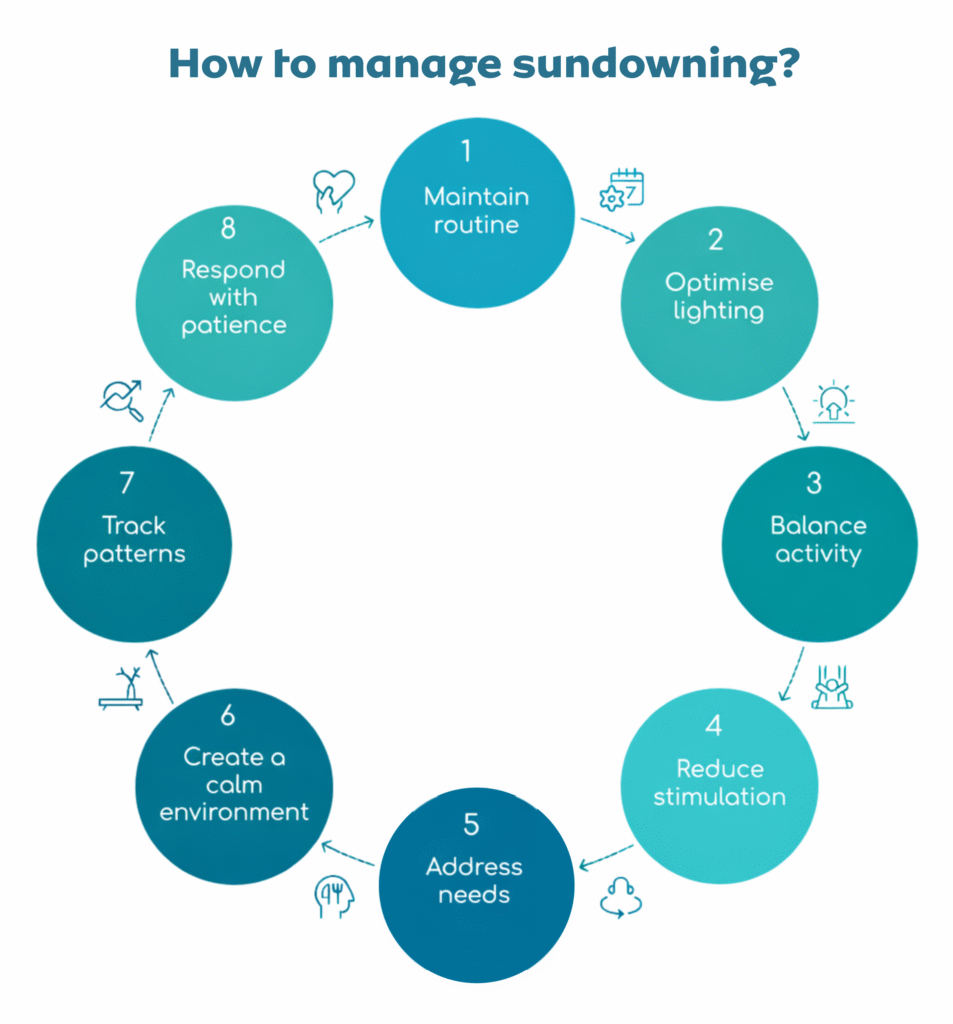
    How to Manage Sundowning in 2026
    How to Manage Sundowning in 2026

    Sundowning usually begins in the late afternoon, around 3 p.m. to 5 p.m., and can continue into the evening and night. For many caregivers, the timing closely follows sunset, so checking what time is sundown today or what time is sundown tonight can help you anticipate when symptoms may begin.

    When does it peak?

    Symptoms often peak around sunset, when natural light fades, and shadows increase. During this period, you may notice:

    • Increased confusion
    • Restlessness or pacing
    • Anxiety or irritability

    How long does sundowning last?

    Sundowning can last for several hours, sometimes easing once the person settles into nighttime routines or sleep. However, the duration varies:

    • Some individuals calm down after a few hours
    • Others may remain unsettled late into the night

    Does it always happen in the evening?

    Not always. While evening is most common:

    • Some people experience sundowning in the morning, especially if their sleep cycle is disrupted
    • Others may have irregular patterns depending on fatigue, environment, or health changes

    Is sundowning linked to life expectancy?

    Many caregivers ask about life expectancy with sundowners, but sundowning itself does not determine lifespan. It reflects how dementia affects brain function and daily rhythms, not how long someone will live.

    Understanding what time is sundowning allows you to prepare ahead, adjust lighting, reduce stimulation, and create a calm routine before symptoms escalate.

    What Triggers Sundowning in Dementia Patients?

    Sundowning does not happen randomly. Certain factors increase confusion and agitation, especially later in the day. When caregivers understand what triggers sundowning, they can prevent or reduce many episodes before they escalate.

    Common triggers of sundowning

    • Fatigue after a long day

    The brain becomes more overwhelmed as energy levels drop.

    • Low lighting and shadows (night shading)

    Dim environments can distort perception and increase fear or confusion.

    • Disrupted body clock (circadian rhythm)

    Dementia affects the brain’s ability to regulate sleep and wake cycles.

    • Hunger, dehydration, or discomfort

    Unmet physical needs can quickly turn into agitation.

    • Unfamiliar environments or changes in routine

    New settings or unexpected changes can increase anxiety.

    • Medications that cause sundowning

    Some drugs, especially sedatives or medications affecting sleep, may worsen confusion or agitation.

    • Underlying medical issues

    Infections, pain, or conditions like urinary tract infections can intensify symptoms.

    Does the type of dementia matter?

    Yes. For example, vascular dementia sundowning may present differently depending on how blood flow changes affect the brain. Some individuals may experience more sudden mood shifts or confusion compared to other types of dementia.

    Caregiver insight

    You may notice patterns over time. For example:

    • Agitation increases after poor sleep
    • Confusion worsens in dim lighting
    • Behavior changes after certain medications

    Tracking these patterns helps you identify what triggers sundowning for your loved one specifically, and respond more effectively.

    READ MORE: What is an SR1 Form? 2026 Guide for UK Care Providers

    Is Sundowning a Sign of Death or Disease Progression?
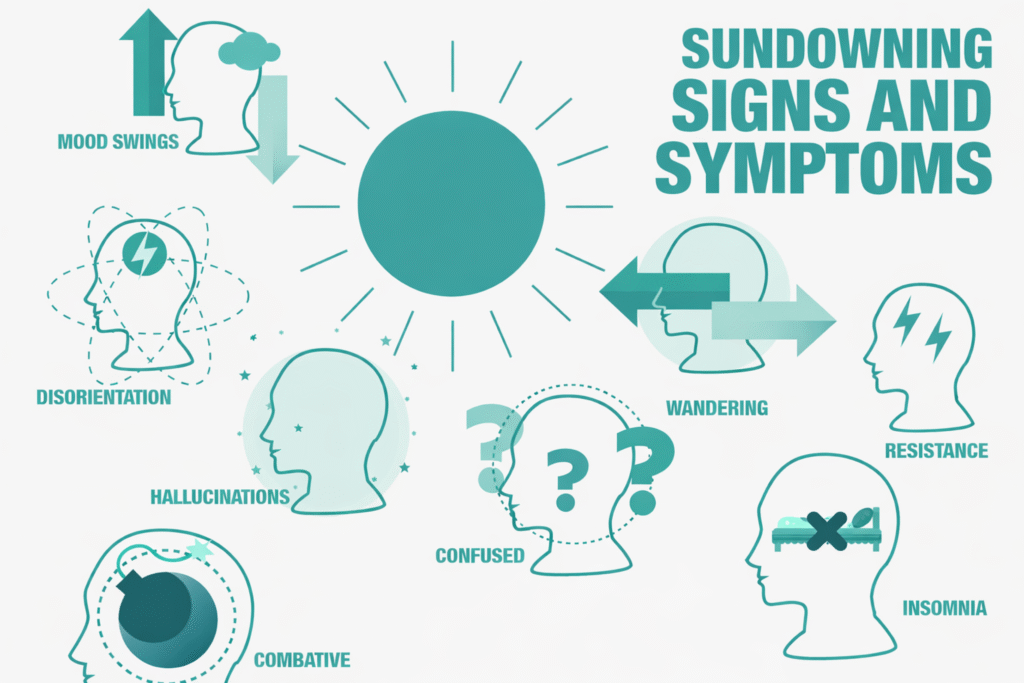
    Sundowning Signs and Symbols
    Sundowning Signs and Symbols

    No, sundowning is not a sign of death. It does not mean that a person is nearing the end of life. Instead, sundowning reflects how dementia affects the brain’s ability to regulate behavior, light perception, and daily rhythms.

    What sundowning actually indicates

    Sundowning usually signals:

    • Changes in brain function caused by dementia
    • Increased sensitivity to fatigue and environmental changes
    • Disruption in the body’s internal clock (sleep–wake cycle)

    As dementia progresses, these symptoms may become more noticeable, but they do not directly predict how long someone will live.

    Understanding the confusion around life expectancy

    Many caregivers search for life expectancy with sundowners, but it’s important to separate the two:

    • Sundowning is a behavioral pattern, not a disease stage
    • Life expectancy depends on the type and progression of dementia, overall health, and care quality
    • Some individuals experience sundowning early, while others develop it later

    When should you be concerned?

    While sundowning itself is not a sign of death, you should seek medical advice if:

    • Symptoms suddenly worsen
    • Behavior changes become extreme or unsafe
    • There are signs of infection, pain, or medication side effects

    In some cases, medications that cause sundowning or untreated health issues can make symptoms appear more severe than they actually are.

    Caregiver reassurance

    It can feel alarming when a loved one becomes confused or agitated every evening. However, understanding that sundowning is a manageable symptom, not a terminal signal, helps you respond with clarity and confidence.

    SEE ALSO: What is the Health and Safety at Work Act 1974?

    Can Sundowning Occur Without Dementia?
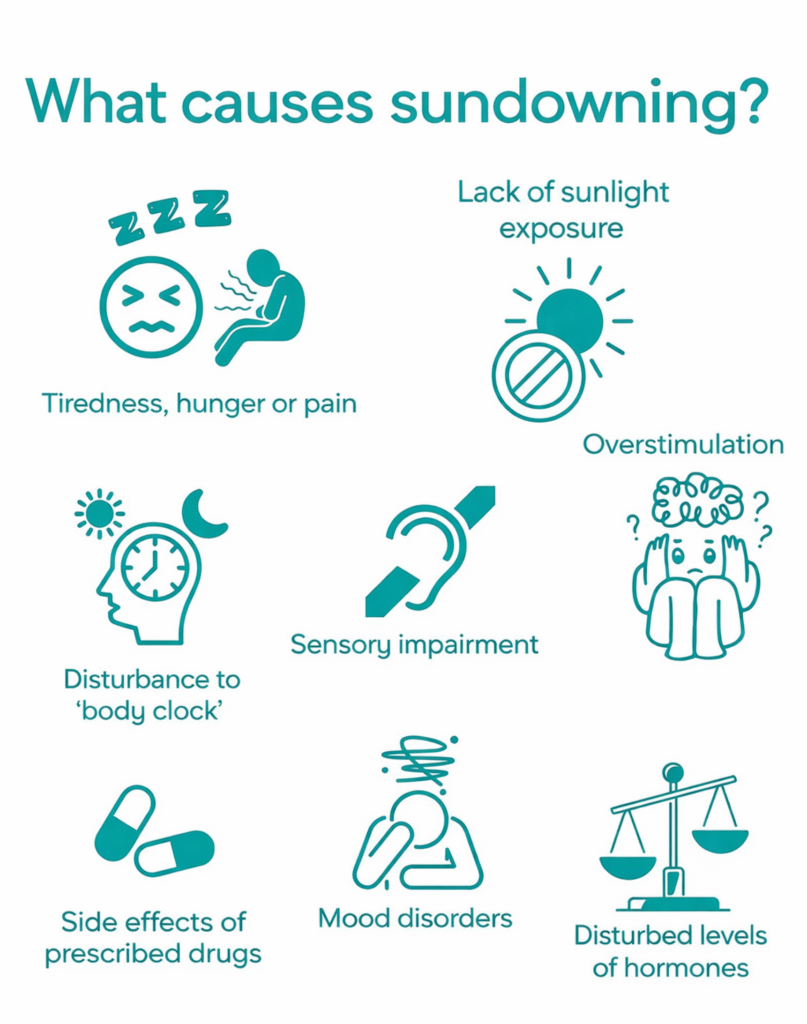
    What Causes Sundowning 2026

    Yes, sundowning without dementia can happen, but it is less common. In most cases, sundowning is strongly linked to dementia, especially Alzheimer’s disease. However, similar late-day confusion or agitation can appear in people without a formal dementia diagnosis.

    When sundowning happens without dementia

    You may notice sundowning-like symptoms in situations such as:

    • Delirium (sudden confusion)

    Often caused by infections, medication changes, or hospitalization

    • Severe sleep disruption

    Poor sleep can confuse the brain’s internal clock and mimic sundowning patterns

    • Stress or anxiety

    Emotional strain can increase restlessness or irritability later in the day

    • Medication side effects

    Some medications that cause sundowning, such as sedatives or drugs affecting the nervous system, can trigger confusion even without dementia

    How to tell the difference

    • Dementia-related sundowning tends to be consistent and progressive
    • Non-dementia cases are often sudden and reversible once the underlying cause is treated

    For example, if confusion appears quickly and worsens over a few days, a medical issue like an infection may be the cause, not dementia.

    Caregiver guidance

    If you notice sundowning behaviors in someone without a dementia diagnosis:

    • Seek medical evaluation promptly
    • Review recent medication changes
    • Monitor sleep patterns and daily routines

    Understanding whether symptoms are due to sundowning dementia or another condition helps you take the right action early.

    MORE: How Much Is JSA (Jobseeker’s Allowance) in 2026?

    How to Deal With Aggressive Dementia and Sundowning Behaviour

    Sundowning can sometimes lead to aggressive dementia behaviors, including shouting, resistance to care, or even physical actions. As a caregiver, these moments can feel overwhelming, but your response can either calm or escalate the situation.

    Why aggression happens during sundowning

    Aggression often comes from:

    • Fear and confusion as surroundings become harder to recognize
    • Frustration from not being understood
    • Overstimulation or fatigue late in the day
    • Misinterpretation of people or shadows (especially with low lighting)

    In many cases, what looks like anger is actually distress.

    What to do with a violent dementia patient

    If behavior becomes intense or unsafe:

    • Stay calm and keep your voice steady

    Your tone directly affects their reaction

    • Give space and avoid confrontation

    Do not try to physically restrain unless absolutely necessary

    • Redirect attention

    Shift focus to a calming activity like music or a familiar object

    • Remove triggers

    Reduce noise, dim harsh lighting, and create a quiet environment

    • Ensure safety first

    Move sharp objects away and position yourself safely

    How to deal with dementia patients who is aggressive

    Use these daily strategies to reduce escalation:

    • Keep a consistent routine

    Predictability reduces anxiety

    • Use simple, clear communication

    Avoid long explanations or arguments

    • Validate their feelings

    Instead of correcting them, respond with reassurance

    • Watch for patterns

    Identify what triggers sundowning and act early

    • Stay patient, even when it’s difficult

    Remember, the behavior is caused by the condition—not intent

    Caregiver reality

    Many caregivers struggle with dementia and being mean to family, especially during sundowning hours. It can feel personal, but it isn’t. The brain can no longer process emotions and reality correctly, which leads to reactions that seem out of character.

    Understanding this helps you respond with empathy instead of frustration, and that alone can reduce how often aggressive episodes occur.

    READ: What Is an Enhanced DBS CRB Check? 2026 Update for Care Homes

    How Caregivers Can Reduce Sundowning Symptoms
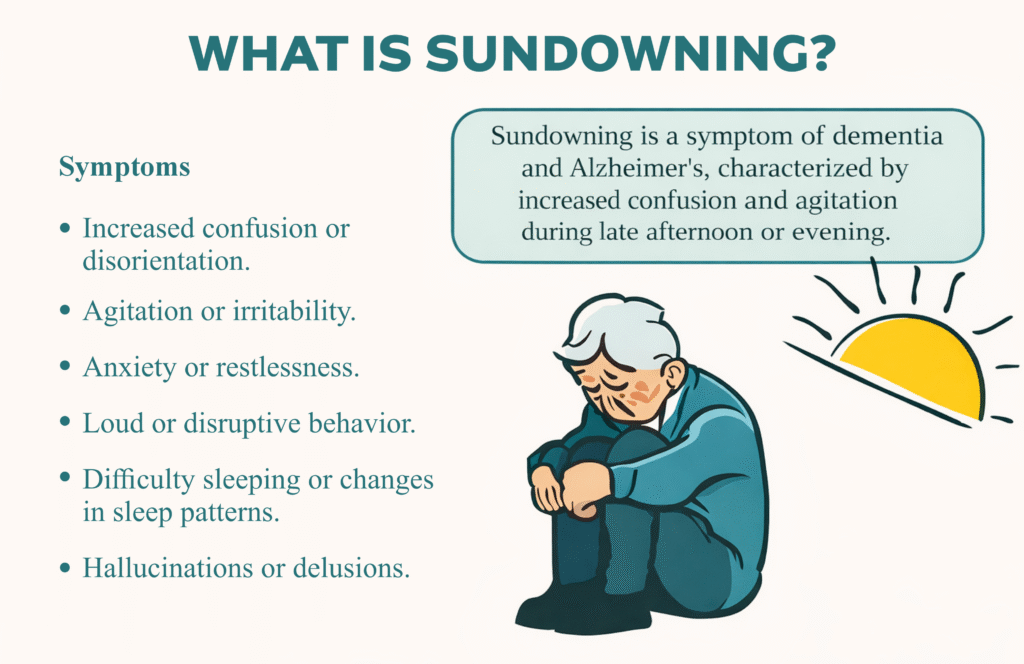
    what time is sundowning
    What Time is Sundowning

    You cannot completely eliminate sundowning, but you can reduce how often it happens and how intense it becomes. Small changes in routine and environment make a big difference, especially when you apply them before symptoms start.

    Create a calm, predictable routine

    • Keep consistent times for waking, meals, and bedtime
    • Schedule demanding activities earlier in the day
    • Avoid sudden changes in routine

    A stable routine helps regulate the brain and reduces confusion later in the day.

    Manage light and environment

    • Turn on lights before it gets dark to reduce shadows (night shading)
    • Keep rooms well-lit and familiar
    • Reduce background noise (TV, loud conversations)

    Matching your environment to what time is sundown today UK can help you act early, before agitation begins.

    Reduce physical and mental triggers

    • Offer meals and fluids regularly to avoid hunger or dehydration
    • Limit caffeine, especially in the afternoon
    • Encourage short rest periods, but avoid long daytime naps

    Also review any medications that cause sundowning, especially if symptoms suddenly worsen.

    Use calming activities

    • Play familiar, gentle music
    • Look through family photos
    • Take a short walk during daylight hours

    These activities help shift focus and reduce anxiety.

    Monitor patterns and act early

    Track:

    • When symptoms start (based on what time is sundowning)
    • What happened earlier in the day
    • Environmental changes (lighting, noise, visitors)

    Over time, you’ll identify patterns and prevent triggers before they escalate.

    Caregiver reminder

    Sundowning can be exhausting, especially when it happens daily. But early preparation, calm responses, and small adjustments can significantly reduce stress for both you and your loved one.

    Final Thoughts…

    Sundowning can feel unpredictable and exhausting, especially when behavior changes happen at the same time every day. But once you understand what time is sundowning and what drives it, you gain something powerful, control through preparation.

    You are not dealing with intentional behavior. You are responding to how dementia changes the brain’s ability to process light, time, and surroundings. That’s why simple steps, like adjusting lighting, maintaining routines, and staying calm, can make a meaningful difference.

    Focus on what you can control:

    • Prepare before late afternoon
    • Reduce known triggers
    • Respond with patience, not confrontation

    Over time, you will begin to recognize patterns, anticipate changes, and handle even difficult moments, like aggressive dementia behaviors, with more confidence.

    Most importantly, take care of yourself too. Supporting someone with sundowning dementia is demanding, and your well-being matters just as much as theirs.

    Need Support Managing Sundowning in Your Care Service?

    Sundowning can quickly lead to distress, aggression, and unsafe situations if not managed early.

    Care Sync Experts helps you:

    • Reduce agitation and aggressive dementia episodes
    • Train staff to handle difficult behaviours confidently
    • Build structured routines that prevent escalation
    • Stay compliant with care standards

    Book a Free Care Support Consultation

    Get practical, expert guidance to improve care outcomes and reduce daily stress for your team.

    FAQ

    Why is sundowning worse at night?

    Sundowning becomes worse at night because the brain struggles more with fatigue, low lighting, and disrupted internal rhythms. As daylight fades, shadows increase and visibility drops, which can confuse a person with dementia. Combined with a full day of mental activity, this often leads to heightened agitation, anxiety, and disorientation in the evening.

    Can sundowning happen after midnight?

    Yes, sundowning can continue after midnight, especially if the person has not settled or has disrupted sleep. While symptoms usually begin in the late afternoon, some individuals remain restless, confused, or awake throughout the night. Poor sleep patterns can extend or worsen these behaviors.

    What is the morning version of sundowning?

    Some caregivers notice similar symptoms earlier in the day, often called “morning confusion” or reversed sundowning.” This can happen when sleep cycles are severely disrupted. Instead of worsening in the evening, the person may wake up confused, agitated, or disoriented in the morning.

    How to respond to sundowning?

    Responding effectively requires calm, proactive care:
    – Stay calm and speak in a reassuring tone
    – Avoid arguing or correcting the person
    – Redirect attention to a calming activity
    – Keep the environment quiet and well-lit
    – Maintain a consistent routine

    The goal is not to “fix” the behavior instantly, but to reduce distress and create a sense of safety for the person.
  • Central Reservations System for Caregivers UK: Importance of Digital Care Management

    Central Reservations System for Caregivers UK: Importance of Digital Care Management

    A central reservations system in caregiving is a digital platform that allows care providers to manage bookings, staff scheduling, and care delivery from a single system.

    In the UK, these systems help domiciliary care agencies and care homes coordinate visits, maintain accurate care records, and meet compliance standards efficiently.

    In simple terms, what is a central reservation system? It is a tool that replaces manual booking, rota planning, and paper-based care logs with a centralised, real-time system designed to improve care delivery and operational control.

    Key Takeaways

    • A central reservations system helps care providers manage bookings, staff rotas, and care plans in one place
    • UK care businesses use these systems to improve efficiency and meet CQC compliance requirements
    • Digital systems replace paper logs with real-time, secure care records
    • Platforms often include features like scheduling, visit tracking, and mobile access for carers
    • Tools such as Log my care, CarePlanner login, and Birdi software support digital care management
    • Centralised systems reduce admin workload and improve visibility across care operations
    Get expert support for your next tender, inspection-ready policies, or CQC registration — book a call with Care Sync Experts today and let’s get you compliant and competitive.

    What Is a Central Reservations System in Care?

    How to Register a Care Agency in Northern Ireland 2026 (Step by Step)

    A central reservations system in care is a digital system that manages bookings, staff scheduling, and care delivery from one central platform. It allows care providers to organise visits, assign carers, and track services in real time without relying on paper or disconnected tools.

    So, what is central reservation in the care context?

    It is the process of coordinating all care-related bookings, such as home visits, shift allocations, and service delivery, through a single, centralised system.

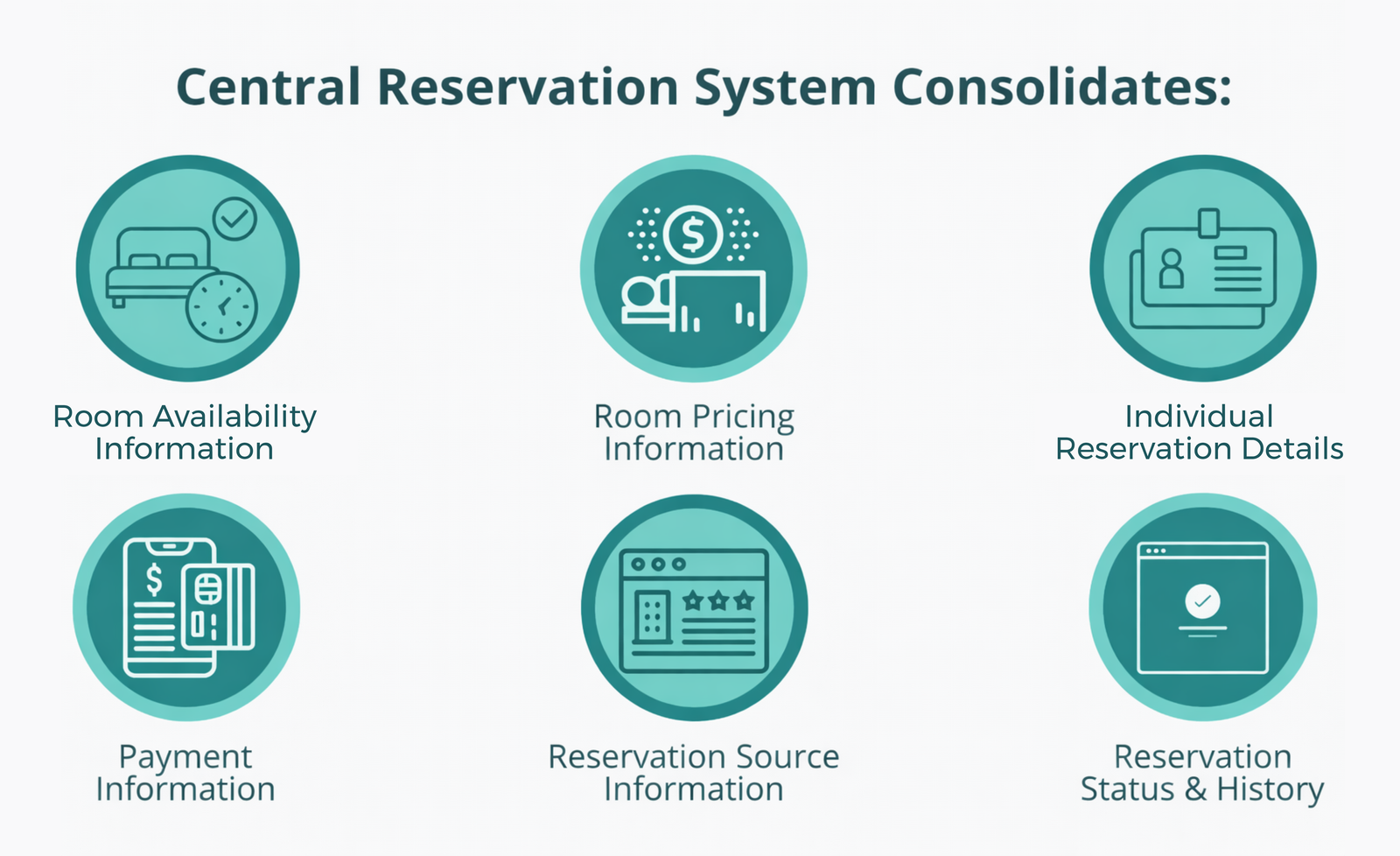
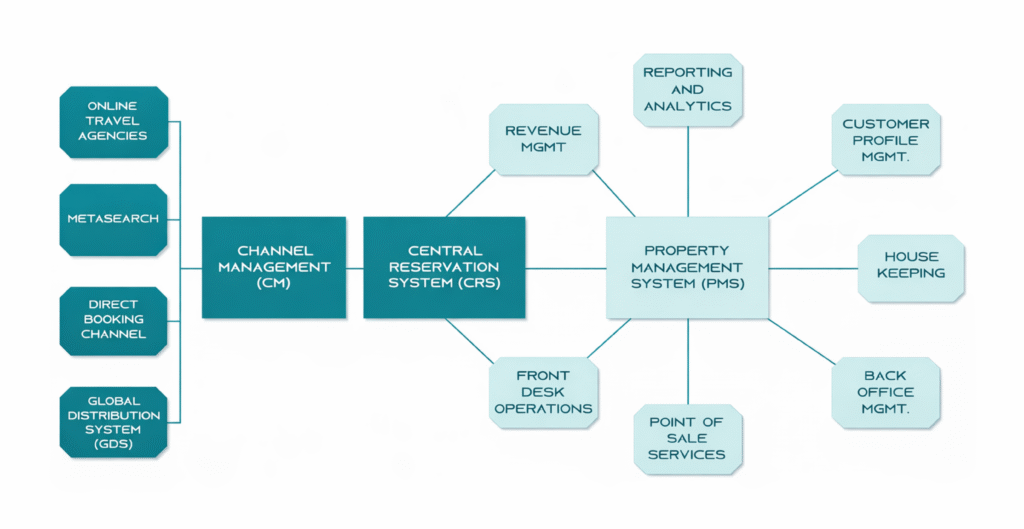
    In broader terms, the central reservation meaning comes from industries like hotels and travel, where a central reservation system manages room bookings across multiple locations. In care, the concept works differently. Instead of rooms, providers manage:

    • client visits
    • staff rotas
    • care delivery schedules

    This often raises questions like:

    • what’s a central reservation system in care?
    • what’s central reservation compared to traditional scheduling?

    The answer is simple: it replaces manual coordination with a structured, digital workflow.

    For example, instead of:

    • answering calls to book visits
    • updating paper rota sheets
    • manually checking care plans

    a central reservations system allows teams to:

    • book visits instantly
    • assign carers based on availability
    • access care plans and updates in real time

    This shift gives care providers better control over daily operations while reducing errors and missed appointments.

    At its core, a central reservations system is not just about booking, it is about connecting every part of care delivery into one reliable system.

    How Central Reservation Systems Work in Caregiver Operations

    A central reservations system brings together booking, scheduling, and care delivery into one smooth workflow. Instead of juggling calls, paper logs, and separate tools, care providers manage everything from a single platform.

    Here’s how it works in real caregiver operations:

    1. Booking and Visit Allocation

    Staff or coordinators enter new care requests into the system. This could be:

    • a new client needing daily visits
    • a family booking a care slot
    • an urgent same-day request

    The system logs the booking instantly and makes it visible to the entire team. This replaces manual processes like phone bookings and handwritten logs.

    2. Staff Scheduling and Rotas

    Once a visit is booked, the system assigns carers based on:

    • availability
    • location
    • skills and qualifications

    Instead of updating spreadsheets or rota sheets, managers adjust schedules in real time.

    This ensures no missed visits and better workload balance.

    3. Care Plan Access and Updates

    Carers access client information directly from the system, including:

    • care plan template details
    • medication instructions
    • visit notes and history

    They no longer need printed documents or separate files. Everything stays updated in one place.

    4. Real-Time Logging and Communication

    During or after visits, carers log activities using mobile apps or portals (often referred to as log in care systems). They can:

    • record completed tasks
    • update notes
    • flag issues instantly

    Managers see updates in real time, which improves oversight and response speed.

    5. Monitoring and Compliance Tracking

    The system automatically tracks:

    • visit times and attendance
    • completed care tasks
    • audit trails for inspections

    This makes it easier to prepare for CQC inspections and maintain compliance without scrambling for records.

    Without a central reservation workflow, teams rely on:

    • phone calls
    • paper records
    • disconnected tools

    With a central reservations system, everything connects:

    • bookings → schedules → care delivery → reporting

    The result is fewer errors, faster coordination, and more time focused on actual care instead of admin.

    RELATED: What Is the Care Certificate? 2026 Update

    Why UK Care Providers Are Moving to Central Reservation Systems

    Central Reservation

    Care providers across the UK are moving to a central reservations system because manual processes no longer keep up with the demands of modern care delivery.

    Most teams recognise the same daily challenges:

    • constant phone calls to book or change visits
    • rota clashes and last-minute gaps
    • missing or incomplete care records
    • pressure to stay compliant with CQC standards

    A central reservation approach removes these problems by giving providers full control over their operations.

    1. Reducing Admin Pressure on Staff

    Reception and care coordinators often spend hours managing bookings manually. Each call interrupts workflow and increases the risk of errors.

    With a central reservations system, teams:

    • book visits in seconds
    • update schedules instantly
    • reduce back-and-forth communication

    Staff spend less time on admin and more time supporting care delivery.

    2. Improving Compliance and Inspection Readiness

    UK regulators expect accurate, accessible records at all times. Paper logs and scattered systems make this difficult.

    A digital system:

    • stores all visit and care data securely
    • creates automatic audit trails
    • allows instant access during inspections

    This makes CQC inspections far less stressful and more predictable.

    3. Enhancing Visibility Across the Organisation

    Managers need to know what is happening in real time:

    • who is on shift
    • which visits are completed
    • where issues are occurring

    A central reservations system provides a live overview of operations, helping teams respond quickly and make better decisions.

    4. Improving the Experience for Families and Clients

    Families expect convenience and transparency. Manual booking systems often lead to:

    • missed appointments
    • unclear schedules
    • delays in communication

    With digital booking and scheduling:

    • visits are confirmed instantly
    • updates are communicated clearly
    • service delivery becomes more reliable

    This builds trust and improves satisfaction.

    5. Supporting Growth Without Losing Control

    As care businesses grow, manual systems break down quickly. More clients and staff mean more complexity.

    A central reservation system allows providers to:

    • scale operations smoothly
    • maintain consistent standards
    • manage multiple locations or teams

    Growth becomes structured instead of chaotic.

    READ MORE: What Are Part L Building Regulations? What Care Homes Need to Know in 2026

    Key Features to Look For in a Central Reservations System

    central reservations system

    Not all platforms offer the same value. A good central reservations system should support the full care workflow, from booking visits to managing compliance, without adding complexity.

    Here are the key features UK care providers should prioritise:

    1. Digital Booking and Scheduling

    The system should allow teams to:

    • book visits quickly
    • adjust schedules in real time
    • avoid double bookings or missed appointments

    A strong booking engine replaces manual coordination and keeps operations organised.

    2. Staff Rota and Workforce Management

    Look for tools that manage:

    • staff availability
    • shift allocation
    • travel time between visits

    Platforms like The Care Office and CarePlanner login systems already offer structured rota management, helping coordinators balance workloads efficiently.

    3. Mobile Access for Carers

    Carers need access on the go. A modern system should allow them to:

    • log visits in real time (log in care)
    • update notes instantly
    • confirm completed tasks

    Solutions such as Log my care and Birdi software provide mobile-friendly access, making it easier for carers to stay connected while working in the community.

    4. Digital Care Plans and Records

    A reliable system should include:

    • structured care plan template access
    • medication records
    • daily care notes

    This ensures carers always work with up-to-date information and reduces reliance on paper files.

    5. Real-Time Monitoring and Alerts

    Managers should be able to track:

    • missed or late visits
    • staff attendance
    • urgent care updates

    Real-time alerts help teams act quickly and maintain service quality.

    6. Compliance and Audit Trails

    Compliance is non-negotiable in UK care.

    The system must:

    • store secure, time-stamped records
    • provide full audit trails
    • support CQC inspection requirements

    This removes the need to manually compile records during inspections.

    7. Reporting and Insights

    A strong central reservation platform should generate reports on:

    • service delivery
    • staff performance
    • client care trends

    These insights help providers improve operations and make informed decisions.

    What This Means in Practice

    When these features work together, a central reservations system becomes more than just a booking tool.

    It becomes a complete operational system that connects:

    • bookings
    • staff
    • care delivery
    • compliance

    The right system does not just organise your care service, it helps you run it better, with fewer errors and more confidence.

    SEE ALSO: What are Cold Weather Payments? Eligibility & How to Claim (2026)

    Central Reservations System for Caregivers UK NHS

    A central reservations system for caregivers UK NHS context is not a single national booking platform, but a group of digital systems that support care coordination, record-keeping, and service delivery across health and social care.

    In practice, care providers use centralised systems to align with NHS expectations around:

    • digital care records
    • data sharing
    • coordinated care delivery

    How Central Systems Connect with NHS Workflows

    Many UK care providers work alongside:

    • Primary Care Networks (PCNs)
    • GP services
    • NHS-funded care packages

    A central reservations system supports this by:

    • organising care visits efficiently
    • keeping accurate, up-to-date records
    • making information easier to share when required

    This improves communication between care providers and healthcare professionals.

    Digital Social Care Records (DSCR)

    The NHS has encouraged the adoption of Digital Social Care Records, which align closely with central reservation systems.

    These records allow providers to:

    • store care data securely
    • access client information in real time
    • reduce paperwork across services

    A central reservations system often acts as the foundation for these digital records.

    Data Protection and GDPR Compliance

    Handling care data requires strict compliance with UK regulations.

    A good system must:

    • protect sensitive client information
    • control user access levels
    • maintain secure audit trails

    This ensures providers meet both GDPR and NHS data handling expectations.

    Using a central reservations system aligned with NHS standards helps providers:

    • deliver more coordinated care
    • reduce duplication of work
    • improve communication across services
    • stay compliant with national digital care initiatives

    Cost of a Central Reservations System for Caregivers in the UK

    The cost of a central reservations system for caregivers UK varies depending on the size of the organisation, the features required, and the number of users.

    Most UK care providers can expect to pay between:

    • £150 to £300 per month for small to mid-sized agencies
    • £300 to £500+ per month for larger providers with advanced features
    • Additional setup or training fees (in some cases)

    What Affects the Cost?

    Several factors influence pricing:

    1. Number of Clients and Staff

    Systems often scale based on:

    • number of service users
    • number of carers using the platform

    Larger teams typically pay more.

    2. Features and Functionality

    Basic systems include:

    • scheduling
    • visit logging
    • simple reporting

    Advanced platforms add:

    • real-time alerts
    • integrations with other systems
    • detailed analytics and compliance tools

    More features = higher cost.

    3. Level of Support and Training

    Some providers include:

    • onboarding support
    • staff training
    • ongoing customer service

    Premium support may increase monthly fees but improves adoption.

    Is It Worth the Cost?

    For most care providers, the return on investment is clear.

    A central reservations system helps reduce:

    • admin hours spent on booking and scheduling
    • missed visits and costly errors
    • compliance risks during inspections

    For example:

    • saving 10–15 staff hours per week can easily offset the monthly fee
    • avoiding one compliance issue can save thousands in potential penalties

    MORE: Does Cold Weather Make You Sick? The Complete 2026 Guide

    Hidden Cost of Not Using One

    Manual systems may seem “free,” but they often lead to:

    • wasted staff time
    • inaccurate records
    • higher operational risk

    Over time, these hidden costs exceed the price of a digital system.

    Central Reservations vs Hotel PMS Systems: What’s the Difference?

    How Does a Central Reservation System (CRS) Work_

    The term central reservation system often comes from industries like hospitality, which can cause confusion for care providers.

    So, what’s the difference?

    How Central Reservation Works in Hotels

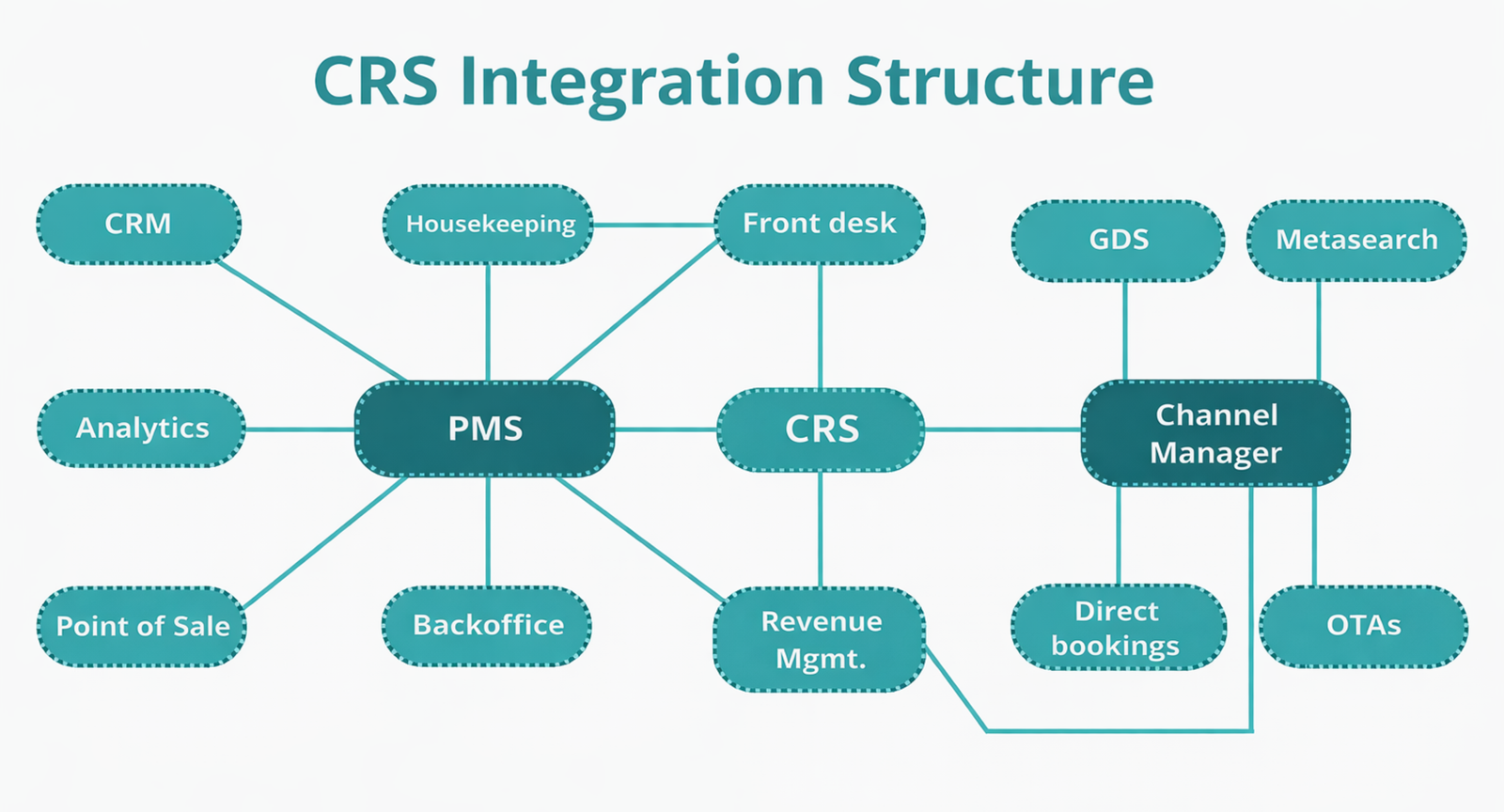
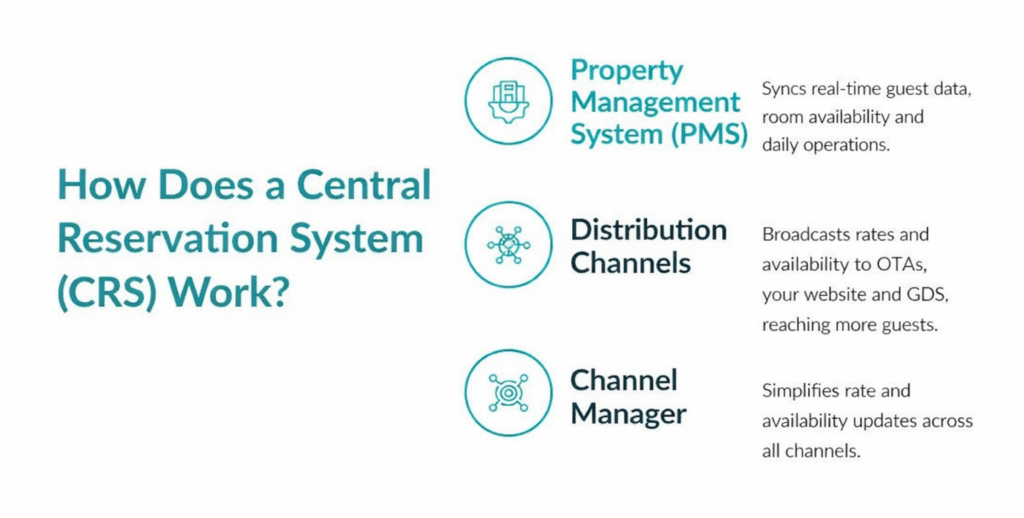
    In hospitality, a central reservation system connects multiple booking channels to manage room availability across locations.

    These systems often include:

    • a hotel PMS system (Property Management System)
    • an IBE booking engine (Internet Booking Engine)
    • integrations with travel platforms

    A major CRS (Central Reservation System) in hotels focuses on:

    • room inventory
    • pricing
    • guest bookings

    The goal is to maximise occupancy and revenue.

    How Central Reservations Work in Care

    In care, the purpose is completely different.

    A central reservations system for caregivers focuses on:

    • scheduling visits
    • assigning carers
    • managing care delivery
    • maintaining compliance records

    Instead of managing rooms, providers manage:

    • people
    • care needs
    • service delivery

    Key Differences at a Glance

    FeatureCare SystemsHotel Systems
    Primary focusCare deliveryRoom bookings
    UsersCare staff & managersGuests & hotel staff
    Data handledCare plans, visits, complianceReservations, pricing, availability
    ComplianceCQC, GDPRHospitality regulations
    GoalSafe, efficient careMaximise bookings

    Some providers researching management systems for hotels or a pms system hotel may assume similar tools apply to care.

    They don’t.

    Care systems are built for:

    • safety
    • compliance
    • real-time care coordination

    Hotel systems are built for:

    • sales
    • bookings
    • revenue optimisation

    READ: What Is the Retirement Age in the UK? (2026 Guide for Care Workers & Providers)

    Should Your Care Business Use a Central Reservation System?

    How Does a Central Reservation System (CRS) Work

    Not every care provider adopts a central reservations system at the same stage, but most reach a point where manual processes stop working.

    Here’s how to decide if it’s the right move for your organisation.

    You Should Use a Central Reservations System If:

    1. You Struggle with Scheduling and Missed Visits

    If your team relies on:

    • phone calls
    • spreadsheets
    • paper rotas

    you are likely dealing with:

    • double bookings
    • missed visits
    • last-minute confusion

    A central reservation system removes these issues by organising everything in one place.

    2. Admin Work Is Taking Too Much Time

    If your staff spend hours:

    • answering booking calls
    • updating schedules
    • chasing information

    A digital system can automate most of these tasks and free up time for care.

    3. You Need Better Compliance and Record-Keeping

    If preparing for inspections feels stressful or rushed, your current system may not be reliable.

    A central reservations system helps by:

    • storing accurate, time-stamped records
    • providing instant access to data
    • reducing compliance risks

    4. Your Service Is Growing

    As your business expands:

    • more clients
    • more staff
    • more visits

    Manual systems become harder to manage.

    A central reservation approach allows you to scale without losing control.

    You May Not Need One Yet If:

    • You manage a very small number of clients
    • Your operations are simple and stable
    • You can track everything accurately without delays

    Even then, growth will eventually create pressure to switch.

    The Real Question to Ask

    Instead of asking: “Do we need a central reservations system?”

    Ask: “How much time and risk are we carrying by not using one?”

    Conclusion

    A central reservations system is quickly becoming a core part of how modern care services operate in the UK. It brings booking, scheduling, and care delivery into one structured system, giving providers better control over their day-to-day operations.

    For caregivers, the impact is immediate:

    • less time spent on admin
    • fewer missed visits
    • clearer communication across teams
    • stronger compliance with regulatory standards

    For managers and business owners, it creates something even more valuable: visibility and confidence. You can see what is happening across your service in real time, respond quickly to issues, and scale without losing control.

    The shift from manual processes to a central reservation approach is not just about technology. It is about running a safer, more reliable, and more efficient care service.

    What This Means for Your Care Business

    If you are still relying on paper logs, phone bookings, or disconnected tools, you are likely:

    • losing valuable staff time
    • increasing the risk of errors
    • making compliance harder than it needs to be

    A central reservations system for caregivers UK gives you a clear path forward, one where operations are organised, records are accurate, and your team can focus on what matters most: delivering quality care.

    Care providers who adopt centralised systems early gain a strong operational advantage. They run smoother services, handle growth better, and build more trust with families and regulators.

    If you want to stay competitive and in control, now is the time to move towards a central reservations system that supports your care business today and scales with you tomorrow.

    Need Expert Support Choosing and Implementing the Right Care Management System?

    Care Sync Experts supports care providers, domiciliary care agencies, and care home operators across the UK with clear, practical guidance on selecting and implementing the right central reservations system for their services.

    From helping you understand how digital care systems work to advising on platforms like Log my care, CarePlanner, Birdi software, and other care management tools, our specialists break down complex technology into simple, actionable decisions.

    Whether you are moving away from paper-based systems, improving scheduling and compliance, or scaling your operations with a centralised digital solution, our team provides tailored support designed for real-world care environments.

    Choose the right system, avoid costly implementation mistakes, and ensure your care service runs efficiently, remains compliant, and delivers high-quality care.

    Contact Care Sync Experts today to get expert guidance on care management systems, central reservations solutions, and building a smarter, more connected care operation.

    FAQ

    Who are the largest care home providers in the UK?

    The largest care home providers in the UK include organisations such as HC-One, Barchester Healthcare, Four Seasons Health Care, Care UK, and Anchor.

    These providers operate across multiple locations and manage thousands of residents, often using advanced digital systems to handle staffing, care planning, and compliance at scale.

    What is the care system in the UK?

    The care system in the UK combines publicly funded and privately delivered services to support individuals who need help with daily living.

    Local authorities and the NHS fund or arrange care based on eligibility, while independent providers, such as care homes and domiciliary care agencies – deliver most services.

    Regulators like the CQC (England), CIW (Wales), and RQIA (Northern Ireland) oversee quality and safety.

    Who funds care homes in the UK?

    Care homes in the UK are funded through a mix of:
    – Local authority funding (for eligible individuals)
    – NHS funding (for specific healthcare needs, such as Continuing Healthcare)
    – Private payments (self-funded residents)

    In many cases, funding is shared, depending on the individual’s financial situation and care requirements.

    What are the top 3 qualities of a caregiver?

    The three most important qualities of a caregiver are:
    Compassion: The ability to provide emotional support and treat individuals with dignity and respect
    Reliability: Being consistent, punctual, and dependable in delivering care
    Communication skills: Clearly understanding and responding to the needs of clients, families, and healthcare professionals

    These qualities directly impact the quality of care and overall client experience.

  • CHC Funding: A Caregiver’s Step-by-Step Guide (2026)

    CHC Funding: A Caregiver’s Step-by-Step Guide (2026)

    CHC funding (NHS Continuing Healthcare funding) is a free, non-means-tested package of care that the NHS fully funds for adults with complex, intense, or unpredictable long-term health needs. If someone has a primary health need, the NHS pays for their care in full, whether that care takes place at home, in a nursing home, or in another community setting.

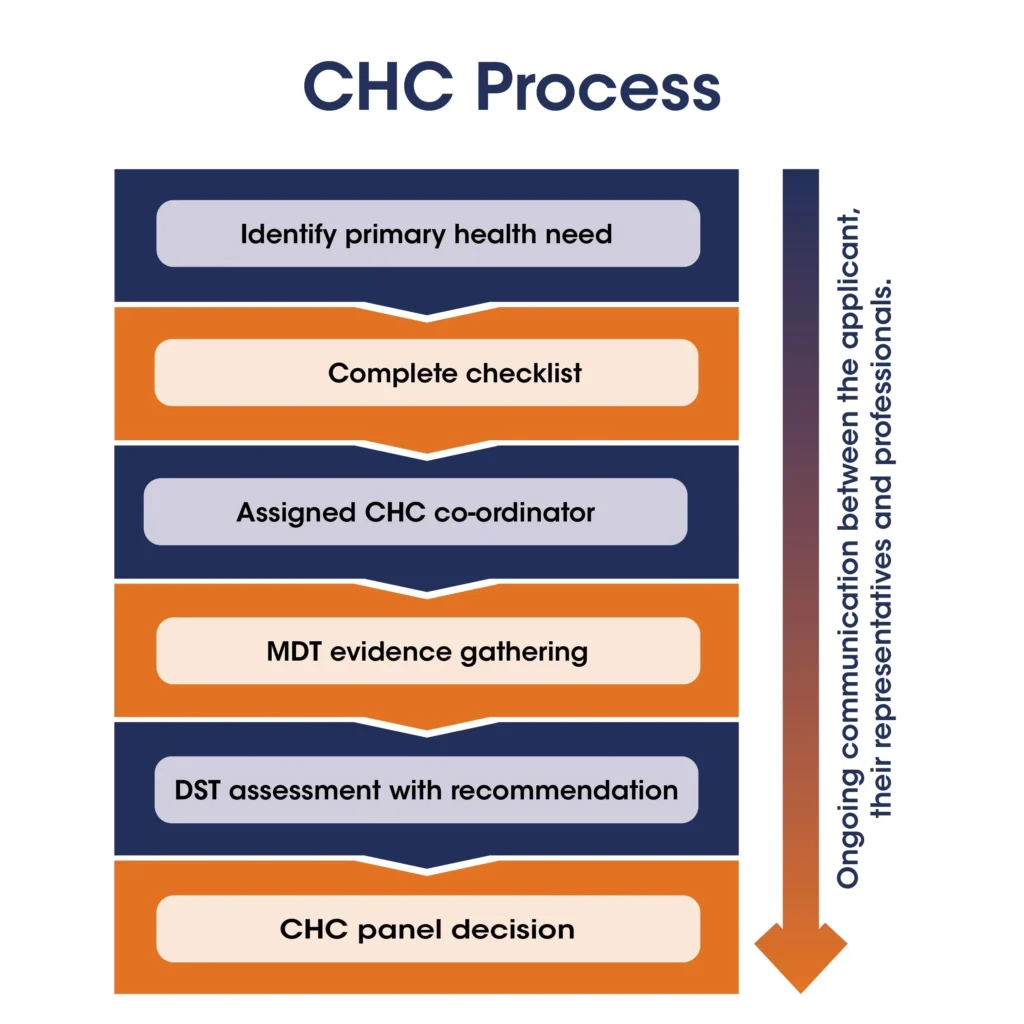
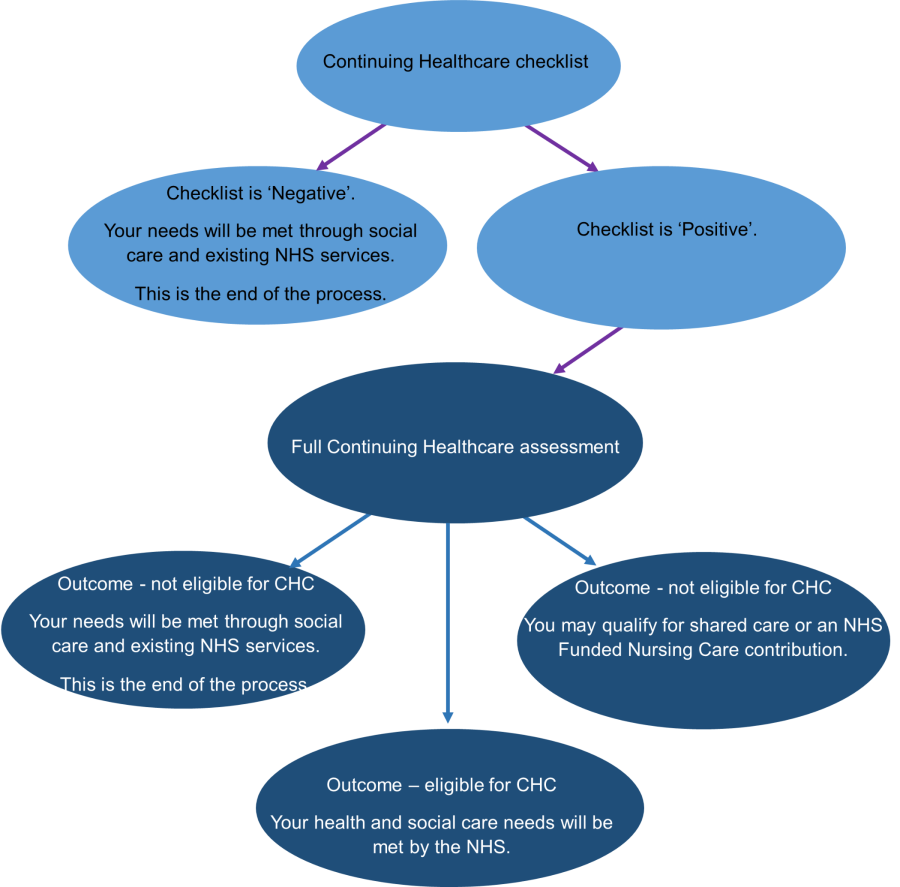
    To qualify, the NHS first completes a CHC Checklist and, if needed, carries out a full CHC assessment using a multidisciplinary team and Decision Support Tool.

    Spot CHC Early: The Caregiver Signs That Trigger an Assessment

    Top 5 Challenges Domiciliary Care Providers Face (and How to Overcome Them)

    As a caregiver, you often notice the warning signs before anyone else. If care feels more medical than social, you should consider raising CHC funding with the NHS.

    You should request a CHC Checklist if the person you support:

    • Needs frequent clinical intervention (complex wound care, PEG feeding, oxygen therapy, or specialist medication management)
    • Faces unpredictable risks such as seizures, choking, falls, or sudden deterioration
    • Requires constant supervision to prevent harm
    • Has behaviour, cognition, or psychological needs that demand skilled monitoring
    • Shows rapid decline, especially in late-stage or life-limiting conditions

    CHC does not depend on diagnosis, income, savings, or property ownership. It depends on whether the person’s needs revolve around managing health risks rather than providing routine social care.

    If you believe health needs drive the care plan, do not wait for someone else to raise it. Ask the GP, district nurse, hospital discharge team, or social worker to start the NHS Continuing Healthcare checklist process.

    CHC Guidance in One Rule: Health Needs Decide, Not Money

    The core rule behind CHC funding is simple: the NHS looks at health needs, not bank accounts.

    You qualify for continuing healthcare if your overall needs show a primary health need. This means your care mainly addresses medical risks and clinical complexity, rather than routine support with daily living.

    During a CHC assessment, decision-makers examine four key characteristics:

    • Nature – What type of health needs exist?
    • Intensity – How much care is required, and how often?
    • Complexity – How do different conditions interact and increase risk?
    • Unpredictability – How likely is sudden deterioration or harm without skilled oversight?

    For example, help with washing and dressing alone does not usually trigger CHC funding. But if that same person also faces unstable blood sugar, high infection risk, behavioural risks, and frequent medication changes, the picture shifts from social care to healthcare.

    As a caregiver, your role is to frame needs clearly. Describe what happens when care does not go right. Document risks, frequency, and consequences. The NHS does not fund diagnoses, it funds risk, intensity, and complexity.

    That is the foundation of all CHC guidance and the CHC framework.

    RELATED: Carers Allowance Scotland: What’s Changed in 2026?

    Start With the CHC Checklist (NHS Continuing Healthcare Checklist)

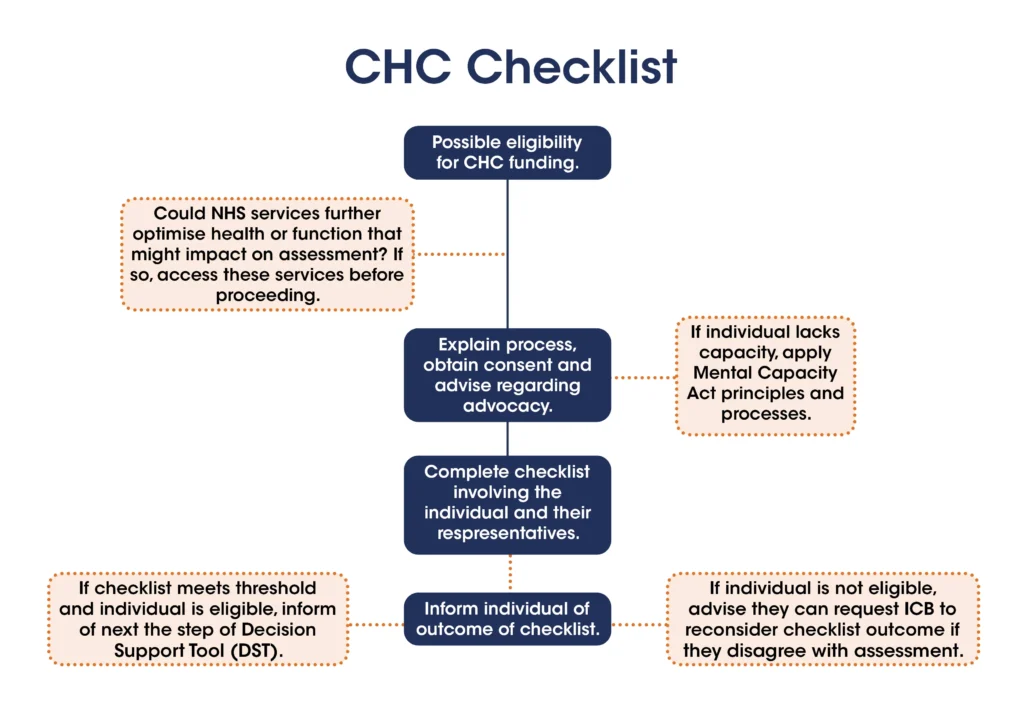
    The CHC Checklist acts as the screening stage for CHC funding. A nurse, GP, hospital clinician, or social worker completes it to decide whether the person should move to a full CHC assessment.

    The NHS Continuing Healthcare checklist does not decide eligibility. It simply asks: “Does this person need a full assessment?”

    You should always:

    • Confirm that a trained professional completes the Checklist
    • Ask for a copy of the completed document
    • Request written reasons for the outcome
    • Check that the recorded needs reflect reality

    If the Checklist shows sufficient need, the NHS must arrange a full assessment. If it does not, you can challenge the outcome and ask for reconsideration.

    Caregiver Move: Bring Evidence to the Checklist

    Do not attend empty-handed. The Checklist works best when you support it with clear, recent evidence:

    • Daily care notes showing frequency of intervention
    • Incident reports (falls, choking, behavioural episodes)
    • Medication charts and changes
    • Risk assessments
    • Hospital discharge summaries
    • Evidence of supervision required to prevent harm

    Avoid vague descriptions like “needs a lot of support.” Instead, say:

    “Requires repositioning every two hours due to Grade 3 pressure ulcer risk. Missed repositioning led to skin breakdown on 12/02.”

    The Checklist stage sets the tone for everything that follows. If you document intensity and risk early, you strengthen your case before the full CHC assessment even begins.

    Prepare for the Full CHC Assessment Like an Inspection

    CHC Funding- Process
    CHC Funding- Process

    If the CHC Checklist triggers a full review, the NHS arranges a CHC assessment led by a multidisciplinary team (MDT). This team usually includes at least two professionals from different disciplines, often health and social care staff already involved in the person’s care.

    The MDT uses a document called the Decision Support Tool (DST). It breaks needs into care domains such as mobility, nutrition, cognition, behaviour, skin integrity, breathing, medication, and more. Each domain receives a level: priority, severe, high, moderate, low, or no need.

    But levels alone do not decide CHC funding. The MDT must also judge how the needs combine under the four key tests:

    • Intensity – How much care does the person require daily?
    • Complexity – How do multiple conditions interact?
    • Unpredictability – How often does risk escalate suddenly?
    • Nature – What kind of clinical skill does safe care demand?

    Caregiver Strategy: Link Evidence to Each Domain

    Do not rely on professionals to “know the story.” Prepare a short summary that maps evidence to domains.

    For example:

    • Skin: Grade 3 pressure ulcer history; repositioning every 2 hours; district nurse involvement.
    • Medication: Frequent dosage changes; risk of hypoglycaemia; nurse oversight required.
    • Behaviour: Verbal aggression during personal care; requires two carers to prevent harm.

    Focus on risk, consequences, and frequency. Show what happens when support fails.

    When you present needs clearly and in active terms, you help the MDT see the full picture, not isolated tasks, but an interconnected health risk profile.

    READ MORE: What Is the Best Mobile Phone for Old Age UK in 2026?

    Use Fast Track When the Condition Deteriorates Rapidly

    When someone’s health declines quickly, and professionals believe they may be approaching the end of life, you do not need to wait for the standard CHC assessment process. The NHS can activate the Fast Track pathway.

    Fast Track allows the NHS to arrange CHC funding immediately, without completing the full Checklist and Decision Support Tool first. A clinician, usually a GP, consultant, or specialist nurse, completes a Fast Track tool confirming rapid deterioration.

    As a caregiver, you should raise Fast Track if you notice:

    • Clear clinical decline over weeks or days
    • Escalating symptoms that require skilled intervention
    • Frequent hospital admissions or crisis events
    • End-of-life indicators

    Do not assume someone else will suggest it. Ask directly: “Does this situation meet the criteria for Fast Track CHC?”

    Fast Track exists to remove delay during urgent periods. If the clinical team agrees that deterioration is significant, the NHS should arrange a funded care package quickly so care remains stable and dignified.

    Track the CHC Timeline: Know the 28-Day Expectation

    CHC Funding

    Once someone requests a full CHC assessment, the local Integrated Care Board (ICB) should normally complete the decision within 28 days of receiving a completed Checklist or request for full assessment.

    This timeframe matters. Delays create stress, financial pressure, and uncertainty for families and caregivers.

    As a caregiver, take control of the timeline:

    • Record the date the CHC Checklist was completed
    • Record the date of referral for full assessment
    • Record the MDT meeting date
    • Record when the ICB issues its decision letter

    If the ICB decides the person qualifies for CHC funding but takes longer than 28 days without justified reason, it may need to refund care costs from day 29 onward.

    Keep communication written wherever possible. Confirm conversations by email. A simple timeline log strengthens your position if you need to challenge delays.

    When you monitor the process closely, you reduce the risk of administrative drift and protect the person’s entitlement to continuing healthcare.

    ALSO SEE: When Does Child Benefit Stop in the UK? (2026 Guide)

    Challenge a CHC Decision With Evidence, Not Emotion

    If the NHS refuses CHC funding, do not treat the decision as final. Many families secure eligibility after challenging weak reasoning or incomplete assessments.

    Start by requesting:

    • A full copy of the Decision Support Tool (DST)
    • The written rationale explaining why the person does not have a primary health need
    • Copies of any risk assessments used

    Read the document carefully. Look for gaps. Did the MDT downplay intensity? Did it ignore unpredictable risks? Did it describe health needs as “social care” without explaining why?

    Caregiver Strategy: Reframe the Case Clearly

    When you challenge a decision, respond domain by domain. Link each disagreement to evidence.

    For example:

    • “The DST records mobility as moderate. However, records show two falls requiring hospital review within three weeks.”
    • “Medication management involves insulin titration with risk of hypoglycaemia. This reflects clinical intensity, not routine support.”

    You can ask the ICB to reconsider its decision locally. If dissatisfaction continues, you may request an independent review through the NHS complaints route.

    Focus on documented risk, frequency, and consequences. Avoid emotional language. Clear evidence carries more weight than frustration.

    A refused decision does not mean the person lacks needs. It often means the evidence did not fully demonstrate the health risk profile at that time.

    If CHC Funding Fails, Check FNC Funding

    NHS Continuing Healthcare for Adults
    NHS Continuing Healthcare for Adults

    If the NHS refuses CHC funding, you should immediately check eligibility for FNC funding (NHS-funded nursing care).

    FNC funding applies when someone lives in a nursing home and requires support from a registered nurse, but does not meet the threshold for full continuing healthcare. Instead of paying the entire care package, the NHS pays a set weekly contribution toward the nursing element of care. The individual or local authority covers the remaining costs.

    You do not usually need a separate assessment for FNC if the person has already completed a full CHC assessment. The MDT should consider FNC automatically during that process.

    As a caregiver, confirm:

    • The home is registered to provide nursing care
    • The assessment clearly identifies ongoing nursing needs
    • The ICB confirms the FNC rate and payment arrangement

    FNC funding does not replace CHC, but it can reduce financial pressure if full eligibility does not apply. Always ask for written confirmation of the decision and review dates, as nursing needs should be reviewed regularly.

    MORE: Latest CQC Reports, Regulated Activities (2026)

    CHC Contact Number: Who to Call and What to Say

    If you want to start or chase a CHC assessment, contact your local Integrated Care Board (ICB). The ICB manages CHC funding decisions in your area.

    You can:

    • Ask your GP, district nurse, hospital discharge team, or social worker to submit a referral
    • Call your local ICB and request the CHC team directly
    • Ask for the named CHC case coordinator handling the case

    When you call, stay clear and direct: “I would like to request a CHC Checklist for [name]. Their needs involve complex health risks, and I believe they may have a primary health need.”

    If you need independent guidance, the organisation Beacon offers free advice on continuing healthcare. They operate a helpline and can explain next steps without charging families.

    Always follow up phone calls with an email. Written records protect you if delays occur.

    Taking early control of communication often speeds up the CHC funding process and prevents your case from stalling in the system.

    If You Are Paying While Waiting: Ask About Short-Term Support

    If the NHS delays a CHC funding decision and care costs continue, do not ignore temporary support options.

    Local councils run emergency cost-of-living schemes under the Household Support Fund. This fund helps residents who face immediate financial hardship with essential costs such as utilities, food, and basic household items. Each council manages its own household support fund application, so eligibility and payment rules vary by area.

    If you need help urgently, search your council website for “household support fund apply online” or contact the council’s welfare support team directly. They will explain whether you qualify and how to submit a household support fund application.

    This support does not replace continuing healthcare, and it does not affect your CHC assessment. It simply provides short-term relief while funding decisions progress.

    Always keep receipts and records of payments made during the waiting period. If the NHS later confirms CHC eligibility, you may need documentation if reimbursement discussions arise.

    Final Checklist for Caregivers: Take Control of the CHC Process

    Before you close this guide, use this quick action list to stay ahead of the CHC funding process:

    • Request the CHC Checklist as soon as health needs escalate
    • Collect clear evidence: daily notes, incidents, medication changes, risk events
    • Map evidence to intensity, complexity, unpredictability, and nature
    • Track every date in the CHC assessment timeline
    • Ask for written decisions and full documentation
    • Challenge weak reasoning with structured evidence
    • Check FNC funding if full eligibility does not apply
    • Contact your local ICB directly if communication stalls

    You do not need to become a legal expert to secure continuing healthcare. You need structured evidence, clear communication, and persistence.

    When you focus on health risk rather than tasks, document frequency rather than general need, and stay proactive at each stage, you place yourself in the strongest position to secure the right outcome.

    Need Help Securing CHC Funding?

    If you feel overwhelmed by the CHC assessment process or want expert support before, during, or after a decision, Care Sync Experts can guide you step by step.

    We help caregivers and care providers:

    • Prepare strong evidence before the CHC Checklist
    • Structure cases clearly for the full CHC assessment
    • Challenge refusals with documented, domain-based responses
    • Navigate appeals professionally and strategically

    CHC decisions should reflect real health risks, not paperwork gaps.

    Contact Care Sync Experts today to discuss your situation and protect your entitlement to the right level of NHS support.

    FAQ

    Can CHC Funding Be Withdrawn?

    Yes. The NHS can withdraw CHC funding if a review shows that the person no longer has a primary health need.

    Integrated Care Boards (ICBs) must review CHC packages after three months and then at least annually. If needs reduce in intensity, complexity, or unpredictability, the NHS may decide that full continuing healthcare no longer applies.

    If funding is withdrawn, you have the right to:
    – Request a written explanation
    – Challenge the decision
    – Provide updated evidence
    – Ask for a reassessment if needs change again

    CHC is based on current needs. If those needs increase later, you can request a new assessment.

    What Are the 4 Criteria for CHC?

    The NHS decides eligibility using four characteristics:
    Nature – What type of health needs exist?
    Intensity – How much care is required and how often?
    Complexity – How multiple conditions interact and increase risk
    Unpredictability – The likelihood of sudden deterioration or harm

    Decision-makers apply these criteria during the full CHC assessment when determining whether someone has a primary health need.

    Is There a Limit to CHC Funding?

    No. There is no financial cap on CHC funding.
    If someone qualifies, the NHS must cover the full cost of meeting assessed health and associated care needs. This applies whether care takes place at home or in a care home.

    The NHS can consider value for money when arranging a package, but it cannot refuse funding simply because care is expensive if the person meets eligibility criteria.

    What Is the Full Form of CHC in Medical Terms?

    CHC stands for Continuing Healthcare.
    In England, the formal term is NHS Continuing Healthcare, which refers to a fully funded package of care for adults with complex or long-term health needs.

    It is sometimes shortened to “CHC funding” when referring to the financial aspect of the package.