A past dismissal does not automatically stop you from becoming a CQC registered manager in 2026.
CQC does not look for a perfect career history. It looks for honesty, competence, and current fitness to manage regulated activity safely. Many successful registered manager CQC applicants have faced dismissals earlier in their careers and still gained approval.
The real risk does not sit with the word dismissal. It sits with inconsistency. Problems arise when your CQC registered manager application form says one thing, your references say another, and your interview answers tell a different story. That is when CQC questions credibility and trust.
CQC assesses three core areas:
- Good character, including honesty and reliability
- Competence and experience relevant to the regulated activity
- Current fitness to manage, not past perfection
If you disclose accurately, explain clearly, and evidence growth, a dismissal alone rarely blocks registration. Concealment, vague explanations, or conflicting accounts create far greater risk than the dismissal itself.
CQC Registered Manager Requirements: What CQC Actually Assesses
To understand how a dismissal fits into your application, you need to know what the Care Quality Commission actually assesses when reviewing a CQC registered manager.
CQC bases its decision on current fitness, not a flawless past. Inspectors focus on whether you can safely and effectively manage regulated activity today. That assessment sits within Regulation 7 of the Health and Social Care Act 2008 (Regulated Activities) Regulations 2014.
In practice, CQC looks for evidence that you meet these CQC registered manager requirements:
- Good character
This covers honesty, trustworthiness, reliability, and professional integrity. CQC expects transparency. It does not require a perfect employment record.
- Relevant competence and experience
You must show you have the skills, knowledge, and experience to manage the specific service type, such as domiciliary care, supported living, or residential services.
- Understanding of care law and regulation
Inspectors expect you to understand how to meet CQC’s fundamental standards and legal duties in day-to-day management.
- Physical and mental fitness for the role
You must demonstrate you can perform the role safely, with reasonable adjustments where appropriate.
- Complete and accurate documentation
This includes a full employment history from age 16, explanations for gaps over four weeks, suitable references, and a CQC-countersigned Enhanced DBS check.
These CQC requirements for registered manager roles apply to all registered managers CQC assesses, regardless of career background. A dismissal becomes relevant only if it raises concerns about honesty, safeguarding, or current capability.
Is a Dismissal a Dealbreaker for a Registered Manager CQC Application?
A dismissal does not automatically disqualify you from a registered manager CQC application. What matters is why it happened, how recent it was, and how you address it now.
CQC applies a risk-based judgement, not a tick-box refusal. In practice, dismissals fall into three broad categories.
When a Dismissal Becomes Close to a Hard Stop
A dismissal creates a near-absolute barrier only when it results in legal restrictions on working in regulated activity.
This includes:
- Placement on the DBS Adults’ or Children’s Barred List
- Court-ordered restrictions preventing work with vulnerable people
If you appear on a barred list, CQC cannot approve you. This position is non-negotiable and sits outside discretion.
High-Scrutiny Scenarios
These situations do not automatically block registration, but CQC will examine them closely:
- A recent dismissal, especially within the last 12–24 months
- Safeguarding-related allegations, even without barring
- Repeated patterns of similar conduct or capability issues
- Inconsistent explanations between your form, references, and interview
- Dismissal from a previous registered manager role, which CQC can access
In these cases, you must evidence learning, remediation, and stable performance since the incident.
Usually Manageable Scenarios
Many dismissals remain manageable with the right evidence, including:
- Capability or performance dismissals without safeguarding concerns
- A single conduct issue followed by years of stable employment
- Personality conflicts or organisational breakdowns
- Dismissals from many years ago, with clear professional development since
CQC looks forward, not backward. If your record shows insight, honesty, and sustained improvement, a dismissal alone rarely blocks approval.
READ MORE: CQC Supported Living Registration in 2026: The Complete Guide
CQC Registered Manager Application Form: How to Complete Employment History Without Triggering Red Flags
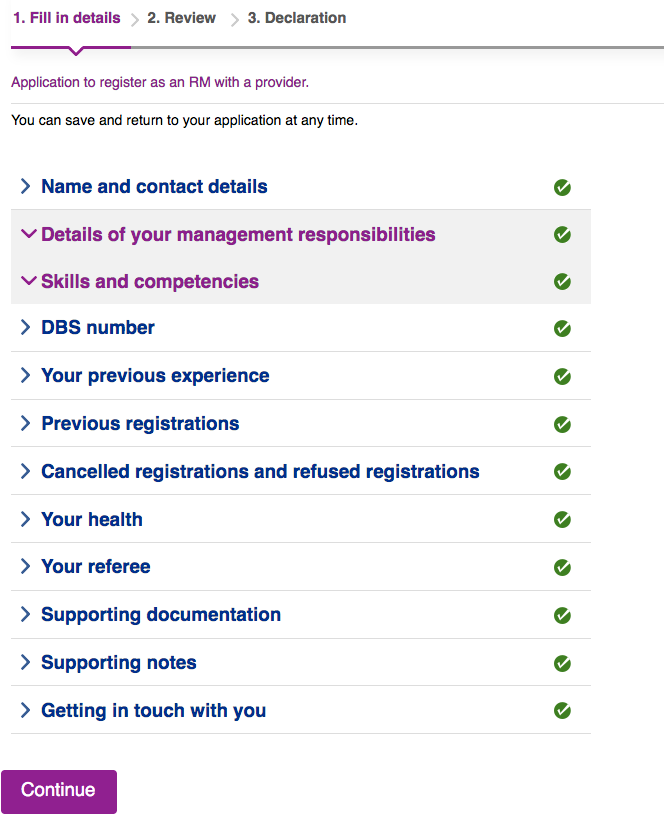
The CQC registered manager application form causes more anxiety than any other part of the process, especially the employment history section. This is where many applicants weaken an otherwise strong application.
Here’s the reality: CQC expects full disclosure, not perfection.
When you complete the CQC application form for registered manager, you must provide:
- A full employment history from age 16
- Explanations for any gaps over four weeks
- A clear reason for leaving every role
This information allows the Care Quality Commission to assess honesty and consistency. Vague answers create more risk than honest ones.
What Not to Do
Avoid entries like:
- “Personal reasons”
- “Mutual agreement” (when dismissal occurred)
- Leaving the box blank
These responses raise red flags because:
- They suggest avoidance rather than transparency
- They often conflict with references
- They force inspectors to probe harder at interview
If your referee mentions a dismissal and your form does not, CQC will question credibility immediately.
The Safe Way to Explain a Dismissal
Use factual, neutral wording. State what happened without blame, emotion, or justification. Keep it brief and consistent.
Examples you can adapt:
- “Dismissed in 2021 following capability concerns. I have since completed leadership training and held two management roles with successful probation periods.”
- “Dismissed in 2019 for conduct reasons. No safeguarding concerns were involved. Evidence of learning and subsequent stable employment available.”
- “Dismissed in 2018 following a probation review. The role exceeded my experience at that time. I later gained relevant qualifications and managed similar services successfully.”
Each example does three things:
- States the fact
- Avoids minimisation or defensiveness
- Points toward current fitness
One Rule to Remember
Your form, CV, references, and interview must tell the same story.
Consistency Check: Make Your Form, CV, References, and Interview Match
Consistency wins or loses a CQC registered manager application.
CQC does not assess your form in isolation. Inspectors cross-check your application form, CV, references, and interview answers to see whether they tell the same story. When those sources conflict, concerns about honesty and reliability surface fast.
Before you submit anything, run this consistency check.
Your Pre-Submission Consistency Audit
Confirm that:
- Dates match everywhere
Employment start and end dates must align across your CV, the CQC registered manager application form, and references.
- Job titles match the role performed
Avoid inflating titles. If your reference lists “Deputy Manager” and your form says “Registered Manager,” CQC will question accuracy.
- Reasons for leaving match referee accounts
If your referee may mention dismissal, your form must reflect that fact using the same core explanation.
- Your interview narrative matches your paperwork
Anything you write on the form is fair game for interview questions. You must be able to explain it calmly and consistently.
CQC assesses good character partly through honesty and reliability. Inconsistencies suggest risk. They force inspectors to question whether you disclose issues fully and whether you would manage service-user risk transparently.
Consistency, on the other hand, builds trust. When your story aligns across documents and conversations, CQC can focus on current competence rather than credibility concerns.
SEE ALSO: First Person vs Third Person Care Plan: CQC & the Mental Capacity Act Expection in 2026
CQC Registered Manager Interview Questions: How to Answer Dismissal Questions With Confidence
The CQC registered manager interview does not test whether you deserve forgiveness. It tests whether you are fit to manage regulated activity safely today.
Inspectors use the interview to verify what you submitted on your CQC registered manager application form and to explore how you think, reflect, and manage risk. If your history includes a dismissal, expect direct questions. Calm, structured answers matter more than perfect wording.
Common CQC Registered Manager Interview Questions
Prepare for questions such as:
- “Can you talk me through what happened at that role?”
- “Why did your employment end?”
- “What did you learn from that experience?”
- “What changed in your practice as a result?”
- “How do you now manage performance or conduct issues?”
- “How do you ensure safeguarding concerns escalate properly?”
- “How does this experience make you a safer manager today?”
These registered manager CQC interview questions aim to test insight, honesty, and leadership maturity.
The Five-Step Answer Structure That Works
Use this structure every time:
- State the facts clearly
“In 2020, I was dismissed following a capability review.”
- Acknowledge responsibility
“I recognise I lacked sufficient experience in that area at the time.”
- Explain what you learned
“That experience highlighted the need for stronger supervision and clearer escalation.”
- Evidence what changed
“Since then, I completed management training and passed probation in two senior roles.”
- Link learning to service-user safety
“I now identify risk earlier and escalate concerns promptly, which protects people using the service.”
Avoid defensiveness. Avoid blaming others. Avoid over-apologising.
What Inspectors Respond To Positively
CQC responds well when you:
- Speak honestly without minimising
- Show reflective practice
- Evidence sustained improvement
- Demonstrate how learning protects service users
MORE: CQC Registration for Domiciliary Care Providers: Complete 2026 Guide
CQC Registered Manager Qualifications: What You Need and What Strengthens Your Application
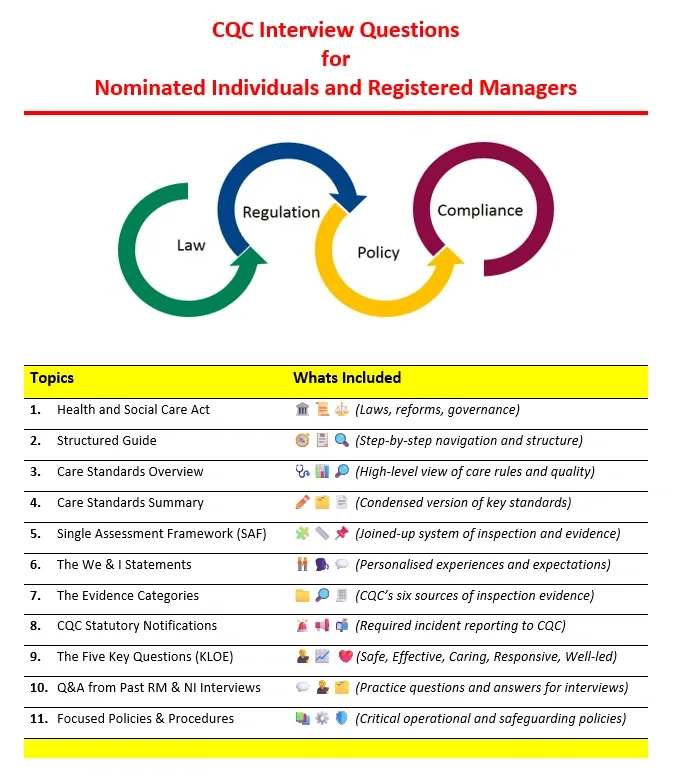
CQC does not approve managers based on titles alone. It approves people who can run a regulated service safely. That means your CQC registered manager qualifications must show leadership ability, regulatory understanding, and relevance to the service you manage.
What Qualifications CQC Expects
CQC does not publish a single mandatory certificate for every role. Instead, inspectors expect you to show that your qualifications match the service type and your responsibilities. This answers the common question: What qualifications do I need to be a Care Manager?
In practice, strong applications show:
- A recognised management or leadership qualification relevant to health or social care
- Evidence of regulatory knowledge, including safeguarding, governance, and quality assurance
- Training aligned to the service type (for example, home care, supported living, or residential care)
A recognised CQC qualification in leadership or health and social care strengthens your case, especially when paired with practical management experience.
Courses That Add Weight (Not Guarantees)
A CQC registered manager course can support your application, but it does not replace experience. Courses work best when they:
- Address gaps identified in your career history
- Cover leadership, compliance, safeguarding, and risk management
- Link directly to how you manage regulated activity day to day
Inspectors look for applied learning, not certificates collected for appearance.
How Qualifications Offset Past Issues
If your history includes a dismissal, targeted qualifications help you show growth. When you link training to learning outcomes and safer practice, you demonstrate current fitness rather than past mistakes.
CQC Registered Manager Salary: What Influences Pay in the UK
Salary often becomes part of the decision to pursue registration, especially given the responsibility that comes with the role. CQC registered manager salary levels in the UK vary widely because CQC does not set pay. Employers do.
Several factors influence Registered Manager salary UK figures in practice.
What Drives Registered Manager Pay
Your salary depends on:
- Service type – domiciliary care, residential care, supported living, or specialist services
- Region – London and the South East usually pay more than other areas
- Size and complexity of the service – larger services with higher risk profiles pay more
- CQC rating – services aiming for or holding strong ratings often invest more in leadership
- On-call and compliance responsibility – added accountability increases compensation
This explains why CQC manager salary in UK job adverts often show wide ranges rather than fixed figures.
UK Salary Expectations (Realistic Framing)
Most Registered Care Manager salary UK roles reflect the level of responsibility rather than tenure alone. Employers pay more when managers:
- Lead multiple services
- Manage complex client needs
- Oversee safeguarding, medication, and governance frameworks
- Carry legal accountability alongside providers
If you manage a home care service, expect CQC registered manager salary offers to align with operational risk, rota management, and out-of-hours responsibility.
LEARN MORE: RQIA Registration for Domiciliary Care Agency in Northern Ireland (2026)
CQC Application for Domiciliary Care: What Home Care Managers Must Get Right
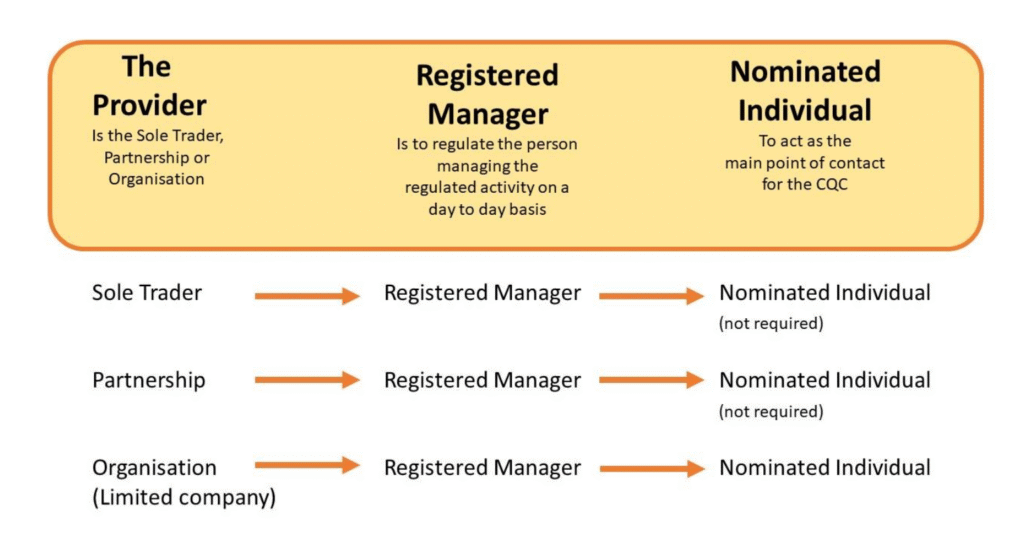
If you apply as a CQC registered manager for a home care service, CQC assesses you against domiciliary care risks, not generic management theory. This matters even more if your history includes a dismissal, because inspectors focus on how you control risk in people’s homes.
A CQC application for domiciliary care must show that you can manage services without direct, on-site oversight.
What CQC Examines in Domiciliary Care Applications
CQC looks closely at whether you can:
- Recruit safely
Robust pre-employment checks, references, DBS processes, and safer recruitment decisions.
- Maintain reliable rotas
Consistent staffing, contingency planning, and continuity of care.
- Manage medication safely
Clear MAR processes, competency checks, audits, and escalation pathways.
- Handle safeguarding remotely
Staff confidence to raise concerns, timely escalation, and accurate recording.
- Oversee records and quality remotely
Supervision, spot checks, audits, and service-user feedback systems.
If your dismissal involved performance or management weaknesses, CQC will expect evidence that you now:
- Identify risk earlier
- Escalate concerns faster
- Supervise staff more effectively
Use examples from recent roles to show how you manage home care safely today. Strong domiciliary leadership reassures inspectors that past issues will not repeat.
Continuing Manager CQC: What Changes When a New Provider Takes Over
If a service changes ownership and you remain in post, CQC may treat you as a continuing manager rather than a brand-new applicant. A Continuing Manager CQC application focuses less on re-proving your entire career and more on whether you remain fit to manage under the new provider.
What CQC Still Requires
Even as a continuing manager, CQC expects:
- An accurate employment history (including any past dismissals)
- A current Enhanced DBS countersigned by CQC
- Evidence that you understand and can meet regulatory requirements under the new provider’s governance
CQC may reuse some information from previous registrations, but it will still assess good character, competence, and current fitness.
What Often Triggers Scrutiny
CQC will look more closely if:
- The service previously faced enforcement action
- The change of provider follows compliance concerns
- Your role or responsibilities have expanded
- Your employment history includes unresolved issues
If a dismissal appears in your past, consistency remains critical. Your explanation must still align across the CQC application, references, and any interview discussion.
How to Strengthen a Continuing Manager Application
To reduce delays:
- Confirm dates and role titles match previous records
- Evidence ongoing professional development
- Show how you support compliance under the new provider’s systems
Final Thoughts…
A past dismissal does not define your future as a CQC registered manager. What defines your outcome in 2026 is how you disclose, how consistently you explain, and how clearly you evidence current fitness to manage regulated activity.
The Care Quality Commission assesses people, not perfection. Inspectors look for honesty, reflective practice, and proof that you can lead safely today. Applicants fail when their story changes between the CQC registered manager application form, references, and interview. Applicants succeed when everything aligns and points forward.
If you take one rule from this guide, make it this: tell the truth once, tell it clearly, and support it with evidence. Do that, and a dismissal becomes context, not a barrier.
Need Support Before You Submit?
If you want a second set of eyes before you apply, professional support can reduce risk and delays. At Care Sync Experts, we help aspiring registered managers:
- Review applications for consistency and risk
- Prepare confidently for CQC registered manager interview questions
- Build evidence packs that demonstrate current fitness
- Navigate applications for domiciliary care and continuing manager roles
FAQ
What Is the Work of CQC?
The Care Quality Commission regulates health and adult social care services in England. Its job is to protect people who use services and make sure care providers meet legal and quality standards.
CQC does this by:
– Registering providers and registered managers
– Inspecting services against legal requirements
– Rating services to inform the public
– Taking enforcement action when care falls below standards
CQC focuses on safety, effectiveness, compassion, and leadership, not paperwork for its own sake. Every action it takes links back to protecting service users from harm.
What Are CQC’s Powers?
CQC has wide legal powers under the Health and Social Care Act 2008. These powers allow it to act quickly when care puts people at risk.
CQC can:
– Grant or refuse registration for providers and managers
– Carry out announced and unannounced inspections
– Issue requirement notices and warning notices
– Impose conditions on registration
– Prosecute providers or managers for serious breaches
– Suspend or cancel registration in extreme cases
For registered managers, this means CQC can hold you personally accountable for how a service operates. That accountability explains why CQC places such weight on honesty, competence, and leadership.
What Are the 5 Questions CQC Asks?
CQC inspects every service using the same five key questions. These questions shape inspections, reports, and ratings.
CQC asks whether a service is:
Safe – Do systems protect people from harm and abuse?
Effective – Does care achieve good outcomes and follow best practice?
Caring – Do staff treat people with dignity, kindness, and respect?
Responsive – Does the service meet people’s needs and respond to concerns?
Well-led – Does leadership promote a positive culture, learning, and accountability?
As a registered manager, your leadership directly affects all five areas, especially “Well-led,” which often drives overall inspection outcomes.
What Are the CQC Levels?
CQC rates services using four levels. These ratings appear publicly and influence reputation, commissioning, and workforce confidence.
The four CQC levels are:
Outstanding – The service performs exceptionally well
Good – The service meets required standards consistently
Requires Improvement – The service falls short in some areas
Inadequate – The service poses risks to people using it
CQC does not rate individual registered managers, but management quality heavily influences the service rating. Strong leadership can lift a service; weak leadership often leads to enforcement.