If you’re asking what disabilities qualify for council tax, this is the right article for you.
And the simple answer is, there is no fixed list of disabilities that automatically qualify for a Council Tax reduction in the UK. Instead, councils assess your eligibility based on how your condition affects your daily living and whether your home needs to meet those needs.
You may qualify for a disability council tax reduction if:
- Your home has been adapted for your condition (for example, space for a wheelchair or a dedicated treatment room), or
- You or someone in your household is classed as having a severe mental impairment (SMI) under council tax rules
Receiving benefits like PIP (Personal Independence Payment) can support your application, but PIP alone does not guarantee eligibility for a council tax reduction.
In practice, councils focus on your needs and living situation, not just your diagnosis.

What Qualifies for Council Tax Reduction?
To qualify for a Council Tax reduction, your situation must meet one of two main criteria. Councils do not base decisions on diagnosis alone; they look at how your condition affects your home and daily living.
Route 1: Disabled Band Reduction (Property-Based)
You may qualify for a council tax disability reduction if your home includes features that support a disability.
This usually applies if your property has:
- An extra room used for treatment, therapy, or essential equipment
- Space to allow wheelchair use indoors
- Adaptations such as ramps, widened doors, or accessible bathrooms
If approved, your council will reduce your bill by one band (for example, from Band C to Band B).
Route 2: Severe Mental Impairment (SMI)
You may qualify for a full or partial exemption if you or someone in your household has a severe mental impairment (SMI).
For council tax purposes, severe mental impairment means a condition that severely affects intelligence and social functioning, such as:
- Dementia (including Alzheimer’s)
- Severe learning disabilities
- Brain injury or neurological conditions
To qualify, you must:
- Get certification from a doctor, and
- Receive a qualifying benefit (such as PIP, Attendance Allowance, or similar)
This is often referred to as SMI council tax exemption.
What This Means in Practice
When councils assess what qualifies for council tax reduction, they focus on:
- Whether your home needs to support your condition
- Whether your condition meets the legal definition of severe mental impairment
A diagnosis alone is not enough; you must show how it affects your living situation or meet SMI criteria.
RELATED: Bereavement Support Payment (BSP) in the UK: Who Qualifies, How Much You Get, and How to Apply
Does PIP Automatically Qualify You for Council Tax Reduction?
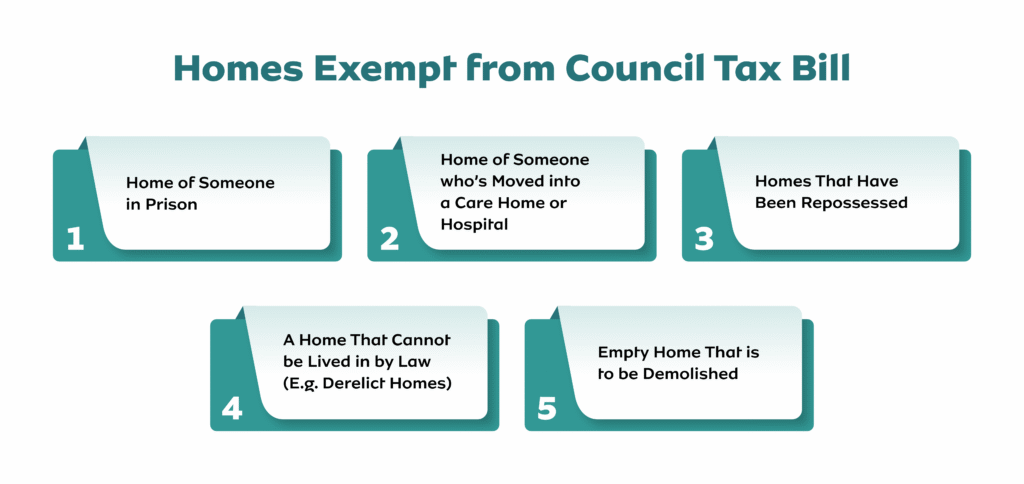
No, PIP (Personal Independence Payment) does not automatically qualify you for a Council Tax reduction.
Many people assume that receiving PIP means they will get a council tax discount for disabled people, but this is not how the system works.
How PIP Helps
PIP can support your application because it:
- Confirms that you have a recognised disability or health condition
- May meet part of the requirement for benefits linked to severe mental impairment (SMI)
- Strengthens your case when applying for a council tax disability reduction
What PIP Does Not Do
PIP alone will not qualify you unless you also meet one of these conditions:
- Your home is adapted for your disability
- You meet the criteria for severe mental impairment council tax exemption
What This Means in Practice
- You can receive PIP and still not qualify for a council tax reduction
- You can qualify without PIP if your home or condition meets council rules
Councils assess your needs and living situation, not just your benefit status.
Simple Rule to Follow
PIP supports your application, but it does not guarantee approval.
Council Tax Discounts for Disabled People: What You Can Get
If you qualify for a council tax disability reduction, your bill will not disappear automatically — but it can be significantly reduced depending on your situation.
1. Band Reduction (Most Common)
If your home has been adapted for a disability, your council may reduce your property by one tax band.
For example:
- A Band C property becomes Band B
- A Band A property (e.g. Band A council tax Sheffield) may receive a special reduction equivalent to a lower band
This is the most common form of reduced council tax for disabled households.
2. Full Exemption (Severe Mental Impairment – SMI)
If someone in your household qualifies under severe mental impairment (SMI) rules:
- They may be disregarded for council tax purposes, or
- The household may receive a full exemption
This is often referred to as SMI council tax exemption and can reduce your bill to zero in some cases.
3. Local Council Variations
Each council applies the rules slightly differently.
For example:
- Leeds City Council council tax bands may apply standard band reductions
- Tower Hamlets council tax disability exemption may include specific local processes or forms
Always check your local council’s guidance to understand how they apply disability discounts.
What This Means in Practice
The level of council tax discount for disabled people depends on:
- How your home supports your condition
- Whether you meet SMI criteria
- Your local council’s implementation
Most people receive a band reduction, while full exemptions apply in more specific cases.
READ MORE: NHS Hearing Aids UK: Cost, Types, Waiting Times, and How to Get One in 2026
Special Case: Severe Mental Impairment (SMI)
A severe mental impairment (SMI) can qualify you for the highest level of council tax reduction, including a full exemption in some cases.
What Counts as Severe Mental Impairment?
For council tax purposes, SMI has a specific legal meaning. It applies to conditions that permanently affect intellectual ability and social functioning.
Common examples include:
- Dementia (including Alzheimer’s)
- Severe learning disabilities
- Brain injuries or neurological conditions
This is not based on general mental health; it must meet the legal definition of severe mental impairment council tax rules.
What You Need to Qualify
To get an SMI council tax exemption, you must:
- Have a doctor certify your condition, and
- Receive a qualifying benefit, such as:
- PIP (daily living component)
- Attendance Allowance
- Disability Living Allowance
How the Discount Works
If approved:
- The person with SMI is disregarded for council tax calculations
- In some cases, the household may receive a 100% exemption
This makes SMI council tax one of the most significant disability council tax reductions available.
What This Means in Practice
- SMI can reduce your council tax to zero, depending on your household setup
- You must provide medical evidence + benefit proof
- Many eligible households do not claim because they do not realise they qualify
Simple Rule to Follow
If a condition severely affects mental functioning, check SMI eligibility, it can lead to full exemption.
SEE ALSO: Children’s DLA Rates: Who Qualifies, and What to Claim in 2026
How to Apply for Council Tax Reduction
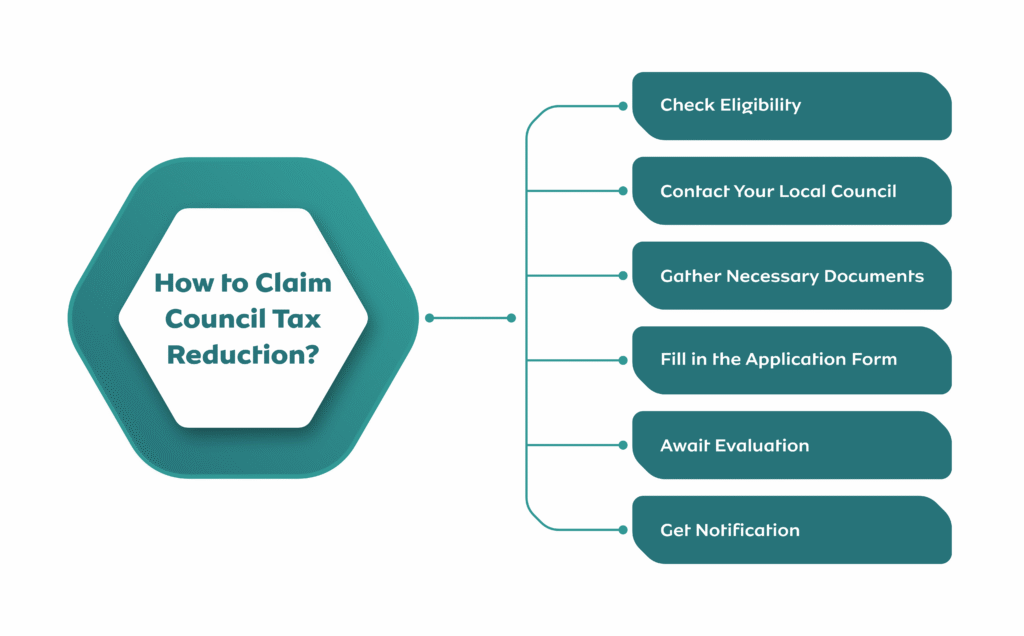
You must apply for a council tax disability reduction through your local council. There is no single national application.
Step 1: Contact Your Local Council
- Visit your council’s website
- Search for “council tax reduction” or “council tax exemption disability”
- Complete the online form or request a paper application
Each council manages its own process (for example, Tower Hamlets council tax disability exemption has its own application route).
Step 2: Provide Supporting Evidence
You will usually need to submit:
- Medical evidence (especially for severe mental impairment)
- Proof of disability-related benefits (such as PIP)
- Details of any home adaptations
In SMI cases, your GP or doctor must complete a certification form.
Step 3: Wait for Assessment
Your council will:
- Review your application
- Confirm whether you qualify
- Apply the council tax reduction to your bill
How Long Does It Take?
- Most decisions take a few weeks
- Delays can happen if:
- Documents are missing
- Medical confirmation is required
What This Means in Practice
Applying for council tax reduction pip or disability-related discounts is straightforward, but:
- You must provide clear evidence
- You must follow your local council’s process
If approved, your reduction will usually be backdated to the date you became eligible.
Simple Rule to Follow
Apply through your local council and provide full evidence; this avoids delays and increases your chances of approval.
Can Students or Other Groups Get Council Tax Exemptions?
Yes, but these exemptions follow different rules from disability-based reductions.
Students
If you are a full-time student, you may qualify for a council tax exemption or discount, depending on your household.
- If everyone in the property is a full-time student → No council tax to pay
- If you live with non-students → you may still get a discount
To apply:
- Contact your local council
- Provide proof of student status (usually from your university)
If you are unsure how to apply for council tax exemption student, your council will guide you through the process.
Other Groups That May Qualify
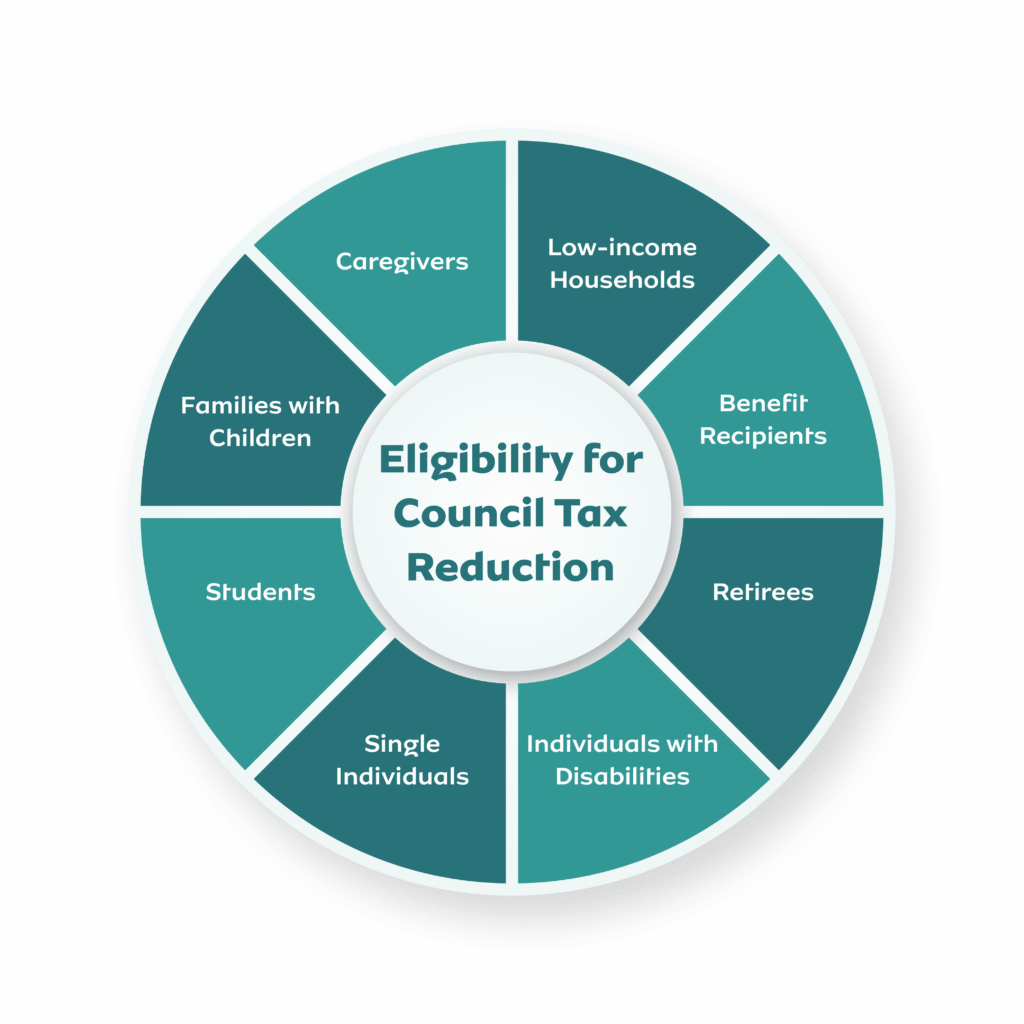
You may also get a reduction or exemption if you are:
- A carer living with someone you support
- A person living alone (single person discount)
- In certain temporary or supported housing situations
Important: These Are Separate from Disability Reductions
- Student exemptions and other discounts are not the same as disability council tax reduction
- You may qualify for multiple discounts, depending on your situation
What This Means in Practice
Council tax rules include different types of support, and they can sometimes overlap.
Always check:
- Whether you qualify under disability rules
- Whether you also qualify under student or household discounts
This ensures you receive the maximum reduction available.
MORE: Equality Act Protected Characteristics: 2026 Importance for Care Work
Use a Council Tax Reduction Calculator
A Council Tax Reduction calculator can help you estimate how much you could save before you apply.
How It Works
Most local councils provide an online calculator where you enter:
- Your income
- Your household details
- Any benefits you receive (such as PIP)
- Information about your property
The tool then gives an estimate of your potential council tax reduction.
Why You Should Use It
Using a calculator helps you:
- Understand whether you are likely to qualify
- Estimate how much your bill could be reduced
- Decide whether to apply immediately
Important Limitation
A calculator only provides an estimate.
Your local council will make the final decision based on:
- Evidence you submit
- Medical certification (if required)
- Local council rules
What This Means in Practice
A Council Tax Reduction calculator gives you a quick starting point, but it does not replace a formal application.
If the estimate shows you may qualify, apply, even if you are unsure.
Simple Rule to Follow
Use the calculator to guide you, but always submit a full application to confirm your entitlement.
Real-Life Scenarios: Do You Qualify?
These examples show how council tax reduction for disabilities works in real situations.
Scenario 1: Wheelchair User With Home Adaptations
You use a wheelchair, and your home includes:
- Widened doorways
- Extra space for movement
You qualify for a council tax disability reduction (band reduction)
Scenario 2: You Receive PIP but No Home Adaptations
You receive PIP, but your home has no disability-related changes.
You may not qualify, because:
- PIP alone does not guarantee eligibility
- Your home does not meet adaptation criteria
Scenario 3: Severe Mental Impairment (SMI)
A household member has dementia and receives a qualifying benefit.
You may qualify for:
- SMI council tax exemption
- Potentially no council tax to pay
Scenario 4: Living Alone With a Disability
You live alone and have a qualifying disability.
You may receive:
- A single-person discount, and
- A disability-related reduction
Scenario 5: Student With a Disability
You are a full-time student and also have a disability.
You may qualify for:
- A student exemption, and
- Additional disability discounts
What This Means in Practice
Eligibility depends on:
- Your living situation
- Your home setup
- Whether your condition meets council criteria
Small differences can change your outcome significantly.
Conclusion
Understanding what disabilities qualify for council tax reduction is less about the condition itself and more about how it affects your daily life and home environment. Many people miss out on support because they assume they do not qualify, especially if they rely only on benefits like PIP or do not realise how rules like severe mental impairment (SMI) apply.
In reality, the system rewards clear evidence, early action, and the right application route. Whether it is a band reduction, a full exemption, or a combination of discounts, the difference can significantly reduce financial pressure for individuals and families already managing complex care needs.
The key is simple: understand the rules, apply correctly, and do not leave support unclaimed.
Need Expert Support Navigating Council Tax Reduction and Disability Benefits?
Care Sync Experts supports care providers, families, and healthcare organisations across the UK with clear, practical guidance on council tax reduction, disability-related benefits, and financial support systems that impact individuals living with long-term conditions.
From helping families understand what qualifies for council tax reduction, severe mental impairment (SMI) rules, and PIP-related eligibility, to guiding care organisations through benefit-linked policies, compliance expectations, and funding pathways, our specialists translate complex council and government processes into straightforward, actionable steps.
Whether you need support applying for council tax disability reduction, understanding local council requirements, or aligning care provision with financial support systems, our team delivers structured guidance aligned with current UK health and social care standards.
Help individuals access the support they are entitled to while strengthening compliance and awareness across your organisation.
Contact Care Sync Experts today to receive expert guidance on council tax reduction, disability benefits, and support pathways with clarity and confidence.
FAQ
Does Carer’s Allowance affect council tax reduction?
Yes, but not always negatively.
Receiving Carer’s Allowance can actually support your eligibility for a council tax reduction, especially if you care for someone with a disability or severe condition.
Some councils offer additional discounts for carers
You may be disregarded for council tax purposes, which can reduce the total bill
Each council applies its own rules, so the impact depends on your local authority and household setup.
What am I entitled to if I’m disabled?
If you have a disability in the UK, you may be entitled to several types of support, including:
– Council tax reduction or disability discounts
– Personal Independence Payment (PIP)
– Housing benefit or Universal Credit support
– Blue Badge (parking support)
– Carer-related benefits (if someone supports you)
Your entitlement depends on how your condition affects your daily life, not just the diagnosis.
Who does not have to pay Council Tax in the UK?
You may not have to pay Council Tax if you:
– Live alone and qualify for a full exemption (e.g. severe mental impairment cases)
– Live in a household where everyone is a full-time student
– Live in certain types of supported or temporary accommodation
– Qualify under specific disability or care-related exemptions
In some cases, households can legally pay zero council tax, depending on their situation.
What discounts can I get with PIP?
PIP does not directly give you a discount, but it can help you access:
– Council tax reduction (if other criteria are met)
– Blue Badge scheme (for mobility support)
– Disabled facilities grants (for home adaptations)
– Travel discounts or concessions
Think of PIP as a gateway benefit; it strengthens your eligibility for other types of support, including disability council tax reduction.