The best mobile phone for old age UK users in 2026 depends on how simple you want the device to be. For straightforward calling and texting, the Doro 6820 stands out as the best big button mobile phone for elderly users thanks to its loud sound, clear screen, and charging cradle.
If mobility is limited, the Doro 5860 offers a sturdy bar-style design with large, tactile keys. For added safety, the Doro 780X includes an SOS button and GPS support.
If your parent or relative needs apps like WhatsApp, NHS services, or online banking, a simple smartphone such as the Motorola Moto G55 provides a more modern but still easy-to-use experience.
Each option supports 4G connectivity, which is essential in the UK as older networks continue to shut down. The right phone for elderly people should prioritise safety, clarity, and ease of use over flashy features.
Best Mobile Phones for the Elderly at a Glance
Below is a snapshot of the top mobile phone for old age UK users, chosen for ease of use, safety, and value. Caregivers and loved ones can use this table to quickly compare key features.
| Model | Type | Best For | 4G | WhatsApp/Apps | SOS Button | Charging Cradle | Approx Price |
| Doro 6820 | Big button flip | Best overall phone for elderly | ✔️ | ✖️ | ✔️ | ✔️ | ~£70 |
| Doro 5860 | Big button bar | Best for limited hand mobility | ✔️ | ✖️ | ✔️ | ✔️ | ~£65 |
| Doro 780X | Safety-oriented phone | Best for emergency / caregiver support | ✔️ | ✖️ | ✔️ (GPS) | Optional | ~£100 |
| Nokia 2660 Flip | Budget flip | Cheapest flip phone for elderly | ✔️ | Limited | ✔️ | ✖️ | ~£50 |
| Motorola Moto G55 | Simple smartphone | Best for WhatsApp & apps | ✔️ | ✔️ | ✖️ | ✖️ | ~£130 |
Note: Prices shown are approximate UK retail values in 2026 and can vary by retailer or promotional offer.
What Caregivers Should Consider Before Choosing a Mobile Phone for Elderly People
Choosing the right mobile phone for elderly users, beyond features on paper, is about how the phone performs in real life, especially when used by someone with limited tech experience, impaired vision, or health concerns. As a caregiver, you want a device that works intuitively, doesn’t frustrate the user, and helps you stay connected and safe.
Below are the main factors that matter most:
1. Safety Comes First: SOS, GPS & Emergency Support
Caregivers consistently rank quick access to help as the most important feature. Phones that include:
- SOS or Assistance buttons (one-press emergency contact)
- GPS tracking (to locate the user when needed)
- Easy contact lists (speed dial for loved ones)
…can make real differences in urgent situations.
- Doro 780X excels in this area
- Most Doro phones include an assistance button
Smartphones require setup for emergency contacts, but offer more apps
If the person you care for has mobility difficulties or lives independently, prioritise safety features over extras.
2. Large Buttons & Clear Display: Essential for Ease of Use
Older eyes and hands benefit massively from:
- Big button mobile phone layouts
- High-contrast screens
- Tactile keys with audible feedback
Phones designed for seniors reduce mistakes when dialing numbers or texting, and they cut down frustration.
- Feature phones (like Doro 6820 and Doro 5860) typically offer the best ergonomics.
Standard smartphones can feel overwhelming unless interfaces are simplified.
3. Hearing & Vision Support
Many older users also have:
- Hearing aids
- Partial sight loss
- Difficulty reading small text
Look for:
- Hearing Aid Compatibility (HAC)
- Adjustable text size
- Loud, clear audio
- Simple menu layouts
These help make phone use easier, not just possible.
4. Simplicity vs Smart Capability
Not every older user needs a smartphone, but many benefit from apps such as:
- WhatsApp (for easy messaging and video calls)
- NHS app (for appointments and prescriptions)
- Email & banking apps
Big button mobile phones keep things simple but don’t support apps.
Simple smartphones like the Motorola Moto G55 support apps while staying easy to use.
Ask yourself:
- Does the person need internet and messaging apps?
- Or is calling and texting enough?
Your answer should guide the choice.
5. Charging Ease & Reliability
Charging is a surprisingly common frustration for seniors. Good features include:
- Charging cradles (docks where you just place the phone)
- Large, easy cables
- Clear charging indicators
Phones that are harder to charge are less likely to be used consistently, especially by users with limited dexterity.
- Many doro phones include a charging cradle.
Standard smartphones do not.
6. Caregiver Setup & Support
A caregiver’s job doesn’t end with a purchase; it includes setup.
Make sure the phone lets you:
- Add emergency contacts
- Label contacts clearly
- Set up speed dial
- Enable accessibility features
- Install essential apps (if a smartphone)
Sometimes the setup matters more than the device itself.
Takeaway
The best mobile phone for old age UK users combines:
- Simplicity
- Safety
- caregiver-friendly features
- clear audio and screen
- reliable charging
In the next section, we’ll look at the best big button mobile phones designed specifically for older users, starting with the most reliable options you can buy today.
RELATED: Carers Allowance Scotland: What’s Changed in 2026?
Best 5 Big Button Mobile Phones for Elderly Users (Easy, Clear & Reliable)
If your priority is simplicity, voice clarity, tactile buttons, and quick access to contacts, a big button mobile phone for elderly people will often be the best choice. These devices keep the basics front and centre: calling, texting, loud audio, and easy charging. Below are the caregiver-approved options that stand out for older users in the UK.
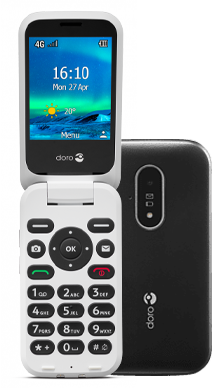
- Doro 6820: Best Overall Big Button Mobile Phone
Why we recommend it
The Doro 6820 combines simplicity with smart safety. It uses large numeric keys and a clear, easy-read screen. The assistance (SOS) button lets the user alert multiple contacts at the press of a single key, ideal for caregivers who need peace of mind.
Top features:
- Dedicated SOS/assistance button
- Charging cradle for easy daily power-ups
- Loud, clear speaker and hearing aid compatibility
- Simple messaging and calling menus
Best for: Those who want a big button mobile phone the elderly can master quickly.
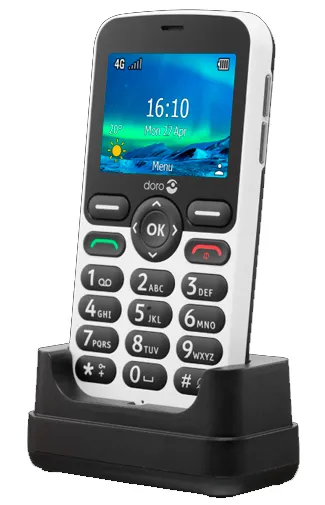
- Doro 5860: Best for Limited Hand Mobility
Why it’s great
If an older person has trouble opening flip phones or using smaller designs, the Doro 5860 delivers a straightforward bar-style phone with large push buttons and a rugged build.
Stand-out features:
- Horizontal layout (no flipping needed)
- Large buttons with strong tactile feedback
- Assistance button for emergencies
- Charging cradle included
Best for: Users with limited hand movement or vision challenges.
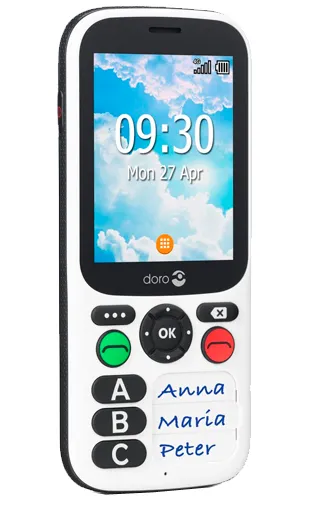
- Doro 780X: Best Safety-Focused Big Button Phone
What sets it apart
The Doro 780X takes safety further with built-in GPS and enhanced SOS features. That’s especially useful if the user spends time alone or may wander.
Key benefits:
- Advanced SOS with GPS location
- Loud, easy-to-use buttons
- 4G connectivity (important in 2026)
- Optional charging cradle
Best for: Seniors who live independently or where caregiver peace of mind is a priority.
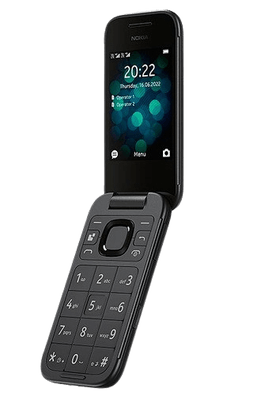
- Budget Big Button Option: Nokia 2660 Flip
Why it’s worth it
If you want big button ease of use on a tight budget, the Nokia 2660 Flip delivers basic calling, texting, and a simple external screen.
Highlights:
- 4G connectivity
- Assistance button (limited setup)
- Classic flip design
- Cheapest big button mobile phone option
Best for: Older users who want simplicity and low cost.
- Notes on Older Cell Phones vs. Big Button Phones
Traditional “older cell phone” designs (standard non-smartphone units) focus on the basics, which many caregivers prefer. Unlike smartphones, they don’t force menus, icons or app complexity. For users who only need phone calls and texts, a big button mobile phone for elderly often fits best.
Summary of Big Button Phones
| Phone | Best For | 4G | SOS | Cradle |
| Doro 6820 | Best overall | ✔️ | ✔️ | ✔️ |
| Doro 5860 | Mobility ease | ✔️ | ✔️ | ✔️ |
| Doro 780X | Safety & GPS | ✔️ | ✔️ (GPS) | Optional |
| Nokia 2660 Flip | Budget simplicity | ✔️ | ✔️ | ✖️ |
- All of the above are designed to deliver clarity over complexity
- They support big button use, which helps users with limited dexterity
- They stay connected with 4G support, essential in the UK as older networks retire
READ MORE: Home Reversion Plan 2026: How It Works, Costs, Risks, Examples
Best 2 Mobile Phone for Elderly with WhatsApp & Apps
Not every older user wants a basic feature phone. Many now use WhatsApp, book NHS appointments online, and check bank accounts digitally. In those cases, a simple smartphone works better than a traditional big button mobile phone.
If the person you’re supporting needs messaging apps or internet access, choose a mobile phone for elderly with WhatsApp rather than a basic feature phone.
- Motorola Moto G55 – Best Simple Smartphone for Older Users
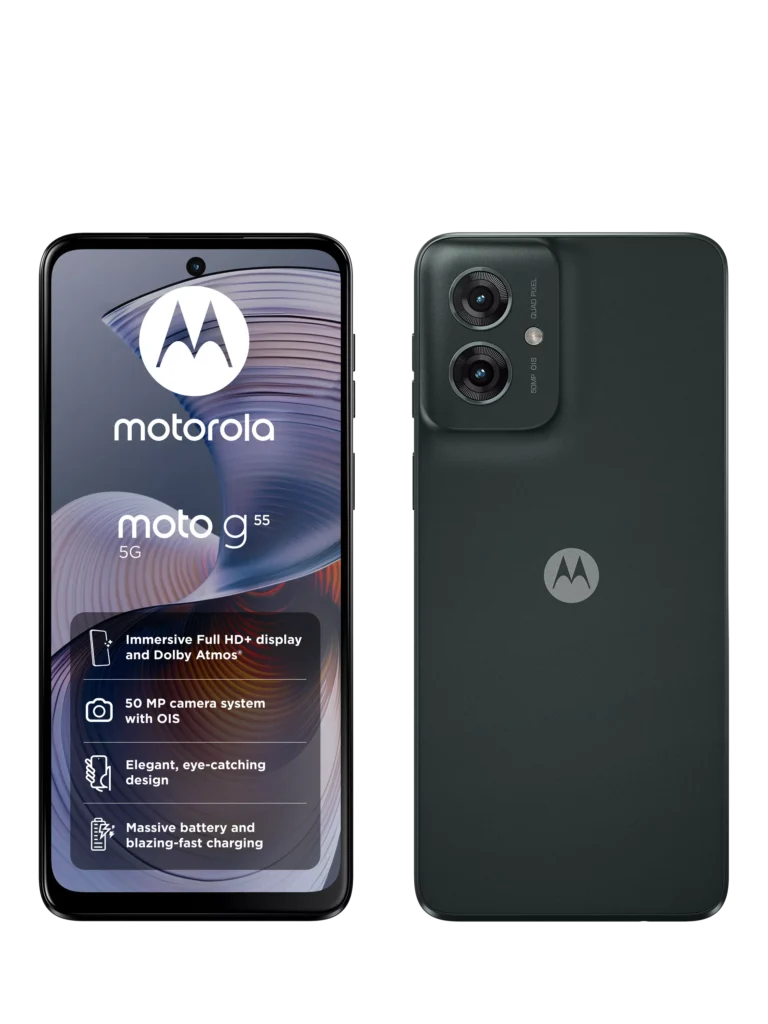
The Motorola Moto G55 strikes the right balance between affordability and simplicity. It runs Android, supports WhatsApp and NHS apps, and delivers strong battery life, without overwhelming the user.
Why caregivers like it:
- Large 6.49in bright display
- Strong battery (often lasts all day)
- Clean, simple Android interface
- 4G/5G ready for UK networks
- Affordable price (~£130)
With accessibility settings enabled (larger text, bold fonts, simplified home screen), it becomes one of the easy to use mobile phones for the elderly that still supports modern apps.
- Chatsie Phone – Best Senior-Focused Smartphone
The Chatsie Phone simplifies the smartphone experience even further. It replaces complex icons with clear text buttons and includes strong accessibility tools.
Key benefits:
- Large, adjustable text
- Simple text-based menus
- Voice dictation for texting
- UK-based support line
- Pre-installed protective case
It costs more (~£299), but it reduces confusion for users who struggle with traditional smartphone layouts.
When Should You Choose a Smartphone Instead of a Big Button Mobile Phone?
Choose a smartphone if the person:
- Uses WhatsApp to stay in touch
- Needs NHS or banking apps
- Wants video calls with family
- Reads news online
- Is comfortable with touchscreens
Stick with a big button mobile phone for elderly users if they only call and text and prefer physical keys.
Accessibility Tip for Caregivers
You can make most Android phones more elderly-friendly by:
- Increasing text size
- Enabling bold fonts
- Removing unnecessary apps from the home screen
- Setting up emergency contacts
- Adding WhatsApp shortcuts for family members
A smartphone can become a highly practical phone for elderly people, but only after proper setup.
Cheapest Mobile Phone for Old Age UK (And Are Free Options Real?)
Many families search for the cheapest mobile phone for old age UK users because they only need basic calling and texting. The good news: you don’t need to spend much to get something reliable.
Cheapest Mobile Phone for Old Age UK (Under £50–£70)
If you want a simple phone for aged users, focus on:
- Big physical buttons
- Loud speaker
- Clear screen
- 4G compatibility
Best low-cost options:
- Nokia 2660 Flip (~£50–£60)
- TTfone Mercury 2 (budget big button model)
- Older entry-level Doro phones (often discounted)
These phones handle calls and texts without distractions. For many older users, that’s all they need.
If your priority is simplicity and affordability, a large button mobile phone under £70 will usually cover the basics.
Is There a Free Mobile Phone for Old Age UK?
Many people ask about a free mobile phone for old age UK schemes. In reality, the UK government does not provide free phones simply based on age alone.
However, some situations may offer low-cost or subsidised options:
- Certain charities support vulnerable or isolated older adults
- Some mobile providers offer discounted plans for low-income households
- Family contracts or SIM-only deals can reduce total cost
Be cautious of online ads promising “completely free phones” with hidden contracts.
If cost is the main concern, you will usually save more money by:
- Buying a low-cost handset outright
- Choosing a cheap SIM-only plan (£5–£10 per month)
- Avoiding long contracts for basic use
Cost vs. Value
Spending slightly more on a reliable big button mobile phone for elderly 4G use often saves frustration later. Very cheap models without 4G support may stop working properly as UK networks retire older systems.
For most families, the sweet spot sits between £50 and £130, depending on whether you choose a feature phone or smartphone.
SEE ALSO: When Does Child Benefit Stop in the UK? (2026 Guide)
Why 4G Matters for a Mobile Phone for Old Age UK in 2026
If you’re buying a mobile phone for old age UK users in 2026, 4G support is essential.
UK mobile networks have shut down (or are actively shutting down) older 3G services. That means some very old feature phones will stop working properly for calls or texts. If you buy outdated stock, you risk giving an older person a phone that struggles with coverage or emergency calls.
Always Choose a Big Button Mobile Phone for Elderly 4G Use
When comparing devices, check that the phone:
- Supports 4G calling (VoLTE)
- Works on UK networks (EE, O2, Vodafone, Three)
- Is unlocked or compatible with your chosen provider
Most modern Doro mobile phones now support 4G. That includes:
- Doro 6820
- Doro 5860
- Doro 780X
Budget models like the Nokia 2660 Flip also support 4G, which makes them safer long-term purchases.
Importance for Caregivers
A phone that doesn’t connect properly creates real risk.
If an older person presses the SOS button and the phone fails to place a call due to poor network compatibility, that becomes more than an inconvenience.
Choosing a 4G-ready phone for elderly people protects against:
- Dropped calls
- Poor signal
- Inability to dial emergency services
- Limited future network support
Avoid “Old Stock” Bargains
You might see very cheap “older cell phone” models online. Before buying, confirm:
- It supports 4G
- It is not locked to a discontinued network
- It is not dependent on 3G-only calling
In short, a mobile elderly phone must be future-ready, not just affordable.
MORE: Is MS Hereditary or Inherited? What Causes Multiple Sclerosis (2026)
How to Choose the Right Phone for the Aged (Simple Decision Guide)
Choosing the right phone for aged users becomes much easier when you focus on real needs instead of brand names. Use the guide below to decide quickly and confidently.
Step 1: Do They Only Call and Text?
If the person only wants to:
- Make calls
- Send basic texts
- Avoid apps and internet
→ Choose a big button mobile phone for elderly users.
Best fit:
- Doro 6820
- Doro 5860
- Nokia 2660 Flip
These phones for elderly mobile use focus on clarity and simplicity.
Step 2: Do They Use WhatsApp or NHS Apps?
If they need:
- WhatsApp messaging
- Video calls
- NHS or banking apps
- Email access
→ Choose a mobile phone for elderly with WhatsApp (a simple smartphone).
Best fit:
- Motorola Moto G55
- Chatsie Phone
A smartphone works better for digital independence.
Step 3: Do They Have Mobility or Dexterity Issues?
If opening flip phones or pressing small buttons causes difficulty:
→ Choose a bar-style large button mobile phone like the Doro 5860.
The fewer moving parts, the better.
Step 4: Is Safety a Priority?
If the person:
- Lives alone
- Has fall risk
- Experiences memory concerns
- Needs emergency support
→ Choose a model with a strong SOS system and 4G connectivity.
Best fit:
- Doro 780X
- Doro 6820
Safety features often matter more than screen size.
Step 5: Is Budget the Main Concern?
If cost drives the decision:
- Under £70 → choose a budget big button phone
- £100–£150 → choose a simple smartphone
Most families do not need to spend more than £150 for a reliable mobile phone for elderly people.
Quick Summary
Choose:
- Big button feature phone → for maximum simplicity
- Simple smartphone → for WhatsApp and online services
- 4G model only → for future-proof reliability
- SOS-enabled phone → for caregiver peace of mind
The best phone for the elderly balances safety, clarity, and confidence.
Final Verdict…
Here’s a practical summary so you can choose the best mobile phone for old age UK users with confidence, whether simplicity, safety, affordability, or connectivity matters most.
Best Overall (Simple & Reliable): Doro 6820
- Perfect for: PHONE CALLS + TEXTS without confusion
- Features: Big tactile keys, loud audio, SOS assistance button, charging cradle
It’s easy to master, gets loud and clear sound, and supports 4G, a must in 2026. Best pick if the user just needs a dependable mobile phone for elderly use.
Best for Limited Mobility: Doro 5860
- Perfect for: Users who struggle with flipping phones
- Features: Bar-style design, large buttons, assistance button, charging cradle
- Why you’ll like it: Simplicity without flipping, great for reduced dexterity.
Best big button mobile phone for elderly users with limited hand use.
Best Safety-Focused: Doro 780X
- Perfect for: Independent seniors with caregiver concerns
- Features: SOS button with GPS, loud audio, 4G
It adds built-in GPS for better safety and location support. Best choice for caregivers who need peace of mind.
Cheapest Big Button Option: Nokia 2660 Flip
- Perfect for: Tight budgets
- Features: 4G, basic call/text, simple flip design
- Why it’s useful: Lowest cost while still covering essential features.
The most affordable big button mobile phone for elderly users.
Best Smartphone with WhatsApp: Motorola Moto G55
- Perfect for: Seniors who use WhatsApp, banking, NHS apps
- Features: Large screen, simple Android, long battery life
- Why it’s great: Delivers both simplicity and modern app support.
Best choice when apps and digital services matter.
Helping You Choose the Right Mobile Phone for an Older Loved One?
If you searched for “best mobile phone for old age UK,” “big button mobile phone for elderly 4G,” “cheapest mobile phone for old age UK,” or “mobile phone for elderly with WhatsApp,” you’re likely trying to make a safe, practical decision for someone you care about.
Choosing the right phone for elderly people isn’t just about price. It affects:
- Safety and emergency response
- Access to NHS apps and digital services
- Communication with family
- Confidence and independence
The wrong device can create frustration, missed calls, or even risk in urgent situations.
Care Sync Experts supports UK families and regulated care providers with:
- Clear, practical guidance on choosing safe and easy-to-use mobile phones for the elderly
- Advice on setting up SOS features, accessibility tools and caregiver contacts
- Digital inclusion support for older adults transitioning to smartphones
- Governance guidance for domiciliary and supported living services improving communication systems
- Compliance-focused advice for providers supporting digitally vulnerable adults
- Structured technology policies aligned with safeguarding best practice
Whether you’re supporting a parent at home or managing a regulated care service, we help you move from uncertainty to confident decision-making.
Speak to Care Sync Experts today and make sure the phone you choose truly supports safety, clarity and independence.
FAQ
How can you make a smartphone easier for an older person to use?
Modern smartphones (Android or iPhone) have built-in accessibility features designed to help older users with visual, hearing, or motor challenges. You can:
– Increase font size and icon size so text is easier to read.
– Enable voice control or voice assistant so the user can speak commands instead of tapping small buttons.
– Turn on spoken notifications or screen-reading tools to read alerts and messages aloud.
Most devices also let you remove unnecessary apps and organise key contacts on the home screen for quick access.
What features help people with hearing loss when choosing a phone?
For older adults with hearing loss, look for:
– Hearing Aid Compatibility (HAC) — phones rated with M3/T3 or higher reduce interference and work better with hearing aids.
– Adjustable volume and loud speaker options for clearer conversations.
– Extra-loud ringtones with vibration options so calls aren’t missed.
Phones designed for seniors often include these, and many modern smartphones also support Bluetooth pairing with hearing aids or neck loops.
Do smartphones designed for seniors exist beyond standard big button phones?
Yes, there are simplified smartphones specifically made for older users that go beyond basic features:
– Some models combine big touch-friendly menus, high-contrast displays, and SOS/emergency functions tailored for users with visual or motor impairments.
– Certain devices pair voice-first interfaces with simple menu systems so users can operate by speaking rather than navigating complex icons.
These options provide a middle ground between basic feature phones and traditional smartphones for users who want both simplicity and modern capability.
Are all big button phones the same, or are there different styles?
There are several styles of big button phones for older users:
– Feature phones with large physical keys — simple calling and texting.
– Flip-style big button phones — buttons are large and easy to see once opened.
– Phones with photo or speed dial buttons for one-touch calling to key contacts.
– Models with amplified sound and SOS buttons to help in emergencies.
The specific design that suits someone best often depends on their mobility, vision, hearing and how they plan to use the phone.