Reg 44 children’s homes visits do more than satisfy a legal requirement. They give providers, registered managers and responsible individuals an independent view of how well the home protects children, promotes their wellbeing and manages day-to-day practice.
Under Regulation 44 of The Children’s Homes (England) Regulations 2015, the registered person must ensure that an independent person visits the children’s home at least once every month.
That visitor reviews the home, speaks with relevant people where consent allows, checks the environment and records, and produces a written report.
For caregiver businesses, a strong Reg 44 process can do more than prepare the home for Ofsted. It can highlight risks early, strengthen staff practice, improve children’s experiences and show placing authorities that the home takes quality assurance seriously.

What Is a Reg 44 Visit in Children’s Homes?
A Reg 44 visit is a monthly independent visit to a children’s home in England. The visit checks whether children are effectively safeguarded and whether the home promotes their wellbeing.
The independent person does not simply review paperwork. They look at how the home works in real life. They may speak with children, staff, parents and relatives where consent allows.
They may also inspect the premises and review relevant records, except a child’s case records unless the child and placing authority give consent.
After the visit, the independent person must write a report. This report should give a clear view of the home’s safeguarding practice, children’s wellbeing, strengths, concerns and recommended actions.
In simple terms, Reg 44 children’s homes visits give providers an honest monthly check on whether the home is safe, caring and well managed.
RELATED: What Are the Children’s Home Regulations? 2026 Update
Why Reg 44 Matters to a Caregiver Business
Reg 44 matters because it helps a children’s home spot problems before they become bigger risks. A strong monthly visit gives the provider, registered manager and responsible individual a fresh view of safeguarding, staff practice, leadership and children’s day-to-day experiences.
Good providers do not treat Reg 44 children’s homes visits as a box-ticking exercise. They use them as part of quality assurance. The visitor can identify patterns in incidents, challenge weak recording, test whether staff understand children’s needs and check whether previous actions have led to real improvement.
This protects the business as well as the children. When a home acts on Reg 44 findings, it builds stronger evidence for Ofsted, reassures placing authorities and shows that leaders take improvement seriously.
What Should a Reg 44 Visitor Check?
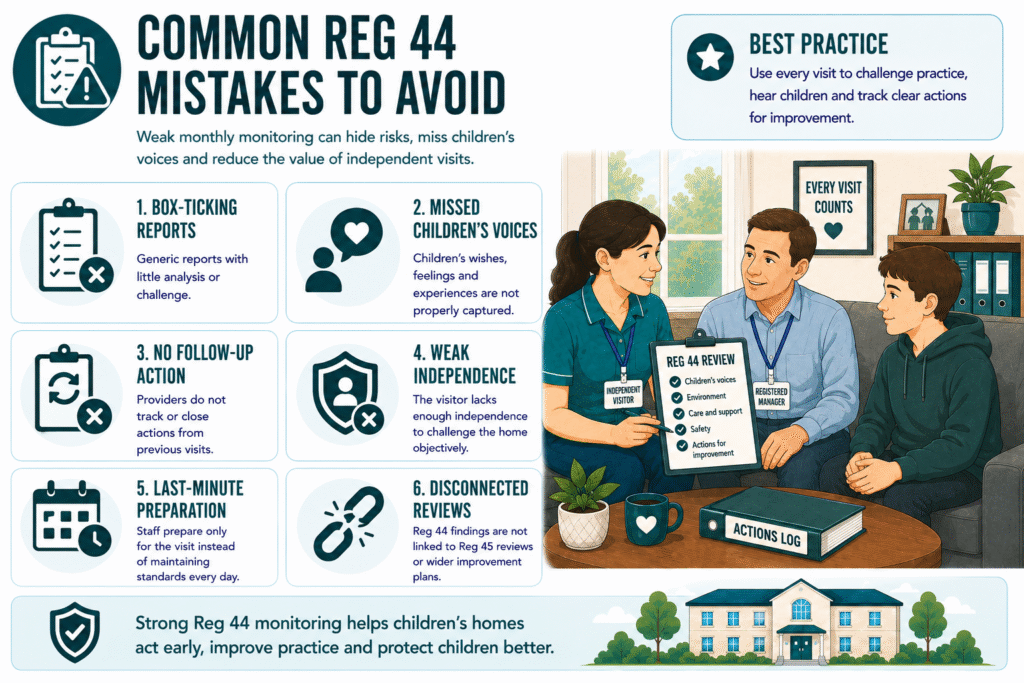
A strong Reg 44 visitor should look beyond files and ask one key question: what is daily life really like for children in this home?
A practical Reg 44 checklist should cover:
- Children’s safety, wellbeing, wishes and feelings
- Staff practice, relationships and interactions with children
- Care plans, risk assessments and behaviour support plans where access is appropriate
- Safeguarding logs, complaints, incidents and restraints
- Medication records, health needs and education arrangements
- The home’s cleanliness, comfort, repairs and general safety
- Staffing levels, supervision, training and leadership oversight
- Actions from previous Reg 44 reports
The best visits combine observation, conversation and evidence. The visitor should speak with people where consent allows, review records carefully and test whether the home’s paperwork matches the children’s lived experience.
READ MORE: Ofsted Regulations for Children’s Homes: What Providers Need to Know
What Should a Reg 44 Report Include?
A Reg 44 report should give providers more than a list of documents reviewed. It should explain what the independent person saw, who they spoke with, what evidence they checked and what this means for children’s safety and wellbeing.
A strong report should include:
- The date of the visit and whether it was announced or unannounced
- Areas inspected during the visit
- People consulted, where consent allowed
- Records reviewed
- Evidence of children’s wishes, feelings and experiences
- Safeguarding strengths and concerns
- Comments on staff practice, leadership and management
- Progress against previous actions
- Clear recommendations with realistic timescales
- Any conflict of interest identified
Anyone searching for a Reg 44 report example should look for clear analysis, not copied phrases. A useful report helps the registered person understand what works well, what needs attention and what action should happen next.
Reg 44, Reg 45 and Reg 40: What Is the Difference?
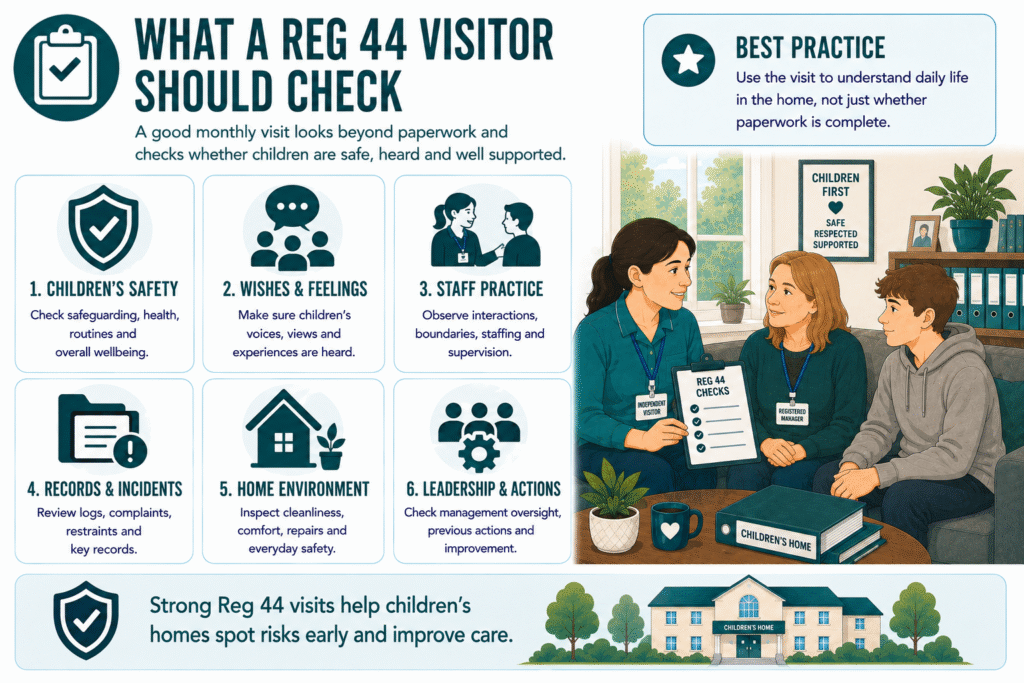
Children’s home providers should understand how Reg 44, Reg 45 and Reg 40 work together. Each regulation supports oversight, but each one serves a different purpose.
| Regulation | What it covers | Why it matters |
| Reg 44 children’s homes | Monthly independent visits and reports | Gives the provider an external view of safeguarding, wellbeing and the running of the home |
| Reg 45 children’s homes | The provider’s quality of care review | Helps the provider review standards, outcomes, feedback and improvement at least every six months |
| Reg 40 children’s homes | Serious event notifications | Requires the provider to notify Ofsted and relevant people about serious incidents |
Reg 44 gives monthly independent challenge. Reg 45 turns wider evidence into a formal quality review. Reg 40 ensures serious incidents do not stay hidden. Together, they help leaders monitor risk, improve care and show accountability.
SEE ALSO: How to Get Private Care Clients UK: Best 2026 Guide
Who Can Become a Reg 44 Visitor?
A Reg 44 visitor must bring independence, professional judgement and enough knowledge to challenge the home properly. Providers should not appoint someone simply because they are available. They need someone who understands children’s homes, safeguarding, the Quality Standards, leadership, recording and the realities of residential care.
This role often suits experienced children’s social care professionals, former registered managers, safeguarding specialists, quality assurance consultants and people with strong children’s services experience.
Before appointing a visitor, providers should check their experience, DBS status, references, insurance, training and any possible conflict of interest. People searching for Reg 44 visitor jobs or Reg 44 children’s homes jobs should also understand that the role requires confidence, curiosity and clear report writing, not just care-sector experience.
Reg 44 Visitor Salary, Fees and Training
Reg 44 visitor salary and fees can vary because visitors work in different ways. Some work as employed quality assurance officers, while others work as freelance independent visitors and charge per visit, per report or through a service provider.
The fee should reflect the visitor’s experience, independence, report quality and ability to challenge practice properly. A cheap visit that produces a weak report can cost the home more in the long run, especially if it misses safeguarding concerns, poor recording or repeated management issues.
Good Reg 44 training should cover the Children’s Homes Regulations, Quality Standards, safeguarding, safer recruitment, professional curiosity, evidence gathering, report writing and conflicts of interest.
Providers should choose visitors who can turn observations into clear actions, not just describe what they saw.
MORE: How to Get Private Care Clients UK: Best 2026 Guide
Common Mistakes Providers Make with Reg 44
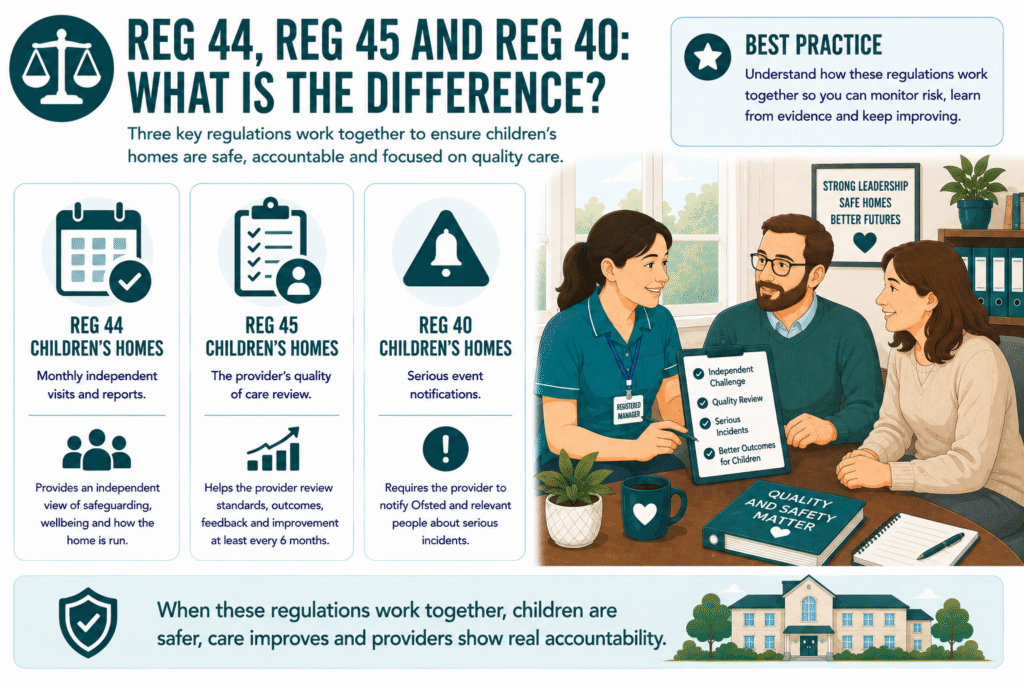
Many providers weaken their Reg 44 process by treating the visit as a monthly paperwork task. The visitor arrives, checks a few files, writes a generic report, and leaves. That approach misses the real purpose of independent monitoring.
Common mistakes include:
- Choosing a visitor who does not challenge practice
- Using reports that repeat the same wording every month
- Ignoring repeated recommendations
- Failing to capture children’s wishes and feelings
- Preparing the home only when staff expect a visit
- Not tracking actions from previous reports
- Keeping Reg 44 findings separate from Reg 45 children’s homes reviews
- Focusing on compliance while missing the child’s lived experience
A strong provider uses every Reg 44 visit to ask better questions, act on concerns and improve the quality of care before small issues become serious problems.
How to Get More Value from Every Reg 44 Visit
Providers get the best value from Reg 44 when they treat the visitor as an independent safeguard, not an inconvenience. The visitor should receive access to the right people, records and areas of the home, but the home should never stage-manage the visit.
Registered managers should encourage honest conversations, respond openly to challenge and track every recommendation until leaders close it properly. They should also review patterns across several reports, such as repeated recording gaps, staffing pressures, missing supervision or recurring incidents.
The strongest homes link Reg 44 findings to team meetings, supervision, development plans and Reg 45 children’s homes reviews. That turns the monthly visit into a practical improvement tool, not just another compliance document.
Need Support with Reg 44 Children’s Homes Compliance?
Reg 44 children’s homes visits work best when providers use them to strengthen safeguarding, improve practice and evidence better leadership. Care Sync Experts can support children’s home providers with independent visitor services, Reg 44 report reviews, compliance preparation, Reg 44 training and wider quality assurance support.
Whether you need help appointing an independent visitor, improving your Reg 44 checklist, preparing for Ofsted or linking Reg 44 findings into your Reg 45 review, our team can help you build a stronger, safer and more accountable children’s home.
FAQ
What is Regulation 23 for children’s homes?
Regulation 23 covers medicines in children’s homes. It requires the registered person to make proper arrangements for the handling, recording, safekeeping, administration and disposal of medicines. In practice, this means providers must have safe medication systems, clear records, trained staff and checks that reduce the risk of errors or misuse.
What is Regulation 32 of the Children’s Homes (England) Regulations 2015?
Regulation 32 covers the fitness of workers. It requires the registered person to recruit staff through procedures designed to keep children safe. For providers, this means safer recruitment, suitable checks, references, DBS checks, employment history review and proper assessment of whether a person is suitable to work in a children’s home.
What is the leadership and management standard?
The leadership and management standard requires the registered person to lead a culture that helps children make progress, protects them from harm and supports staff to deliver high-quality care. In simple terms, Ofsted expects leaders to know the home well, act on risks, support staff, listen to children and keep improving the service.
Who regulates children’s homes in England?
Ofsted regulates and inspects children’s homes in England. It registers children’s homes, inspects them under the social care common inspection framework and checks whether providers meet the relevant regulations and Quality Standards. CQC may become relevant only where a provider also carries out regulated health or adult social care activities.