
New Style Jobseeker’s Allowance (JSA) pays up to £72.90 per week if you’re under 25 and up to £92.05 per week if you’re 25 or over in the 2025/26 tax year. You can usually receive this JSA payment for up to 182 days (about 6 months) while you actively look for work.
JSA is not means tested, so your savings or your partner’s income do not affect your claim. Instead, eligibility depends on your National Insurance contributions, making it different from other unemployment and benefits support.
In short, if you’re asking how much is JSA or how much is job seekers allowance, the answer depends mainly on your age and contribution history, not your savings.

Key Facts About Jobseeker’s Allowance
- JSA payment (weekly):
Up to £72.90 (18–24) and £92.05 (25+)
- Payment frequency:
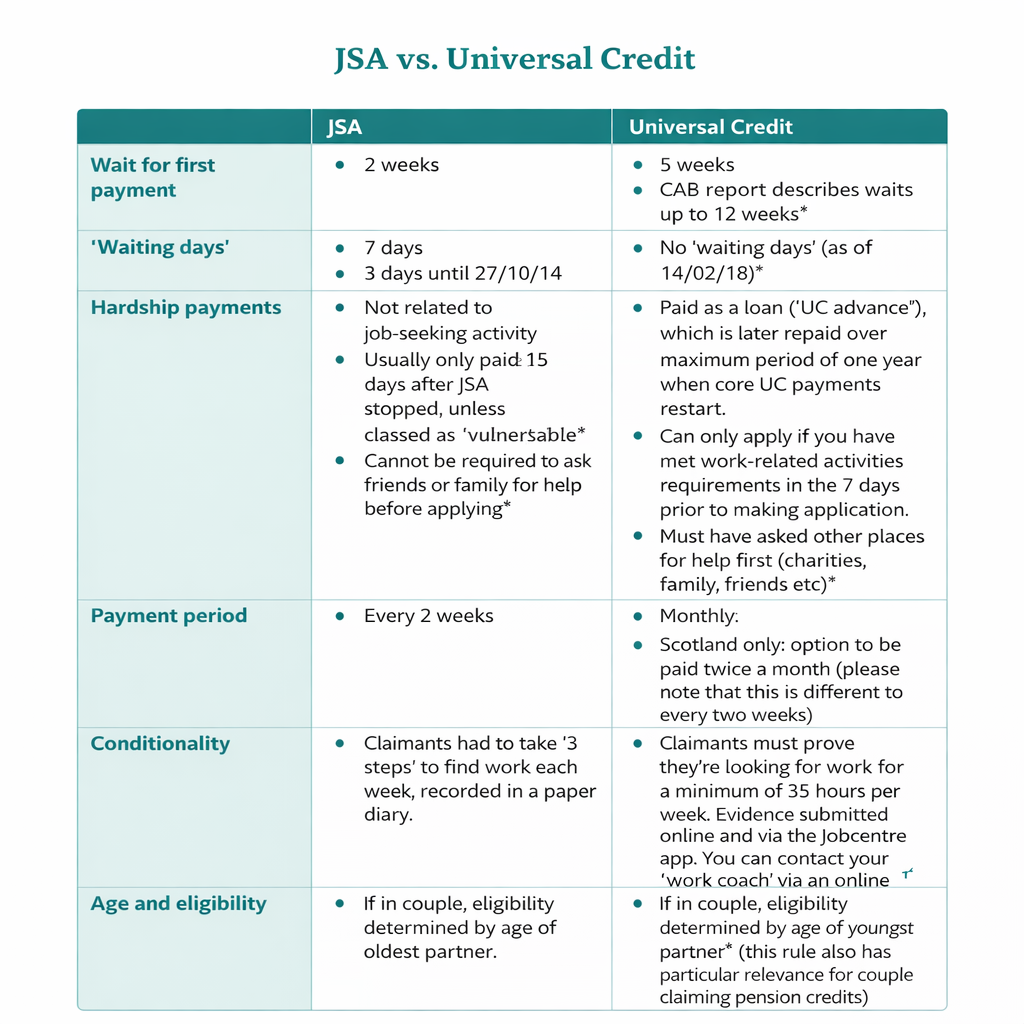
You usually receive JSA every 2 weeks into your bank account
- Duration:
You can claim for up to 182 days (around 6 months)
- Means testing:
New Style JSA is not means tested, so savings and partner income do not affect your claim
- Eligibility basis:
Your entitlement depends on your National Insurance contributions, not household finances
- Work requirement:
You must be actively looking for work and meet your Jobcentre agreement
- Other benefits:
You can sometimes claim JSA alongside Universal Credit, depending on your situation
If you’re wondering is job seekers allowance means tested, the answer for New Style JSA is no, but you must still meet strict JSA eligibility rules based on your work history.
What JSA Means for Care Workers and Care Providers
Jobseeker’s Allowance plays an important role in the care sector, where employment can be unpredictable. Many care workers move between roles, work on zero-hour contracts, or take short breaks between placements. During these periods, JSA provides short-term financial support while they look for new work.
For care workers, JSA helps bridge gaps between jobs without relying entirely on savings. Since New Style JSA is not means tested, workers can still receive support even if they have some savings or a working partner. This makes it a useful option for those navigating unemployment and benefits in a sector with fluctuating hours.
For care providers, JSA indirectly supports workforce stability. When staff leave or contracts end, access to JSA allows workers to remain financially secure while searching for their next role, often within the same sector. This reduces long-term workforce loss and helps agencies rehire experienced carers more easily.
In practical terms, JSA functions as a form of short-term unemployment insurance, giving both workers and employers breathing room during transitions. For providers facing staffing shortages, understanding how JSA works can also help when advising candidates or supporting staff between roles.
JSA Eligibility: Who Can Claim Job Seeker’s Allowance?
To claim Job Seekers Allowance, you must meet specific conditions based on your work history and availability for work. New Style JSA focuses on contributions, not your financial situation.
Basic JSA eligibility requirements:
You can claim if you:
- Are 18 or over and below State Pension age
- Live in Great Britain
- Have paid Class 1 National Insurance contributions in the last 2–3 years
- Work less than 16 hours per week
- Are available for work and actively looking for a job
Who cannot claim JSA?
You will not qualify if:
- You work 16 hours or more per week
- You cannot work due to illness or disability (you may need ESA instead)
- You have not built enough National Insurance contributions
Care sector example:
A care worker who recently left a domiciliary care role and has been paying National Insurance can usually claim JSA while searching for a new position, especially if they are working reduced hours or between contracts.
If you want to claim job seekers allowance, focus on your work history and job search activity. Your savings or household income will not stop you from qualifying under New Style JSA eligibility rules.
Can I Claim Job Seekers Allowance If I Have Savings?
Yes, you can claim Job Seekers Allowance if you have savings when applying for New Style JSA.
New Style JSA is not means tested, which means:
- Your savings do not affect your claim
- Your partner’s income or savings do not affect your claim
- You can still qualify even if you have money in the bank
This directly answers the common question: “Can I claim job seekers allowance if I have savings?” → Yes, you can.
Why savings don’t matter
New Style JSA works differently from older benefits. Instead of assessing your finances, it looks at your National Insurance contributions.
If you have worked and paid enough contributions in recent years, you may qualify regardless of how much you have saved.
Important exception to understand
- If you apply for Universal Credit instead, your savings will be assessed
- If you receive older income-based JSA, savings may also affect eligibility
Care sector example
A care worker who has saved money while working in a care home can still claim JSA after leaving their job. Even with savings, they can receive support while applying for new roles.
So if you’re asking:
- “Is job seekers allowance means tested?” → Not for New Style JSA
- “Can I claim job seekers allowance if I have savings?” → Yes, as long as you meet contribution-based requirements
How Much Is Job Seekers Allowance Per Week and Month?
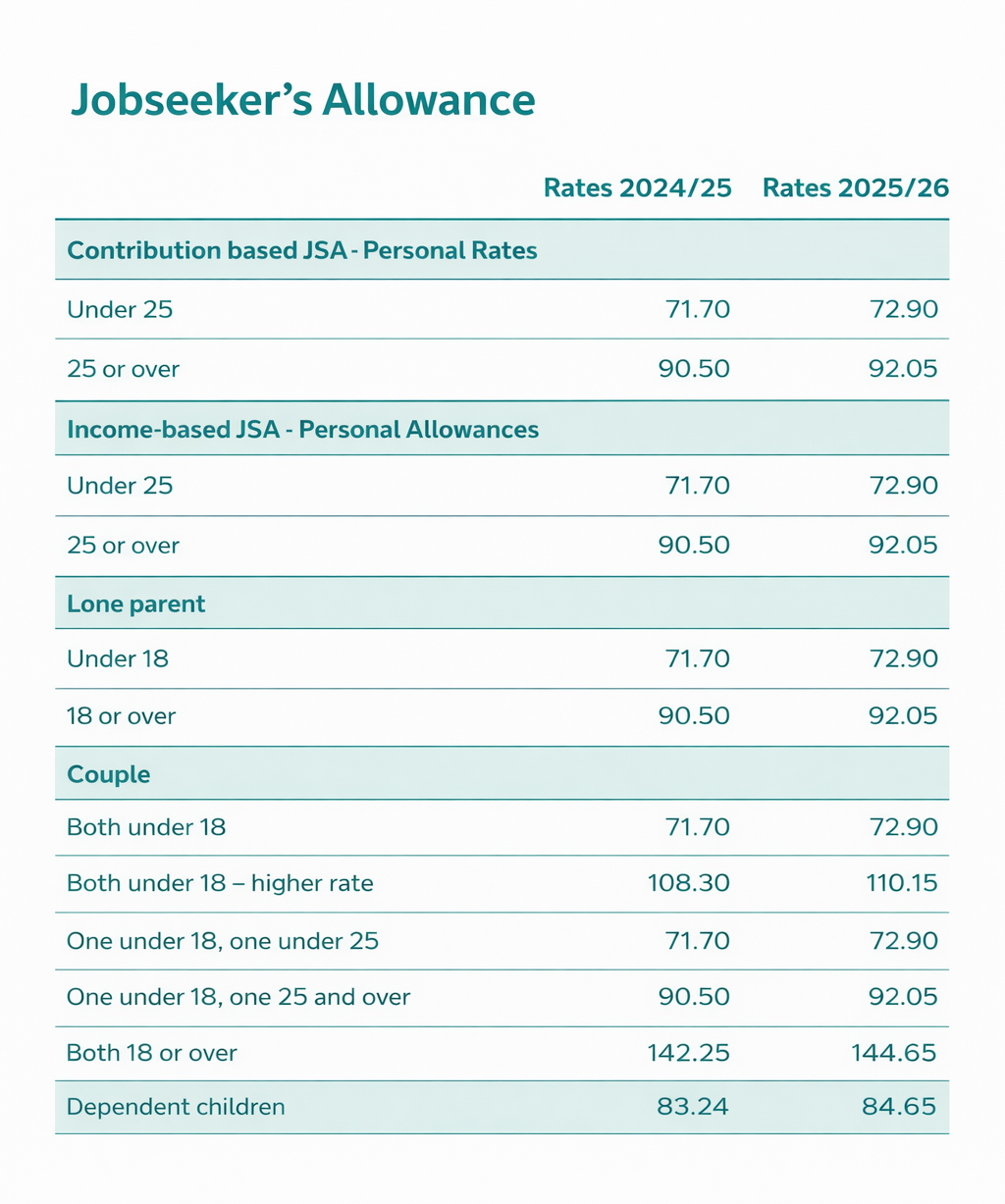
The amount you receive depends mainly on your age. New Style JSA sets a maximum weekly payment, but your actual amount may be lower in some cases.
Weekly JSA payment rates (2025/26):
- £72.90 per week if you are aged 18–24
- £92.05 per week if you are 25 or over
How much is Job Seekers Allowance a month?
Although JSA is paid weekly, you can estimate the monthly amount:
- Under 25: about £291 per month
- 25 or over: about £368 per month
This answers common searches like:
- how much is job seekers allowance a month
- jobseekers how much
What can affect your JSA payment?
You may receive less than the maximum if:
- You work part-time
- You receive a pension or other income
- You do not fully meet your job search requirements
Using a Job Seekers Allowance calculator
A job seekers allowance calculator can help you estimate your exact payment based on your situation. However, for New Style JSA, the calculation is usually straightforward since it depends mostly on:
- Your age
- Your National Insurance contributions
Care sector example
A care assistant aged 30 who recently left a role can receive up to £92.05 per week while searching for a new job. If they take on a few part-time shifts, their JSA payment may reduce slightly depending on earnings.
In simple terms, if you’re asking how much is job seekers allowance, most people receive between £72.90 and £92.05 per week, depending on age and circumstances.
How Long Can You Claim Job Seekers Allowance?
You can usually claim New Style Jobseeker’s Allowance for up to 182 days, which is about 6 months.
This directly answers the question: “How long can you claim job seekers allowance?” → Up to 6 months in most cases.
What happens after 6 months?
Once your JSA ends, you have a few options:
- Apply for Universal Credit if you still need financial support
- Continue working with your Jobcentre work coach to find employment
- Explore training or alternative benefits depending on your situation
Important to know
- JSA does not renew automatically after 182 days
- You must continue to meet job search requirements throughout your claim
- Missing commitments can lead to your payments being reduced or stopped
Care sector example
A care worker between roles may claim JSA while applying for new positions in domiciliary care or care homes. If they do not secure a job within 6 months, they may transition to Universal Credit while continuing their job search.
In simple terms, JSA provides short-term support, not long-term income. It helps you stay financially stable while actively looking for your next job.
How to Apply for JSA (Step-by-Step)
If you want to apply for JSA, the process is straightforward, but you must follow each step carefully to avoid delays.
Step 1: Start your JSA application
You can apply online through GOV.UK. This is the fastest way to begin your claim.
This answers common searches like:
- job seekers allowance apply
- jsa applications
- how do I get Job Seekers Allowance
Step 2: Prepare your details
Before you apply, gather:
- Your National Insurance number
- Your bank account details
- Your employment history (last 6 months)
- Details of any income or part-time work
Having this ready speeds up your application.
Step 3: Attend your Jobcentre interview
After submitting your application, the Jobcentre will invite you to an interview.
During this meeting, you will:
- Confirm your details
- Discuss your job search
- Agree to a Claimant Commitment
This agreement outlines how you will actively look for work.
Step 4: Start receiving payments
- You may wait up to 7 days before your claim starts
- Your first payment may take up to 2 weeks
- After that, you will receive JSA payment every 2 weeks
Important rules during your claim
To continue receiving JSA, you must:
- Actively apply for jobs
- Attend scheduled Jobcentre meetings
- Follow your Claimant Commitment
If you fail to meet these conditions, your payments may be reduced or stopped.
Care sector example
A care assistant who recently left a role can claim job seekers allowance online, attend a Jobcentre interview, and begin receiving payments while applying for new care jobs.
In simple terms, to claim job seekers allowance, apply online, attend your interview, and actively search for work to keep receiving payments.
JSA Contact Number and Support
If you need help with your claim, you can contact Jobcentre Plus, which handles all JSA enquiries.
Job Seekers Allowance contact telephone number
- Telephone: 0800 055 6688
- Opening hours: Monday to Friday, usually 8am to 5pm
- Calls are free from mobiles and landlines
This covers common searches like:
- job seekers allowance contact telephone number
- jsa contact no
- jsa enquiries number
- jsa allowance contact number
When should you call?
You should contact Jobcentre Plus if:
- You need help with your JSA application
- You want to check your claim status
- You need to report a change in circumstances
- You missed an appointment or payment
What to prepare before calling
To avoid delays, have the following ready:
- Your National Insurance number
- Your personal details (name, address)
- Details of your claim or application
Alternative support options
- Visit your local Jobcentre Plus office
- Request help if English is not your first language
- Ask for support with online applications if needed
Care sector tip
Care workers moving between jobs often need quick support to keep their claims active. Calling early and keeping records of conversations can help avoid payment issues during job transitions.
If you’re unsure about your claim, using the JSA contact number is the fastest way to get direct support and resolve issues quickly.
Job Seekers Allowance Rules You Must Follow
To keep receiving JSA, you must follow strict job seekers allowance rules set by the Department for Work and Pensions (DWP). These rules focus on your commitment to finding work.
Your main responsibilities
You must:
- Actively search for work every week
- Be available to start work immediately
- Attend all Jobcentre appointments
- Follow your agreed Claimant Commitment
Your Claimant Commitment outlines the steps you will take to find a job, such as applying for roles, attending interviews, or completing training.
What happens if you don’t follow the rules?
If you fail to meet these requirements:
- Your JSA payment may be reduced or stopped
- You may receive a sanction, which pauses your payments
- You must provide a valid reason (for example, illness or emergencies) to avoid penalties
Understanding the 35-hour job search rule
Traditionally, claimants are expected to spend around 35 hours per week looking for work. However, policies can change, and there have been discussions around flexibility in job search expectations depending on individual circumstances.
If you’ve heard that the DWP is ending the 35-hour work search rule, it’s important to check with your work coach, as requirements can vary based on your situation.
Care sector example
A care worker claiming JSA may agree to:
- Apply for a set number of care jobs weekly
- Attend interviews with care agencies
- Complete refresher training (e.g. safeguarding)
Failing to meet these commitments without a valid reason could result in reduced payments.
In simple terms, JSA is not automatic income. You must actively prove that you are looking for work and ready to return to employment.
How Care Providers Can Support Staff on JSA
Care providers play a key role in supporting staff who are between roles or experiencing reduced hours. Understanding how JSA works allows providers to guide workers through transitions and maintain a strong workforce.
1. Support staff during employment gaps
When a care worker leaves or finishes a contract, providers can:
- Inform them about how to claim Job Seekers Allowance
- Encourage early applications to avoid payment delays
- Direct them to Jobcentre support services
This helps workers stay financially stable while searching for new roles.
2. Maintain a talent pipeline
Care providers can use JSA periods as an opportunity to:
- Reconnect with experienced carers
- Offer flexible or part-time roles
- Build a pool of workers ready to return quickly
Workers receiving JSA often remain active job seekers, making them ideal candidates for rapid recruitment.
3. Provide guidance on compliance
Providers can help staff understand:
- JSA eligibility requirements
- Job search expectations
- How part-time work affects their JSA payment
Clear guidance reduces confusion and helps workers avoid sanctions.
4. Encourage training and upskilling
During periods of unemployment, providers can:
- Recommend short courses (e.g. care certifications)
- Support refresher training
- Prepare staff for higher-level roles
This improves both worker confidence and service quality.
5. Strengthen retention and reputation
When providers support staff even after contracts end, they:
- Build trust and loyalty
- Increase the likelihood of staff returning
- Enhance their reputation as a supportive employer
Care sector insight
Many care workers move between roles due to the nature of the industry. Providers who understand unemployment and benefits systems like JSA can better support staff transitions and reduce long-term workforce shortages.
In simple terms, JSA is not just a worker benefit, it is also a tool that care providers can use to retain talent, support staff, and strengthen recruitment pipelines.
Conclusion
Jobseeker’s Allowance offers short-term financial support while you actively look for work. If you meet the JSA eligibility requirements, you can receive up to £72.90 or £92.05 per week, depending on your age, for up to 6 months.
For care workers, JSA helps bridge employment gaps between roles. For care providers, it supports workforce stability by keeping skilled workers active in the job market.
If you’re considering your options:
- Check your eligibility early
- Start your JSA application as soon as your work situation changes
- Stay consistent with your job search requirements
- Explore Universal Credit if you need longer-term support
If you’re asking “how much is JSA”, the real value goes beyond the weekly payment. JSA gives you time, stability, and support while you secure your next role, especially in fast-moving sectors like care.
Need Support Navigating Compliance, Staffing, or Care Business Growth?
At Care Sync Experts, we help care providers stay compliant, strengthen their workforce, and grow with confidence.
Whether you need support with:
- CQC registration and inspection readiness
- Staff compliance, onboarding, and retention strategies
- Tender writing and securing local authority contracts
- Policies, documentation, and operational setup
We’ve got you covered.
Don’t let staffing gaps, compliance issues, or missed opportunities slow your growth.
Let our experts handle the complexity while you focus on delivering high-quality care.
Get Started Today
Book a consultation with Care Sync Experts and take the next step toward building a compliant, scalable, and resilient care business.
FAQ
What are the two types of JSA?
There are two main types of Jobseeker’s Allowance in the UK:
– New Style JSA – based on your National Insurance contributions and not means tested
– Income-based JSA – an older benefit that is now being replaced by Universal Credit and is no longer available for new claims
Most new applicants will apply for New Style JSA, sometimes alongside Universal Credit.
Can I claim JSA if I have redundancy pay?
Yes, you can still claim New Style JSA if you have redundancy pay.
Redundancy payments do not usually affect your eligibility because New Style JSA is based on your National Insurance contributions, not your savings or lump-sum payments.
However, if you apply for Universal Credit, your redundancy pay may be taken into account.
Can I claim JSA if I resign?
You can claim JSA if you resign, but your payments may be delayed or reduced.
The Jobcentre will assess your reason for leaving. If they decide you left your job without a good reason, you may receive a sanction, which means your payments could be paused for a period of time.
Valid reasons may include workplace issues, health concerns, or unsafe working conditions.
What proof do I need for New Style JSA?
To apply for New Style JSA, you typically need to provide:
– Your National Insurance number
– Proof of identity (such as passport or driving licence)
– Details of your recent employment history
– Your bank account details
– Information about any income or part-time work
The Jobcentre may also ask for additional documents during your application or interview.