
ASC-WDS is the free Adult Social Care Workforce Data Set run by Skills for Care for employers in England. It can help you manage workplace, staff, qualification and training records. For the 2026 to 2027 Adult Social Care Learning and Development Support Scheme, an up-to-date ASC-WDS account is also a condition of claiming eligible training costs.
The distinction matters. ASC-WDS is not a universal legal requirement for every independent care provider. It becomes a specific funding condition when an employer wants reimbursement through the current scheme. Treat the account as a live workforce record, not a form you complete once and forget.
Table of Contents
What is ASC-WDS?
The Adult Social Care Workforce Data Set, usually shortened to ASC-WDS, is an online service hosted and administered by Skills for Care. Employers enter information about their workplace and workforce. Skills for Care uses aggregated, anonymous data to build intelligence about the adult social care sector.
Your account can hold workplace information such as service type, capacity, vacancies, starters and leavers. Staff records can include employment details, contracted hours, pay, sickness, qualifications and Care Certificate completion. Once staff records are in place, you can also use the service to monitor training and qualification records and identify gaps.
| ASC-WDS use | What it can help you do | Important boundary |
|---|---|---|
| Workforce management | Maintain workplace and staff information in one structured service | Do not assume the account replaces your HR, payroll or compliance records |
| Training oversight | Record courses, qualifications and renewal dates | A recorded course does not by itself prove workplace competence |
| Sector intelligence | Contribute anonymised data used for workforce analysis | Check your privacy information and internal data responsibilities |
| Training funding | Meet one of the conditions for an eligible 2026 to 2027 claim | Funding remains subject to all scheme conditions and available funds |
Is ASC-WDS mandatory for care providers?
No general rule makes ASC-WDS mandatory for every independent care provider. The current funding rules are narrower and more precise. If an adult social care employer in England wants to claim through the 2026 to 2027 Learning and Development Support Scheme, the employer must have an up-to-date ASC-WDS account and meet the service’s minimum data requirements before submitting the claim.
For claims other than Oliver McGowan Mandatory Training on Learning Disability and Autism, an employer does not need to be registered with the Care Quality Commission (CQC), but must employ eligible non-regulated adult social care staff in England. Oliver’s Training has separate eligibility conditions. Always check the latest government employer guide before booking or paying for learning.
The 2026 to 2027 funding rules at a glance
The current grant determination applies to eligible courses and qualifications paid for between 1 April 2026 and 31 March 2027. It supports evidenced costs for eligible non-regulated care staff, including deputy managers, CQC-registered managers and agency staff. Regulated professionals are generally outside the scheme, except for the separate Oliver’s Training provision described in the rules.
| Check | Current 2026 to 2027 position | Provider action |
|---|---|---|
| Account | ASC-WDS must be up to date and meet minimum data requirements | Verify status before submitting a claim |
| Payment window | Eligible costs must be paid between 1 April 2026 and 31 March 2027 | Keep invoices and proof of payment linked to the staff member and course |
| Course claims | Submit after completion, normally within three months of completion | Set a claim deadline when the course finishes |
| Qualification claims | A combined 60% start claim and 40% completion claim can apply | Track both evidence points and both claim windows |
| Availability | Reimbursement is subject to remaining scheme funds and all conditions | Do not treat expected reimbursement as guaranteed income |
Build an ASC-WDS record that is ready for a funding claim
A strong account has three layers: an accurate workplace profile, complete staff records and a controlled maintenance routine. The funding rules require employers to meet the minimum data requirements and refresh the account annually. If a parent organisation claims for subsidiaries, the relevant workplace and staff records must be up to date for every organisation included in the claim.

1. Confirm the workplace record
- Match the legal employer and workplace details to the entity making the claim.
- Check the CQC location ID where the service is registered.
- Confirm service type, capacity and workforce totals.
- Map every subsidiary or workplace that will be included in a group claim.
2. Reconcile staff records
Compare ASC-WDS against your current employee list. Add starters, close or update leaver records, and check that roles, employment status and contracted details remain accurate. Do not upload information merely because a field exists. Use the data definitions and apply your organisation’s privacy and access controls.
3. Connect training to the correct worker
Record the relevant course or qualification against the right staff member, but keep the supporting evidence in your controlled training or finance system. Your evidence pack may need employment confirmation, National Insurance information for identity verification, proof that the learning is eligible, course start or completion evidence, invoices and proof of payment.
Use the five-gate claim method
Before finance treats a reimbursement as claimable, move it through five gates. This method keeps the workforce account, course decision and evidence trail aligned.
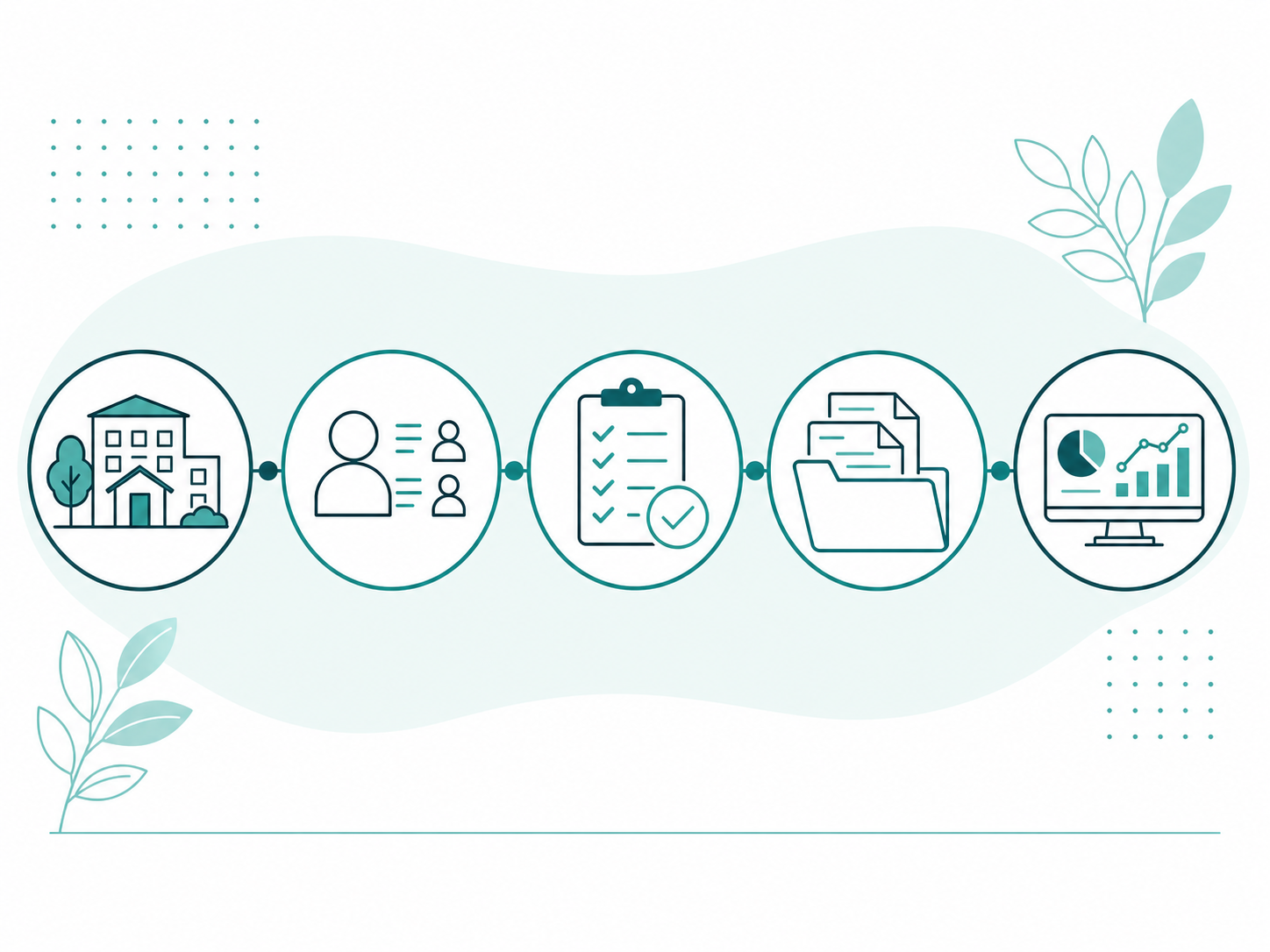
| Gate | Decision question | Minimum evidence | Owner |
|---|---|---|---|
| 1. Workplace | Is the claiming employer eligible and correctly recorded? | ASC-WDS workplace status and legal entity check | Registered Manager or workforce lead |
| 2. Worker | Is this worker and role within the current scheme? | Employment and role evidence | HR lead |
| 3. Learning | Was the course or qualification eligible at the relevant booking or payment point? | Saved copy or link to the applicable eligibility guidance | Learning lead |
| 4. Evidence | Can every claimed cost and completion point be proved? | Invoice, payment evidence and course or qualification record | Finance lead |
| 5. Claim | Is the claim within the correct deadline, cap and available-funds condition? | Claim log, deadline and approval record | Authorised claimant |
Manage the two clocks
ASC-WDS and the funding scheme run on different clocks. Your account needs an annual refresh to retain up-to-date status. Individual course and qualification claims have their own evidence and submission deadlines. A provider can therefore have a recently refreshed account and still miss a claim window, or have complete course evidence but fail the account condition.
| Clock | Trigger | Control |
|---|---|---|
| ASC-WDS maintenance | Annual account refresh, plus real workforce changes | Monthly data reconciliation and an annual status check |
| Funding claim | Course completion, qualification start or qualification completion | Deadline entered when the evidence event occurs |
| Guidance freshness | Booking, payment and claim preparation | Save the applicable guidance version and recheck the live page |
Common ASC-WDS and funding mistakes
- Calling ASC-WDS a universal legal requirement. Describe the exact context. It is a current scheme condition for eligible claims, not a blanket rule for every independent provider.
- Updating only the workplace record. Minimum data requirements can depend on staff records as well as the workplace profile.
- Leaving subsidiaries out of the reconciliation. Group claims require the relevant records for each organisation included.
- Assuming every course is funded. Check the current eligible learning list at the relevant booking or payment point.
- Using ASC-WDS as the only evidence store. Retain invoices, payment proof, completion evidence and internal approvals in controlled systems.
- Waiting until the claim deadline. Limited scheme funds mean reimbursement cannot be guaranteed. Prepare the evidence promptly.
For the separate competence and inspection evidence layer, read our 2026 guide to mandatory training for care workers. It explains why a certificate or data entry is not the same as proving that a worker can apply learning safely in practice.
A monthly ASC-WDS governance checklist
- Reconcile starters, leavers and role changes against HR records.
- Review workplace and subsidiary records included in planned claims.
- Check training and qualification entries against the training matrix.
- Confirm that each planned claim still meets the live eligibility rules.
- Test that invoices, payment evidence and completion records are retrievable.
- Review approaching account and claim deadlines.
- Record the review date, exceptions, actions and named owner.
How Care Sync Experts can help
Care Sync Experts can help you connect workforce data, training records, competence evidence and management oversight into one practical governance system. Our Compliance Management support can review record ownership, evidence controls, training gaps and audit routines alongside your wider regulatory responsibilities.
If you want an independent review of your ASC-WDS readiness, training evidence or claim-control process, book a consultation with Care Sync Experts.
Frequently asked questions
What does ASC-WDS stand for?
ASC-WDS stands for Adult Social Care Workforce Data Set. It is the free workforce data service hosted and administered by Skills for Care for adult social care employers in England.
Is ASC-WDS the same as NHS Capacity Tracker?
No. ASC-WDS is Skills for Care’s workforce data service. NHS Capacity Tracker is a separate government service used for operational capacity and related provider information. Keep separate owners, deadlines and evidence for the two systems. Our NHS Capacity Tracker 2026 guide explains that reporting route.
Do I need ASC-WDS to claim training funding in 2026 to 2027?
Yes, if you want to claim through the 2026 to 2027 Adult Social Care Learning and Development Support Scheme. The employer must have an up-to-date ASC-WDS account and meet the minimum data requirements before submitting a claim.
How often should an ASC-WDS account be updated?
The 2026 to 2027 grant determination says employers must update the account annually to retain up-to-date status. A safer operational approach is to reconcile material workforce changes throughout the year and complete a formal annual refresh.
Can ASC-WDS replace my training matrix?
ASC-WDS can help you record training and qualification information, identify gaps and receive renewal notifications. You still need controls that show role-specific requirements, competence checks, evidence ownership and the records your organisation relies on for governance.
Is reimbursement guaranteed once my ASC-WDS account is up to date?
No. An up-to-date account is one condition. The course or qualification, worker, payment, evidence and submission timing must also meet the scheme rules. Reimbursement is also subject to sufficient funds remaining.
Official source check completed 22 July 2026. The funding guidance can change. Recheck the 2026 to 2027 grant determination, the current employer guidance, the Skills for Care ASC-WDS overview and the getting started guidance before committing to learning or submitting a claim.