
Policies and procedures in health and social care are the formal rules and practical instructions that control how a care service operates, delivers care, and meets legal and regulatory requirements. Policies set out what a care organisation must do and why, while procedures explain exactly how staff carry out those requirements in day-to-day practice.
In simple terms, policies and procedures in care turn legal duties and regulatory standards into consistent actions that protect people who receive care, support staff in their roles, and keep the service compliant with regulators such as the CQC, RQIA, and CIW.
What Are Policies?
Policies are clear, written statements that explain how a care organisation makes decisions, sets standards, and meets its legal responsibilities. They define what must happen and why it matters, rather than the step-by-step actions staff take.
In health and social care, policies guide behaviour across the entire service. They set expectations for staff, protect people who receive care, and show regulators that the organisation understands its responsibilities.
If you’re asking what is a policy in health and social care, the simplest answer is this: a policy explains the organisation’s position, values, and rules in areas that affect safety, quality, and compliance.
For example, a safeguarding policy does not describe every action staff must take. Instead, it explains:
- The organisation’s commitment to protecting people from abuse
- What counts as abuse or neglect
- Who holds responsibility for safeguarding
- How concerns must be raised and escalated
Policies give direction. They create consistency. Most importantly, they give inspectors confidence that the service operates with clear leadership and accountability.
When inspectors review care services, they do not look for policies as paperwork alone. They expect policies to match how the service actually works and to reflect current laws, regulations, and best practice.
What Is a Procedure in Health and Social Care?
A procedure in health and social care is a clear, step-by-step set of instructions that tells staff exactly how to carry out a task safely and consistently. While policies explain what must happen and why, procedures explain how it happens in practice.
If you’re asking what is a procedure in health and social care, think of it as the practical instruction manual that staff follow during real situations. Procedures remove uncertainty. They ensure that everyone handles tasks in the same way, regardless of role, shift, or experience level.
For example, a medication policy may state that medicines must be managed safely and in line with legislation. The procedure then explains:
- How staff receive and store medication
- How they administer it safely
- How they record doses
- What action to take if an error occurs
This distinction matters to regulators. Inspectors assess whether staff can demonstrate procedures in action, not just talk about policies in theory. If a staff member cannot explain or follow a procedure, inspectors treat that as a risk to safety and compliance.
Strong procedures in health and social care protect people receiving care, support staff decision-making, and reduce errors. They also provide evidence that the service runs in a controlled, predictable, and accountable way.
Why Policies and Procedures Matter in Care Settings
Policies and procedures matter in care settings because they turn legal duties into safe, consistent action. Without them, care services rely on individual judgement, memory, or informal habits—and that is exactly what regulators aim to prevent.
In practice, policies and procedures in care protect three things at the same time:
the people receiving care, the staff delivering it, and the organisation running the service.
They protect people who receive care
Clear policies and procedures reduce risk. They make sure staff follow the same safe approach when delivering care, managing medication, responding to safeguarding concerns, or handling emergencies. When everyone works to the same standards, people receive safer, more reliable care.
They protect staff and managers
Procedures give staff confidence. Instead of guessing what to do in difficult situations, staff can follow agreed steps that align with the organisation’s policies. This reduces mistakes, stress, and personal liability. For managers, policies show leadership and provide evidence that staff receive clear guidance and support.
They support registration and inspections
Regulators do not assess care services on intent alone. They assess systems. Policies and procedures show inspectors that the service understands its legal responsibilities and has practical controls in place to meet them. During registration or inspection, inspectors expect to see:
- Written policies that reflect current regulations
- Procedures that staff can explain and follow
- Evidence that policies guide real practice
When policies exist only on paper and procedures do not match day-to-day care, services fail inspections.
They protect the business
Strong policies and procedures reduce complaints, incidents, and enforcement action. They help care, providers demonstrate compliance, defend decisions, and maintain trust with commissioners, families, and regulators. In short, they protect the long-term stability of the service.
Policies and procedures are not optional paperwork. They are the framework that holds a care service together.
Procedures in Health and Social Care: Practical Examples
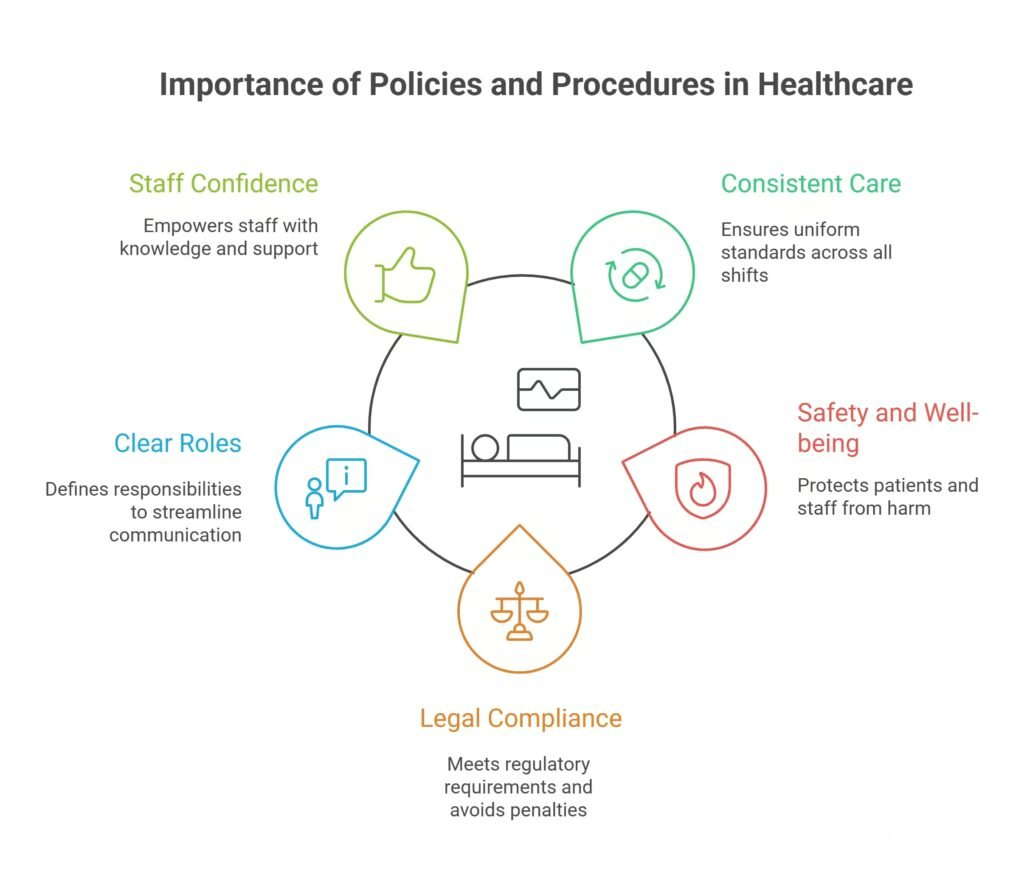
Procedures in health and social care show how care actually happens, not how a service hopes it happens. They translate policies into clear actions that staff can follow in real situations. Inspectors focus heavily on procedures because they reveal whether a service controls risk in practice.
When inspectors ask staff questions, they do not want policy language repeated back to them. They want to hear procedures explained clearly and confidently, step by step.
Examples of Procedures in Health and Social Care
Below are common examples of procedures in health and social care that regulators expect most services to have in place. These procedures must reflect the service’s actual day-to-day operations.
- Medication administration
Explains how staff receive, store, administer, record, and dispose of medication, and what action to take if an error occurs. - Safeguarding reporting
Sets out how staff identify concerns, who they report to, how quickly they act, and how the service escalates issues to external authorities. - Incident and accident reporting
Describes how staff record incidents, inform managers, support affected individuals, and prevent repeat issues. - Infection prevention and control
Details hand hygiene, use of PPE, cleaning routines, waste disposal, and outbreak management. - Complaints handling
Explains how the service receives complaints, investigates them, communicates outcomes, and uses feedback to improve care. - Record keeping and confidentiality
Shows how staff create, store, access, and protect care records in line with data protection laws.
Each procedure must be specific to the service. Generic or copied procedures that do not match real practice raise red flags during inspections. Inspectors often test procedures by asking staff to describe what they would do in a real scenario. If answers vary or sound uncertain, the procedure fails, even if the document exists.
Strong procedures support safe care, consistent practice, and inspection success.
Care Home Policies and Procedures Explained
Care home policies and procedures control some of the most complex and high-risk areas in health and social care. Unlike domiciliary care, care homes operate as closed environments where staff deliver support around the clock. This increases responsibility, scrutiny, and regulatory expectations.
Inspectors expect care homes to run on structured systems, not informal practice. That means policies must clearly set standards, and procedures must show how staff meet those standards every day.
Care homes must demonstrate control over:
- Medication management across multiple residents
- Safeguarding within shared living environments
- Staffing levels, supervision, and training
- Clinical decision-making and escalation
- Governance, audits, and quality monitoring
Because of this, care home policies usually cover a wider scope and go deeper than policies used in community or domiciliary settings.
Core Care Home Policies You Must Have
Every care home should have a structured set of policies that reflect how the service operates and the needs of the people it supports. Inspectors look for consistency, relevance, and evidence that staff understand these policies.
Key care home policy areas include:
- Safeguarding policies
Cover how the service protects adults and children at risk, manages allegations, and works with safeguarding authorities. - Medication policies
Set standards for storage, administration, audits, controlled drugs, and error management. - Staffing and recruitment policies
Explain safer recruitment checks, induction, supervision, and ongoing training requirements. - Health and safety policies
Address fire safety, moving and handling, infection control, and environmental risks. - Governance and quality assurance policies
Show how the service monitors performance, audits care, learns from incidents, and drives improvement. - Care planning policies
Explain how staff assess needs, develop personalised care plans, and review care regularly.
Inspectors do not expect perfection. They expect clarity, consistency, and evidence. Policies must match how the care home actually runs. Procedures must support staff in real situations, not just satisfy documentation requirements.
When care home policies and procedures align with daily practice, they create safer care, stronger inspections, and better outcomes for residents.
How to Implement Policies and Procedures in Health and Social Care
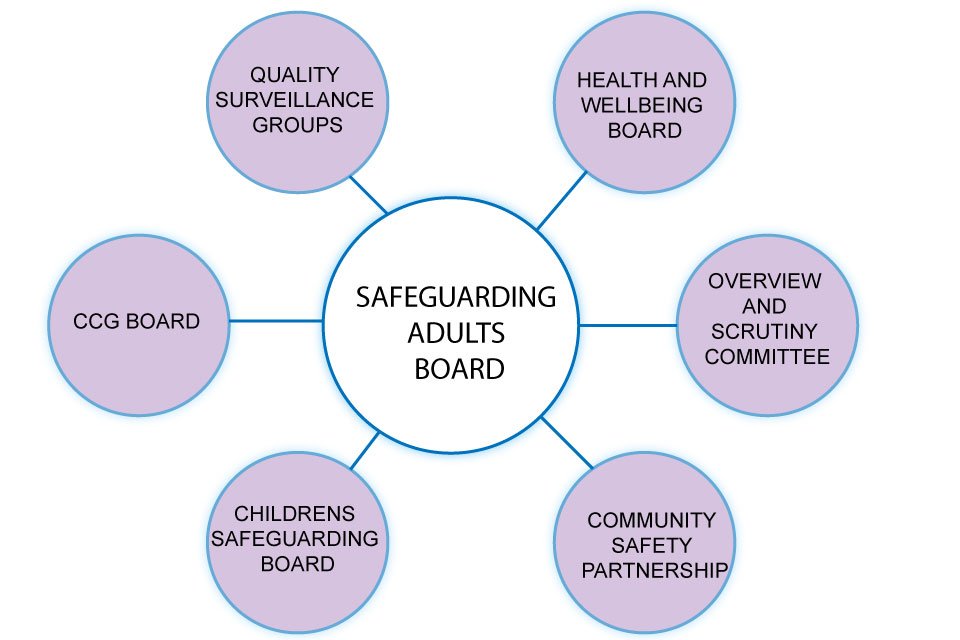
Writing policies is not enough. Care services fail inspections when policies exist on paper but never shape real practice. To work properly, policies and procedures in health and social care must follow a clear implementation system that staff understand and managers actively control.
Below is a practical, inspection-ready approach that works across care homes, domiciliary care, and supported living services.
Step 1: Identify the policies your service actually needs
Start with your service type, not a generic list. A care home, domiciliary care agency, and supported living service all face different risks and regulatory expectations. Identify mandatory policies first, then add service-specific ones based on:
- The people you support
- The care you provide
- The risks present in your service
Inspectors expect relevance, not volume.
Step 2: Assign ownership and accountability
Every policy and procedure needs an owner. That person takes responsibility for:
- Keeping the document up to date
- Making sure staff follow it
- Reviewing it when regulations or practice change
Without ownership, policies drift out of date quickly.
Step 3: Draft or customise policies to match real practice
Whether you use templates, digital tools, or bespoke writing, policies must reflect how your service actually works. Adapt language, processes, and examples so staff recognise their daily routines in the documents. Generic wording creates confusion and inspection risk.
Step 4: Approve, version-control, and organise documents
Inspectors expect clear document control. Each policy should show:
- A version number
- An approval date
- A review date
- Who approved it
Disorganised or outdated documents weaken credibility during inspections.
Step 5: Train staff and record evidence
Policies only work when staff understand them. Train staff on relevant policies and procedures during induction and ongoing updates. Record:
- Training dates
- Attendance
- Understanding and competency
Inspectors often ask staff questions to confirm training took place.
Step 6: Monitor compliance in daily practice
Managers must check that procedures guide real behaviour. Use spot checks, audits, supervision, and observations to confirm staff follow procedures consistently. Address gaps early and record corrective actions.
Step 7: Review and update regularly
Laws, guidance, and risks change. Review policies at least annually and immediately after:
- Regulatory updates
- Serious incidents
- Service changes
A live review cycle shows strong governance and leadership.
When care services follow this system, policies stop feeling like paperwork. They become practical tools that support safe care, confident staff, and successful inspections.
LEARN MORE: Harrow Council Home Care Tender 2026
Common Mistakes That Cause Policy Failures
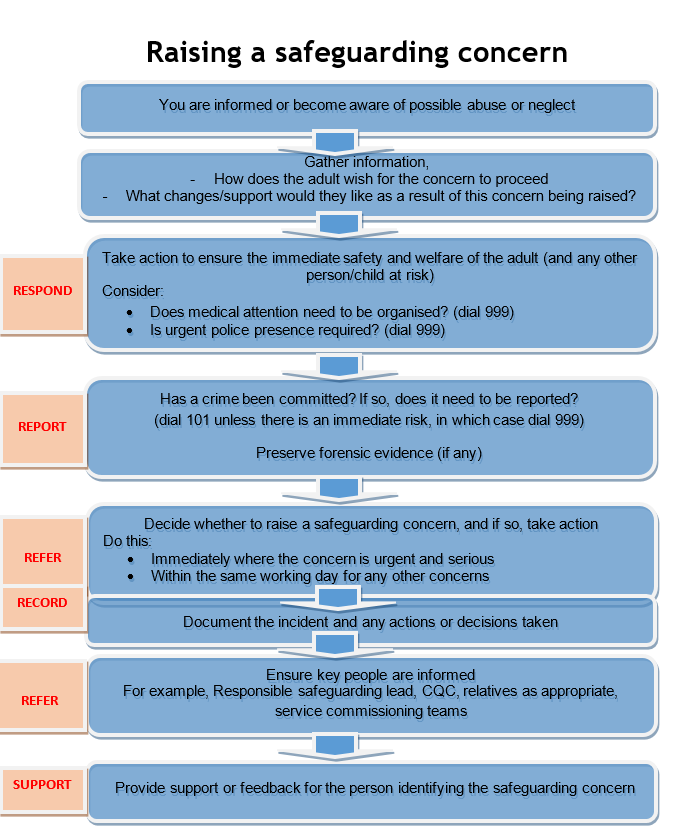
Many care services believe they have strong policies in place, yet still struggle during inspections. In most cases, the issue is not the absence of documents; it is how policies and procedures are written, used, or ignored in practice.
Below are the most common mistakes inspectors see, and why they create risk.
Using generic or copy-and-paste policies
Templates save time, but copying them without adapting content creates gaps. If policies do not reflect how your service actually operates, staff will not follow them. Inspectors quickly spot documents that feel generic or disconnected from real practice.
Writing policies that staff never read
Policies only work when staff understand them. Long, complex documents written in technical language often sit unused. When staff cannot explain a procedure in their own words, inspectors treat that as a failure, regardless of how polished the document looks.
Missing training evidence
Even strong policies fail without proof of training. Inspectors expect to see clear evidence that staff received training, understood procedures, and applied them correctly. Verbal assurances are not enough.
Allowing policies to fall out of date
Outdated policies signal weak governance. Changes in legislation, guidance, or service delivery must trigger immediate reviews. Inspectors often check review dates and version control before reading content.
Letting practice drift away from policy
When staff develop informal habits that contradict written procedures, risk increases. Inspectors test this by asking staff what they would do in real scenarios. If answers differ from the policy, the system fails.
Treating policies as inspection paperwork
Policies exist to guide safe care, not just to pass inspections. When services only update policies before inspections, inspectors notice. Strong services use policies daily to support decision-making and accountability.
Avoiding these mistakes strengthens compliance, improves care quality, and reduces inspection stress.
How Do You Spell Policies?
The correct spelling is policies. The word comes from policy, and the plural form changes the “y” to “ies”. While this may seem obvious, it’s a surprisingly common search term, especially for new care providers preparing documentation for registration or inspection.
Getting the spelling right matters more than it seems. Consistent spelling across policies, procedures, training records, and audit documents helps present a professional, well-organised service. Inspectors notice attention to detail, especially when reviewing large sets of documentation.
Key Takeaways for Care Providers
Care services rely on clear systems to deliver safe, consistent, and compliant support. Care policies procedures form the foundation of those systems. When written and implemented properly, they guide staff, protect people who receive care, and give regulators confidence in how a service operates.
Here are the essentials to remember:
- Policies explain what a care service must do and why. They set standards, expectations, and accountability across the organisation.
- Procedures explain how staff carry out those standards in real situations, step by step.
- Policies and procedures in care must reflect real practice, not generic templates or theory.
- Procedures in health and social care carry the most inspection weight because they show how risks are managed day to day.
- Care home policies and procedures require greater depth and structure due to higher risk and continuous care delivery.
- Effective implementation depends on ownership, staff training, evidence, monitoring, and regular review.
When policies guide daily decisions, and procedures shape real behaviour, care services operate more safely, staff feel more confident, and inspections become far less stressful.
If you want policies that do more than sit on a shelf, focus on clarity, relevance, and consistency. That approach supports compliance, improves care quality, and protects your service in the long term.
Need clarity on care policies and procedures in 2026?
Many care providers only realise gaps in their policies when registration, inspection, or enforcement action is already underway. Unclear documentation, outdated procedures, or policies that don’t reflect real practice often lead to avoidable delays, failed inspections, and unnecessary stress.
Care Sync Experts supports care providers across England, Wales, and Northern Ireland to understand, implement, and maintain inspection-ready policies and procedures that align with current regulatory expectations. Support typically includes:
- Clear explanations of what regulators actually expect from policies and procedures
- Practical guidance on tailoring policies to your service type and risk profile
- Support aligning written policies with day-to-day practice
- Help preparing evidence for registration, inspection, or audits
- Independent, regulation-aligned advice grounded in current UK guidance
Book a free initial consultation
If you’re unsure whether your policies meet current requirements, whether staff can follow procedures confidently, or whether your documentation would stand up to inspection, a short conversation now can prevent costly problems later.
This article reflects UK health and social care regulatory expectations and sector practice in 2026. Regulatory requirements may change, and outcomes depend on individual service circumstances. Providers should always refer to current guidance from the relevant regulator.
FAQ
What are care procedures?
Care procedures are written, step-by-step instructions that explain how staff must carry out specific tasks safely and consistently in a care setting. They guide day-to-day actions such as administering medication, reporting safeguarding concerns, recording care, or responding to incidents.
In practice, care procedures:
– Remove uncertainty for staff
– Reduce risk to people receiving care
– Ensure consistent practice across shifts and teams
– Provide evidence of control during inspections
Inspectors focus heavily on procedures because they show how care actually happens, not just what a service intends to do.
What are the 4 types of policies?
In health and social care, policies usually fall into four practical categories:
Governance policiesThese cover leadership, accountability, quality assurance, audits, and decision-making.
Operational policiesThese guide day-to-day running of the service, such as staffing, recruitment, supervision, and training.
Clinical and care policiesThese set standards for care delivery, including care planning, medication management, infection control, and risk management.
Safeguarding and protection policiesThese explain how the service prevents abuse, responds to concerns, and works with safeguarding authorities.
Grouping policies this way helps services stay organised and inspection-ready.
How to write a simple policy and procedure?
To write a simple but effective policy and procedure, focus on clarity, relevance, and real practice.
For the policy:
-State the purpose clearly
– Explain what the organisation expects and why
– Define responsibilities
– Keep language plain and direct
For the procedure:
– Break the task into clear steps
– Write in active voice
– Match the steps to how staff actually work
– Include what to do if something goes wrong
– Avoid copying generic templates without adapting them. Inspectors expect documents to reflect real service delivery.
How do you write a procedure?
To write a strong procedure:
– Identify the task or situation
– List each step in the order staff must follow
– Use short, clear instructions
– Specify who is responsible at each stage
– Include escalation steps and recording requirements
A good procedure allows any trained staff member to carry out the task safely and consistently, even under pressure. If staff cannot explain the procedure confidently, it needs improvement.
Leave a Reply