
If you are searching for how to get private care clients UK, start with one truth: families do not choose a caregiver only because they saw an advert. They choose someone they can trust with a parent, partner, or vulnerable relative.
Private care work can give you more control, stronger client relationships, and better earning potential than some agency roles. But you need more than availability. You need a clear service offer, local visibility, proof of experience, professional checks, and a simple way for families to contact you.
In this guide, we’ll look at practical ways to attract private care clients, build trust, and turn enquiries into paid care work.

Know Who You Are Targeting: Self-Funding Families and Private Clients
Most private clients looking for carers are not just buying “care hours.” They want peace of mind. They may be an adult child worried about an ageing parent, a spouse who needs extra support at home, or an older person who wants to stay independent for longer.
These families usually compare several options before they choose. They look at your experience, personality, reliability, prices, reviews, and how clearly you explain your service. Some need companionship or help with meals. Others need personal care, medication prompts, overnight support, respite care, or live-in care.
When you understand what families fear most – poor communication, missed visits, unsafe care, or strangers coming in and out – you can present your service in a way that feels safe, personal, and professional.
RELATED: Domiciliary Care Business Plan: How to Start a CQC-Ready Agency in 2026
Get Your Basics Right Before You Market Yourself
Before you ask how to get private clients for domiciliary care, make sure families can quickly see that you are safe, professional, and ready to work.
Start with the essentials: an enhanced DBS check, public liability insurance, training certificates, references, a clear list of services, and a simple price structure. If you provide regulated personal care as a business or agency in England, you may also need CQC registration before you start delivering care.
Create a short profile that explains who you support, where you work, what care you provide, and why families can trust you. Add a professional phone number, email address, and basic website or landing page.
Families will not chase unclear carers. Make it easy for them to check you, contact you, and understand your service.
Make Yourself Easy to Find Locally
Families often start with a simple search like how to find a private carer in their area. If your name does not appear online, they may never know you exist.
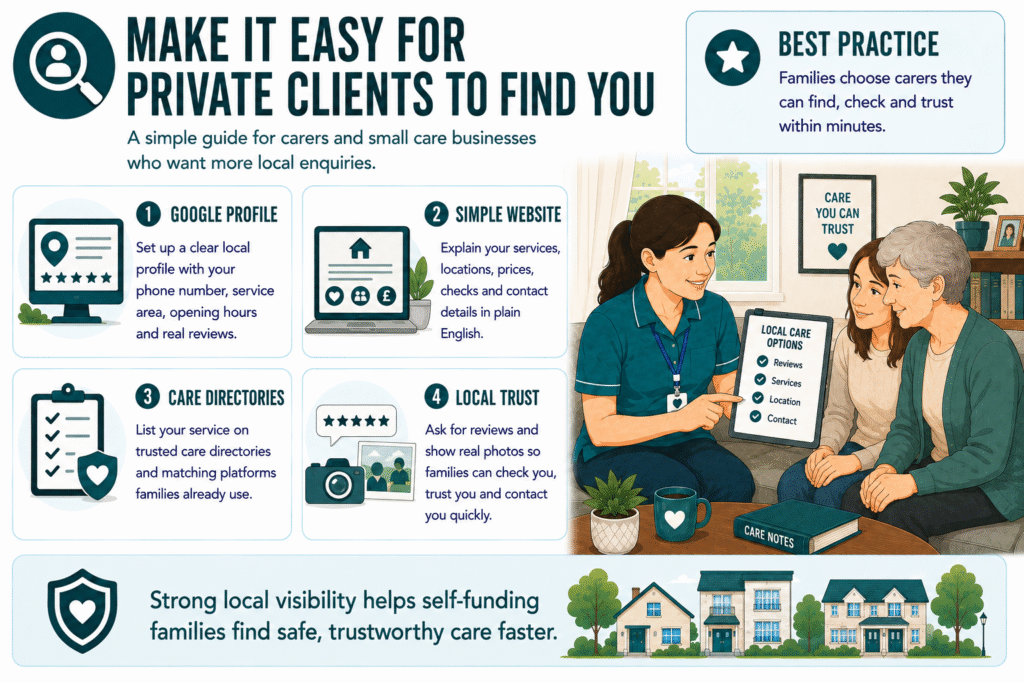
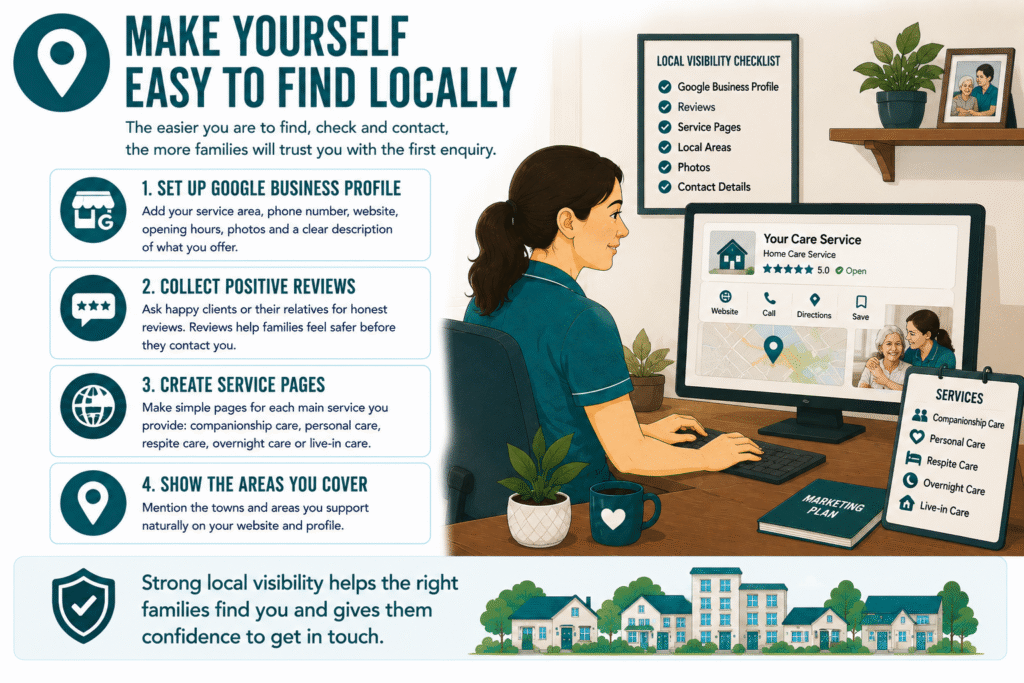
Set up a Google Business Profile and add your service area, phone number, website, opening hours, photos, and a clear description of what you offer. Ask happy clients or their relatives for honest reviews, because reviews help families feel safer before they contact you.
You should also create a simple website page for each main service you provide, such as companionship care, personal care, respite care, overnight care, or live-in care. Mention the towns and areas you cover naturally.
Local visibility matters. The easier you are to find, check, and contact, the more likely families will trust you with the first enquiry.
READ MORE: Housing for Autistic Adults: What Care Businesses Need to Know in 2026
Use Directories and Platforms, But Do Not Depend on Them Alone
Care directories and matching platforms can help you reach families who already need support. List your service on trusted care directories, local business directories, and suitable care-matching platforms where private clients looking for carers may search.
Make your profile clear and complete. Add your location, services, experience, checks, availability, prices where possible, and reviews. A weak profile will not win trust, even if the platform sends traffic.
Some people search phrases like private clients looking for carers Gumtree, but use informal platforms carefully. Protect yourself with safe first meetings, written agreements, clear boundaries, and proper checks before accepting work.
Directories can bring enquiries, but your reputation closes them. Treat every listing as one part of a wider trust-building system.
Build Referral Routes in Your Community
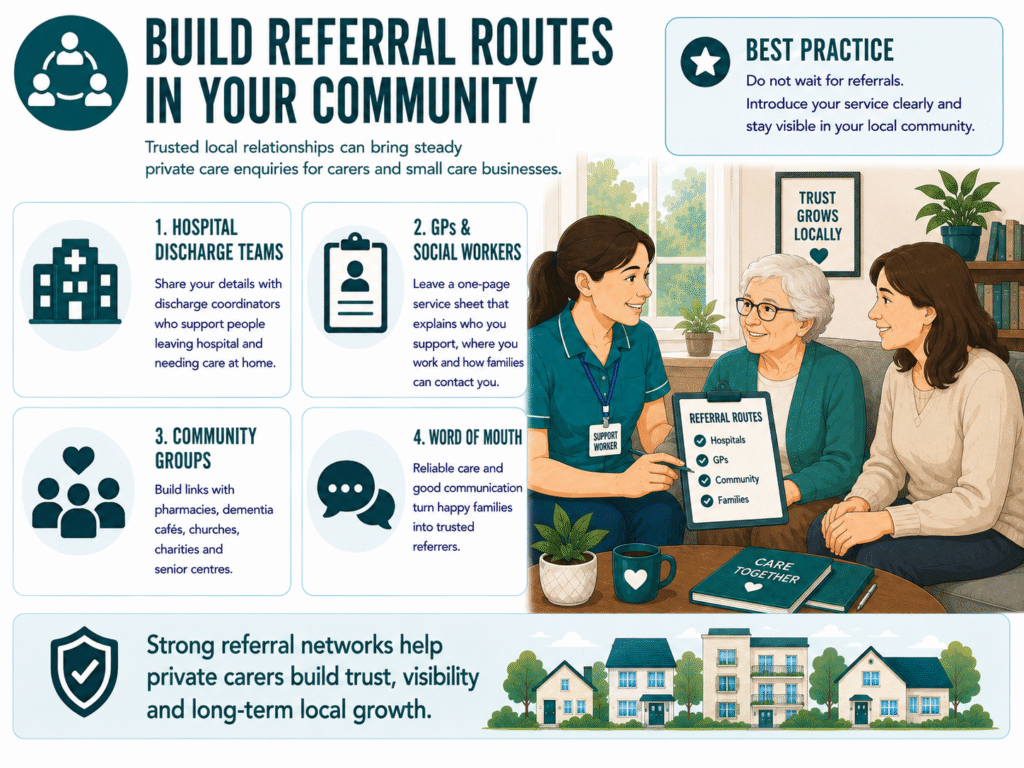
Referrals can bring stronger private care clients than adverts because families trust recommendations from people they already know. Do not wait for referrals to happen by chance. Build relationships in your local area.
Introduce yourself to hospital discharge teams, GPs, social workers, occupational therapists, community nurses, pharmacies, dementia cafés, churches, charities, and senior centres. Give them a simple one-page service sheet that explains who you support, what you offer, where you work, and how families can contact you.
Word of mouth also matters. When you deliver reliable care, communicate well, and treat people with dignity, families remember you. They may recommend you to neighbours, friends, relatives, or other families looking for support at home.
SEE ALSO: What Is Supported Living? 2026 Update for Businesses
Explain Your Fees Clearly
Families often search how much private carers charge per hour UK or how much do you have to pay for carers in your own home before they contact anyone. Clear pricing helps you build trust early.
Your rate may depend on your location, experience, travel time, the type of support needed, and whether the client needs daytime visits, overnight care, live-in care, or more complex support. Do not hide your fees or wait until the last minute to explain them.
Give families a simple price range, explain what is included, and make clear what may cost extra. When people understand your charges, they can make decisions faster and avoid awkward surprises later.
Consider Live-In and 24-Hour Care Carefully
Live-in care can attract steady private work, especially when families want one familiar carer instead of several short visits. Some carers search for private live in care jobs non agency UK because they want direct arrangements, but you must set clear terms before you start.
Agree the duties, working hours, rest breaks, sleeping arrangements, pay, time off, emergency cover, and what happens if the client’s needs increase. Put everything in writing.
Families may also ask about 24-hour care at home NHS funding. Do not promise funding. Explain that support may depend on a local authority assessment, NHS Continuing Healthcare eligibility, private funding, or a mix of arrangements.
MORE: What Are the Children’s Home Regulations? 2026 Update
Convert Enquiries With a Simple Process
Getting enquiries is only the first step. You still need to turn interest into paid care work.
Reply quickly, speak warmly, and ask clear questions about the person’s needs, location, routines, risks, and preferred visit times. Explain what you can offer, what you cannot safely provide, and when you are available to start.
After the first call, send a short summary of your service, fees, checks, references, and next steps. If the family seems suitable, arrange an assessment call or home visit before agreeing to care.
Do not accept every package. Choose clients whose needs match your skills, availability, and legal responsibilities. A clear process helps families trust you and helps you avoid unsafe work.
Conclusion
The best answer to how to get private care clients UK is not one single tactic. You need local visibility, professional proof, clear pricing, strong referral relationships, and a simple enquiry process that helps families feel safe.
Private care clients choose carers they can find, check, trust, and communicate with easily. When you present yourself professionally and deliver reliable care, every client can become a source of reviews, referrals, and long-term growth.
If you need help setting up your care business, preparing policies, improving compliance, or building a stronger client acquisition plan, Care Sync Experts can support you.
FAQ
How to be a private carer in the UK?
To become a private carer in the UK, start by building trust and showing that you can provide safe, reliable support. You should have care experience, training in areas such as safeguarding and moving and handling, an enhanced DBS check, references, insurance, and clear written terms.
If you run a business that provides regulated personal care in England, you may need to register with the CQC before delivering that service. CQC says providers of regulated activity in England must register with them.
How to get contracts for a care agency in the UK?
Care agencies can get contracts by applying for local authority care tenders, joining approved provider frameworks, or bidding through a Dynamic Purchasing System.
Start by checking your local council’s procurement portal and the UK government’s Find a Tender service, where public sector buyers publish procurement and contract notices.
You will usually need strong evidence of quality, safeguarding, staffing, policies, insurance, CQC compliance, and the ability to deliver reliable care.
Can I pay a friend to be my carer?
In some situations, yes. A person may be able to use a direct payment or personal budget to employ a personal assistant, which can sometimes include someone they know.
However, local council rules can vary, especially when the person is a close family member or lives in the same household. The safest step is to check the direct payment agreement with the local authority before making any arrangement.
What proof do you need to show you are a carer?
The proof you need depends on who is asking. Common examples include a Carer’s Allowance award letter, Carer’s Credit evidence, a letter from a GP or social worker, a local authority carer’s assessment, or documents showing that you provide regular unpaid care.
Carers UK lists benefit award letters, professional letters, and carer identification schemes as possible ways to evidence a caring role.