Tag: Dementia

  • Is There a Senility Test? 2026 Guide to Dementia Screening Tools

    Is There a Senility Test? 2026 Guide to Dementia Screening Tools

    There is no single senility test. Healthcare professionals use a combination of cognitive screening tools, such as the MMSE test for dementia, SAGE test, and 6 CIT test, to evaluate memory, attention, language, and thinking ability. These tests help identify possible cognitive impairment, but they do not diagnose dementia on their own.

    Doctors use these assessments as a first step in understanding how dementia is diagnosed, often alongside medical history, physical exams, and, in some cases, brain imaging or blood tests. A caregiver’s observations also play a crucial role, as early signs, such as memory loss or confusion, often appear at home before clinical testing begins.

    For care businesses, understanding how these tools work can help you spot early warning signs, support timely referrals, and improve the quality of care you provide.

    Get expert support for your next tender, inspection-ready policies, or CQC registration — book a call with Care Sync Experts today and let’s get you compliant and competitive.

    Key Takeaways

    • There is no single senility test; doctors use multiple cognitive screening tools to assess brain function.
    • Common tools include the MMSE test for dementia, SAGE test, and 6 CIT test, each measuring memory, attention, and reasoning.
    • A free cognitive test or sample dementia test can highlight early concerns, but only a professional can make a diagnosis.
    • Caregivers often notice early warning signs first, such as confusion, memory loss, or changes in behaviour.
    • Doctors combine test results with medical history, daily functioning, and sometimes lab tests to determine how dementia is diagnosed.
    • Online tools like a test for dementia 30 questions online can be useful for awareness but should always lead to professional follow-up.

    What Caregivers Mean by a “Senility Test”

    Is Medication a CQC Regulated Activity? The Real Answer 2026

    Many caregivers use the term “senility test” to describe a quick way to check if someone is developing memory problems. In reality, healthcare professionals no longer use the term senility. They refer instead to cognitive impairment or dementia, which they assess using structured tools like a cognitive ability test or a formal cognitive assessment system.

    From a caregiver’s perspective, the concern usually starts with everyday observations:

    • A client forgets familiar names or routines
    • They repeat the same questions multiple times
    • They struggle to follow simple instructions
    • Their behaviour or personality changes unexpectedly

    These signs often prompt the search for a “test.” What caregivers are really looking for is a reliable way to confirm whether these changes are normal aging or something more serious.

    In practice, no single test can answer that question. Instead, professionals use a series of cognitive assessments to evaluate different brain functions.

    For caregiver businesses, recognising these early signs and understanding what a senility test actually means allows you to act quickly, by documenting changes, informing families, and recommending a professional evaluation at the right time.

    RELATED: What are Cold Weather Payments? Eligibility & How to Claim (2026)

    Common Cognitive Tests Doctors Use
    Is There a Senility Test?
    Is There a Senility Test?

    Healthcare professionals rely on a range of structured tools instead of a single senility test. Each test measures different aspects of thinking, memory, and reasoning. As a caregiver, understanding these tools helps you communicate better with clinicians and support early intervention.

    Mini-Cog (Quick Screening)

    Doctors often use the Mini-Cog as a fast first check. The test takes about three minutes and combines:

    • A short memory recall task
    • A clock-drawing exercise

    This tool works well in primary care because it quickly flags potential cognitive issues without requiring complex equipment.

    MMSE Test for Dementia (30-Point Assessment)

    The MMSE test for dementia is one of the most widely used tools. It uses a structured format often described as a test for dementia 30 questions, covering:

    • Orientation (date, location)
    • Memory recall
    • Attention and calculation
    • Language skills

    Doctors assign a score out of 30. Lower scores suggest cognitive impairment and the need for further evaluation.

    MoCA (Montreal Cognitive Assessment)

    The MoCA helps detect mild cognitive impairment, which the MMSE may miss. It includes more complex tasks such as:

    • Executive function exercises
    • Visuospatial tasks
    • Delayed recall

    Clinicians often choose MoCA when they suspect early-stage decline.

    SAGE Test (Self-Administered Option)

    The SAGE test for dementia allows individuals to complete a cognitive assessment at home. It includes questions on:

    • Problem-solving
    • Memory
    • Language

    Caregivers sometimes use this as an early check before visiting a doctor. However, a professional must interpret the results.

    6 CIT Test (Common in the UK)

    The 6 CIT test (Six-Item Cognitive Impairment Test) is widely used in UK primary care. It focuses on:

    • Orientation
    • Memory recall
    • Attention

    Doctors calculate a 6cit score, where higher scores indicate greater impairment. This test works well in busy clinical settings due to its speed and simplicity.

    Addenbrooke’s Cognitive Examination (ACE-III)

    The Addenbrooke’s cognitive examination III is a more detailed assessment used by specialists. It evaluates:

    • Attention and orientation
    • Memory
    • Verbal fluency
    • Language
    • Visuospatial abilities

    Clinicians often use this test when they need a deeper understanding of cognitive decline beyond basic screening.

    Each of these tools plays a specific role in assessing brain function. Caregivers don’t need to administer them, but knowing how they work helps you recognise when a client may need further evaluation and supports better communication with healthcare professionals.

    READ MORE: Attendance Allowance Pitfalls (2026): Best Guide to Claim AA Successfully

    Can You Take a Dementia Test Online?
    Signs of Dementia
    Signs of Dementia

    Yes, you can take a test for dementia 30 questions online or try a free cognitive test, but these tools only provide a basic indication of cognitive function. They do not replace a clinical assessment.

    Many people search for options like a dementia test online NHS UK or printable tools such as the SAGE test. These tests typically include:

    • Memory recall exercises
    • Orientation questions (date, place, time)
    • Simple problem-solving tasks

    Some online versions mimic structured tools like the MMSE test for dementia, often referred to as a test for dementia 30 questions. Others provide simplified formats designed for quick self-checks at home.

    From a caregiver’s perspective, these tools can be useful for:

    • Noticing early warning signs
    • Starting conversations with families
    • Deciding when to seek professional help

    However, online tests have clear limitations:

    • They cannot diagnose dementia
    • They do not assess daily functioning
    • They may miss early or subtle symptoms
    • Results can be affected by stress, education level, or misunderstanding questions

    A free cognitive test should always act as a starting point—not a conclusion. If results raise concerns, the next step should be a formal assessment by a healthcare professional who can evaluate the individual more thoroughly.

    For caregiver businesses, the key is not to rely on online tools alone, but to use them as part of a broader observation process that includes behaviour, communication, and daily living patterns.

    Sample Dementia Test Questions (What to Expect)

    Many caregivers search for a sample dementia test to understand what happens during an assessment. While no single senility test exists, most tools—whether it’s a test for dementia 30 questions UK style format or a shorter screening—follow similar patterns.

    Healthcare professionals design these questions to check memory, attention, language, and reasoning.

    Here are common examples you might see:

    Memory Recall

    • “I’m going to say three words: Apple, Table, Penny. Can you repeat them now and again in a few minutes?”

    Orientation (Time and Place)

    • “What is today’s date?”
    • “Where are we right now?”

    Attention and Calculation

    • “Count backwards from 100 in steps of 7.”
    • “Spell the word ‘WORLD’ backwards.”

    Language Skills

    • “Name this object” (e.g., showing a pen or watch)
    • “Repeat this phrase: ‘No ifs, ands, or buts.’”

    Reasoning and Understanding

    • “What would you do if you found a stamped letter on the ground?”
    • “How are a car and a bicycle similar?”

    Visuospatial Skills

    • “Draw a clock and set the time to 10 past 11.”

    These questions often appear in structured formats like the MMSE test for dementia, the 6 CIT test, or even a test for dementia 30 questions online.

    Caregivers don’t need to administer these tests, but understanding the format helps you:

    • Recognise early cognitive decline during daily interactions
    • Document specific concerns (e.g., difficulty recalling words or dates)
    • Provide useful observations to healthcare professionals

    If a person struggles consistently with tasks like these, it signals the need for a professional evaluation, not a self-diagnosis.

    A sample dementia test can guide awareness, but real diagnosis always requires a full clinical assessment.

    SEE ALSO: When Does Child Benefit Stop in the UK? (2026 Guide)

    How Is Dementia Diagnosed?
    Senility Test Statistics

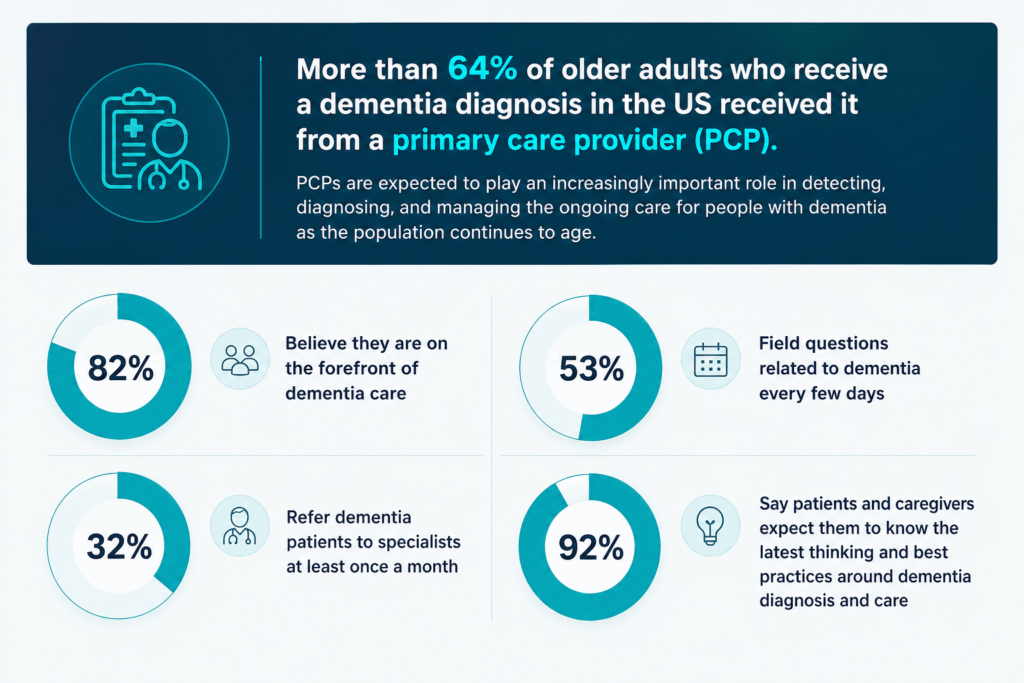
    Doctors do not rely on a single senility test to diagnose dementia. Instead, they use a structured process that combines cognitive testing with medical evaluation to understand the cause and severity of symptoms.

    Step 1: Cognitive Assessment

    The first step usually involves a cognitive ability test such as the MMSE test for dementia, SAGE test, or 6 CIT test. These tools help identify problems with:

    • Memory
    • Attention
    • Language
    • Reasoning

    A low score (for example, a high 6cit score) signals possible cognitive impairment and the need for further investigation.

    Step 2: Medical History and Daily Function

    Doctors then assess how symptoms affect everyday life. They ask:

    • Can the person manage daily tasks independently?
    • Have there been noticeable personality or behaviour changes?
    • When did the symptoms begin?

    Caregiver input is critical at this stage. Your observations often provide the most accurate picture of how the condition has progressed over time.

    Step 3: Physical Exams and Lab Tests

    Healthcare providers rule out other causes of confusion or memory loss. They may order:

    • Blood tests (often called confusion screen bloods) to check for infections, vitamin deficiencies, or thyroid issues
    • Neurological exams to assess reflexes and coordination

    These tests ensure that reversible conditions do not get mistaken for dementia.

    Step 4: Brain Imaging

    In some cases, doctors request imaging such as:

    • CT scans
    • MRI scans

    These scans help identify structural changes in the brain or rule out other conditions like tumours or stroke.

    Step 5: Specialist Assessment

    If needed, the patient may see a neurologist or geriatric specialist. They may use advanced tools like the Addenbrooke’s cognitive examination or the Addenbrooke’s cognitive examination III for a more detailed evaluation.

    Understanding how dementia is diagnosed helps you take the right steps at the right time. A screening test may raise concerns, but only a full medical evaluation can confirm a diagnosis.

    As a caregiver, your role includes:

    • Noticing early warning signs
    • Documenting changes in behaviour or memory
    • Encouraging timely medical consultation

    Early diagnosis allows families to plan care, access support, and improve quality of life.

    MORE: UK Cost of Living Payment Eligibility (2026): What Caregivers and Families Need to Know

    When Should Caregivers Be Concerned?

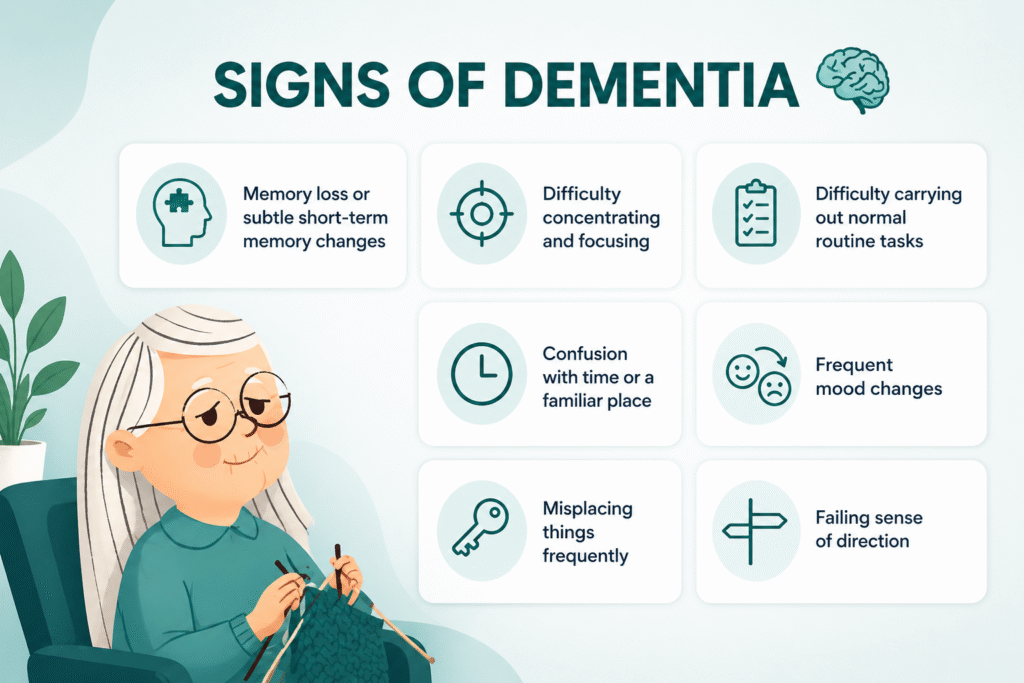
    Caregivers often notice subtle changes long before any senility test or clinical assessment takes place. Recognising these early signs can make a significant difference in how quickly someone receives help.

    Common Warning Signs to Watch For

    You should pay attention if a client or loved one:

    • Repeats the same questions or stories frequently
    • Forgets recent events or important appointments
    • Struggles to follow simple instructions or conversations
    • Gets confused about time, place, or familiar routines
    • Shows sudden personality or mood changes
    • Has difficulty completing everyday tasks (e.g., cooking, dressing)
    • Gets lost in familiar environments

    These symptoms often appear gradually, which makes them easy to overlook at first.

    Caregiver Insight Matters Most

    A cognitive ability test can highlight problems, but caregivers see the full picture. You observe:

    • Daily behaviour
    • Communication patterns
    • Emotional changes over time

    This ongoing insight often provides more context than a one-time assessment.

    When to Take Action

    You should recommend a professional evaluation if:

    • Symptoms start affecting daily life
    • Confusion becomes frequent or severe
    • Safety becomes a concern (e.g., wandering, forgetting appliances)
    • There is a sudden or rapid decline

    In some cases, doctors may also order tests like confusion screen bloods to rule out other causes before confirming cognitive decline.

    Early intervention improves outcomes. It allows:

    • Faster diagnosis
    • Better care planning
    • Access to treatment and support services

    For caregiver businesses, acting early shows professionalism and builds trust with families. Instead of waiting for symptoms to worsen, you help guide clients toward the right care at the right time.

    Should You Get a Professional Assessment?

    You should not rely on a senility test, a free cognitive test, or even a test for dementia 30 questions online to make decisions about someone’s health. These tools can raise concerns, but only a healthcare professional can confirm what is happening.

    When to Seek Professional Help

    You should arrange a medical assessment if:

    • Memory loss starts affecting daily activities
    • Confusion becomes frequent or noticeable
    • Behaviour or personality changes without clear reason
    • Results from a sample dementia test or SAGE test for dementia raise concerns

    Taking action early gives doctors more time to identify the cause and recommend appropriate care.

    What Happens During an Assessment?

    A professional evaluation goes beyond a simple cognitive ability test. It usually includes:

    • A structured screening tool (e.g., MMSE test for dementia, 6 CIT test)
    • Questions about daily functioning and behaviour
    • Input from caregivers or family members
    • Medical history review and physical examination

    If needed, the doctor may refer the individual to a specialist or recommend further testing.

    Why Professional Diagnosis Matters

    Online tools and self-assessments cannot:

    • Identify the cause of symptoms
    • Measure the progression of cognitive decline
    • Rule out other medical conditions

    Only a clinician can determine how dementia is diagnosed and whether symptoms relate to dementia or another treatable condition.

    The Caregiver’s Role

    Caregivers play a critical role in this process. You can:

    • Document changes in memory, behaviour, and communication
    • Share accurate observations with healthcare providers
    • Encourage families to seek timely medical advice

    By guiding clients toward a professional assessment, you help ensure they receive the right diagnosis, support, and care plan.

    Need Expert Support with Cognitive Assessments and Care Planning?

    At Care Sync Experts, we help caregiver businesses move from uncertainty to clarity.

    If you’re noticing early signs of memory loss, confusion, or behavioural changes in a client, don’t wait. Our team supports you with:

    • Guidance on recognising early cognitive decline
    • Help interpreting screening tools like the MMSE test for dementia, SAGE test, and 6 CIT test
    • Step-by-step support for referrals and professional assessments
    • Compliance-ready documentation for care providers

    Whether you run a care agency or support clients directly, we make it easier to act early, stay compliant, and deliver better care outcomes.

    Get in touch with Care Sync Experts today and take the next step toward confident, informed care.

    FAQ

    What are the 5 cognitive tests?

    Five common cognitive tests include the Mini-Cog, MMSE, MoCA, SAGE test, and 6 CIT test. Clinicians use these tools to screen memory, attention, language, orientation, and reasoning, but they do not diagnose dementia alone. A doctor must interpret the results alongside medical history and daily functioning.

    What is the 3 words test for memory?

    The 3 words test checks short-term memory. A clinician says three unrelated words, asks the person to repeat them immediately, and then asks them to recall the same words a few minutes later. This task often appears in brief cognitive screening tools such as the Mini-Cog.

    What is the 7 minute test for dementia?

    The 7 Minute Screen is a cognitive screening tool that combines four short tasks: orientation, memory recall, clock drawing, and verbal fluency. It helps identify people who may need further dementia assessment, but it should not replace a full clinical diagnosis.

    What are the 7 stages of dementia?

    The 7-stage model describes progression from no visible impairment to very severe decline. In simple terms, it moves from normal function, to mild memory changes, to noticeable cognitive problems, to increasing difficulty with daily activities, and finally to full dependence on care. Alzheimer’s Association also commonly groups progression into early, middle, and late stages because symptoms vary from person to person.
  • Do Dementia Sufferers Have to Pay Care Home Fees in the UK? (2026 Guide)

    Do Dementia Sufferers Have to Pay Care Home Fees in the UK? (2026 Guide)

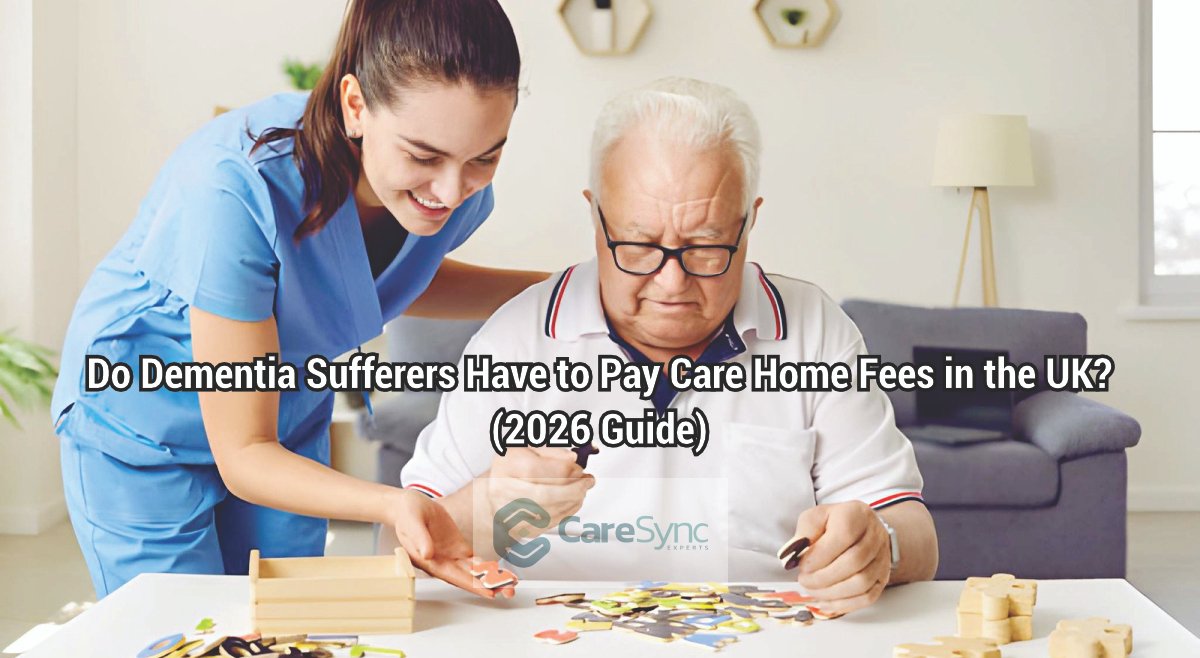
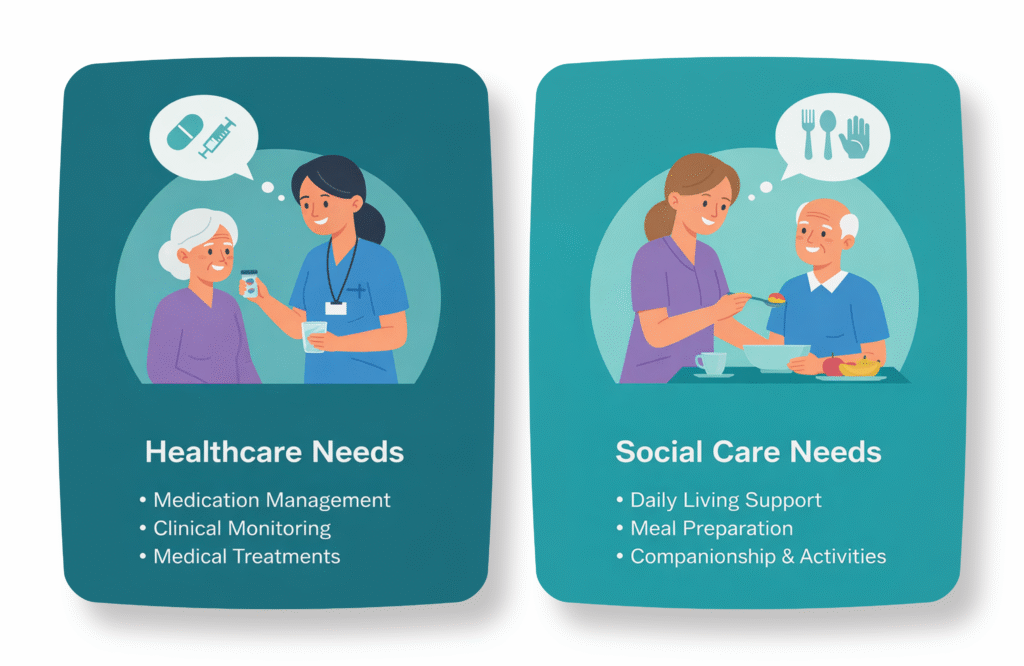
    If you’re do dementia sufferers have to pay care home fees, the answer is yes. Many dementia sufferers do have to pay care home fees in the UK, because dementia care is usually classified as social care rather than medical care. This means the cost of a dementia care home is typically assessed through a financial (means) test carried out by the local authority.

    If a person’s savings, income, or assets exceed certain thresholds, they usually have to pay for their own care home fees, either fully or partly. In England, for example, people with more than £23,250 in assets are generally expected to fund their own care.

    However, some people with dementia may receive financial support or fully funded care, depending on their circumstances.

    Get expert support for your next tender, inspection-ready policies, or CQC registration — book a call with Care Sync Experts today and let’s get you compliant and competitive.

    Key points families should know:

    • Self-funding is common. Many families pay privately for dementia care homes when savings or property exceed the means-test threshold.
    • Local authorities may contribute. If assets fall below the upper threshold, the council may help with care home fees.
    • NHS Continuing Healthcare (CHC) may cover the full cost of care if the person’s needs are primarily medical rather than social.
    • NHS-Funded Nursing Care (FNC) may pay a weekly contribution if the person lives in a nursing home and needs care from registered nurses.

    Because of these rules, dementia care home costs in the UK vary widely. Some families pay the full price of long-term care, while others receive partial or full funding depending on their financial situation and health needs.

    Understanding how the system works is the first step toward finding help with care home fees for dementia patients and planning the right level of support.

    Why dementia care home costs in the UK are often high

    Care Sync Experts Bark for Private Home Care Clients in 2026

    Many families feel shocked when they first see dementia care home costs in the UK. Unlike standard residential care, dementia care requires specialist support, higher staffing levels, and a secure environment, all of which increase the overall cost of care homes.

    People living with dementia often need help throughout the day and night. Care teams support residents with memory loss, confusion, mobility problems, and changes in behaviour. As the condition progresses, care homes may provide enhanced dementia care, which includes:

    • 24-hour supervision and support
    • Staff trained specifically in dementia care
    • Secure layouts to prevent wandering
    • Structured routines and therapeutic activities
    • Specialist nursing care for complex health needs

    These additional services make dementia care homes more resource-intensive than many other forms of residential care.

    Location also plays a major role in the cost of an old people’s home. Care homes in cities or areas with higher staffing costs often charge significantly more than homes in rural regions. Facilities that provide specialist dementia units, private rooms, or advanced medical care may also charge higher fees.

    For caregivers searching online for dementia care homes near me or a care home for dementia near me, the price can vary dramatically depending on the level of support required. Families often discover that dementia care involves not just accommodation but round-the-clock professional care, which is why the price of long-term care can feel overwhelming at first.

    Understanding these factors helps families prepare for the financial side of dementia care and explore available funding options before making long-term decisions.

    READ MORE: What Is a Care Needs Assessment? (England Guide for Families and Caregivers)

    How much are dementia care home costs in the UK?

    The cost of care homes for dementia in the UK varies widely depending on the type of care, the location, and the level of support required. However, most families can expect dementia care to cost more than standard residential care, because specialist support and supervision are often needed.

    On average, weekly dementia care home costs in the UK are approximately:

    • Residential dementia care: around £1,200 – £1,500 per week
    • Nursing dementia care: around £1,400 – £1,700 per week

    These figures represent the typical price of long-term care, but the final cost depends on several factors.

    What affects the cost of care homes?

    Several factors influence how much families pay for care home fees, including:

    • Location: Care homes in London and major cities often charge more than those in smaller towns.
    • Level of care required: Residents who need specialist nursing or behavioural support may face higher costs.
    • Facilities and services: Private rooms, specialist dementia units, and enhanced dementia care programs can increase fees.
    • Availability of care homes: In some areas, limited supply means higher prices.

    For families searching online for “dementia care homes near me”, prices can vary significantly even within the same region. Some homes focus on standard residential support, while others offer specialist dementia care homes with trained staff and secure environments designed specifically for memory conditions.

    Because of these variations, the cost of an old people’s home or dementia care home can differ greatly from one provider to another. This is why many families first research local options before deciding whether to fund care privately or apply for financial support.

    Who pays dementia care home fees in the UK?

    do dementia sufferers have to pay care home fees 2026
    do dementia sufferers have to pay care home fees 2026

    In most cases, who pays care home fees depends on a financial (means) assessment carried out by the local authority. This assessment looks at the person’s income, savings, and assets to determine whether they must pay for their care themselves or qualify for financial support.

    Many people with dementia end up paying some or all of their care home fees, particularly if they have savings or property above the government thresholds.

    The financial assessment explained

    Before funding any care placement, the local council will usually complete two assessments:

    1. Needs assessment – Determines what type of care the person requires (home care, residential care, or nursing care).
    2. Financial assessment – Calculates how much the person should contribute toward the cost of care homes.

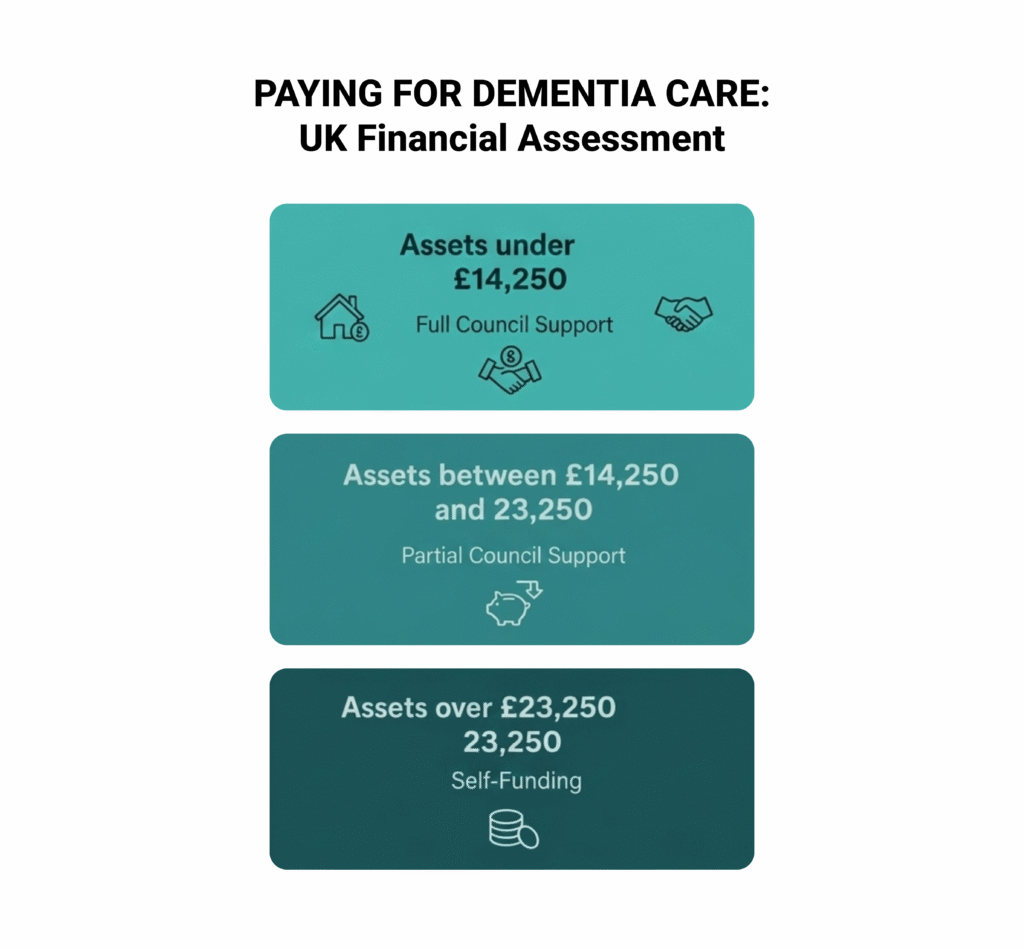
    In England, the main capital limits currently work as follows:

    • Over £23,250 in assets: The person normally pays the full dementia care home costs UK privately (self-funding).
    • Between £14,250 and £23,250: The person contributes toward care costs, and the local authority may help pay the rest.
    • Below £14,250: The local authority usually covers most care costs, although income such as pensions may still contribute.

    Assets considered in the financial assessment can include:

    • Savings and investments
    • Property (in some cases)
    • Pensions or regular income

    However, the value of a home may not always be included in the assessment. For example, if a spouse or dependent relative still lives in the property, the council may disregard its value.

    Local authority funding for care

    If someone qualifies financially and meets eligibility criteria, the council may provide local authority funding for care in your own home or help cover the cost of a residential placement.

    Families often start researching how to get help with care home fees once they understand the outcome of the financial assessment. The council may either arrange the placement directly or provide a personal budget to support the person’s care needs.

    Understanding how the financial assessment works can help families plan ahead and explore the options available for help with care home fees for dementia patients.

    SEE ALSO: Attendance Allowance Pitfalls (2026): Best Guide to Claim AA Successfully

    Is there free care home funding for dementia patients?

    Many families ask whether there is free care home funding for dementia patients in the UK. In most situations, dementia care is not automatically free, because the system treats it primarily as social care rather than healthcare. However, some people with dementia may qualify for funding that covers part or all of their care home fees.

    Two NHS funding routes can help reduce dementia care home costs in the UK.

    NHS Continuing Healthcare (CHC)

    NHS Continuing Healthcare is a package of care fully funded by the NHS. If someone qualifies, the NHS pays the full cost of care, including accommodation and nursing support in a care home.

    Eligibility does not depend on savings or assets. Instead, assessors decide whether the person has a “primary health need.” This means their care needs mainly involve medical supervision rather than personal support.

    Some people with advanced dementia qualify for CHC when they experience complex needs such as:

    • Severe cognitive impairment
    • High levels of behavioural distress
    • Complex mobility problems
    • Significant medical supervision needs

    Although families sometimes assume dementia automatically qualifies for CHC, this is not always the case. Each person must go through a detailed assessment conducted by healthcare professionals.

    For those who meet the criteria, CHC effectively provides free care for dementia patients in the UK, because the NHS covers the full cost of care.

    NHS-Funded Nursing Care (FNC)

    If someone lives in a nursing home but does not qualify for CHC, they may still receive NHS-Funded Nursing Care.

    Under this scheme, the NHS pays a weekly contribution toward the nursing element of care. The payment goes directly to the care home and helps reduce the overall care home fees families must pay.

    FNC does not cover accommodation or personal care costs, but it can still provide meaningful financial support for people living in specialist dementia care homes that require registered nursing staff.

    Understanding these funding options helps families determine whether they can access help with care home fees for dementia patients, particularly when dementia progresses, and care needs become more complex.

    Are next of kin responsible for care home fees?

    Pay for Dementia Care-Uk Financial Assessment
    Pay for Dementia Care-Uk Financial Assessment

    Many families worry that they might personally inherit the care home fees of a loved one with dementia. In most cases, next of kin are not legally responsible for paying care home fees.

    The person receiving care usually remains responsible for their own dementia care home costs in the UK. Local authorities or the NHS may contribute depending on the outcome of the needs and financial assessments, but family members do not automatically become liable for the bill.

    However, there are a few situations where a relative may agree to pay part of the cost.

    When families may contribute to care home fees

    A family member may become financially involved if they choose to:

    • Sign a contract with the care home agreeing to pay part of the fees
    • Provide a third-party top-up payment if they select a more expensive home than the local authority normally funds
    • Manage finances on behalf of the person through Lasting Power of Attorney

    For example, if a council agrees to fund care up to a certain amount but the family prefers a more expensive care home for dementia near me, they may choose to pay the difference as a top-up.

    What families should understand

    In most cases:

    • Next of kin are not automatically responsible for care home fees.
    • The financial assessment focuses on the assets and income of the person receiving care.
    • Families should carefully review any agreements before signing documents with a care home.

    Understanding this distinction can reduce anxiety for caregivers who already face emotional and practical challenges when supporting someone living with dementia.

    MORE: Council Care Cost Inheritance: Who Pays for Care Home Fees 2026?

    What about home care instead of a care home?

    Not every person with dementia needs to move into a care home immediately. Many families first explore care at home, especially in the early or moderate stages of dementia. Understanding home care services cost can help caregivers decide whether staying at home is a practical alternative.

    How much does home care cost per hour in the UK?

    The cost of home care services depends on the level of support required and the region where you live. On average:

    • Home care services: around £20–£35 per hour
    • Live-in carer cost: roughly £900–£1,600 per week depending on care needs
    • Private nursing care: higher costs if medical support is required

    Families often search questions such as “how much does home care cost per hour UK” or “how much does a home nurse cost” when deciding whether home care might be more affordable than residential care.

    When home care may work better

    Home care can be a suitable option when a person with dementia:

    • Can still live safely in familiar surroundings
    • Needs help with daily tasks such as washing, dressing, or medication
    • Benefits from routine and familiar environments

    In some situations, the local authority may also provide local authority funding for care in your own home after completing a needs and financial assessment.

    When residential care becomes necessary

    As dementia progresses, some people eventually require 24-hour supervision or specialist dementia support. At that stage, families may start exploring dementia care homes near me or a care home for dementia near me that offers structured care and specialist staff.

    Understanding the differences between home care and residential care helps families make informed decisions about the cost of care homes, the price of long-term care, and the level of support their loved one truly needs.

    How to get help with care home fees for dementia patients

    Many families feel overwhelmed when they first learn about dementia care home costs in the UK. The good news is that several funding routes may help reduce or cover care home fees, depending on the person’s financial situation and care needs.

    If you are wondering how to get help with care home fees, the process usually begins with two important assessments arranged through your local authority.

    1. Request a care needs assessment

    Start by asking your local council for a care needs assessment. A trained professional will evaluate the person’s condition and decide what level of support they require. This assessment determines whether the person needs:

    • Home care support
    • Specialist dementia care
    • A residential or nursing care home

    The results help the council decide what type of support they can provide.

    2. Complete a financial assessment

    If the person needs residential care, the council will then carry out a financial (means) assessment to determine who pays for the care.

    The assessment considers:

    • Savings and investments
    • Income, such as pensions
    • Property ownership
    • Other financial assets

    Depending on the results, the local authority may contribute toward the cost of care homes, or the person may need to self-fund their care.

    3. Ask about NHS funding options

    Families should also ask for an assessment for NHS Continuing Healthcare (CHC) if the person has complex health needs. If approved, CHC can cover the full cost of care, including accommodation in a care home.

    If CHC is not granted but the person lives in a nursing home, they may still qualify for NHS-Funded Nursing Care, which contributes toward the nursing portion of care home fees.

    4. Check benefits and financial support

    Some people with dementia may qualify for additional financial help, including:

    • Attendance Allowance
    • Personal Independence Payment (PIP) for people under pension age
    • Pension Credit
    • Council tax reductions for severe mental impairment

    These benefits can help cover daily expenses and reduce the overall price of long-term care.

    5. Explore deferred payment schemes

    If the person owns a home but does not want to sell it immediately, the local authority may offer a deferred payment agreement. This allows care fees to be paid later, usually when the property is eventually sold.

    Understanding these steps helps families access help with care home fees for dementia patients and navigate the financial side of care with more confidence.

    LEARN MORE: How a Domiciliary Care Agency Can Prepare for 2026 and Grow Faster

    Finding dementia care homes near you

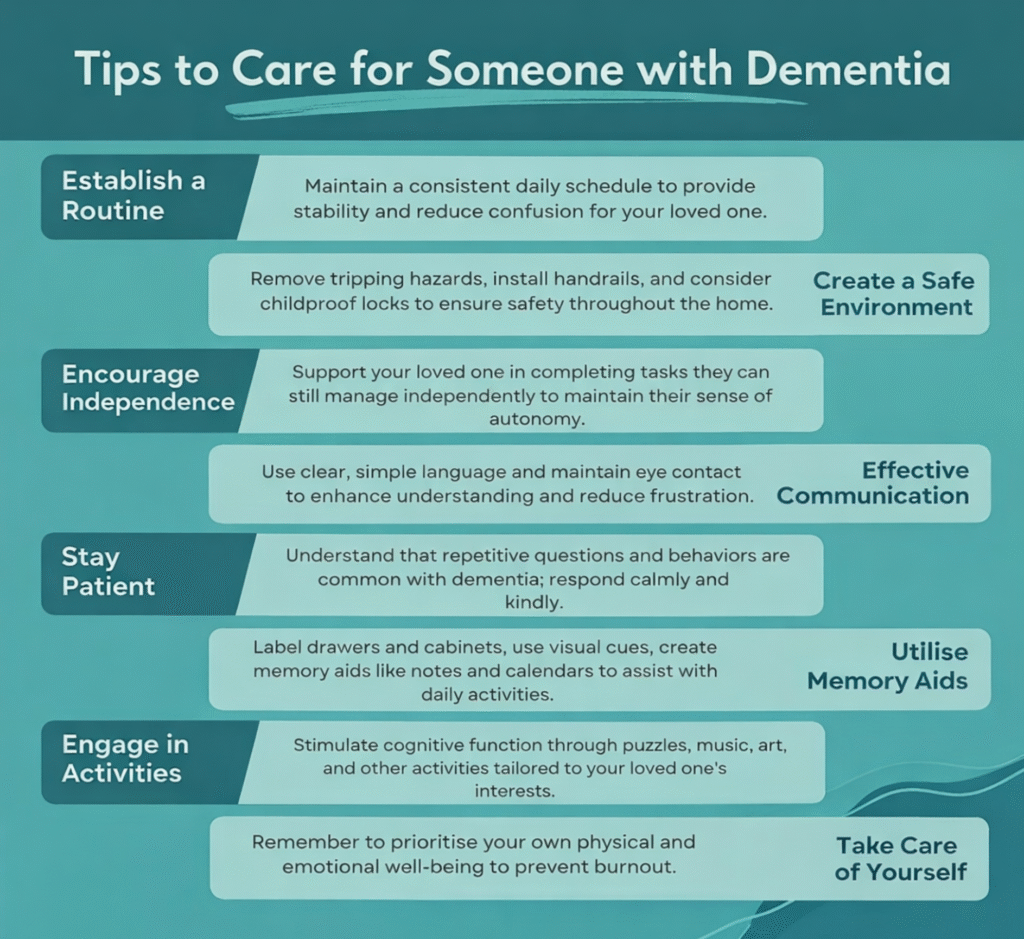
    Tips for caring parent or loved ones with dementia at home

    When dementia progresses, and care needs increase, many families begin searching online for dementia care homes near me or a care home for dementia near me. Choosing the right home can feel overwhelming, but taking a structured approach can make the process easier.

    Start with local authority directories

    Your local council usually keeps a list of approved providers and can help you identify government funded care homes near me that meet required standards. If the local authority funds part of the placement, they may suggest care homes that work within their funding arrangements.

    However, families can still explore other dementia care homes if they prefer a different location or service. In some cases, this may involve paying a top-up fee if the chosen home costs more than the council normally covers.

    Check care quality ratings

    Before choosing a care home, review the inspection ratings from the relevant regulator:

    • CQC (Care Quality Commission) in England
    • Care Inspectorate Wales (CIW) in Wales
    • RQIA in Northern Ireland
    • Care Inspectorate in Scotland

    Inspection reports can reveal important details about safety, staffing levels, and the quality of dementia care provided.

    Visit care homes in person

    Whenever possible, visit several dementia care homes near you before making a decision. Pay attention to:

    • Staff interactions with residents
    • Safety and cleanliness
    • Activities designed for people with dementia
    • Secure layouts for residents who may wander

    Many homes offer specialist enhanced dementia care, including memory-friendly environments, trained staff, and structured daily routines.

    Consider care needs and future progression

    Dementia is a progressive condition, so it is important to choose a home that can support increasing care needs over time. Some homes provide both residential and nursing care, which allows residents to remain in the same environment as their condition changes.

    Taking time to research and visit care homes for dementia near you helps families make confident decisions and ensures their loved one receives the level of care and support they truly need.

    Key facts about dementia care home fees

    If you are supporting someone with dementia, understanding how care home fees work can make the financial side of care much less confusing. The most important points families should remember include the following:

    • Many people with dementia pay for their own care. Dementia care is usually treated as social care, which means funding depends on a financial assessment rather than being automatically covered by the NHS.
    • Local authorities may help with the cost of care homes. If a person’s savings and assets fall below the capital thresholds, the council may contribute toward their care.
    • NHS funding is sometimes available. People with complex medical needs may qualify for NHS Continuing Healthcare, which can cover the full cost of care.
    • NHS-Funded Nursing Care may reduce costs. If someone lives in a nursing home but does not qualify for full NHS funding, the NHS may contribute a weekly amount toward the nursing element of care.
    • Home care can be an alternative in earlier stages. Some families explore options such as live-in carers or hourly support before moving to residential care.

    Understanding these key facts can help families plan ahead, explore help with care home fees for dementia patients, and make informed decisions about the best care options for their loved ones.

    New rules for care home payments in the UK (2026 update)

    Families often ask whether the government has introduced new rules for care home payments that could reduce the price of long-term care. The UK government has discussed several reforms to the social care system in recent years, but the way care home fees work largely remains the same for most families.

    The proposed care cost cap

    A major reform previously planned was a cap on lifetime care costs, which would have limited how much individuals pay for personal care over their lifetime. The proposed cap was set at £86,000.

    However, the government later delayed these reforms, meaning the current funding system still relies mainly on the means-tested financial assessment used by local authorities.

    What this means for families today

    For now, most people entering a care home will still follow the existing system:

    • People with assets above the upper capital limit usually self-fund their care.
    • Those with fewer assets may receive local authority support.
    • NHS funding remains available through Continuing Healthcare or NHS-Funded Nursing Care for those who qualify.

    Because policy changes can happen over time, families should always check the latest government guidance or speak with their local authority before making long-term financial decisions about care.

    Understanding these rules can help caregivers plan ahead and better prepare for the cost of care homes or specialist dementia care homes in the future.

    Conclusion

    Understanding whether dementia sufferers have to pay care home fees can feel confusing at first, especially when families face emotional and financial pressure at the same time. In the UK, dementia care is usually treated as social care, which means many people pay for some or all of their care home fees depending on their financial situation.

    The amount someone pays depends on several factors, including their savings, property, and the outcome of a local authority financial assessment. Some people qualify for support from the council, while others may receive NHS funding through Continuing Healthcare or NHS-Funded Nursing Care if their needs are primarily medical.

    Because dementia care home costs in the UK can be significant, families benefit from understanding the funding process early. Requesting a care needs assessment, exploring financial support options, and reviewing care home choices carefully can make the transition into long-term care much easier to manage.

    Planning ahead also helps caregivers make informed decisions about the cost of care homes, home care alternatives, and the best level of support for their loved one.

    If you are supporting someone with dementia and need guidance navigating care home fees, funding assessments, or NHS Continuing Healthcare applications, Care Sync Experts can help.

    We work with families and care professionals to review funding eligibility, explain the assessment process clearly, and help present care needs accurately so you can access the financial support available for dementia care and avoid the common mistakes that delay or reduce funding.

    FAQ

    Do dementia patients do better at home or in a nursing home?

    It depends on the stage of dementia and the level of support the person needs. In the early stages, many people with dementia do well at home because familiar surroundings can reduce confusion and anxiety. Family support, home care services, and structured routines often help maintain independence for longer.

    However, as dementia progresses, some individuals require 24-hour supervision, specialist dementia care, or nursing support. At this stage, a dementia care home or specialist nursing home may provide a safer environment with trained staff, structured activities, and secure facilities designed to support memory-related conditions. The best option depends on the person’s safety, medical needs, and the level of support available at home.

    How fast can dementia progress?

    Dementia progresses at different speeds depending on the type of dementia, the person’s age, and their overall health. Some people experience slow progression over many years, while others may decline more quickly.

    On average, many people live between 4 and 10 years after diagnosis, although some individuals live much longer. Certain forms of dementia, such as vascular dementia, may progress in noticeable steps, while Alzheimer’s disease typically causes a gradual decline. Regular medical reviews, supportive care, and early intervention can sometimes help slow the impact of symptoms.

    What are the signs dementia is getting worse?

    As dementia progresses, symptoms usually become more noticeable and begin to affect daily life more significantly. Families often notice changes in memory, behaviour, and independence.

    Common signs that dementia may be worsening include:
    – Increasing memory loss and confusion
    – Difficulty recognising familiar people or places
    – Problems with communication or finding words
    – Changes in behaviour or mood, such as agitation or anxiety
    – Difficulty managing everyday tasks like dressing, cooking, or taking medication
    – Greater need for supervision and personal care

    When these signs appear, families may start considering additional support such as home care services or specialist dementia care.

    What are four common behaviours that people with dementia often exhibit?

    People living with dementia often experience changes in behaviour because the condition affects memory, reasoning, and emotional regulation. While symptoms vary from person to person, several behaviours commonly occur.

    Four common behaviours seen in people with dementia include:
    Memory loss – forgetting recent events, appointments, or conversations
    Confusion or disorientation – becoming lost in familiar places or forgetting the date or time
    Mood or personality changes – increased anxiety, irritability, or withdrawal
    Repetitive actions or questions – asking the same question repeatedly or repeating activities

    These behaviours usually develop gradually as the condition progresses. Understanding them can help caregivers respond with patience and choose the right level of support for the person living with dementia.