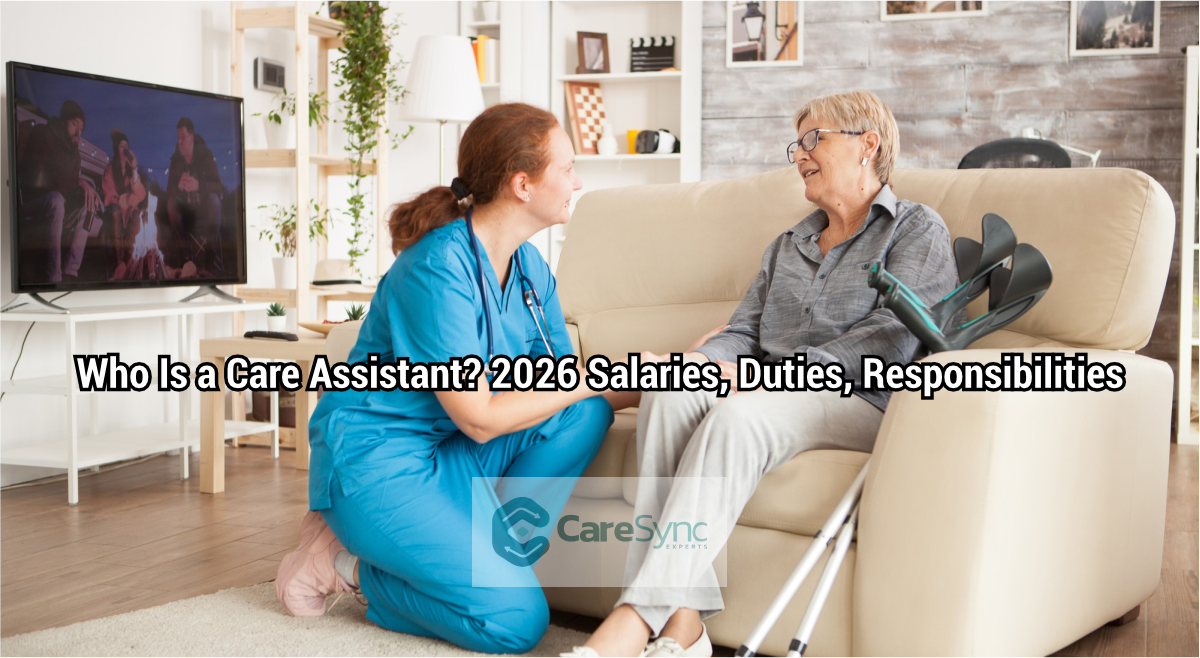
A care assistant supports people who need help with daily living due to age, illness, disability, or mobility challenges. In the UK, care assistants work in private homes, care homes, and some NHS settings, helping individuals live safely, comfortably, and with dignity.
Core care assistant duties include personal care, medication support, mobility assistance, and emotional companionship. Unlike purely clinical roles, a care assistant focuses on practical, hands-on support that enables independence and improves quality of life.
In simple terms, a care assistant helps someone manage everyday life when they cannot do it alone, whether that means assisting with washing and dressing, preparing meals, or checking that medication routines stay on track.
A Day in the Life of a Care Assistant
A typical day as a care assistant starts early. You may arrive at a client’s home at 7:30am to help them get ready for the day. You support them with washing, dressing, and personal hygiene. You prepare breakfast, prompt medication, and make sure they feel comfortable before you leave for the next visit.
Later in the day, you might assist another client with mobility exercises, help them move safely using approved moving and handling techniques, or provide companionship to reduce isolation. In a care home or healthcare assistant setting, you may support multiple residents during a shift, documenting care provided and reporting any changes in condition.
Care assistants do not just complete tasks; they build trust. They notice small changes in appetite, mood, or mobility and report concerns promptly. Their presence often makes the difference between someone merely surviving and truly living with dignity.
RELATED: Employment Rights Bill: What UK Care Workers Must Do Before 2026–2027
Care Assistant Duties and Responsibilities in the UK
The care assistant duties and responsibilities in the UK vary slightly depending on the setting, but they typically include:
1. Personal Care
Care assistants help clients with bathing, showering, dressing, grooming, and toileting. They respect privacy and promote independence wherever possible.
2. Medication Support
Depending on training and employer policy, a care assistant may prompt, assist with, or in some cases administer medication. This differs from some healthcare assistant or clinical roles, where medication administration may fall under stricter supervision.
3. Mobility and Moving & Handling
Care assistants support clients in transferring safely from bed to chair, repositioning to prevent pressure sores, and using mobility aids correctly.
4. Monitoring Health Changes
While a healthcare assistant in a hospital may check vital signs more routinely, care assistants in home care services observe and report changes in condition, such as appetite loss, confusion, or reduced mobility.
5. Daily Living Support
They prepare meals, assist with light household tasks, manage laundry, and help with shopping.
6. Companionship and Emotional Support
Many clients receiving senior care at home value conversation and companionship as much as physical assistance. A care assistant often becomes a trusted presence in a client’s life.
In short, the role blends practical care, observation, and human connection.
Where Care Assistants Work in the UK
A care assistant can work in several environments across the UK, and each setting shapes the daily routine and level of responsibility.
Home Care Services (Domiciliary Care)
Many care assistants work in home care services, supporting individuals in their own homes. In this setting, you may act as a home caregiver for elderly clients who want to remain independent for as long as possible.
You travel between visits, often supporting multiple clients per day. You work one-to-one, which allows you to build strong relationships. This environment requires time management, confidence, and the ability to work independently without immediate supervision.
Home-based roles focus heavily on:
- Personal care
- Medication prompting
- Meal preparation
- Companionship
- Mobility assistance
This is where most people think of the traditional care worker role.
Care Homes and Residential Facilities
In a care home, a care assistant supports several residents during a shift. You work as part of a team, often alongside senior carers, nurses, and sometimes a nursing assistant or auxiliary nurse.
The pace can feel faster than domiciliary care, but you benefit from immediate team support. Documentation and coordination become more structured, and supervision is closer.
NHS Hospitals and Nursing Settings
Some care assistants work in NHS environments, often under the title healthcare assistant (sometimes written as health care assistant). You may see this shortened to HCA, and many people search online for the “hca meaning” when exploring this role.
In NHS and nursing settings, responsibilities can include:
- Supporting patients with hygiene
- Assisting with feeding
- Monitoring basic observations under supervision
- Supporting nurses during procedures
This differs from roles such as an emergency care assistant or ambulance care assistant, which involve pre-hospital or emergency transport environments.
Although related, these are distinct career paths.
READ MORE: Is MS Hereditary or Inherited? What Causes Multiple Sclerosis (2026)
Care Assistant vs Healthcare Assistant vs Care Worker
Many people use these titles interchangeably, but they do not always mean the same thing. Understanding the difference helps you choose the right career path, and helps employers recruit correctly.
Here is a clear comparison:
| Role | Where They Work | Focus | Clinical Involvement |
| Care Assistant | Care homes, home care services | Personal care, daily living support, companionship | Limited clinical tasks |
| Care Worker | Usually domiciliary care | Similar to care assistant (often interchangeable term) | Limited clinical tasks |
| Healthcare Assistant (HCA) | NHS hospitals, clinics, nursing settings | Supports nurses with patient care | More clinical exposure under supervision |
| Nursing Assistant / Auxiliary Nurse | Hospital or specialist units | Assists qualified nurses | Structured clinical support |
| Emergency Care Assistant / Ambulance Care Assistant | Ambulance services | Patient transport and emergency support | Pre-hospital environment |
What Is the Difference in Practice?
A care assistant usually works in social care, helping individuals live independently at home or in residential settings. A healthcare assistant works more closely within medical environments, often alongside nurses in hospitals.
If you have seen the term “CNA meaning” online, note that CNA (Certified Nursing Assistant) is commonly used in the United States. In the UK, the closest equivalent would be a healthcare assistant or nursing assistant, depending on the setting.
In many job adverts, employers use care worker and care assistant interchangeably, especially in domiciliary care. However, once you move into NHS environments, the title healthcare assistant becomes more common.
Choosing between these roles depends on:
- Whether you prefer home-based or hospital work
- Your comfort with clinical environments
- Your long-term career plans (for example, progressing into nursing)
Understanding these distinctions helps you align your training, qualifications, and job applications correctly.
Care Assistant UK Salary and Pay (2026 Guide)
If you’re considering this career, you naturally want to understand care assistant UK salary levels and how pay varies across settings.
How Much Does a Care Assistant Earn in the UK?
In 2026, most entry-level care assistant UK pay starts close to the National Living Wage. However, actual earnings depend on:
- Location (London and the South East typically pay more)
- Employer type (private provider vs NHS)
- Experience level
- Shift patterns (nights and weekends often include enhancements)
On average:
- Entry-level care assistants earn a competitive hourly rate aligned with UK minimum wage legislation.
- Experienced carers or those with specialist training earn higher hourly rates.
- Senior care assistants earn more than entry-level staff.
NHS Pay Bands
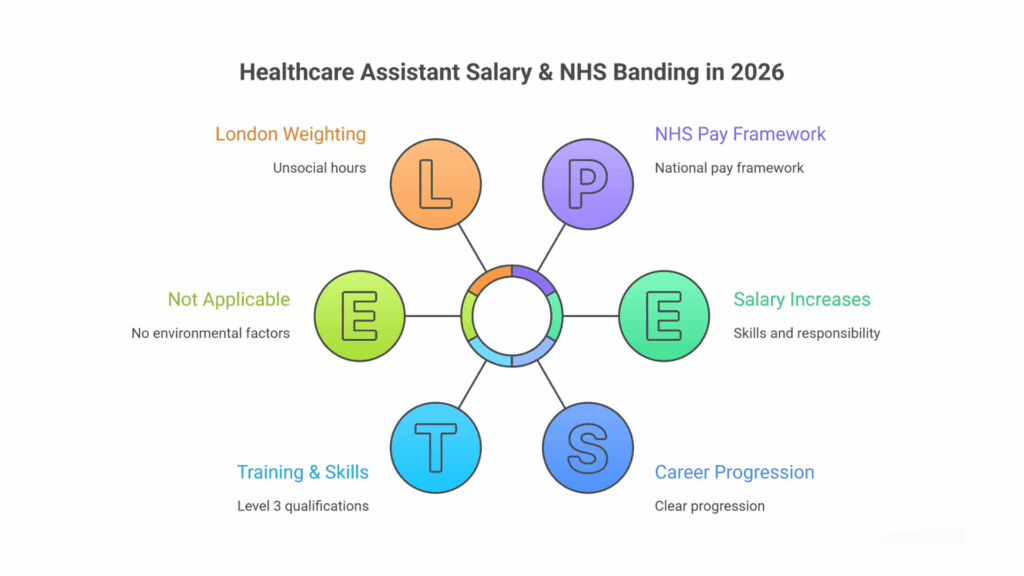
If you work as a healthcare assistant in the NHS, your salary typically follows NHS pay bands. Most healthcare assistants fall under Band 2 or Band 3, depending on responsibilities and experience.
This differs from private sector domiciliary care, where pay structures depend on the provider.
Visa and Occupation Classification (6131 Job Code)
For international applicants, care assistants fall under the UK Standard Occupational Classification 6131 job code, which relates to care workers and home carers. This classification matters when applying under the Skilled Worker or Health and Care Worker routes.
While salary should not be the only factor in choosing this career, understanding pay structures helps you set realistic expectations and plan progression into higher-paying roles.
SEE ALSO: How to Choose Home Care Agencies in the UK (2026)
Care Assistant UK Qualifications and Eligibility
You do not need a university degree to become a care assistant in the UK, but employers expect you to meet certain standards before you begin working with vulnerable people.
Care Assistant UK Qualifications
Most entry-level roles do not require formal qualifications at the start. However, employers strongly prefer candidates who:
- Hold (or are willing to complete) a Level 2 or Level 3 Diploma in Adult Care
- Complete mandatory training such as safeguarding, moving and handling, infection control, and medication awareness
- Pass a Disclosure and Barring Service (DBS) check
Many providers support new staff through structured induction programmes aligned with the Care Certificate. Over time, you may progress into more advanced qualifications in health and social care.
When people search for care assistant UK qualifications, they often want reassurance that the role is accessible. The truth is simple: employers value attitude, reliability, and compassion just as much as certificates.
Care Assistant UK Eligibility
To meet care assistant UK eligibility requirements, you must:
- Have the legal right to work in the UK
- Pass background checks (DBS)
- Demonstrate basic English communication skills
- Show physical capability to assist with mobility tasks
Some employers also look for previous experience in social care, volunteering, or working as a home caregiver for elderly individuals.
UK Care Assistant Jobs with Visa Sponsorship
International applicants often search for UK Care Assistant jobs with visa sponsorship. In many cases, care assistant roles qualify under the Health and Care Worker visa, provided the employer holds a sponsorship licence and meets minimum salary requirements.
The role usually falls under the 6131 job code (care workers and home carers). Applicants must:
- Secure a confirmed job offer from a licensed sponsor
- Meet English language requirements
- Earn at or above the required salary threshold
Some people specifically search for NHS Care Assistant jobs with visa sponsorship UK, but sponsorship depends on the employer and current immigration rules. Not every provider offers sponsorship, so candidates should verify this directly with the recruiting organisation.
Visa regulations can change, so applicants should always check official government guidance before applying.
MORE: First Person vs Third Person Care Plan: CQC and the Mental Capacity Act Expectation in 2026
Career Progression: Where Can a Care Assistant Go Next?
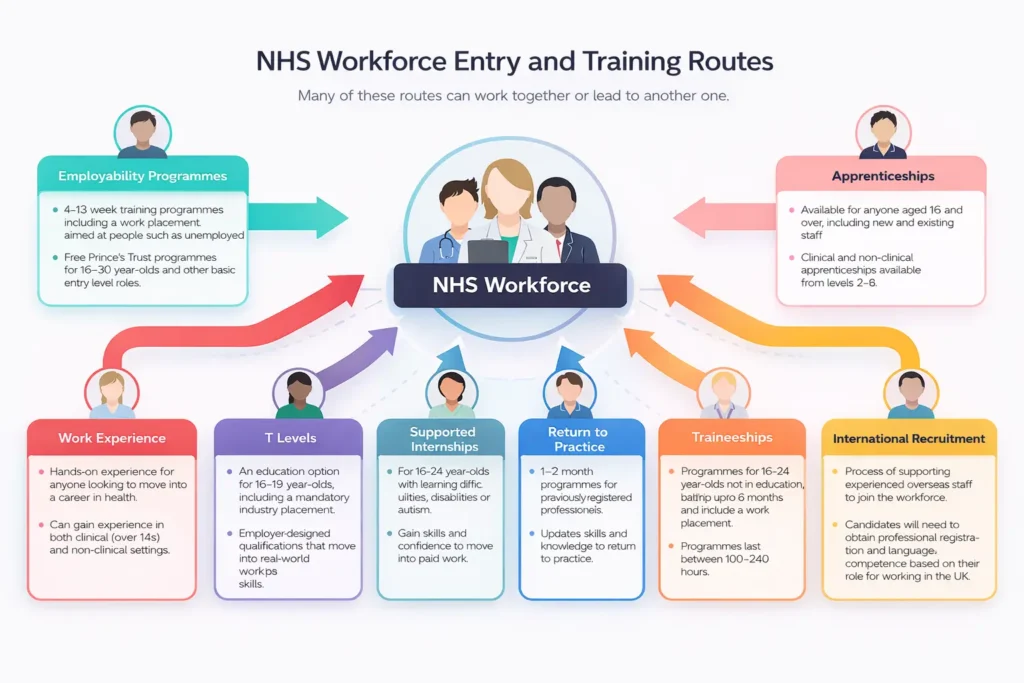
Many people start as a care assistant and build long-term careers in health and social care. The role opens multiple progression paths, depending on your interests and training.
1. Senior Care Assistant
With experience, you can move into a senior role. A senior care assistant often:
- Oversees junior staff
- Supports care planning
- Handles more complex client needs
- Acts as a shift leader in care homes
This step usually comes with higher care assistant UK pay and more responsibility.
2. Healthcare Assistant in the NHS
Some care assistants transition into healthcare assistant roles within NHS and nursing settings. In this environment, you gain closer exposure to clinical care and work alongside qualified nurses.
If you want to move into hospital work, this path offers valuable experience and structured pay progression.
3. Nursing Associate or NHS Nurse
With further training, you can progress toward becoming a nursing associate or even an NHS nurse. Many registered nurses began their careers as care assistants or healthcare assistants.
This route requires formal study, but your frontline experience gives you a strong foundation.
4. Specialist Roles
You may also explore specialist positions such as:
- Dementia care specialist
- Palliative care support worker
- Rehabilitation assistant
- Emergency care assistant (with additional training)
Each path builds on your practical experience and compassion.
A role as a care assistant does not trap you in one position. It gives you real-world experience, confidence in supporting vulnerable people, and a gateway into broader opportunities across health and social care.
Is a Career as a Care Assistant Right for You?
A career as a care assistant suits people who take pride in helping others live with dignity. You will not sit behind a desk. You will move, listen, lift, document, reassure, and adapt, sometimes all within the same hour.
You should consider this role if you:
- Feel comfortable supporting people with personal care
- Stay calm under pressure
- Communicate clearly and confidently
- Notice small changes in someone’s health or behaviour
- Value human connection over routine office work
The work can challenge you physically and emotionally. Some days will test your patience. However, you will also see direct impact. When a client smiles because you helped them feel clean, safe, or less lonely, you understand why this role matters.
If you want stable employment, opportunities to progress into healthcare assistant roles or nursing, and the chance to make a daily difference, becoming a care assistant offers a meaningful starting point.
Conclusion
A care assistant does far more than complete daily tasks. You support independence, protect dignity, and become a steady presence in someone’s life. Whether you work in home care services, a residential setting, or alongside NHS and nursing teams as a healthcare assistant, your role directly shapes quality of life.
The profession demands empathy, resilience, and accountability. It also offers meaningful career progression, stable employment, and the chance to build a long-term pathway in health and social care.
If you feel drawn to practical support work, value human connection, and want a role that makes visible impact every single day, becoming a care assistant in the UK could be the right step forward.
Supporting Care Assistant Standards and Workforce Development?
If you searched “care assistant duties,” “care assistant UK qualifications,” or “UK Care Assistant jobs with visa sponsorship,” you are likely either exploring this career path or managing a service that depends on competent, well-trained care staff.
Clear, accurate information matters. Poor training, unclear role boundaries, or weak onboarding processes increase risk, reduce inspection confidence, and weaken tender performance.
Care Sync Experts supports families, caregivers, and care providers across the UK with:
- Clear interpretation of CQC, RQIA, and CIW workforce expectations
- Education sessions for domiciliary care and supported living teams
- Structured induction frameworks aligned with the Care Certificate
- Competency sign-off systems for medication support and moving & handling
- Governance guidance for safe delegation between care assistants and healthcare assistants
- Workforce planning strategies that strengthen tender submissions
- Policy development for home care services and residential settings
- Documentation systems that improve compliance and inspection readiness
Whether you are applying for care assistant roles, recruiting staff, or managing a domiciliary care agency, we help you move from uncertainty to structured, evidence-based workforce systems.
Get in touch with Care Sync Experts today and ensure your care delivery model is compliant, confident, and built to withstand inspection and commissioning scrutiny.
FAQ
How to Get a Care Assistant Job in the UK?
To get a care assistant job in the UK, follow these practical steps:
Prepare a simple, clear CV
Highlight any experience in care, volunteering, customer service, or supporting vulnerable people. Employers value reliability and attitude as much as qualifications.
Apply directly to care providers
Search local care homes, home care services, and NHS job portals. Many roles advertise year-round due to ongoing demand.
Register with care recruitment agencies
Agencies often place candidates quickly in both residential and domiciliary care roles.
Prepare for interviews
Employers usually assess:
– Communication skills
– Safeguarding awareness
– Basic understanding of care assistant duties
– Reliability and availability
Complete required checks
You must pass a DBS check and provide references before starting.
If you aim to work in the NHS as a healthcare assistant, apply through the official NHS Jobs website and review the job description carefully.
How to Become a Carer in the UK With No Experience?
You can become a care assistant in the UK with no formal experience. Many providers recruit entry-level staff and provide training.
To increase your chances:
– Show empathy and patience during interviews
– Demonstrate good communication skills
– Complete short online courses in safeguarding or basic care awareness
– Volunteer in community or support settings if possible
Most employers enrol new staff onto the Care Certificate during induction. You learn essential topics such as infection control, moving and handling, and medication awareness while working.
The key requirement is not prior experience; it is attitude, reliability, and willingness to learn.
Can a Care Assistant Become a Nurse in the UK?
Yes. Many registered nurses in the UK began their careers as care assistants or healthcare assistants.
Common progression routes include:
– Moving into a healthcare assistant role in the NHS
– Training as a nursing associate
– Completing a university nursing degree
– Applying for NHS nurse positions after qualification
Working as a care assistant gives you frontline experience with patients, documentation, and teamwork. This experience strengthens university applications and improves your understanding of clinical environments.
If long-term nursing is your goal, starting as a care assistant offers practical exposure before committing to formal study.
Can I Migrate to the UK as a Caregiver?
Yes, you can migrate to the UK as a caregiver if you meet immigration requirements.
Care assistants and care workers fall under the UK occupation code 6131 (care workers and home carers). Many roles qualify under the Health and Care Worker visa, provided:
– You receive a confirmed job offer from a licensed UK sponsor
– The employer meets minimum salary thresholds
– You meet English language requirements
– You pass required background checks
Some employers advertise UK Care Assistant jobs with visa sponsorship, but sponsorship availability depends on the provider.
If you are applying from outside the UK (for example, from Nigeria), you must secure sponsorship before travelling. Always check official UK government immigration guidance to confirm current rules, as visa requirements can change.
Leave a Reply