End of life care at home helps people with terminal illnesses receive comfort, dignity, and medical support in familiar surroundings. Families often choose palliative care at home because it allows loved ones to stay close to the people, routines, and environment that matter most during their final months, weeks, or days.
A team of healthcare professionals, including GPs, palliative care nurses, carers, and hospice specialists, can provide pain management, emotional support, personal care, and end of life care at home medication. Understanding what to expect, who provides support, and who pays for palliative care at home in the UK can help families make informed decisions during an emotionally difficult time.

End of Life Care at Home: What to Expect
End of life care at home focuses on comfort, dignity, pain relief, and emotional support as a person approaches the final stage of life. Care teams work closely with families to manage symptoms, reduce distress, and help the person remain as comfortable as possible at home.
Many people ask, “dying at home what to expect?” The experience differs for every person, but families often notice gradual physical and emotional changes. A person may become weaker, sleep more often, eat and drink less, or lose interest in daily activities. Healthcare professionals help families understand these changes and respond with the right support.
Palliative care at home may include:
- Pain and symptom management
- Help with washing, dressing, and toileting
- Emotional and psychological support
- Medication monitoring and adjustments
- Overnight or emergency nursing support
- Equipment such as hospital beds or pressure-relief mattresses
Families also receive guidance on what to do if symptoms suddenly change or worsen. Nurses and carers often create a care plan that explains who to contact during the day, at night, or in an emergency.
For people receiving end of life care at home cancer support, care teams may also help manage symptoms such as breathlessness, fatigue, nausea, anxiety, and reduced mobility. The goal of cancer care at home is not only to manage physical symptoms but also to help the person feel safe, respected, and supported throughout their care journey.
RELATED: New Rules for Care Home Payments in 2026
Palliative Care at Home vs End-of-Life Care
Many people use the terms palliative care and end-of-life care interchangeably, but they do not always mean the same thing. Understanding the difference helps families make better decisions about care and support.
Palliative care at home supports people living with serious or life-limiting illnesses. It focuses on relieving pain, managing symptoms, and improving quality of life. A person can receive palliative care alongside treatment for conditions such as cancer, heart failure, dementia, or neurological diseases.
End-of-life care, however, usually refers to the final stage of life when healthcare professionals believe a person may be in their last months, weeks, or days. At this stage, care teams place greater focus on comfort, dignity, symptom control, and emotional support for both the person and their loved ones.
So, is palliative care end of life care? Sometimes, yes. End-of-life care often includes palliative care, but palliative care can begin much earlier in an illness and continue for months or even years.
Many families also ask, “when should someone be offered palliative care?” Healthcare professionals may recommend palliative or end of life care when symptoms begin affecting daily life, comfort, mobility, or emotional wellbeing. Early support often helps people feel more comfortable and gives families more time to plan care confidently.
A palliative care nurse can support families at home by helping manage symptoms, coordinating care, explaining medication, and providing emotional reassurance during difficult moments.
Who Provides End-of-Life Care at Home?
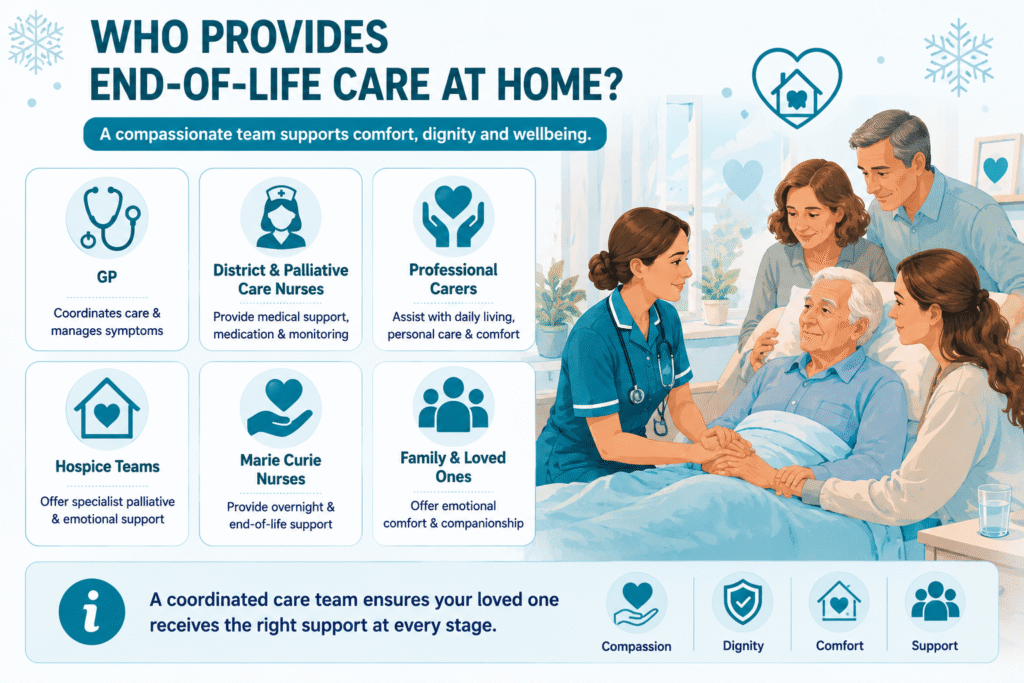
Several healthcare professionals work together to provide safe and compassionate end of life care at home. Each person plays a different role in supporting comfort, dignity, and quality of life.
A GP usually coordinates the person’s overall care and helps manage symptoms, prescriptions, and treatment decisions. District nurses and a palliative care nurse may visit regularly to monitor pain, manage dressings, give medication, and respond to changes in the person’s condition.
Professional carers also provide important daily support. They help with washing, dressing, mobility, toileting, meal preparation, and emotional reassurance. For many families, caregivers become a trusted source of comfort during an emotionally difficult time.
Hospice teams may also support palliative care at home. Many people ask, “what is hospice?” A hospice is a specialist service that supports people living with terminal illnesses. Hospice teams can provide nursing care, counselling, therapy services, and practical advice either at home or in a hospice setting.
Families caring for someone with advanced illness may also receive support from Marie Curie cancer care nurses, who provide overnight nursing, symptom management, and emotional support for both patients and carers. These services often help families feel more confident caring for a loved one at home.
For people receiving end of life care at home cancer support, care teams may include cancer specialists, palliative care nurses, physiotherapists, occupational therapists, and social workers. Together, they help families manage both medical and practical challenges while allowing the person to remain in familiar surroundings.
READ MORE: PIP and ADP Insider Tips for 2026: Everything You Need to Know
End of Life Care at Home Medication and Daily Support
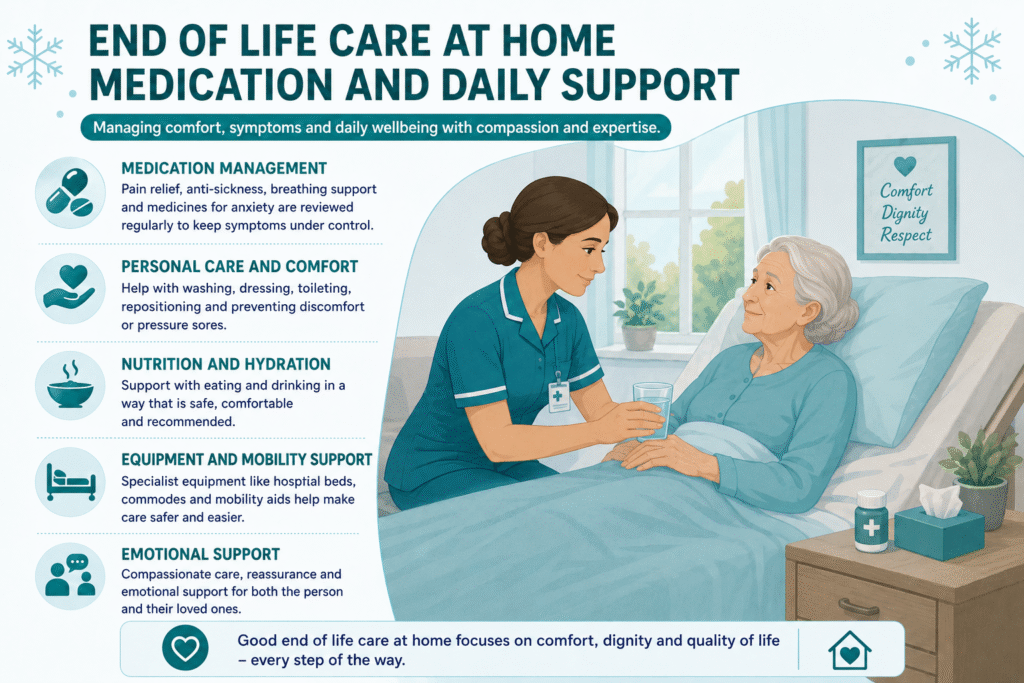
Managing comfort and daily wellbeing becomes a central part of end of life care at home. Care teams work closely with families to control pain, reduce distressing symptoms, and help the person feel as comfortable as possible.
End of life care at home medication often includes pain relief, anti-sickness medicine, breathing support medication, and treatments that reduce anxiety or agitation. A GP, district nurse, or palliative care nurse will regularly review medication to make sure symptoms remain under control as needs change.
Families do not have to manage everything alone. Nurses and carers can help with:
- Giving medication safely
- Monitoring pain and symptoms
- Helping with washing and personal care
- Supporting eating and drinking
- Assisting with movement and repositioning
- Preventing discomfort and pressure sores
Many providers also arrange practical equipment to support palliative care home services. This may include hospital beds, commodes, mobility aids, oxygen equipment, or pressure-relief mattresses.
As a person becomes weaker, care often becomes more hands-on. Some people may sleep longer, speak less, or need more support with daily activities. Healthcare professionals guide families through these changes and explain what is happening in a calm and reassuring way.
Good end of life care palliative support focuses not only on physical comfort but also on emotional wellbeing. Small actions such as maintaining routines, keeping the environment peaceful, and helping loved ones spend meaningful time together can make a significant difference during the final stage of life.
Who Pays for Palliative Care at Home in the UK?
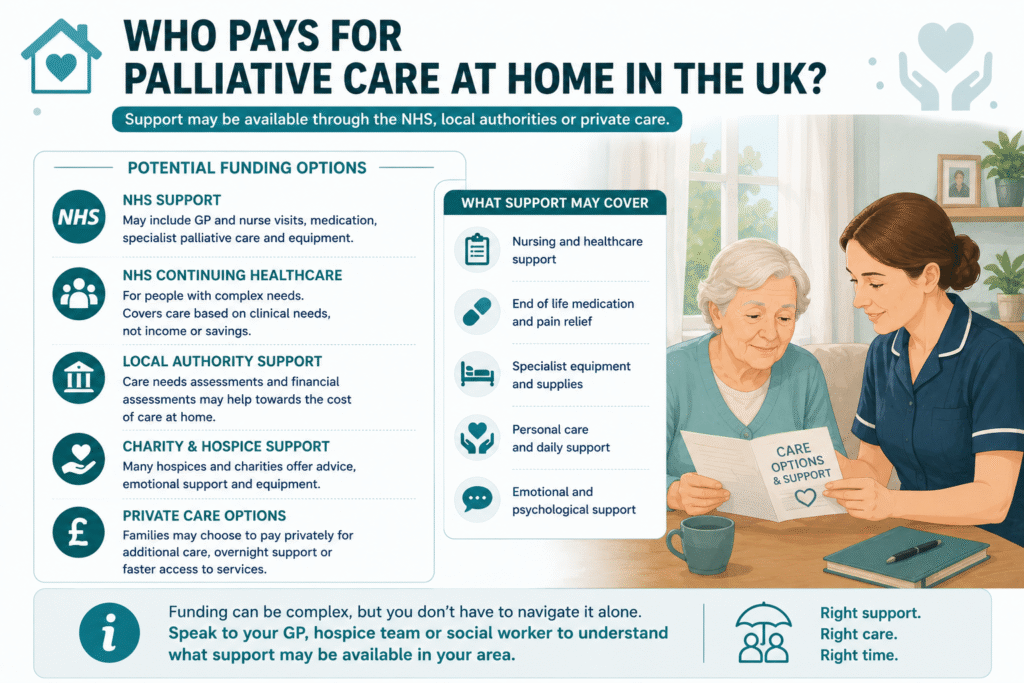
Many families worry about the cost of end of life care at home, especially when care needs increase quickly. The good news is that some palliative care at home services may be funded through the NHS or local authority support, depending on a person’s condition and financial circumstances.
People with complex or rapidly changing health needs may qualify for NHS Continuing Healthcare funding. This funding can cover some or all end of life care at home costs, including nursing support, personal care, and specialist equipment. Healthcare professionals usually assess eligibility based on medical needs rather than income alone.
Families often ask, “is palliative care at home free?” Some services are free, while others may involve private costs. NHS-funded support may include:
- GP and district nurse visits
- Palliative care nurse support
- End of life care at home medication
- Specialist equipment arranged through the NHS
- Hospice support services
However, families may still choose to pay privately for additional caregiver visits, overnight care, live-in care, or faster access to certain services.
Local councils may also contribute toward care costs after completing a care needs assessment and financial assessment. Charities and hospice organisations sometimes provide additional support, advice, or equipment free of charge.
Understanding end of life care at home funding options early can reduce stress and help families plan care more confidently. Speaking with a GP, hospice team, or social worker can help families understand what support may be available in their area.
SEE ALSO: HICBC Child Benefit Rule Change UK: What Care Workers Need to Know in 2026
When Home Care May Not Be Enough
Many people feel more comfortable receiving end of life care at home, but there are times when symptoms or care needs become too difficult to manage safely at home. Families should never feel guilty about asking for additional support when care becomes physically or emotionally overwhelming.
Some people may need more intensive symptom management, specialist monitoring, or round-the-clock nursing care. In these situations, a hospice or hospital team may provide better support and comfort.
Many families ask, “what is hospice care?” Hospice care provides specialist support for people living with terminal illnesses. Hospice teams focus on pain relief, emotional support, dignity, and quality of life. Some hospices offer short stays for symptom management, while others provide day services or overnight care.
End of life care in hospital may also become necessary if symptoms suddenly worsen or require urgent medical treatment. Doctors and nurses can help stabilise symptoms and decide whether the person can safely return home afterward.
A healthcare team may recommend moving from palliative care home support to hospice or hospital care when a person experiences:
- Severe pain or breathing difficulties
- Frequent medical emergencies
- Complex medication needs
- Increased confusion or agitation
- Rapid physical decline requiring constant monitoring
Even when someone moves into hospice or hospital care, families still remain closely involved in decisions and emotional support. The goal always stays the same: helping the person feel safe, comfortable, and respected during the final stage of life.
Conclusion
End of life care at home allows many people to spend their final months, weeks, or days in familiar surroundings with the support of loved ones and healthcare professionals. With the right palliative care at home support, families can manage pain, daily care, emotional wellbeing, and changing medical needs more confidently.
Understanding what to expect, who provides care, and who pays for palliative care at home in the UK can help families make informed decisions during a difficult time. Speaking with a GP, hospice team, or palliative care nurse early can make it easier to arrange the right support and ensure the person receives compassionate, dignified care throughout their journey.
If you need guidance arranging end of life care home support for a loved one, Care Sync Experts can help you understand your options and connect you with compassionate, professional caregivers.
Our team supports families with personalised care solutions designed to provide comfort, dignity, and reassurance when it matters most.
FAQ
What are common symptoms in the last 48 hours of life?
In the final 48 hours of life, many people become increasingly tired and may spend most of their time sleeping. Other common symptoms include reduced appetite and thirst, changes in breathing patterns, restlessness, confusion, cool hands or feet, and reduced communication.
Healthcare professionals providing end of life care at home focus on keeping the person comfortable and managing symptoms calmly and compassionately.
What is an enad of life care plan?
An end of life care plan outlines a person’s medical, emotional, and personal care wishes during the final stage of life. The plan may include preferred treatments, pain management, emergency contacts, preferred place of care, spiritual wishes, and decisions about hospital treatment. Care teams use the plan to provide consistent and person-centred support.
What are examples of signs that someone is very close to death?
Signs that someone may be very close to death can include long periods of sleep, little interest in food or drink, changes in breathing, withdrawal from conversation, increased confusion, and significant physical weakness.
Some people may also become less responsive in their final days. Nurses and carers often help families understand these changes and provide reassurance during this difficult time.
What words comfort a dying person?
Simple, calm, and reassuring words often provide the most comfort. Many people appreciate hearing phrases such as:
“I’m here with you.”
“You are loved.”
“You are not alone.”
“We will be okay.”
“Thank you for everything.”
Sometimes quiet presence, holding a hand, or listening can provide more comfort than trying to find the perfect words.
Leave a Reply