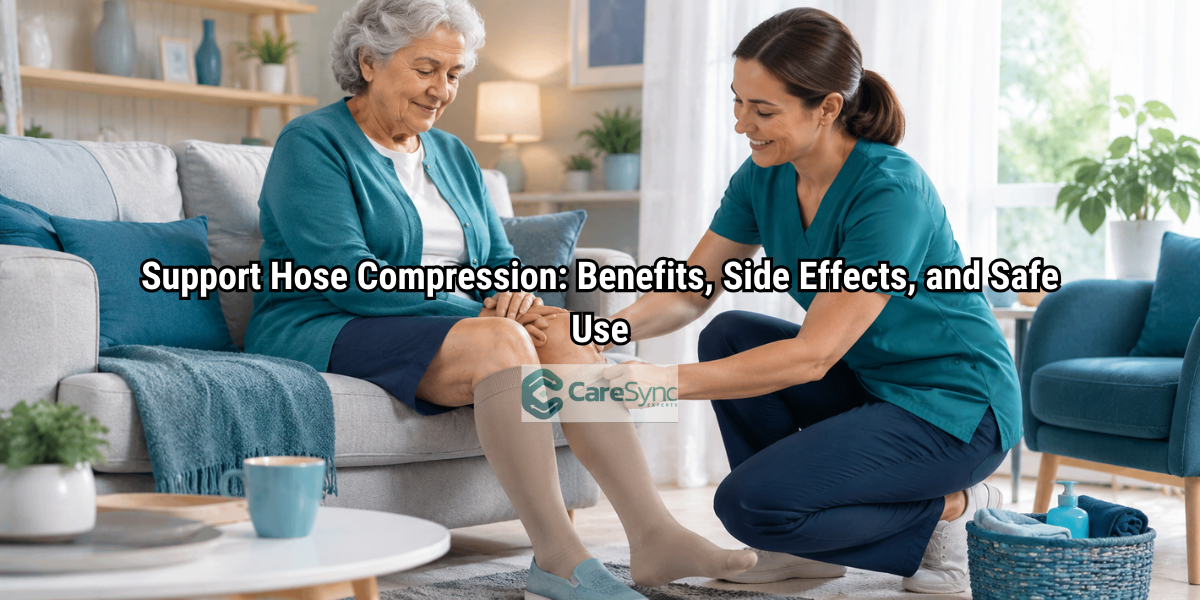
Support hose compression helps improve blood flow in the legs by applying gentle pressure, usually strongest around the ankle and lighter as it moves up the leg. This pressure helps push blood and fluid upward, which can reduce swelling, ease heavy or tired legs, and support people who struggle with poor circulation.
People often ask, what do support hose do or what are compression socks used for? In simple terms, they help the legs move blood back toward the heart instead of allowing blood or fluid to pool around the feet, ankles, and lower legs.
For caregivers, the goal is not just to help someone put them on. The real goal is to make sure the person wears the right type, at the right time, for the right reason. A poorly fitted stocking can cause pain, skin irritation, deep marks, or circulation problems.
Support hose and compression stockings can help many older adults, people with swollen legs, people who sit or stand for long periods, and some people recovering from surgery. However, they do not suit everyone.
Anyone with fragile skin, open wounds, severe leg pain, diabetes-related circulation problems, or suspected poor blood flow should speak to a healthcare professional before using them.

What Do Support Hose Do?
Support hose gently squeeze the legs to help blood move upward toward the heart. They also help reduce fluid build-up around the ankles, feet, and lower legs, especially when someone sits, stands, or moves less than usual.
So, where does the fluid go when wearing compression stockings? The fluid does not simply disappear. The pressure helps move excess fluid back into the body’s normal circulation and drainage systems, where the body can process it more effectively.
From a caregiver’s point of view, support hose can make daily care easier when they work well. The person may feel less heaviness in their legs, move more comfortably, and experience less swelling by the end of the day.
However, caregivers should not only check whether the stockings are on. They should also check how the legs respond. Look for comfort, normal skin colour, warm toes, reduced swelling, and no deep marks. If the stockings cause pain, numbness, cold feet, blue toes, or skin damage, remove them and ask for medical advice.
RELATED: The 5 Principles of Mental Capacity Act: A Practical Guide for 2026
Who Should Wear Compression Socks?
People often ask who should wear compression socks because leg swelling, aching, and poor circulation can affect daily comfort. Compression socks may help people who stand or sit for long periods, travel long distances, have heavy legs, swollen ankles, varicose veins, or reduced mobility.
They may also help some people after surgery, during pregnancy, or when a healthcare professional recommends support for circulation or clot prevention. In these cases, the right pressure level matters. A light support sock may suit tired legs, but medical-grade compression needs proper guidance.
Caregivers should pay close attention when supporting older adults or people with health conditions. Compression can help the right person, but it can harm someone with poor arterial blood flow, fragile skin, open wounds, severe leg pain, untreated infection, or certain diabetes-related circulation problems.
So, who should not wear compression socks without medical advice? Anyone with numbness, cold feet, blue or pale toes, active leg ulcers, severe peripheral artery disease, or unexplained swelling should speak to a GP, nurse, pharmacist, or vascular specialist first.
The best time to wear compression socks is usually during the day, especially when the person will sit, stand, travel, or move around. The safest choice always depends on the person’s condition, comfort, and professional advice.
How Long Should You Wear Compression Socks?
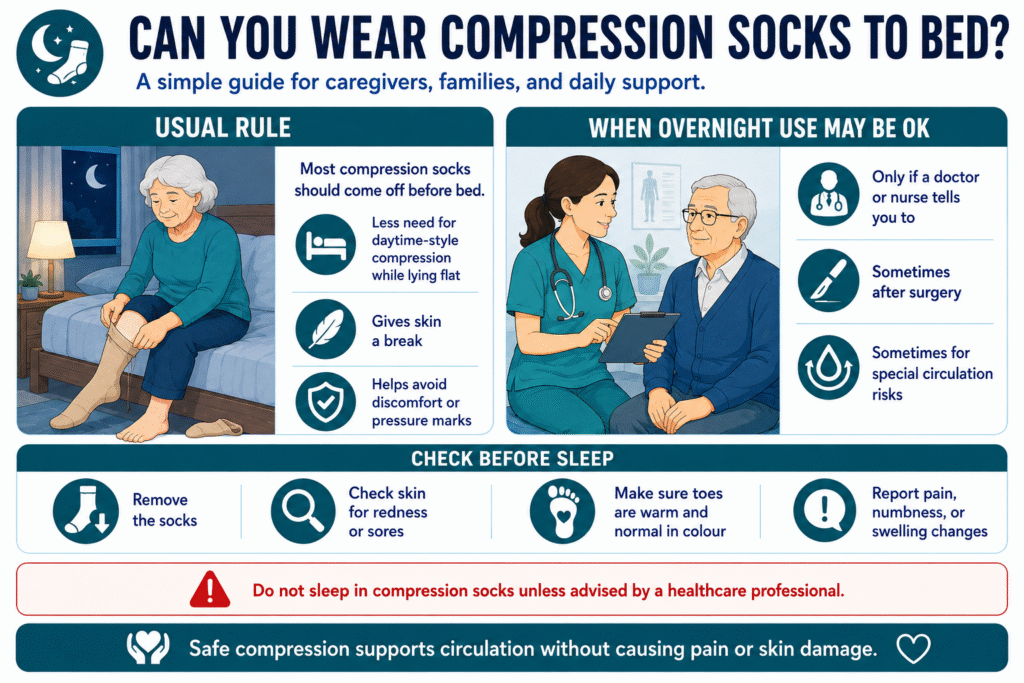
Most people wear compression socks during the day and remove them before going to bed, unless a healthcare professional gives different instructions. The best routine usually starts in the morning, before swelling builds up in the feet and ankles.
So, how long should you wear compression socks? For general daytime support, many people wear them during active hours, especially when they sit, stand, travel, or move around. If a doctor or nurse prescribed them, follow their exact instructions on how long to wear compression socks or stockings each day.
Caregivers should build compression use into the person’s normal routine. Help them put the socks on after washing and drying the skin in the morning. Remove them later in the day or before bed, then check the skin for redness, soreness, deep marks, irritation, or colour changes.
The same rule applies when families ask how long to wear compression stockings. The answer depends on the person’s condition, the compression level, and whether the stockings are for mild swelling, varicose veins, travel, reduced mobility, or post-surgery recovery. When in doubt, ask a GP, nurse, pharmacist, or specialist before extending wear time.
READ MORE: Universal Credit Compensation DWP: Can You Claim Money Back in 2026?
Can You Wear Compression Socks to Bed?
Many families ask, can you wear compression socks to bed or should you wear compression socks to bed? For most over-the-counter compression socks, the answer is no, unless a healthcare professional tells the person to wear them overnight.
During the day, gravity pulls blood and fluid down into the legs, especially when someone sits or stands for long periods. Compression helps push that fluid upward. At night, the person lies flat, so the legs do not fight gravity in the same way. Wearing compression socks unnecessarily during sleep may irritate the skin, leave marks, or affect comfort and circulation.
So, why should you never wear compression socks at night without advice? Because the wrong pressure, poor fit, or long wear time can cause problems, especially for older adults, people with fragile skin, diabetes, poor circulation, or reduced feeling in their feet.
There may be medical situations where a doctor recommends overnight use, especially after surgery or for specific circulation risks. In that case, follow the care instructions exactly.
Caregivers should remove compression socks at night unless told otherwise, check the skin, and report pain, numbness, colour changes, cold toes, or sores. The benefits of wearing compression socks to bed only apply when a healthcare professional confirms that overnight use is safe and necessary.
When to Remove Compression Stockings After Surgery
After surgery, the hospital team should tell the person when to remove compression stockings after surgery and how long to keep using them. Some people only need them for a short period, while others may need them for longer if they have reduced mobility, a higher clot risk, or a slower recovery.
Caregivers should not guess the timing. Follow the surgeon’s, nurse’s, or physiotherapist’s instructions, especially if the stockings were given to reduce the risk of deep vein thrombosis, also called DVT.
In many cases, the person may need to wear the stockings during the day and remove them for washing, skin checks, or as directed by the care team. If the person must wear them for long periods, caregivers should check the skin daily. Look for redness, pressure marks, pain, swelling, numbness, cold toes, or colour changes.
Do not stop post-surgery compression early without medical advice. Also, do not leave stockings on continuously without checking the skin. Safe use means balancing clot prevention with comfort, hygiene, and skin protection.
SEE ALSO: Band C Council Tax Per Month: What You Should Know in 2026
How to Put On Compression Socks Safely
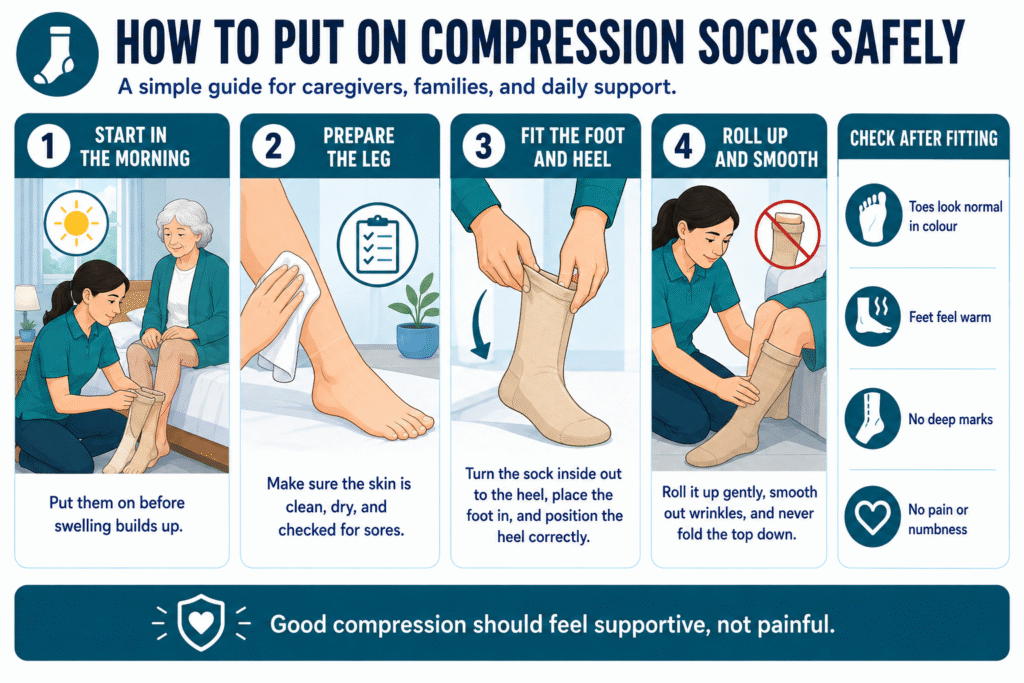
Many people struggle with compression socks because they fit tighter than normal socks. Caregivers can make the process easier by using a calm routine and checking the fit carefully.
Here is how to put on compression socks safely:
- Start in the morning before the legs swell.
- Make sure the skin is clean and dry.
- Remove jewellery that could snag the fabric.
- Turn the sock inside out down to the heel.
- Place the foot into the sock and fit the heel correctly.
- Gently roll the sock up the leg.
- Smooth out wrinkles as you go.
- Do not fold the top down.
- Check that the toes look normal in colour and feel warm.
If someone asks, how do you put on compression stockings when the person cannot bend easily, use a stocking aid or ask a nurse, pharmacist, or trained carer to demonstrate the safest method.
Never pull hard against fragile skin. Do not force the stocking over swelling, wounds, or pain. After putting it on, check that the person feels comfortable and that the stocking does not dig into the skin.
Side Effects of Wearing Compression Stockings
The side effects of wearing compression stockings usually happen when the stockings fit badly, use the wrong pressure level, or stay on too long without skin checks. Most people feel mild tightness at first, but compression should not cause strong pain, numbness, or changes in skin colour.
Possible side effects include:
- Skin irritation or itching
- Redness or pressure marks
- Pain or tightness
- Numbness or tingling
- Cold feet or toes
- Deep marks around the calf or ankle
- Worsening swelling above or below the stocking
- Blisters, sores, or broken skin
Caregivers should check the skin every day, especially for older adults, people with diabetes, fragile skin, reduced feeling in the feet, or limited mobility. Remove the stockings and seek medical advice if the leg becomes painful, cold, blue, very swollen, numb, or if the skin breaks down.
Compression should support circulation, not restrict it. If the person feels worse after wearing them, stop using them until a healthcare professional checks the fit, pressure level, and reason for use.
MORE: Income Taxation UK: A Simple Guide for Care Businesses (2026)
Choosing the Right Compression Level
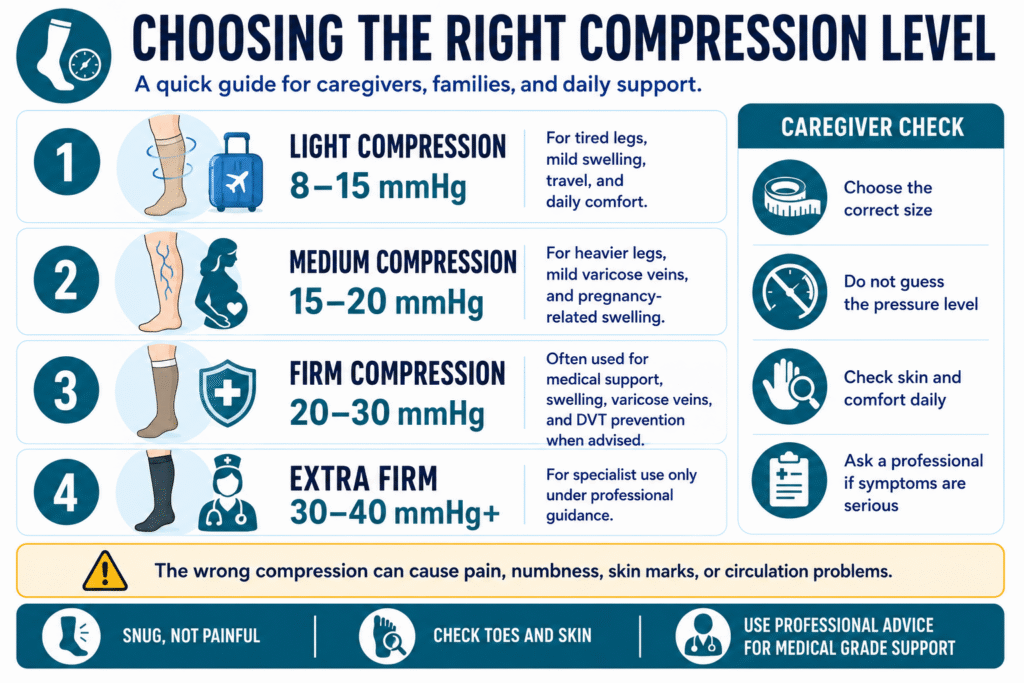
Support hose compression comes in different pressure levels, usually measured in mmHg. The higher the number, the firmer the pressure. Caregivers should not choose a strong compression level just because swelling looks serious. The wrong pressure can cause discomfort or restrict circulation.
| Compression level | Common use |
| Light compression | Tired legs, mild swelling, travel, or long periods of standing |
| Medium compression | Heavier legs, mild varicose veins, pregnancy-related swelling, or general support |
| Firm compression | Medical use for swelling, varicose veins, or clot prevention when advised |
| Extra firm compression | Specialist use for more complex circulation or lymphatic conditions |
For everyday tired legs, light support may be enough. For medical conditions, surgery recovery, severe swelling, or suspected circulation problems, a GP, nurse, pharmacist, or vascular specialist should recommend the correct type.
A caregiver should also check the fit, not just the pressure level. The stocking should feel snug, but it should not cause pain, numbness, blue toes, cold feet, or deep marks. Safe support starts with the right size, the right compression level, and regular skin checks.
Caregiver Checklist Before and After Use
Caregivers play an important role in making support hose compression safe. Before putting the stockings on, check the person’s legs, skin, comfort, and reason for using them.
Before use, ask:
- Has a healthcare professional recommended compression for this person?
- Is the size correct?
- Is the pressure level suitable?
- Is the skin clean and dry?
- Are there cuts, wounds, ulcers, blisters, or signs of infection?
- Are the feet warm and normal in colour?
- Does the person have pain, numbness, or new swelling?
After use, check again:
- Did the stockings leave deep marks?
- Did the person feel pain, tingling, or numbness?
- Did swelling improve or get worse?
- Are the toes warm and normal in colour?
- Is the skin still intact?
This quick check helps caregivers spot problems early. Compression socks should make the person feel supported, not trapped, sore, or unsafe. If anything looks unusual, remove the stockings and ask a GP, nurse, pharmacist, or specialist for advice before using them again.
Final Thoughts…
Support hose compression can help many people feel more comfortable, reduce leg swelling, and support healthier blood flow when they use the right product correctly. But compression is not something caregivers should treat casually, especially when supporting older adults or people with fragile skin, diabetes, poor circulation, wounds, or post-surgery recovery needs.
The safest approach is simple: choose the right size, use the right pressure level, put the stockings on properly, remove them at the right time, and check the skin every day.
If the person feels pain, numbness, coldness, colour changes, worsening swelling, or skin damage, remove the stockings and ask for medical advice. Good compression should support the legs, not create new problems.
For caregivers, the aim is not just to help someone wear compression socks. The aim is to protect comfort, circulation, skin health, and confidence while helping the person stay as mobile and safe as possible.
Need Support Making Care Safer and Easier?
If someone you care for uses support hose compression, small daily checks can make a big difference. The right stockings may reduce swelling and improve comfort, but the wrong fit, pressure, or routine can cause pain, skin damage, or circulation problems.
At Care Sync Experts, we help caregivers, families, and care providers understand everyday care needs with more confidence. From mobility support and personal care to safety checks and practical health guidance, our resources help you make better decisions for the people who depend on you.
If an older adult or vulnerable person you support struggles with swollen legs, reduced mobility, fragile skin, or post-surgery recovery, do not guess. Check the fit, watch for warning signs, and seek medical advice when symptoms change.
Care Sync Experts provides care-focused guidance to help families and care teams deliver safer, more informed, and more compassionate support every day.
FAQ
Is it good to wear compression stockings every day?
Yes, it can be good to wear compression stockings every day if a healthcare professional has recommended them or if you use the correct low-level support for general leg comfort.
Many NHS-style patient guides advise daily wear, usually putting them on in the morning and removing them at night. The key is fit: they should feel snug, not painful, and any red marks should fade after removal.
What works better than compression socks?
It depends on the reason for swelling or poor circulation. For some people, leg elevation, walking, calf exercises, weight management, wound care, medication, lymphoedema therapy, or medical treatment for vein disease may work better or may need to be combined with compression.
For lymphoedema, the NHS explains that exercise and compression together help move fluid out of the affected limb.
Do compression socks cause you to urinate more?
Compression socks do not directly “make” you urinate, but some people may notice more urination after swelling reduces. This can happen because compression helps move excess fluid from the legs back into circulation, and the body may later remove some of that fluid through the kidneys. This is more likely when someone has noticeable leg swelling or fluid retention.
What happens if you stop wearing compression stockings?
If you stop wearing compression stockings, the original problem may return. Swelling, heaviness, aching, fluid build-up, or vein symptoms can come back, especially if the stockings were controlling venous insufficiency, lymphoedema, varicose veins, or post-surgery clot risk.
Do not stop prescribed compression suddenly without asking the GP, nurse, pharmacist, or specialist who recommended it. NHS guidance notes that compression garments help prevent fluid accumulating again in lymphoedema care.
Leave a Reply