Choosing housing for autistic adults is not just about finding a safe place to live. It is about matching the right home with the right level of daily support, independence, routine and dignity.
As caregivers, we should look beyond the building itself. An autistic adult may live in their own flat, shared housing, supported accommodation, a Shared Lives arrangement or residential care. What matters most is whether the setting supports their communication style, sensory needs, life skills, safety and personal choices.
A good housing plan should answer one clear question:
What support will help this person live as safely, confidently and independently as possible?
That answer should guide every decision that follows.

What Are the Main Housing Options for Autistic Adults?
The main housing for autistic adults options include independent living, supported living, supported accommodation, Shared Lives, group homes, sheltered housing and residential care. The right choice depends on the person’s independence, sensory needs, communication style, safety risks, care needs and funding.
Common options include:
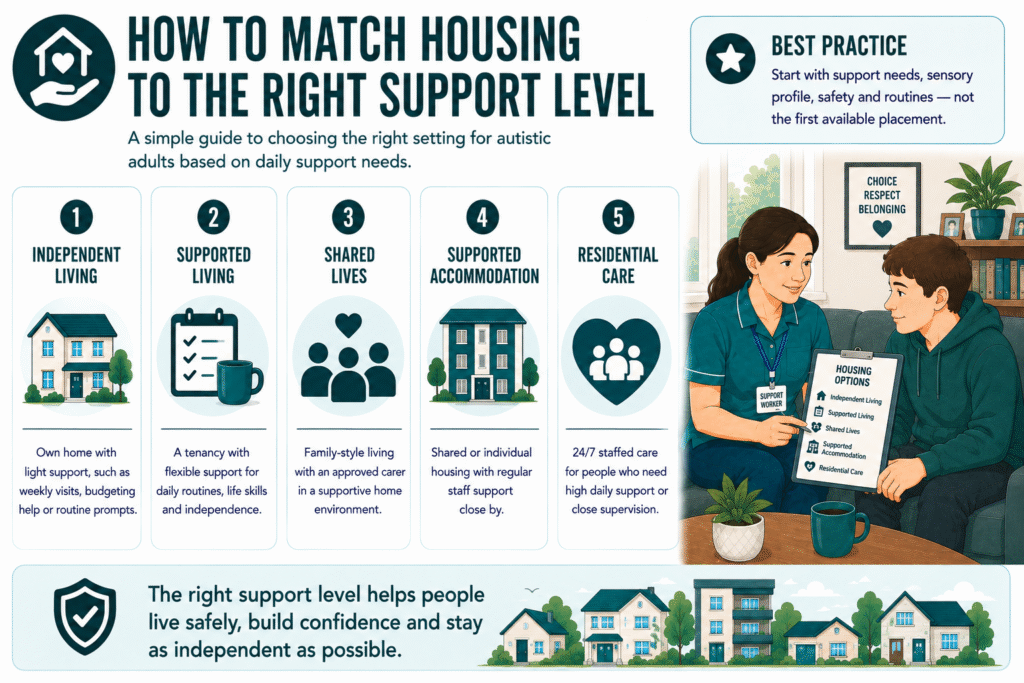
- Independent living: The person lives in their own home and may receive planned visits from a support worker.
- Supported living: The person has a tenancy or home of their own, with flexible care and support arranged around their needs.
- Supported accommodation: Housing and support sit more closely together, often with staff available on-site or nearby.
- Shared Lives: The person lives with an approved carer or host family in a family-style setting.
- Group homes or shared housing: Several people live together and receive shared or individual support.
- Sheltered housing: Managed housing that may suit adults who need a safer, more structured living environment.
- Residential care: A staffed setting for people who need 24/7 support with daily living, personal care or supervision.
RELATED: What Is Supported Living? 2026 Update for Businesses
Housing and Support Are Not the Same Thing
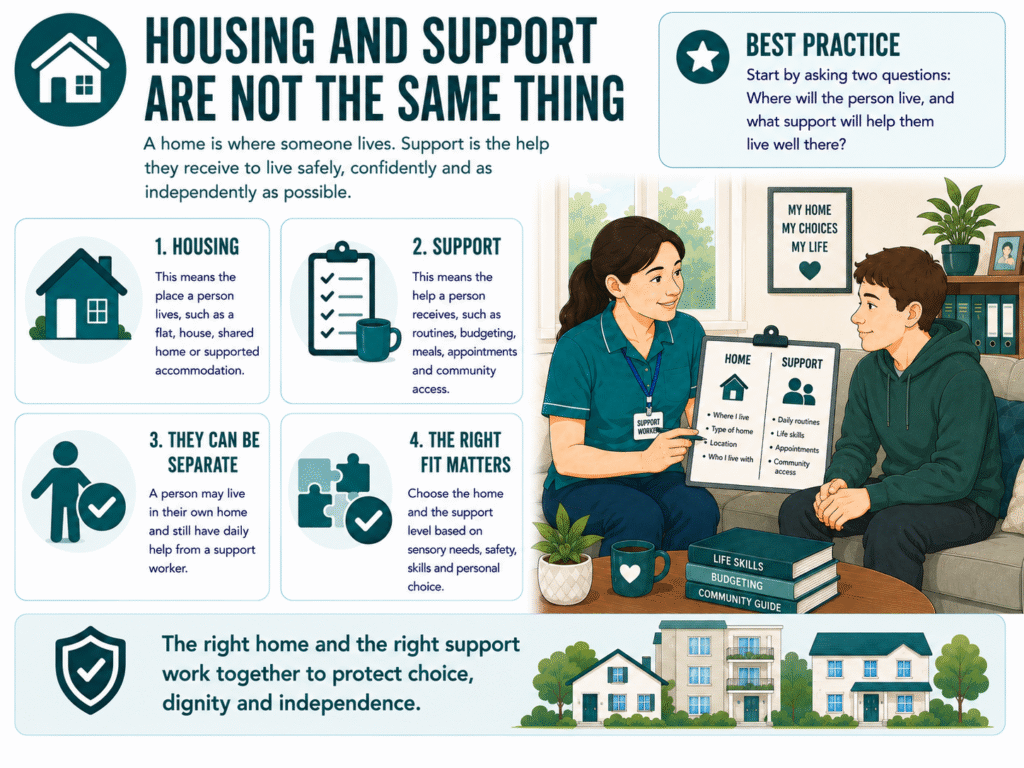
When planning housing for autistic adults, caregivers should separate two decisions: where the person will live and what support they need to live well there.
The housing might be a flat, house, room, shared tenancy, HMO housing, sheltered housing or residential placement. The support might include a few weekly visits, daily prompting, overnight staff, help with personal care or 24/7 supervision.
This matters because the most suitable home is not always the one with the most care. Some autistic adults thrive in their own space with scheduled support. Others need staff nearby because anxiety, safety risks or daily living tasks can become difficult without help.
In simple terms, social care helps people with daily life, independence, safety and wellbeing. A support worker may help with routines, appointments, budgeting, meal planning, community access and confidence-building.
Main Housing Models Compared
Caregivers should compare each housing model by independence, staffing, safety, and long-term suitability. The table below gives a simple starting point.
| Housing model | Best for | Support level |
| Independent living | Autistic adults who can manage many daily tasks but need some planned help | Low to moderate |
| Supported living | Adults who need flexible support while keeping their own tenancy and independence | Low to high |
| Supported accommodation | Adults who need housing linked closely with regular staff support | Moderate to high |
| Shared Lives scheme | Adults who may benefit from family-style support in an approved carer’s home | Low to high |
| Group home or HMO housing | Adults who can share space safely and benefit from staff or peer support | Variable |
| Sheltered housing | Adults who need a managed, safer housing setting but not full residential care | Low to moderate |
| Residential care | Adults who need 24/7 supervision, personal care or high daily support | High |
Families often ask, what is HMO housing? An HMO is a house in multiple occupation, where several unrelated people live in one property and share facilities. It can work for some autistic adults, but only when the environment, housemates, staffing and sensory needs fit the person.
Similarly, what is sheltered housing? It usually means managed housing with extra safety features or support access, but it does not always include personal care.
READ MORE: What Are the Children’s Home Regulations? 2026 Update
What Does a Support Worker Do in Autistic Adult Housing?
A support worker helps an autistic adult manage daily life while protecting their choice, confidence and independence. Good support should not take over the person’s life. It should help them do more safely and comfortably.
The duties of a support worker may include helping with routines, budgeting, meal planning, shopping, appointments, personal care, medication prompts, travel planning and community activities. They may also help reduce isolation, support communication, notice changes in wellbeing and work with family members, social workers or health professionals.
When people ask, what is a support worker?, the simple answer is this: a support worker gives practical, emotional and social support so a person can live with more stability and dignity.
The key duties and responsibility of a support worker should always focus on the autistic adult’s needs, not the convenience of the service.
How to Match Housing to the Right Support Level
The best housing for autistic adults starts with support needs, not the first available placement. Caregivers should look at daily living skills, sensory triggers, communication needs, safety risks, social confidence, and what happens when routines change.
If the person needs light help, independent living with scheduled visits may work well. If they need daily prompting, supported living for vulnerable adults can offer structure while still protecting independence. If they prefer a family-style setting, Shared Lives may feel more personal than a larger service.
If the person needs staff close by, supported accommodation or a group home may offer safer daily support. If they need help day and night, residential care may be more suitable. For young adults moving from SEN support into adult services, planning should start early so the move does not happen in crisis.
SEE ALSO: What is Regulated Activity? 2026 DBS Update, Examples
Funding, Benefits and Local Council Support
Caregivers should check funding early because the right housing for autistic adults may depend on both care needs and housing costs. A social care assessment can identify whether the person needs support at home, supported accommodation, Shared Lives, or residential care. A financial assessment may then decide how much the person or local authority contributes.
Families should also check disability benefits, Universal Credit housing support, local welfare schemes and council hardship funds. In England, the Household Support Fund ended on 31 March 2026 and moved into the Crisis and Resilience Fund from 1 April 2026, so people should now search their council website for local council cost of living assistance, essential living fund or housing support fund.
Caregivers should also avoid relying on old advice about a cost of living payment, cost of living payments or disability cost of living payment. The UK Government says there will be no Cost of Living Payment in 2026 and no further payments are planned.
Housing for Autistic Adults in the UK, Scotland and Ireland
Support routes vary across the UK and Ireland, so caregivers should always check the local system before choosing a placement. Housing for autistic adults UK services may involve the local council, adult social care, housing teams, NHS professionals, private providers, charities or supported living organisations.
For housing for autistic adults Scotland, families may need to explore local authority social care support, housing associations, supported accommodation and Scotland-specific disability services. The right route can vary by council area, so early planning helps avoid crisis moves.
For housing for autistic adults Ireland, families should check local disability services, housing supports, health services and approved housing bodies. Funding, eligibility and waiting times can differ from one county or region to another.
Wherever the person lives, caregivers should focus on the same goal: find a home that protects choice, safety, routine and long-term wellbeing.
MORE: Supported Accommodation Regulations: 2026 Practical Ofsted Compliance Guide
Questions Caregivers Should Ask Before Choosing Housing
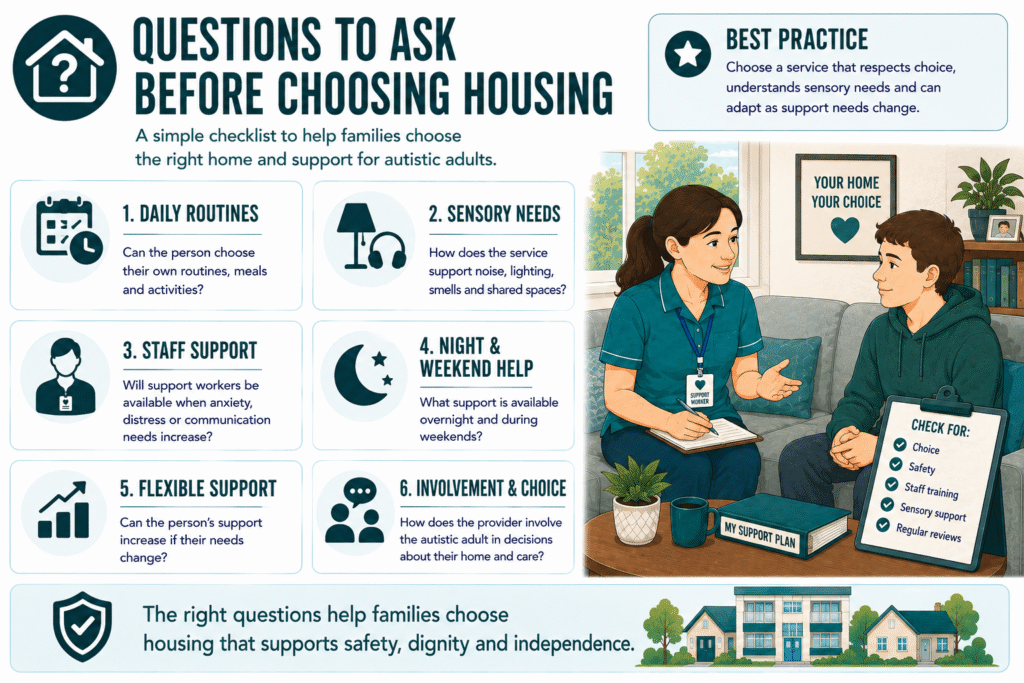
Before choosing housing for autistic adults, caregivers should ask practical questions that reveal how the service works day to day:
- Can the autistic adult choose their own routines, meals and activities?
- How does the service support sensory needs such as noise, lighting, smells and shared spaces?
- Will a support worker be available when anxiety, distress or communication difficulties increase?
- What support happens overnight or during weekends?
- Who helps with medication prompts, appointments, budgeting and meal planning?
- How does the service prevent loneliness and social isolation?
- Can the person’s support increase if their needs change?
- Is the tenancy separate from the care package?
- How does the provider involve the autistic adult in decisions?
- What training do staff receive in autism, communication and positive behaviour support?
The answers should show whether the service offers real social care, not just a room and basic supervision.
Final Thoughts…
The best housing for autistic adults is not always the most intensive option. It is the option that gives the person the right support, in the right environment, at the right time.
Caregivers should choose housing that protects safety without removing choice. A good service should respect routines, reduce distress, support communication, build daily living skills and help the person stay connected to their community.
Before making a decision, review the person’s care needs, sensory profile, funding options and long-term plans. When housing and support work together, autistic adults have a stronger chance to live with dignity, confidence and greater independence.
Need support setting up or improving a supported living service?
Care Sync Experts helps care providers create safe, compliant and person-centred services for autistic adults and vulnerable people. From registration and policies to audits, staff training and operational guidance, we help your team deliver support that protects independence and promotes better outcomes.
FAQ
What activities can adults with autism do?
Autistic adults can enjoy a wide range of activities, depending on their interests, sensory preferences and support needs. These may include art, music, gardening, cooking, swimming, walking, gaming, volunteering, social groups, fitness classes, drama, photography or structured community activities. The best activities are predictable, meaningful and chosen with the person, not simply chosen for them.
What do autistic adults struggle with the most?
Autistic adults may struggle with sensory overload, social communication, anxiety, changes in routine, employment barriers, independent living tasks, loneliness or accessing the right support. These challenges vary from person to person, so caregivers should avoid assumptions and focus on the individual’s needs, strengths and preferences.
Why are many autistic adults unemployed?
Many autistic adults face employment barriers because workplaces often fail to provide clear communication, sensory-friendly environments, flexible interviews, reasonable adjustments and autism-aware management. The issue is not lack of ability. Many autistic adults have strong skills, but they may need the right environment and support to thrive at work.
Is dating someone with autism hard?
Dating an autistic adult is not automatically hard, but it may require patience, clear communication and respect for sensory needs, routines and social preferences. Like any relationship, success depends on honesty, understanding and mutual respect. Partners should avoid stereotypes and learn how the person communicates affection, stress, boundaries and needs.