Tag: national minimum wage

  • Living Wage UK 2026: What Care Providers Need to Know

    Living Wage UK 2026: What Care Providers Need to Know

    The Living Wage UK 2026 is £13.45 per hour across the UK and £14.80 per hour in London. The Living Wage Foundation sets these rates based on real living costs, making them higher than the legal National Living Wage of £12.71 per hour for workers aged 21 and over.

    Unlike the mandatory minimum wage UK system, the living wage UK remains voluntary. However, many care providers choose to pay the living wage UK per hour because it improves staff retention, strengthens care quality, and increases their chances of winning contracts in a competitive sector.

    Get expert support for your next tender, inspection-ready policies, or CQC registration — book a call with Care Sync Experts today and let’s get you compliant and competitive.

    Key Takeaways for Care Providers

    • The living wage UK for 2026 is £13.45 per hour, rising to £14.80 under the London Living Wage 2026 due to higher living costs.
    • The National Living Wage (£12.71 per hour) remains the legal minimum under the minimum wage UK framework.
    • Paying above the minimum wage 2026 helps care providers attract and retain skilled staff in a competitive labour market.
    • Many commissioners and regulators view Living Wage employers more favourably when awarding contracts.
    • The gap between the living wage UK and the National Living Wage translates into thousands of pounds annually, especially when considering London Living Wage yearly earnings.
    • Rising pressures like the UK minimum wage increase 2026 and ongoing cost-of-living challenges continue to influence wage decisions in the care sector.

    What Is the Living Wage UK (and Why Care Providers Pay It)

    CQC Registration Policy Pack: What You Must Submit and How to Pass First Time

    The living wage UK is a voluntary pay rate based on the real cost of living, not just the legal minimum. The Living Wage Foundation calculates this rate each year to reflect essential expenses like housing, food, transport, and childcare. For Living Wage UK 2026, that means £13.45 per hour nationally and a higher rate for London.

    Unlike the minimum wage UK, which the government enforces, the living wage UK per hour gives employers a benchmark for fair pay. It applies to all workers over 18, including part-time, temporary, and contracted staff, something especially relevant in the care sector where flexible staffing is common.

    Care providers choose to pay the living wage UK for practical reasons, not just ethical ones:

    • They attract better carers in a sector facing chronic staff shortages
    • They reduce turnover, saving recruitment and training costs
    • They improve care quality, since stable teams deliver more consistent support
    • They strengthen their reputation, especially during inspections and contract bids

    Rising pressures like the cost of living payment 2025 discussions and ongoing economic strain have made fair pay more visible than ever. Care workers feel these pressures directly, and providers who respond by paying above the National Living Wage position themselves as more competitive employers.

    In short, while the living wage UK remains voluntary, many care businesses now treat it as a strategic investment rather than an optional expense.

    RELATED: What is the SSP rate? 2026 Update for Care Businesses

    What Is the National Living Wage (Legal Minimum in 2026)
    Living Wage UK
    Living Wage UK

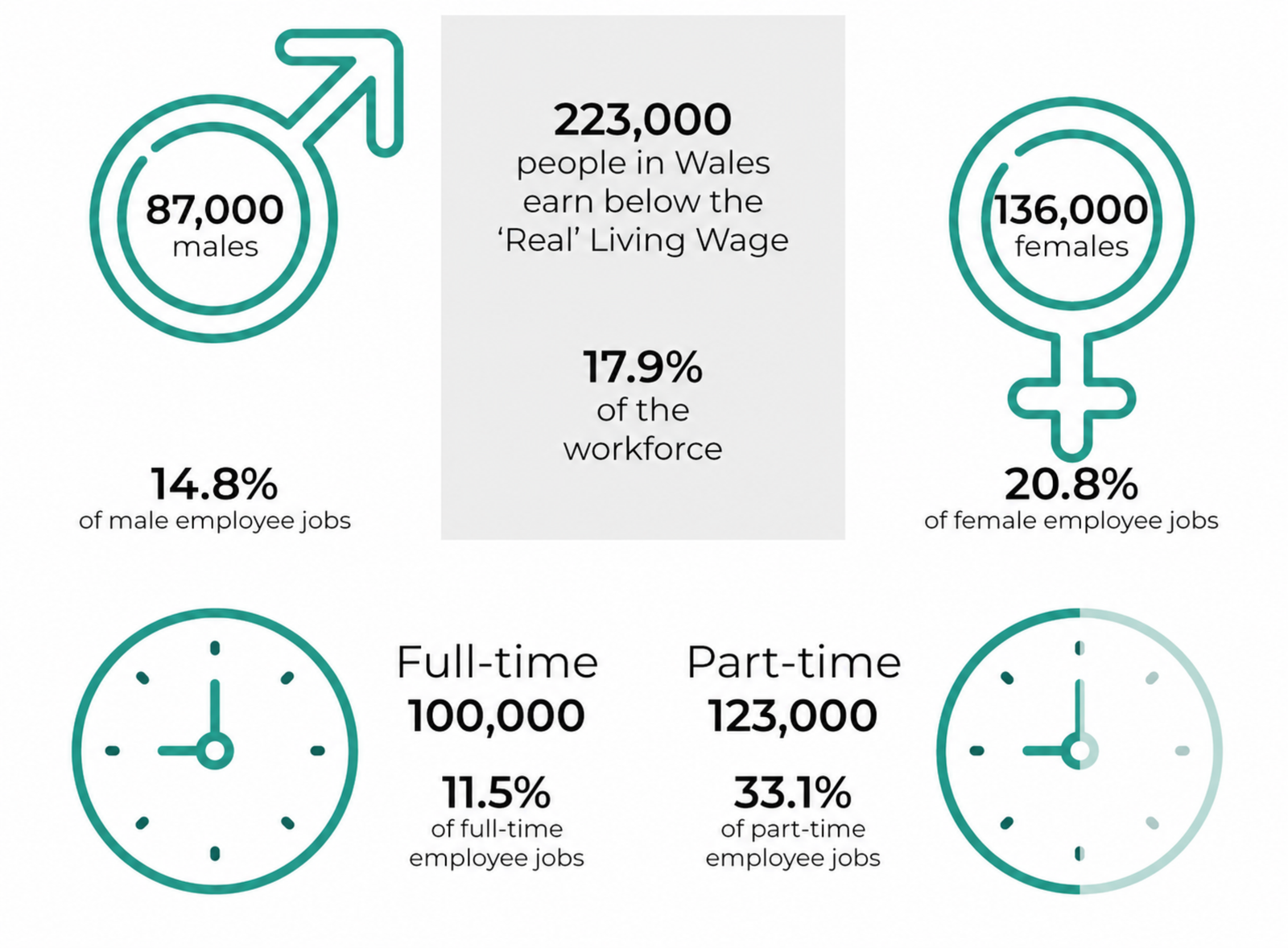
    The National Living Wage is the legal minimum hourly pay that employers must provide to workers aged 21 and over in the UK. As of April 2026, the rate stands at £12.71 per hour, forming part of the wider minimum wage UK system.

    The government sets this rate annually, usually following recommendations from the Low Pay Commission. The goal is to balance fair pay with economic sustainability, which means it often sits below the living wage UK, which reflects actual living costs.

    For care providers, the minimum wage 2026 represents the baseline for compliance:

    • You must pay at least this rate to eligible staff
    • You must also follow rules for younger workers and apprentices
    • You risk penalties if you fail to meet the legal requirement

    The minimum wage uk framework also includes:

    • Lower rates for workers aged 18–20
    • Specific pay rates for apprentices during training periods
    • Regional considerations like minimum wage Scotland, though rates remain UK-wide

    Recent changes, including the minimum wage April 2025 increase and the broader UK minimum wage increase 2026, show a clear upward trend. While these increases help workers, they also raise cost pressures for care businesses already operating on tight margins.

    For many providers, the key decision is not whether to meet the National Living Wage, rhat’s mandatory, but whether to go beyond it and adopt the living wage UK per hour to stay competitive in recruitment and service quality.

    Living Wage UK vs National Living Wage (Care Sector Impact)

    Care providers often compare the living wage UK with the National Living Wage when deciding how to pay staff. The difference goes beyond hourly rates, it affects recruitment, retention, and contract success.

    Key Differences

    FactorLiving Wage UK 2026National Living Wage 2026
    Hourly Rate£13.45 (UK) / £14.80 (London Living Wage 2026)£12.71
    Mandatory?VoluntaryLegal requirement
    Who Sets ItLiving Wage FoundationUK Government
    Applies ToAll workers 18+Workers aged 21+
    BasisReal cost of livingEconomic policy & median earnings

    What This Means for Care Providers

    The gap between the two rates may look small hourly, but it adds up quickly:

    • A full-time care worker on the living wage UK per hour earns significantly more per year than one on the minimum wage 2026
    • In London, the difference becomes even larger when factoring in London Living Wage yearly earnings
    • Higher pay helps providers attract experienced carers and reduce turnover

    From a business perspective:

    • Providers paying only the minimum wage UK may struggle to recruit in competitive areas
    • Providers paying the living wage UK often perform better in contract evaluations and staff retention metrics

    In a sector where care quality depends heavily on workforce stability, the decision between the National Living Wage and the living wage UK directly impacts both service delivery and long-term growth.

    READ MORE: What Is Tenants in Common Meaning UK: 2026 Update

    Should Care Providers Pay the Living Wage UK?
    UK Minimum Wage Increases
    UK Minimum Wage Increases

    Care providers must pay at least the National Living Wage, but many now choose to go further and adopt the living wage UK. This decision goes beyond compliance, it directly affects staffing, care quality, and business growth.

    Why Many Care Providers Pay the Living Wage UK

    • They attract better carers
      Higher pay draws more qualified and experienced staff, especially in a sector facing ongoing shortages.
    • They retain staff longer
      Paying the living wage UK per hour reduces turnover, which lowers recruitment and training costs.
    • They improve care quality
      Stable teams deliver more consistent and person-centred care.
    • They strengthen contract opportunities
      Local authorities and commissioners often favour providers who demonstrate fair pay practices.

    The Trade-Off: Higher Costs

    Adopting the Living Wage UK 2026 increases payroll costs, especially after the UK minimum wage increase 2026. Providers must plan carefully to ensure contracts and pricing cover these higher wages.

    When It Makes Strategic Sense

    Paying the living wage UK works best when:

    • You operate in a competitive hiring market
    • You want to scale and win more government contracts
    • You aim to build a strong reputation with regulators and families

    Bottom Line

    The minimum wage UK ensures legal compliance, but the living wage UK creates a competitive advantage. For many care providers, it’s no longer just about paying staff, it’s about building a sustainable, high-quality service.

    Real Cost Impact (What the Living Wage UK Means for Your Budget)

    Switching from the National Living Wage to the living wage UK affects your payroll immediately, but the real impact shows over a full year.

    Example: Annual Cost per Care Worker

    • National Living Wage (2026): £12.71/hour
    • Living Wage UK 2026: £13.45/hour
    • Difference: £0.74/hour

    For a full-time carer (40 hours/week):

    • Extra weekly cost: £29.60
    • Extra yearly cost: ~£1,540 per employee

    In London, the gap is larger with the London Living Wage 2026 (£14.80):

    • Difference vs £12.71: £2.09/hour
    • Extra yearly cost: ~£4,300 per employee (based on full-time hours)

    How to Estimate Your Costs

    Use an hourly rate calculator or a basic living wage UK calculator approach:

    • Multiply hourly difference by weekly hours
    • Multiply by number of staff
    • Factor in employer costs (NI, pensions)

    What Care Providers Should Consider

    • Contract pricing: Ensure council/NHS rates cover higher wages
    • Staff mix: Full-time vs part-time impacts total cost
    • Location: London providers face higher wage pressure

    The living wage UK per hour raises costs, but it can pay back through lower turnover, fewer agency shifts, and stronger contract performance. For many providers, the decision isn’t just about expense, it’s about long-term stability.

    SEE ALSO: DWP Benefit Scrapping 2026: Latest Update

    London Living Wage 2026 vs Rest of the UK
    What Is the UK Minimum Wage

    The London Living Wage 2026 is set at £14.80 per hour, compared to £13.45 per hour for the rest of the UK under the living wage UK. The Living Wage Foundation sets a higher rate for London to reflect significantly higher living costs.

    Why London Rates Are Higher

    Care providers in London face increased expenses across the board:

    • Higher rent and housing costs
    • More expensive transport
    • Greater childcare costs

    These pressures directly affect care workers, making the living wage UK per hour less sustainable in London without adjustment.

    What This Means for Care Providers

    • Providers in London must budget for higher wages to stay competitive
    • Staff expect pay aligned with the London Living Wage 2026, especially in urban areas
    • Recruitment becomes harder if wages stay close to the minimum wage UK

    Annual Impact (London Living Wage Yearly)

    The higher hourly rate leads to a significant yearly difference:

    • A full-time worker on the London Living Wage yearly earns thousands more than one on the National Living Wage
    • This gap increases pressure on care providers but also improves staff retention

    For London-based care businesses, paying the living wage UK at the standard rate may not be enough. Adopting the London Living Wage 2026 often becomes necessary to attract and retain staff in a high-cost environment.

    MORE: New Rules for Care Home Payments in 2026

    What About Minimum Wage, Apprentices & Other Pay Rates?
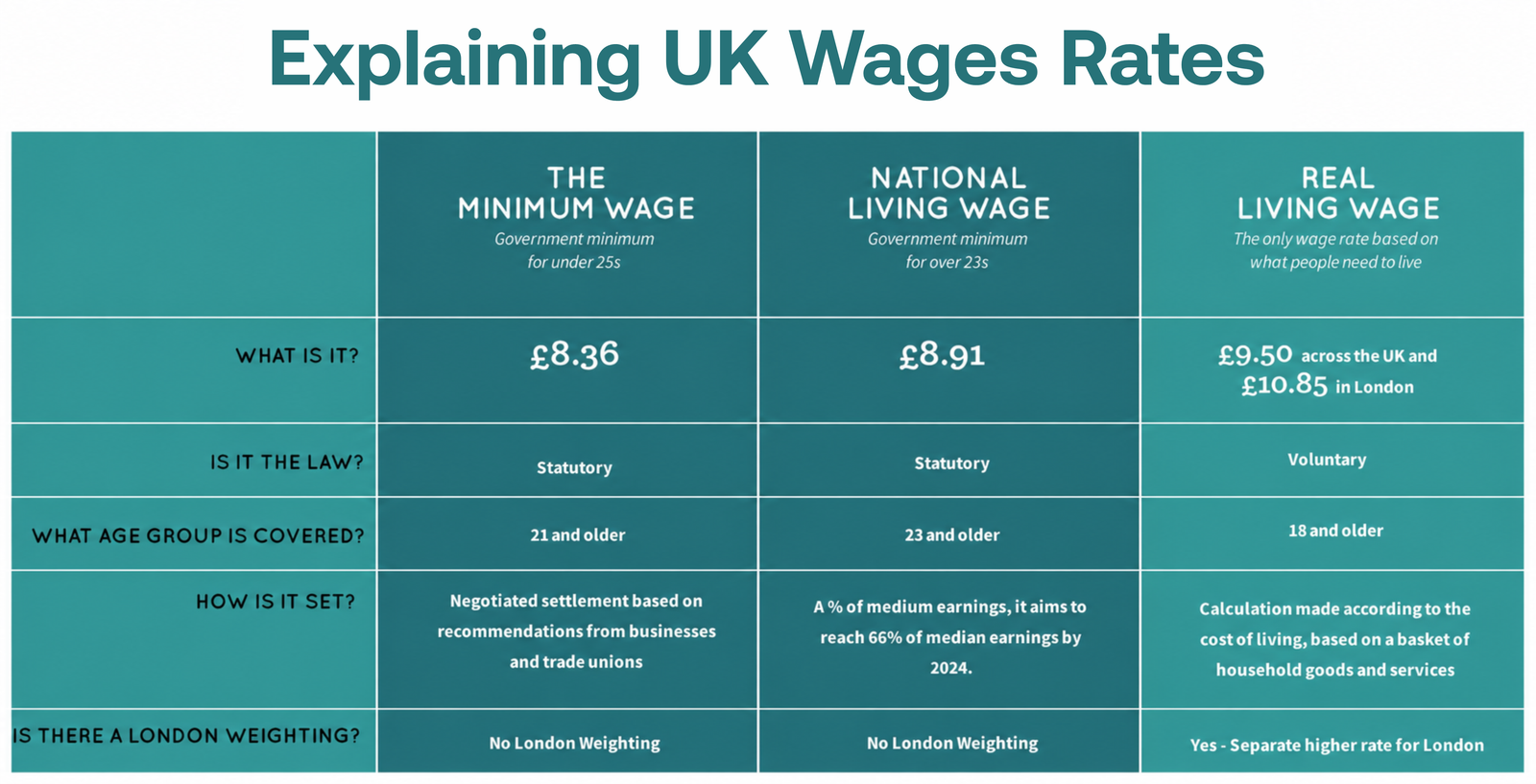
    UK Wage Rates

    Care providers must understand the full minimum wage UK structure, not just the National Living Wage, to stay compliant and manage payroll effectively.

    Minimum Wage 2026 (By Age Group)

    As of April 2026:

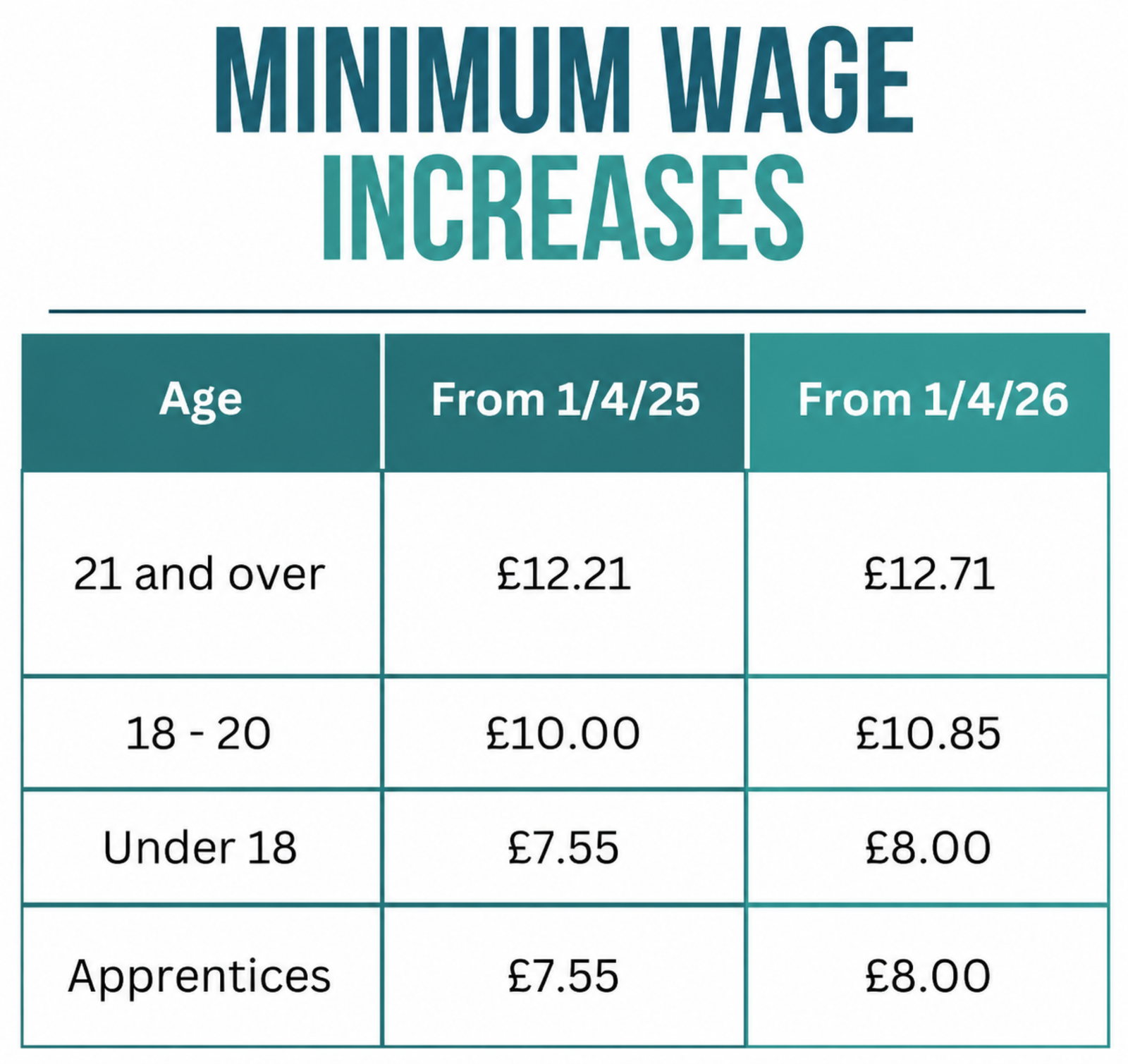
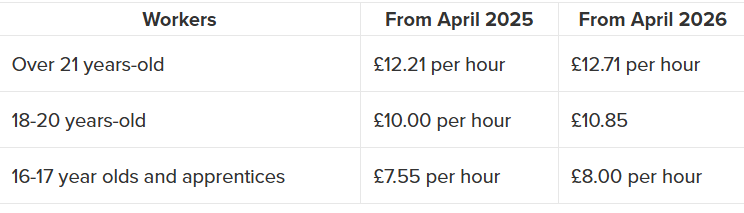
    • 21 and over: £12.71 (National Living Wage)
    • 18 to 20: £10.85
    • Under 18: £8.00
    • Apprentices: £8.00

    These rates apply across the UK, including minimum wage Scotland, as part of the national framework.

    Apprenticeship Wage and Pay Rules

    Care providers often hire apprentices to build their workforce. You must follow specific rules:

    • Pay the apprenticeship wage (£8.00) if:
      • The worker is under 19, or
      • They are 19+ and in the first year of apprenticeship
    • After the first year (if aged 19+), you must pay the minimum wage for their age group

    Why This Matters in Care

    • Apprentices help reduce staffing shortages
    • Lower pay rates for apprentices can reduce short-term costs
    • However, experienced carers often expect pay closer to the living wage UK per hour

    Practical Tip

    Use an hourly rate calculator to plan mixed workforce costs:

    • Combine apprentice wages + senior staff wages
    • Compare against contract income
    • Factor in the UK minimum wage increase 2026 and future rises

    The minimum wage UK ensures compliance, but relying heavily on lower wage bands may affect care quality and staff retention. Most successful providers balance apprenticeships with competitive pay aligned to the living wage UK.

    Final Thoughts…

    The living wage UK is no longer just a “nice-to-have” for care providers—it’s becoming a strategic decision that affects growth, staffing, and long-term sustainability.

    You must meet the legal baseline under the National Living Wage and the wider minimum wage UK framework. However, many providers now go further by adopting the Living Wage UK 2026 to stay competitive in a demanding labour market.

    Here’s the reality:

    • Paying only the minimum wage 2026 keeps you compliant, but may limit recruitment and retention
    • Paying the living wage UK per hour helps you attract and keep skilled carers
    • In cities like London, the London Living Wage 2026 often becomes essential, not optional

    Rising costs, including the UK minimum wage increase 2026, continue to put pressure on care businesses. At the same time, expectations from staff, regulators, and commissioners keep increasing. Providers who adapt early position themselves ahead of the curve.

    The choice is not just about wages, it’s about the kind of care business you want to run.

    • Compliance-focused providers meet the minimum
    • Growth-focused providers invest in people

    For most successful care businesses in 2026, the living wage UK sits at the centre of that strategy.

    Care Sync Experts helps care providers build sustainable workforce strategies, stay compliant with UK wage regulations, and position their businesses to win more contracts through smarter pay decisions.

    Speak to our team today and ensure your pay structure supports your staff, strengthens your service, and drives long-term growth.

    FAQ

    Is UK Living Wage the same as minimum wage?

    No. The living wage UK is voluntary and based on the real cost of living, while the National Living Wage is the legal minimum employers must pay. The living wage UK is usually higher.

    Is 12.60 an hour good in the UK?

    £12.60 per hour is close to the National Living Wage (2026), so it meets legal standards for workers aged 21+. However, it falls slightly below the living wage UK per hour (£13.45), meaning it may not fully cover rising living costs in many areas.

    What salary is 13.50 an hour?

    £13.50 per hour equals approximately:
    – £540 per week (based on 40 hours)
    – Approximately £28,000 per year (before tax)
    This aligns closely with the Living Wage UK 2026, making it a competitive wage in many sectors, including care.

    Is it illegal to pay less than London’s Living Wage?

    No, it is not illegal. The London Living Wage 2026 (£14.80) is voluntary. Employers only break the law if they pay below the National Living Wage or other applicable minimum wage UK rates.

  • National Minimum Wage 2026 for Care Providers: Compliance Risks and FWA Enforcement

    National Minimum Wage 2026 for Care Providers: Compliance Risks and FWA Enforcement

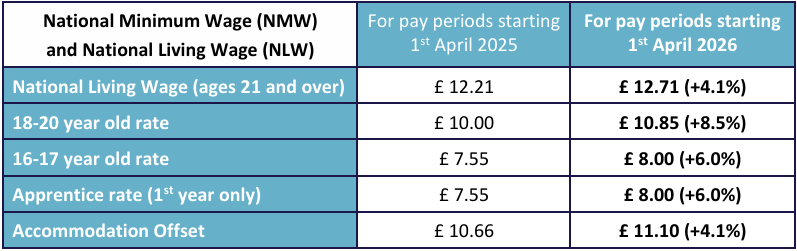
    From 1 April 2026, the National Minimum Wage and National Living Wage 2026 rates increase across England, Scotland, Wales, and Northern Ireland. Workers aged 21 and over must receive £12.71 per hour. Younger age bands and apprentice rates also rise.

    At the same time, the new Fair Work Agency begins operations in April 2026, replacing HMRC’s standalone minimum wage enforcement with a single body that can investigate minimum wage, holiday pay, and statutory sick pay together.

    For domiciliary care agencies, supported living providers, and care homes, the risk does not sit in the headline rate. It sits in travel time, deductions, sleep-ins, salaried hours, and record-keeping. If your effective hourly rate falls below the legal threshold in any pay reference period, you face arrears, penalties of up to 200%, and public naming.

    Confirmed National Minimum Wage and National Living Wage rates from 1 April 2026

    The Government accepted the Low Pay Commission’s recommendations in full. The new National Minimum Wage rates apply from 1 April 2026 across England, Scotland, Wales, and Northern Ireland.

    Here are the confirmed rates:

    CategoryRate from 1 April 2026
    National Living Wage (aged 21 and over)£12.71 per hour
    18–20 year olds£10.85 per hour
    16–17 year olds£8.00 per hour
    Apprentice rate£8.00 per hour
    Accommodation offset£11.10 per day

    What this means in monthly terms

    For employers calculating Minimum wage UK 2026 per month, use hours worked, not assumptions.

    Example:

    • 37.5 hours per week at £12.71
    • Weekly pay: £476.63
    • Monthly pay (average): approx. £2,065 before tax

    Actual take home pay depends on tax code, pension deductions, and any salary sacrifice arrangements. Minimum wage compliance looks at gross pay before tax, not net pay received.

    Scotland, London, and regional confusion

    Some employers search for “minimum wage Scotland” or “minimum wage 2026 UK London.” The statutory National Minimum Wage is the same across the whole UK. Scotland and London do not set separate legal minimum wage rates.

    However, the voluntary London Living Wage (set by the Living Wage Foundation) is higher than the statutory minimum. Paying it does not remove your obligation to comply with statutory minimum wage rules.

    Now let’s look at what these increases actually cost care providers in real terms.

    What the National Minimum Wage increase really costs a care business

    CQC Compliance Quiz: How Well Do You ACTUALLY Understand It?

    The National Minimum Wage 2026 rise looks modest on paper. In practice, it reshapes your entire cost base.

    Start with the headline figure:

    • £12.71 per hour for workers aged 21+
    • 37.5 hours per week
    • Annual gross pay increases by roughly £975 per worker

    That number alone does not break a business. The compounding effect might.

    1. On-costs rise automatically

    When base pay rises, everything calculated as a percentage rises with it:

    • Employer National Insurance
    • Workplace pension contributions
    • Holiday pay accrual
    • Statutory sick pay exposure
    • Overtime rates linked to basic pay

    From April 2025, Employer NI increased to 15% with a reduced threshold. That change already tightened margins. April 2026 layers another wage uplift on top.

    2. Travel time multiplies the impact (domiciliary care)

    In homecare, you do not pay only for contact time. Travel time between visits counts as working time for National Minimum Wage purposes.

    If travel time represents 15–25% of working hours, the wage increase applies to that portion too.

    If you currently pay:

    • £12.71 for contact time
    • But fail to fully include travel time in payroll

    Your effective hourly rate may already sit below minimum wage 2026 once you divide total pay by total working time.

    3. Care sector margins remain thin

    Independent care providers operate in a fee environment that rarely matches actual employment costs. Employment costs typically represent 70–80% of total provider expenditure.

    When statutory rates rise, but commissioner fees stay static, providers absorb the difference.

    That tension explains why compliance failures often arise from payroll structure errors, not deliberate underpayment. However, regulators do not treat financial pressure as a defence.

    The math is simple:

    Higher base rate

    • Higher on-cost percentage
    • Travel time inclusion
    • Variable hours = Narrower margin for error

    Now add enforcement.

    Let’s look at how the Fair Work Agency changes the compliance landscape from April 2026.

    RELATED: New Rules for Care Home Payments in 2026

    Fair Work Agency payroll checks: what changes from April 2026

    From 7 April 2026, the Fair Work Agency (FWA) begins operations as the UK’s single labour market enforcement body. It replaces HMRC’s standalone National Minimum Wage enforcement function and brings several enforcement streams under one structure.

    This is not a cosmetic change. It shifts how investigations start, how far they reach, and what they examine.

    What the Fair Work Agency consolidates

    The FWA combines:

    • HMRC’s National Minimum Wage enforcement
    • The Employment Agency Standards Inspectorate
    • The Gangmasters and Labour Abuse Authority

    It also gains authority to enforce additional employment rights, including holiday pay and statutory sick pay, rather than waiting for workers to bring tribunal claims.

    For care providers, that means one investigation can now cover:

    • National Minimum Wage
    • Holiday pay calculations
    • Sick pay compliance
    • Record-keeping standards
    • Agency worker compliance (where relevant)

    Expect more payroll checks, not fewer

    Some providers search for phrases like “HMRC wage raid payroll checks.” The reality is less dramatic but more structured.

    The FWA can:

    • Enter premises to inspect records
    • Require payroll, time sheets, and contracts
    • Issue Notices of Underpayment
    • Impose penalties of up to 200% of arrears (capped at £20,000 per worker)
    • Publicly name employers

    If you pay arrears quickly, the penalty can reduce to 100%, but that still doubles the financial exposure.

    Why the care sector sits in the spotlight

    Enforcement bodies consistently prioritise sectors where:

    • Pay sits at or near the National Minimum Wage
    • Workers have variable hours
    • Travel time and split shifts create complexity
    • Employers rely on zero-hours or flexible contracts

    Domiciliary care, supported living, and care homes match that profile precisely.

    Record-keeping now matters more than ever

    The Employment Rights reforms introduce stronger record-keeping expectations, particularly around holiday entitlement and pay. Investigators will expect six years of accessible, accurate records.

    If you cannot demonstrate compliance, you assume non-compliance.

    In short, April 2026 brings higher pay rates and broader enforcement at the same time. Care providers must prepare for structured, evidence-based payroll scrutiny, not just headline wage checks.

    Now, let’s look at the six compliance traps that most often trigger underpayment findings in care.

    Why care providers underpay minimum wage without meaning to

    National Minimum Wage 2026 for Care Providers
    National Minimum Wage 2026 for Care Providers

    Most care providers do not deliberately breach the National Minimum Wage. They fall into calculation traps.

    Investigators do not ask, “What hourly rate does the contract say?”
    They ask, “What was the worker’s effective hourly rate across the pay reference period?”

    If total pay that counts ÷ total working time that counts falls below minimum wage 2026, you face arrears.

    Here are the six traps that trigger enforcement in domiciliary care, supported living, and care homes.

    1) Travel time between visits (domiciliary care risk)

    In homecare, travel between appointments counts as working time for National Minimum Wage purposes.

    If you:

    • Pay £12.71 for contact time
    • Fail to pay fully for travel time
    • Or underestimate travel time systematically

    You reduce the worker’s effective hourly rate.

    Example:

    • 6 contact hours paid at £12.71
    • 1.5 hours travel unpaid
    • Worker actually worked 7.5 hours

    You divide total pay by 7.5 hours, not 6.

    That difference alone can push pay below UK minimum wage increase 2026 thresholds.

    If you use estimated travel time, document your method and test it against real routes regularly.

    2) Deductions that reduce minimum wage pay

    HMRC and the Fair Work Agency assess what the worker actually receives.

    Certain deductions reduce minimum wage pay, including:

    • Required uniforms (even “black trousers and shoes”)
    • DBS check deductions
    • Training cost recovery agreements
    • Administration fees
    • Salary sacrifice arrangements
    • Payroll savings schemes

    If post-deduction pay drops below the National Minimum Wage, you breach the law, even if the headline rate looks safe.

    Many providers paying above minimum wage 2026 UK London levels still fail compliance because deductions erase the buffer.

    3) Sleep-ins versus on-call (supported living risk)

    The Supreme Court clarified that genuine sleep-in hours do not require minimum wage if the worker can sleep and only respond if needed.

    However:

    • Time spent awake and working must be paid at minimum wage.
    • Records must show when the worker woke and worked.

    If staff remain on-call and must stay awake or remain ready to work continuously, you must pay minimum wage for the full period.

    Poor documentation, not intent, often creates arrears.

    4) Unpaid training, induction, and meetings

    Mandatory training counts as working time.

    That includes:

    • Induction before first shift
    • E-learning modules
    • Safeguarding updates
    • Team meetings

    If you require attendance, you must pay for it.

    Providers frequently breach National Minimum Wage 2026 rules by assuming training outside rostered hours does not count. It does.

    5) Salaried hours misclassification

    A salary does not protect you from minimum wage checks.

    For a worker to qualify as a salaried hours worker under minimum wage rules:

    • They must receive an annual salary
    • For a fixed number of basic hours
    • Paid in equal instalments

    If those conditions fail, the worker becomes “unmeasured work” for minimum wage purposes.

    If they regularly work beyond basic hours without paid overtime or timely time off in lieu, their effective hourly rate can fall below minimum wage UK 2026 per month equivalents once recalculated.

    Investigators now review salaried care managers more closely than before.

    6) Apprentice rate errors

    The apprentice rate of £8.00 only applies to:

    • Apprentices under 19
    • Apprentices 19+ in their first year

    Once an apprentice turns 19 and completes year one, they move to their age band rate.

    Payroll systems often fail to update automatically.

    That error creates technical underpayment under National Minimum Wage rules.

    The pattern stays consistent:

    Most underpayments happen because providers:

    • Miscount hours
    • Misclassify workers
    • Overlook deductions
    • Or fail to document working time properly

    READ MORE: Zero Hour Agreement in UK Care: How to Stay Compliant (2026)

    Minimum wage compliance test (copy and use this)

    April 2026 National Minimum and Living Wage
    April 2026 National Minimum and Living Wage

    If you do one check before April 2026, do this one.

    The National Minimum Wage does not test your headline hourly rate. It tests your effective hourly rate across the pay reference period.

    Use this formula: Pay that counts for minimum wage ÷ Hours that count as working time = Effective hourly rate

    If the result falls below the applicable rate, you breach the law.

    Step 1: Calculate pay that counts

    Include:

    • Basic pay
    • Paid travel time
    • Shift payments that count toward minimum wage

    Exclude:

    • Tips
    • Genuine expense reimbursements
    • Premium overtime elements that cannot count toward minimum wage

    Use gross pay before tax.

    Step 2: Calculate hours that count

    Include:

    • Contact time
    • Travel time between visits
    • Mandatory training
    • Required meetings
    • Time awake and working during sleep-ins
    • Any time staff must be present and available to work

    Exclude:

    • Genuine rest breaks
    • Time completely free from work duties

    Step 3: Divide and compare

    Example:

    • Total qualifying pay in the pay period: £950
    • Total working time (including travel and training): 78 hours

    £950 ÷ 78 = £12.18 per hour

    If the worker is 21+, the required National Living Wage 2026 is £12.71.

    You underpaid.

    It does not matter if the contract says £13 per hour for contact time. The calculation decides compliance.

    With minimum wage 2026 set at £12.71 and enforcement moving to the Fair Work Agency, investigators will request:

    • Payroll data
    • Timesheets
    • Travel logs
    • Deduction records

    If you cannot show this calculation clearly, you assume risk.

    SEE ALSO: RQIA Registration for Domiciliary Care Agency in Northern Ireland (2026)

    National Minimum Wage 2026 checklist for care providers

    Complete this review before your first April 2026 payroll run. Do not wait for a payroll check to expose gaps.

    1) Update every worker to the correct rate

    • Move all 21+ workers to £12.71 per hour
    • Move 18–20 year olds to £10.85
    • Update 16–17 and apprentice rates to £8.00
    • Check apprentices aged 19+ who completed year one
    • Set reminders for birthdays that move workers into higher bands

    Do not assume payroll updates automatically.

    2) Run the minimum wage calculation across real pay periods

    Take one full recent pay reference period and calculate:

    • Total pay that counts
    • Total hours that count (including travel and training)
    • Effective hourly rate

    If it falls below National Minimum Wage 2026, fix it immediately.

    3) Audit travel time from rota to payroll

    • Does your system record travel time accurately?
    • Do you pay for it?
    • Do estimates reflect reality?
    • Does mileage payment remain separate from time pay?

    In domiciliary care, travel errors trigger most arrears findings.

    4) Stress-test all deductions

    List every deduction that could reduce minimum wage pay:

    • Uniform or dress code requirements
    • DBS checks
    • Training repayment clauses
    • Salary sacrifice schemes
    • Payroll savings schemes

    For each, check whether any pay period drops below minimum wage after deduction.

    If it does, redesign the structure.

    5) Review salaried staff working hours

    • Confirm they meet the definition of salaried hours work
    • Track actual hours worked
    • Address consistent excess hours
    • Pay overtime or provide timely time off

    A £54,000 salary does not protect against minimum wage underpayment if hours inflate.

    6) Verify sleep-in and on-call rules

    • Record time awake and working
    • Pay minimum wage for those hours
    • Distinguish genuine sleep-ins from active on-call

    Document your approach clearly.

    7) Prepare for Fair Work Agency scrutiny

    Create an evidence pack that includes:

    • Payroll summaries
    • Time records
    • Travel logs
    • Deduction policies
    • Salary sacrifice documentation
    • Holiday pay calculations

    Keep records for six years.

    8) Model the financial impact properly

    Build into your pricing:

    • Wage increase at 4.1% (21+)
    • 8.5% increase for 18–20 workers
    • Employer NI at 15%
    • Pension contributions
    • Travel time compliance cost

    Use this data in discussions with commissioners and private clients.

    If you complete these steps, you significantly reduce the risk of arrears, penalties, and public naming under the new enforcement regime.

    LEARN MORE: Starting a Care Home in the UK: Best 2026 Guide

    What changed in 2024 and 2025, and what next in 2026?

    To understand National Minimum Wage 2026, you need to see the pattern.

    Minimum wage 2024

    In April 2024, the Government expanded the National Living Wage to workers aged 21 and over. That change pulled thousands of younger care workers into the higher rate band overnight.

    Providers who relied on historic age assumptions had to adjust quickly.

    Minimum wage 2025 UK

    From April 2025, the UK minimum wage 2025 for workers aged 21+ rose to £12.21 per hour. Many providers focused on that uplift alone and ignored structural payroll risks.

    At the same time:

    • Employer National Insurance increased to 15%
    • The NI threshold dropped significantly
    • Employment costs climbed faster than fee rates

    Some employers search for terms like:

    • “UK minimum wage rise August 2025”
    • “UK minimum wage increase October 2025”

    Statutory minimum wage changes take effect in April, not August or October. The October announcements usually relate to the voluntary London Living Wage, not the legal National Minimum Wage.

    The Government has delivered consecutive annual increases:

    • Minimum wage 2024 – structural age change
    • Minimum wage 2025 UK – significant rate increase
    • Minimum wage 2026 – further uplift to £12.71

    Each year reduces the buffer between your pay structure and the legal threshold.

    The gap between the statutory National Living Wage 2026 (£12.71) and the voluntary London Living Wage narrows further. That leaves less margin for payroll errors, deductions, or miscounted hours.

    UK cost of living support 2026: what’s real (and what’s not)

    Some care providers search for:

    • “UK cost of living payment 2026”
    • “UK 2025 cost of living payment”

    At the time of writing, the Government has not announced new universal Cost of Living Payments for 2026. Previous one-off payments targeted specific benefit recipients during the energy crisis period.

    That means you cannot rely on state support to offset wage pressure.

    While there is no confirmed broad UK cost of living payment 2026, rising living costs still affect:

    • Staff retention
    • Recruitment pressure
    • Salary expectations
    • Overtime demand

    Workers compare their take home pay against rent, fuel, and food costs, not against legal minimums.

    For care providers, that creates a double pressure:

    1. You must comply with National Minimum Wage 2026 rules.
    2. You must remain competitive enough to retain staff.

    The statutory rate protects legal compliance. It does not guarantee workforce stability.

    Conclusion

    April 2026 does not just increase the National Minimum Wage. It raises the standard of evidence regulators expect from care providers.

    You can no longer rely on a headline hourly rate and assume safety. Investigators will examine travel time, deductions, salaried hours, sleep-ins, and holiday pay together. They will divide pay by real working hours. If your calculation fails, your defence fails.

    Strong providers will treat this moment as an opportunity.

    They will:

    • Tighten payroll systems
    • Strengthen governance oversight
    • Document compliance clearly
    • Price services sustainably
    • Protect both staff and margins

    Minimum wage compliance now signals leadership quality. When regulators, commissioners, and staff assess your organisation, they look for systems that withstand scrutiny, not systems that survive on assumptions.

    Ready to Make Your Payroll Enforcement-Proof?

    A compliant payroll structure does more than meet the National Minimum Wage 2026 threshold. It protects your CQC reputation, shields your business from arrears and penalties, and strengthens commissioner confidence.

    Care Sync Experts supports domiciliary care agencies, supported living providers, and care homes across the UK with:

    • Full payroll structure audits against National Minimum Wage rules
    • Travel time and deduction compliance testing
    • Sleep-in and salaried hours classification review
    • Holiday pay and record-keeping framework design
    • Governance documentation aligned with CQC “Well-Led” standards
    • Financial modelling to reflect the UK minimum wage increase 2026
    • Evidence pack preparation for Fair Work Agency payroll checks

    Whether you are launching a new service, scaling operations, or stress-testing an existing payroll model, we help you build systems that stand up to investigation and stand out to regulators.

    Get in touch with Care Sync Experts today to move into April 2026 with clarity, confidence, and compliance.

    FAQ

    What is the minimum wage in the UK?

    The National Minimum Wage is the legal minimum hourly pay employers must give workers. It varies by age and apprenticeship status. From April 2026, workers aged 21 and over must receive at least £12.71 per hour. Younger age bands have lower statutory rates.

    What is the minimum wage 2025 in the UK?

    From April 2025 to March 2026, the National Living Wage for workers aged 21 and over was £12.21 per hour. Different age bands applied to workers aged 18–20 and under 18. The Government reviews and updates rates each April.

    What is the National Living Wage?

    The National Living Wage is the highest band of the UK’s statutory minimum wage system. It applies to workers aged 21 and over. It is set by the Government following recommendations from the Low Pay Commission. It differs from the voluntary “Real Living Wage” set by the Living Wage Foundation.

    When did minimum wage go up?

    The UK increases minimum wage rates each year in April. The most recent increase took effect on 1 April 2026. Previous increases occurred in April 2025 and April 2024. Statutory minimum wage rates do not change in August or October; those months sometimes relate to voluntary Living Wage announcements, not the legal minimum.