The SSP rate (Statutory Sick Pay) in the UK is £123.25 per week as of 6 April 2026, or 80% of an employee’s average weekly earnings (whichever is lower). Employers must pay SSP for up to 28 weeks, starting from the first qualifying day of sickness absence.
In simple terms, if you’re asking “how much is statutory sick pay?” or “how much is SSP?”, the legal minimum most employers must pay eligible staff is £123.25 per week, processed through normal payroll with tax and National Insurance deductions.

Key Takeaways
- The SSP rate in 2026 is £123.25 per week (or 80% of earnings if lower)
- Employers pay SSP for up to 28 weeks
- SSP now starts from the first qualifying day (no waiting days)
- There is no minimum earnings threshold after April 2026
- SSP forms part of the UK’s minimum sick pay entitlement
- Employers can offer more through private sick pay or enhanced schemes
Why SSP Is Important for Caregiver Businesses
SSP directly affects how you run and sustain a caregiver business. If you manage a domiciliary care agency or care home, staff absence is not just an HR issue, it impacts service delivery, compliance, and profitability.
Care work depends heavily on consistent staffing. When a caregiver calls in sick, you must:
- find cover quickly
- maintain safe staffing ratios
- continue delivering care without disruption
That creates immediate pressure on your team and your margins.
Staffing Pressure and Cost Impact
From April 2026, SSP starts from the first day of sickness absence, which means costs begin immediately. For caregiver businesses with:
- part-time workers
- zero-hour contracts
- high staff turnover
SSP payments will occur more frequently than before. This makes long-term sick pay planning essential, especially if multiple staff members are off at the same time.
Compliance Risk for Care Providers
Care businesses operate in a regulated environment. If you fail to meet sick pay entitlement rules, you risk:
- payroll errors
- HMRC penalties
- reputational damage
You must apply SSP correctly and consistently across your workforce.
Real Impact on Care Delivery
Unlike many industries, you cannot “pause” operations. If a caregiver is absent:
- clients still need support
- visits must continue
- regulators expect continuity of care
This makes SSP more than just a payroll obligation; it becomes part of your operational strategy.
In short, understanding SSP is not optional for care providers. It directly affects staff stability, compliance, and business performance.
RELATED: Earned Income Disallowance: Benefits & Allowances (2026 Guide)
SSP Rate UK: How Much Is Statutory Sick Pay in 2026?
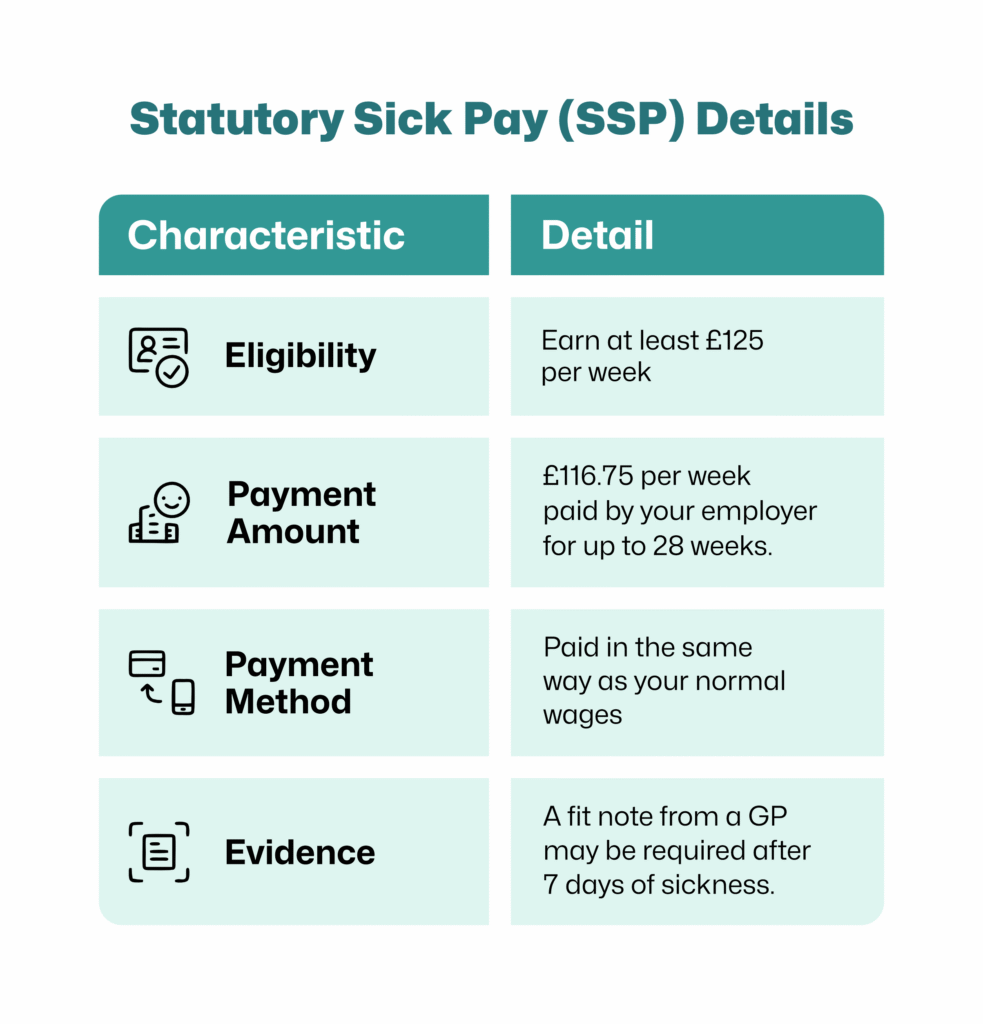
The SSP rate UK for the 2026/27 tax year is £123.25 per week, or 80% of an employee’s average weekly earnings, whichever is lower.
If you’re asking “how much is SSP?” or “how much is statutory sick pay?”, this is the legal minimum you must pay eligible employees when they are off sick.
What Employers Must Know
- Weekly SSP rate: £123.25
- Alternative calculation: 80% of average weekly earnings (if lower than £123.25)
- Maximum duration: 28 weeks per period of sickness
- Payment method: Through payroll, with tax and National Insurance deducted
You must pay SSP in the same way you pay wages, on your employee’s normal payday.
What This Means for Caregiver Businesses
For care providers, the SSP rate sets the baseline cost of staff absence. Even if a caregiver works limited hours, you must still calculate SSP correctly based on their average earnings and qualifying days.
Most employees will receive the full £123.25 per week, but lower-paid or part-time staff may receive less if 80% of their earnings falls below the standard SSP rate.
This makes it critical to understand not just the headline number, but how SSP applies across different types of care staff in your workforce.
READ MORE: Scotland PIP ADP Update 2026: What Care Businesses and Claimants Must Know
How Much Is SSP Per Day? (With Example)
SSP is not paid as a flat daily amount. You must calculate the daily rate based on how many qualifying days an employee usually works each week.
If you’re asking “how much is SSP per day?” or “how much is statutory sick pay per day?”, the answer depends on the employee’s work pattern.
How Daily SSP Is Calculated
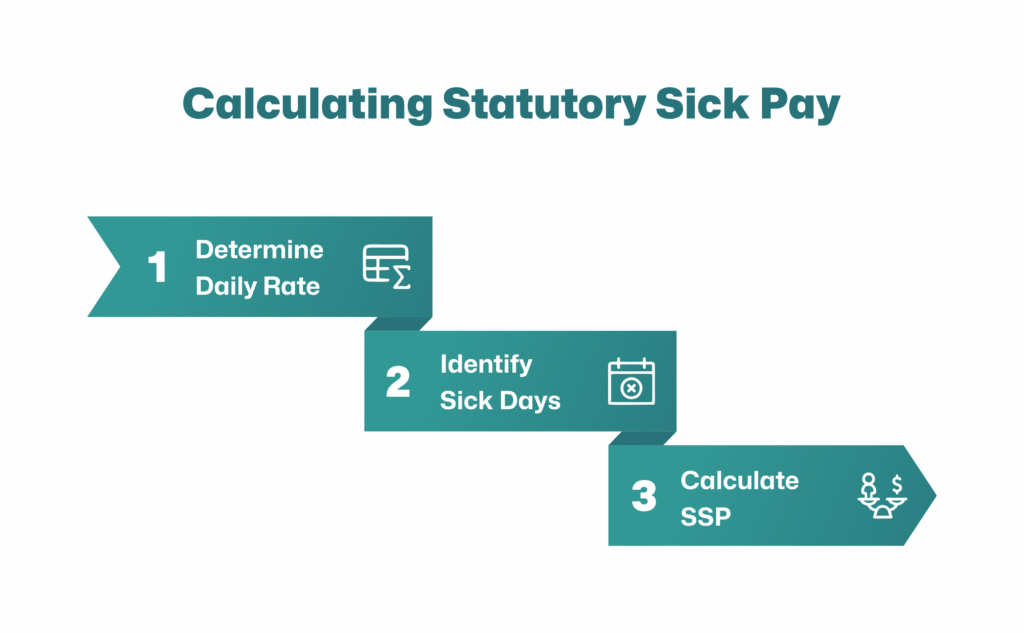
You calculate the daily rate using this formula:
Daily SSP = Weekly SSP rate ÷ Number of qualifying days
- Weekly SSP rate (2026): £123.25
- Qualifying days: the days the employee normally works
Example (Caregiver Working 5 Days a Week)
- Weekly SSP: £123.25
- Qualifying days: 5
£123.25 ÷ 5 = £24.65 per day
So, you would pay £24.65 for each sick day the employee qualifies for.
Why This Matters for Care Providers
Caregiver schedules vary widely:
- some staff work 2–3 days per week
- others work full-time shifts
- some work rotating or weekend patterns
This means SSP daily rates will differ across your workforce.
You must calculate SSP individually for each employee based on:
- their contract
- their working pattern
- their qualifying days
Getting this wrong can lead to underpayment, disputes, or compliance issues.
Always base your calculation on the employee’s actual working schedule, not a standard 5-day assumption.
SSP Calculator UK: How to Calculate Sick Pay
You don’t need complex software to calculate SSP correctly. You can follow a simple process or use an SSP calculator UK tool to speed things up.
If you’re managing multiple caregivers, using a statutory sick pay calculator or sick pay calculator helps reduce errors and saves time.
Simple Step-by-Step Method
Use this method for every employee:
- Confirm eligibility
Check that the employee qualifies for SSP (employed, reported sickness, at least one full working day off). - Work out average weekly earnings
Calculate earnings over the relevant period (usually 8 weeks). - Apply the SSP rate
Use:- £123.25 per week, or
- 80% of average weekly earnings (whichever is lower)
- Identify qualifying days
Count how many days the employee normally works each week. - Calculate daily rate
Divide the weekly amount by qualifying days. - Pay through payroll
Process SSP like wages, including tax and National Insurance.
When to Use an SSP Calculator
An SSP calculator becomes useful when:
- staff work irregular shifts
- earnings vary week to week
- you manage a large care team
Many employers search for:
- SSP calculator UK
- ssp rate uk calculator
- statutory sick pay calculator
These tools help you avoid manual errors, especially in busy care environments.
Practical Tip for Caregiver Businesses
Do not rely on assumptions. Always calculate SSP based on:
- actual earnings
- real working patterns
Even small mistakes, especially across multiple staff, can lead to payroll inaccuracies and compliance risks.
If you run a care agency, standardising your calculation process (or using a calculator tool) will save time and protect your business.
SEE ALSO: What is the Work Capability Assessment? 2026 Update for Care Businesses
SSP Entitlement UK: Who Qualifies After April 2026 Changes
SSP entitlement UK rules expanded in April 2026, which means more care workers now qualify for statutory sick pay.
If you manage a caregiver workforce, you must understand exactly who qualifies to apply the correct sick pay entitlement.
Who Qualifies for SSP in 2026
An employee qualifies for SSP if they:
- Have an employment contract
- Have started work under that contract
- Are off sick for at least one full working day
- Follow your sickness reporting process (or notify within 7 days)
SSP now applies regardless of income level, following the removal of the Lower Earnings Limit.
What Changed in April 2026
Two major changes affect caregiver businesses:
- No minimum earnings threshold
Even low-paid or part-time care staff now qualify - No waiting days
SSP starts from the first qualifying day of sickness
This means more employees will receive SSP, more often
What This Means for Care Providers
In care settings, many staff:
- work part-time
- work flexible shifts
- earn variable income
Before 2026, some of these workers did not qualify. Now, most will qualify
This increases:
- your payroll exposure
- the importance of accurate absence tracking
Important Clarification
Not every absence automatically qualifies.
You must still confirm:
- the employee was scheduled to work that day
- they were fully absent (not partially worked)
SSP entitlement depends on actual working patterns, not assumptions.
Practical Tip
Create a clear internal checklist for SSP eligibility.
This helps your HR or admin team apply rules consistently across all caregivers.
In a care business, consistency protects you from disputes, errors, and compliance issues.
Who Does NOT Qualify for SSP
Not every worker qualifies for Statutory Sick Pay. As a caregiver business, you must identify non-eligible cases early to avoid overpaying or making incorrect payroll decisions.
Employees Who Do Not Qualify
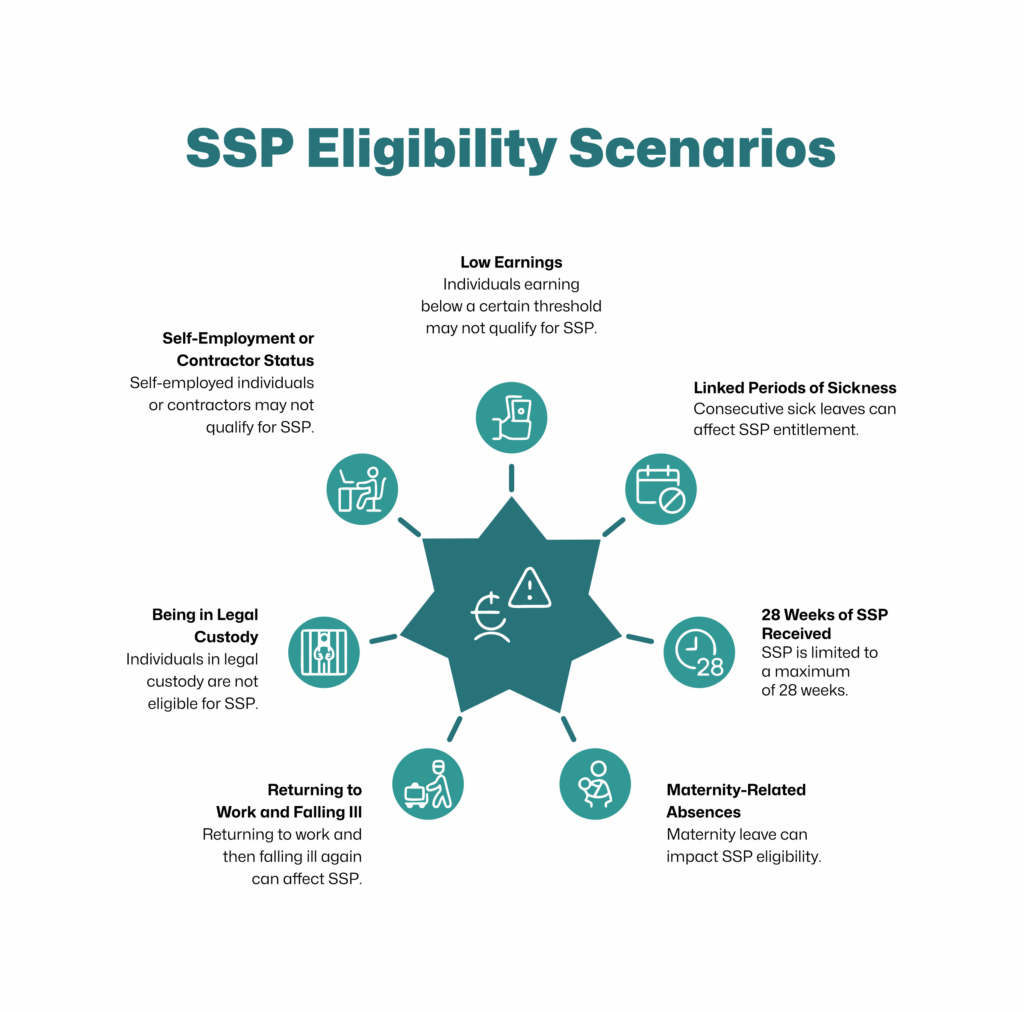
An employee does not qualify for SSP if they:
- Have already received the maximum 28 weeks of SSP
- Are receiving Statutory Maternity Pay or Maternity Allowance
- Are off sick due to a pregnancy-related illness in the 4 weeks before the due date
- Were in custody or on strike on the first day of sickness
- Work outside the UK and are not liable for UK National Insurance
- Recently received Employment and Support Allowance (ESA) within certain conditions
These rules still apply even after the 2026 changes.
What About Self-Employed Workers?
Self-employed individuals do not qualify for SSP.
If you’re wondering about:
- self employed sick pay
- sick pay for self employed
The answer is simple: SSP only applies to employees, not self-employed contractors.
Self-employed caregivers must rely on:
- personal savings
- insurance
- government benefits (e.g., Universal Credit or ESA, if eligible)
Common Mistake Care Providers Make
Some care businesses incorrectly assume all staff qualify, especially when using:
- agency workers
- freelance caregivers
- zero-hour arrangements
Always confirm employment status before applying SSP.
Practical Tip for Care Businesses
Before paying SSP, check:
- employment status
- SSP already paid (28-week limit)
- reason for absence
A quick check upfront prevents overpayment, payroll errors, and compliance issues later.
MORE: What is a Discretionary Housing Payment? 2026 Update for Care Business
SSP1 Form Explained: When You Must Give It to Employees
The SSP1 form is a legal document you must provide when an employee cannot receive SSP or when their SSP is about to end.
As a caregiver business, issuing this form at the right time is critical. It allows your employee to apply for alternative financial support.
When You Must Issue an SSP1 Form
You must give an employee an SSP1 form if:
- They do not qualify for SSP
- Their SSP is about to end before they return to work
- Their SSP has ended unexpectedly while still sick
Deadlines You Must Follow
- If SSP ends unexpectedly → within 7 days
- If SSP is expected to end → by week 23 of absence
- If employee never qualified → within 7 days of first sick day
Missing these deadlines can lead to compliance issues and employee complaints
Why the SSP1 Form Matters
The SSP1 form allows employees to apply for:
- Employment and Support Allowance (ESA)
- Universal Credit
Without it, they may face delays in receiving financial support.
What This Means for Care Providers
In caregiving businesses:
- long-term sickness is common
- staff may reach the 28-week SSP limit
You must track absence carefully so you can issue the SSP1 form on time.
Practical Tip
Set a reminder system for:
- week 20–23 of long-term sickness cases
This ensures your admin team:
- prepares the SSP1 form early
- avoids last-minute errors
Good tracking protects both your business and your employees.
Fit Notes and Sick Notes: What Employers Can Ask For
As a caregiver business, you must handle sickness evidence correctly. You cannot demand medical proof too early, and you must follow clear rules around fit notes (often called sick notes).
What Happens in the First 7 Days
For the first 7 calendar days of sickness:
- The employee can self-certify their illness
- You cannot require a fit note
- You should record the absence internally
Many people refer to this loosely as a “sick note” (ss note), but no formal medical note is required at this stage.
After 7 Days: Fit Notes Required
If the employee is off sick for more than 7 days:
- You can request a fit note
- It must come from an approved healthcare professional:
- GP or hospital doctor
- Registered nurse
- Pharmacist
- Physiotherapist
- Occupational therapist
Fit notes can be:
- digital
- printed
Types of Fit Notes
A fit note will usually state:
- “Not fit for work”
- or
- “May be fit for work” (with adjustments)
If it suggests adjustments (e.g. reduced hours or lighter duties), you should:
- discuss options with the employee
- consider a phased return to work
What This Means for Care Providers
In care settings:
- frequent short-term absences are common
- long-term absences require proper documentation
You must balance:
- compliance
- operational needs
You cannot withhold SSP just because a fit note arrives late, unless there is no valid reason for the delay.
Practical Tip
Create a simple policy:
- Day 1–7 → self-certification
- Day 8+ → fit note required
This keeps your process consistent across all caregivers and reduces disputes.
READ: What is the Health and Safety at Work Act 1974?
SSP vs NHS Sick Pay vs Private Sick Pay
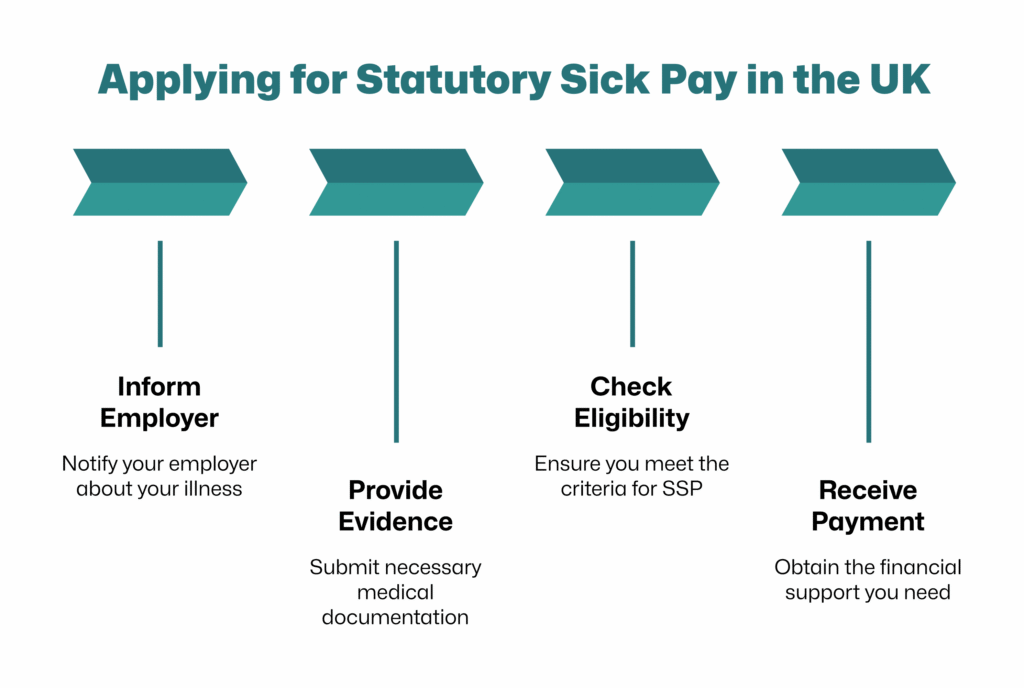
Not all sick pay works the same. As a caregiver business, you must understand the difference between SSP, NHS sick pay, and private sick pay so you can set the right expectations for your staff.
What Is SSP?
Statutory Sick Pay (SSP) is the legal minimum you must pay eligible employees:
- £123.25 per week (2026 rate)
- Paid for up to 28 weeks
- Funded entirely by the employer
This applies to most private care providers.
What Is NHS Sick Pay?
NHS sick pay is a contractual scheme, not a legal minimum.
It typically offers:
- Full pay for a set period
- Then half pay
- Based on length of service
NHS staff receive significantly more support than SSP alone.
This creates a gap in expectations, especially when caregivers move from NHS roles into private care.
What Is Private Sick Pay?
Private sick pay (also called contractual or occupational sick pay) is:
- Set by the employer
- Defined in the employment contract
- Paid on top of, or instead of, SSP
Examples include:
- Full pay for 2–4 weeks
- Then SSP only
- Or tiered systems (full → half → SSP)
You can offer more than SSP—but never less.
Why This Matters for Caregiver Businesses
Many caregivers compare benefits across employers.
If you only offer SSP:
- staff may feel under-supported
- retention may suffer
If you offer private sick pay:
- you improve staff loyalty
- reduce presenteeism (working while sick)
- strengthen your employer brand
Practical Tip
Review your sick pay structure regularly.
Even a small top-up above SSP can:
- improve retention
- reduce burnout
- make your business more competitive
In a staffing-sensitive sector like care, this can make a real difference.
SEE MORE: What is an SR1 Form? 2026 Guide for UK Care Providers
Why Is SSP So Low?
Many care providers and caregivers ask the same question: why is SSP so low compared to real living costs?
The answer is simple, SSP is designed as a minimum legal safety net, not a full income replacement.
SSP Is a Baseline, Not Full Pay
The government sets SSP at a fixed rate to:
- ensure employers provide basic financial support
- keep costs predictable for businesses
- avoid placing full wage liability on employers
At £123.25 per week, SSP does not aim to cover normal living expenses.
Impact on Care Workers
For many caregivers:
- pay is already modest
- shifts vary
- overtime is common
When sickness occurs, income can drop sharply.
This creates:
- financial stress
- pressure to return to work early
- higher risk of presenteeism (working while unwell)
Impact on Caregiver Businesses
Low SSP can also affect your business:
- Staff may return too early → quality of care risk
- Morale may drop → retention issues
- Absence patterns may become inconsistent
SSP levels indirectly influence staff behaviour and service delivery
Why Employers Often Top It Up
Many care providers introduce private sick pay to:
- support staff financially
- reduce early returns to work
- improve retention
Even a small enhancement can:
- stabilise your workforce
- improve care continuity
Practical Perspective
SSP works as a legal minimum, not a competitive benefit.
If you rely on SSP alone, you meet the law, but you may fall behind as an employer.
Caregiver businesses that understand this tend to:
- plan for absence costs
- design better sick pay policies
- build stronger, more reliable teams
Practical Tips for Care Providers
Managing SSP effectively is not just about compliance, it’s about protecting your operations, your staff, and your margins.
1. Standardise Your SSP Process
Create a simple, repeatable system:
- Track sickness from day one
- Confirm eligibility before payment
- Use a consistent SSP calculator UK method for all staff
This reduces errors, especially in large caregiver teams.
2. Plan for Long-Term Sick Pay
Care businesses often face extended absences.
- Monitor staff approaching 28 weeks of SSP
- Prepare to issue the SSP1 form early
- Plan cover for long-term cases
Proactive planning avoids disruption to client care.
3. Use Accurate Records
Keep clear records of:
- sickness dates
- qualifying days
- SSP payments
HMRC may request this if disputes arise.
4. Review Your Sick Pay Policy
Relying only on SSP may not be enough.
Consider:
- adding private sick pay
- offering short-term top-ups
Even small enhancements can improve retention and reduce absenteeism.
5. Train Your Admin or HR Team
Make sure your team understands:
- SSP entitlement rules
- calculation methods
- when to request fit notes
This ensures consistent application across all caregivers.
6. Think Operationally, Not Just Legally
In care, absence affects real people.
When a caregiver is off sick:
- clients still need support
- schedules must adjust quickly
Build a system that balances:
- compliance
- cost control
- continuity of care
Final Tip…
Do not treat SSP as just a payroll task. Treat it as part of your workforce strategy, because in a caregiver business, staffing stability directly affects care quality.
Here are stronger, higher-converting CTA options tailored to your article (SSP + caregiver business angle).
These are designed to feel less generic, more authoritative, and action-driven
Take control of sick pay, compliance, and staffing with confidence.
Care Sync Experts helps caregiver businesses simplify SSP calculations, stay compliant with 2026 regulations, and build stronger workforce systems that reduce risk and improve care delivery.
Speak to our team today and get your sick pay strategy right from day one.
FAQ
What is SSP in UK payroll?
SSP (Statutory Sick Pay) is the legal minimum sick pay employers must provide to eligible employees who are off work due to illness.
In UK payroll:
SSP is processed through PAYE, just like wages
Employers are responsible for paying it (not HMRC)
It is subject to tax and National Insurance deductions
For caregiver businesses, SSP becomes part of your regular payroll obligations, not a separate benefit system.
What is an example of SSP?
Here’s a simple example for a care worker:
Weekly SSP rate: £123.25
Employee works: 5 days per week
Daily SSP rate: £24.65
If the employee is off sick for 3 qualifying days, you pay:
£24.65 × 3 = £73.95 SSP
This amount is:
paid through payroll
taxed like normal earnings
How to calculate absence rate in the UK?
Caregiver businesses often track absence rates to manage staffing.
Use this simple formula: Absence Rate (%) = (Total days absent ÷ Total available working days) × 100
Example:
10 employees
Each works 5 days per week → 50 total working days
5 days lost to sickness
(5 ÷ 50) × 100 = 10% absence rate
Tracking this helps you:
identify trends
plan staffing
control long-term sick pay costs
How many sick days per year is acceptable in the UK?
There is no fixed legal limit on how many sick days are “acceptable” in the UK.
However, many employers use internal benchmarks:
Short-term absence: 3–5 days per year (typical range)
Trigger points: Often set around 3–4 separate absences
For care providers:
even a few sick days can disrupt service delivery
consistency matters more than averages
The best approach is to:
set clear absence policies
monitor patterns
support staff early to prevent long-term issues
Leave a Reply