Rachel Reeves has defended proposed changes to the UK welfare system that could tighten access to disability-related benefits, including Personal Independence Payment (PIP). The planned reforms focus on reviewing eligibility criteria for claimants, with ministers arguing that the current system no longer supports long-term economic sustainability.
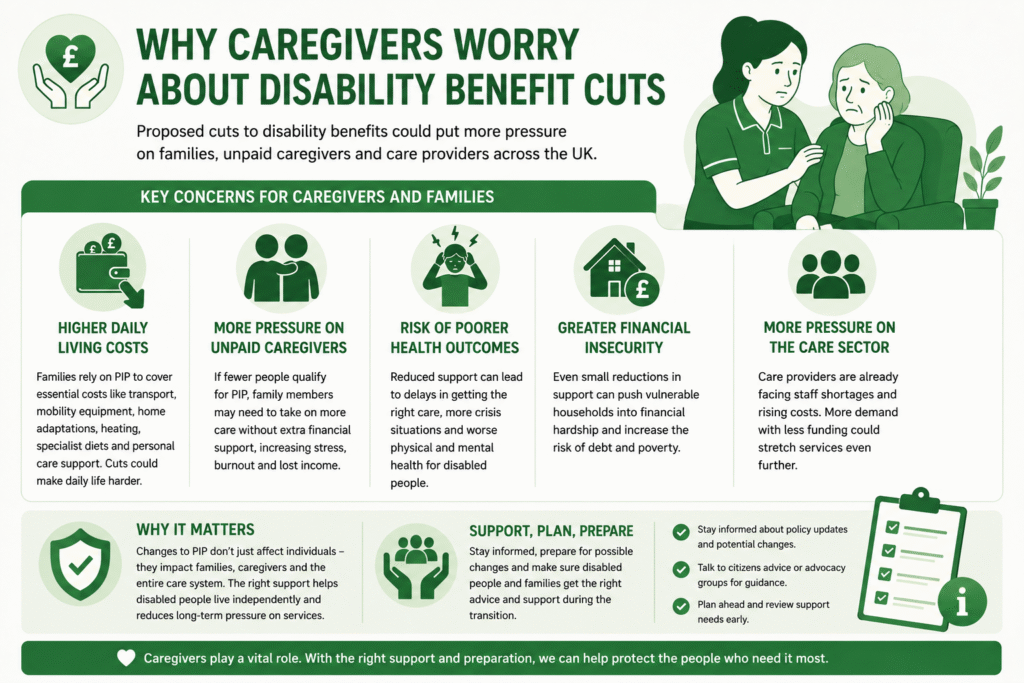
The debate around Rachel Reeves disability reforms has intensified because many disabled people and caregivers rely on PIP to cover daily living costs, mobility support, and essential care needs.
Campaigners and disability advocates fear the proposed Rachel Reeves disability cuts could reduce financial support for vulnerable households and place additional pressure on unpaid caregivers and care providers.
Although Labour has not confirmed every detail of the reforms, Rachel Reeves disability benefit proposals have already triggered national discussion about fairness, healthcare access, and the future of disability support in the UK.
Many caregivers worry that the proposed Rachel Reeves disability benefit cuts could make daily life harder for disabled people who already struggle with rising living costs.
Families often use disability benefits to pay for transport, mobility equipment, home adjustments, heating, specialist diets, and personal care support. Even small reductions in support can create major disruptions for vulnerable households.
Care providers also fear that tighter eligibility rules could increase pressure on unpaid family caregivers. If fewer people qualify for PIP, relatives may need to take on more caring responsibilities without additional financial support.
That shift could increase emotional burnout, reduce household income, and affect the quality of care disabled people receive at home.
The latest Rachel Reeves disability news has also raised concerns across the social care sector because many providers already operate under staffing shortages and funding pressures.
Some caregivers believe the proposed reforms may push more people toward crisis support services instead of preventive care, increasing long-term pressure on the NHS and local authorities.
How Changes to PIP Could Affect Disabled People and Care Providers
Potential changes to Rachel Reeves disability PIP policies could affect far more than monthly benefit payments. Many disabled people use PIP to maintain independence, access transport, and continue living safely in their communities.
If the government tightens eligibility criteria, some claimants could lose access to financial support that helps cover mobility and daily living needs.
Concerns around Rachel Reeves disability cars discussions have also grown because thousands of disabled people rely on the Motability scheme for accessible transport.
Losing PIP eligibility could prevent some individuals from qualifying for Motability vehicles, making it harder to attend medical appointments, work, education, or social activities.
Care providers may also feel the impact quickly. Reduced financial support often increases demand for local care services, emergency support, and unpaid family care.
Home care agencies and community support workers could face higher caseloads as more families struggle to manage complex care needs without adequate funding.
What Rachel Reeves and Labour Have Said About Disability Reforms
Rachel Reeves Disability Benefits? 2026 Update
Rachel Reeves has defended the government’s approach by arguing that the welfare system needs reform to remain financially sustainable. Labour ministers say the current system does not effectively support people back into work and that the number of disability benefit claims has increased significantly since the pandemic.
Recent Rachel Reeves disability news coverage has focused on proposed changes to Personal Independence Payment assessments, particularly around stricter qualification criteria.
Reeves has stated that the government continues to review the rules for accessing PIP and may still adjust parts of the proposal following criticism from Labour MPs, disability groups, and campaigners.
Supporters of the reforms argue that Labour wants to balance financial responsibility with long-term support for vulnerable people.
Critics, however, believe the Rachel Reeves budget disability proposals could place disabled households under additional financial strain during an already difficult economic period.
Why Campaigners and Disability Advocates Oppose the Proposed Changes
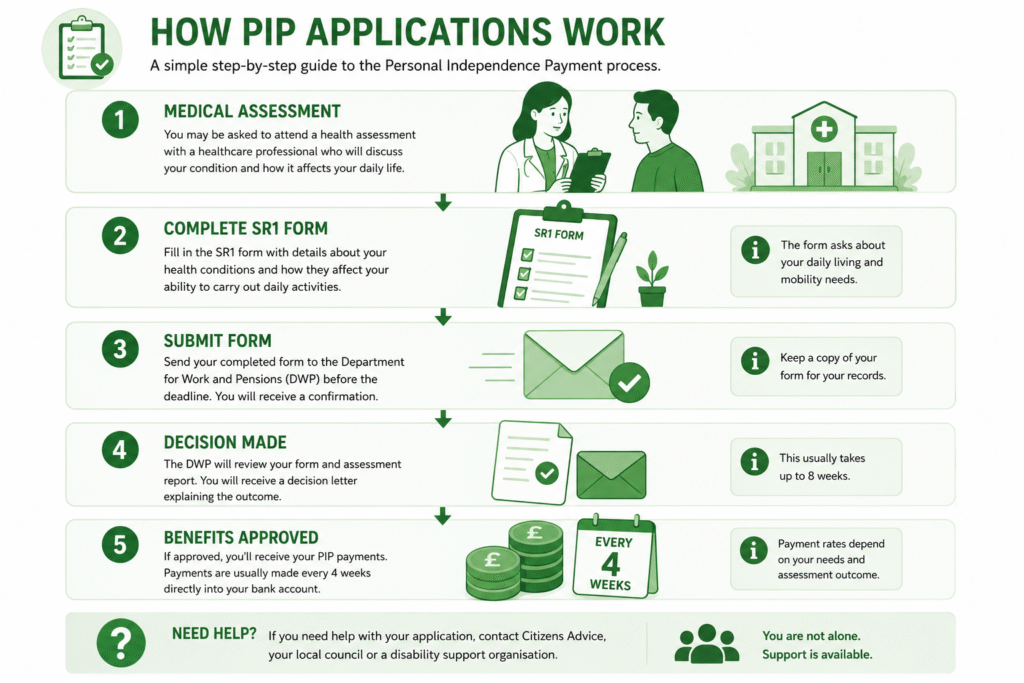
How PIP applications work
Disability campaigners and advocacy groups strongly oppose the proposed reforms because they believe the changes could reduce independence and financial security for disabled people.
Many critics argue that tighter eligibility rules may unfairly affect people with invisible illnesses, mental health conditions, and fluctuating disabilities that already prove difficult to assess through the current system.
Advocates also warn that reducing access to PIP could increase poverty levels among vulnerable households. Many disabled people depend on disability benefits to cover additional living costs that non-disabled households may not face, including specialist transport, medical equipment, higher utility bills, and personal support services.
Some campaigners have linked the wider public reaction to growing frustration around Labour’s welfare direction, especially as online discussions continue around questions like “will Rachel Reeves resign” and “why is Rachel Reeves crying.”
While those conversations often reflect broader political tensions, disability organizations continue to focus mainly on the long-term impact the reforms could have on disabled people and caregivers across the UK.
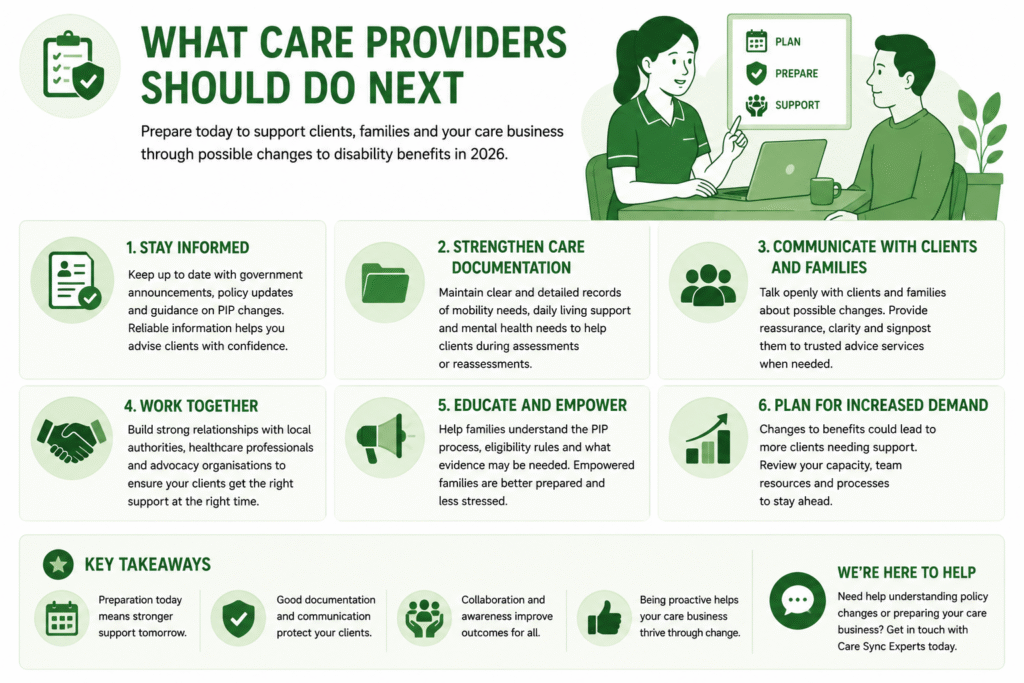
Care providers should prepare early for possible changes to disability benefit assessments and eligibility rules. Many families may need additional guidance if the government introduces new PIP requirements or reassessment processes in 2026.
Providers who stay informed and communicate clearly with clients will place themselves in a stronger position to offer support during periods of uncertainty.
Home care agencies and support workers should also strengthen care documentation and maintain accurate client records. Clear evidence of mobility challenges, daily living needs, and mental health support can help families during benefit reviews or reassessments.
Providers may also need to work more closely with local authorities, advocacy groups, and healthcare professionals as demand for support services increases.
Caregiver businesses can also play an important role by educating families about policy updates, signposting trusted advice services, and helping vulnerable clients avoid unnecessary stress during the ongoing Rachel Reeves disability debate.
Conclusion
The debate around Rachel Reeves disability reforms has become one of the most closely watched welfare discussions in the UK. While Labour argues that changes to disability benefits aim to create a more sustainable welfare system, many caregivers, disabled people, and advocacy groups remain concerned about the possible impact on financial stability, independence, and access to care.
For care providers, the conversation goes beyond politics. Any major change to PIP or disability support could directly affect families, unpaid caregivers, and frontline care services already working under pressure.
Providers who stay informed, support vulnerable clients, and prepare for possible policy changes will place themselves in a stronger position to respond effectively in 2026.
At Care Sync Experts, we help caregiver businesses stay ahead of regulatory, operational, and industry changes affecting the UK care sector.
From compliance support and tender guidance to policy-focused insights for care providers, our team works closely with organizations that want to grow sustainably while delivering high-quality care.
FAQ
Is Parkinson’s considered a disability in the UK?
Yes. Parkinson’s disease can qualify as a disability in the UK if it significantly affects a person’s ability to complete daily activities or move independently. Many people living with Parkinson’s may qualify for support such as Personal Independence Payment (PIP), depending on how the condition impacts their everyday life.
Is arthritis a disability?
Arthritis may qualify as a disability when it causes long-term physical limitations, chronic pain, or mobility difficulties that affect normal daily activities. Severe arthritis often impacts a person’s ability to work, walk, dress, cook, or manage personal care without support.
What are the top 3 disabilities?
The most commonly reported disabilities often include mobility impairments, mental health conditions, and musculoskeletal disorders such as arthritis or chronic back pain. However, disability experiences vary widely, and many conditions can affect people differently depending on severity and support needs.
What actor has Down syndrome?
Several actors with Down syndrome have gained recognition in film and television. One well-known example is Zack Gottsagen, who starred in The Peanut Butter Falcon. In the UK entertainment industry, actors and advocates with Down syndrome continue to help improve disability representation in media and public life.
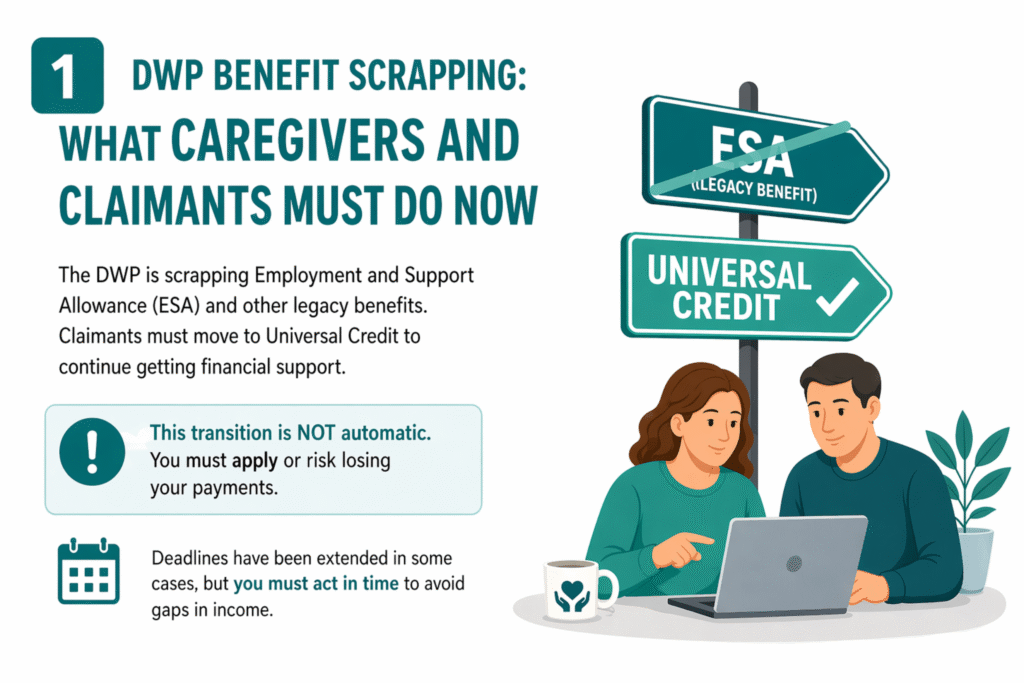
The Department for Work and Pensions (DWP) is scrapping Employment and Support Allowance (ESA) as part of a wider DWP benefit scrapping programme. Claimants must move to Universal Credit (UC) to continue receiving financial support, as the government phases out legacy benefits. This transition is not automatic; people must apply for Universal Credit or risk losing their payments.
The DWP has extended deadlines in some cases to support vulnerable claimants, but the responsibility still falls on individuals and caregivers to act in time. Care providers should identify clients receiving ESA and guide them through the transition early to avoid disruptions in income.
While this reform focuses on ESA, it also signals broader welfare changes. Many families are now asking whether other policies, such as the two child benefit cap, will also change under ongoing government reviews.
The current wave of DWP benefit scrapping is not just a policy change; it directly affects how caregivers support vulnerable people every day.
If you run a care agency or support clients on ESA, you now carry a bigger responsibility. You must identify which clients still receive legacy benefits and help them transition to Universal Credit before deadlines pass. Many clients, especially elderly or disabled individuals, do not fully understand the process or may assume payments will continue automatically.
For families, the impact can be immediate. A missed application can stop income entirely. That creates stress, increases dependency on care providers, and can even affect a person’s ability to afford basic needs like housing, food, and medication.
Care providers must also prepare for increased workload. You may need to:
Explain benefit changes in simple terms
Help clients gather documents
Support online applications
Follow up on claims and deadlines
This shift also connects to wider welfare concerns. Families already dealing with limits like the 2 child cap UK rules may face additional financial pressure as benefits change. When combined with ongoing uncertainty around policies like the two child benefit cap, the risk of financial instability grows.
In short, DWP benefit scrapping turns caregivers into frontline support for both care and financial guidance. Acting early protects your clients and reduces crisis situations later.
Why ESA and Other Legacy Benefits Are Being Scrapped
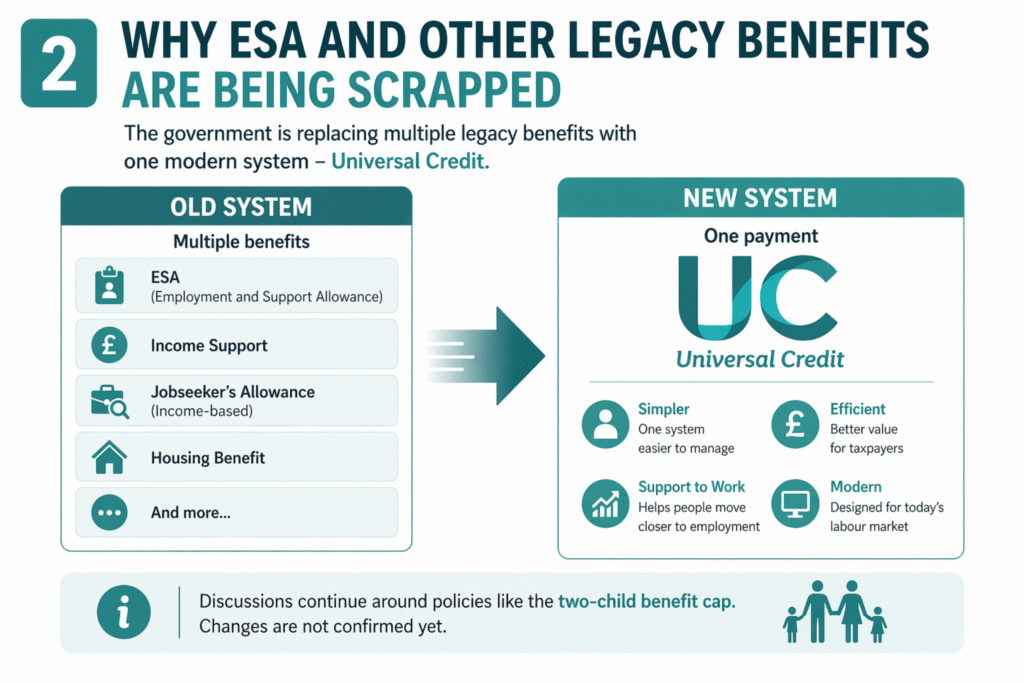
The DWP is scrapping ESA and other legacy benefits to replace them with a single system: Universal Credit. This move forms a key part of the wider DWP benefit scrapping programme aimed at simplifying welfare and encouraging people to move closer to work where possible.
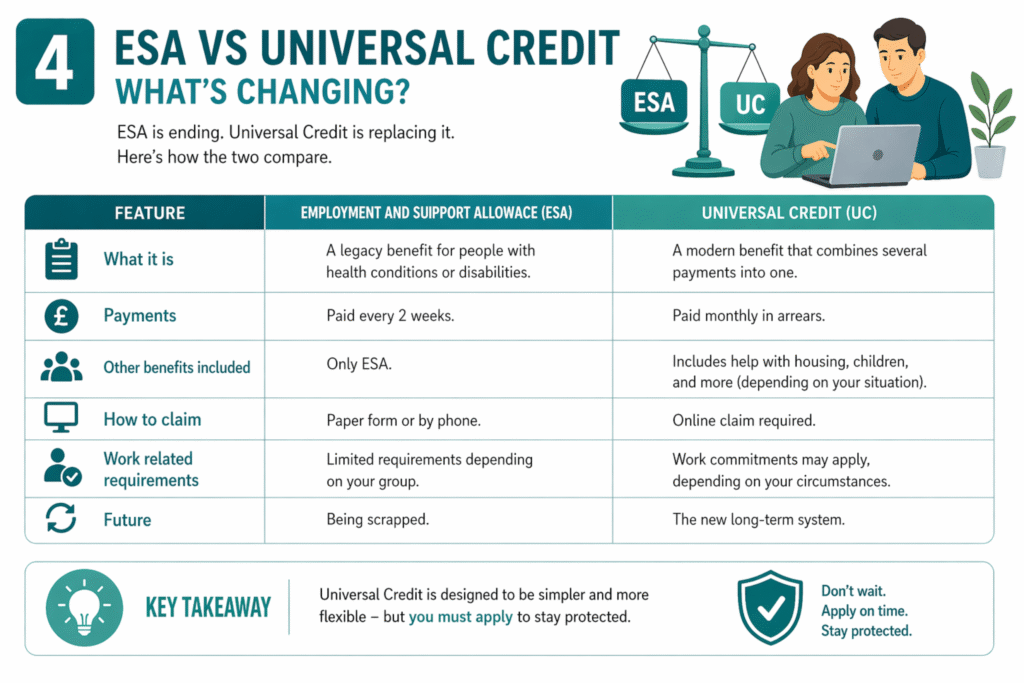
Universal Credit combines several older benefits, including ESA, Income Support, and income-based Jobseeker’s Allowance, into one monthly payment. The government argues that this system better reflects today’s labour market and provides clearer pathways into employment.
Universal Credit is designed to replace multiple legacy benefits with a single payment that adjusts based on income, employment status, and personal circumstances.
From a policy standpoint, the goal is efficiency. Instead of managing several separate benefits, the DWP wants one streamlined system that is easier to administer and monitor. However, for many claimants and caregivers, the transition creates confusion and risk, especially because the process requires action.
This change also raises broader questions about the future of welfare limits. Many families now ask whether policies like the two-child benefit cap will change alongside these reforms. While discussions continue, particularly around whether the two-child benefit cap will be lifted or adjusted under future budgets, no universal change has been confirmed yet.
For now, the priority remains clear: ESA is ending, and Universal Credit is replacing it. Care providers must treat this as an active transition, not a passive update.
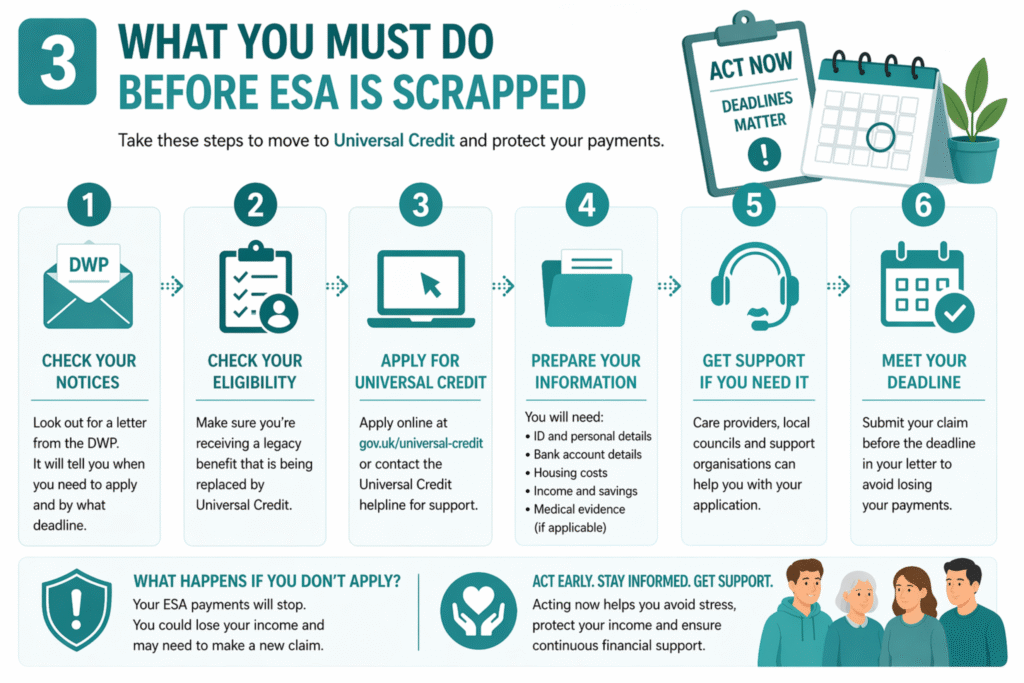
What You Must Do Before ESA Is Scrapped
Checklist Before ESA transitions
If you or someone you support still receives ESA, you must act now. The DWP will not move you automatically. You must apply for Universal Credit before your deadline to keep receiving financial support.
The move to Universal Credit is not automatic. Claimants must apply or risk losing their payments completely.
Follow these steps to stay protected:
Check eligibility immediately Confirm whether you receive income-related ESA or another legacy benefit being replaced
Watch for official DWP letters The DWP sends a migration notice with a deadline to apply
Apply for Universal Credit early Do not wait until the last minute—processing delays can affect payments
Prepare required information Gather ID, bank details, housing costs, and medical evidence if needed
Seek support if needed Care providers, local councils, and support organisations can guide you through the process
For caregivers, this step is critical. Many vulnerable clients may ignore letters, misunderstand instructions, or struggle with online applications. You should actively monitor their situation and assist with submissions to prevent missed deadlines.
This transition also connects to wider concerns about benefit limits. Families moving to Universal Credit often ask whether policies like the two child benefit cap will change or whether the benefit cap is being lifted on Universal Credit. While these questions remain under review, they do not affect the immediate requirement to apply.
Act early, stay organised, and ensure every affected claimant completes their application before the deadline.
What Happens If You Don’t Move to Universal Credit
If a claimant does not switch in time, the DWP will stop their ESA payments. The system does not transfer benefits automatically, and missing the deadline can leave people without income.
If you do not apply for Universal Credit before your deadline, your ESA payments will end and you may not receive backdated support.
This situation creates serious risks, especially for vulnerable individuals. Without a successful application:
Monthly income stops completely
Housing payments may be affected
Bills and essential costs become harder to manage
Reapplying later can cause delays and financial gaps
For caregivers, this is where proactive support matters most. You must not assume clients will act on their own. Many people miss deadlines because they:
Ignore DWP letters
Do not understand the process
Struggle with digital applications
From a wider perspective, these risks add to existing financial pressure on families already affected by limits like the 2 child cap UK rules. Questions such as “is the benefit cap being lifted for everyone?” or whether support will increase do not change the immediate reality, missing the migration deadline leads to lost payments.
Acting early prevents crisis. Waiting increases the chance of financial hardship.
Will the Two-Child Benefit Cap Be Scrapped in 2026? Latest Updates
dwp benefit changes
The current wave of DWP benefit scrapping has pushed more families to ask a bigger question: Will the two-child benefit cap be scrapped in 2026?
Right now, the policy remains in place. The two child benefit cap limits financial support to the first two children in most households claiming benefits like Universal Credit. Families with more than two children do not receive additional payments for extra children under this rule.
The two-child benefit cap restricts Universal Credit and tax credit payments to a maximum of two children in most cases.
Recent discussions, especially around the autumn budget 2025 2 child cap and political debates involving figures like Rachel Reeves child benefit cap proposals—have increased expectations that the policy could change. Some reports suggest a possible UK two-child limit abolition, but no confirmed timeline exists.
Here’s what we know so far:
The policy is still active across the UK
No official confirmation of a full removal yet
Ongoing debate continues within government and policy circles
Any change would likely come through a future budget announcement
Many families also search for:
“when will the 2 child benefit cap be scrapped”
“when does the 2 child cap end”
“two-child benefit cap scrapped”
At this stage, these remain unanswered. No confirmed date has been announced.
For caregivers, this matters because families transitioning to Universal Credit may expect increased support that does not yet exist. Managing expectations is critical. You should clearly explain that while discussions continue, the policy still applies today.
In short, while the two-child benefit cap will be lifted remains a possibility in future reforms, caregivers and claimants must plan based on current rules, not speculation.
2 Child Benefit Cap Lifted: How Much Will Families Get?
dwp benefit scrapping
Many families moving to Universal Credit ask the same question: “If the 2 child benefit cap is lifted, how much will I get?”
Right now, there is no confirmed change. The two-child benefit cap still limits payments to the first two children in most households. That means families do not receive additional Universal Credit amounts for a third or subsequent child under current rules.
If the two-child benefit cap is lifted, eligible families would receive additional Universal Credit payments for each extra child, increasing their total monthly income.
To understand the impact, here’s what would change if the policy were removed:
Families with more than two children would qualify for extra child elements under Universal Credit
Monthly payments would increase based on the number of additional children
Financial pressure on larger families would reduce significantly
For example, when people search:
“2 child benefit cap lifted how much will I get”
“2 child benefit cap lifted how much will I get universal credit”
They are trying to estimate how much extra support they could receive. While exact figures depend on individual circumstances, each additional child element in Universal Credit is worth thousands of pounds per year. Removing the cap would therefore create a meaningful increase in household income.
However, it’s important to stay grounded in current policy. There is no automatic payment or confirmed rollout yet. Questions like “will the 2 child benefit cap be automatically paid” or “will the 2 child benefit cap be backdated” remain speculative.
For caregivers and support workers, this is where clear communication matters. Many clients may expect immediate financial relief due to ongoing debates or media headlines. You must explain that:
The cap is still in place today
No confirmed payment increase has been announced
Any future change would likely require a formal policy update
Until then, families should plan based on existing Universal Credit rules, not future expectations.
Care Provider Checklist: How to Support Clients Through Benefit Changes
Why legacy benefits are being replaced
Care providers play a critical role during this period of DWP benefit scrapping. You are often the first point of support when clients feel confused, overwhelmed, or at risk of losing income.
Use this checklist to stay proactive and protect your clients:
Identify At-Risk Clients
Review your records and flag anyone receiving ESA or other legacy benefits. Prioritise clients with disabilities, limited digital skills, or no family support.
Communicate Early and Clearly
Explain the changes in simple terms. Tell clients:
ESA is ending
They must apply for Universal Credit
Missing deadlines can stop payments
Avoid assumptions, many clients do not understand official letters.
Support the Application Process
Help clients:
Create Universal Credit accounts
Upload required documents
Complete identity checks
Where possible, sit with them during the application to avoid errors.
Track Deadlines and Follow Up
Set reminders for each client’s migration deadline. Check progress regularly and confirm that applications have been submitted successfully.
Manage Expectations Around Policy Changes
Clients may ask about:
“when will the two child benefit cap be lifted”
“two-child benefit cap removed”
“is child benefit going up”
Be clear: these changes are not confirmed yet. Focus clients on what they must do now, not what might happen later.
Monitor Financial Stability
Watch for early signs of financial stress:
Missed rent
Reduced food spending
Anxiety about bills
Step in early and connect clients with additional support if needed.
Stay Updated on Policy Changes
Welfare rules continue to evolve. Follow updates on:
Universal Credit changes
Potential reforms like the 2 child cap
Budget announcements affecting benefits
By following this checklist, you move from reactive support to proactive care. You protect your clients from sudden income loss, and strengthen your role as a trusted guide during uncertain policy changes.
Conclusion
The current wave of DWP benefit scrapping is already changing how caregivers support clients across the UK. ESA is ending, Universal Credit is replacing it, and the transition requires action, not assumptions.
For care providers, this is more than a policy update. It directly affects your clients’ financial stability, well-being, and trust in your service. Acting early, guiding clearly, and staying informed will prevent avoidable crises.
At the same time, wider reforms, like ongoing debates around the two-child benefit cap, continue to shape expectations. But until confirmed, the priority remains simple: help every affected client complete their transition on time.
Care Sync Experts helps you manage applications, compliance, and updates with confidence.
FAQ
Can DWP check your bank account?
The DWP does not routinely monitor your bank account, but it can request access to financial information if it suspects fraud or needs to verify a claim. In some cases, they may work with banks or use data-sharing powers to confirm income and savings.
Can the DWP just stop my benefits?
Yes, the DWP can stop your benefits if you fail to meet eligibility rules, miss a required action (like moving to Universal Credit), or do not respond to official requests. Payments can also stop if your circumstances change and you do not report it.
What triggers a DWP bank check?
A bank check may be triggered by: Suspected fraud or incorrect claims – Unreported income or savings – Data mismatches between government systems – Random compliance reviews
Keeping your information accurate and up to date reduces the risk of checks.
Will I lose my PIP if I inherit money?
No, inheriting money does not automatically stop Personal Independence Payment (PIP). PIP is not means-tested, so it does not depend on your savings or income. However, if your condition improves or your circumstances change, the DWP may review your claim.
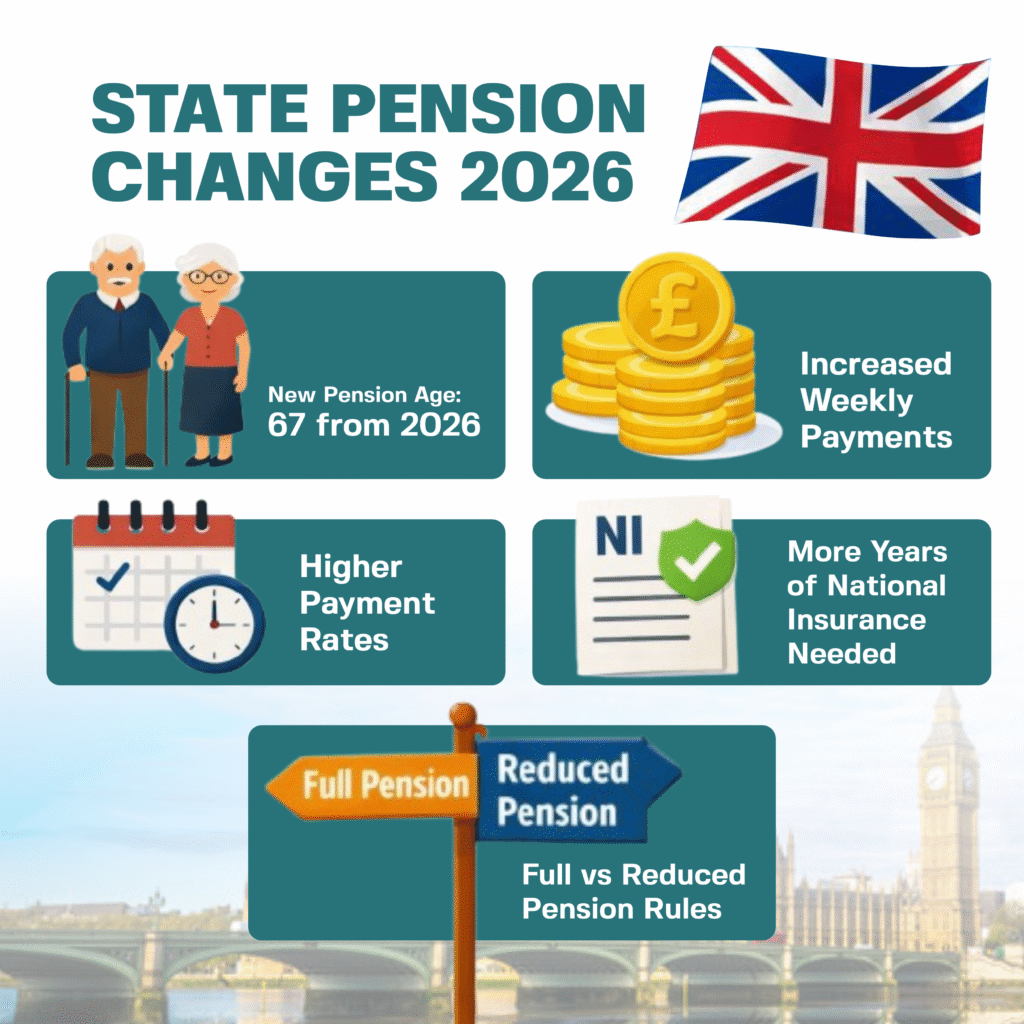
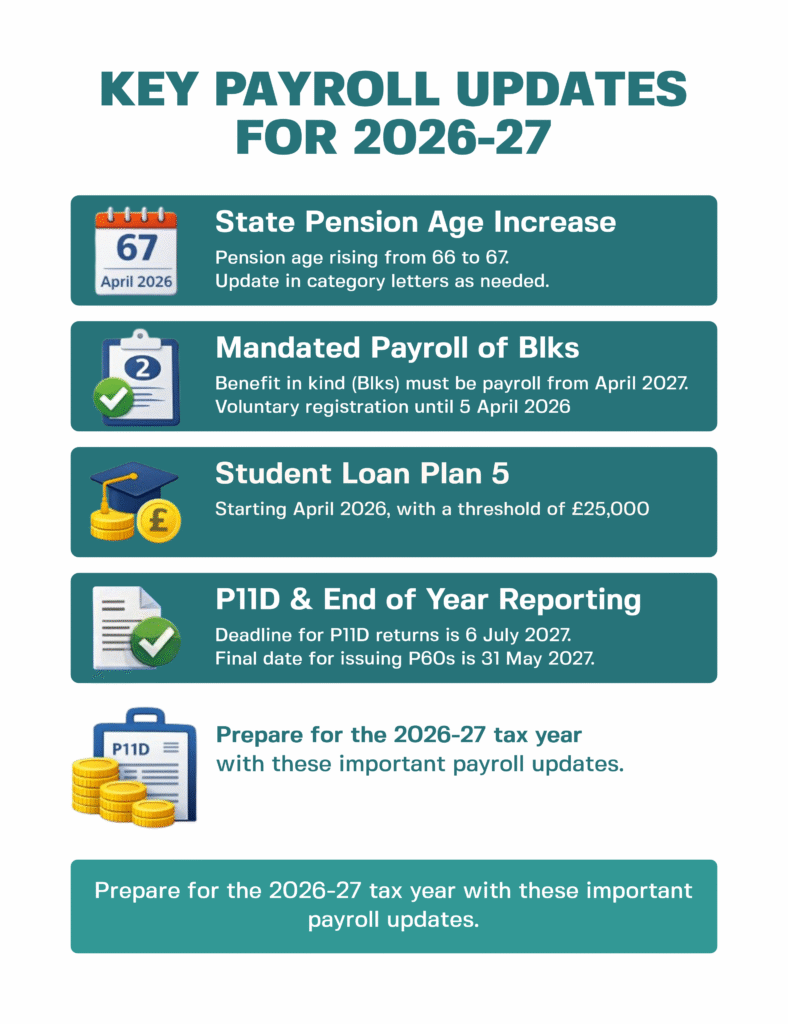
The UK State Pension age increase 2026 will raise the retirement age from 66 to 67 between April 2026 and April 2028. This change affects people born on or after 6 April 1960, meaning they will retire at age 67 instead of 66, depending on their exact birth date. The government introduced this state pension age increase to reflect longer life expectancy and reduce long-term pension costs.
If you’re asking “when can I retire?”, the answer now depends on your date of birth. The increase does not apply all at once, it rolls out gradually over two years, so some people will wait a few extra months, while others will wait the full year.
For care providers and their staff, this means many workers will remain in employment longer, making it essential to understand how the UK state pension age increase 2026 affects retirement planning and workforce decisions.
The state pension age increase 2026 affects anyone born on or after 6 April 1960. If an employee falls into this group, they will not receive their State Pension at 66. Instead, they will need to wait until they reach age 67, depending on their exact birth date.
The increase does not apply equally to everyone. The government is rolling it out in phases between April 2026 and April 2028. For example, someone born in April 1960 may wait only a few extra months, while someone born later in the year could wait much longer.
From a caregiver business perspective, this change directly impacts your workforce:
Many experienced caregivers will stay in employment longer
Retirement timelines will become less predictable
Workforce planning will require closer tracking of staff age and retirement expectations
The DWP state pension age change 2026 also means employers can no longer assume that staff in their mid-60s will retire soon. Instead, care providers should expect a gradual shift, where older employees remain active in the workforce for an extended period.
Understanding who is affected by the UK state pension age increase allows care businesses to plan staffing levels, manage expectations, and avoid sudden workforce gaps.
When Can You Retire Now? (Use the Official Calculator)
State Pension Changes 2026- New Payment Rates and Age Rules
If you’re asking “when can I retire?”, the answer now depends entirely on your date of birth. The state pension age increase 2026 means there is no single retirement age anymore; each person has a specific date.
The easiest way to check is by using the official UK State Pension age calculator on GOV.UK. This tool gives you your exact retirement date based on current legislation.
Quick Answer:
Your State Pension age depends on your date of birth, and you should use the official UK State Pension age calculator to confirm when you can retire.
How to check your pension age:
Go to the GOV.UK pension calculator
Enter your date of birth
View your exact State Pension age and date
You can also check a state pension forecast to see how much you’re likely to receive under the New State Pension 2026 rules.
Caregiver businesses should encourage staff, especially those aged 55+, to use the UK State Pension calculator. This helps:
Set realistic retirement expectations
Prevent sudden staffing gaps
Support better workforce planning
Because of the UK state pension age increase 2026 calculator results, two employees of the same age may now retire at different times. Care providers must account for this variation when planning schedules, hiring, and succession.
How Much Is the State Pension in 2026/27?
The state pension increase 2026/27 raises payments by 4.8%, in line with average earnings under the triple lock policy. This means higher weekly income for pensioners starting from April 2026.
Current Rates:
New State Pension 2026:
£241.30 per week (£12,547.60 per year)
Basic State Pension (pre-2016 retirees):
£184.90 per week (£9,614.80 per year)
The New State Pension in 2026 will pay up to £241.30 per week, depending on your National Insurance record.
To receive the full amount, individuals typically need 35 years of qualifying National Insurance contributions. Those with fewer years will receive a reduced amount.
How much is the state pension for a woman?
The amount is the same for men and women under the current system. What matters is the individual’s National Insurance record, not gender.
Understanding the state pension increase 2026 helps care businesses:
Support staff with retirement planning
Explain income expectations to older employees
Reduce uncertainty around financial readiness
Many caregivers may rely heavily on the New State Pension 2026, especially if they do not have private pensions. Encouraging staff to check their state pension forecast ensures they understand what they will actually receive and whether they need to work longer.
The UK state pension age increase 2026 will directly affect how care providers manage their workforce. As employees delay retirement, your staffing model will shift, both positively and negatively.
Quick Insight:
The state pension age increase means more experienced caregivers will stay in the workforce longer, but it also increases the risk of burnout and workforce imbalance.
1. Longer Staff Retention
Many caregivers who planned to retire at 66 will now continue working until 67.
This can benefit your business:
You retain experienced staff longer
You reduce short-term recruitment pressure
You maintain continuity of care for clients
2. Increased Burnout Risk
Older caregivers may:
Struggle with physically demanding roles
Experience fatigue or reduced mobility
This creates a real operational risk if not managed properly.
3. Workforce Planning Becomes Critical
The UK pension age reform impact means you must actively plan for:
Gradual retirement timelines
Flexible working options
Succession planning
You can no longer assume when staff will leave. Instead, you must track and manage retirement expectations.
4. Recruitment Strategy Must Evolve
With delayed retirement:
Fewer roles may open up immediately
Younger workers may face slower entry into the sector
Care providers should balance:
Retaining experienced staff
Bringing in new talent
What smart care providers are doing
Forward-thinking providers are already:
Offering flexible shifts for older staff
Reducing physically demanding tasks
Encouraging staff to check their state pension forecast
Staying updated with pension news and DWP changes
The state pension age increase is not just a policy change, it is a workforce shift. Care providers who adapt early will maintain stability, reduce risk, and stay competitive.
Should Care Providers Adjust Workforce Planning Now?
UK Payroll Updates- 2026_27 Changes and Compliance
Yes, care providers should start adjusting workforce planning now. The state pension age increase 2026 will delay retirement for many employees, which changes how you manage staffing, scheduling, and long-term growth.
Care providers should adjust workforce planning now if they rely on older staff, because the state pension age increase will delay retirement and change workforce availability.
When you SHOULD adjust now
You should act immediately if:
A large portion of your workforce is aged 55+
You rely heavily on experienced caregivers
You expect staff to retire soon based on old assumptions
In these cases, the state pension age increase will directly affect your staffing timeline.
When adjustment is less urgent
You may not need immediate changes if:
Your workforce is mostly younger (under 50)
You already have strong recruitment pipelines
You use flexible or agency staffing models
Practical steps care providers should take
To adapt effectively:
Review staff age profiles and expected retire at age timelines
Encourage employees to check when can I retire using official tools
Offer flexible roles for older staff
Introduce succession planning early
Train younger staff to prepare for future leadership roles
The risk of doing nothing
If you ignore the state pension age increase 2026, you may face:
Unexpected staff shortages
Burnout among older employees
Poor workforce planning decisions
The state pension age increase is already underway. Care providers who respond early will maintain stability, support their staff better, and avoid operational disruptions.
Future Pension Changes You Should Watch (2025–2046)
The state pension age increase 2026 is only one part of a wider shift in UK pension policy. Care providers should stay informed about upcoming changes, because these updates will continue to affect workforce planning and staff expectations.
Quick Insight:
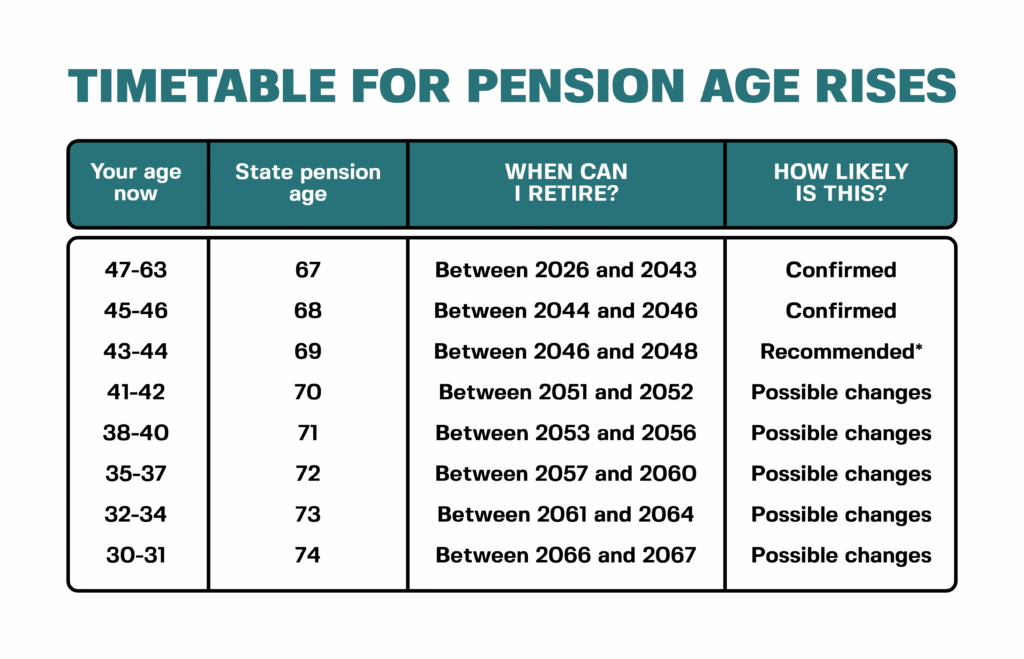
The UK government plans to increase the State Pension age to 68 in the future, and ongoing policy reviews could bring further changes.
1. Planned Increase to Age 68
The government has already scheduled another state pension age increase:
Age 68 is expected between 2044 and 2046
Future reviews may bring this forward depending on life expectancy and economic conditions
This means younger caregivers may need to work even longer before they retire at age.
2. Ongoing Reviews and DWP Updates
The Department for Work and Pensions (DWP) regularly reviews pension policy. Recent pension news highlights:
Potential adjustments based on life expectancy trends
Discussions around affordability and sustainability
Occasional DWP state pension warnings about planning ahead
Care providers should monitor these updates to avoid being caught off guard.
3. Other Pension Changes to Watch
Several related updates may also impact your staff:
UK pensioner cash withdrawal changes 2025 – potential changes in how pension funds are accessed
UK state pension reduction 2025 – concerns around reduced real value due to inflation or policy shifts
September 2025 state pension updates – periodic policy announcements affecting benefits
These changes may influence how employees view retirement and financial security.
Understanding future pension trends helps you:
Prepare for long-term workforce changes
Support staff with realistic retirement expectations
Stay aligned with UK pension age reform impact
The UK state pension age increase will continue evolving. Care providers who stay informed and adapt early will remain stable, competitive, and better prepared for future workforce challenges.
Common Questions About the UK State Pension Age Increase 2026
uk state pension age increase 2026
When will the State Pension age reach 67?
The state pension age increase 2026 will raise the retirement age from 66 to 67 between April 2026 and April 2028. The change happens gradually, so not everyone reaches 67 at the same time.
Can I still retire at 66?
Yes, you can still retire at 66, but you may not receive your State Pension yet. If you fall under the UK state pension age increase, you will need to wait until your official pension age before receiving payments.
How do I check when I can retire?
You should use the official UK State Pension age calculator.
Your exact retirement age depends on your date of birth, and the calculator provides the most accurate answer.
You can also check your state pension forecast to understand how much you’ll receive.
Will the State Pension age increase again?
Yes. The government has already planned another state pension age increase to 68 between 2044 and 2046, although future reviews may change this timeline.
What happens if I don’t have enough National Insurance contributions?
You may receive less than the full New State Pension 2026 amount. To qualify for the full payment, you typically need 35 years of contributions. If you have gaps, you may still qualify for a partial pension.
Does the State Pension amount differ for men and women?
No. The amount is the same for both. The key factor is your National Insurance record, not gender.
If you’re wondering how much is the state pension for a woman, the answer is the same as for men under the current system.
These questions reflect the most common concerns around the UK state pension age increase 2026. Clear answers help both individuals and care providers plan more effectively.
Conclusion
The UK state pension age increase 2026 is more than a policy update—it’s a workforce shift that care providers must manage proactively.
What you should do now:
Expect staff to retire at age 67, not 66
Encourage employees to check when can I retire using the UK State Pension age calculator
Support staff in reviewing their state pension forecast
Adjust workforce planning to reflect delayed retirement
Introduce flexible roles to reduce burnout among older caregivers
Stay updated with pension news and DWP state pension age change 2026 developments
Care providers who understand the state pension age increase early will manage staffing better, retain experienced workers, and avoid sudden workforce gaps.
The state pension age increase 2026 is already shaping the future of the care sector. By acting now, you can protect your workforce, support your staff, and keep your operations stable in a changing environment.
Need Support Managing Workforce Changes from the State Pension Age Increase?
The UK state pension age increase 2026 can disrupt staffing plans, delay retirements, and increase pressure on your existing team if not managed early.
Care Sync Experts helps you:
Plan for delayed retirement and workforce shifts
Retain experienced caregivers without increasing burnout
Build flexible staffing models that support older employees
Improve workforce stability and reduce sudden staff shortages
Stay aligned with regulatory expectations and long-term care demands
Get practical, expert guidance to adapt your care service, support your staff, and stay ahead of pension-related workforce changes.
FAQ
Do I get my husband’s State Pension if he dies?
You may be able to receive part of your husband’s State Pension, depending on your circumstances. This is usually called inheriting State Pension or qualifying for bereavement benefits. – If you reached State Pension age before April 2016, you may inherit some of your partner’s pension based on their National Insurance record. – If you’re under the new State Pension system (after April 2016), inheritance is more limited, but you may still qualify for Bereavement Support Payment (BSP).
The exact amount depends on contributions, age, and marital status.
How long is pension paid after death in the UK?
State Pension payments stop shortly after death. However: – Payments may continue briefly if they were already issued before the death was reported – Any overpayments must usually be returned – A surviving spouse or partner may qualify for bereavement benefits instead
You should report a death to the DWP immediately to avoid complications.
Can I pass my pension to my children?
You cannot pass your State Pension directly to your children. The State Pension is not treated as a transferable asset. However: – Private or workplace pensions can often be passed on, depending on the scheme – Beneficiaries may receive lump sums or ongoing payments
Always check the specific rules of your pension provider.
What is the minimum salary to qualify for State Pension in the UK?
There is no fixed minimum salary to qualify for the State Pension. Instead, eligibility depends on National Insurance (NI) contributions. – You typically need at least 10 qualifying years to receive any pension – You need 35 years to receive the full New State Pension 2026
You earn qualifying years by: – Working and paying NI contributions – Receiving NI credits (e.g., for caregiving, unemployment, or illness)
Even low earners can qualify, as long as they meet the contribution requirements.
TL;DR: What the Employment Rights Bill Means for Workers
The Employment Rights Bill (often searched as the employee rights bill or Employment Rights Bill 2024) introduces phased employment law changes 2025–2027 that directly affect care providers across England, Wales, Scotland, and Northern Ireland. If you employ a care assistant, support worker, or healthcare assistant, you must prepare now.
Here is what you should know:
From 2026–2027: Workers gain stronger rights around predictable hours, sick pay, family leave, and protection from unfair dismissal.
From October 2026: Employers must take “all reasonable steps” to prevent harassment, including harassment by service users and family members.
Tribunal risk increases: Employees will have longer to bring claims, and tribunals can uplift compensation if you fail to meet prevention duties.
Costs will rise: Scheduling reforms, sick pay changes, and sector-wide pay negotiations will affect margins, especially in domiciliary care and 24 hour home care models.
Action required now: Audit contracts, update policies, model staffing costs, strengthen record-keeping, and train managers before deadlines hit.
This guide breaks down what the Employment Rights Bill changes, how it affects care assistant duties, rota management, and dismissal risk, and what care providers must implement before 2026–2027.
Key Dates:
The Employment Rights Bill moves in phases. Care providers must track each stage carefully and avoid assuming everything changes at once.
Here are the dates that matter:
26 October 2024 – Employers must take reasonable steps to prevent sexual harassment. This duty already applies.
18 December 2025 – The Employment Rights Act 2025 received Royal Assent, formally introducing wide-ranging employment law changes 2025.
April 2026 (expected implementation phase) – Whistleblowing protections expand, and early elements of reform begin to take effect.
October 2026 – Employers must take “all reasonable steps” to prevent harassment, including third-party harassment. Tribunal time limits extend from three to six months.
2026–2027 (phased roll-out) – Predictable-hours rights, zero-hours reform, and strengthened unfair dismissal protections come into force.
2027 – Workers on low-hours or variable contracts gain rights to guaranteed hours reflecting actual work patterns, along with compensation for cancelled shifts.
These new rules in UK employment law do not arrive overnight, but they build quickly. If you operate domiciliary care, supported living, or 24 hour live in care services, you should treat 2026 as your practical compliance deadline.
The Employment Rights Bill affects every employer, but care providers will feel the pressure faster and harder than most sectors.
You operate on narrow margins. You manage complex rotas. You employ large numbers of care assistants, support workers, healthcare assistants, and mental health support workers across multiple settings. When employment law changes 2025 tighten worker protections, your operational model absorbs the shock immediately.
Unlike office-based industries, care services rely on:
Variable-hours contracts for domiciliary care
Night shifts and lone working
24 hour home care and 24 hour live in care packages
Agency and bank staff
High turnover in assistant caregiver roles
If predictable-hours rights expand in 2027, rota flexibility reduces. If sick pay becomes payable from day one, absence costs increase. If unfair dismissal protection shortens qualifying periods, probation management becomes riskier. If tribunal time limits double, your exposure window expands.
Care settings also face higher third-party interaction risk. A care assistant delivering personal care in someone’s home cannot control every environment. A support worker in supported living interacts with visitors, family members, and external professionals daily. These realities make harassment prevention and dismissal decisions more complex under the employee rights bill reforms.
In short, employment law rarely hits care providers in theory. It hits you in scheduling, payroll, recruitment, safeguarding, and contracts, all at once.
What the Employment Rights Bill Actually Changes
Many providers hear “Employment Rights Bill” and assume it is just another update to employment law. It is not. This legislation restructures core employer obligations across pay, scheduling, dismissal, and harassment.
The Employment Rights Bill 2024, now enacted as the Employment Rights Act 2025, introduces phased reforms between 2026 and 2027. These reforms aim to strengthen worker protections, increase job security, and shift more responsibility onto employers.
Here is what that means in practical terms:
Workers on irregular or low-hours contracts gain stronger rights to predictable income.
Employers must tighten dismissal processes as qualifying periods shorten.
Sick pay and family leave protections expand.
Harassment prevention duties move from “reasonable steps” to “all reasonable steps.”
Tribunal time limits extend, increasing litigation exposure.
These are not cosmetic updates. They reshape how you structure contracts, manage rotas, document decisions, and train managers.
If you run a service employing care assistants, support workers, or healthcare assistants, you must now treat workforce compliance as a strategic function, not just an HR task.
The remainder of this guide breaks down each reform in detail and shows how it affects domiciliary care, care homes, supported living services, and assistant caregiver job structures.
Staffing & Scheduling: Zero-Hours Reform and Predictable Hours
The Employment Rights Bill targets variable and zero-hours working patterns, a model many care providers rely on to deliver flexible support.
From 2026–2027 (phased implementation), workers on low or unpredictable hours will gain stronger rights to:
Guaranteed hours that reflect their actual working pattern
Advance notice of shifts
Compensation for cancelled or curtailed shifts
If you run domiciliary care or 24 hour home care services, this affects how you build rotas for every care assistant, support worker, and mental health support worker on your books.
Care providers often:
Increase hours during winter pressures
Cancel visits when packages change
Use bank staff to fill last-minute gap
Adjust shifts when service users enter hospital
Under the employment law changes 2025, these routine adjustments may trigger financial consequences.
If a care assistant regularly works 35 hours despite holding a 10-hour contract, you may need to offer a contract that reflects reality. If you cancel shifts at short notice due to package withdrawal, you may need to compensate the worker.
This reform directly impacts:
Domiciliary care agencies
Supported living providers
24 hour live in care models
Services relying heavily on assistant caregiver job flexibility
What You Should Do Now
Do not wait for 2027 implementation. Start building evidence and systems now:
Audit actual hours worked versus contracted hours
Track cancelled or shortened shifts
Review probationary contract templates
Model cost exposure under guaranteed-hours scenarios
Speak to commissioners about pricing assumptions
If you fail to align contracts with real working patterns, you increase exposure to tribunal claims and compliance challenges under the employee rights bill reforms.
The providers who adapt early will protect margins. The providers who ignore rota data will struggle to defend their decisions later.
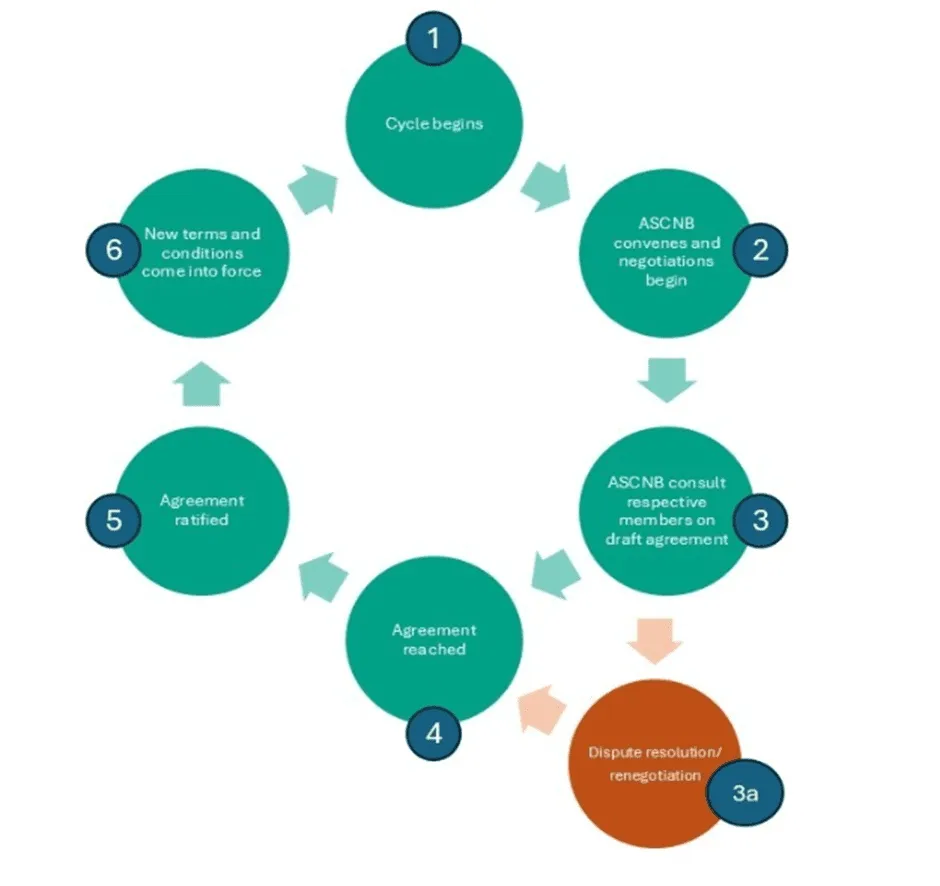
Pay, Terms and the Adult Social Care Negotiating Body
Fair Pay Negotiating Body for adult social care
The Employment Rights Bill does not only change contracts and scheduling. It also reshapes how pay develops across the care sector.
The government plans to introduce an Adult Social Care Negotiating Body to agree sector-wide pay rates and employment standards. This move aims to improve retention, reduce turnover, and stabilise the workforce. In theory, it strengthens career pathways for every care assistant, support worker, and healthcare assistant.
In practice, it increases cost pressure on providers.
What This Means for Care Providers
If national minimum pay bands rise through negotiated agreements, you will need to:
Review your care assistant job specification and pay structure
Recalculate margins on council contracts
Adjust recruitment budgets for support worker jobs
Update assistant caregiver job descriptions to reflect new standards
Higher baseline pay may improve recruitment in care assistant jobs and mental health support worker roles. However, unless commissioners increase contract rates, your wage bill rises without matching income.
This creates a direct tension between:
Workforce stability
Contract viability
Service sustainability
What You Should Do Now
Do not wait for formal pay bands to appear before preparing.
Start by:
Modelling wage increases of 5–15% across frontline role
Reviewing contracts with local authorities for uplift clauses
Identifying services operating on the tightest margins
Building a clear evidence pack showing cost increases
Commissioners increasingly expect providers to justify pricing with workforce data. If you prepare now, you position yourself as credible and proactive when negotiating rates.
The Employment Rights Bill strengthens worker protections. Care providers must strengthen financial planning at the same time.
Sick Pay, Leave, and Day-One Rights: What Changes for Care Employers
The Employment Rights Bill strengthens statutory protections around sick pay and family leave. For care providers, these reforms affect daily operations more than policy wording.
From 2026 onwards (phased implementation), reforms are expected to:
Remove waiting periods for Statutory Sick Pay (SSP), making sick pay payable from the first eligible day
Expand eligibility for lower-income workers
Strengthen “day-one” rights for certain family-related leave
Shorten qualifying periods for protection against unfair dismissal
For employers of care assistants, support workers, and healthcare assistants, this means absence management must tighten.
Care services face:
High exposure to illness (especially in 24 hour home care and residential care)
Frequent short-term absence
Infection control obligations
Reliance on bank or agency cover
If sick pay becomes payable earlier and unfair dismissal protections attach sooner, you cannot treat early absence during probation as a low-risk decision.
Managers must understand the difference between:
Unfair dismissal (statutory rights and fairness test)
Wrongful dismissal (breach of contract, such as failing to give notice)
Under strengthened employment law protections, probation management errors may lead to claims faster than before.
What You Should Do Now
Prepare your service before changes take full effect:
Update absence and sick pay policies
Train managers on lawful probation reviews
Document performance concerns clearly and early
Review your assistant caregiver job description and expectations for attendance
Ensure payroll systems can adapt quickly
If you employ frontline roles such as care assistant or mental health support worker, you must assume that dismissal decisions made within the first year of employment will face closer scrutiny under the employment law changes 2025.
Strong documentation protects you. Informal conversations do not.
The Employment Rights Bill strengthens worker security. Your processes must match that strength.
Dismissals, Tribunal Risk and Wrongful Dismissal Exposure
The Employment Rights Bill increases legal risk when you dismiss staff. Care providers must now treat every dismissal as potentially reviewable by a tribunal within a longer window.
From October 2026, the time limit for most employment tribunal claims increases from three months to six months. This change alone doubles your exposure period.
At the same time, qualifying periods for certain protections shorten, meaning employees may access unfair dismissal rights earlier in their employment.
Unfair vs Wrongful Dismissal: Know the Difference
Care managers often confuse two separate legal concepts:
Unfair dismissal: You failed to follow a fair process or lacked a fair reason under employment law.
Wrongful dismissal: You breached the employee’s contract, often by failing to give proper notice or pay.
Both risks increase under the employment law changes 2025.
If you dismiss a care assistant during probation without evidence of performance concerns, you risk an unfair dismissal claim sooner than before.
If you dismiss a support worker immediately without contractual notice, you risk wrongful dismissal even if your reason was valid.
Why Care Providers Face Higher Risk
Care environments create complex dismissal situations:
Performance concerns linked to care assistant duties
Conduct issues involving service users
Lone-working safety breaches
Under the employee rights bill reforms, you must show:
A clear reason for dismissal
A documented investigation
Evidence you considered alternatives
A fair hearing process
If you cannot produce records six months later, your defence weakens significantly.
What You Should Do Now
Before terminating any employee, ensure you:
Confirm the contractual notice requirement
Follow a documented disciplinary or capability process
Keep detailed investigation notes
Separate safeguarding action from employment decision-making
Provide written outcome letters
Train managers to avoid informal dismissals. Phrases like “it’s just not working out” no longer provide safe ground.
The Employment Rights Bill does not remove your ability to dismiss staff. It removes your ability to do it casually.
Care providers who strengthen process now will avoid costly tribunal claims later.
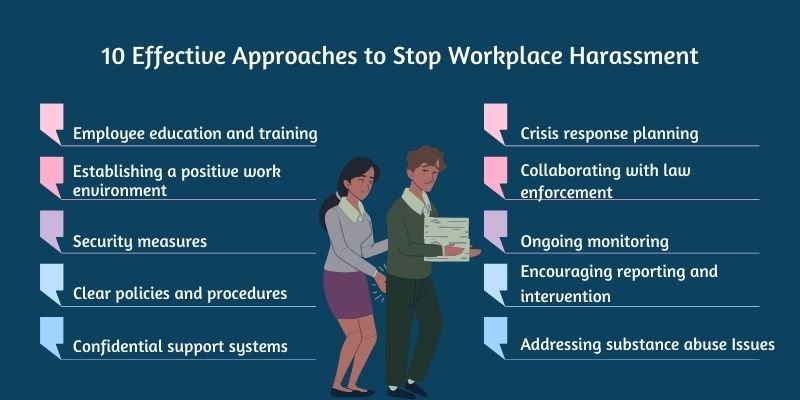
Harassment, Third-Party Risk and the “All Reasonable Steps” Duty
How to Prevent Workplace Harassment
The Employment Rights Bill significantly strengthens employer responsibility for preventing workplace harassment. Care providers face particular exposure because your staff work in environments you do not fully control.
From October 2026, employers must take “all reasonable steps” to prevent harassment. This replaces the current “reasonable steps” standard and raises the bar.
At the same time, employers will become directly liable for harassment of staff by third parties, including:
Service user
Family members
Visitors
Contractors
External professionals
For care providers, this risk is real and immediate.
Why This Reform Hits Care Harder
A care assistant delivering 24 hour live in care works alone in a private home.
A support worker in supported living interacts daily with residents’ visitors.
A mental health support worker may manage behaviours linked to trauma or cognitive conditions.
These environments increase the likelihood of inappropriate conduct. Under the strengthened duty, you must prove you did everything reasonably possible to prevent it.
Tribunals will examine:
Your policy
Your training
Your reporting routes
Your risk assessments
Your actions after incidents
If any of these elements are missing, you weaken your defence.
What “All Reasonable Steps” Looks Like in Care
In practical terms, you should already be able to demonstrate:
A clear anti-harassment policy that includes third-party behaviour
Care-plan risk flags where previous incidents occurred
Two-carer arrangements for high-risk visits
A safe withdrawal protocol for staff
Multiple reporting routes that do not rely solely on line managers
Manager training on trauma-informed responses
If a service user behaves inappropriately toward a healthcare assistant, your records must show:
The incident was documented
The care plan was reviewed
Risk controls were updated
You communicated boundaries where appropriate
You protected the employee from further exposure
With tribunal time limits extending to six months, you must preserve:
Training attendance logs
Risk assessment updates
Incident reports
Investigation outcomes
Manager decisions and rationale
If you cannot evidence these steps, you may struggle to rely on the “all reasonable steps” defence.
The Employment Rights Bill does not expect perfection. It expects preparation.
Care providers who treat harassment prevention as a live operational risk, not just a policy requirement, will position themselves far more safely under the employment law changes 2025.
Payroll & Compliance Watch: HMRC Rule Changes (22 October 2025)
While the Employment Rights Bill focuses on worker protections, care providers must also monitor parallel compliance deadlines that affect payroll and reporting.
One important date to note is 22 October 2025. If your organisation operates a PAYE Settlement Agreement (PSA), HMRC requires electronic payment clearance by this date to avoid interest or penalties.
This is not a reform introduced by the employee rights bill itself. However, it sits within the same broader landscape of tightening compliance expectations for employers.
Care organisations often manage:
Large frontline workforces
Overtime and variable-hour payments
Mileage reimbursements for domiciliary care
Uniform allowances
Staff benefit schemes
If payroll processes slip, especially during periods of legislative change, HMRC penalties can add financial strain to an already pressured operating model.
What You Should Do Now
Confirm whether your organisation operates a PSA
Review payroll reporting processes
Ensure finance and HR teams align on compliance deadlines
Document internal responsibility for statutory submission
Employment law changes 2025 will already require policy updates and training investment. Avoid compounding risk with preventable payroll non-compliance.
Care providers must treat workforce reform and financial compliance as part of the same governance framework.
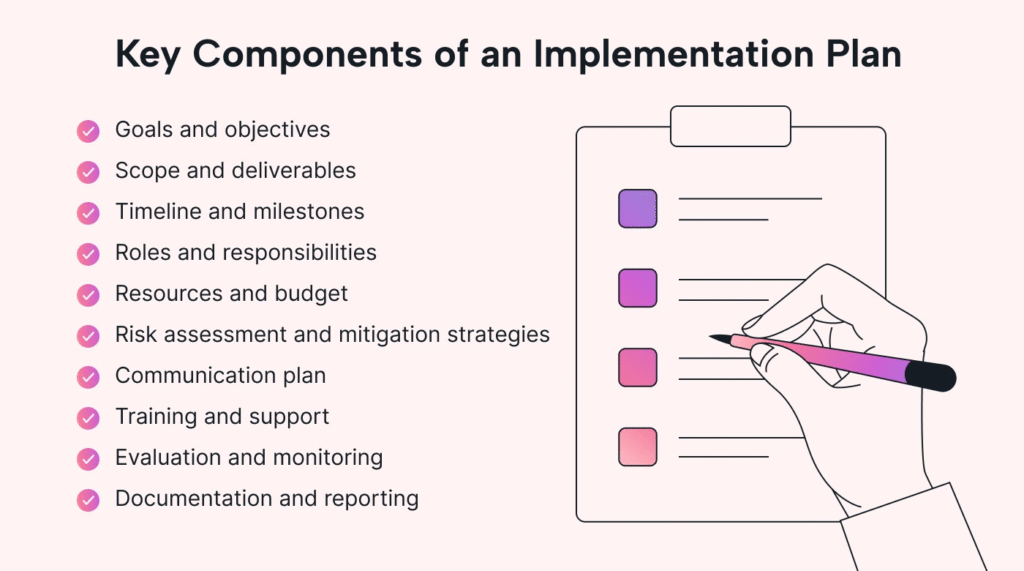
What Care Providers Should Do Next: A Practical Implementation Plan
Employment Rights Bill- Key Components of an Implementation Plan
The Employment Rights Bill introduces phased reforms, but preparation must begin now. Waiting until 2026 or 2027 will leave you reacting under pressure instead of leading with control.
Here is a structured plan to protect your organisation.
Phase 1: Immediate Review (Next 30 Days)
Focus on visibility and risk mapping.
Audit all employment contracts for care assistants, support workers, and frontline staff
Compare contracted hours against actual worked hours
Review dismissal procedures and probation policies
Update harassment policies to reference third-party situations
Identify your highest-risk services (e.g., 24 hour home care, lone working)
This phase creates clarity. You cannot fix what you have not measured.
Phase 2: Systems and Training (Next 90 Days)
Strengthen operational foundations.
Train managers on unfair vs wrongful dismissal
Introduce structured investigation templates
Update absence and sick pay policies
Build rota tracking systems to monitor cancellations and pattern hours
Create a harassment reporting flowchart for all staff
If you employ staff in assistant caregiver jobs, ensure managers understand how changes affect scheduling, probation handling, and disciplinary action.
Phase 3: Financial and Strategic Planning (Next 6–12 Months)
Prepare for cost and tribunal exposure.
Model wage uplift scenarios under sector-wide pay negotiations
Review council contracts for uplift mechanisms
Create a compliance evidence folder (training logs, policies, risk assessments)
Assign a named lead responsible for Employment Rights Act readiness
Care providers that treat these reforms as strategic governance will protect both margins and reputation.
The employment law changes 2025 will not reverse. Regulators, commissioners, and tribunals will expect preparation not surprise.
Conclusion
The Employment Rights Bill reshapes how care providers manage people, risk, and compliance. It strengthens worker protections, expands tribunal exposure, and raises the standard for prevention in areas such as harassment and dismissal.
For providers employing care assistants, support workers, and healthcare assistants, these employment law changes 2025 do not sit in isolation. They affect:
Rota flexibility
Contract structure
Absence management
Dismissal procedures
Payroll controls
Harassment prevention
Financial planning
The organisations that treat this as an HR update will struggle.
The organisations that treat it as a board-level governance issue will adapt.
You must:
Align contracts with real working patterns
Strengthen documentation around performance and dismissal
Build robust third-party harassment controls
Model workforce cost exposure
Preserve training and risk assessment evidence
The employee rights bill does not remove your ability to run a care business. It removes tolerance for weak systems.
Care providers who act early will protect margins, maintain commissioner confidence, and reduce tribunal risk. Those who delay will face pressure from every direction: financial, legal, and reputational.
The question is not whether these new rules in UK employment law will affect your service.
The question is whether your governance framework is strong enough to absorb them.
Ready to Strengthen Your Employment Law Compliance Before 2026?
The Employment Rights Bill is not just another policy update. It changes how you manage rotas, dismiss staff, prevent harassment, document decisions, and defend tribunal claims.
For care providers, weak systems will not survive these reforms. Strong governance will.
Care Sync Experts supports domiciliary care agencies, supported living providers, and care homes across the UK with:
Full employment contract audits aligned with the Employment Rights Act 2025
Zero-hours and predictable-hours compliance modelling
Dismissal process reviews to reduce unfair and wrongful dismissal risk
Care-specific harassment prevention frameworks and third-party risk controls
Manager training on probation, absence management, and investigation standards
Workforce cost modelling ahead of sector-wide pay negotiations
Tribunal-readiness evidence pack design and documentation systems
Whether you operate 24 hour home care, supported living services, or large residential settings, we help you build employment systems that protect your margins, strengthen governance, and withstand legal scrutiny.
What are the 5 fair reasons for dismissal under the Employment Rights Act?
UK employment law recognises five potentially fair reasons for dismissal:
– Capability or qualifications (performance, skill, or health issues) – Conduct (misconduct or gross misconduct) Redundancy – Statutory restriction (e.g., loss of required licence or visa status) – Some other substantial reason (SOSR)
Even if you rely on one of these reasons, you must still follow a fair process. If you skip investigation, ignore evidence, or fail to hold a proper hearing, a tribunal may still find the dismissal unfair.
Do I need a new contract if my role changes?
It depends on the scale of the change. Minor adjustments to duties, for example, adjusting certain care assistant duties within the scope of an existing job, usually do not require a brand-new contract.
However, you should issue written confirmation if: – Hours change significantly – Pay changes – Reporting lines change – Core responsibilities expand beyond the original care assistant job specification – The role moves into a substantially different function
If you introduce predictable-hours adjustments or guaranteed-hour offers under the Employment Rights Bill reforms, you should document those changes formally. Always consult the variation clause in the original contract before making changes.
Can an employer make changes to your job duties?
An employer can make reasonable changes if:
– The contract allows flexibility – The changes remain within the scope of the role – The changes are not discriminatory – The employer consults properly where changes are substantial
For example, asking a support worker to assist with additional community activities may fall within scope. Asking them to perform a completely different professional function without agreement may not.
If changes significantly alter responsibilities, pay, or status, the employer should consult and agree the variation. Imposing major changes without agreement can lead to claims for constructive dismissal or breach of contract.
Can I be fired for refusing to do something not in my job description?
It depends on what you refused and how your contract is written.
If the instruction falls reasonably within your role, even if not explicitly listed in the assistant caregiver job description, refusal may amount to misconduct.
However, you may have legal protection if: – The instruction is unsafe – The instruction is unlawful – The instruction breaches regulatory standards – The instruction significantly exceeds your agreed role
For care providers, this often arises in safeguarding contexts. If a healthcare assistant refuses to perform a task because they believe it breaches care standards, you must investigate carefully before taking disciplinary action.
Always assess whether the instruction was reasonable and whether refusal connects to health, safety, or legal compliance.
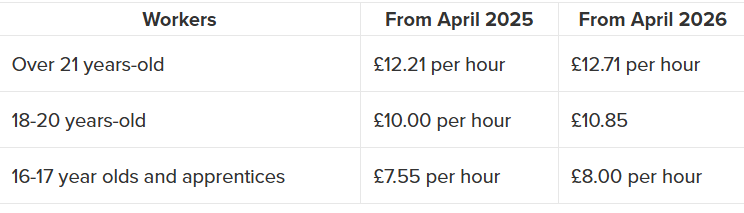
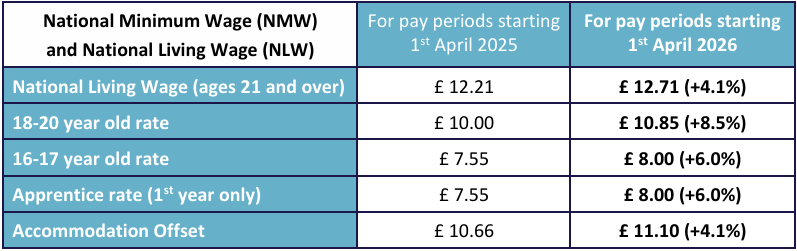
From 1 April 2026, the National Minimum Wage and National Living Wage 2026 rates increase across England, Scotland, Wales, and Northern Ireland. Workers aged 21 and over must receive £12.71 per hour. Younger age bands and apprentice rates also rise.
At the same time, the new Fair Work Agency begins operations in April 2026, replacing HMRC’s standalone minimum wage enforcement with a single body that can investigate minimum wage, holiday pay, and statutory sick pay together.
For domiciliary care agencies, supported living providers, and care homes, the risk does not sit in the headline rate. It sits in travel time, deductions, sleep-ins, salaried hours, and record-keeping. If your effective hourly rate falls below the legal threshold in any pay reference period, you face arrears, penalties of up to 200%, and public naming.
Confirmed National Minimum Wage and National Living Wage rates from 1 April 2026
The Government accepted the Low Pay Commission’s recommendations in full. The new National Minimum Wage rates apply from 1 April 2026 across England, Scotland, Wales, and Northern Ireland.
Here are the confirmed rates:
Category
Rate from 1 April 2026
National Living Wage (aged 21 and over)
£12.71 per hour
18–20 year olds
£10.85 per hour
16–17 year olds
£8.00 per hour
Apprentice rate
£8.00 per hour
Accommodation offset
£11.10 per day
What this means in monthly terms
For employers calculating Minimum wage UK 2026 per month, use hours worked, not assumptions.
Example:
37.5 hours per week at £12.71
Weekly pay: £476.63
Monthly pay (average): approx. £2,065 before tax
Actual take home pay depends on tax code, pension deductions, and any salary sacrifice arrangements. Minimum wage compliance looks at gross pay before tax, not net pay received.
Scotland, London, and regional confusion
Some employers search for “minimum wage Scotland” or “minimum wage 2026 UK London.” The statutory National Minimum Wage is the same across the whole UK. Scotland and London do not set separate legal minimum wage rates.
However, the voluntary London Living Wage (set by the Living Wage Foundation) is higher than the statutory minimum. Paying it does not remove your obligation to comply with statutory minimum wage rules.
Now let’s look at what these increases actually cost care providers in real terms.
What the National Minimum Wage increase really costs a care business
The National Minimum Wage 2026 rise looks modest on paper. In practice, it reshapes your entire cost base.
Start with the headline figure:
£12.71 per hour for workers aged 21+
37.5 hours per week
Annual gross pay increases by roughly £975 per worker
That number alone does not break a business. The compounding effect might.
1. On-costs rise automatically
When base pay rises, everything calculated as a percentage rises with it:
Employer National Insurance
Workplace pension contributions
Holiday pay accrual
Statutory sick pay exposure
Overtime rates linked to basic pay
From April 2025, Employer NI increased to 15% with a reduced threshold. That change already tightened margins. April 2026 layers another wage uplift on top.
2. Travel time multiplies the impact (domiciliary care)
In homecare, you do not pay only for contact time. Travel time between visits counts as working time for National Minimum Wage purposes.
If travel time represents 15–25% of working hours, the wage increase applies to that portion too.
If you currently pay:
£12.71 for contact time
But fail to fully include travel time in payroll
Your effective hourly rate may already sit below minimum wage 2026 once you divide total pay by total working time.
3. Care sector margins remain thin
Independent care providers operate in a fee environment that rarely matches actual employment costs. Employment costs typically represent 70–80% of total provider expenditure.
When statutory rates rise, but commissioner fees stay static, providers absorb the difference.
That tension explains why compliance failures often arise from payroll structure errors, not deliberate underpayment. However, regulators do not treat financial pressure as a defence.
The math is simple:
Higher base rate
Higher on-cost percentage
Travel time inclusion
Variable hours = Narrower margin for error
Now add enforcement.
Let’s look at how the Fair Work Agency changes the compliance landscape from April 2026.
Fair Work Agency payroll checks: what changes from April 2026
From 7 April 2026, the Fair Work Agency (FWA) begins operations as the UK’s single labour market enforcement body. It replaces HMRC’s standalone National Minimum Wage enforcement function and brings several enforcement streams under one structure.
This is not a cosmetic change. It shifts how investigations start, how far they reach, and what they examine.
What the Fair Work Agency consolidates
The FWA combines:
HMRC’s National Minimum Wage enforcement
The Employment Agency Standards Inspectorate
The Gangmasters and Labour Abuse Authority
It also gains authority to enforce additional employment rights, including holiday pay and statutory sick pay, rather than waiting for workers to bring tribunal claims.
For care providers, that means one investigation can now cover:
National Minimum Wage
Holiday pay calculations
Sick pay compliance
Record-keeping standards
Agency worker compliance (where relevant)
Expect more payroll checks, not fewer
Some providers search for phrases like “HMRC wage raid payroll checks.” The reality is less dramatic but more structured.
The FWA can:
Enter premises to inspect records
Require payroll, time sheets, and contracts
Issue Notices of Underpayment
Impose penalties of up to 200% of arrears (capped at £20,000 per worker)
Publicly name employers
If you pay arrears quickly, the penalty can reduce to 100%, but that still doubles the financial exposure.
Employers rely on zero-hours or flexible contracts
Domiciliary care, supported living, and care homes match that profile precisely.
Record-keeping now matters more than ever
The Employment Rights reforms introduce stronger record-keeping expectations, particularly around holiday entitlement and pay. Investigators will expect six years of accessible, accurate records.
If you cannot demonstrate compliance, you assume non-compliance.
In short, April 2026 brings higher pay rates and broader enforcement at the same time. Care providers must prepare for structured, evidence-based payroll scrutiny, not just headline wage checks.
Now, let’s look at the six compliance traps that most often trigger underpayment findings in care.
Why care providers underpay minimum wage without meaning to
National Minimum Wage 2026 for Care Providers
Most care providers do not deliberately breach the National Minimum Wage. They fall into calculation traps.
Investigators do not ask, “What hourly rate does the contract say?” They ask, “What was the worker’s effective hourly rate across the pay reference period?”
If total pay that counts ÷ total working time that counts falls below minimum wage 2026, you face arrears.
Here are the six traps that trigger enforcement in domiciliary care, supported living, and care homes.
1) Travel time between visits (domiciliary care risk)
In homecare, travel between appointments counts as working time for National Minimum Wage purposes.
If you:
Pay £12.71 for contact time
Fail to pay fully for travel time
Or underestimate travel time systematically
You reduce the worker’s effective hourly rate.
Example:
6 contact hours paid at £12.71
1.5 hours travel unpaid
Worker actually worked 7.5 hours
You divide total pay by 7.5 hours, not 6.
That difference alone can push pay below UK minimum wage increase 2026 thresholds.
If you use estimated travel time, document your method and test it against real routes regularly.
2) Deductions that reduce minimum wage pay
HMRC and the Fair Work Agency assess what the worker actually receives.
Certain deductions reduce minimum wage pay, including:
Required uniforms (even “black trousers and shoes”)
If post-deduction pay drops below the National Minimum Wage, you breach the law, even if the headline rate looks safe.
Many providers paying above minimum wage 2026 UK London levels still fail compliance because deductions erase the buffer.
3) Sleep-ins versus on-call (supported living risk)
The Supreme Court clarified that genuine sleep-in hours do not require minimum wage if the worker can sleep and only respond if needed.
However:
Time spent awake and working must be paid at minimum wage.
Records must show when the worker woke and worked.
If staff remain on-call and must stay awake or remain ready to work continuously, you must pay minimum wage for the full period.
Poor documentation, not intent, often creates arrears.
4) Unpaid training, induction, and meetings
Mandatory training counts as working time.
That includes:
Induction before first shift
E-learning modules
Safeguarding updates
Team meetings
If you require attendance, you must pay for it.
Providers frequently breach National Minimum Wage 2026 rules by assuming training outside rostered hours does not count. It does.
5) Salaried hours misclassification
A salary does not protect you from minimum wage checks.
For a worker to qualify as a salaried hours worker under minimum wage rules:
They must receive an annual salary
For a fixed number of basic hours
Paid in equal instalments
If those conditions fail, the worker becomes “unmeasured work” for minimum wage purposes.
If they regularly work beyond basic hours without paid overtime or timely time off in lieu, their effective hourly rate can fall below minimum wage UK 2026 per month equivalents once recalculated.
Investigators now review salaried care managers more closely than before.
6) Apprentice rate errors
The apprentice rate of £8.00 only applies to:
Apprentices under 19
Apprentices 19+ in their first year
Once an apprentice turns 19 and completes year one, they move to their age band rate.
Payroll systems often fail to update automatically.
That error creates technical underpayment under National Minimum Wage rules.
What changed in 2024 and 2025, and what next in 2026?
To understand National Minimum Wage 2026, you need to see the pattern.
Minimum wage 2024
In April 2024, the Government expanded the National Living Wage to workers aged 21 and over. That change pulled thousands of younger care workers into the higher rate band overnight.
Providers who relied on historic age assumptions had to adjust quickly.
Minimum wage 2025 UK
From April 2025, the UK minimum wage 2025 for workers aged 21+ rose to £12.21 per hour. Many providers focused on that uplift alone and ignored structural payroll risks.
At the same time:
Employer National Insurance increased to 15%
The NI threshold dropped significantly
Employment costs climbed faster than fee rates
Some employers search for terms like:
“UK minimum wage rise August 2025”
“UK minimum wage increase October 2025”
Statutory minimum wage changes take effect in April, not August or October. The October announcements usually relate to the voluntary London Living Wage, not the legal National Minimum Wage.
The Government has delivered consecutive annual increases:
Minimum wage 2024 – structural age change
Minimum wage 2025 UK – significant rate increase
Minimum wage 2026 – further uplift to £12.71
Each year reduces the buffer between your pay structure and the legal threshold.
The gap between the statutory National Living Wage 2026 (£12.71) and the voluntary London Living Wage narrows further. That leaves less margin for payroll errors, deductions, or miscounted hours.
UK cost of living support 2026: what’s real (and what’s not)
Some care providers search for:
“UK cost of living payment 2026”
“UK 2025 cost of living payment”
At the time of writing, the Government has not announced new universal Cost of Living Payments for 2026. Previous one-off payments targeted specific benefit recipients during the energy crisis period.
That means you cannot rely on state support to offset wage pressure.
While there is no confirmed broad UK cost of living payment 2026, rising living costs still affect:
Staff retention
Recruitment pressure
Salary expectations
Overtime demand
Workers compare their take home pay against rent, fuel, and food costs, not against legal minimums.
For care providers, that creates a double pressure:
You must comply with National Minimum Wage 2026 rules.
You must remain competitive enough to retain staff.
The statutory rate protects legal compliance. It does not guarantee workforce stability.
Conclusion
April 2026 does not just increase the National Minimum Wage. It raises the standard of evidence regulators expect from care providers.
You can no longer rely on a headline hourly rate and assume safety. Investigators will examine travel time, deductions, salaried hours, sleep-ins, and holiday pay together. They will divide pay by real working hours. If your calculation fails, your defence fails.
Strong providers will treat this moment as an opportunity.
They will:
Tighten payroll systems
Strengthen governance oversight
Document compliance clearly
Price services sustainably
Protect both staff and margins
Minimum wage compliance now signals leadership quality. When regulators, commissioners, and staff assess your organisation, they look for systems that withstand scrutiny, not systems that survive on assumptions.
Ready to Make Your Payroll Enforcement-Proof?
A compliant payroll structure does more than meet the National Minimum Wage 2026 threshold. It protects your CQC reputation, shields your business from arrears and penalties, and strengthens commissioner confidence.
Care Sync Experts supports domiciliary care agencies, supported living providers, and care homes across the UK with:
Full payroll structure audits against National Minimum Wage rules
Travel time and deduction compliance testing
Sleep-in and salaried hours classification review
Holiday pay and record-keeping framework design
Governance documentation aligned with CQC “Well-Led” standards
Financial modelling to reflect the UK minimum wage increase 2026
Evidence pack preparation for Fair Work Agency payroll checks
Whether you are launching a new service, scaling operations, or stress-testing an existing payroll model, we help you build systems that stand up to investigation and stand out to regulators.
The National Minimum Wage is the legal minimum hourly pay employers must give workers. It varies by age and apprenticeship status. From April 2026, workers aged 21 and over must receive at least £12.71 per hour. Younger age bands have lower statutory rates.
What is the minimum wage 2025 in the UK?
From April 2025 to March 2026, the National Living Wage for workers aged 21 and over was £12.21 per hour. Different age bands applied to workers aged 18–20 and under 18. The Government reviews and updates rates each April.
What is the National Living Wage?
The National Living Wage is the highest band of the UK’s statutory minimum wage system. It applies to workers aged 21 and over. It is set by the Government following recommendations from the Low Pay Commission. It differs from the voluntary “Real Living Wage” set by the Living Wage Foundation.
When did minimum wage go up?
The UK increases minimum wage rates each year in April. The most recent increase took effect on 1 April 2026. Previous increases occurred in April 2025 and April 2024. Statutory minimum wage rates do not change in August or October; those months sometimes relate to voluntary Living Wage announcements, not the legal minimum.
From 9 February 2026, the CQC Application process changes in one critical way: CQC will immediately return any incomplete or inaccurate application at the point of receipt. You will not get the chance to send missing documents later. If your application lacks even one required document, CQC will reject it and require you to cancel and resubmit from scratch.
These stricter rules apply to new provider registrations in England, including care homes, supported living services, and home care agencies providing specialist services for autistic people and people with a learning disability.
CQC introduced these changes to reduce backlogs and speed up decisions for providers who submit complete, compliant applications first time.
Who the 9 February Rules Affect (Care Homes, Supported Living, Home Care)
The new reject-on-receipt rule applies to all new provider registrations in England, but CQC has tightened document requirements for specific service types.
Care homes and nursing homes must now submit additional documents upfront with their CQC application. Previously, CQC often requested these during assessment. From 9 February 2026, you must include them at submission.
Supported living services face similar changes. CQC now expects key operational and governance documents at the start, plus an additional service-specific form.
Home care agencies applying to deliver specialist services for autistic people or people with a learning disability must include new policies that demonstrate compliance with CQC’s Right Support, Right Care, Right Culture guidance.
If you are preparing a CQC application for domiciliary care, review the updated CQC supporting documents guidance carefully. CQC will not process incomplete submissions under the new rules.
What Makes CQC Return Your Application Immediately
From 9 February 2026, CQC checks your documents before it moves your CQC Application into formal assessment. If your submission fails this first check, CQC will return it without progressing it any further.
CQC will reject your application immediately if:
You fail to include all required CQC supporting documents
You submit outdated templates or the wrong version of a required form
Your documents contradict each other (for example, staffing numbers that differ across your business plan and financial forecast)
Your policies use generic language that does not reflect your service type
Your evidence of legal occupancy does not match your premises details
You apply before your premises, staffing, or governance structure are ready
CQC assessors now review applications for completeness and accuracy at receipt. They expect a coherent, consistent pack. If anything looks incomplete or inconsistent, they will return the entire application.
Before you submit, use current CQC resources and complete a full internal cross-check. One missing document can delay your registration by months.
CQC Supporting Documents Every Provider Must Prepare
Every CQC Application must include a complete set of supporting documents. From 9 February 2026, CQC will not request missing items later. You must submit a full, accurate pack from day one.
Below are the core CQC supporting documents that apply to most new provider applications:
Governance and Operational Documents
Business continuity plan
Governance and quality assurance policies
Complaints policy
Consent policy and procedures
Safeguarding policy and procedures
These documents must show how you will lead, monitor, and improve your service. CQC expects clear lines of accountability and safe decision-making from the start.
Financial and Business Documents
Business plan for CQC registration
Financial forecast
Financial viability statement (using CQC’s current template)
Your business plan must align with your staffing model, service user numbers, and regulated activities. CQC will compare these documents closely.
Premises and Safety Evidence
Evidence of legal occupancy
Floor plan of premises
Fire risk assessment
Gas and electrical safety certificates
Legionella risk assessment
Environment risk assessment
If your premises are not inspection-ready, your application is premature.
Clinical and Care Policies
Infection prevention and control policy
Medicines management and prescribing policy
Equality, diversity, and human rights policy
CQC expects policies that reflect how your specific service will operate, not generic templates. If your documents do not match your service type, CQC will return your application before you receive your CQC certificate of registration.
Prepare each document carefully. Check consistency across all files. A complete and coherent document pack gives your application the best chance of progressing to assessment.
Care Homes: Extra Documents You Must Send From 9 February 2026
CQC Application Changes 2026
If you are opening a care home or nursing home, you must now submit additional documents at the point of application. CQC previously requested some of these during assessment. From 9 February 2026, you must include them in your initial CQC Application.
Care homes must now provide:
A detailed business plan
A two-year financial forecast
Evidence of legal occupancy (including landlord or mortgage consent where relevant)
A service user guide
A structured staff training plan
Your business plan for CQC registration must go beyond ambition. It must explain how you will operate the home, recruit and retain staff, meet residents’ needs, and maintain financial stability. CQC will cross-check this plan against your financial viability statement, staffing model, and statement of purpose.
Your service user guide must clearly explain what residents can expect, how they can raise concerns, and how you will promote dignity and safety. Your staff training plan must show how you will prepare your team to deliver person-centred care from day one.
If you plan to support autistic people or people with a learning disability, you must also demonstrate alignment with Right Support, Right Care, Right Culture guidance. CQC expects evidence that you understand specialist service delivery before it grants registration.
Submit these documents only when they are complete, consistent, and tailored to your service. Any gaps will trigger an immediate return.
Supported Living: Extra Documents & the Additional Form
Supported living providers must also front-load key documents in their CQC Application from 9 February 2026. CQC will no longer wait until assessment to request operational and governance evidence.
If you are registering a supported living service, you must submit:
A detailed business plan and financial forecast
Evidence of legal occupancy for the office or operational base
A clear service user guide
A structured staff training plan
An additional supported living information form required by CQC
This additional form gives CQC deeper insight into your governance structure, directors, nominated individual, and proposed registered manager. CQC wants to understand how you will lead and monitor the service before it commits resources to a full assessment.
Remember, CQC regulates the personal care element of supported living, not the housing component. Your documents must clearly separate regulated activities from tenancy or housing support. If you blur these lines, CQC may question the scope of your registration.
Review the latest CQC supporting documents guidance before submitting. Ensure your statement of purpose, staffing model, and training plan align precisely. Any inconsistencies will trigger an immediate return under the new rules.
Home Care for LD and Autism: New Policies You Must Include
If you are submitting a CQC application for domiciliary care and you intend to support autistic people or people with a learning disability, you must now include two additional policies from 9 February 2026:
A Positive Behaviour Support (PBS) policy
A Restraint (restrictive interventions) policy
CQC introduced this requirement to ensure providers entering the specialist LD and autism market understand safe, person-centred practice from the outset.
Your Positive Behaviour Support policy must explain how you will:
Assess behaviour proactively
Train staff in PBS principles
Reduce triggers and prevent escalation
Minimise restrictive practices
Your restraint policy must clearly state:
When restrictive intervention may be used
How staff will record and review incidents
How you will ensure restraint remains proportionate and a last resort
How you comply with the Mental Capacity Act 2005
CQC will not accept generic templates. Your policies must reflect how your service will actually operate in the community. If they do not demonstrate a clear understanding of specialist care delivery, CQC will return your application.
Before you submit, review current CQC supporting documents guidance and cross-check your specialist policies against your training plan and governance framework. Consistency matters under the new reject-on-receipt process.
Registered Manager CQC: Requirements, Form, Interview and Salary (2026)
Every CQC Application must name a suitable registered manager. CQC will not process your provider registration without a compliant manager application submitted at the same time.
CQC Registered Manager Requirements and Qualifications
A registered manager CQC applicant must demonstrate competence, integrity, and the ability to lead safe and effective care. CQC expects clear evidence that the manager understands governance, safeguarding, quality assurance, incident reporting, and regulatory compliance.
There is no single mandatory “CQC qualification.” However, CQC registered manager requirements typically include:
Relevant health or social care experience
Management or supervisory experience
A Level 5 Diploma in Leadership for Health and Social Care (or working towards it)
Strong knowledge of safeguarding, MCA 2005, and regulatory standards
If you are asking, “What qualifications do I need to be a Care Manager?”, focus on leadership competence and regulatory knowledge, not just certificates. CQC registered manager qualifications must reflect your service type.
CQC Registered Manager Application Form
You must complete the CQC registered manager application form accurately and submit it alongside your provider application. Many providers fail because of inconsistencies between:
The provider’s statement of purpose
The staffing structure
The manager’s declared responsibilities
Treat the CQC application form for registered manager as a regulatory document, not an HR form. Any inaccuracies can delay your registration.
CQC Registered Manager Interview Questions
CQC often interviews proposed managers as part of assessment. Expect detailed CQC registered manager interview questions covering:
Safeguarding procedures
Governance and quality monitoring
Incident reporting
Medicines management
Staffing oversight
Mental Capacity Act application
Prepare for structured, scenario-based questions. If you search for registered manager CQC interview questions, you will see patterns. CQC wants evidence that you can lead safely from day one.
Registered Manager Salary UK (2026 Context)
Search interest around Registered Manager salary UK, Registered Care Manager salary UK, and CQC manager salary in UK continues to rise. Salaries vary by region, service type, and complexity. Providers typically pay more for specialist LD/autism services or large multi-site operations.
Salary alone does not secure approval. CQC evaluates competence, experience, and governance understanding above pay scale.
Appoint your registered manager carefully. A weak application at manager level can stall your entire CQC Application.
How Long CQC Registration Takes in 2026 (And What Slows It Down)
CQC Application- Avoiding Rejection 2026
CQC registration does not move faster just because you submit early. It moves faster when you submit a complete, accurate CQC Application.
In 2026, most provider registrations take 10 to 16 weeks from submission to decision. However, your total timeline usually stretches longer because preparation takes time.
Your process typically includes:
Preparing your CQC supporting documents
Completing DBS checks for directors and the registered manager
Submitting your provider and registered manager applications
CQC’s initial completeness review
Full assessment (document review, interviews, and possibly a site visit)
Under the new reject-on-receipt rule, a single missing document resets your timeline. If CQC returns your application, you must cancel and resubmit. You go back to the start of the queue.
Several factors commonly delay registration:
Inconsistent financial forecasts
Premises not ready for inspection
Weak answers in the registered manager interview
Incorrectly selected regulated activities
If you want your CQC certificate of registration without avoidable delays, submit only when your documents, premises, and leadership structure are fully ready. Preparation now protects your opening date later.
Common CQC Application Mistakes That Trigger Rejection
CQC does not reject applications at random. It rejects them because providers submit incomplete, inconsistent, or poorly prepared documents. Under the 9 February 2026 rules, these mistakes now result in immediate return.
Here are the most common CQC Application errors:
Submitting generic template policies
CQC assessors recognise copied templates quickly. If your safeguarding policy does not reflect your service type, location, and staffing model, CQC will return your application.
Contradictions across documents
Your business plan states 20 service users. Your financial forecast assumes 30. Your staffing plan supports 12. CQC cross-checks everything.
Incorrect regulated activities
Many providers misunderstand the scope of registration. If you apply for the wrong regulated activity, your entire submission may fail.
Weak financial viability statement
You must use CQC’s current template. An unsigned or outdated version can stop your application immediately.
Incomplete registered manager information
Missing DBS checks, inconsistent responsibilities, or unclear governance roles often delay assessment.
Premises not ready
If your premises do not match your floor plans or lack required safety documentation, CQC may question your readiness.
Before you submit, treat your application like an audit. Review every document. Check alignment across files. Compare your submission against current CQC supporting documents guidance. One small error can cost you months.
CQC Application Checklist (Submit Once, Get Assessed)
CQC Application KLOE Registration
If you want your CQC Application to move forward instead of coming straight back, complete this checklist before you press submit.
1. Download the latest guidance
Use only current CQC resources. Requirements changed in 2026. Old guides will mislead you.
2. Build a full document inventory
List every required CQC supporting document for your service type. Tick each one off only when final, signed, and internally reviewed.
3. Cross-check for consistency
Match your business plan, financial forecast, staffing structure, and statement of purpose. Remove contradictions before CQC finds them.
4. Finalise your registered manager submission
Complete the manager application form accurately. Ensure DBS checks are complete. Prepare for interview questions.
5. Confirm premises readiness
Secure legal occupancy evidence, safety certificates, and floor plans. Do not apply before your site is inspection-ready.
6. Run a pre-submission audit
Review your entire pack as if you were CQC. Ask: does this prove we can deliver safe, compliant care from day one?
Submit once. Submit complete. That is how you reach assessment and secure your registration without avoidable delay.
Conclusion
The 9 February 2026 changes leave no room for partial submissions. CQC now checks your documents at receipt. If your CQC Application contains gaps, inconsistencies, or generic templates, CQC will return it. You will cancel, resubmit, and lose your place in the queue.
Care homes must front-load additional documents. Supported living providers must complete extra forms. Home care agencies entering the LD and autism market must submit specialist policies. Every provider must align governance, finance, staffing, and premises evidence from day one.
The rule is simple: prepare thoroughly or prepare twice.
If you want your CQC certificate of registration without unnecessary delay, build your document pack carefully, align your registered manager submission, and audit everything before you apply.
Ready to Make Your CQC Application Rejection-Proof?
A strong CQC Application does more than tick document boxes. It proves leadership competence, financial viability, governance structure, and operational readiness from day one. Under the new reject-on-receipt rules, precision matters.
Care Sync Experts supports providers across England with:
Complete CQC supporting documents preparation and cross-checking
Business plan and financial forecast alignment
Registered manager CQC application and interview preparation
Specialist LD and autism policy development
Pre-submission audit against 2026 CQC requirements
Governance and compliance framework structuring
Whether you are launching a new service, expanding a location, or strengthening an existing submission, we help you build an application that stands up to scrutiny and moves forward without delay.
CQC stands for the Care Quality Commission. It is the independent regulator of health and adult social care services in England. CQC registers providers, monitors compliance, carries out inspections, publishes ratings, and takes enforcement action where services fail to meet legal standards.
CQC does not regulate services in Wales, Scotland, or Northern Ireland. Those jurisdictions have separate regulators.
What 5 Questions Does CQC Ask?
CQC bases inspections and assessments around five key questions. Inspectors ask whether a service is:
Safe – Do people receive care free from abuse and avoidable harm? Effective – Does care achieve good outcomes and follow best practice? Caring – Do staff treat people with dignity, compassion, and respect? Responsive – Does the service meet people’s individual needs? Well-led – Does leadership promote quality, safety, and accountability?
These five questions shape both registration assessments and ongoing inspections. Providers should structure governance systems around them.
What Happens If You Fail CQC?
If CQC finds that a service does not meet fundamental standards, it can:
CQC may also prosecute where it identifies serious breaches of legal requirements. Services rated “Inadequate” face increased monitoring and enforcement. Leadership and governance weaknesses often drive enforcement action.
What Must Be Reported to CQC?
Registered providers must notify CQC of specific events and incidents. These include:
– Serious injuries – Deaths of people using the service – Allegations of abuse – Incidents reported to the police – Events that stop the service from operating safely – Changes to registered managers or nominated individuals
Providers must submit notifications within required timeframes using CQC’s notification system. Failure to report notifiable incidents can lead to enforcement action.
£21m–£160m Domiciliary Care Framework: Complete Guide for Care Providers
The London Borough of Harrow, working jointly with Hillingdon, is commissioning a new Home Care (Domiciliary Care) Services Framework starting 1 September 2026, with an estimated total value between £21 million and £160 million over the framework lifespan.
The framework is expected to run for up to 8 years (2026–2034) and is open to CQC-registered providers delivering adult home care, reablement services, and care for children and young adults with disabilities.
This guide explains who can bid, how the framework is structured, key deadlines, and what providers must do to qualify and compete successfully.
What Is the Harrow Home Care Framework?
Harrow Council £21 MILLION Home Care Tender 2026
The London Borough of Harrow, alongside London Borough of Hillingdon, is establishing a new open framework for the delivery of domiciliary care and support services across Harrow.
This framework replaces or consolidates existing arrangements and will form the primary route through which the council purchases home care services from 2026 onwards.
Key Contract Details
Item
Detail
Contracting Authority
London Borough of Harrow (with Hillingdon)
Tender Reference
FTS 002241-2026 / ocds-h6vhtk-06039f
Estimated Framework Value
£21m – £160m (potential £150m+ over life)
Initial Term
3 years (Sept 2026 – Aug 2029)
Maximum Duration
Up to 8 years (to Aug 2034)
Contract Start Date
1 September 2026
Procurement Route
Open Procedure – Open Framework
Submission Deadline
25 February 2026 at 23:59
Procurement Portal
London Tenders Portal
Services Being Commissioned
Harrow Council is seeking providers to deliver regulated domiciliary care services aligned with assessed social care needs, including:
Personal care and daily living support
Long-term home care packages
Short-term reablement following hospital discharge
Support for adults with:
Physical frailty
Dementia
Learning disabilities
Autism
Mental ill-health
Sensory or neurological conditions
Home-based care for children and young adults with disabilities (CYAD)
All services must comply with statutory adult and children’s social care duties and relevant regulatory standards.
Understanding the 7-Lot Framework Structure
home care services
The framework is divided into seven distinct lots, allowing providers to bid based on geography, service type, and operational capacity.
Adults 18+ Long-Term Homecare (Lots 1–3)
These lots cover ongoing domiciliary care for adults aged 18 and over.
Lot
Area
Estimated Value
Provider Cap
Lot 1
Harrow West
£6m
Unlimited
Lot 2
Harrow Central
£6m
Unlimited
Lot 3
Harrow East
£6m
Unlimited
Services include support for people with learning disabilities, autism, dementia, mental health needs, and physical impairments.
Adult Reablement Support Services (Lots 4–6)
Short-term, intensive reablement services designed to restore independence, typically lasting up to 6 weeks.
Lot
Area
Estimated Value
Provider Cap
Lot 4
Harrow West
£400k
Max 3
Lot 5
Harrow Central
£300k
Max 2
Lot 6
Harrow East
£300k
Max 2
These lots are highly competitive due to limited provider numbers.
Children & Young Adults with Disabilities (CYAD) – Lot 7
Lot
Coverage
Estimated Value
Provider Cap
Lot 7
Borough-wide
£2m
Max 6
This lot supports children and young people aged 0–18 with moderate to profound disabilities, autism, severe physical impairments, and complex needs.
Eligibility Requirements: Can You Bid?
Harrow Council applies strict pass/fail Project Specific Questions (PSQs). Failure on any requirement results in elimination.
Mandatory Requirements
You must be able to demonstrate all of the following:
Providers that fail in large London frameworks typically fail before pricing is even considered, due to weak mobilisation plans, poor evidence of ECM use, or generic policy submissions.
Recommended Preparation Checklist
Confirm CQC rating remains “Good” or above
Audit ECM functionality and reporting outputs
Align staffing levels to specific lot geography
Update business continuity and escalation plans
Prepare a clear mobilisation plan for 1 September 2026
Evidence workforce recruitment, retention, and training
Demonstrate quality assurance and service monitoring
Ensure policies match current practice, not templates
Assign internal ownership for bid coordination
Submit early to avoid portal issues
Common Reasons Providers Are Eliminated
Failing a single PSQ requirement
Submitting outdated or generic policies
Inability to evidence ECM in practice
Bidding for too many lots without delivery capacity
Weak mobilisation planning for borough-wide coverage
Who This Opportunity Is Best Suited For
Care Home in UK
Established domiciliary care providers operating in or near Harrow
Providers with strong compliance records and stable workforces
Organisations able to scale safely over a long-term framework
Specialist providers with CYAD or reablement expertise
Final Takeaway…
The Harrow Council Home Care Framework 2026 is one of the largest domiciliary care opportunities in North-West London, offering long-term stability for providers that meet high regulatory and operational standards.
For CQC-registered organisations with the right capacity, preparation, and governance, this framework represents a transformational growth opportunity lasting potentially until 2034.
Need Expert Support With the Harrow Home Care Tender?
Bidding for large local authority frameworks like Harrow’s Homecare Services Framework is complex.
Even strong providers are often eliminated due to technical non-compliance, weak mobilisation plans, or poorly evidenced PSQ responses.
Care Sync Experts supports domiciliary care providers across England with end-to-end tender and framework support, including:
bid readiness assessments before you submit
review of pass/fail PSQs to prevent automatic elimination
compliance checks against CQC, workforce, and ECM requirements
mobilisation planning for borough-wide and multi-lot bids
quality and method statement drafting aligned to council expectations
policy and evidence alignment to support tender responses
ongoing framework compliance and performance support after award
We stay up to date with local authority commissioning practices, social care procurement requirements, and regulatory expectations, so you can submit with confidence and avoid costly mistakes.
Book a Free Tender Readiness Consultation
If you’re planning to bid for the Harrow Home Care Framework, or you’ve previously been unsuccessful on similar council tenders, speak to our team before you submit.
Early preparation can make the difference between framework appointment and automatic exclusion.
This guide was prepared by Care Sync Experts and reflects the Harrow Home Care Tender requirements available at the time of writing (2026). Procurement requirements and evaluation criteria may change. Providers should always refer to the official procurement documents and portal before submitting a bid.
FAQ
Can new or recently registered care providers bid for the Harrow Home Care Framework?
Yes, newly registered providers may bid, provided they meet all mandatory eligibility criteria at the point of submission, including active registration with the Care Quality Commission and a minimum overall rating of “Good.” However, newly registered providers should be aware that councils typically scrutinise mobilisation plans, workforce stability, and governance maturity more closely where operating history is limited.
Can providers bid for more than one lot under the Harrow Home Care Framework?
Yes, providers may bid for multiple lots, but must clearly demonstrate operational capacity, staffing resilience, and geographic coverage for each lot applied for. Bidding for multiple lots without sufficient evidence of delivery capability increases the risk of evaluation failure, particularly during quality and mobilisation scoring.
Does being awarded a place on the framework guarantee work or care packages?
No. Appointment to the framework does not guarantee any minimum level of work or income. Placements and care packages are awarded on a call-off basis, depending on service demand, provider performance, availability, and commissioning decisions throughout the framework term.
What happens if a provider’s CQC rating drops below “Good” during the framework period?
If a provider’s CQC rating falls below “Good” during the life of the framework, the contracting authority may:
– Suspend new placements – Apply remedial or monitoring measures – In serious cases, remove the provider from the framework
Maintaining regulatory compliance and inspection readiness throughout the contract term is therefore critical to long-term participation.