
A care home risk assessment identifies anything that could cause harm to residents, staff, or visitors and sets out practical steps to reduce that risk.
It should cover the whole care environment as well as each resident’s individual needs, including falls, moving and handling, medication, nutrition, dementia-related risks, infection control, fire safety, and safeguarding.
Risk assessments matter because they help care teams prevent avoidable harm before an incident happens. They also give staff clear guidance on what to do, what equipment to use, when to ask for support, and when to review someone’s care.
However, the purpose of a risk assessment is not to remove every risk from a resident’s life. Good care homes use risk assessments to protect people while still supporting dignity, independence, routines, and personal choice.
For example, a resident may want to walk to the garden, make a cup of tea, or take part in an activity that carries some risk. Instead of stopping them automatically, the care team should assess the situation, put sensible controls in place, and help the person enjoy everyday life as safely as possible.

What Is a Hazard and Risk in a Care Home?
A hazard is anything that could cause harm. A risk is the chance that harm could happen and how serious the outcome could be.
For example, a wet bathroom floor is a hazard. The risk is that a resident could slip, fall, and suffer an injury. A hoist used without the right sling is a hazard. The risk is that the resident or carer could fall or get hurt during a transfer.
In care homes, staff should look beyond obvious hazards such as wet floors, loose carpets, poor lighting, or trailing cables. They also need to consider less visible risks, including medication errors, dehydration, pressure damage, infection, choking, confusion, wandering, or unsafe moving and handling.
Good risk assessment in healthcare examples always link the hazard to the person most likely to be affected. A resident with poor balance may face a higher falls risk than another resident. Someone with dementia may need extra support around exits, routines, or unfamiliar environments.
Once staff understand the hazard and the risk, they can put the right controls in place. That may include clearer routines, equipment checks, extra supervision, staff training, or changes to the environment.
RELATED: Council Care Cost Inheritance: Who Pays for Care Home Fees 2026?
Types of Risk Assessment in Care Homes
Care homes use different types of risk assessment because residents, staff, visitors, and the building itself can face different risks. A strong care home risk assessment brings these areas together so staff can deliver safe care without losing sight of the person’s choices and routine.
The main types of risk assessment in care include:
- Individual resident risk assessments for falls, mobility, moving and handling, nutrition, hydration, skin integrity, medication, personal care, dementia, and behaviour that may place someone at risk.
- Environmental risk assessments for slips, trips, poor lighting, unsafe equipment, hot water, infection risks, fire safety, and maintenance issues.
- Staff and operational risk assessments for staffing levels, lone working, manual handling, medication procedures, training needs, and emergency response.
- Safeguarding and security assessments for abuse, neglect, unauthorised access, missing residents, financial risks, and protecting vulnerable adults.
- COSHH assessments for cleaning chemicals, disinfectants, laundry products, and other hazardous substances.
- Emergency risk assessments for fire, evacuation, power failure, severe weather, outbreaks, or other incidents that could disrupt care.
Personal care risk assessment examples may include checking whether a resident needs help with bathing, dressing, continence care, eating, or using the bathroom safely. In nursing care, staff may also assess pressure ulcer risk, swallowing difficulties, medication needs, and clinical equipment.
The best assessments do not sit in a folder and gather dust. Care teams should use them every day, share updates clearly, and review them whenever a resident’s needs change.
Risk Assessment in Care Homes Examples
The clearest way to understand risk assessment is to look at everyday care situations. Good assessments do not simply identify a problem; they help carers decide what safe, practical support looks like.
Falls risk: A resident becomes unsteady after a medication change. The team checks their footwear, mobility aid, lighting, hydration, medication timing, and level of supervision. They may add regular checks or encourage the resident to use a walking aid, while still supporting them to move around independently.
Moving and handling: A resident needs help transferring from bed to wheelchair. The assessment should record the correct equipment, sling type, number of carers needed, transfer method, and any pain or mobility issues staff need to consider. This protects both the resident and the carers.
Dementia-related risk: A resident enjoys walking outside but sometimes becomes confused about how to return. Rather than stopping them from going out completely, the care team can agree safer controls such as familiar routes, regular check-ins, a personal alarm, family involvement, or staff support at certain times.
Nutrition and hydration risk: A resident loses weight or struggles to swallow safely. Staff may record food textures, drink preferences, mealtime support, allergy information, weight-monitoring plans, and when to seek clinical advice.
These risk assessment in care homes examples show why care providers need more than generic forms. Each plan should reflect the person’s needs, choices, strengths, and daily routine.
READ MORE: Domiciliary Care Business Plan: How to Start a CQC-Ready Agency in 2026
How Many Steps Are There to a Risk Assessment?
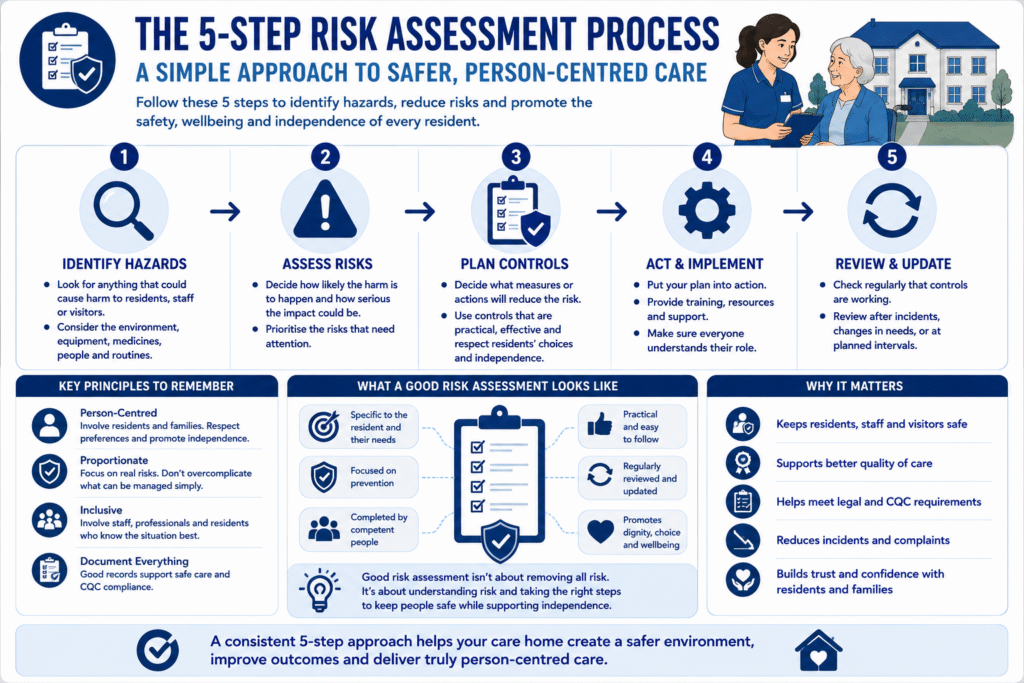
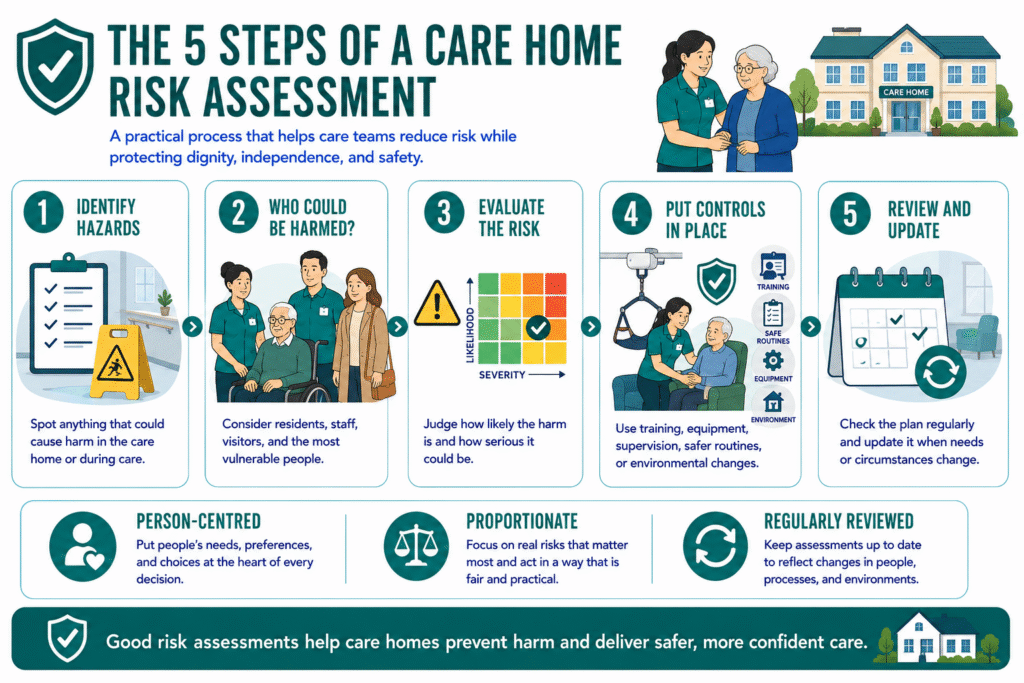
There are five main steps in a risk assessment. Care homes can use this process to spot hazards, protect people, and make sure staff know what action to take.
- Identify the hazards
Walk through the care home, observe daily routines, speak with staff and residents, and review incident records. Look for anything that could cause harm. - Decide who could be harmed and how
Consider residents, staff, visitors, contractors, and the most vulnerable people in the home. A hazard may affect each person differently. - Evaluate the risk and choose controls
Decide how likely harm is and how serious it could be. Then put sensible controls in place, such as equipment, training, supervision, safer routines, or environmental changes. - Record findings and put controls into practice
Write the assessment clearly. Staff should know what the risk is, what action they need to take, and when they must report concerns. - Review and update the assessment
Update the plan when circumstances change. A fall, hospital stay, medication change, infection outbreak, mobility decline, or new equipment may all trigger a review.
So, who should perform a risk assessment? A competent person with the right knowledge should lead it, but good care homes involve carers, managers, residents, families, and relevant health professionals. A risk assessment only works when the people delivering care understand it and follow it consistently.
What Is a Dynamic Risk Assessment?
A dynamic risk assessment happens in the moment when a situation changes and a carer must make a safe decision quickly. Unlike a planned risk assessment, staff do not complete it days or weeks in advance. They use their training, the resident’s care plan, and their professional judgement at the time.
For example, a resident may usually transfer safely from their chair to the bathroom with one carer. One morning, they appear dizzy, weak, or confused. The carer should stop, check what has changed, call for support if needed, and avoid continuing with the usual routine until it is safe.
Dynamic risk assessments also help staff respond to changing situations such as:
- A spill on the floor during a busy mealtime
- A resident showing signs of distress or agitation
- A broken mobility aid or hoist
- A sudden deterioration in mobility
- A visitor raising a safeguarding concern
- A resident refusing care they would normally accept
A good care team does not rush through these moments. Staff pause, assess what has changed, reduce immediate risks, and report the concern so the wider care plan can be reviewed if needed.
SEE ALSO: How Long Does CQC Registration Take? 2026 Update
Safeguarding, COSHH, and Other Risks Care Homes Must Manage
Care homes need to manage more than falls and moving and handling. They must also protect residents from abuse, neglect, unsafe substances, medication mistakes, infection, and failures in day-to-day care.
Safeguarding in care means protecting people from abuse, neglect, discrimination, avoidable harm, or improper treatment. In practice, this includes listening to concerns, noticing changes in behaviour, recording incidents clearly, and reporting concerns quickly through the right channels.
So, what is safeguarding adults? It is the process of protecting adults who may have care and support needs from harm while respecting their rights, wishes, and involvement in decisions about their lives.
Care homes also need a clear COSHH assessment. COSHH means Control of Substances Hazardous to Health. A COSHH assessment looks at cleaning chemicals, disinfectants, laundry products, and other substances that could harm staff or residents if someone stores, uses, or disposes of them incorrectly.
Other key risks include medication management, infection prevention, fire safety, staffing levels, equipment maintenance, visitor access, and emergency planning. The Care Quality Commission, or CQC, regulates health and adult social care services in England and expects providers to manage these risks safely, consistently, and in a person-centred way.
Why Risk Assessments Matter in Good Care

Risk assessments protect residents, staff, and visitors, but they should never turn care into a list of restrictions. Good care teams use them to prevent avoidable harm while helping people keep their routines, choices, and independence.
They improve care because they give staff clear guidance. Carers know what support a resident needs, what equipment to use, when to call for help, and what changes they must report. Families also gain confidence when they can see that the home understands the person’s risks and has a plan to manage them.
Risk assessments also support better communication between carers, nurses, managers, families, and health professionals. When everyone works from the same information, the care team can respond earlier to falls, weight loss, confusion, medication changes, pressure damage, or safeguarding concerns.
The Care Certificate also reinforces this approach by covering key areas such as safeguarding, duty of care, dignity, health and safety, fluids and nutrition, infection prevention, and dementia awareness.
The best care home risk assessment does not ask, “How do we remove every risk?” It asks, “How do we help this person live as safely, confidently, and independently as possible?”
Make Risk Management a Strength of Your Care Service
Strong risk assessments protect residents, support carers, and show regulators that your service takes safe, person-centred care seriously.
Care Sync Experts helps care providers build practical systems, strengthen compliance, and create safer services that families and staff can trust.
FAQ
What Are the 5 Risk Assessments?
In a care home, the five most common risk assessment areas are usually:
Individual resident risks — such as falls, moving and handling, nutrition, skin integrity, medication, and dementia-related risks.
Environmental risks — such as slips, trips, lighting, hot water, fire safety, and unsafe equipment.
Staff and operational risks — including staffing levels, lone working, training, and manual handling.
Safeguarding and security risks — including abuse, neglect, missing residents, visitor access, and financial harm.
Hazardous substance risks — often managed through COSHH assessments for cleaning chemicals, disinfectants, and other substances.
The exact list may vary between homes, but these five areas help providers manage both resident safety and day-to-day care delivery.
What Are 5 Examples of Risk?
Five common examples of risks in a care home include:
– A resident falling while walking to the bathroom
– A carer injuring their back during a transfer
– A medication dose being missed or given incorrectly
– A resident choking during a meal
– A cleaning chemical being stored where a resident can access it
– A risk assessment should identify what could cause the harm, who may be affected, and what controls can reduce the chance or severity of harm.
HSE describes risk assessment as identifying hazards, assessing the risks, controlling them, recording findings, and reviewing the controls.
What Are the 4 Components of Risk Assessment?
A simple risk assessment usually includes four core components:
Hazard — what could cause harm
Who may be harmed — residents, staff, visitors, or contractors
Risk level — how likely the harm is and how serious it could be
Control measures — what action will reduce the risk
Many care homes also record who is responsible for each action and when the action must be completed.
HSE templates commonly include existing controls, further actions needed, the responsible person, and deadlines.
What Is a Type 2 Risk Assessment?
“Type 2 risk assessment” is not a standard UK-wide HSE or CQC term. Different providers, local authorities, training companies, and clinical services may use it differently.
In some settings, it can mean a more detailed or specialist assessment completed when a basic assessment identifies a higher level of risk. For example, a resident may need a more detailed moving-and-handling, falls, pressure-care, behavioural, or clinical assessment after an initial concern.
Care homes should avoid relying on the label alone. The important question is whether the assessment clearly identifies the risk, records proportionate controls, names who will act, and sets review triggers.
Leave a Reply