Author: Muhideen Ajibade

  • Early Sign of MND in 2026: What Care Businesses Should Notice First

    Early Sign of MND in 2026: What Care Businesses Should Notice First

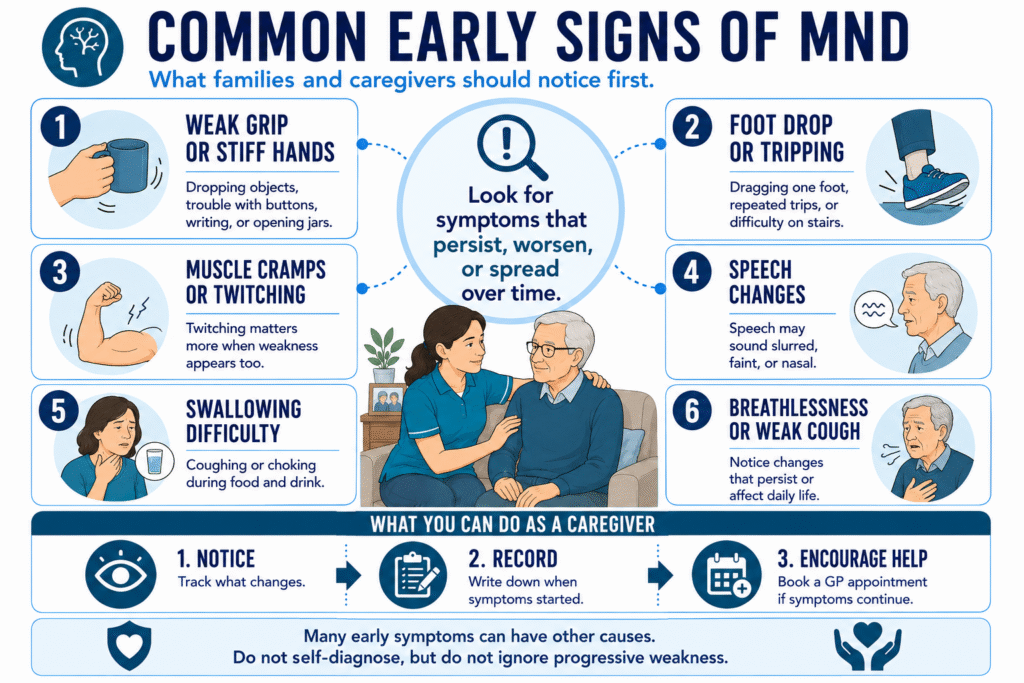
    An early sign of MND often starts with muscle weakness that slowly gets worse. A person may develop a weak grip, drop objects more often, drag one foot, trip repeatedly, struggle with stairs, speak less clearly, or cough when eating and drinking.

    Some people also notice muscle cramps or twitching, but twitching alone does not always point to MND. Stress, tiredness, trapped nerves, injuries, vitamin deficiencies, and other health problems can cause similar symptoms.

    Families and caregivers should look for a pattern: symptoms that persist, worsen, spread, or begin to affect daily life. MND is uncommon, but early medical advice helps doctors check the cause and offer the right support sooner.

    Get expert support for your next tender, inspection-ready policies, or CQC registration — book a call with Care Sync Experts today and let’s get you compliant and competitive.

    Why Caregivers Often Notice MND Symptoms First

    Healthcare Tender Eligibility UK: 3 Hidden Checks Before You Bid (2026)

    Caregivers often notice changes before anyone else because they see the person in ordinary moments. They may watch them button a shirt, hold a cup, climb the stairs, walk across the room, or eat a meal.

    Small changes can stand out. A person may drop cutlery more often, struggle to turn a key, drag one foot, avoid stairs, speak more softly, or cough during meals. These signs may seem minor at first, but a caregiver can spot when they become repeated patterns.

    A caregiver does not diagnose MND. That role belongs to a GP, neurologist, and medical tests. But a caregiver can do something very important: notice what has changed, write it down, and encourage the person to seek medical advice when symptoms persist or get worse.

    Many MND stories first symptoms mention everyday changes like weak hands, tripping, or speech changes. However, personal stories and an MND first symptoms forum should never replace professional assessment. They can offer reassurance, but only a healthcare professional can investigate the real cause.

    RELATED: What Is Safeguarding in Care? 2026 Update

    Common Early Signs of MND

    The common early signs of MND usually involve muscles becoming weaker over time. The first change may appear in the hands, feet, legs, speech, or swallowing, depending on which muscles MND affects first.

    Families and caregivers may notice:

    • Weak or stiff hands
    • A weaker grip
    • Dropping cups, keys, cutlery, or pens
    • Difficulty with buttons, zips, writing, or opening jars
    • Foot drop or dragging one foot
    • Repeated tripping or falls
    • Trouble climbing stairs
    • Muscle cramps or spasms
    • Muscle twitching, especially when it appears with weakness
    • Slurred, faint, or nasal-sounding speech
    • Coughing, choking, or struggling when swallowing
    • A weaker cough or breathlessness

    MND symptoms hands often worry families because hand weakness can affect everyday tasks quickly. Someone may stop writing clearly, struggle to hold a toothbrush, or avoid tasks they once managed easily.

    Twitching alone does not usually mean MND. Many people experience twitching from stress, tiredness, exercise, caffeine, or minor nerve irritation. The bigger concern comes when twitching appears with weakness, wasting, speech changes, swallowing problems, or symptoms that keep getting worse.

    What Can Be Mistaken for Motor Neurone Disease?
    Early Sign of MND in 2026
    Early Sign of MND in 2026

    Several conditions can look like MND at first, which is why families should avoid self-diagnosing from one symptom. A trapped nerve, muscle injury, vitamin B12 deficiency, thyroid problems, medication side effects, stress, anxiety, or another neurological condition can cause weakness, twitching, tiredness, or changes in movement.

    Many people search “convinced I have motor neurone disease” after noticing twitching, fatigue, or weakness. That fear feels real, but MND usually causes weakness that gradually worsens rather than symptoms that come and go quickly.

    Fatigue also needs context. If you keep asking, “why do I feel tired and fatigued all the time?”, the cause may involve sleep, stress, anaemia, infection, low mood, thyroid issues, vitamin deficiency, or another health problem. Tiredness alone does not usually point to MND.

    Vertigo can also confuse families because it affects balance. But vertigo often feels like spinning, dizziness, or unsteadiness, not progressive muscle weakness. If you wonder how long can a bout of vertigo last, the answer depends on the cause, but it can last seconds, hours, days, or longer.

    The safest approach is simple: track the symptoms, look for patterns, and speak to a GP if weakness persists, spreads, or affects walking, grip, speech, swallowing, or breathing.

    READ MORE: Carers Allowance Supplement: What Scotland’s Carers Need to Know in 2026

    Is ALS the Same as MND?

    Yes, ALS is a type of MND. In the UK, people usually use the term motor neurone disease, or MND, to describe a group of conditions that affect the nerves controlling movement. In the United States, people often use ALS more commonly.

    ALS stands for amyotrophic lateral sclerosis. It is the most common type of MND and can affect muscles in the arms, legs, speech, swallowing, and breathing over time.

    So, if someone asks “is ALS the same as MND?” or “is MND and ALS the same?”, the simple answer is: ALS falls under the wider MND family. The terms may differ by country, but both refer to serious conditions that affect motor neurones and gradually weaken muscles.

    Is MND Hereditary or Genetic?
    How to prepare for a GP appointment
    How to prepare for a GP appointment

    Most cases of MND do not run in families. In many people, doctors cannot point to one clear cause, and the condition appears without a known family history.

    Still, some families worry and ask, “is MND hereditary?”, “is MND inherited?”, or “is MND genetic?” These questions matter, especially when more than one person in the family has had MND or a related neurological condition.

    A small number of MND cases involve inherited genetic changes. If MND runs in the family, the person should speak to a GP or neurologist about the next step. The doctor may suggest genetic counselling before any genetic testing, so the family can understand what the results may mean.

    From a caregiver’s perspective, the most helpful step is not to assume. Record symptoms, ask about family history, and encourage medical advice if weakness, speech changes, swallowing problems, or mobility issues continue to worsen.

    SEE MORE: The 5 Principles of Mental Capacity Act: A Practical Guide for 2026

    Can You Prevent Motor Neurone Disease?

    There is no proven way to prevent motor neurone disease. Researchers still do not know exactly why most cases happen, and MND causes can involve a mix of genetic, environmental, and biological factors.

    That can feel frustrating for families, especially when they want a clear action plan. But prevention is not the same as early action. Caregivers can still help by encouraging regular health checks, balanced nutrition, safe movement, and prompt medical advice when new weakness or speech changes appear.

    If someone asks how to prevent motor neuron disease, the honest answer is that no lifestyle change can guarantee prevention. However, noticing symptoms early, recording changes, and speaking to a GP can help rule out other treatable causes and get the right support in place sooner.

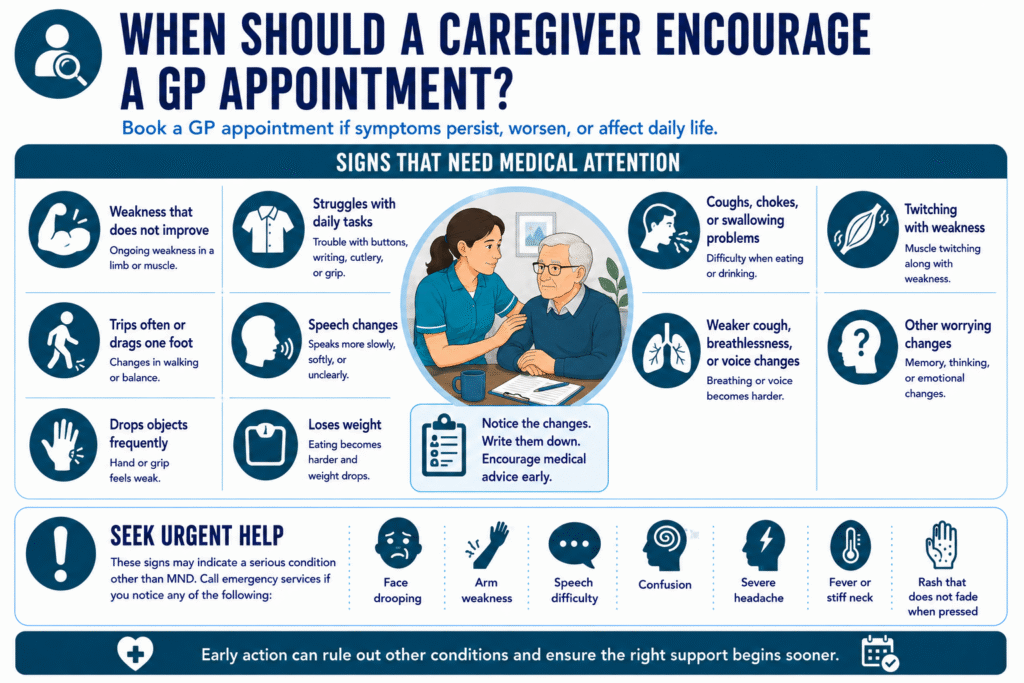
    When Should a Caregiver Encourage a GP Appointment?
    When to seek GP advice

    A caregiver should encourage a GP appointment when symptoms persist, worsen, or start to affect daily life. One weak day may not mean something serious, but repeated changes deserve attention.

    Book a GP appointment if someone:

    • Develops weakness that does not improve
    • Trips often or starts dragging one foot
    • Drops objects because their hand feels weak
    • Struggles with buttons, writing, cutlery, or grip
    • Speaks more slowly, softly, or unclearly
    • Coughs, chokes, or struggles when swallowing
    • Has twitching together with weakness
    • Loses weight because eating becomes harder
    • Shows a weaker cough, breathlessness, or voice changes

    Some symptoms need urgent help because they may point to something other than MND. Call emergency services if someone suddenly develops face drooping, arm weakness, speech difficulty, confusion, severe headache, fever, stiff neck, or a rash that does not fade when pressed.

    Families sometimes ask how does meningitis start, how can you catch meningitis, or how do you catch meningitis B because sudden illness can feel frightening. Meningitis is different from MND, but symptoms such as fever, severe headache, stiff neck, confusion, or a non-fading rash need urgent medical attention.

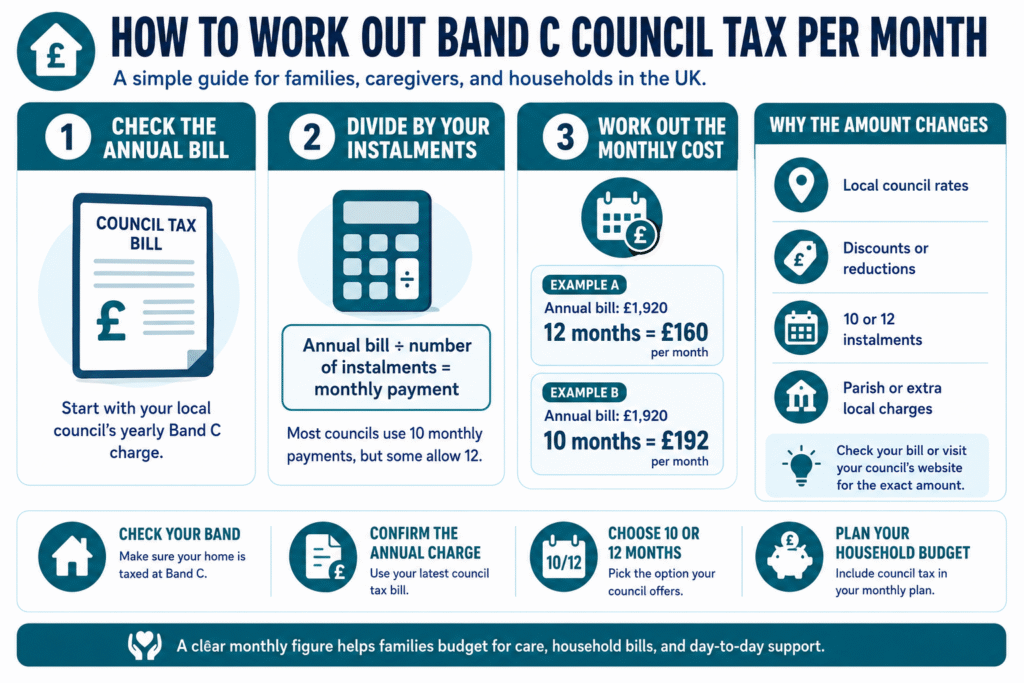
    ALSO READ: Band C Council Tax Per Month: What You Should Know in 2026

    How to Prepare for the GP Appointment

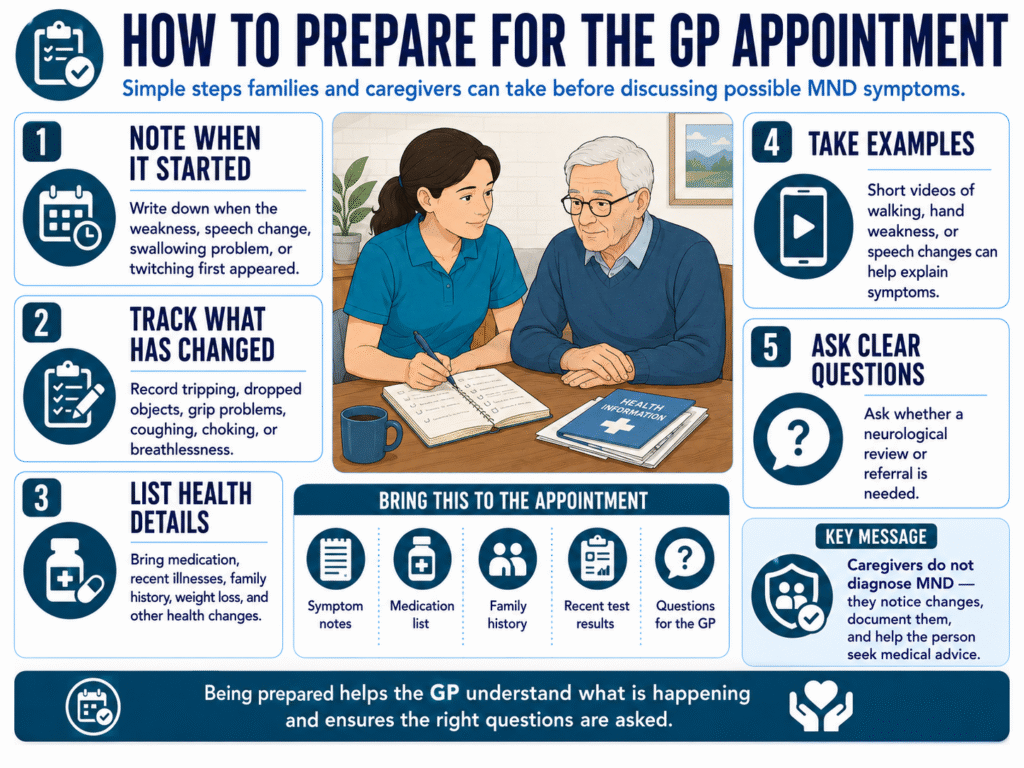
    Before the appointment, write down what has changed and when it started. Clear notes help the GP understand the pattern, especially when symptoms come and go or feel difficult to explain.

    A caregiver can help by recording:

    • Which body part showed symptoms first
    • Whether weakness affects the hand, foot, leg, speech, or swallowing
    • How often the person trips, drops objects, coughs, or chokes
    • Whether symptoms have worsened or spread
    • Any muscle cramps, twitching, stiffness, or visible muscle loss
    • Recent injuries, infections, stress, medication changes, or weight loss
    • Family history of MND or other neurological conditions

    Short videos can also help if the symptom does not always appear during the appointment. For example, a video of foot dragging, hand weakness, speech changes, or repeated difficulty with a daily task may give the GP useful context.

    Forums and personal stories can make people feel less alone, but they cannot confirm a diagnosis. If someone feels worried after reading MND stories online, encourage them to take the next practical step: collect the facts, book the appointment, and let a healthcare professional investigate properly.

    Final Caregiver Advice

    An early sign of MND can feel frightening, especially when weakness, speech changes, or swallowing problems begin to affect daily life. But fear should not become self-diagnosis. Many symptoms that worry families can come from other causes, and some of those causes can be treated.

    A caregiver’s role is not to diagnose MND. It is to notice, document, support, and act early.

    If someone you care for develops weakness that keeps getting worse, starts tripping, drops objects often, speaks differently, or struggles with swallowing, encourage them to see a GP. Clear notes, calm support, and early medical advice can help doctors investigate the cause and guide the next step.

    The most helpful thing a caregiver can do is stay observant without creating panic. Notice the changes, protect the person’s dignity, and help them get the right medical support at the right time.

    Need Clearer Care Guidance for Your Team?

    Early symptoms can be easy to miss, especially when changes happen slowly. Caregivers who know what to notice can support families sooner and encourage the right medical help at the right time.

    At Care Sync Experts, we provide practical, caregiver-focused guidance that helps care teams recognise concerns, respond with confidence, and support safer care decisions.

    Help your carers notice changes early and act with confidence.

    FAQ

    At what age does MND start?

    MND can affect adults at different ages, but it usually starts in people over 50. Younger adults can develop it too, but this is less common. If someone develops ongoing weakness, foot drop, speech changes, or swallowing problems at any age, they should speak to a GP rather than waiting to see if it disappears. The NHS says MND can affect adults of any age but usually affects people over 50.

    Is MND painful at first?

    MND does not usually start with pain as the main symptom. Early symptoms more often involve weakness, stiffness, cramps, twitching, tripping, weak grip, speech changes, or swallowing difficulties. Pain can still happen because of muscle cramps, stiffness, poor posture, reduced movement, or falls, but pain alone usually points doctors to check for other causes too.

    Would MND show up in a blood test?

    A standard blood test does not confirm MND on its own. Doctors may use blood tests to rule out other causes of symptoms, such as vitamin deficiencies, thyroid problems, inflammation, or other illnesses.

    Diagnosis usually depends on a neurological examination and tests such as nerve tests, EMG, MRI scans, and other investigations. The NHS says there is no single test for MND.

    What is Stage 1 motor neurone disease?

    “Stage 1” usually refers to the early stage of MND, when symptoms may affect one area first, such as the hand, foot, leg, speech, or swallowing muscles.

    At this point, a person may still manage many daily activities but notice weakness, stiffness, cramps, twitching, tripping, or grip problems.

    MND progression varies from person to person, so doctors focus more on the person’s symptoms, function, and support needs than a simple numbered stage.

  • What Is Safeguarding in Care? 2026 Update

    What Is Safeguarding in Care? 2026 Update

    Safeguarding in care means protecting children and adults with care and support needs from abuse, neglect, exploitation, discrimination, and avoidable harm. It helps people receive care in a way that protects their safety, dignity, wellbeing, choices, and human rights.

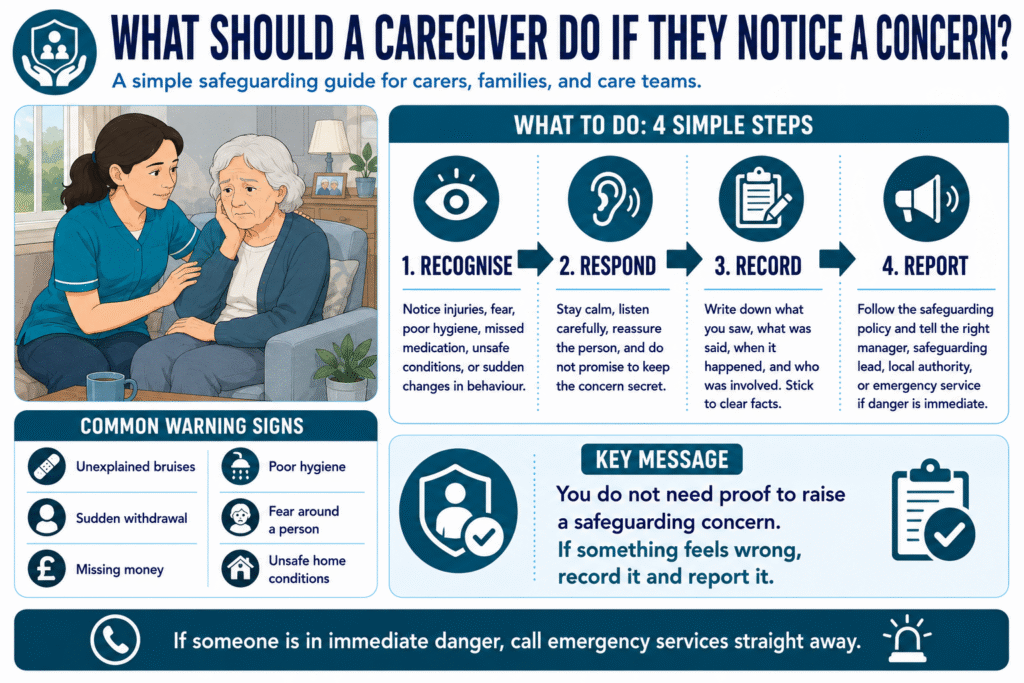
    For caregivers, safeguarding means more than following a policy. It means staying alert, listening carefully, noticing changes, and acting quickly when something feels wrong. A carer may spot a bruise, a sudden change in mood, poor hygiene, missing money, fear around a certain person, or signs that someone no longer feels safe.

    A simple safeguarding definition UK families can understand is this: safeguarding protects people who may not always be able to protect themselves.

    So, what is safeguarding in care in everyday practice? It means carers and care providers must prevent harm where possible, recognise warning signs early, report concerns properly, and make sure the person receives support that respects who they are.

    Some people search for what is safe guarding, but the correct term is safeguarding. In care, it should guide every visit, every care plan, and every decision that affects a vulnerable person.

    Get expert support for your next tender, inspection-ready policies, or CQC registration — book a call with Care Sync Experts today and let’s get you compliant and competitive.

    What Is Safeguarding in Health and Social Care?

    Applying Creams in Domiciliary Care: The CQC Rules Nobody Explains

    Safeguarding in health and social care means protecting people from harm across care settings such as home care, care homes, hospitals, clinics, supported living, children’s services, and community care.

    Care workers do not only help with daily tasks. They also play a key role in spotting risks, preventing abuse, and raising concerns when something does not feel right. A caregiver may be the first person to notice that someone looks frightened, has unexplained injuries, misses meals, struggles with hygiene, or suddenly withdraws from normal conversation.

    In healthcare, safeguarding also means doctors, nurses, carers, and other professionals must respond when a person’s safety, rights, or wellbeing may be at risk. That is why people often ask what is safeguarding in healthcare or what is safeguarding health and social care.

    In simple terms, safeguarding makes sure care does not just support the body. It protects the whole person: their safety, voice, dignity, choices, and right to live free from abuse and neglect.

    RELATED: First Person vs Third Person Care Plan: CQC and the Mental Capacity Act Expectation in 2026

    Why Is Safeguarding Important?

    Safeguarding is important because abuse and neglect often start quietly. A missed meal, poor hygiene, an unexplained bruise, sudden fear, unpaid bills, or a change in behaviour can point to a deeper problem.

    In care, small warning signs matter. A caregiver may notice that an older person no longer wants to speak freely, a child becomes withdrawn, or an adult with support needs seems anxious around a particular person. When carers act early, they can prevent harm from getting worse.

    Safeguarding protects more than physical safety. It protects dignity, choice, independence, privacy, and human rights. It also helps families trust that their loved one receives care in a safe and respectful environment.

    So, why is safeguarding important? It gives carers, families, and care providers a clear responsibility: notice risks, take concerns seriously, and act before someone suffers avoidable harm.

    For safeguarding adults, this means protecting people who may struggle to protect themselves because of age, illness, disability, mental health needs, or care dependency. For children, safeguarding means protecting their welfare, development, health, and safety.

    The Six Principles of Safeguarding

    Safeguarding guide for caregivers and families
    Safeguarding guide for caregivers and families

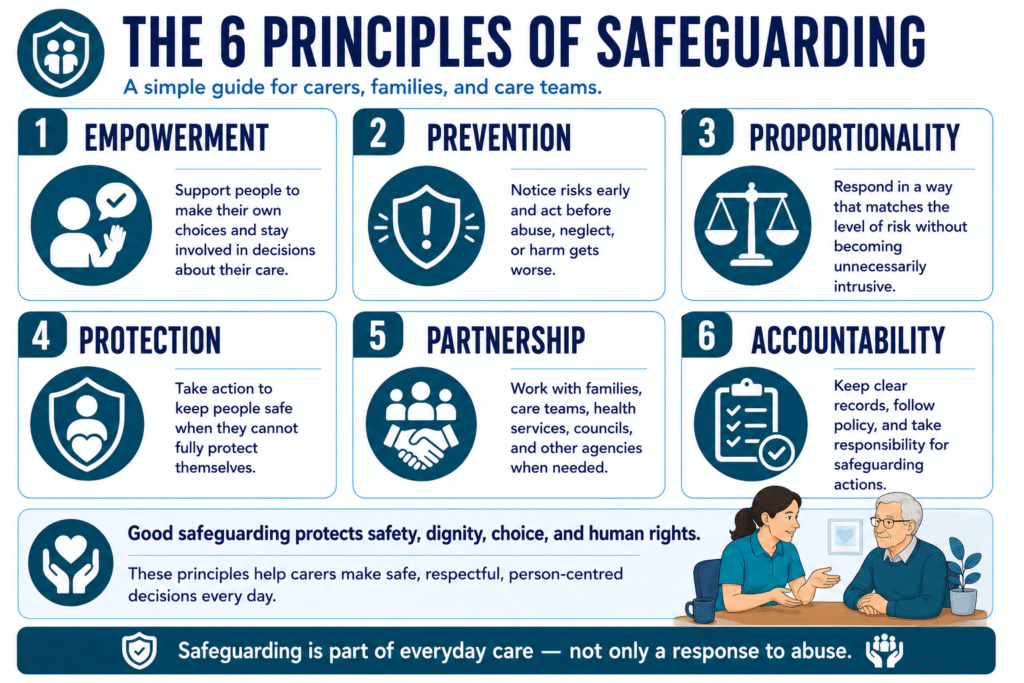
    The six principles of safeguarding help caregivers protect people without taking away their voice, dignity, or independence. They guide how care teams should prevent harm, respond to concerns, and support people safely.

    1. Empowerment means supporting people to make their own choices. A caregiver should listen, explain options clearly, and involve the person in decisions about their care.
    2. Prevention means acting early before harm happens or gets worse. This may include noticing changes in behaviour, checking risks in the home, or raising concerns before a situation becomes serious.
    3. Proportionality means responding in a way that matches the level of risk. A safeguarding response should protect the person without becoming unnecessarily intrusive.
    4. Protection means giving help to people who cannot fully protect themselves. So, what is protection in safeguarding? It means taking action to keep someone safe when abuse, neglect, exploitation, or serious risk may affect them.
    5. Partnership means working with the right people, such as families, care managers, social workers, healthcare professionals, local authorities, or the police.
    6. Accountability means everyone must understand their role, keep clear records, and take responsibility for action.

    These principles remind caregivers that safeguarding is not only about reporting abuse. It is about creating care that feels safe, respectful, and person-centred every day.

    READ MORE: Carers Allowance Supplement: What Scotland’s Carers Need to Know in 2026

    What Counts as a Safeguarding Issue?

    A safeguarding issue is any concern that someone may be experiencing abuse, neglect, exploitation, discrimination, or avoidable harm. It can also mean a situation where a person may not be safe, even if no one has confirmed abuse yet.

    In care, safeguarding concerns can appear in small changes. A caregiver may notice unexplained bruises, repeated falls, poor hygiene, missed medication, sudden weight loss, fear of a particular person, missing money, unsafe living conditions, or a person becoming unusually quiet or withdrawn.

    Some concerns come from what the person says. For example, they may tell a carer that someone hurts them, takes their money, threatens them, ignores their needs, or makes them feel unsafe. Carers must take these words seriously, even if the person later becomes nervous or changes the story.

    So, what are safeguarding concerns? They are warning signs that a child or adult may need protection, support, or urgent action. A good caregiver does not wait for proof. They record what they see, report the concern, and follow the safeguarding policy.

    Common Types of Safeguarding Concerns in Care

    Safeguarding concerns can take many forms. Some are easy to see, while others appear through patterns, behaviour changes, or small signs that something is wrong.

    Common types of safeguarding concerns in care include:

    • Physical abuse: hitting, pushing, rough handling, misuse of restraint, or unexplained injuries.
    • Emotional or psychological abuse: threats, humiliation, intimidation, isolation, or controlling behaviour.
    • Financial abuse: stealing money, pressuring someone about property, misusing bank cards, or taking belongings.
    • Sexual abuse: any unwanted sexual contact, inappropriate touching, exposure, or exploitation.
    • Neglect: failing to provide food, fluids, medication, hygiene support, heating, clothing, or medical attention.
    • Self-neglect: when someone cannot or does not care for their own health, hygiene, home, or safety.
    • Discriminatory abuse: mistreating someone because of age, disability, race, religion, gender, or sexuality.
    • Organisational abuse: poor care caused by unsafe routines, lack of staff training, weak management, or a culture that ignores concerns.

    Real examples of safeguarding in care may include an elderly person losing weight because meals are missed, a resident becoming frightened around a staff member, or a vulnerable adult suddenly losing control of their money.

    A caregiver may not always see abuse happen. That is why observation, listening, accurate recording, and fast reporting matter.

    SEE ALSO: The 5 Principles of Mental Capacity Act: A Practical Guide for 2026

    Who Is Responsible for Safeguarding?

    Safeguarding roles and teamwork responsibilities

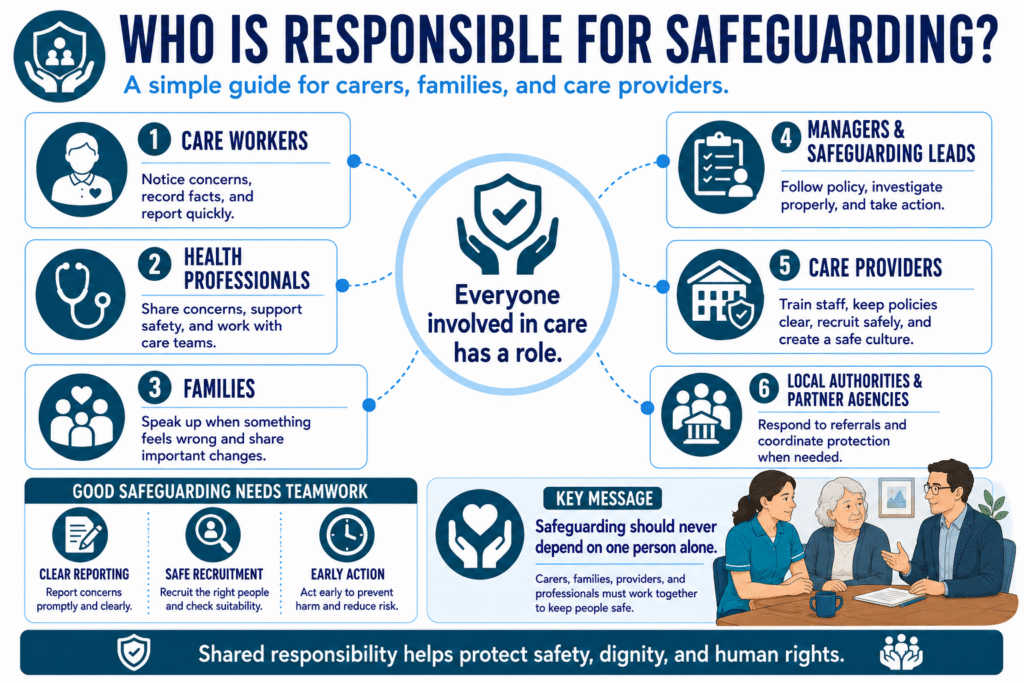
    Everyone involved in care has a responsibility to safeguard people. This includes care workers, care managers, nurses, doctors, social workers, family members, volunteers, local authorities, and care providers.

    A caregiver may notice the concern first, but safeguarding should never depend on one person alone. Good care providers train staff, check recruitment properly, keep safeguarding policies clear, and make sure every worker knows how to report a concern.

    So, who is responsible for safeguarding? In simple terms, everyone who supports or works with a child or adult at risk must help keep them safe. Each person has a role, but care providers must create the systems that make safe care possible.

    This includes clear reporting routes, accurate record keeping, regular training, safe staffing, risk assessments, and strong leadership. Families also play an important role because they often notice changes in mood, behaviour, money, hygiene, or confidence before anyone else.

    Safeguarding works best when carers, families, health professionals, and local services share concerns early and act together.

    Duty of Care: What Caregivers Must Do

    Duty of care means caregivers must act in a way that protects the person from avoidable harm. In simple terms, carers must provide support safely, follow agreed care plans, and speak up when something puts a person at risk.

    In health and social care, duty of care applies to everyday decisions. A carer should not ignore a loose rug if the person has a falls risk. They should not skip medication prompts, rush personal care, or dismiss a person who says they feel unsafe.

    So, what does duty of care mean in practice? It means caregivers must:

    • Follow the care plan
    • Respect privacy and dignity
    • Reduce known risks
    • Record concerns clearly
    • Report safeguarding worries
    • Escalate urgent issues
    • Keep professional boundaries
    • Never ignore signs of abuse, neglect, or harm

    When people ask what is duty of care health and social care, the answer is simple: care workers must take reasonable steps to keep people safe while respecting their rights, choices, and independence. Duty of care does not mean taking control away from someone. It means supporting them safely and acting when risk becomes serious.

    MORE: Universal Credit Compensation DWP: Can You Claim Money Back in 2026?

    What Should a Caregiver Do If They Notice a Concern?

    What Is Safeguarding
    What Is Safeguarding in Care?

    When a caregiver notices a safeguarding concern, they should act quickly, calmly, and professionally. They do not need to prove abuse before reporting it. They only need to recognise that something may place the person at risk.

    A simple way to remember the right response is: recognise, respond, record, and report.

    Recognise the signs. Look for injuries, fear, poor hygiene, missed medication, unsafe living conditions, sudden mood changes, or anything that feels unusual.

    Respond with calm reassurance. If the person tells you something, listen carefully. Do not promise to keep it secret. Instead, explain that you may need to share the concern with the right person to help keep them safe.

    Record the facts clearly. Write what you saw, what the person said, when it happened, who was present, and what action you took. Avoid guesses or personal opinions.

    Report the concern through the correct safeguarding policy. This may mean speaking to a manager, safeguarding lead, local authority safeguarding team, or emergency services if the person faces immediate danger.

    Strong safeguarding policies help caregivers know exactly what to do, who to contact, and how fast they must act.

    Final Thoughts…

    Safeguarding in care works best when people treat it as part of everyday care, not as a box-ticking exercise. A safe care culture starts with small actions: listening properly, noticing changes, asking the right questions, and acting before concerns grow into serious harm.

    Families should trust their instincts. If something feels wrong, raise it. A person may seem withdrawn, frightened, neglected, confused, or unusually quiet for a reason. Early action can protect them.

    Care providers should also make safeguarding easy to understand. Staff need clear policies, regular training, safe recruitment, strong supervision, and confidence to report concerns without fear.

    So, what is safeguarding in care at its best? It is care that protects people from harm while still respecting their dignity, choices, independence, and human rights. It helps every child, adult, family member, and caregiver feel safer, heard, and supported.

    Need Clearer Safeguarding Support for Your Care Team?

    Safeguarding should never feel confusing, delayed, or ignored. When carers, families, and care providers understand what to look for and how to respond, they can protect vulnerable people earlier and with more confidence.

    At Care Sync Experts, we help caregivers and care providers stay informed with practical, easy-to-understand guidance on safer care, safeguarding responsibilities, care planning, and quality support.

    If your team needs clearer safeguarding awareness, better care guidance, or resources that help carers make safer decisions every day, Care Sync Experts is here to support you.

    Build a safer care culture with guidance your carers can understand and apply.

    FAQ

    What are the 5 R’s of safeguarding?

    The 5 R’s of safeguarding are usually: Recognise, Respond, Report, Record, and Refer. They help care workers remember what to do when they notice possible abuse, neglect, or harm. First, recognise the warning signs.

    Then respond calmly, report the concern, record the facts clearly, and refer the issue to the right safeguarding lead, manager, local authority, or emergency service when needed. Some organisations use 4 R’s instead, but the core action remains the same.

    How do you explain safeguarding in an interview?

    In a care interview, explain safeguarding in a practical way. You could say: “Safeguarding means protecting vulnerable people from abuse, neglect, and harm. In my role, I would stay alert to warning signs, listen carefully if someone shared a concern, record facts accurately, and report the issue through the correct safeguarding procedure. I would never promise secrecy if someone disclosed abuse, because my priority is to keep them safe.” This answer shows that you understand both compassion and procedure.

    What are the 5 aims of safeguarding?

    A simple way to explain the 5 aims of safeguarding is: prevent harm, protect people at risk, promote wellbeing, respond quickly to concerns, and work with the right professionals.

    In care, these aims help staff protect people’s health, wellbeing, rights, and dignity. CQC describes safeguarding as protecting people’s health, wellbeing, and human rights so they can live free from harm, abuse, and neglect.

    What is an example of a safeguarding question?

    An example of a safeguarding interview question is: “What would you do if a service user told you that a family member was taking their money?” A strong answer would include staying calm, listening carefully, reassuring the person, avoiding promises of secrecy, recording the exact concern, and reporting it immediately through the organisation’s safeguarding policy. This shows that you know how to protect the person without investigating the matter yourself.

  • Carers Allowance Supplement: What Scotland’s Carers Need to Know in 2026

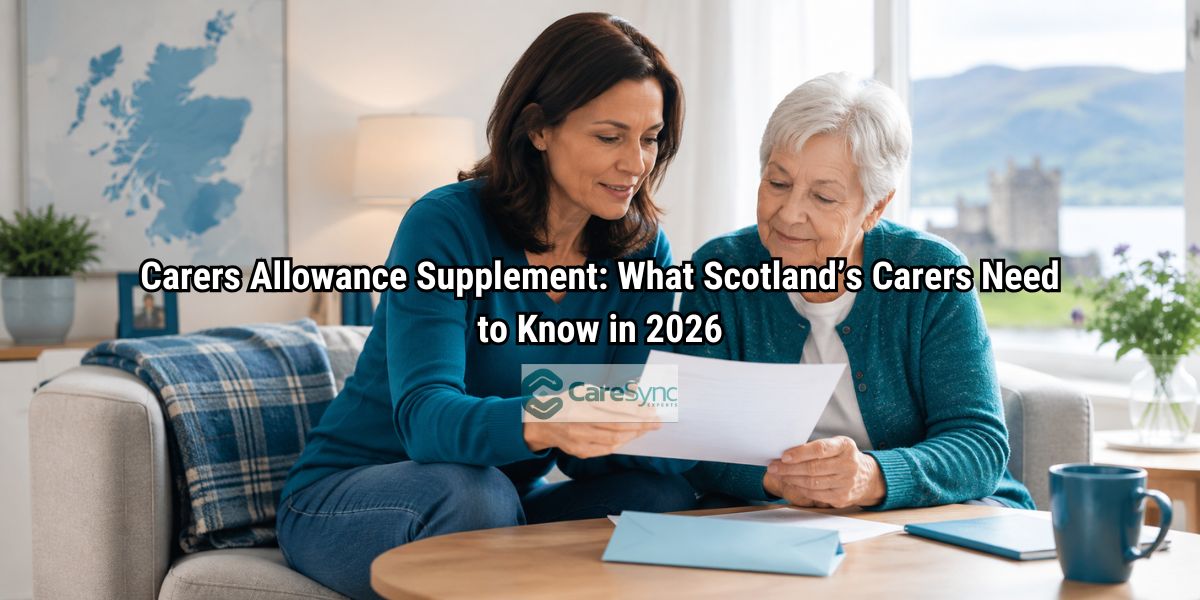
    Carers Allowance Supplement: What Scotland’s Carers Need to Know in 2026

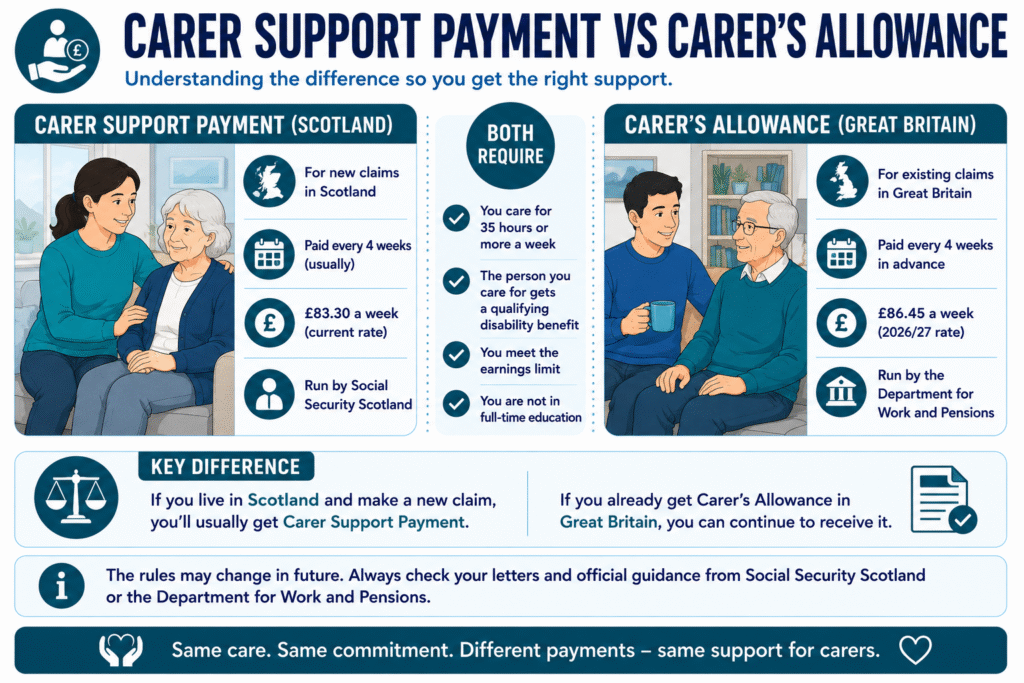
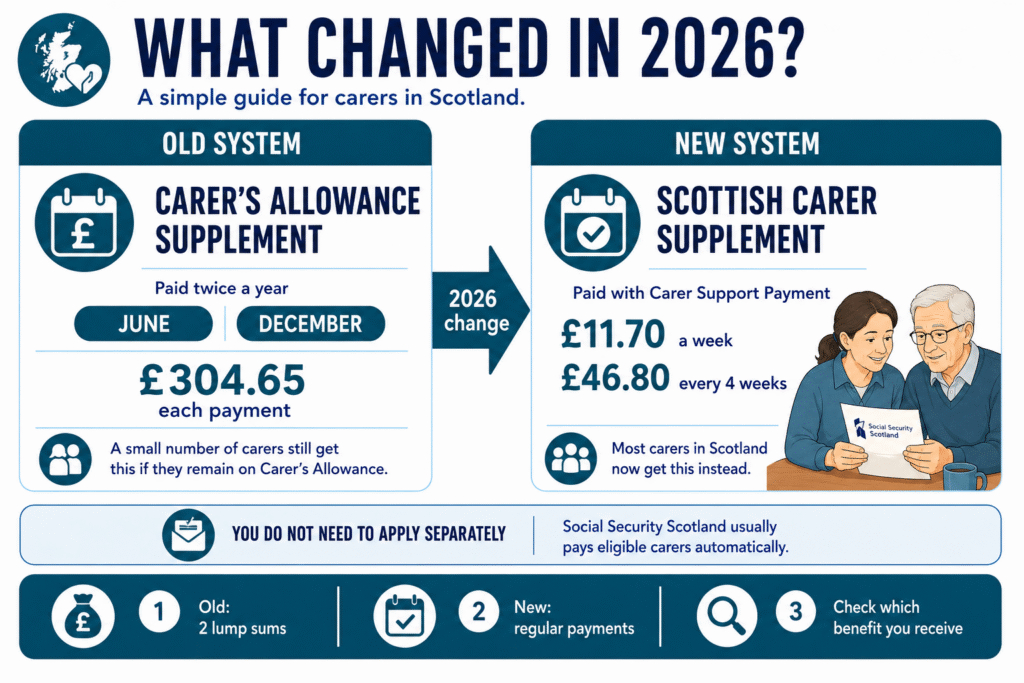
    Carers Allowance Supplement used to give eligible unpaid carers in Scotland two extra payments each year. In 2026, the system changed for most carers. Scottish Carer Supplement now replaces Carer’s Allowance Supplement for most people who receive Carer Support Payment.

    This matters because many carers still plan around the old June and December lump sums. If you now get Carer Support Payment, you will usually receive Scottish Carer Supplement alongside your regular payments instead. Official Scottish guidance lists Scottish Carer Supplement as £11.70 a week, or £46.80 every 4 weeks, paid automatically on top of Carer Support Payment.

    A small number of carers may still receive Carers Allowance Supplement 2026 as two payments if they remain on Carer’s Allowance or meet specific exception rules. The key point is simple: most eligible carers do not need to apply separately. Social Security Scotland checks eligibility and pays the supplement automatically.

    For carers and families, this extra support will not remove every pressure, but it can help with the real cost of caring: travel, food, heating, missed work, and the daily responsibility of supporting someone who depends on you.

    Get expert support for your next tender, inspection-ready policies, or CQC registration — book a call with Care Sync Experts today and let’s get you compliant and competitive.

    What Changed in 2026?

    CQC Fit Person Interview: How to Pass It First Time in 2026

    In 2026, Scotland changed how many unpaid carers receive this extra support. Scottish Carer Supplement replaced Carers Allowance Supplement for most carers who get Carer Support Payment.

    The old Carers Allowance Supplement usually came as two lump-sum payments each year. Many carers expected those payments in June and December and used them for larger household costs, travel, food, energy bills, or breaks from caring.

    The new Scottish Carer Supplement works differently. Instead of waiting for two larger payments, eligible carers receive the extra money more regularly alongside Carer Support Payment. This can make budgeting easier because the support comes throughout the year, not only twice a year.

    So, has carers allowance gone up? The support has changed more in structure than in purpose. The supplement still gives extra financial help to eligible carers in Scotland, but most carers now receive it through the newer Scottish Carer Supplement system.

    Some people may still receive Carers Allowance Supplement 2026 under the older rules, but most carers should check whether they now receive Carer Support Payment and Scottish Carer Supplement instead.

    RELATED: New Style ESA (Employment and Support Allowance) 2026

    Who Still Gets Carers Allowance Supplement?

    Most carers in Scotland who receive Carer Support Payment now get Scottish Carer Supplement instead of the old Carers Allowance Supplement.

    A small number of people may still receive Carers Allowance Supplement if they continue to get Carer’s Allowance rather than Carer Support Payment, or if they fall under special exception rules. This is why some carers still see information about June and December payments, while others now receive the supplement more regularly with their Carer Support Payment.

    The important rule is this: the carer element of Universal Credit does not qualify you for Carers Allowance Supplement on its own. To receive the supplement, you must usually receive the qualifying carer benefit, such as Carer Support Payment or Carer’s Allowance.

    From a caregiver’s point of view, this difference matters. Many unpaid carers provide daily support but do not always claim the right benefit. If you care for someone for many hours each week, check which carer benefit you receive, not just whether Universal Credit includes a carer element. That one detail can affect which payment route applies to you.

    What Date Does Carer’s Allowance Supplement Get Paid?

    Carer support payment vs allowance breakdown
    Carer support payment vs allowance breakdown

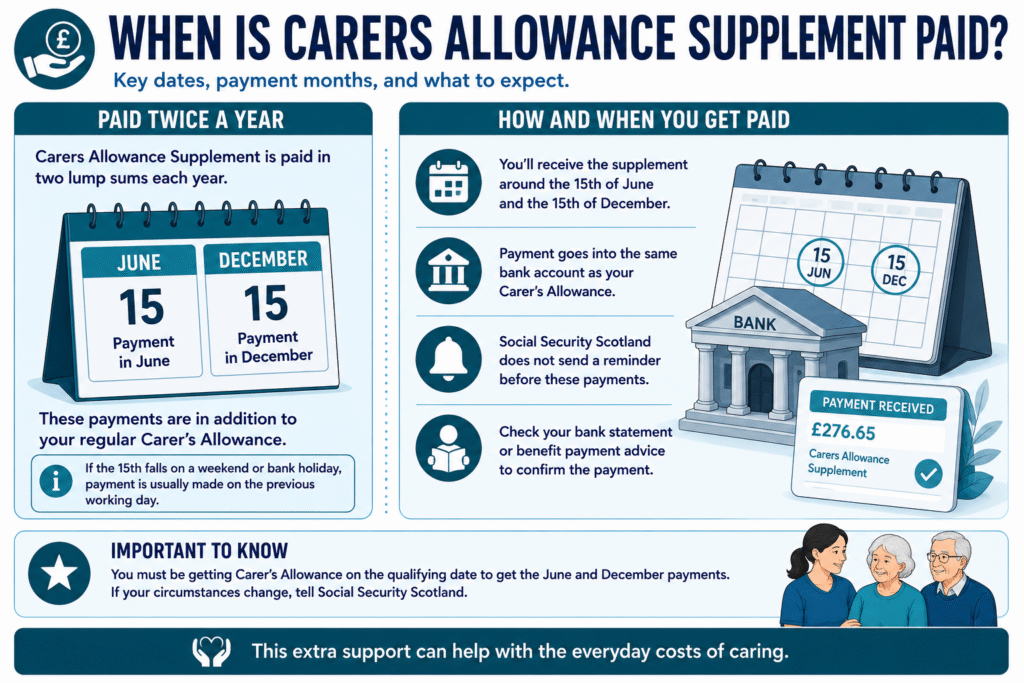
    Many carers still ask, what date does Carer’s Allowance Supplement get paid? Under the older system, eligible carers usually received two payments each year: one in June and one in December.

    For Carers Allowance Supplement Scotland payment date June 2026, the payment applies only to people who still qualify under the older Carer’s Allowance Supplement rules. Scotland’s newer system now pays most eligible carers through Scottish Carer Supplement, which comes with Carer Support Payment instead of two lump sums.

    Here is the simple difference:

    Payment typeHow carers receive it
    Scottish Carer SupplementPaid regularly with Carer Support Payment
    Carer’s Allowance SupplementPaid twice yearly, usually June and December

    If you searched when is Carer’s Supplement paid 2025 or Carer’s Allowance Supplement 2025, remember that the payment system changed in 2026 for most carers in Scotland. Check your latest Social Security Scotland letter to confirm which supplement you receive, the payment date, and the amount.

    READ MORE: Support Hose Compression: Benefits, Side Effects, and Safe Use

    Do You Need to Apply for Carers Allowance Supplement?

    Most eligible carers do not need to apply for Carers Allowance Supplement separately. Social Security Scotland usually checks who qualifies and sends the payment automatically.

    This also applies to the newer Scottish Carer Supplement. If you receive Carer Support Payment and meet the rules, the supplement should be added to your regular payments without a separate claim.

    So, how to apply for Carers Allowance Supplement? In most cases, you do not apply for the supplement itself. You apply for the main carer benefit, such as Carer Support Payment in Scotland or Carer’s Allowance if that still applies to your situation.

    Some people search for Carers Allowance Supplement form ADP online, but there is usually no separate form for the supplement. ADP often refers to Adult Disability Payment, which may be the disability benefit received by the person you care for. It does not mean you need a special supplement form.

    If you have recently applied for a carer benefit, you may also wonder how long does Carers Allowance take. Processing times can vary, so keep your application reference, check your letters, and contact the relevant benefit office if you have waited longer than expected.

    Does Carers Allowance Supplement Affect Universal Credit or Other Benefits?

    Carers Allowance Supplement and Scottish Carer Supplement do not reduce Universal Credit, Housing Benefit, Income Support, Council Tax Reduction, or the benefits of the person you care for. Social Security Scotland confirms that Scottish Carer Supplement and Carer Additional Person Payment do not affect other benefits.

    However, the main carer benefit can affect other benefits. Carer Support Payment may affect your income-related benefits, your partner’s benefits, or the benefits of the person you care for. 

    So, does care allowance affect Universal Credit? The supplement itself should not, but Carer Support Payment or Carer’s Allowance can be counted when Universal Credit works out your award. If you care for someone and claim Universal Credit, you should report your caring role and ask about the carer element.

    For 2026/27, the Universal Credit carer amount is listed as £209.34 per month. If you need to know how to apply for carers element of Universal Credit, update your Universal Credit journal and report that you provide care for someone who gets a qualifying disability benefit.

    SEE MORE: The 5 Principles of Mental Capacity Act: A Practical Guide for 2026

    Is Carers Allowance Taxable or Means Tested?

    Carers Allowance Supplement 2026
    Carers Allowance Supplement 2026

    Many carers ask two important questions: is Carers Allowance taxable and is Carers Allowance means tested?

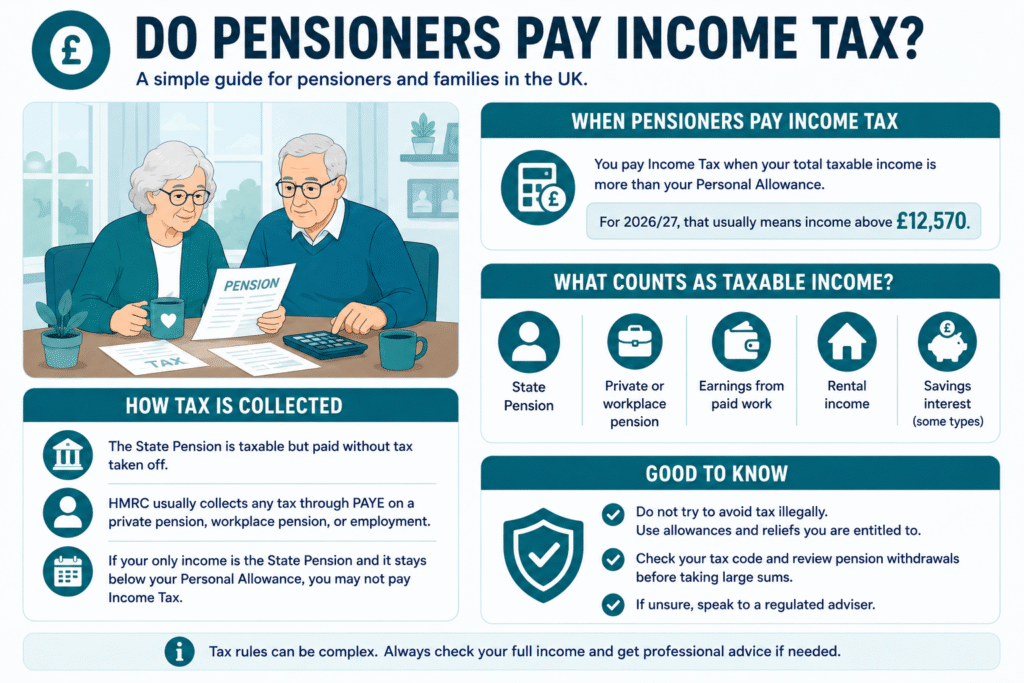
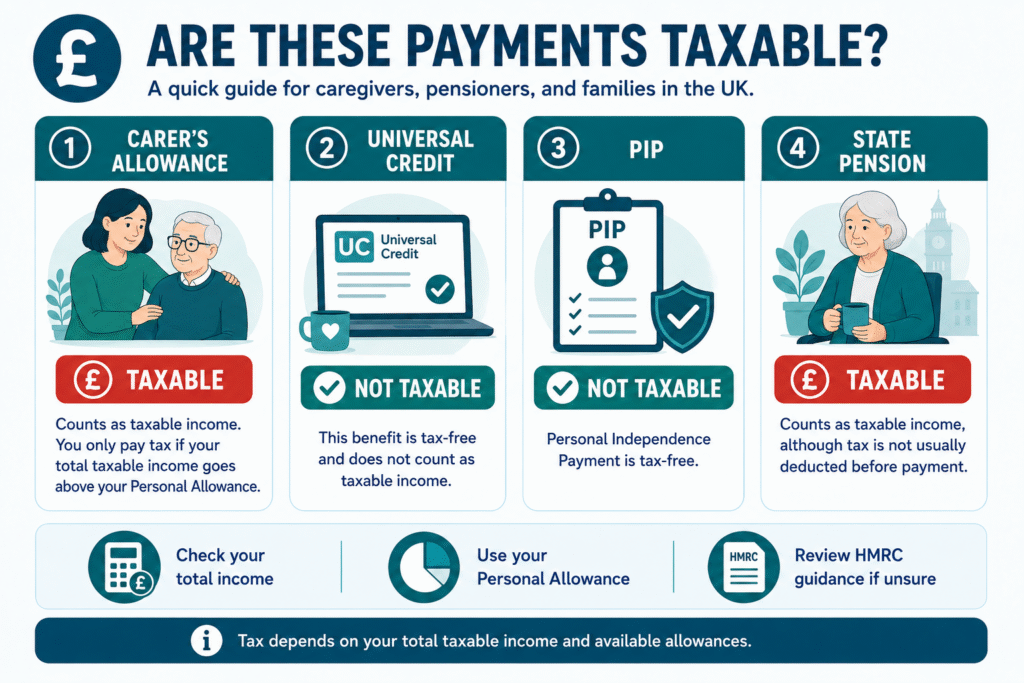
    Carer’s Allowance and Carer Support Payment count as taxable income. This does not mean every carer will pay tax. It means the payment forms part of your taxable income, and you may pay tax if your total income goes above the personal tax allowance. Scottish guidance also says Carer Support Payment will usually only be taxed where the person’s taxable income is above the personal allowance.

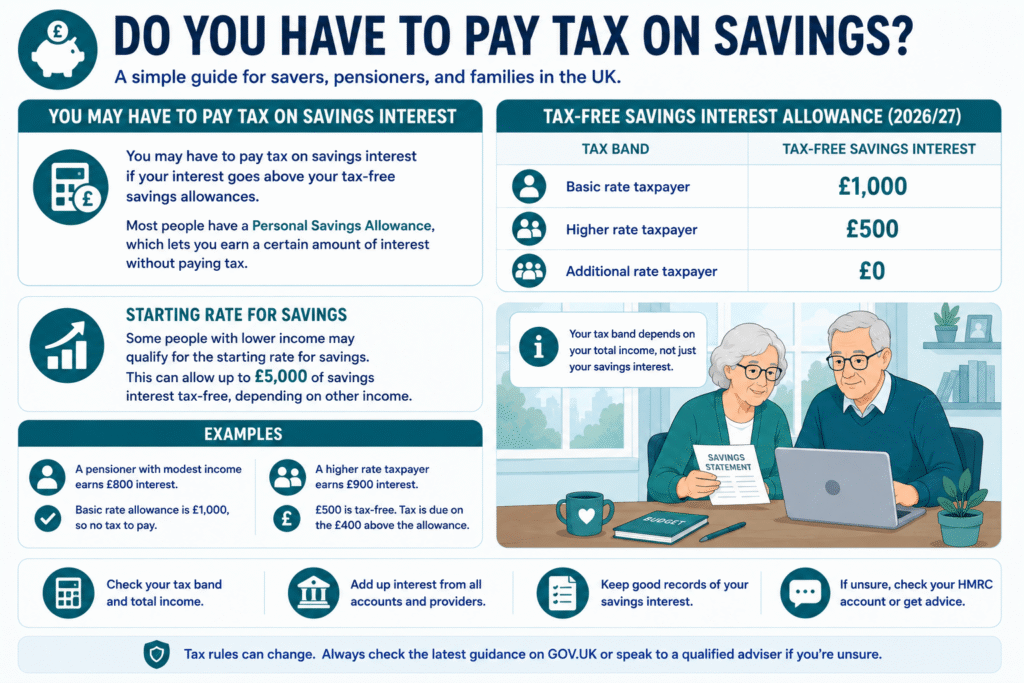
    Carer’s Allowance is not means tested in the same way as Universal Credit. However, it does have an earnings limit. For 2026/27, GOV.UK lists the Carer’s Allowance earnings limit as £204 per week. Social Security Scotland also says Carer Support Payment has a take-home pay limit of £204 a week after tax, National Insurance, and allowed expenses. 

    So, is Carer’s Allowance means tested? Not in the usual benefit-assessment sense, but your earnings can still stop you from qualifying. That is why carers who work part-time, run a small business, or have changing hours should track earnings carefully before assuming they qualify.

    Can You Get Carers Allowance and PIP?

    Yes, you can get Carers Allowance and PIP in some situations, but the rules depend on who receives each benefit.

    If you receive PIP for your own health condition or disability, you may still claim Carer’s Allowance or Carer Support Payment for caring for someone else, as long as you meet the caring rules. You usually need to provide care for 35 hours or more a week, and the person you care for must receive a qualifying disability benefit.

    However, you do not usually claim Carer’s Allowance for caring for yourself. The carer benefit supports someone who provides care to another person.

    Families also ask, can you claim Carers Allowance for 2 people? You cannot get two full Carer’s Allowance payments for caring for two different people. In Scotland, if you receive Carer Support Payment and care for more than one person, you may qualify for Carer Additional Person Payment, currently £41.60 every 4 weeks for each additional person you care for.

    So, can I claim Carers Allowance and PIP? Possibly, yes, but only when you care for someone else and meet the eligibility rules. Check the qualifying benefit, your caring hours, your earnings, and whether anyone else already claims as the main carer for the same person.

    MORE: Universal Credit Compensation DWP: Can You Claim Money Back in 2026?

    What About Carers Allowance Supplement in England?

    Carers allowance supplement payment details

    Carers Allowance Supplement is a Scottish payment. Carers in England do not receive Scottish Carer Supplement or Carer’s Allowance Supplement.

    If you live in England, you may still be able to claim Carer’s Allowance if you care for someone for at least 35 hours a week and they receive a qualifying disability benefit. GOV.UK lists Carer’s Allowance as £86.45 a week for 2026/27.

    If you claim Universal Credit, you may also qualify for the carer element. GOV.UK explains that Universal Credit can include an extra amount for caring, but you need to report your caring role through your Universal Credit account.

    So, if someone searches Carers Allowance Supplement England, the answer is simple: England does not have this Scottish supplement. English carers should check Carer’s Allowance, Universal Credit carer element, local council carer’s assessments, and any local support available through their council or carer support service.

    Final Thoughts…

    Caring affects more than your diary. It can affect your income, energy, health, work, family life, and peace of mind. That is why carers should not ignore extra support like Carers Allowance Supplement, Scottish Carer Supplement, Carer Support Payment, or the Universal Credit carer element.

    If you care for someone in Scotland, check which benefit you currently receive. If you now receive Carer Support Payment, you will usually get Scottish Carer Supplement instead of the old twice-yearly Carers Allowance Supplement. If you still receive Carer’s Allowance, check your letters from Social Security Scotland so you know whether you still qualify for the June and December payments.

    Keep every payment letter, check your bank statements, and ask for advice if something does not look right. A missed payment, wrong benefit route, or unreported caring role can place extra pressure on a carer who already gives so much.

    The right support will not remove every challenge, but it can help carers plan better, protect their wellbeing, and continue caring with more confidence.

    Need Help Understanding Carer Support?

    Caring for someone can affect your time, income, health, and peace of mind. Knowing which payments apply, when support is paid, and what you may be entitled to can make planning much easier.

    At Care Sync Experts, we help carers, families, and care providers understand care-related support with confidence.

    Explore our practical care guides to make safer, clearer, and better-informed care decisions every day.

    FAQ

    Who cannot claim Carers Allowance?

    You usually cannot claim Carer’s Allowance if you do not care for someone for at least 35 hours a week, if the person you care for does not receive a qualifying disability benefit, if you earn over the earnings limit, or if you are in full-time education. In Scotland, new claims usually go through Carer Support Payment instead of Carer’s Allowance.

    How do I claim Carer’s Allowance?

    You can claim Carer’s Allowance online through GOV.UK or by post using the DS700 claim form. If you live in Scotland, you should apply for Carer Support Payment instead of Carer’s Allowance.

    How much is Carer Support Payment?

    Carer Support Payment is currently £83.30 a week if you are eligible. Social Security Scotland usually pays it every 4 weeks, although some people can receive weekly payments in special circumstances, such as terminal illness rules. 

    Do carers still get $600?

    The $600 Carer Supplement is an Australian payment, not a UK or Scottish payment. Services Australia says eligible carers can receive an annual $600 supplement for each qualifying payment, and they do not need to apply separately.

  • Support Hose Compression: Benefits, Side Effects, and Safe Use

    Support Hose Compression: Benefits, Side Effects, and Safe Use

    Support hose compression helps improve blood flow in the legs by applying gentle pressure, usually strongest around the ankle and lighter as it moves up the leg. This pressure helps push blood and fluid upward, which can reduce swelling, ease heavy or tired legs, and support people who struggle with poor circulation.

    People often ask, what do support hose do or what are compression socks used for? In simple terms, they help the legs move blood back toward the heart instead of allowing blood or fluid to pool around the feet, ankles, and lower legs.

    For caregivers, the goal is not just to help someone put them on. The real goal is to make sure the person wears the right type, at the right time, for the right reason. A poorly fitted stocking can cause pain, skin irritation, deep marks, or circulation problems.

    Support hose and compression stockings can help many older adults, people with swollen legs, people who sit or stand for long periods, and some people recovering from surgery. However, they do not suit everyone.

    Anyone with fragile skin, open wounds, severe leg pain, diabetes-related circulation problems, or suspected poor blood flow should speak to a healthcare professional before using them.

    Get expert support for your next tender, inspection-ready policies, or CQC registration — book a call with Care Sync Experts today and let’s get you compliant and competitive.

    What Do Support Hose Do?

    CQC Registered Manager Training Evidence: What You Need (2026)

    Support hose gently squeeze the legs to help blood move upward toward the heart. They also help reduce fluid build-up around the ankles, feet, and lower legs, especially when someone sits, stands, or moves less than usual.

    So, where does the fluid go when wearing compression stockings? The fluid does not simply disappear. The pressure helps move excess fluid back into the body’s normal circulation and drainage systems, where the body can process it more effectively.

    From a caregiver’s point of view, support hose can make daily care easier when they work well. The person may feel less heaviness in their legs, move more comfortably, and experience less swelling by the end of the day.

    However, caregivers should not only check whether the stockings are on. They should also check how the legs respond. Look for comfort, normal skin colour, warm toes, reduced swelling, and no deep marks. If the stockings cause pain, numbness, cold feet, blue toes, or skin damage, remove them and ask for medical advice.

    RELATED: The 5 Principles of Mental Capacity Act: A Practical Guide for 2026

    Who Should Wear Compression Socks?

    People often ask who should wear compression socks because leg swelling, aching, and poor circulation can affect daily comfort. Compression socks may help people who stand or sit for long periods, travel long distances, have heavy legs, swollen ankles, varicose veins, or reduced mobility.

    They may also help some people after surgery, during pregnancy, or when a healthcare professional recommends support for circulation or clot prevention. In these cases, the right pressure level matters. A light support sock may suit tired legs, but medical-grade compression needs proper guidance.

    Caregivers should pay close attention when supporting older adults or people with health conditions. Compression can help the right person, but it can harm someone with poor arterial blood flow, fragile skin, open wounds, severe leg pain, untreated infection, or certain diabetes-related circulation problems.

    So, who should not wear compression socks without medical advice? Anyone with numbness, cold feet, blue or pale toes, active leg ulcers, severe peripheral artery disease, or unexplained swelling should speak to a GP, nurse, pharmacist, or vascular specialist first.

    The best time to wear compression socks is usually during the day, especially when the person will sit, stand, travel, or move around. The safest choice always depends on the person’s condition, comfort, and professional advice.

    How Long Should You Wear Compression Socks?

    Can you wear compression socks to bed?
    Can you wear compression socks to bed?

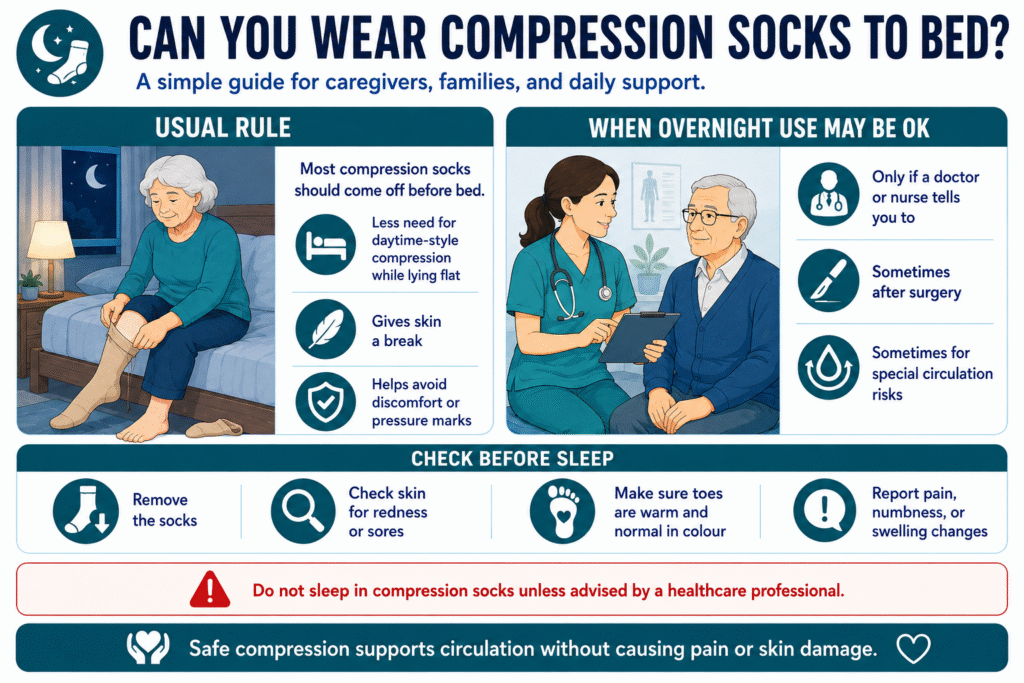
    Most people wear compression socks during the day and remove them before going to bed, unless a healthcare professional gives different instructions. The best routine usually starts in the morning, before swelling builds up in the feet and ankles.

    So, how long should you wear compression socks? For general daytime support, many people wear them during active hours, especially when they sit, stand, travel, or move around. If a doctor or nurse prescribed them, follow their exact instructions on how long to wear compression socks or stockings each day.

    Caregivers should build compression use into the person’s normal routine. Help them put the socks on after washing and drying the skin in the morning. Remove them later in the day or before bed, then check the skin for redness, soreness, deep marks, irritation, or colour changes.

    The same rule applies when families ask how long to wear compression stockings. The answer depends on the person’s condition, the compression level, and whether the stockings are for mild swelling, varicose veins, travel, reduced mobility, or post-surgery recovery. When in doubt, ask a GP, nurse, pharmacist, or specialist before extending wear time.

    READ MORE: Universal Credit Compensation DWP: Can You Claim Money Back in 2026?

    Can You Wear Compression Socks to Bed?

    Many families ask, can you wear compression socks to bed or should you wear compression socks to bed? For most over-the-counter compression socks, the answer is no, unless a healthcare professional tells the person to wear them overnight.

    During the day, gravity pulls blood and fluid down into the legs, especially when someone sits or stands for long periods. Compression helps push that fluid upward. At night, the person lies flat, so the legs do not fight gravity in the same way. Wearing compression socks unnecessarily during sleep may irritate the skin, leave marks, or affect comfort and circulation.

    So, why should you never wear compression socks at night without advice? Because the wrong pressure, poor fit, or long wear time can cause problems, especially for older adults, people with fragile skin, diabetes, poor circulation, or reduced feeling in their feet.

    There may be medical situations where a doctor recommends overnight use, especially after surgery or for specific circulation risks. In that case, follow the care instructions exactly.

    Caregivers should remove compression socks at night unless told otherwise, check the skin, and report pain, numbness, colour changes, cold toes, or sores. The benefits of wearing compression socks to bed only apply when a healthcare professional confirms that overnight use is safe and necessary.

    When to Remove Compression Stockings After Surgery

    After surgery, the hospital team should tell the person when to remove compression stockings after surgery and how long to keep using them. Some people only need them for a short period, while others may need them for longer if they have reduced mobility, a higher clot risk, or a slower recovery.

    Caregivers should not guess the timing. Follow the surgeon’s, nurse’s, or physiotherapist’s instructions, especially if the stockings were given to reduce the risk of deep vein thrombosis, also called DVT.

    In many cases, the person may need to wear the stockings during the day and remove them for washing, skin checks, or as directed by the care team. If the person must wear them for long periods, caregivers should check the skin daily. Look for redness, pressure marks, pain, swelling, numbness, cold toes, or colour changes.

    Do not stop post-surgery compression early without medical advice. Also, do not leave stockings on continuously without checking the skin. Safe use means balancing clot prevention with comfort, hygiene, and skin protection.

    SEE ALSO: Band C Council Tax Per Month: What You Should Know in 2026

    How to Put On Compression Socks Safely

    Support Hose Compression 2026
    Support Hose Compression 2026

    Many people struggle with compression socks because they fit tighter than normal socks. Caregivers can make the process easier by using a calm routine and checking the fit carefully.

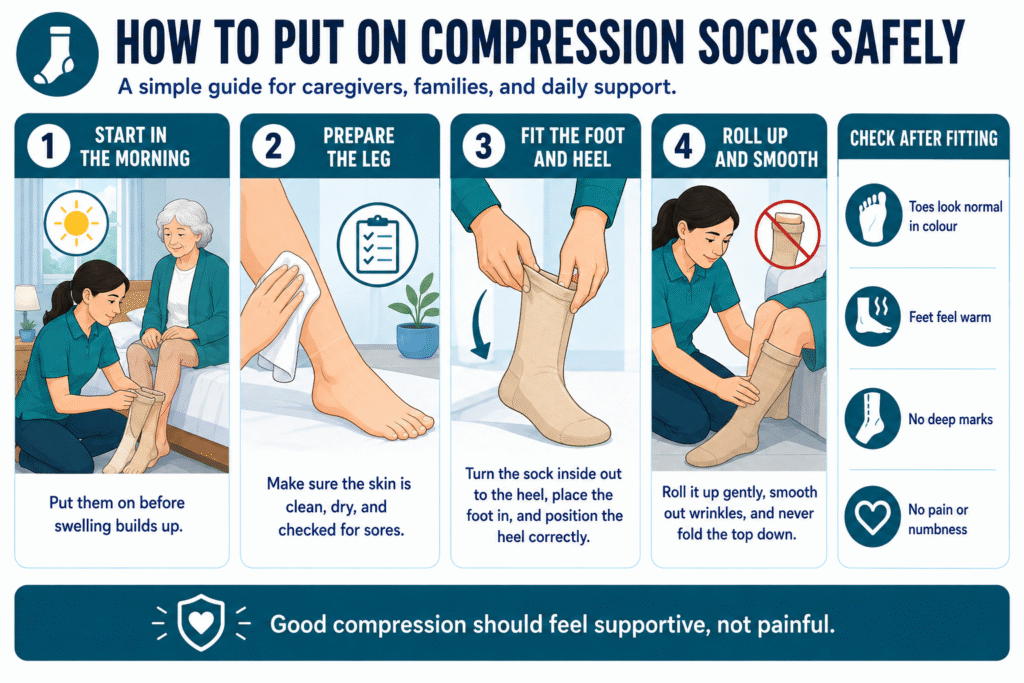
    Here is how to put on compression socks safely:

    1. Start in the morning before the legs swell.
    2. Make sure the skin is clean and dry.
    3. Remove jewellery that could snag the fabric.
    4. Turn the sock inside out down to the heel.
    5. Place the foot into the sock and fit the heel correctly.
    6. Gently roll the sock up the leg.
    7. Smooth out wrinkles as you go.
    8. Do not fold the top down.
    9. Check that the toes look normal in colour and feel warm.

    If someone asks, how do you put on compression stockings when the person cannot bend easily, use a stocking aid or ask a nurse, pharmacist, or trained carer to demonstrate the safest method.

    Never pull hard against fragile skin. Do not force the stocking over swelling, wounds, or pain. After putting it on, check that the person feels comfortable and that the stocking does not dig into the skin.

    Side Effects of Wearing Compression Stockings

    The side effects of wearing compression stockings usually happen when the stockings fit badly, use the wrong pressure level, or stay on too long without skin checks. Most people feel mild tightness at first, but compression should not cause strong pain, numbness, or changes in skin colour.

    Possible side effects include:

    • Skin irritation or itching
    • Redness or pressure marks
    • Pain or tightness
    • Numbness or tingling
    • Cold feet or toes
    • Deep marks around the calf or ankle
    • Worsening swelling above or below the stocking
    • Blisters, sores, or broken skin

    Caregivers should check the skin every day, especially for older adults, people with diabetes, fragile skin, reduced feeling in the feet, or limited mobility. Remove the stockings and seek medical advice if the leg becomes painful, cold, blue, very swollen, numb, or if the skin breaks down.

    Compression should support circulation, not restrict it. If the person feels worse after wearing them, stop using them until a healthcare professional checks the fit, pressure level, and reason for use.

    MORE: Income Taxation UK: A Simple Guide for Care Businesses (2026)

    Choosing the Right Compression Level

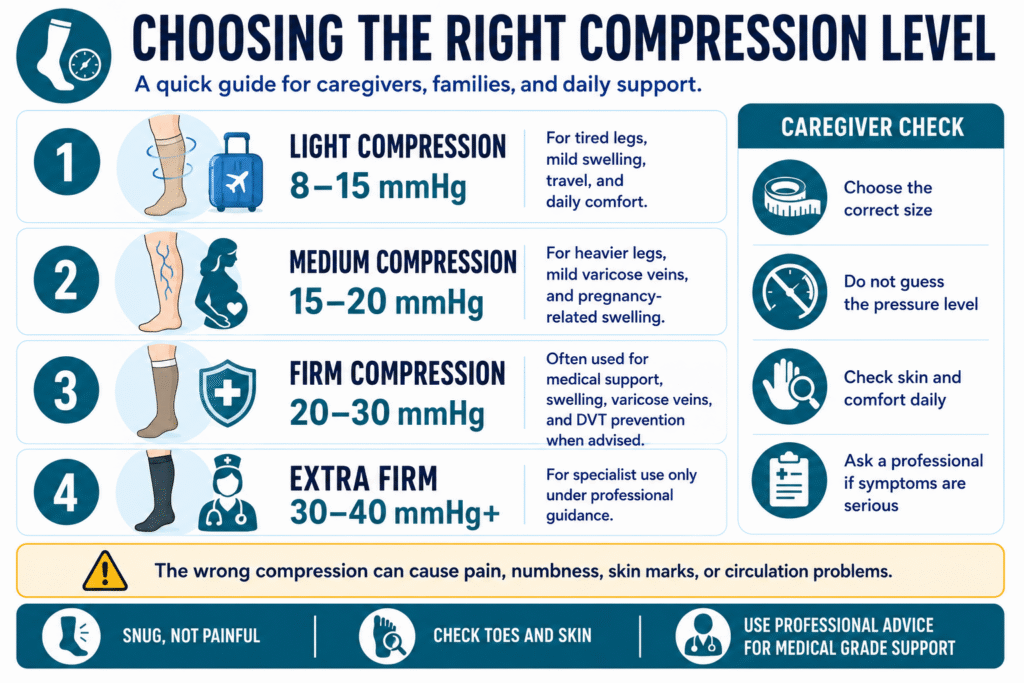
    Support hose compression comes in different pressure levels, usually measured in mmHg. The higher the number, the firmer the pressure. Caregivers should not choose a strong compression level just because swelling looks serious. The wrong pressure can cause discomfort or restrict circulation.

    Compression levelCommon use
    Light compressionTired legs, mild swelling, travel, or long periods of standing
    Medium compressionHeavier legs, mild varicose veins, pregnancy-related swelling, or general support
    Firm compressionMedical use for swelling, varicose veins, or clot prevention when advised
    Extra firm compressionSpecialist use for more complex circulation or lymphatic conditions

    For everyday tired legs, light support may be enough. For medical conditions, surgery recovery, severe swelling, or suspected circulation problems, a GP, nurse, pharmacist, or vascular specialist should recommend the correct type.

    A caregiver should also check the fit, not just the pressure level. The stocking should feel snug, but it should not cause pain, numbness, blue toes, cold feet, or deep marks. Safe support starts with the right size, the right compression level, and regular skin checks.

    Caregiver Checklist Before and After Use

    Choosing the right compression level guide

    Caregivers play an important role in making support hose compression safe. Before putting the stockings on, check the person’s legs, skin, comfort, and reason for using them.

    Before use, ask:

    • Has a healthcare professional recommended compression for this person?
    • Is the size correct?
    • Is the pressure level suitable?
    • Is the skin clean and dry?
    • Are there cuts, wounds, ulcers, blisters, or signs of infection?
    • Are the feet warm and normal in colour?
    • Does the person have pain, numbness, or new swelling?

    After use, check again:

    • Did the stockings leave deep marks?
    • Did the person feel pain, tingling, or numbness?
    • Did swelling improve or get worse?
    • Are the toes warm and normal in colour?
    • Is the skin still intact?

    This quick check helps caregivers spot problems early. Compression socks should make the person feel supported, not trapped, sore, or unsafe. If anything looks unusual, remove the stockings and ask a GP, nurse, pharmacist, or specialist for advice before using them again.

    Final Thoughts…

    Support hose compression can help many people feel more comfortable, reduce leg swelling, and support healthier blood flow when they use the right product correctly. But compression is not something caregivers should treat casually, especially when supporting older adults or people with fragile skin, diabetes, poor circulation, wounds, or post-surgery recovery needs.

    The safest approach is simple: choose the right size, use the right pressure level, put the stockings on properly, remove them at the right time, and check the skin every day.

    If the person feels pain, numbness, coldness, colour changes, worsening swelling, or skin damage, remove the stockings and ask for medical advice. Good compression should support the legs, not create new problems.

    For caregivers, the aim is not just to help someone wear compression socks. The aim is to protect comfort, circulation, skin health, and confidence while helping the person stay as mobile and safe as possible.

    Need Support Making Care Safer and Easier?

    If someone you care for uses support hose compression, small daily checks can make a big difference. The right stockings may reduce swelling and improve comfort, but the wrong fit, pressure, or routine can cause pain, skin damage, or circulation problems.

    At Care Sync Experts, we help caregivers, families, and care providers understand everyday care needs with more confidence. From mobility support and personal care to safety checks and practical health guidance, our resources help you make better decisions for the people who depend on you.

    If an older adult or vulnerable person you support struggles with swollen legs, reduced mobility, fragile skin, or post-surgery recovery, do not guess. Check the fit, watch for warning signs, and seek medical advice when symptoms change.

    Care Sync Experts provides care-focused guidance to help families and care teams deliver safer, more informed, and more compassionate support every day.

    FAQ

    Is it good to wear compression stockings every day?

    Yes, it can be good to wear compression stockings every day if a healthcare professional has recommended them or if you use the correct low-level support for general leg comfort.

    Many NHS-style patient guides advise daily wear, usually putting them on in the morning and removing them at night. The key is fit: they should feel snug, not painful, and any red marks should fade after removal.

    What works better than compression socks?

    It depends on the reason for swelling or poor circulation. For some people, leg elevation, walking, calf exercises, weight management, wound care, medication, lymphoedema therapy, or medical treatment for vein disease may work better or may need to be combined with compression.

    For lymphoedema, the NHS explains that exercise and compression together help move fluid out of the affected limb.

    Do compression socks cause you to urinate more?

    Compression socks do not directly “make” you urinate, but some people may notice more urination after swelling reduces. This can happen because compression helps move excess fluid from the legs back into circulation, and the body may later remove some of that fluid through the kidneys. This is more likely when someone has noticeable leg swelling or fluid retention.

    What happens if you stop wearing compression stockings?

    If you stop wearing compression stockings, the original problem may return. Swelling, heaviness, aching, fluid build-up, or vein symptoms can come back, especially if the stockings were controlling venous insufficiency, lymphoedema, varicose veins, or post-surgery clot risk.

    Do not stop prescribed compression suddenly without asking the GP, nurse, pharmacist, or specialist who recommended it. NHS guidance notes that compression garments help prevent fluid accumulating again in lymphoedema care.

  • The 5 Principles of Mental Capacity Act: A Practical Guide for 2026

    The 5 Principles of Mental Capacity Act: A Practical Guide for 2026

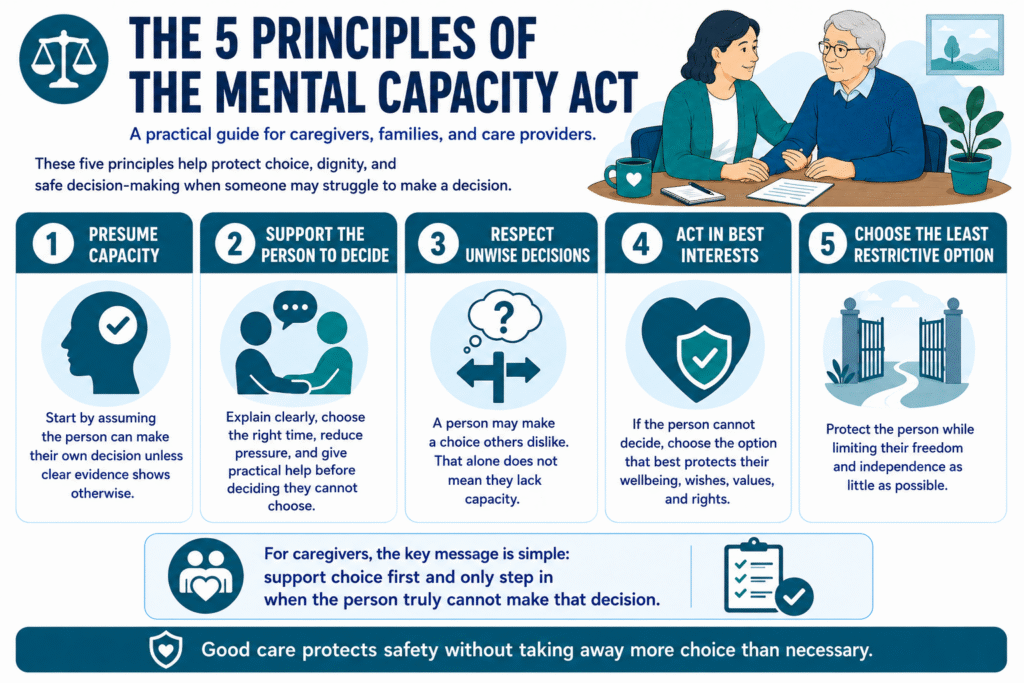
    The 5 principles of Mental Capacity Act guide how caregivers, families, and care providers support people who may struggle to make certain decisions. These principles come from the Mental Capacity Act 2005, which applies in England and Wales and protects people aged 16 and over.

    The five principles are simple but powerful: presume the person has capacity, support them to make their own decision, respect their right to make an unwise decision, act in their best interests if they lack capacity, and choose the least restrictive option.

    For caregivers, the message is clear: do not take over too quickly. A person may need time, reassurance, simpler information, or a better way to communicate before they can decide.

    Good care starts by protecting choice. Before a care worker makes or supports a decision, they should ask: Can this person decide with the right support? That question sits at the heart of safe, respectful, person-centred care.

    Get expert support for your next tender, inspection-ready policies, or CQC registration — book a call with Care Sync Experts today and let’s get you compliant and competitive.

    What Is the Mental Capacity Act?

    CQC Interview Preparation: 5 Days, Night Sessions, She Passed

    The Mental Capacity Act 2005 is a law that protects people who may not be able to make a specific decision for themselves. It also guides caregivers, families, health professionals, and care providers on how to support decisions safely and respectfully.

    So, what does MCA stand for? MCA stands for Mental Capacity Act.

    A simple Mental Capacity Act 2005 summary is this: the law helps people make their own decisions wherever possible. When someone cannot make a specific decision, the law tells caregivers and professionals how to act in that person’s best interests while protecting their rights and freedom.

    In daily care, the MCA can apply to decisions about personal care, medication, meals, clothing, going out, managing money, hospital appointments, care visits, or moving into a care home.

    The Act does not tell caregivers to control people. It tells them to support choice first, assess capacity properly, and only step in when the person truly cannot make that decision.

    RELATED: What Is Respite Care in the UK? 2026

    What Is Mental Capacity?

    Mental capacity means a person can make a specific decision at the time they need to make it. It is not about age, diagnosis, disability, or how someone looks. It is about whether the person can understand the decision, think through the information, and communicate what they want.

    Capacity can change from one decision to another. A person may choose what to wear, what to eat, or when to go to bed, but still struggle with a bigger decision such as managing money, refusing care, or moving into a care home.

    Capacity can also change during the day. Someone may feel confused in the evening but clearer in the morning. Another person may decide better when a caregiver explains things slowly, uses pictures, gives them time, or removes pressure.

    For caregivers, this matters because you should not say, “They lack capacity” in a general way. You should ask, “Can this person make this decision, at this time, with the right support?”

    Who Does the Mental Capacity Act Apply To?

    Guide for assessing decision-making capacity

    The Mental Capacity Act applies to people aged 16 and over in England and Wales who may lack capacity to make a specific decision. It also applies to anyone who supports or makes decisions for that person, including care workers, nurses, doctors, social workers, family members, attorneys, and care providers.

    So, who does the Mental Capacity Act 2005 protect? It protects people who may struggle to make decisions because of dementia, learning disabilities, brain injury, mental health conditions, stroke, serious illness, confusion, unconsciousness, or another impairment affecting the mind or brain.

    Caregivers must not assume someone lacks capacity because they are elderly, disabled, distressed, forgetful, or living with a diagnosis. The law expects workers to start with respect: assume the person can decide unless an assessment shows otherwise.

    In practice, who does the MCA apply to? It applies whenever a caregiver supports a person who may not understand, retain, weigh up, or communicate a decision at the time it needs to happen.

    READ MORE: Universal Credit Compensation DWP: Can You Claim Money Back in 2026?

    The 5 Principles of the Mental Capacity Act

    There are five statutory principles within the MCA. Every caregiver should understand them because they shape how care workers support choice, safety, dignity, and rights.

    1. Presume capacity

    Start by assuming the person can make their own decision. Do not decide they lack capacity because of age, dementia, disability, appearance, or behaviour. Always begin with the belief that the person can decide unless there is clear evidence they cannot.

    2. Support the person to decide

    Before you say someone cannot decide, give them practical support. Use simple words, pictures, familiar routines, quiet spaces, or a trusted person. Choose the best time of day and give the person enough time to respond.

    3. Respect unwise decisions

    A person can make a choice that others see as unwise. That alone does not mean they lack capacity. Caregivers should focus on how the person makes the decision, not whether they personally agree with it.

    4. Act in best interests

    If the person cannot make the decision, workers must act in their best interests. This means considering their wishes, beliefs, values, safety, wellbeing, family input, and what they would likely choose if they could decide.

    5. Choose the least restrictive option

    When someone lacks capacity, choose the option that protects them while limiting their freedom as little as possible. Good care should reduce risk without taking away more control than necessary.

    So, how many core principles are in the Mental Capacity Act? There are five. These 5 principles of Mental Capacity Act remind caregivers to support choice first and only step in when the person truly cannot decide.

    How Do You Assess Mental Capacity?

    How to assess mental capacity
    How to assess mental capacity

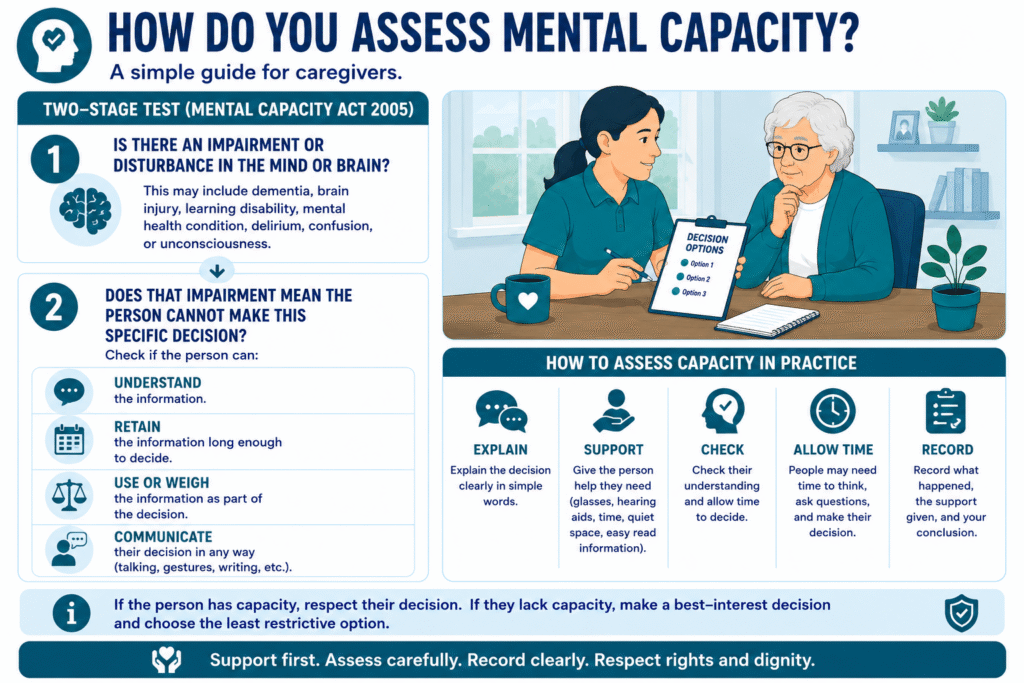
    Assessing mental capacity means checking whether a person can make a specific decision at the time the decision needs to happen. Caregivers should never assess capacity in a general way. They should focus on one decision at a time.

    The Mental Capacity Act uses a two-stage test. First, ask whether the person has an impairment or disturbance in the mind or brain. This may include dementia, brain injury, learning disability, mental health condition, delirium, confusion, or unconsciousness.

    Second, ask whether that impairment means the person cannot make the specific decision. To decide this, check whether the person can:

    • Understand the information
    • Retain the information long enough to decide
    • Use or weigh the information
    • Communicate their decision in any way

    So, how do you assess mental capacity in care? You explain the decision clearly, give the person support, check their understanding, allow time, and record what happened.

    Good caregivers do not rush this process. They support first, assess carefully, and document the reason for any decision made on the person’s behalf.

    SEE ALSO: Band C Council Tax Per Month: What You Should Know in 2026

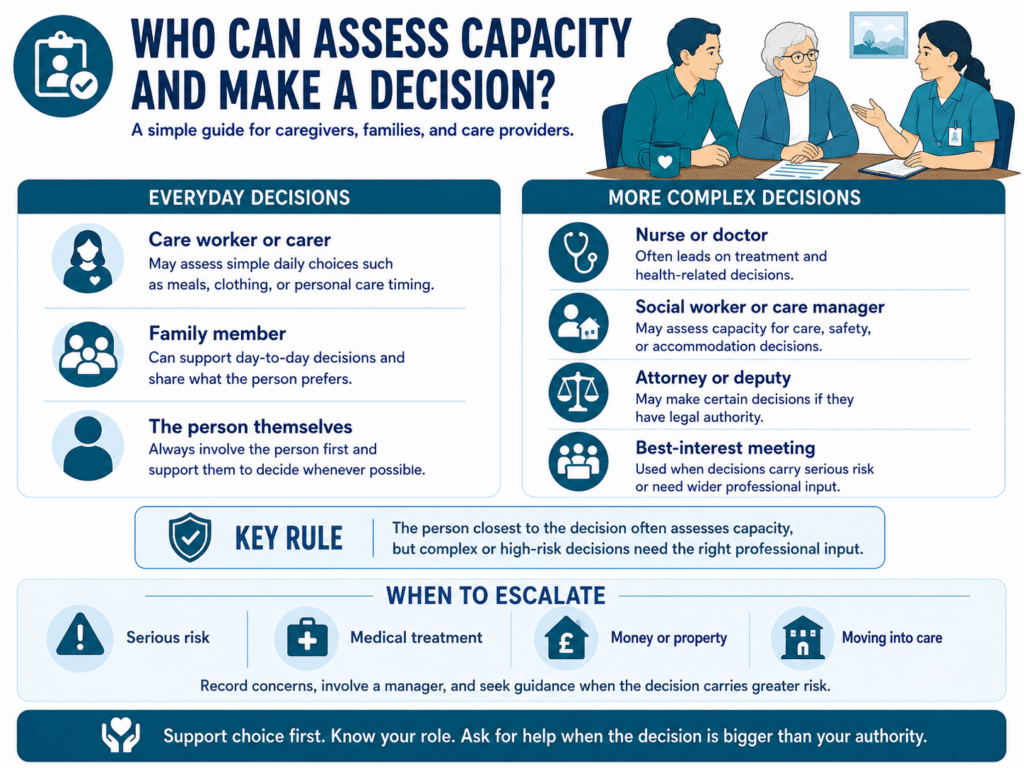
    Who Can Assess Capacity and Make a Decision?

    The person who needs the decision made usually assesses capacity for that decision. In daily care, this may be a care worker, nurse, care manager, social worker, doctor, or family member, depending on the type of decision.

    For simple everyday choices, such as what to wear, what to eat, or whether to have a shower now or later, a care worker may assess whether the person can decide. For more serious decisions, such as medical treatment, moving into a care home, managing money, or refusing important care, the right professional should take the lead.

    So, who can assess capacity and make a decision? The answer depends on the decision. The person closest to the decision should assess capacity, but complex or high-risk decisions often need senior staff, health professionals, social workers, attorneys, deputies, or a best-interest meeting.

    Caregivers should know their limits. If a decision carries serious risk, they should record concerns, involve a manager, and seek professional guidance before acting.

    When Must a Care Worker Comply With the Mental Capacity Act 2005?

    The 5 Principles of Mental Capacity Act
    The 5 Principles of Mental Capacity Act

    A care worker must comply with the Mental Capacity Act 2005 whenever they support or make a decision for someone aged 16 or over who may lack capacity for that specific decision.

    This can happen during ordinary care. For example, a person may refuse personal care, decline medication, choose unsafe food, want to go outside alone, reject care visits, or disagree with moving into a care home. In each situation, the worker must ask whether the person can understand the decision, weigh the risks, and communicate their choice.

    To describe when a worker must comply with the Mental Capacity Act 2005, keep it simple: comply whenever a person’s ability to decide may be affected by dementia, brain injury, learning disability, mental health condition, confusion, illness, or another impairment of the mind or brain.

    Care workers should not force support because they feel worried. They should explain, encourage, assess, record, and involve a manager or professional when risk increases. The MCA protects the person’s rights while guiding workers to act safely and lawfully.

    MORE: Income Taxation UK: A Simple Guide for Care Businesses (2026)

    What Does DoLS Allow You to Do?

    DoLS means Deprivation of Liberty Safeguards. It applies when a person in a hospital or care home lacks capacity to agree to care arrangements that may restrict their freedom.

    So, what does a DoLS allow you to do? It gives a legal framework for providing necessary care when restrictions protect the person from harm. For example, staff may need to supervise the person closely, stop them from leaving unsafely, or keep them in a care setting because they cannot understand the risks.

    However, DoLS does not give care providers permission to ignore someone’s rights. It requires proper assessment, clear reasons, best-interest decision-making, and regular review.

    From a caregiver’s perspective, DoLS should never feel like “control first.” Workers should still talk to the person, involve them as much as possible, respect their wishes, and choose the least restrictive option.

    Good care protects safety without removing more freedom than necessary.

    Final Thoughts…

    The 5 principles of Mental Capacity Act do not ask caregivers to take control away from people. They ask caregivers to protect choice for as long as possible.

    Good care starts with listening. Before you decide that someone cannot make a decision, explain the options clearly, reduce pressure, give them time, and check whether the right support could help them decide.

    Families and care workers should also remember this: mental capacity can change. A person may struggle today but decide more clearly tomorrow. They may refuse care in the morning but accept it later when they feel calmer or when a trusted caregiver explains it differently.

    When someone truly cannot decide, caregivers must act in their best interests and choose the least restrictive option. That means protecting safety while respecting dignity, rights, wishes, and independence.

    The Mental Capacity Act 2005 gives caregivers a practical rule for everyday care: support the person first, assess carefully, record clearly, and never remove choice without a lawful reason.

    Need Support Understanding Mental Capacity in Care?

    Making the right decision for someone who may lack capacity can feel difficult, especially when safety, dignity, family concerns, and legal responsibilities all matter at the same time.

    At Care Sync Experts, we help caregivers, families, and care providers understand important care topics in clear, practical language. Our goal is to make complex guidance easier to apply in real care situations, from supporting daily choices to recognising when a best-interest decision may be needed.
    If you care for someone who struggles with decisions about personal care, medication, safety, home routines, or moving into a care setting, do not guess your way through it. Learn the principles, ask the right questions, record clearly, and seek professional guidance when risks increase.

    Care Sync Experts provides care-focused insights, practical care guidance, and evidence-based resources to support safer, more confident care decisions every day.

    FAQ

    What are the 5 principles of care?

    The five commonly used principles of care are dignity, independence, privacy, choice, and safety. In practice, this means carers should treat people with respect, support them to do what they can for themselves, protect their personal information and private space, involve them in decisions, and reduce avoidable risks.

    Skills for Care also highlights values such as individuality, independence, privacy, partnership, choice, dignity, respect, and rights as part of person-centred care.

    What are the 5 C’s in care?

    People often ask about the 5 C’s in care, but in UK health and social care the more recognised framework is the 6 C’s: care, compassion, competence, communication, courage, and commitment. NHS England introduced these values to describe the behaviours expected from nursing, midwifery, and care staff.

    What are the 7 principles of care?

    The seven principles of care usually refer to values such as dignity, independence, privacy, choice, safety, equality, and inclusion. These principles help care workers provide support that respects the person, protects their rights, and keeps them involved in decisions about their care.

    CQC guidance also stresses that providers must treat people with dignity and respect while they receive care and treatment.

    What is Section 5 of the Mental Capacity Act?

    Section 5 of the Mental Capacity Act 2005 covers acts done in connection with a person’s care or treatment when that person lacks capacity to consent. In simple terms, it can protect carers and professionals from liability when they reasonably believe the person lacks capacity and they act in the person’s best interests.

    It does not allow careless or unnecessary restrictions; workers must still follow the MCA principles and choose the least restrictive option.

  • Universal Credit Compensation DWP: Can You Claim Money Back in 2026?

    Universal Credit Compensation DWP: Can You Claim Money Back in 2026?

    You may be able to claim Universal Credit compensation DWP if a DWP mistake, delay, poor service, or incorrect advice caused you financial loss, serious inconvenience, distress, or hardship.

    This does not mean every reduced Universal Credit payment leads to compensation. You need to show what went wrong, when it happened, and how it affected the claimant.

    For carers and family members, this matters because vulnerable claimants may not always spot an error quickly. Someone you support may miss a journal message, misunderstand a decision letter, struggle with the Universal Credit log in, or feel too overwhelmed to challenge DWP.

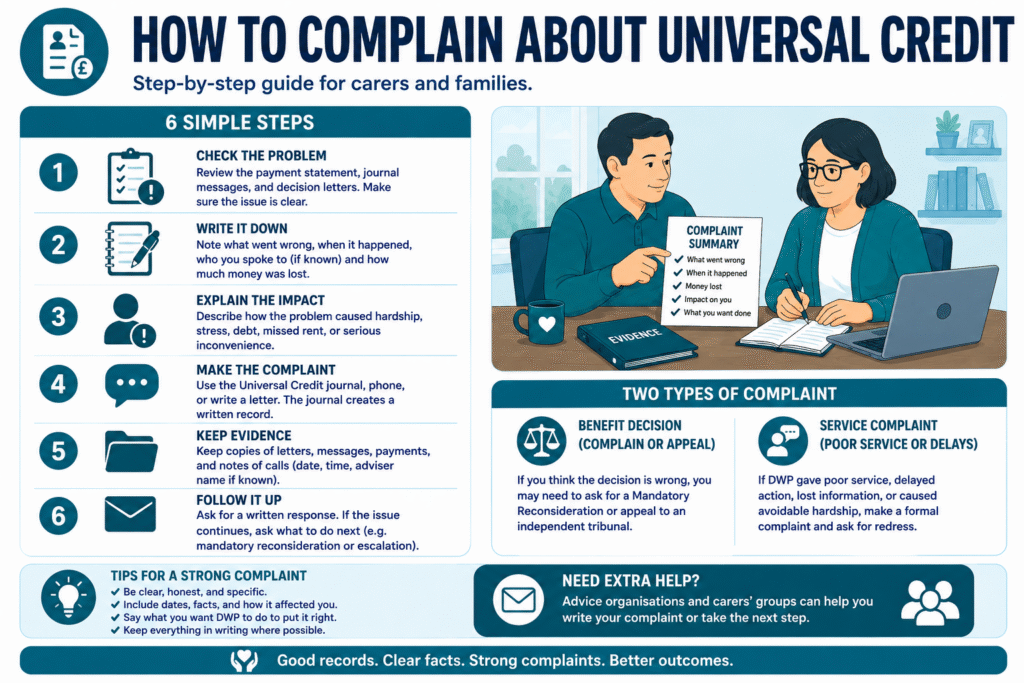
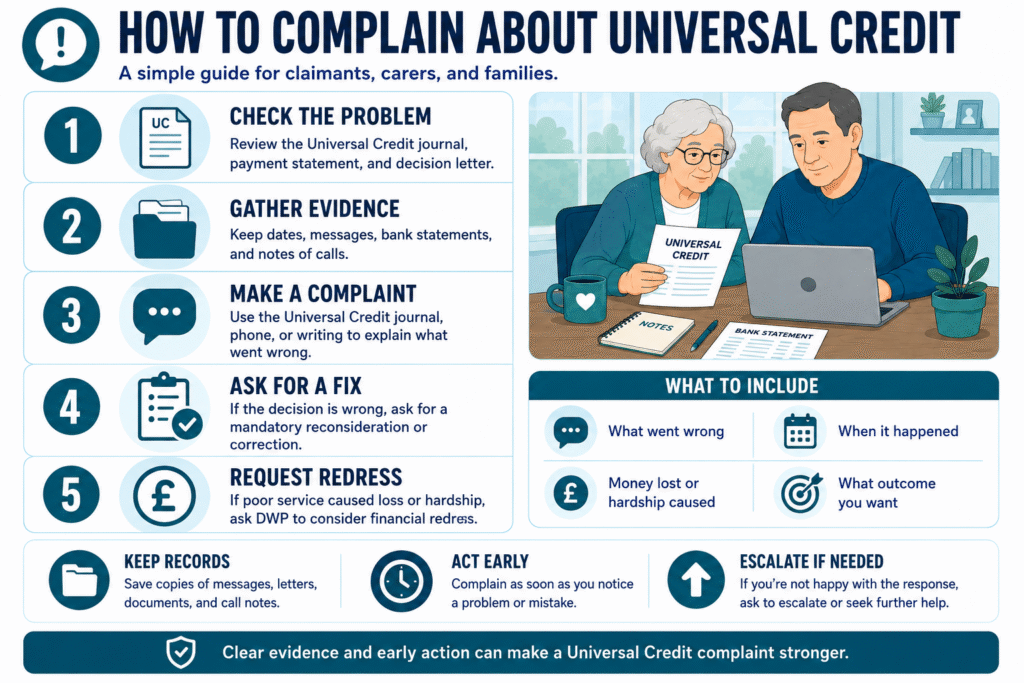
    There are different routes depending on the problem. Some people may qualify for the Successful Legacy Appeals Compensation Scheme if they lost money after moving from legacy benefits to Universal Credit because of a decision that later turned out to be wrong. Others may need to use the DWP complaints process and ask for financial redress.

    The key question is simple: did DWP’s action or failure cause a real loss or unfair hardship? If yes, it may be worth checking whether a Universal Credit compensation DWP claim or complaint applies.

    Get expert support for your next tender, inspection-ready policies, or CQC registration — book a call with Care Sync Experts today and let’s get you compliant and competitive.

    When Can DWP Pay Universal Credit Compensation?

    CQC Interview Questions 2026: 10 Red Flags That Get You Rejected

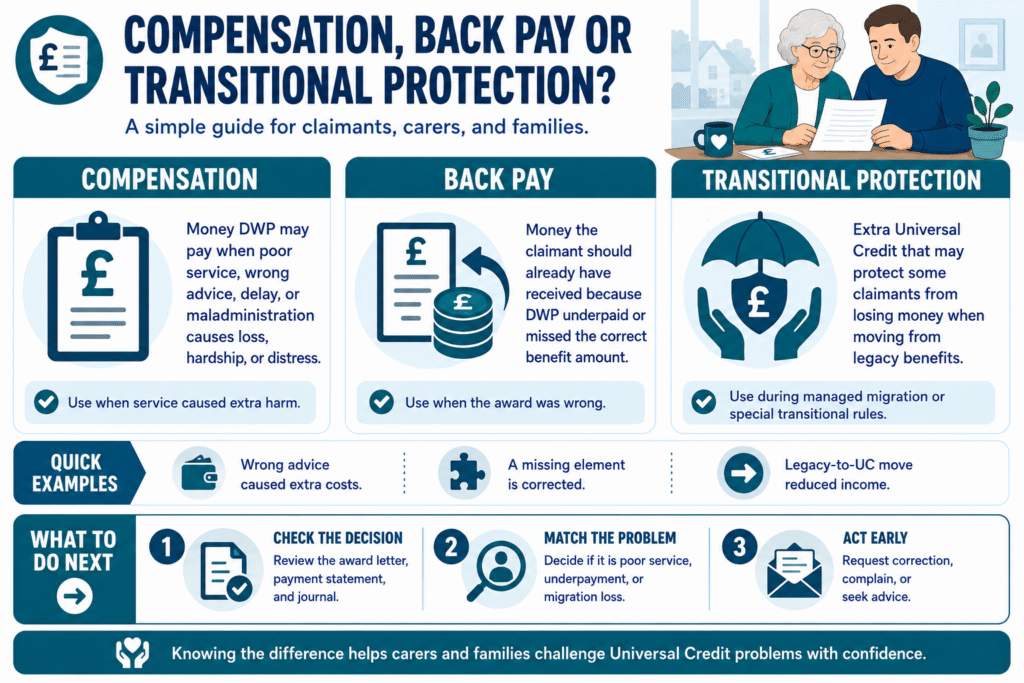
    DWP may pay compensation when its own error or poor service causes a claimant to lose money, face avoidable hardship, or suffer serious inconvenience. This can happen if DWP gives incorrect advice, delays action, misses evidence, sends confusing information, or handles a Universal Credit claim badly.

    However, compensation is different from normal Universal Credit back pay. If DWP simply underpaid someone, it should correct the award and pay the money owed. Compensation usually applies when the claimant suffered extra loss or distress because of the way DWP handled the case.

    There are three common routes:

    1. A corrected benefit decision — DWP pays arrears after fixing a wrong Universal Credit decision.
    2. Financial redress for poor service — DWP considers compensation for maladministration, delay, wrong advice, distress, or financial loss.
    3. A specific scheme — some claimants may qualify under the Successful Legacy Appeals Compensation Scheme.

    If you searched for Universal Credit compensation DWP 2025, check the latest rules before acting, because compensation schemes and benefit rates can change. For most people, the best first step is to gather evidence and make a formal complaint before considering whether to escalate further.

    RELATED: Moving From ESA Support Group to Universal Credit: What You Need to Know in 2026

    The Successful Legacy Appeals Compensation Scheme Explained

    The Successful Legacy Appeals Compensation Scheme helps a specific group of people who lost money after moving from legacy benefits to Universal Credit.

    This may apply if DWP stopped someone’s old benefit, the person claimed Universal Credit within one month, and they later won an appeal that showed the old benefit should not have ended. Because they had already moved to Universal Credit, they could not return to the legacy benefit, even though the original decision was wrong.

    To qualify, the claimant must usually show that:

    • they received a means-tested legacy benefit, such as income-related ESA, income-based JSA, Income Support, Housing Benefit, Child Tax Credit, or Working Tax Credit
    • DWP made a decision that ended that benefit
    • they claimed Universal Credit within one month of that decision
    • Universal Credit paid less than the old benefit
    • they challenged the decision and won

    This scheme does not cover every Universal Credit complaint. It focuses on people who lost money because an incorrect legacy benefit decision pushed them onto Universal Credit. For carers, the key job is to help the claimant find old letters, appeal decisions, payment statements, and dates, because those details can prove whether a Universal Credit compensation DWP claim fits this route.

    Compensation, Back Pay and Transitional Protection: What Is the Difference?

    Many people mix up compensation, back pay, and transitional protection, but they do not mean the same thing.

    TermWhat it means
    CompensationMoney DWP may pay when poor service, delay, wrong advice, or maladministration causes loss, distress, or serious inconvenience
    Back payMoney DWP already owed because the claimant should have received more Universal Credit or another benefit
    Transitional protectionExtra Universal Credit that may protect some people from losing money when they move from legacy benefits under managed migration
    Personal injury compensationLegal compensation for an injury, which may affect means-tested benefits if not handled correctly

    This matters because the next step depends on the problem. If DWP calculated the award wrongly, the claimant may need a correction or appeal. If DWP handled the case badly, they may need to complain and ask for financial redress. If the issue involves migration from legacy benefits, they may need to check transitional protection or the legacy appeals scheme.

    For carers, the safest approach is to separate the facts: what DWP should have paid, what DWP actually paid, and what extra harm the error caused. That makes any Universal Credit compensation DWP complaint clearer and harder to ignore.

    READ MORE: Band C Council Tax Per Month: What You Should Know in 2026

    What Evidence Should Carers and Families Gather?

    How to complain about Universal Credit
    How to complain about Universal Credit

    Before you complain, gather evidence. Do not rely on memory alone. DWP will look at dates, decisions, payment records, messages, and what impact the mistake had on the claimant.

    Start with the claimant’s Universal Credit log in. Check the journal, payment statements, deductions, housing costs, reported earnings, decision notices, and any messages from work coaches or case managers. Take screenshots or download records where possible.

    Carers and families should collect:

    • Universal Credit journal messages
    • decision letters
    • mandatory reconsideration notices
    • appeal decisions
    • bank statements showing missing or reduced payments
    • dates of phone calls or appointments
    • names of DWP staff, if available
    • evidence of extra costs, rent arrears, debt, hardship, or distress
    • medical or caring evidence if the claimant struggled to manage the claim

    Also keep the Universal Credit number and any reference numbers close by when contacting DWP.

    Strong evidence helps you explain what happened clearly: what DWP did, what should have happened, how much money the claimant lost, and why compensation or financial redress may be reasonable.

    How Earnings and Work Allowance Can Affect Universal Credit

    Earnings can reduce Universal Credit, so a lower payment does not always mean DWP made a mistake. If the claimant works, DWP usually looks at monthly earnings and adjusts the award for that assessment period.

    The Universal Credit work allowance is the amount some people can earn before their Universal Credit starts to reduce. A claimant may get a work allowance if they have responsibility for a child or have limited capability for work. After that allowance, Universal Credit reduces through the earnings taper.

    This is why people often ask, “how much Universal Credit will I get if I earn 1000 a month,” “how much Universal Credit will I get if I earn 1500 a month,” or “how much Universal Credit will I get if I earn 2000 a month.” The answer depends on the person’s Universal Credit standard allowance, rent, children, disability elements, caring responsibilities, deductions, savings, and work allowance.

    For carers, always check the payment statement before assuming DWP owes compensation. If the statement shows the wrong earnings, missing housing costs, incorrect deductions, or a missing element, challenge the calculation first. Compensation only becomes relevant if DWP’s error, delay, or poor service caused extra loss or hardship.

    SEE ALSO: Income Taxation UK: A Simple Guide for Care Businesses (2026)

    Savings, ISAs, Pensions and Compensation Payments

    Understanding compensation and benefits options

    Savings and lump sums can affect Universal Credit because it is a means-tested benefit. This means DWP looks at income, savings, investments, and some types of capital when working out entitlement.

    In most cases, savings over £6,000 can reduce Universal Credit, and savings over £16,000 can stop entitlement. So, if you are asking how much savings are you allowed on Universal Credit or how much saving can you have on Universal Credit, those two figures matter.

    ISAs usually count as savings, so the answer to do ISAs count as savings for Universal Credit is normally yes. DWP can also ask for bank statements or evidence of accounts, so families often ask, can Universal Credit check my savings account? DWP can request financial information when checking entitlement or investigating a claim.

    Pension income can also affect Universal Credit. If someone asks, does State Pension affect Universal Credit, the answer is yes: pension income can reduce entitlement. A pension lump sum may also affect Universal Credit if the claimant keeps it as capital, so ask for welfare advice if you are unsure how long does a pension lump sum affect Universal Credit.

    Personal injury compensation needs extra care. If someone asks does personal injury compensation affect benefits or can DWP take my compensation, get specialist advice before spending or moving the money. A properly handled compensation payment may receive different treatment, but mistakes can affect means-tested benefits.

    Does Universal Credit Affect Credit Score or Tax?

    Universal Credit does not usually appear as borrowing on a credit report, so receiving it should not directly damage a credit score. However, money problems linked to a reduced or delayed payment can still affect someone’s credit record. For example, missed rent, unpaid bills, overdrafts, loans, or debt arrangements may show on a credit file.

    So, if you ask does Universal Credit affect credit score, the benefit itself is not the main issue. The real risk comes when a claimant cannot pay essential bills because their Universal Credit stops, drops, or arrives late.

    Universal Credit is also not taxable. So, if you ask is UC taxable, the answer is no. Claimants do not pay income tax on Universal Credit.

    For carers, this matters because financial stress can build quickly. Check payment dates, deductions, rent support, and journal messages early, especially if the claimant already struggles with bills, debt, or budgeting.

    MORE: Wheelchair Parking Permit UK: Who Qualifies for a Blue Badge in 2026?

    Severe Disability Premium and Universal Credit

    Universal Credit Compensation DWP 2026?
    Universal Credit Compensation DWP 2026?

    Some claimants lost money when they moved from legacy benefits to Universal Credit, especially if their old award included a Severe Disability Premium. This issue matters because Severe Disability Premium gave extra support to some disabled people who lived alone, received a qualifying disability benefit, and did not have someone claiming Carer’s Allowance or the carer element for looking after them.

    So, who qualifies for Severe Disability Premium Universal Credit? Universal Credit does not include Severe Disability Premium in the same way legacy benefits did. Instead, some people may receive transitional protection or a transitional element if they moved across under certain rules.

    Carers should check the claimant’s old benefit letters, disability benefit awards, living situation, and Universal Credit migration history. Do not assume the award is correct just because DWP calculated it. If the claimant lost Severe Disability Premium after moving to Universal Credit, ask DWP to explain the calculation and whether any transitional protection applies.

    How to Complain About Universal Credit

    If you believe DWP made a mistake or handled a Universal Credit claim badly, start by checking the payment statement, journal messages, and decision letters. Make sure the issue is clear before you complain.

    To complain about Universal Credit, write down:

    • what went wrong
    • when it happened
    • who you spoke to, if known
    • how much money the claimant lost
    • how the problem caused hardship, stress, debt, missed rent, or serious inconvenience
    • what you want DWP to do next

    You can complain through the Universal Credit journal, by phone, or in writing. Use the journal if the claimant can access their account, because it creates a written record. If you call, write down the date, time, and what the adviser said.

    When asking how to complain about Universal Credit, remember this difference: if DWP made a wrong benefit decision, you may need a mandatory reconsideration or appeal. If DWP gave poor service, delayed action, lost information, or caused avoidable hardship, you can make a formal complaint and ask DWP to consider financial redress.

    For a strong Universal Credit compensation DWP complaint, keep the message clear: explain the error, show the evidence, state the impact, and ask for a written response.

    Final Thoughts…

    If you support someone who struggles with forms, online accounts, phone calls, memory, disability, mental health, or complex paperwork, your help can make a real difference. Many Universal Credit problems become harder to fix when nobody checks the journal, reads decision letters, or challenges errors early.

    Start with the basics. Check the claimant’s payment statement every month, keep copies of important messages, and write down dates when payments change. If something looks wrong, ask DWP to explain it clearly.

    Do not ignore reduced payments, missing elements, unexplained deductions, or sudden changes after savings, earnings, PIP, pension payments, or compensation settlements. These issues can affect the claimant’s income quickly.

    A strong Universal Credit compensation DWP complaint needs evidence, dates, and a clear explanation of the harm caused. As a carer or family member, your role is not to fight blindly. Your role is to organise the facts, protect the claimant’s wellbeing, and help them ask the right questions before the problem becomes a crisis.

    Need Help Understanding Care and Benefit Decisions?

    Universal Credit issues, DWP errors, and care costs can quickly affect a vulnerable person’s stability at home.

    Care Sync Experts helps caregivers, families, and care providers make clearer, safer decisions around care, support, and household pressures.

    Before problems grow, check the claimant’s payments, keep evidence, and act early.

    Plan better support with practical, caregiver-focused guidance from Care Sync Experts.

    FAQ

    Will I lose benefits if I get compensation?

    Not always. It depends on the type of compensation, how much money you receive, and whether the payment counts as savings or capital for means-tested benefits like Universal Credit.

    Some compensation payments may receive special treatment if handled correctly, especially personal injury compensation placed into a trust. Always get welfare or legal advice before moving or spending a large compensation payment.

    Who is eligible for Universal Credit in the UK?

    To claim Universal Credit, a person usually needs to live in the UK, be on a low income or out of work, accept a claimant commitment, and have savings below the capital limit. Some students, carers, disabled people, self-employed workers, and people in work can also qualify depending on their circumstances.

    How much can I earn and still get Universal Credit?

    There is no single earnings limit because Universal Credit changes based on rent, children, disability elements, caring responsibilities, and the Universal Credit work allowance. Some people still receive Universal Credit while working full-time, while others may see their award reduce quickly as earnings rise.

    Will Universal Credit know if I inherit money?

    Yes, DWP expects claimants to report inheritance money because inheritance can affect means-tested benefits like Universal Credit.

    If the inheritance pushes savings above the capital limit, the claimant’s award may reduce or stop. Carers and families should report changes quickly to avoid overpayments or future disputes.

  • Band C Council Tax Per Month: What You Should Know in 2026

    Band C Council Tax Per Month: What You Should Know in 2026

    Band C Council Tax per month often falls between £150 and £220 in many UK areas, but your exact bill depends on your local council, your annual charge, any discounts, and whether you pay over 10 or 12 months.

    For families and caregivers, this is not just another household bill. If you support an older parent, a vulnerable adult, or someone receiving care at home, Council Tax forms part of the same monthly budget as food, heating, transport, medication, home care visits, mobility equipment, and safety adaptations.

    So, how much is Council Tax a month for Band C? Start with the annual Band C amount from the local council, then divide it by the number of instalments. A £1,920 yearly bill would cost £160 per month over 12 months or £192 per month over 10 months.

    Before you plan care costs, check the exact Band C Council Tax per month for the property. A small difference in monthly bills can affect how much money remains for care, support, and day-to-day wellbeing.

    Get expert support for your next tender, inspection-ready policies, or CQC registration — book a call with Care Sync Experts today and let’s get you compliant and competitive.

    Why Band C Council Tax Varies by Area

    CQC Registration: Can You Use Your Home Address? The Truth 2026

    Band C Council Tax changes from one area to another because each local council sets its own yearly charge. Your bill may also include extra charges for services such as police, fire and rescue, adult social care, parish councils, or local authority precepts.

    This is why two families in Band C homes can pay different monthly amounts, even if the properties look similar. A Council Tax Band C London bill may differ from a Band C bill in Manchester, Bristol, Leicester, Glasgow, Cardiff, or a rural district because each authority raises and spends money differently.

    If you ask, how much Council Tax do I pay, the answer starts with three checks: your property band, your local council’s current rate, and any discount or reduction that applies to the household.

    From a caregiver’s point of view, this matters because Council Tax can affect the money left for care visits, food, heating, continence products, transport, and home safety needs. So, before you estimate care costs, confirm the exact local bill instead of relying only on a UK average.

    How to Work Out Council Tax Band C Per Month

    To work out Council Tax Band C per month, use a simple calculation:

    Annual Band C Council Tax bill ÷ number of instalments = monthly payment

    For example, if the annual Band C bill is £1,920, the monthly cost would be:

    Payment planMonthly cost
    Paid over 12 months£160 per month
    Paid over 10 months£192 per month

    This is why two people can have the same yearly bill but pay a different monthly amount. Many councils set bills over 10 months by default, but some allow residents to spread payments over 12 months.

    So, if you ask how much is Council Tax per month Band C, do not rely only on a national estimate. Find the yearly charge for your council area, then divide it by your payment schedule.

    For caregivers, this simple calculation helps with planning. Once you know the exact Council Tax Band C per month, you can build a clearer monthly budget for home care, food, heating, transport, and other support needs.

    RELATED: Income Taxation UK: A Simple Guide for Care Businesses (2026)

    What Are the Council Tax Bands?

    Council tax reductions guide

    Council Tax bands group homes by property value. In England and Scotland, homes fall into Bands A to H. In Wales, homes fall into Bands A to I. Northern Ireland uses a different system called domestic rates, so Council Tax bands do not apply there in the same way.

    When people ask what are the Council Tax bands, they usually want to know why one property pays more than another. In simple terms, lower bands usually pay less, while higher bands usually pay more. Band A is normally the lowest charge, while Band H, or Band I in Wales, sits at the higher end.

    So, how are Council Tax bands calculated? They are based on property valuations set for Council Tax purposes. The valuation date depends on the country: England and Scotland use 1991 property values, while Wales uses 2003 property values.

    If you ask what is my Council Tax band Scotland, use the Scottish Assessors website. For England and Wales, use the Council Tax valuation list or your local council’s bill. Once you know the band, you can check the current local charge and work out the monthly amount.

    Band A, B, C, D, E and F Monthly Costs: What to Know

    Council Tax bands help councils charge different amounts based on property value. Lower bands usually cost less, while higher bands usually cost more. However, the actual monthly cost still depends on your local council.

    If you ask how much is Council Tax Band A or how much is Band A Council Tax monthly, expect it to cost less than Band C in the same area. Band B Council Tax monthly cost usually sits between Band A and Band C. Band D Council Tax monthly cost often acts as the standard comparison point because councils commonly publish rates against Band D.

    Band E and Band F usually cost more. So, if you ask how much is Council Tax Band E or how much is Band F Council Tax, check your council’s current yearly charge before estimating the monthly payment.

    For families planning care, these differences matter. A Council Tax Band D London per month bill may leave a different care budget than a Band C home outside London. The safest approach is simple: check the annual bill for the exact band, then divide it by 10 or 12 months.

    READ MORE: Wheelchair Parking Permit UK: Who Qualifies for a Blue Badge in 2026?

    How Caregivers Should Budget Council Tax With Care Costs

    How to check your council tax bill
    How to check your council tax bill

    Council Tax is not a care cost, but it affects the same monthly household budget. When families plan care at home, they should list Council Tax beside food, heating, water, transport, home insurance, continence products, mobility equipment, and private care fees.

    This matters because care costs can rise quickly. A few home care visits per week may feel manageable at first, but extra morning support, evening calls, night care, or live-in care can change the monthly budget. If the household already pays a high Council Tax bill, families need a clear view of what remains for practical support.

    Caregivers should also check whether the person qualifies for help. A person living alone may get a single-person discount. Some households may qualify for Council Tax Reduction if income is low. A disabled person may also qualify for a disability-related reduction if the home has certain features needed because of their disability.

    Before arranging care, ask one simple question: how much Council Tax do I pay each month after discounts? That answer gives families a more realistic picture before they commit to ongoing care at home.

    How to Find Your Council Tax Number and Exact Bill

    You can usually find your Council Tax number on your annual bill, online council account, payment reminder, direct debit letter, or any recent message from your local council. If you cannot find it, contact the council with the property address, account holder’s name, and proof that you have permission to discuss the account.

    To check the exact bill, follow four simple steps:

    1. Confirm the property’s Council Tax band.
    2. Visit your local council’s Council Tax page.
    3. Check the current yearly charge for that band.
    4. Divide the yearly amount by 10 or 12 months.

    This gives you the real monthly figure, not just an average. It also helps families answer the question, how much Council Tax do I pay, before they make decisions about home care, live-in support, or other household care costs.

    For caregivers, keeping the Council Tax number, payment schedule, and discount details in one folder can make financial planning easier, especially when several family members help manage bills.

    SEE ALSO: UK Two-Child Limit Abolition: What the 2026 Changes Mean

    Can You Reduce a Band C Council Tax Bill?

    Band C Council Tax Per Month
    Band C Council Tax Per Month

    Yes, some households can reduce a Band C Council Tax bill, but the rules depend on who lives in the property and their circumstances. Do not assume the full bill is final until you check possible discounts, reductions, and exemptions.

    A person who lives alone may qualify for a 25% single-person discount. Some people on a low income may qualify for Council Tax Reduction through their local council. If someone has a disability and the home has been adapted or includes extra space needed because of that disability, the household may qualify for a disability reduction.

    Some households may also get help where a person has a severe mental impairment, lives with full-time students, or receives certain benefits. Carers may also affect the bill in specific situations, depending on who they care for and whether they meet the local rules.

    If the property band looks wrong, you can challenge it, but gather evidence first. A successful challenge can lower the bill, but an incorrect challenge may not always work in your favour.

    For caregivers, this check matters. Reducing Council Tax can free up money for care visits, heating, meals, transport, home adaptations, and other support that helps someone stay safe at home.

    Final Thoughts…

    Do not treat Council Tax as a small background bill when planning care. It forms part of the full monthly picture, especially when someone wants to stay safe and comfortable at home.

    Before arranging support, check the exact Band C Council Tax per month, confirm whether any discount applies, and place the figure beside other regular costs such as heating, food, transport, mobility aids, home insurance, and care visits.

    A clear budget helps families avoid rushed decisions. It also helps caregivers understand what level of support the person can afford, whether that means a few weekly visits, daily personal care, night support, or help from the local council.

    The best care planning starts with honesty. Know the household bills, check the support available, and build a care budget that protects the person’s home, wellbeing, and independence.

    Need Help Planning Care Around Household Costs?

    Council Tax, heating, food, transport, and care fees can quickly affect what support a loved one can afford at home.

    At Care Sync Experts, we help caregivers, families, and care providers understand practical care decisions with confidence.

    Before arranging home care, check the exact Council Tax bill, look for discounts or reductions, and build a realistic care budget around the person’s safety, dignity, and independence.

    Care Sync Experts provides clear, caregiver-focused guidance to help families plan safer, smarter support across the UK.

    FAQ

    What does Band C mean?

    Band C means the property falls into the third Council Tax valuation band. In England, Band C applies to homes valued between £52,001 and £68,000 based on their estimated value on 1 April 1991.

    Your council then uses that band to calculate the yearly Council Tax bill. Oxford City Council’s 2026/27 band table uses this same Band C valuation range.

    How much is Band C Council Tax in Glasgow per month?

    For 2026/27, Glasgow City Council lists Band C Council Tax at £1,516.44 per year. That works out at about £126.37 per month over 12 months, or about £151.64 per month over 10 months. Glasgow’s Band H is the highest band at £4,179.70 per year.

    How much is Council Tax C in Oxford?

    For 2026/27, Oxford Band C Council Tax depends slightly on the parish or area. The unparished area Band C amount is £2,378.25 per year, which is about £198.19 per month over 12 months or £237.83 over 10 months. Other Oxford areas listed by the council range from £2,378.83 to £2,406.92 for Band C.

    How much is Band C Council Tax in Bradford?

    For 2026/27, Bradford lists Band C Council Tax at £2,073.83 per year, excluding parish or town precepts. That equals about £172.82 per month over 12 months or £207.38 per month over 10 months. If the property sits in a parish or town council area, you may need to add the relevant precept.

  • Income Taxation UK: A Simple Guide for Care Businesses (2026)

    Income Taxation UK: A Simple Guide for Care Businesses (2026)

    Income taxation UK rules affect more than monthly wages. They can affect care workers, family carers, pensioners, people receiving benefits, and families who need to plan the cost of care at home.

    For the 2026/27 tax year, most people can earn up to £12,570 before they pay Income Tax. This is the standard personal tax allowance 2026.

    In England, Wales, and Northern Ireland, income above that allowance falls into the 20%, 40%, or 45% tax bands, depending on how much taxable income someone has. Scotland uses different bands for employment and pension income.

    For caregivers and families, tax matters because income can come from different places. A paid carer may receive wages through PAYE. A family carer may claim Carer’s Allowance.

    An older person may receive State Pension, private pension income, savings interest, or benefits. Some of these count as taxable income, while others do not. GOV.UK lists Carer’s Allowance and State Pension as taxable benefits.

    Understanding Income Tax helps families ask better questions: how much can you earn before tax, how much do you take home, which benefits count as taxable income, and whether pension or savings income may affect the amount owed.

    For anyone arranging care, those answers can make budgeting clearer and reduce stressful surprises later.

    Get expert support for your next tender, inspection-ready policies, or CQC registration — book a call with Care Sync Experts today and let’s get you compliant and competitive.

    When Does the New Tax Year Start?

    What Records Go in a Client’s Home? CQC Rules for Domiciliary Care

    The UK tax year starts on 6 April and ends on 5 April the following year. So, the 2026/27 tax year runs from 6 April 2026 to 5 April 2027.

    This date matters because tax allowances, benefit rates, pension rules, and tax bands usually follow the tax year, not the calendar year. If you work in care, claim Carer’s Allowance, receive pension income, or support an older person with their finances, the new tax year can affect how much tax someone pays.

    Families often ask, when does the new tax year start because they want to plan wages, pension income, savings interest, or care costs properly. A simple yearly check can help you spot changes early and avoid confusion later.

    RELATED: Earned Income Disallowance: Benefits & Allowances (2026 Guide)

    How Much Can You Earn Before Tax?

    Most people can earn up to £12,570 in the 2026/27 tax year before paying Income Tax. This is the personal tax allowance 2026, and it means the first £12,570 of taxable income usually falls into the 0% tax band.

    For caregivers and families, this matters because taxable income can come from wages, pension income, Carer’s Allowance, rental income, self-employment, or savings interest above certain allowances. So when someone asks, how much can you earn before tax, the simple answer is £12,570 for most people, but the full answer depends on the type and total amount of income they receive.

    Pensioners usually use the same Personal Allowance. That means the answer to how much can a pensioner earn before paying tax UK is also generally £12,570 in taxable income for 2026/27. However, State Pension, private pensions, work income, and some benefits can all count towards that total.

    If someone’s adjusted net income goes above £100,000, HMRC reduces their Personal Allowance by £1 for every £2 above that limit. Once income reaches £125,140, the Personal Allowance becomes zero.

    UK Income Tax Rates 2026/27 and Tax Brackets

    The main UK income tax rates 2026/27 for England, Wales, and Northern Ireland are simple once you separate your tax-free income from your taxable income.

    BandTaxable incomeTax rate
    Personal AllowanceUp to £12,5700%
    Basic rate£12,571 to £50,27020%
    Higher rate£50,271 to £125,14040%
    Additional rateOver £125,14045%

    These are the main UK tax brackets 2026 for most taxpayers outside Scotland. Scotland uses different Income Tax bands for employment income, pension income, and some other taxable income, so Scottish taxpayers should check the Scottish rates separately.

    It helps to remember that Income Tax works in layers. You do not pay one tax rate on everything you earn. For example, if a care manager earns enough to enter the higher-rate band, only the part above the higher-rate threshold gets taxed at 40%.

    This matters for caregivers, pensioners, and families because taxable income can come from more than one place. Wages, State Pension, private pensions, taxable benefits, rental income, and some savings interest can all affect which band someone falls into.

    READ MORE: Wheelchair Parking Permit UK: Who Qualifies for a Blue Badge in 2026?

    What Is the 40% Tax Bracket?

    Tax on savings interest explained

    The 40% tax bracket is the higher-rate Income Tax band. In England, Wales, and Northern Ireland, you usually enter this band when your taxable income goes above £50,270 in the 2026/27 tax year.

    People often ask, what is the 40 tax bracket or when do you pay 40 tax because they worry that all their income will suddenly get taxed at 40%. That is not how it works.

    You only pay 40% on the part of your income that falls inside the higher-rate band. For example, if a senior care worker, care manager, or self-employed care consultant earns above the higher-rate threshold, the income below the threshold still uses the lower bands. Only the income above the threshold faces the 40% rate.

    This makes a big difference when planning care wages, extra shifts, pension income, or private work. A pay rise can still leave you better off, but it may also change your tax band, savings allowance, or take-home pay.

    Is Carer’s Allowance, Universal Credit or PIP Taxable?

    Caregivers and families often deal with more than wages. They may also manage benefits, pensions, savings, and care-related payments. Some of these count as taxable income, and some do not.

    PaymentTaxable?What this means
    Carer’s AllowanceYesIt counts as taxable income, but you only pay tax if your total taxable income goes above your allowance.
    Universal CreditNoIt does not count as taxable income.
    PIPNoPersonal Independence Payment is tax-free.
    State PensionYesIt counts as taxable income, although tax is not usually deducted before payment.

    GOV.UK lists Carer’s Allowance and the State Pension as taxable state benefits. It also lists Universal Credit and Personal Independence Payment, PIP, as tax-free benefits.

    So, if you ask is Carer’s Allowance taxable, the answer is yes. If you ask is Universal Credit taxable or is PIP taxable, the answer is no. For pensioners, the key point is simple: the State Pension is taxable, but tax only becomes due if total taxable income rises above the Personal Allowance.

    SEE ALSO: Working Tax Credit: What Replaced It and What You Can Claim in 2026

    Do Pensioners Pay Income Tax?

    Do pensioners pay income tax?
    Do pensioners pay income tax?

    Pensioners pay Income Tax when their total taxable income goes above their Personal Allowance. For 2026/27, that usually means income above £12,570. This can include State Pension, private pensions, workplace pensions, earnings, rental income, and some savings interest.

    Many families ask, do you pay tax on State Pension or is the State Pension taxable. The answer is yes: State Pension counts as taxable income. However, the Department for Work and Pensions pays it without deducting tax first. HMRC usually collects any tax due through PAYE on a private pension, workplace pension, or employment income.

    A pensioner whose only income is the State Pension may not pay Income Tax in practice if their yearly income stays below the Personal Allowance. But if they also receive a private pension, paid work income, rental income, or taxable savings interest, their total income may cross the tax-free limit.

    People also ask how to avoid paying tax on your pension. The safest answer is: do not avoid tax illegally. Instead, use legitimate allowances, understand your tax code, check pension withdrawals before taking large sums, and ask a regulated adviser before making major pension decisions.

    Do You Have to Pay Tax on Savings?

    You may have to pay tax on savings interest if your interest goes above your tax-free savings allowances. This matters for pensioners, family carers, and people saving towards care costs because bank interest can still count as taxable income.

    Most people have a Personal Savings Allowance. Basic-rate taxpayers can usually earn up to £1,000 in savings interest tax-free. Higher-rate taxpayers can usually earn up to £500 tax-free. Additional-rate taxpayers do not get a Personal Savings Allowance. GOV.UK also explains that some people with lower income may qualify for the starting rate for savings, which can allow up to £5,000 of savings interest tax-free, depending on other income.

    Tax bandTax-free savings interest
    Basic rate£1,000
    Higher rate£500
    Additional rate£0

    So, if you ask do you have to pay tax on savings or how much interest can I earn tax free, the answer depends on your total income and tax band. A pensioner with modest income may pay no tax on savings interest, while someone in the higher-rate band may pay tax once interest goes above £500.

    MORE: What Is the Retirement Age UK for Female Workers in 2026?

    Income Tax in UK for Foreigners Working in Care

    Income Taxation UK (2026)
    Income Taxation UK (2026)

    Foreign care workers may pay UK Income Tax if they work in the UK or become UK tax resident. In most care jobs, employers deduct Income Tax through PAYE before paying wages, just as they do for UK workers.

    The phrase income tax in UK for foreigners can cause confusion because tax does not depend only on nationality. HMRC looks at where someone lives, where they work, their residency status, and the source of their income. GOV.UK explains that non-residents usually pay UK tax only on UK income, while UK residents normally pay UK tax on income from the UK and abroad.

    For overseas care workers, the simple rule is this: if you earn wages from a UK care employer, expect UK tax and National Insurance to apply. If you also receive income from another country, such as rent, pension income, investments, or business income, you may need extra advice.

    Care providers should also help international staff understand payslips, tax codes, pension deductions, and HMRC letters. Clear guidance reduces stress and helps workers focus on delivering safe, reliable care.

    How Much Would I Earn After Tax?

    Your take-home pay depends on more than your gross salary. Income Tax, National Insurance, pension contributions, student loan repayments, tax code changes, and workplace deductions can all affect what lands in your bank account.

    This is why many care workers and families ask, how much would I earn after tax or how much do I take home. The quickest way to estimate this is to use a reliable UK tax income calculator or check your HMRC personal tax account. GOV.UK also provides tools to help people check Income Tax, tax codes, and estimated pay.

    For care workers, this matters when comparing jobs, overtime, sleep-in shifts, weekend rates, or promotion into senior care roles. A higher wage can increase take-home pay, but it may also affect tax bands, National Insurance, pension deductions, or means-tested benefits.

    Families arranging care should also think carefully about take-home income. If an older person receives pension income, savings interest, or taxable benefits, their actual disposable income may affect how they plan private care, home support, or contributions towards care costs.

    ALSO: How to Report Benefit Fraud in the UK (2026)

    What About UK Income Tax Rates from 1980 to Present?

    UK Income Tax rates from 1980 to present have changed many times. Governments have adjusted allowances, basic-rate bands, higher-rate thresholds, dividend tax, savings rules, and pension-related tax treatment over the years.

    For most caregivers, pensioners, and families, the current rules matter most. If you want to plan wages, care costs, Carer’s Allowance, pension income, or savings interest, focus on the tax year you are actually in. For this article, that means the UK income tax rates 2026/27 and the current Personal Allowance.

    Historical tax rates can still help if you want to compare long-term policy changes, understand frozen thresholds, or review older pension and employment records. HMRC publishes current and previous Income Tax rates and allowances, which is the best place to check UK income tax rates 1980 to present instead of relying on outdated summaries.

    Final Thoughts…

    Tax may not feel like a care issue at first, but it often affects care decisions. It can shape how much a care worker takes home, how a family carer manages Carer’s Allowance, how a pensioner budgets for support, and how families plan long-term care costs.

    The best approach is simple: check income, benefits, pensions, savings interest, and allowances before making major financial decisions. Do not guess based on one payment alone. Look at the full picture because several small income sources can push someone above their tax-free allowance.

    For caregivers, this means checking payslips, tax codes, overtime, and pension deductions. For pensioners, it means understanding whether State Pension, private pension income, savings, or part-time work may create a tax bill. For families arranging care, it means planning with clear numbers rather than assumptions.

    Income taxation UK rules can feel confusing, but they become easier when you break them down by income type. Use official calculators, keep records, read HMRC letters carefully, and get professional advice when income, pensions, overseas earnings, or care funding becomes complex. The more clearly you understand tax, the better you can plan safe, affordable, and sustainable care.

    Need Clearer Guidance on Tax, Care, and Family Finances?

    Income tax can affect care workers, family carers, pensioners, and families planning support at home.

    At Care Sync Experts, we make complex care-related topics easier to understand, from taxable benefits and pensions to allowances, take-home pay, and everyday care planning.

    If tax, benefits, or pension income could affect someone you support, do not rely on guesswork. Check the rules, use official tools, and make care decisions with clearer financial confidence.

    Care Sync Experts helps caregivers and families plan safer, smarter, and more informed care across the UK.

    FAQ

    Can I gift money to my wife?

    Yes. In the UK, you can usually gift money to your wife, husband, or civil partner without Inheritance Tax, as long as you both live permanently in the UK. GOV.UK says there is no Inheritance Tax to pay on gifts between spouses or civil partners.

    This means questions like “how much money can I transfer to my spouse in the UK?” or “how much money can I give my wife without paying taxes?” usually have a simple answer: transfers between UK-domiciled spouses or civil partners are normally exempt. Complex cases, such as non-UK domicile, large assets, divorce, trusts, or care-fee planning, need professional advice.

    What is the Marriage Allowance in the UK?

    Marriage Allowance lets one spouse or civil partner transfer £1,260 of their Personal Allowance to the other person. It can reduce the recipient’s tax bill by up to £252 in the tax year.

    It usually helps when one partner earns less than the Personal Allowance, and the other pays basic-rate tax. GOV.UK explains that the person transferring the allowance reduces their own Personal Allowance, while their partner gets the tax reduction.

    Does anyone pay 60% tax in the UK?

    There is no official 60% Income Tax band, but some people face an effective 60% marginal rate between £100,000 and £125,140. This happens because the Personal Allowance reduces by £1 for every £2 of adjusted net income above £100,000.

    So the person pays 40% higher-rate tax and also loses part of their tax-free allowance at the same time. GOV.UK confirms the Personal Allowance taper above £100,000 and that it becomes zero at £125,140.

    How much tax do I pay on a £57,000 salary?

    For England, Wales, or Northern Ireland in 2026/27, a £57,000 salary with the standard Personal Allowance would create about £10,232 in Income Tax before considering pension contributions, student loans, benefits, or tax code changes.

    Estimated employee National Insurance would be about £3,151, giving rough take-home pay of about £43,617 per year, before workplace pension or other deductions. This uses the 2026/27 Income Tax bands and employee NI rates published by GOV.UK.

  • Wheelchair Parking Permit UK: Who Qualifies for a Blue Badge in 2026?

    Wheelchair Parking Permit UK: Who Qualifies for a Blue Badge in 2026?

    In the UK, a wheelchair parking permit is officially called a Blue Badge. It helps eligible disabled people park closer to where they need to go, whether they drive themselves or travel as a passenger.

    A Blue Badge can make everyday journeys safer and less stressful. It can help with hospital appointments, GP visits, shopping, pharmacy trips, social activities, and family outings. For caregivers, it can also make it easier to support someone who struggles with pain, breathlessness, fatigue, anxiety, confusion, poor mobility, or unsafe journeys.

    The badge belongs to the person, not the vehicle. This means a caregiver can use it when they drive or pick up the badge holder, but not for their own errands.

    In this Blue Badge UK guide, we explain who may qualify, what medical conditions can support an application, how to apply, how to renew, and the key Blue Badge benefits caregivers and families should understand.

    Get expert support for your next tender, inspection-ready policies, or CQC registration — book a call with Care Sync Experts today and let’s get you compliant and competitive.

    What Is a Blue Badge and Who Is It For?

    The Supported Living Property Trap UK: Why You Shouldn’t Buy Before Winning the Tender (2026)

    A Blue Badge is the UK’s disabled parking permit. It helps people with serious mobility challenges, hidden disabilities, or health conditions park closer to the places they need to reach.

    You do not always need to drive to qualify. The badge supports the disabled person, not the car. This means an older parent, disabled child, or vulnerable adult can use a Blue Badge as a passenger when a caregiver, family member, or support worker drives them.

    For caregivers, a wheelchair parking permit can turn a difficult journey into a safer one. It can reduce walking distance, lower the risk of falls, make hospital visits easier, and help someone avoid distress when busy car parks, long walks, or unfamiliar places feel overwhelming.

    A Blue Badge may help with everyday journeys such as GP appointments, shopping, pharmacy visits, day centres, family visits, and community activities. It does not remove every parking rule, but it gives important parking concessions that can protect independence and make care outside the home easier.

    What Medical Conditions Qualify for Blue Badge?

    Blue Badge parking guide

    A medical condition does not always qualify someone for a Blue Badge on its own. The council looks at how the condition affects the person’s mobility, safety, walking ability, or ability to complete journeys without serious distress or risk.

    Some people qualify automatically. This may include people who receive the higher rate mobility component of Disability Living Allowance, certain Personal Independence Payment mobility scores, War Pensioners’ Mobility Supplement, or people registered as blind or severely sight-impaired.

    Others may qualify after further assessment. This can include people with long-term difficulty walking, severe pain when walking, breathlessness, poor balance, serious risk of falls, or severe problems using both arms.

    Families often ask about the maximum walking distance for Blue Badge applications. There is no single distance that guarantees approval in every case. The council considers how far the person can walk, how safely they walk, how much pain or breathlessness they experience, and whether the difficulty happens regularly.

    You may also ask, can you get a Blue Badge for autism or can you get a Blue Badge for ADHD? The answer is: possibly. A person may qualify if autism, ADHD, anxiety, dementia, or another non-visible disability causes overwhelming distress, unsafe behaviour, or serious difficulty during journeys. The diagnosis alone may not be enough, so caregivers should explain what happens during real trips and provide clear evidence.

    RELATED: Blue Badge PIP Welfare Reform: What Care Businesses Need to Know in 2026

    What Are the New Rules for a Blue Badge?

    Wheelchair Parking Permit UK
    Wheelchair Parking Permit UK

    The most important change to the Blue Badge UK scheme is that people with non-visible disabilities can now be considered. This means a person may qualify even if they do not use a wheelchair, walking frame, or obvious mobility aid.

    So, what are the new rules for a Blue Badge? The rules allow councils to look at conditions that make journeys extremely difficult, unsafe, overwhelming, or distressing. This can include some people with autism, dementia, severe anxiety, learning disabilities, or other hidden disabilities.

    However, the rules do not give an automatic Blue Badge to everyone with a hidden disability. The person still needs to show how their condition affects real journeys. For example, a caregiver may need to explain that the person panics in busy car parks, runs into danger, becomes confused, cannot follow safe instructions, or experiences severe distress when walking from the car to a building.

    The strongest applications do not just name the condition. They explain the risk, the journey difficulty, and why closer parking would make travel safer.

    How to Get a Blue Badge: Application Checklist

    If you want to know how to get a Blue Badge, start with the official application route. In England, Scotland, and Wales, you can apply online through GOV.UK or your local council. In Northern Ireland, you apply through nidirect.

    You can apply for yourself, for someone you care for, or for an organisation that transports disabled people. This helps caregivers who support an older parent, disabled child, vulnerable adult, or someone who cannot complete the form alone.

    Before you apply, prepare:

    • A recent digital photo of the person applying
    • Proof of identity, such as a passport, birth certificate, or driving licence
    • Proof of address, such as a Council Tax bill or official letter
    • National Insurance number, if available
    • Benefit award letter, if the person qualifies through DLA, PIP, or another eligible benefit
    • Medical evidence, if the person does not qualify automatically
    • Details of the current badge, if you are renewing

    If you ask, how do I apply for a Blue Badge or how to apply for disabled badge, the answer is simple: apply through the official council or government route, give clear evidence, and explain how the person’s condition affects real journeys.

    Some people also search how to apply for a disability car, but that may refer to a different scheme, such as Motability or vehicle tax exemption. A Blue Badge only deals with disabled parking support.

    READ MORE: Working Tax Credit: What Replaced It and What You Can Claim in 2026

    How to Renew Blue Badge Before It Expires

    You need to renew your Blue Badge before it expires because you cannot use an expired badge. Most Blue Badges last up to three years, but renewal does not happen automatically.

    If you ask, how do I renew my Blue Badge, how to renew Blue Badge, how to renew disabled Blue Badge, or how do you renew a Blue Badge, the process usually means reapplying through GOV.UK, your local council, or nidirect if you live in Northern Ireland.

    Start early so you do not lose access to disabled parking support while you wait for a decision. You may need to provide a new photo, proof of identity, proof of address, benefit evidence, medical details, and your current Blue Badge number.

    Caregivers should check the expiry date for anyone they support, especially older adults, disabled children, or people who may not manage paperwork easily. If the person’s condition has changed, explain this clearly in the renewal application and include updated evidence where possible.

    Blue Badge Benefits and Parking Rules Caregivers Should Know

    Eligible for a blue badge guide
    Eligible for a blue badge guide

    The main Blue Badge benefits are simple: the badge helps the disabled person park closer, reduce walking distance, and make essential journeys easier. For caregivers, this can make GP appointments, hospital visits, pharmacy trips, shopping, and social outings less stressful.

    You can usually use a Blue Badge in marked disabled bays, on-street parking meters, and some pay-and-display spaces. Always check the signs because local rules can differ, especially in private car parks, hospitals, airports, town centres, and parts of London.

    Many caregivers ask, can I park on single yellow line with Blue Badge? In many areas of England, Blue Badge holders may park on single or double yellow lines for up to three hours, but not where there is a loading ban. You must display the badge and the blue parking clock showing your arrival time. 

    Remember, the badge supports the person, not the driver. You should only use it when the badge holder travels with you, or when you need to pick them up or drop them off. Misusing it can lead to fines and may put the person’s badge at risk.

    SEE ALSO: What Is the Retirement Age UK for Female Workers in 2026?

    Does a Blue Badge Entitle You to Free Road Tax?

    A Blue Badge does not automatically give someone free road tax. The badge helps with parking, but vehicle tax exemption or reduction follows separate rules.

    Some disabled people may qualify for free or reduced vehicle tax if they receive certain disability benefits, such as the higher rate mobility component of Disability Living Allowance, the enhanced mobility component of Personal Independence Payment, or other qualifying mobility support. The vehicle must usually be used for the disabled person’s needs.

    This means caregivers should not assume that a wheelchair parking permit also covers vehicle tax. Check the person’s benefit award letter, then review the vehicle tax rules separately before applying.

    So, does a Blue Badge entitle you to free road tax? No, not by itself. It may sit alongside other disability support, but it does not replace the separate application for vehicle tax exemption or reduction.

    Final Thoughts…

    A wheelchair parking permit can make a real difference when someone struggles with distance, pain, fatigue, confusion, distress, or unsafe journeys. It will not solve every care challenge, but it can make everyday travel safer and more manageable.

    If you support someone who avoids appointments, becomes distressed in car parks, cannot walk far, or needs close access to buildings, check their Blue Badge UK eligibility early. Do not wait until every journey becomes a battle.

    The strongest applications come from clear real-life evidence. Explain what happens when the person travels, how far they can walk, what risks they face, and why closer parking would help.

    For caregivers, the goal is not just easier parking. The goal is safer access, more dignity, and better independence for the person you support.

    Need Help Understanding Blue Badge Support for Someone You Care For?

    Applying for a Blue Badge can feel confusing, especially when the person you support has changing mobility needs, a hidden disability, dementia, autism, anxiety, pain, or another condition that makes journeys difficult.

    At Care Sync Experts, we help caregivers, families, and care providers understand practical support options that make everyday care safer and easier.

    If someone you care for struggles to walk far, becomes distressed during journeys, avoids appointments, or needs closer access to shops, clinics, hospitals, or community spaces, do not wait until travel becomes overwhelming. Check their eligibility, gather clear evidence, and apply through the official Blue Badge route.

    Care Sync Experts provides care-focused guidance to help you make confident care decisions, protect dignity, and support safer independence across the UK.

    FAQ

    Who can use a disabled parking permit?

    Only the disabled person named on the Blue Badge can benefit from it. They can use it as a driver or as a passenger, so a caregiver can display the badge when taking them somewhere or picking them up.

    A caregiver cannot use the badge for personal errands if the badge holder is not part of the journey. GOV.UK warns that misuse can lead to a fine of up to £1,000 and confiscation of the badge.

    Is disabled parking free in the UK?

    Not always. A Blue Badge can give parking concessions, but it does not guarantee free parking everywhere. Some council car parks, private car parks, hospitals, airports, and shopping centres set their own rules, so caregivers should always check the signs before leaving the vehicle. Northern Ireland guidance also states that a Blue Badge does not automatically entitle someone to free parking.

    Can I get a disabled parking space outside my house in the UK?

    You may be able to apply to your local council for a disabled parking bay near your home, especially if you hold a Blue Badge, have mobility difficulties, and do not have suitable off-street parking.

    However, many residential disabled bays are not reserved for one person; other Blue Badge holders may also use them unless your council offers a permit-only bay. Local rules, costs, and eligibility checks vary by council.

    Can you use someone else’s Blue Badge?

    No. You must not use someone else’s Blue Badge to park unless the badge holder travels with you or you are picking them up or dropping them off.

    The badge belongs to the person, not the car. Using it without the badge holder’s involvement counts as misuse and can lead to enforcement action, a fine of up to £1,000, and badge confiscation.

  • Working Tax Credit: What Replaced It and What You Can Claim in 2026

    Working Tax Credit: What Replaced It and What You Can Claim in 2026

    Working Tax Credit has ended in the UK. You can no longer make a new claim, and HMRC says tax credits ended on 5 April 2025 with no further payments being made. People who qualified for replacement support should have received a letter about moving to Universal Credit or Pension Credit instead.

    For care workers, unpaid carers, single parents, and families on low income, the real question in 2026 is no longer, “Can I claim Working Tax Credit?” The better question is, “What support can I claim now while I work, care, or raise children?”.

    If you work in care and your income changes because of shifts, overtime, reduced hours, childcare costs, or caring duties at home, you should check your current benefit entitlement rather than rely on old tax credits guidance. Universal Credit has replaced Working Tax Credit for most working-age people, while Pension Credit may apply if you are over State Pension age.

    Working families should also check support such as Child Benefit, childcare help through Universal Credit, and any extra help linked to disability, rent, or caring responsibilities.

    Get expert support for your next tender, inspection-ready policies, or CQC registration — book a call with Care Sync Experts today and let’s get you compliant and competitive.

    What Is Working Tax Credit?

    CQC Registration: She Did It All on Her Own and Passed First Time

    Working Tax Credit was a UK benefit that helped people who worked but earned a low income. HMRC paid it to eligible workers, including some single parents, couples, disabled workers, and people without children who met the rules at the time.

    Despite the name, Working Tax Credit did not work like a normal tax refund. It was a means-tested payment, which means HMRC looked at your household income, working hours, age, disability status, relationship status, and childcare responsibilities before deciding how much you could get.

    So, what is tax credit in this context? A tax credit was financial support from the government to top up income or help with family costs. The old system included Working Tax Credit for low-paid workers and Child Tax Credit for people responsible for children.

    Some people also used the phrase in-work tax credit to describe this type of support because it helped people who worked but still struggled with everyday costs.

    In 2026, Working Tax Credit no longer supports new or existing claimants. Universal Credit has replaced it for most working-age people who need help with low income, rent, children, childcare, disability, or caring responsibilities.

    RELATED: Moving From ESA Support Group to Universal Credit: What You Need to Know in 2026

    Can You Still Claim Working Tax Credit in 2026?

    No. You cannot make a new Working Tax Credit claim in 2026. Tax credits ended on 5 April 2025, and GOV.UK says no more payments will be made. People who qualified for replacement support should have received a letter about moving to Universal Credit or Pension Credit instead.

    This means a working tax credit form or old working tax credit calculator can no longer help you start a new claim. If you work on a low income, raise children, pay rent, manage childcare costs, or care for someone, you should now check whether Universal Credit, Child Benefit, Pension Credit, or other support applies to you.

    Some people may still need to deal with old tax credit account issues. For example, HMRC may contact you about a final decision, an overpayment, an appeal, or a possible working tax credit refund linked to a period before the scheme ended. GOV.UK still allows people to challenge tax credit decisions or dispute overpayments where relevant.

    What Replaced Working Tax Credit?

    Child tax credit vs child benefit explained
    Child tax credit vs child benefit explained

    Universal Credit replaced Working Tax Credit for most working-age people on a low income. Unlike the old tax credit system, Universal Credit can support people whether they work, work part-time, care for someone, look after children, pay rent, or cannot work because of illness or disability.

    For working carers and care workers, this matters because income can change from month to month. You may work shifts, accept overtime, reduce your hours to care for a loved one, or pay for childcare so you can stay in work. Universal Credit looks at your circumstances and earnings, then adjusts the amount you receive.

    If you are over State Pension age, Pension Credit may apply instead. Some people may also qualify for help with housing costs, council tax support, disability benefits, or Child Benefit depending on their situation.

    People often ask, can you get Working Tax Credit without a child? In the old system, some workers without children could qualify if they met the rules. In 2026, that no longer matters because Working Tax Credit has ended. The practical step now is to check what support replaces it for your current circumstances.

    READ MORE: What Is the Retirement Age UK for Female Workers in 2026?

    What About Child Working Tax Credit and Child Tax Credit?

    Many people say Child Working Tax Credit, but the old system had two separate benefits: Working Tax Credit and Child Tax Credit. Working Tax Credit helped low-paid workers. Child Tax Credit helped people responsible for children.

    So, what is Child Tax Credit? It was a payment for families with children, based on household income and family circumstances. It could help whether the parent worked or not, but the amount depended on income, number of children, disability needs, and other factors.

    People also ask, how much is Child Tax Credit in 2026? The simple answer is that Child Tax Credit has ended, so families cannot make a new claim or receive ongoing payments under the old tax credit system.

    If you are a working parent, single parent, care worker, or unpaid carer raising children, you should now check Universal Credit and Child Benefit instead. Universal Credit may include extra support for children, rent, childcare costs, disability, or caring responsibilities, while Child Benefit remains separate from the old tax credits system.

    Is Child Tax Credit the Same as Child Benefit?

    No. Child Tax Credit and Child Benefit are not the same.

    Child Tax Credit belonged to the old tax credits system, which has now ended. It helped families with children based on income and circumstances, but you can no longer make a new claim or receive ongoing Child Tax Credit payments in 2026.

    Child Benefit still exists. It pays a weekly amount to someone responsible for a child, usually until the child turns 16, or until 20 if they stay in approved education or training. For the 2026/27 tax year, Child Benefit pays £27.05 per week for the eldest or only child and £17.90 per week for each additional child.

    So, if you ask “is Child Tax Credit the same as Child Benefit?”, the answer is no. Child Tax Credit has ended, but Child Benefit continues.

    Families often ask, “is Child Benefit going up in 2026?” Yes. GOV.UK lists the 2026/27 weekly rate as higher than the 2025/26 rate, which was £26.05 for the eldest or only child and £17.25 for other children.

    SEE ALSO: How to Report Benefit Fraud in the UK (2026)

    Support for Single Parents, Working Carers, and Childcare Costs

    Support for working families and carers

    Single parents, care workers, and unpaid carers often manage more than one responsibility at once. You may work shifts, raise children, care for a loved one, pay rent, and cover childcare before your wages even settle. That is why old Working Tax Credit guidance can confuse families in 2026.

    If you are a working tax credit single parent searching for what replaced your support, you should check Universal Credit instead. Universal Credit may include extra help for children, rent, disability, childcare costs, or caring responsibilities, depending on your situation.

    If you pay for registered childcare while you work, Universal Credit can cover up to 85% of eligible childcare costs. From April 2026, the maximum monthly amount is £1,071.09 for one child or £1,836.16 for two or more children. You usually pay childcare costs first, report them through your Universal Credit account, and claim the money back.

    People also ask, how much benefits does a single parent get? There is no single amount. It depends on earnings, rent, children, childcare costs, disability, savings, and whether you care for someone. A benefits calculator can give a clearer estimate than an old Working Tax Credit calculator.

    What Do Gross Pay and Gross Annual Income Mean?

    When you check Universal Credit, childcare support, or other benefits, you may need to enter your income details correctly. Two common terms can confuse people: gross pay and gross annual income.

    Gross pay means the money you earn before tax, National Insurance, pension contributions, student loan repayments, or other deductions come out. For example, if your payslip shows £2,000 before deductions and £1,650 after deductions, your gross pay is £2,000.

    Gross annual income means your total yearly income before deductions. If you work in care, this may include regular wages, overtime, sleep-in shifts, weekend rates, bonuses, or extra hours.

    This matters because many benefit checks look at income before or after certain deductions, depending on the support you apply for. If your hours change each month, use the most accurate figures you can. Care workers, single parents, and unpaid carers with flexible or changing income should avoid guessing, because wrong income details can affect payments.

    Some people search for a how rich am I calculator UK or a benefits calculator to understand where they stand financially. A proper benefits calculator gives a more useful answer because it looks at earnings, rent, children, childcare costs, disability, savings, and caring responsibilities.

    MORE: Individual Support Package: What It Means for Care at Home

    How to Check What You Can Claim Now

    Working Tax Credit - What You Can Claim in 2026
    Working Tax Credit – What You Can Claim in 2026

    If you previously searched for a Working Tax Credit calculator, use a current benefits calculator instead. Working Tax Credit has ended, so an old calculator may explain past entitlement, but it will not help you make a new claim in 2026.

    Start by checking your age. If you are under State Pension age and work on a low income, Universal Credit may apply. If you are over State Pension age, check Pension Credit instead.

    Before you check, gather the details that affect your claim:

    • Your gross pay and monthly earnings
    • Rent or housing costs
    • Number of children you support
    • Registered childcare costs
    • Disability or health conditions
    • Caring responsibilities
    • Savings and partner’s income, if relevant

    If you still have an old tax credit account issue, contact HMRC about final notices, overpayments, appeals, or a possible Working Tax Credit refund. Do not ignore letters about old tax credits, even though the scheme has ended.

    For working carers and families, the safest next step is simple: check your current entitlement based on today’s rules, not the old Working Tax Credit system.

    Final Thoughts…

    If you work in care, care for a loved one, or raise children on a low income, do not rely on old Working Tax Credit guidance. The scheme has ended, so the right support now depends on your current age, earnings, rent, childcare costs, disability needs, and caring responsibilities.

    Working carers often carry pressure quietly. You may support vulnerable people at work, then return home to care for your own family. If your income feels stretched, check what help exists now instead of assuming you do not qualify.

    Universal Credit may support working-age people on a low income. Child Benefit may help if you are responsible for a child. Pension Credit may apply if you are over State Pension age. Other support may also apply if you pay rent, have a disability, or care for someone regularly.

    The key message is simple: Working Tax Credit has ended, but support for working families has not disappeared. Check your entitlement early, keep your income details accurate, and ask for advice if your situation changes.

    Stay Informed About Support for Working Carers

    Changes to benefits, tax credits, childcare support, and low-income help can affect care workers, unpaid carers, single parents, and families across the UK care sector.

    At Care Sync Experts, we help caregivers, care providers, and care professionals understand the practical changes that matter, from workforce pressures and financial support to compliance, care planning, and everyday care decisions.

    Explore more expert guides from Care Sync Experts to stay informed, make confident decisions, and keep up with the issues shaping care work and family support across the UK.

    FAQ

    What is a tax credit and how does it work?

    A tax credit reduces the amount of tax someone owes or increases financial support through the tax system. In the old UK benefits system, Working Tax Credit and Child Tax Credit worked more like means-tested payments than ordinary tax reductions. They helped low-income workers and families, but both ended on 5 April 2025, and no further tax credit payments will be made.

    How much was Working Tax Credit in the UK?

    Working Tax Credit no longer pays anything in the UK because the scheme has ended. For reference only, GOV.UK lists the previous 2024/25 maximum annual elements as £2,435 for the basic element, £2,500 for the couple or lone parent element, £1,015 for the 30-hour element, £3,935 for the disabled worker element, and £1,705 for the severe disability element. These old rates do not create entitlement in 2026.

    Do you get money back from a tax credit?

    Sometimes, but it depends on the type of tax credit. In the old UK tax credit system, HMRC could pay support directly to eligible people, but it could also ask for money back if someone received too much.

    Since tax credits have ended, some people may still need to finalise old claims, check annual review letters, or deal with overpayments linked to payments made before 5 April 2025.

    Can I claim Child Benefit if I earn over £50k in the UK?

    Yes. You can still claim Child Benefit if you earn over £50,000. The important threshold from the 2024/25 tax year through 2026/27 is £60,000 for the High Income Child Benefit Charge.

    If your adjusted net income is over £60,000, you may have to pay some Child Benefit back through the charge; the charge increases until Child Benefit is fully clawed back at higher income levels. GOV.UK provides a Child Benefit tax calculator to check this.