Author: Muhideen Ajibade

  • Temporary Occupation Permit in the UK (2026): What Care Businesses Must Know

    Temporary Occupation Permit in the UK (2026): What Care Businesses Must Know

    A temporary work permit UK (often referred to as a temporary occupation permit) allows foreign workers to take up short-term roles in the UK through specific visa routes that typically last between 6 and 24 months.

    To qualify, applicants must meet UK temporary work visa requirements, including securing a licensed sponsor, obtaining a Certificate of Sponsorship (CoS), and meeting basic financial and eligibility criteria.

    For caregiver businesses, these permits offer limited use, as most care roles require longer-term staffing solutions through the Skilled Worker route rather than short-term temporary visas.

    Get expert support for your next tender, inspection-ready policies, or CQC registration — book a call with Care Sync Experts today and let’s get you compliant and competitive.

    Key Takeaways

    • A temporary occupation permit allows short-term work in the UK under specific visa routes.
    • All applicants must meet UK temporary work visa requirements, including sponsorship and financial proof.
    • Temporary work visa sponsorship UK requires employers to hold a valid sponsor licence.
    • Most temporary work visas last between 6 and 24 months, depending on the route.
    • Care providers rarely rely on temporary visas and instead use long-term Skilled Worker pathways.
    • Understanding how to get temporary work visa in UK helps businesses avoid using the wrong visa route for hiring.

    What Is a Temporary Work Permit in the UK?

    CQC Cancelling Your Registration? The 28-Day Action Plan That Saves It

    A temporary work permit UK (also called a temporary occupation permit) allows foreign nationals to work in the UK for a fixed, short-term period under specific visa routes approved by the government.

    These permits are not a single visa type, instead, they cover a group of temporary work visas such as the Creative Worker, Charity Worker, Government Authorised Exchange, and Seasonal Worker routes.

    A temporary work permit in the UK allows individuals to work for a licensed sponsor for a limited time under a specific visa route.

    Each route has its own rules, duration, and restrictions, but they all share one key requirement: you must have a licensed sponsor in the UK who issues a Certificate of Sponsorship (CoS) before applying.

    From a caregiver business perspective, this distinction matters.

    Temporary permits are designed for:

    • Short-term or project-based roles
    • Exchange programmes or training placements
    • Seasonal or voluntary work

    They are not built for long-term workforce needs, which is what most care providers require when hiring carers, support workers, or nurses.

    For example:

    • A Charity Worker visa allows unpaid voluntary roles but cannot be used for paid care staff
    • A Seasonal Worker visa focuses on agriculture, not healthcare
    • A Government Authorised Exchange visa supports training—not permanent employment

    This means that while a temporary occupation license may sound like a flexible hiring option, it rarely fits the operational needs of care agencies or care homes.

    Caregiver businesses must therefore understand the limits of temporary work permits before using them, especially when planning recruitment strategies in 2026.

    RELATED: What Time Is Sundowning? 2026 Update for Care Workers

    UK Temporary Work Visa Requirements (2026)

    Temporary Occupation Permit
    Temporary Occupation Permit

    To apply for a temporary work permit UK, applicants must meet a clear set of UK temporary work visa requirements. These requirements apply across most temporary routes and form the foundation of any successful application.

    A temporary work visa in the UK requires sponsorship from a licensed employer and a valid Certificate of Sponsorship (CoS).

    1. Sponsorship from a Licensed Employer

    The most important requirement is temporary work visa sponsorship UK.

    Applicants must:

    • Have a confirmed job offer from a UK employer
    • Work for an organisation that holds a valid sponsor licence
    • Receive a Certificate of Sponsorship (CoS) from that employer

    The CoS is a unique reference number that confirms:

    • Job role
    • Salary (where applicable)
    • Start date

    Without sponsorship, applicants cannot apply.

    2. Financial Requirement

    Applicants must prove they can support themselves in the UK.

    Typically, this means:

    • Having at least £1,270 in savings
    • Holding the funds for 28 consecutive days

    In some cases, the sponsor can certify maintenance and cover this requirement.

    3. Application Process

    Understanding how to get temporary work visa in UK starts with the application process:

    • Apply online (usually from outside the UK)
    • Submit application up to 3 months before job start date
    • Provide supporting documents (passport, CoS, financial proof)
    • Complete biometrics (fingerprints and photo)

    4. Processing Time

    • Standard decision time: around 3 weeks (outside the UK)
    • Faster decisions may be available for an additional fee

    5. Duration of Stay

    The length of stay depends on the visa route:

    • Most temporary visas last 6 to 12 months
    • Some routes extend up to 24 months

    6. Dependants

    Some temporary work visas allow applicants to bring:

    • A partner
    • Children

    However, this depends on the specific visa route, and not all temporary visas permit dependants.

    What This Means for Caregiver Businesses

    For care providers, these requirements highlight a key limitation:

    You must become a licensed sponsor before hiring any international worker—even on a temporary basis.

    However, most temporary visas:

    • Do not support long-term employment
    • Restrict job types
    • Do not align with care sector workforce needs

    This is why most care providers move beyond temporary permits and rely on more sustainable visa routes (covered later).

    Key Temporary Work Visa Routes (And Why They Rarely Fit Care Providers)

    The UK offers several temporary work visa routes under what many refer to as a temporary work permit UK system. Each route serves a specific purpose, but most do not align with the hiring needs of caregiver businesses.

    Understanding these routes helps you avoid choosing the wrong pathway when planning international recruitment.

    Creative Worker Visa

    This visa allows individuals to work in the UK’s creative sector for short-term, project-based roles.

    • Duration: up to 12 months (extendable in some cases)
    • Requirement: sponsorship from a licensed creative organisation

    Why it doesn’t fit care providers:

    This route targets actors, musicians, and production professionals—not healthcare or social care staff.

    Charity Worker Visa

    This visa supports unpaid voluntary work for registered UK charities.

    • Duration: up to 12 months
    • Requirement: sponsorship from a licensed charity

    Why it doesn’t fit care providers:

    Care roles are paid positions, and this visa strictly prohibits paid employment. It cannot be used to hire carers or support workers.

    Government Authorised Exchange (GAE)

    This route supports training, research, or work experience programmes.

    • Duration: 12 to 24 months
    • Requirement: sponsorship through an approved scheme

    Why it doesn’t fit care providers:

    This visa focuses on temporary placements, not long-term employment. Care businesses need stable staff, not short-term trainees.

    Seasonal Worker Visa

    This visa allows temporary work in specific seasonal industries.

    • Duration: up to 6 months
    • Sector: agriculture and horticulture

    Why it doesn’t fit care providers:

    This route is strictly limited to farming-related roles and has no application in the care sector.

    What This Means for Caregiver Businesses

    At first glance, these routes may seem like flexible hiring options under a temporary occupation license model. However, in practice:

    • They are highly restricted by industry
    • They focus on short-term or unpaid roles
    • They do not support long-term workforce planning

    This makes them unsuitable for most care providers, who need:

    • Consistent staffing
    • Skilled workers
    • Long-term employment solutions

    For this reason, understanding how to get temporary work visa in UK is useful, but knowing when not to use it is even more important.

    READ MORE: Will a Bladder Infection Cause Nausea UTI? A Caregiver’s Guide (2026)

    Temporary Work Visa vs Skilled Worker Visa (What Care Providers Should Use)

    temporary occupation permit

    Caregiver businesses often explore a temporary work permit UK when hiring internationally. However, most quickly realise that temporary visas do not support long-term staffing needs.

    The real solution for care providers is the Temporary Skilled Worker visa UK pathway (Skilled Worker visa).

    Care providers in the UK typically use the Skilled Worker visa, not temporary work visas, to hire international care staff.

    Key Difference: Temporary vs Skilled Worker

    FeatureTemporary Work VisaSkilled Worker Visa
    Duration6–24 monthsUp to 5 years (renewable)
    PurposeShort-term rolesLong-term employment
    SectorsLimited (creative, charity, agriculture)Includes healthcare and care roles
    DependantsLimitedAllowed
    Career progressionRestrictedPathway to settlement

    Why Temporary Work Visas Don’t Work for Care Providers

    Temporary visas under a temporary occupation permit framework are designed for:

    • Short-term assignments
    • Exchange programmes
    • Seasonal or voluntary work

    Care businesses need:

    • Stable workforce
    • Ongoing care delivery
    • Long-term employment contracts

    Temporary routes simply cannot support this.

    Why the Skilled Worker Visa Is the Right Route

    The Temporary Skilled Worker visa UK pathway allows care providers to legally hire international staff for roles such as:

    • Care workers
    • Senior care workers
    • Support workers

    Benefits include:

    • Longer stay (up to 5 years)
    • Ability to extend or settle
    • Permission to bring dependants
    • More flexibility for employers

    New Entrant Skilled Worker Advantage

    Some applicants may qualify as a new entrant skilled worker, which allows:

    • Lower salary thresholds
    • Easier entry into the workforce

    This can help care providers manage recruitment costs while still meeting visa requirements.

    What This Means for Caregiver Businesses

    If your goal is to hire and retain care staff, do not rely on temporary visas.

    Instead:

    • Apply for a sponsor licence
    • Use the Skilled Worker route
    • Build a sustainable workforce strategy

    Understanding this difference is critical. Many providers waste time exploring temporary routes when the Skilled Worker pathway offers the only realistic solution for long-term care recruitment in the UK.

    SEE ALSO: Central Reservations System for Caregivers UK: Importance of Digital Care Management

    Temporary Shortage Occupation List UK (2026 Explained)

    Many employers searching for a temporary work permit UK come across the Temporary Shortage Occupation List UK, but this is where confusion often starts.

    The Temporary Shortage Occupation List UK applies to Skilled Worker visas, not temporary work visas.

    What Is the Temporary Shortage Occupation List?

    The shortage occupation list UK (also referred to as the temporary shortage list UK or employment shortage list UK) is a government-approved list of jobs where the UK lacks enough local workers.

    This list helps employers:

    • Hire international workers more easily
    • Fill critical workforce gaps
    • Access more flexible salary rules

    You may also see it called:

    • United Kingdom shortage occupation list
    • National occupation shortage list UK
    • Job shortage list UK
    • List of shortage occupations in UK

    All refer to the same concept.

    Is This a Temporary Work Visa?

    No.

    The Temporary Shortage Occupation List UK 2026 does not create a temporary visa route.

    Instead, it works within the Skilled Worker visa system.

    This is a critical distinction:

    • Temporary work visas = short-term, restricted
    • Shortage occupation list = supports long-term hiring

    Many care roles already appear on the list of shortage occupations, especially:

    • Care workers
    • Senior care workers

    This makes it easier for caregiver businesses to:

    • Recruit internationally
    • Fill urgent staffing gaps
    • Meet workforce demand

    Key Benefits of the Shortage Occupation List

    For employers using the UK shortage occupation list, benefits include:

    • Faster recruitment decisions
    • Reduced barriers to hiring
    • Access to wider talent pools

    This is why the temporary shortage list is often misunderstood, it feels like a shortcut, but it still sits under the Skilled Worker route.

    What This Means for Caregiver Businesses

    If you are trying to:

    • Hire carers
    • Expand your workforce
    • Solve staffing shortages

    Focus on:

    • The shortage occupation list for the UK
    • The Skilled Worker visa route

    Not temporary visas.

    Understanding this difference helps you avoid costly mistakes and build a hiring strategy that actually works in 2026.

    Salary Requirements and Shortage Occupation List UK Salary

    UK Work Permit Visa Requirements
    UK Work Permit Visa Requirements

    Understanding salary rules is critical when hiring under the UK shortage occupation list, especially for caregiver businesses planning international recruitment.

    The Shortage Occupation List UK salary rules allow some roles to be paid below standard thresholds, but employers must still meet minimum requirements.

    How Salary Requirements Work

    Under the Skilled Worker route, salaries depend on:

    • Job type
    • Occupation code
    • Experience level

    Most roles follow a standard salary threshold. However, jobs on the shortage occupation list UK 2026 may qualify for reduced salary requirements.

    Shortage Occupation List UK Salary Advantage

    If a role appears on the list of shortage occupations, employers can:

    • Pay a lower salary than the standard Skilled Worker rate
    • Still meet visa eligibility requirements

    This is particularly useful for care providers, where margins can be tight.

    For example:

    • Care worker roles often fall under lower salary thresholds compared to high-skilled roles
    • Employers must still meet minimum hourly or annual pay rules

    RQF Levels and Skilled Worker Eligibility

    To qualify for the Skilled Worker route, jobs must meet certain skill levels.

    This is where RQF level 6 skilled worker visa confusion comes in.

    • Not all roles require RQF Level 6 (degree level)
    • Many care roles fall below this but are still eligible due to labour shortages

    This allows caregiver businesses to:

    • Recruit internationally
    • Fill essential roles
    • Stay compliant with visa rules

    New Entrant Skilled Worker Salary Option

    Some applicants qualify as a new entrant skilled worker, which allows:

    • Lower salary thresholds
    • Easier entry into the UK workforce

    This option is useful for:

    • Younger applicants
    • Early-career workers
    • Certain training or progression roles

    What About “Unskilled” Roles?

    You may see terms like:

    • Unskilled shortage occupation list UK
    • “Low-skilled visa routes”

    In reality:

    • The UK does not offer a general visa for unskilled workers
    • All roles must meet Skilled Worker eligibility criteria

    The UK does not provide a visa route for unskilled care workers; roles must meet Skilled Worker requirements even when listed as shortages.

    What This Means for Caregiver Businesses

    For care providers, salary planning is not optional, it is strategic.

    You must:

    • Align job roles with the shortage occupation list for the UK
    • Meet minimum salary thresholds
    • Structure offers carefully to remain compliant

    The opportunity:

    • Use shortage roles to reduce salary pressure
    • Hire internationally without exceeding budget

    Understanding Shortage Occupation List UK salary rules helps you build a sustainable recruitment model while staying fully compliant in 2026.

    MORE: What Are Part L Building Regulations? What Care Homes Need to Know in 2026

    Can Care Providers Hire “Unskilled” Workers? (Reality Check)

    Why Apply for a UK Skilled Worker Visa_ 2026

    Many caregiver businesses searching for a temporary work permit UK often ask the same question:

    Can we hire “unskilled” workers from abroad?

    The short answer is no.

    The UK does not offer a visa route for unskilled care workers; all roles must meet Skilled Worker eligibility requirements.

    Why the “Unskilled Shortage Occupation List UK” Is Misleading

    You may come across terms like:

    • Unskilled shortage occupation list UK
    • Employment shortage list UK
    • “Low-skilled visa routes”

    These terms are often used informally but do not reflect official UK immigration policy.

    There is no standalone visa for:

    • Low-skilled roles
    • General labour positions
    • Entry-level work without defined skill requirements

    What Actually Qualifies Instead

    To hire internationally, care providers must use roles that meet Skilled Worker criteria.

    For example:

    • Care workers
    • Senior care workers

    These roles:

    • Meet required skill levels
    • Appear on the uk shortage occupation list
    • Qualify under the list of shortage occupations in uk

    This is why they are eligible, even though they are not degree-level roles.

    The Skill Level Requirement

    All eligible roles must meet a defined skill threshold.

    This includes:

    • Recognised job classifications
    • Structured responsibilities
    • Minimum pay requirements

    This is where confusion happens:

    • “Not degree-level” ≠ “unskilled”

    Care roles are considered essential skilled roles, even if they do not require formal degrees.

    What This Means for Caregiver Businesses

    If you are planning recruitment in 2026:

    Do not rely on:

    • “Unskilled visa” assumptions
    • Generic labour recruitment strategies

    Instead:

    • Align roles with the united kingdom shortage occupation list
    • Ensure jobs meet Skilled Worker criteria
    • Structure job descriptions properly

    The opportunity:

    You can still hire internationally, but only by positioning your roles correctly within the job shortage list uk framework.

    Understanding this distinction protects your business from:

    • Visa rejections
    • Compliance risks
    • Recruitment delays

    And ensures your hiring strategy actually works in the UK system.

    READ: What Is the Care Certificate? 2026 Update

    How Caregiver Businesses Should Approach Hiring in 2026

    Care providers often start by exploring a temporary work permit UK, but the most successful businesses take a more strategic approach.

    Caregiver businesses in the UK should prioritise the Skilled Worker route over temporary work permits to build a stable and compliant workforce.

    When (and When Not) to Use a Temporary Work Permit

    A temporary occupation permit can be useful in very limited situations:

    Use it when:

    • You need short-term support for a specific project
    • You are running a training or exchange programme
    • The role fits one of the approved temporary visa routes

    Do not use it when:

    • You need permanent or long-term staff
    • You are hiring care workers or support staff
    • You want workforce stability

    For most care providers, temporary visas create more limitations than value.

    The Right Approach: Skilled Worker Strategy

    Instead of relying on a temporary occupation license, care providers should:

    • Apply for a sponsor licence
    • Identify roles on the uk shortage occupation list
    • Structure salaries to meet visa requirements
    • Build long-term recruitment pipelines

    This approach allows you to:

    • Hire internationally with confidence
    • Retain staff over multiple years
    • Scale your care services sustainably

    Step-by-Step Hiring Strategy for Care Providers

    If you want to understand how to get temporary work visa in UK and apply it correctly, follow this process:

    1. Get a Sponsor Licence
      Register your organisation as a licensed sponsor with the UK Home Office
    2. Define Eligible Roles
      Align job roles with the list of shortage occupations in uk
    3. Set Compliant Salaries
      Ensure pay meets Skilled Worker thresholds
    4. Issue Certificate of Sponsorship (CoS)
      Assign CoS to selected candidates
    5. Support the Visa Process
      Guide applicants through documentation and timelines

    With ongoing workforce shortages, the UK continues to rely on international recruitment—especially in the care sector.

    The temporary shortage list uk and broader immigration system are designed to:

    • Fill critical roles
    • Support essential services
    • Maintain care quality across the country

    However, only businesses that understand the system will benefit.

    Final Advice for Care Providers

    Focus on:

    • Long-term workforce planning
    • Compliance with visa rules
    • Strategic use of sponsorship

    Avoid:

    • Misusing temporary permits
    • Hiring without proper eligibility
    • Relying on outdated assumptions about “unskilled” recruitment

    By aligning your hiring strategy with the shortage occupation list for the uk, you position your business for growth, stability, and long-term success in 2026.

    Key Takeaway for Care Providers

    If you take one thing from this guide, let it be this: Temporary work permits in the UK are not designed for hiring care workers; care providers should use the Skilled Worker route supported by the shortage occupation list.

    What You Should Focus On

    • A temporary occupation permit is only suitable for short-term, restricted roles
    • Most care roles do not qualify under temporary work visa routes
    • The Temporary Shortage Occupation List UK supports hiring—but only under the Skilled Worker system
    • You must meet UK temporary work visa requirements if using temporary routes, but they rarely apply to care
    • The uk shortage occupation list offers a practical pathway for hiring international care staff

    What You Should Avoid

    • Relying on a temporary work permit UK for long-term staffing
    • Confusing the temporary shortage list with temporary visas
    • Assuming there is an unskilled shortage occupation list UK (this does not exist officially)

    Caregiver businesses that succeed in 2026 do not chase short-term fixes.

    They:

    • Secure a sponsor licence
    • Use the Skilled Worker route
    • Align hiring with the list of shortage occupations

    They avoid:

    • Misusing temporary visa routes
    • Building unstable staffing models

    Understanding the difference between temporary permits and long-term visa strategies allows you to:

    • Hire correctly
    • Stay compliant
    • Grow sustainably

    And most importantly, deliver consistent, high-quality care.

    Need Support Hiring International Care Staff the Right Way in 2026?

    Understanding UK temporary work permits, sponsorship rules, and the shortage occupation list can be confusing, and choosing the wrong route can lead to visa refusals, delays, and staffing gaps.

    Care Sync Experts helps you:

    • Choose the right visa pathway for your care business (avoid costly mistakes)
    • Secure and manage your sponsor licence with confidence
    • Hire qualified international care staff using the Skilled Worker route
    • Align roles with the UK shortage occupation list for faster approvals
    • Structure salaries and contracts to meet compliance requirements
    • Build a long-term, sustainable workforce strategy

    Book a Free Recruitment Strategy Consultation

    Get clear, expert guidance to hire the right staff, stay compliant, and grow your care service without disruption.

    FAQ

    Is ILR increasing to 10 years?

    Not across the board. As of April 2026, 10 years is still one of the existing routes to indefinite leave to remain under long residence, rather than a new universal rule for everyone. Many other routes, such as Skilled Worker settlement, still operate on their own settlement timelines and residence conditions.

    What are the new rules for British citizenship in 2026?

    The safest way to phrase this is: British citizenship rules in 2026 still depend on route and personal circumstances. In general, applicants must be 18 or over, meet the residence rules, show good character, prove English where required, and usually have held ILR or settled status first.

    GOV.UK’s March 2026 naturalisation guidance also notes that lawful residence is now easier to demonstrate in some cases under changes linked to the Nationality and Borders Act 2022.

    How long can I stay outside the UK with indefinite leave to remain?

    In most cases, you can lose ILR if you stay outside the UK for more than 2 continuous years. If that happens, you may need to apply for a Returning Resident visa before coming back, although there are limited exceptions, including some armed forces cases.

    Is IELTS compulsory for UK work permits?

    Not always. For work visas that have an English-language requirement, you usually need to prove English, but that does not always mean IELTS specifically.

    GOV.UK accepts Secure English Language Tests from approved providers, and some applicants can meet the requirement through a degree taught in English or another accepted qualification or exemption.

    For Skilled Worker, the required level is generally B1 or B2 depending on the route and evidence used, and GOV.UK now publishes route-by-route English requirements separately.

  • UK State Pension Age Increase 2026: What Care Businesses Need to Know

    UK State Pension Age Increase 2026: What Care Businesses Need to Know

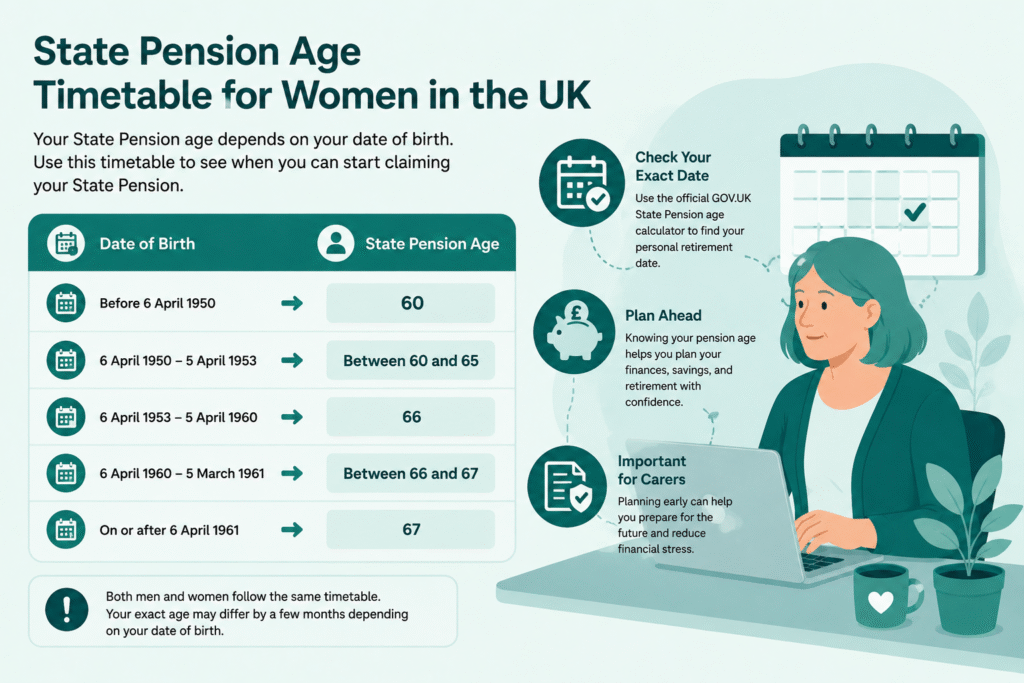
    The UK State Pension age increase 2026 will raise the retirement age from 66 to 67 between April 2026 and April 2028. This change affects people born on or after 6 April 1960, meaning they will retire at age 67 instead of 66, depending on their exact birth date. The government introduced this state pension age increase to reflect longer life expectancy and reduce long-term pension costs.

    If you’re asking “when can I retire?”, the answer now depends on your date of birth. The increase does not apply all at once, it rolls out gradually over two years, so some people will wait a few extra months, while others will wait the full year.

    For care providers and their staff, this means many workers will remain in employment longer, making it essential to understand how the UK state pension age increase 2026 affects retirement planning and workforce decisions.

    Get expert support for your next tender, inspection-ready policies, or CQC registration — book a call with Care Sync Experts today and let’s get you compliant and competitive.

    Key Takeaways

    • The UK state pension age increase 2026 will raise the retirement age from 66 to 67 between April 2026 and April 2028.
    • Anyone born on or after 6 April 1960 will reach state pension age later than expected.
    • The change will affect when staff can retire at age 67, not 66, depending on their birth date.
    • Care providers should expect longer staff retention, especially among experienced caregivers.
    • You can confirm your exact retirement date using the UK State Pension age calculator on GOV.UK.
    • Checking a state pension forecast helps employees understand how much they will receive and plan ahead.
    • The state pension age increase will continue to shape workforce planning across the care sector.

    Who Is Affected by the State Pension Age Increase in 2026?

    DBS Checks for Care Workers: The 3-Year Renewal Rule That Does Not Exist

    The state pension age increase 2026 affects anyone born on or after 6 April 1960. If an employee falls into this group, they will not receive their State Pension at 66. Instead, they will need to wait until they reach age 67, depending on their exact birth date.

    The increase does not apply equally to everyone. The government is rolling it out in phases between April 2026 and April 2028. For example, someone born in April 1960 may wait only a few extra months, while someone born later in the year could wait much longer.

    From a caregiver business perspective, this change directly impacts your workforce:

    • Many experienced caregivers will stay in employment longer
    • Retirement timelines will become less predictable
    • Workforce planning will require closer tracking of staff age and retirement expectations

    The DWP state pension age change 2026 also means employers can no longer assume that staff in their mid-60s will retire soon. Instead, care providers should expect a gradual shift, where older employees remain active in the workforce for an extended period.

    Understanding who is affected by the UK state pension age increase allows care businesses to plan staffing levels, manage expectations, and avoid sudden workforce gaps.

    RELATED: What Is the Best Mobile Phone for Old Age UK in 2026?

    When Can You Retire Now? (Use the Official Calculator)

    State Pension Changes 2026
    State Pension Changes 2026- New Payment Rates and Age Rules

    If you’re asking “when can I retire?”, the answer now depends entirely on your date of birth. The state pension age increase 2026 means there is no single retirement age anymore; each person has a specific date.
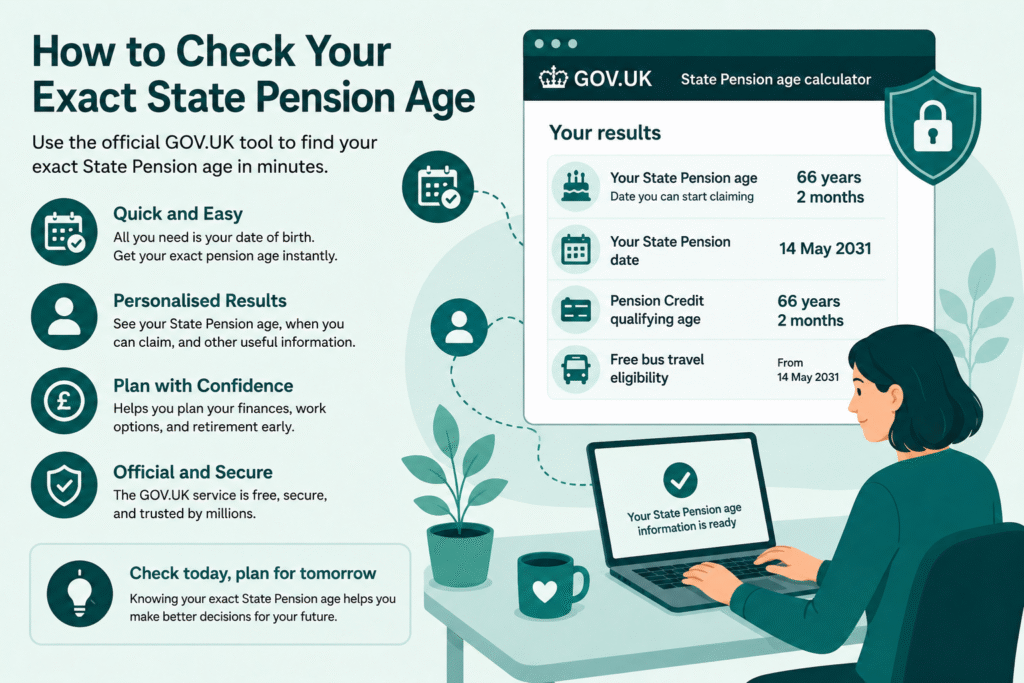
    The easiest way to check is by using the official UK State Pension age calculator on GOV.UK. This tool gives you your exact retirement date based on current legislation.

    Quick Answer:

    Your State Pension age depends on your date of birth, and you should use the official UK State Pension age calculator to confirm when you can retire.

    How to check your pension age:

    1. Go to the GOV.UK pension calculator
    2. Enter your date of birth
    3. View your exact State Pension age and date

    You can also check a state pension forecast to see how much you’re likely to receive under the New State Pension 2026 rules.

    Caregiver businesses should encourage staff, especially those aged 55+, to use the UK State Pension calculator. This helps:

    • Set realistic retirement expectations
    • Prevent sudden staffing gaps
    • Support better workforce planning

    Because of the UK state pension age increase 2026 calculator results, two employees of the same age may now retire at different times. Care providers must account for this variation when planning schedules, hiring, and succession.

    How Much Is the State Pension in 2026/27?

    The state pension increase 2026/27 raises payments by 4.8%, in line with average earnings under the triple lock policy. This means higher weekly income for pensioners starting from April 2026.

    Current Rates:

    • New State Pension 2026:

    £241.30 per week (£12,547.60 per year)

    • Basic State Pension (pre-2016 retirees):

    £184.90 per week (£9,614.80 per year)

    The New State Pension in 2026 will pay up to £241.30 per week, depending on your National Insurance record.

    To receive the full amount, individuals typically need 35 years of qualifying National Insurance contributions. Those with fewer years will receive a reduced amount.

    How much is the state pension for a woman?

    The amount is the same for men and women under the current system. What matters is the individual’s National Insurance record, not gender.

    Understanding the state pension increase 2026 helps care businesses:

    • Support staff with retirement planning
    • Explain income expectations to older employees
    • Reduce uncertainty around financial readiness

    Many caregivers may rely heavily on the New State Pension 2026, especially if they do not have private pensions. Encouraging staff to check their state pension forecast ensures they understand what they will actually receive and whether they need to work longer.

    READ MORE: What Time Is Sundowning? 2026 Update for Care Workers

    What This Means for Caregiver Businesses

    The UK state pension age increase 2026 will directly affect how care providers manage their workforce. As employees delay retirement, your staffing model will shift, both positively and negatively.

    Quick Insight:

    The state pension age increase means more experienced caregivers will stay in the workforce longer, but it also increases the risk of burnout and workforce imbalance.

    1. Longer Staff Retention

    Many caregivers who planned to retire at 66 will now continue working until 67.

    This can benefit your business:

    • You retain experienced staff longer
    • You reduce short-term recruitment pressure
    • You maintain continuity of care for clients

    2. Increased Burnout Risk

    Older caregivers may:

    • Struggle with physically demanding roles
    • Experience fatigue or reduced mobility

    This creates a real operational risk if not managed properly.

    3. Workforce Planning Becomes Critical

    The UK pension age reform impact means you must actively plan for:

    • Gradual retirement timelines
    • Flexible working options
    • Succession planning

    You can no longer assume when staff will leave. Instead, you must track and manage retirement expectations.

    4. Recruitment Strategy Must Evolve

    With delayed retirement:

    • Fewer roles may open up immediately
    • Younger workers may face slower entry into the sector

    Care providers should balance:

    • Retaining experienced staff
    • Bringing in new talent

    What smart care providers are doing

    Forward-thinking providers are already:

    • Offering flexible shifts for older staff
    • Reducing physically demanding tasks
    • Encouraging staff to check their state pension forecast
    • Staying updated with pension news and DWP changes

    The state pension age increase is not just a policy change, it is a workforce shift. Care providers who adapt early will maintain stability, reduce risk, and stay competitive.

    SEE ALSO: Will a Bladder Infection Cause Nausea UTI? A Caregiver’s Guide (2026)

    Should Care Providers Adjust Workforce Planning Now?

    UK Payroll Updates- 2026_27 Changes and Compliance

    Yes, care providers should start adjusting workforce planning now. The state pension age increase 2026 will delay retirement for many employees, which changes how you manage staffing, scheduling, and long-term growth.

    Care providers should adjust workforce planning now if they rely on older staff, because the state pension age increase will delay retirement and change workforce availability.

    When you SHOULD adjust now

    You should act immediately if:

    • A large portion of your workforce is aged 55+
    • You rely heavily on experienced caregivers
    • You expect staff to retire soon based on old assumptions

    In these cases, the state pension age increase will directly affect your staffing timeline.

    When adjustment is less urgent

    You may not need immediate changes if:

    • Your workforce is mostly younger (under 50)
    • You already have strong recruitment pipelines
    • You use flexible or agency staffing models

    Practical steps care providers should take

    To adapt effectively:

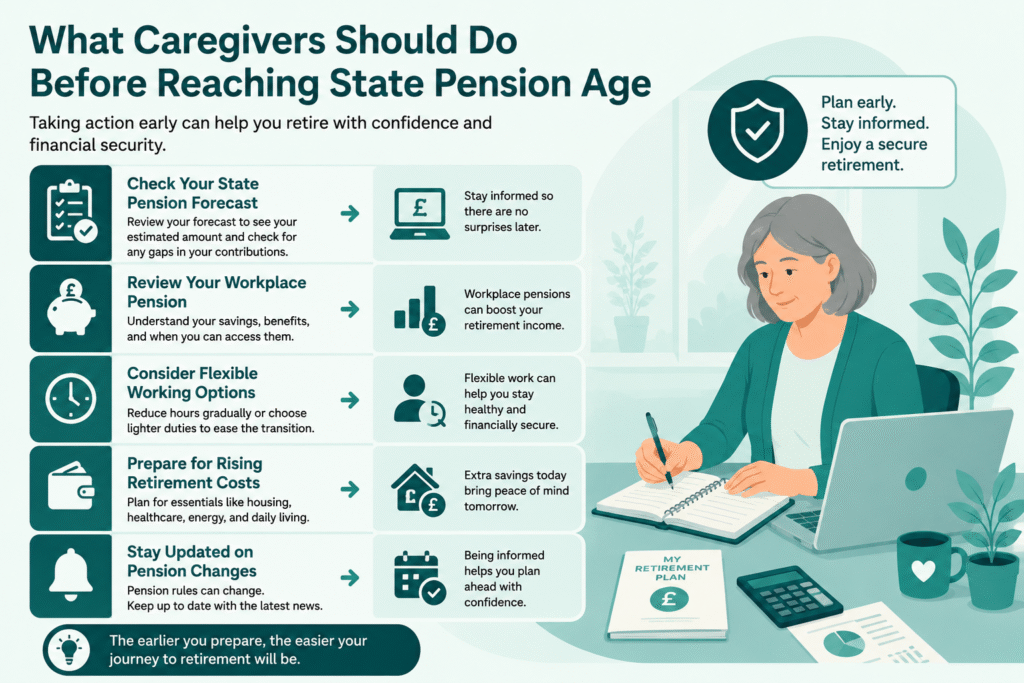
    • Review staff age profiles and expected retire at age timelines
    • Encourage employees to check when can I retire using official tools
    • Offer flexible roles for older staff
    • Introduce succession planning early
    • Train younger staff to prepare for future leadership roles

    The risk of doing nothing

    If you ignore the state pension age increase 2026, you may face:

    • Unexpected staff shortages
    • Burnout among older employees
    • Poor workforce planning decisions

    The state pension age increase is already underway. Care providers who respond early will maintain stability, support their staff better, and avoid operational disruptions.

    MORE: CQC Registration for Domiciliary Care Providers: Complete 2026 Guide

    Future Pension Changes You Should Watch (2025–2046)

    The state pension age increase 2026 is only one part of a wider shift in UK pension policy. Care providers should stay informed about upcoming changes, because these updates will continue to affect workforce planning and staff expectations.

    Quick Insight:

    The UK government plans to increase the State Pension age to 68 in the future, and ongoing policy reviews could bring further changes.

    1. Planned Increase to Age 68

    The government has already scheduled another state pension age increase:

    • Age 68 is expected between 2044 and 2046
    • Future reviews may bring this forward depending on life expectancy and economic conditions

    This means younger caregivers may need to work even longer before they retire at age.

    2. Ongoing Reviews and DWP Updates

    The Department for Work and Pensions (DWP) regularly reviews pension policy. Recent pension news highlights:

    • Potential adjustments based on life expectancy trends
    • Discussions around affordability and sustainability
    • Occasional DWP state pension warnings about planning ahead

    Care providers should monitor these updates to avoid being caught off guard.

    3. Other Pension Changes to Watch

    Several related updates may also impact your staff:

    • UK pensioner cash withdrawal changes 2025 – potential changes in how pension funds are accessed
    • UK state pension reduction 2025 – concerns around reduced real value due to inflation or policy shifts
    • September 2025 state pension updates – periodic policy announcements affecting benefits

    These changes may influence how employees view retirement and financial security.

    Understanding future pension trends helps you:

    • Prepare for long-term workforce changes
    • Support staff with realistic retirement expectations
    • Stay aligned with UK pension age reform impact

    The UK state pension age increase will continue evolving. Care providers who stay informed and adapt early will remain stable, competitive, and better prepared for future workforce challenges.

    READ: What is an SR1 Form? 2026 Guide for UK Care Providers

    Common Questions About the UK State Pension Age Increase 2026

    uk state pension age increase 2026
    uk state pension age increase 2026

    When will the State Pension age reach 67?

    The state pension age increase 2026 will raise the retirement age from 66 to 67 between April 2026 and April 2028. The change happens gradually, so not everyone reaches 67 at the same time.

    Can I still retire at 66?

    Yes, you can still retire at 66, but you may not receive your State Pension yet. If you fall under the UK state pension age increase, you will need to wait until your official pension age before receiving payments.

    How do I check when I can retire?

    You should use the official UK State Pension age calculator.

    Your exact retirement age depends on your date of birth, and the calculator provides the most accurate answer.

    You can also check your state pension forecast to understand how much you’ll receive.

    Will the State Pension age increase again?

    Yes. The government has already planned another state pension age increase to 68 between 2044 and 2046, although future reviews may change this timeline.

    What happens if I don’t have enough National Insurance contributions?

    You may receive less than the full New State Pension 2026 amount. To qualify for the full payment, you typically need 35 years of contributions. If you have gaps, you may still qualify for a partial pension.

    Does the State Pension amount differ for men and women?

    No. The amount is the same for both. The key factor is your National Insurance record, not gender.

    If you’re wondering how much is the state pension for a woman, the answer is the same as for men under the current system.

    These questions reflect the most common concerns around the UK state pension age increase 2026. Clear answers help both individuals and care providers plan more effectively.

    Conclusion

    The UK state pension age increase 2026 is more than a policy update—it’s a workforce shift that care providers must manage proactively.

    What you should do now:

    • Expect staff to retire at age 67, not 66
    • Encourage employees to check when can I retire using the UK State Pension age calculator
    • Support staff in reviewing their state pension forecast
    • Adjust workforce planning to reflect delayed retirement
    • Introduce flexible roles to reduce burnout among older caregivers
    • Stay updated with pension news and DWP state pension age change 2026 developments

    Care providers who understand the state pension age increase early will manage staffing better, retain experienced workers, and avoid sudden workforce gaps.

    The state pension age increase 2026 is already shaping the future of the care sector. By acting now, you can protect your workforce, support your staff, and keep your operations stable in a changing environment.

    Need Support Managing Workforce Changes from the State Pension Age Increase?

    The UK state pension age increase 2026 can disrupt staffing plans, delay retirements, and increase pressure on your existing team if not managed early.

    Care Sync Experts helps you:

    • Plan for delayed retirement and workforce shifts
    • Retain experienced caregivers without increasing burnout
    • Build flexible staffing models that support older employees
    • Improve workforce stability and reduce sudden staff shortages
    • Stay aligned with regulatory expectations and long-term care demands

    Book a Free Workforce Strategy Consultation

    Get practical, expert guidance to adapt your care service, support your staff, and stay ahead of pension-related workforce changes.

    FAQ

    Do I get my husband’s State Pension if he dies?

    You may be able to receive part of your husband’s State Pension, depending on your circumstances. This is usually called inheriting State Pension or qualifying for bereavement benefits.
    – If you reached State Pension age before April 2016, you may inherit some of your partner’s pension based on their National Insurance record.
    – If you’re under the new State Pension system (after April 2016), inheritance is more limited, but you may still qualify for Bereavement Support Payment (BSP).

    The exact amount depends on contributions, age, and marital status.

    How long is pension paid after death in the UK?

    State Pension payments stop shortly after death. However:
    – Payments may continue briefly if they were already issued before the death was reported
    – Any overpayments must usually be returned
    – A surviving spouse or partner may qualify for bereavement benefits instead

    You should report a death to the DWP immediately to avoid complications.

    Can I pass my pension to my children?

    You cannot pass your State Pension directly to your children. The State Pension is not treated as a transferable asset.
    However:
    – Private or workplace pensions can often be passed on, depending on the scheme
    – Beneficiaries may receive lump sums or ongoing payments

    Always check the specific rules of your pension provider.

    What is the minimum salary to qualify for State Pension in the UK?

    There is no fixed minimum salary to qualify for the State Pension. Instead, eligibility depends on National Insurance (NI) contributions.
    – You typically need at least 10 qualifying years to receive any pension
    – You need 35 years to receive the full New State Pension 2026

    You earn qualifying years by:
    – Working and paying NI contributions
    – Receiving NI credits (e.g., for caregiving, unemployment, or illness)

    Even low earners can qualify, as long as they meet the contribution requirements.

  • What Time Is Sundowning? 2026 Update for Care Workers

    What Time Is Sundowning? 2026 Update for Care Workers

    Sundowning typically starts in the late afternoon, usually between 3 p.m. and 5 p.m., and continues into the evening and night. This pattern often aligns with the time the sun begins to set, so changes in light, like knowing what time is sundown today UK, can influence when symptoms begin.

    Sundowning dementia refers to a group of behaviors, such as confusion, agitation, and restlessness, that worsen as daylight fades. While most caregivers notice symptoms in the evening, some individuals may also experience sundowning in the morning, especially when sleep patterns are disrupted.

    For caregivers, understanding what time is sundowning helps you anticipate changes in behavior and prepare the environment before symptoms escalate.

    Get expert support for your next tender, inspection-ready policies, or CQC registration — book a call with Care Sync Experts today and let’s get you compliant and competitive.

    Key Takeaways About Sundowning

    CQC Interview Preparation That Actually Works | 2,300+ Questions | 98% Pass Rate
    • What time is sundowning? It usually starts between 3 p.m. and 5 p.m. and can continue into the night.
    • Sundowning dementia is not a disease. It is a pattern of symptoms like confusion, anxiety, and agitation that worsen later in the day.
    • Symptoms often peak around sunset, especially as lighting changes and fatigue builds.
    • What triggers sundowning? Common triggers include tiredness, low lighting (sometimes called night shading), hunger, and disrupted routines.
    • Behaviour can become challenging, including restlessness, wandering, or even aggressive dementia episodes in some individuals.
    • Early preparation helps. Adjusting lighting, reducing noise, and maintaining a calm routine can reduce symptoms.
    • Each person is different. While evening is most common, some people may show symptoms at other times of the day.

    What Is Sundowning in Dementia and Why It Happens

    Sundowning in dementia is a pattern of increased confusion, agitation, and behavioral changes that appear later in the day, typically as daylight fades. It is not a disease on its own; it is a symptom seen in people living with conditions like Alzheimer’s or vascular dementia. Many caregivers also hear it described as “sundowner syndrome,” which reflects the same late-day changes.

    You may notice that a calm loved one suddenly becomes restless, anxious, or even upset without a clear reason. In some cases, dementia and being mean to family can become more noticeable during these hours, not because the person intends harm, but because their brain struggles to process reality, emotions, and surroundings.

    Why does sundowning happen?

    Sundowning happens due to a combination of physical and environmental factors:

    • Brain changes from dementia disrupt the body’s internal clock (circadian rhythm)
    • Fatigue builds up after a full day of activity
    • Reduced daylight and increasing shadows (sometimes called night shading) create confusion
    • Difficulty distinguishing reality from imagination may lead to fear or suspicion

    In some cases, these changes can lead to aggressive dementia behaviors, including shouting, pacing, or resisting care. This can feel overwhelming for caregivers, especially when it happens suddenly or daily.

    Understanding what is sundowning in dementia helps you recognize that these behaviors are not personal, they are part of how the condition affects the brain.

    RELATED: Will a Bladder Infection Cause Nausea UTI? A Caregiver’s Guide (2026)

    What Time Does Sundowning Start, and How Long Does It Last?

    How to Manage Sundowning in 2026
    How to Manage Sundowning in 2026

    Sundowning usually begins in the late afternoon, around 3 p.m. to 5 p.m., and can continue into the evening and night. For many caregivers, the timing closely follows sunset, so checking what time is sundown today or what time is sundown tonight can help you anticipate when symptoms may begin.

    When does it peak?

    Symptoms often peak around sunset, when natural light fades, and shadows increase. During this period, you may notice:

    • Increased confusion
    • Restlessness or pacing
    • Anxiety or irritability

    How long does sundowning last?

    Sundowning can last for several hours, sometimes easing once the person settles into nighttime routines or sleep. However, the duration varies:

    • Some individuals calm down after a few hours
    • Others may remain unsettled late into the night

    Does it always happen in the evening?

    Not always. While evening is most common:

    • Some people experience sundowning in the morning, especially if their sleep cycle is disrupted
    • Others may have irregular patterns depending on fatigue, environment, or health changes

    Is sundowning linked to life expectancy?

    Many caregivers ask about life expectancy with sundowners, but sundowning itself does not determine lifespan. It reflects how dementia affects brain function and daily rhythms, not how long someone will live.

    Understanding what time is sundowning allows you to prepare ahead, adjust lighting, reduce stimulation, and create a calm routine before symptoms escalate.

    What Triggers Sundowning in Dementia Patients?

    Sundowning does not happen randomly. Certain factors increase confusion and agitation, especially later in the day. When caregivers understand what triggers sundowning, they can prevent or reduce many episodes before they escalate.

    Common triggers of sundowning

    • Fatigue after a long day

    The brain becomes more overwhelmed as energy levels drop.

    • Low lighting and shadows (night shading)

    Dim environments can distort perception and increase fear or confusion.

    • Disrupted body clock (circadian rhythm)

    Dementia affects the brain’s ability to regulate sleep and wake cycles.

    • Hunger, dehydration, or discomfort

    Unmet physical needs can quickly turn into agitation.

    • Unfamiliar environments or changes in routine

    New settings or unexpected changes can increase anxiety.

    • Medications that cause sundowning

    Some drugs, especially sedatives or medications affecting sleep, may worsen confusion or agitation.

    • Underlying medical issues

    Infections, pain, or conditions like urinary tract infections can intensify symptoms.

    Does the type of dementia matter?

    Yes. For example, vascular dementia sundowning may present differently depending on how blood flow changes affect the brain. Some individuals may experience more sudden mood shifts or confusion compared to other types of dementia.

    Caregiver insight

    You may notice patterns over time. For example:

    • Agitation increases after poor sleep
    • Confusion worsens in dim lighting
    • Behavior changes after certain medications

    Tracking these patterns helps you identify what triggers sundowning for your loved one specifically, and respond more effectively.

    READ MORE: What is an SR1 Form? 2026 Guide for UK Care Providers

    Is Sundowning a Sign of Death or Disease Progression?

    Sundowning Signs and Symbols
    Sundowning Signs and Symbols

    No, sundowning is not a sign of death. It does not mean that a person is nearing the end of life. Instead, sundowning reflects how dementia affects the brain’s ability to regulate behavior, light perception, and daily rhythms.

    What sundowning actually indicates

    Sundowning usually signals:

    • Changes in brain function caused by dementia
    • Increased sensitivity to fatigue and environmental changes
    • Disruption in the body’s internal clock (sleep–wake cycle)

    As dementia progresses, these symptoms may become more noticeable, but they do not directly predict how long someone will live.

    Understanding the confusion around life expectancy

    Many caregivers search for life expectancy with sundowners, but it’s important to separate the two:

    • Sundowning is a behavioral pattern, not a disease stage
    • Life expectancy depends on the type and progression of dementia, overall health, and care quality
    • Some individuals experience sundowning early, while others develop it later

    When should you be concerned?

    While sundowning itself is not a sign of death, you should seek medical advice if:

    • Symptoms suddenly worsen
    • Behavior changes become extreme or unsafe
    • There are signs of infection, pain, or medication side effects

    In some cases, medications that cause sundowning or untreated health issues can make symptoms appear more severe than they actually are.

    Caregiver reassurance

    It can feel alarming when a loved one becomes confused or agitated every evening. However, understanding that sundowning is a manageable symptom, not a terminal signal, helps you respond with clarity and confidence.

    SEE ALSO: What is the Health and Safety at Work Act 1974?

    Can Sundowning Occur Without Dementia?

    What Causes Sundowning 2026

    Yes, sundowning without dementia can happen, but it is less common. In most cases, sundowning is strongly linked to dementia, especially Alzheimer’s disease. However, similar late-day confusion or agitation can appear in people without a formal dementia diagnosis.

    When sundowning happens without dementia

    You may notice sundowning-like symptoms in situations such as:

    • Delirium (sudden confusion)

    Often caused by infections, medication changes, or hospitalization

    • Severe sleep disruption

    Poor sleep can confuse the brain’s internal clock and mimic sundowning patterns

    • Stress or anxiety

    Emotional strain can increase restlessness or irritability later in the day

    • Medication side effects

    Some medications that cause sundowning, such as sedatives or drugs affecting the nervous system, can trigger confusion even without dementia

    How to tell the difference

    • Dementia-related sundowning tends to be consistent and progressive
    • Non-dementia cases are often sudden and reversible once the underlying cause is treated

    For example, if confusion appears quickly and worsens over a few days, a medical issue like an infection may be the cause, not dementia.

    Caregiver guidance

    If you notice sundowning behaviors in someone without a dementia diagnosis:

    • Seek medical evaluation promptly
    • Review recent medication changes
    • Monitor sleep patterns and daily routines

    Understanding whether symptoms are due to sundowning dementia or another condition helps you take the right action early.

    MORE: How Much Is JSA (Jobseeker’s Allowance) in 2026?

    How to Deal With Aggressive Dementia and Sundowning Behaviour

    Sundowning can sometimes lead to aggressive dementia behaviors, including shouting, resistance to care, or even physical actions. As a caregiver, these moments can feel overwhelming, but your response can either calm or escalate the situation.

    Why aggression happens during sundowning

    Aggression often comes from:

    • Fear and confusion as surroundings become harder to recognize
    • Frustration from not being understood
    • Overstimulation or fatigue late in the day
    • Misinterpretation of people or shadows (especially with low lighting)

    In many cases, what looks like anger is actually distress.

    What to do with a violent dementia patient

    If behavior becomes intense or unsafe:

    • Stay calm and keep your voice steady

    Your tone directly affects their reaction

    • Give space and avoid confrontation

    Do not try to physically restrain unless absolutely necessary

    • Redirect attention

    Shift focus to a calming activity like music or a familiar object

    • Remove triggers

    Reduce noise, dim harsh lighting, and create a quiet environment

    • Ensure safety first

    Move sharp objects away and position yourself safely

    How to deal with dementia patients who is aggressive

    Use these daily strategies to reduce escalation:

    • Keep a consistent routine

    Predictability reduces anxiety

    • Use simple, clear communication

    Avoid long explanations or arguments

    • Validate their feelings

    Instead of correcting them, respond with reassurance

    • Watch for patterns

    Identify what triggers sundowning and act early

    • Stay patient, even when it’s difficult

    Remember, the behavior is caused by the condition—not intent

    Caregiver reality

    Many caregivers struggle with dementia and being mean to family, especially during sundowning hours. It can feel personal, but it isn’t. The brain can no longer process emotions and reality correctly, which leads to reactions that seem out of character.

    Understanding this helps you respond with empathy instead of frustration, and that alone can reduce how often aggressive episodes occur.

    READ: What Is an Enhanced DBS CRB Check? 2026 Update for Care Homes

    How Caregivers Can Reduce Sundowning Symptoms

    what time is sundowning
    What Time is Sundowning

    You cannot completely eliminate sundowning, but you can reduce how often it happens and how intense it becomes. Small changes in routine and environment make a big difference, especially when you apply them before symptoms start.

    Create a calm, predictable routine

    • Keep consistent times for waking, meals, and bedtime
    • Schedule demanding activities earlier in the day
    • Avoid sudden changes in routine

    A stable routine helps regulate the brain and reduces confusion later in the day.

    Manage light and environment

    • Turn on lights before it gets dark to reduce shadows (night shading)
    • Keep rooms well-lit and familiar
    • Reduce background noise (TV, loud conversations)

    Matching your environment to what time is sundown today UK can help you act early, before agitation begins.

    Reduce physical and mental triggers

    • Offer meals and fluids regularly to avoid hunger or dehydration
    • Limit caffeine, especially in the afternoon
    • Encourage short rest periods, but avoid long daytime naps

    Also review any medications that cause sundowning, especially if symptoms suddenly worsen.

    Use calming activities

    • Play familiar, gentle music
    • Look through family photos
    • Take a short walk during daylight hours

    These activities help shift focus and reduce anxiety.

    Monitor patterns and act early

    Track:

    • When symptoms start (based on what time is sundowning)
    • What happened earlier in the day
    • Environmental changes (lighting, noise, visitors)

    Over time, you’ll identify patterns and prevent triggers before they escalate.

    Caregiver reminder

    Sundowning can be exhausting, especially when it happens daily. But early preparation, calm responses, and small adjustments can significantly reduce stress for both you and your loved one.

    Final Thoughts…

    Sundowning can feel unpredictable and exhausting, especially when behavior changes happen at the same time every day. But once you understand what time is sundowning and what drives it, you gain something powerful, control through preparation.

    You are not dealing with intentional behavior. You are responding to how dementia changes the brain’s ability to process light, time, and surroundings. That’s why simple steps, like adjusting lighting, maintaining routines, and staying calm, can make a meaningful difference.

    Focus on what you can control:

    • Prepare before late afternoon
    • Reduce known triggers
    • Respond with patience, not confrontation

    Over time, you will begin to recognize patterns, anticipate changes, and handle even difficult moments, like aggressive dementia behaviors, with more confidence.

    Most importantly, take care of yourself too. Supporting someone with sundowning dementia is demanding, and your well-being matters just as much as theirs.

    Need Support Managing Sundowning in Your Care Service?

    Sundowning can quickly lead to distress, aggression, and unsafe situations if not managed early.

    Care Sync Experts helps you:

    • Reduce agitation and aggressive dementia episodes
    • Train staff to handle difficult behaviours confidently
    • Build structured routines that prevent escalation
    • Stay compliant with care standards

    Book a Free Care Support Consultation

    Get practical, expert guidance to improve care outcomes and reduce daily stress for your team.

    FAQ

    Why is sundowning worse at night?

    Sundowning becomes worse at night because the brain struggles more with fatigue, low lighting, and disrupted internal rhythms. As daylight fades, shadows increase and visibility drops, which can confuse a person with dementia. Combined with a full day of mental activity, this often leads to heightened agitation, anxiety, and disorientation in the evening.

    Can sundowning happen after midnight?

    Yes, sundowning can continue after midnight, especially if the person has not settled or has disrupted sleep. While symptoms usually begin in the late afternoon, some individuals remain restless, confused, or awake throughout the night. Poor sleep patterns can extend or worsen these behaviors.

    What is the morning version of sundowning?

    Some caregivers notice similar symptoms earlier in the day, often called “morning confusion” or reversed sundowning.” This can happen when sleep cycles are severely disrupted. Instead of worsening in the evening, the person may wake up confused, agitated, or disoriented in the morning.

    How to respond to sundowning?

    Responding effectively requires calm, proactive care:
    – Stay calm and speak in a reassuring tone
    – Avoid arguing or correcting the person
    – Redirect attention to a calming activity
    – Keep the environment quiet and well-lit
    – Maintain a consistent routine

    The goal is not to “fix” the behavior instantly, but to reduce distress and create a sense of safety for the person.

  • Will a Bladder Infection Cause Nausea UTI? A Caregiver’s Guide (2026)

    Will a Bladder Infection Cause Nausea UTI? A Caregiver’s Guide (2026)

    Yes, a bladder infection can cause nausea, but it usually happens when the infection becomes more severe or spreads beyond the bladder. A simple lower urinary tract infection (UTI) typically causes urinary symptoms, but nausea often signals that the infection may have reached the kidneys or triggered a stronger body response.

    This article will answer the popular question care workers mostly ask: will a bladder infection cause nausea. Caregivers should pay close attention when nausea appears alongside a UTI, as this may indicate a more serious condition that requires prompt medical treatment.

    Get expert support for your next tender, inspection-ready policies, or CQC registration — book a call with Care Sync Experts today and let’s get you compliant and competitive.

    Key Takeaways

    • A simple bladder infection does not usually cause nausea, but severe infections can.
    • Nausea often signals that the infection may have spread to the kidneys.
    • Caregivers should act quickly if nausea appears with fever, back pain, or vomiting.
    • Urine infection treatment typically involves antibiotics, and early treatment prevents complications.
    • UTI antibiotics like nitrofurantoin often start working within a few days, but symptoms can worsen if untreated.
    • Always monitor vulnerable groups such as the elderly and pregnant women closely, as symptoms may escalate faster.

    RELATED: Is MS Hereditary or Inherited? What Causes Multiple Sclerosis (2026)

    What Causes Nausea in a UTI?

    Dates-Only Reference in Care: How to Stay CQC Compliant Under Schedule 3

    A urinary tract infection does not usually affect the stomach directly. However, certain changes in the body can trigger nausea, especially when the infection becomes more severe.

    Infection Spreads to the Kidneys

    When bacteria move from the bladder to the kidneys, the infection becomes more serious (pyelonephritis). This stage often causes nausea, vomiting, fever, and back pain. Caregivers should treat this as urgent.

    Strong Immune Response

    The body reacts to infection by releasing inflammatory chemicals. This response can make a person feel unwell, tired, and nauseous. In some cases, the discomfort feels similar to flu symptoms.

    Medication Side Effects

    Some UTI antibiotics, such as nitrofurantoin, can cause nausea as a side effect. This does not always mean the infection is worsening, but caregivers should monitor symptoms closely.

    Underlying Bladder Infection Causes

    Different bladder infection causes, such as bacterial overgrowth, poor hygiene, or incomplete bladder emptying, can influence how severe the infection becomes. In women, understanding what causes a UTI in a woman (like shorter urethra or hormonal changes) helps explain why symptoms can escalate quickly.

    For caregivers, the key takeaway is simple: nausea is not usually the first sign of a UTI, but when it appears, it often signals that the infection needs closer attention or medical review.

    When Nausea Means Something Serious

    Nausea alone does not always signal danger, but when it appears with certain symptoms, caregivers should act quickly. These combinations often point to a more serious infection, especially one affecting the kidneys.

    Red Flags to Watch For

    • Fever and chills
    • Lower back or side pain
    • Vomiting or inability to keep fluids down
    • Severe fatigue or confusion (common in older adults)
    • Painful or frequent urination alongside worsening symptoms

    These signs suggest the infection may have progressed beyond a simple bladder infection and now requires urgent treatment urinary tract infection care.

    Special Situations Caregivers Must Not Ignore

    • UTI in pregnancy: Even mild symptoms can become serious quickly and require immediate medical attention.
    • Recurrent infections: If someone experiences repeated UTIs, caregivers may wonder, can recurrent UTIs be a sign of cancer? While this is rare, persistent infections should always be medically evaluated to rule out underlying conditions.

    Caregiver Insight

    Do not wait for symptoms to “settle.” If nausea appears alongside any of these warning signs, seek medical care immediately. Early intervention with proper urine infection treatment can prevent complications and speed up recovery.

    READ MORE: What is an SR1 Form? 2026 Guide for UK Care Providers

    Common UTI Symptoms Caregivers Should Watch For

    UTI Symptoms, Causes & Prevention Tips
    UTI Symptoms, Causes & Prevention Tips

    A urinary tract infection often starts with mild, easy-to-miss symptoms. Caregivers should spot these early to prevent the infection from worsening.

    General UTI Symptoms

    • Frequent urge to urinate
    • Burning sensation when urinating
    • Cloudy or strong-smelling urine
    • Lower abdominal or pelvic pain
    • Fatigue or general discomfort

    These symptoms usually point to a lower UTI (bladder infection). When symptoms escalate, the risk of complications increases.

    UTI Symptoms in Women

    Women experience UTIs more often due to anatomy and hormonal factors. Many caregivers ask about the 10 causes of UTI in females, which commonly include poor hygiene, dehydration, sexual activity, and incomplete bladder emptying.

    Understanding what causes a UTI in a woman helps caregivers act early and prevent recurrence. Women may also report pelvic pressure and a constant urge to urinate, even after emptying the bladder.

    UTI Symptoms in Men

    Although less common, UTI in men can be more serious and often linked to underlying conditions.

    Caregivers should watch for:

    • Painful urination
    • Lower abdominal or rectal discomfort
    • Weak urine flow
    • Fever in more advanced cases

    Questions like can guys get urinary tract infections, do males get UTIs, or does man get UTI come up often, the answer is yes, and when they do occur, they require careful attention.

    Understanding male UTI symptoms and how a man gets a urinary tract infection (such as through prostate issues or urinary blockages) helps caregivers respond appropriately and seek timely care.

    How to Treat a UTI (Caregiver Action Plan)

    Why UTI Can Persist After Antibiotics

    Caregivers play a key role in getting fast, effective treatment. Early action prevents complications and speeds up recovery.

    Medical Treatment (First-Line Care)

    Doctors treat most UTIs with antibiotics. Start treatment as soon as symptoms appear and follow the full course.

    • Common options include nitrofurantoin, trimethoprim, and cephalexin
    • Many people ask, what is best antibiotic for urinary tract infection, the best choice depends on the bacteria and the patient’s history
    • UTI antibiotics usually begin to relieve symptoms within 24–72 hours
    • If you’re wondering how long does nitrofurantoin take to work on a UTI, most patients feel improvement within 2–3 days

    Caregivers should ensure the patient:

    • Takes medication exactly as prescribed
    • Finishes the full course, even if symptoms improve
    • Reports worsening symptoms immediately

    This is the most reliable treatment urinary tract infection approach.

    UTI Treatment at Home (Supportive Care)

    Home care supports recovery but does not replace antibiotics for most infections.

    • Encourage plenty of fluids (water helps flush bacteria)
    • Promote regular urination (do not hold urine)
    • Maintain proper hygiene
    • Ensure adequate rest

    Many caregivers search for UTI treatment at home or how to treat a UTI naturally. While these steps help, they do not cure most infections alone.

    Common Questions Caregivers Ask

    • Can a UTI heal on its own?

    Mild cases may improve, but most require antibiotics to prevent complications

    • How to get rid of a UTI in 24 hours?

    There is no guaranteed way, fast treatment reduces symptoms, but full recovery takes a few days

    • How to get rid of cystitis fast?

    Start antibiotics early, stay hydrated, and rest

    • Water infection tablets:

    Over-the-counter products may relieve symptoms, but do not replace proper urine infection treatment

    Caregivers should always prioritize early medical care. Quick action reduces the risk of the infection spreading and helps patients recover safely.

    SEE ALSO: What is the Health and Safety at Work Act 1974?

    Special Cases Caregivers Must Not Ignore

    Some patients face a higher risk of complications from a urinary tract infection. Caregivers must act faster and monitor symptoms more closely in these situations.

    Elderly Patients

    Older adults may not show typical UTI symptoms. Instead, they may develop:

    • Confusion or sudden changes in behavior
    • Increased weakness or falls
    • Loss of appetite

    Do not assume these signs are “normal aging.” A UTI can quickly worsen without obvious urinary symptoms.

    UTI in Pregnancy

    A UTI in pregnancy requires immediate attention. Even mild symptoms can lead to serious complications, including kidney infection or premature labor.

    Caregivers should:

    • Encourage early testing
    • Ensure prompt treatment
    • Never delay medical care

    Recurrent UTIs

    Frequent infections should not be ignored. Many caregivers ask, can recurrent UTIs be a sign of cancer? While this is uncommon, repeated infections can signal underlying issues such as:

    • Kidney stones
    • Structural problems in the urinary tract
    • Chronic bladder conditions

    A healthcare provider should always investigate persistent or recurring UTIs.

    UTIs in Men

    Although less common, male UTI cases often indicate an underlying condition such as prostate enlargement or urinary blockage.

    Caregivers should pay attention to:

    • Persistent symptoms
    • Difficulty urinating
    • Recurrent infections

    Understanding 10 causes of UTI male (such as poor bladder emptying, catheter use, or prostate issues) helps caregivers recognize when further evaluation is needed.

    In all these cases, do not rely on home remedies alone. Early diagnosis, proper treatment urinary tract infection, and close monitoring can prevent serious complications.

    MORE: How Much Is JSA (Jobseeker’s Allowance) in 2026?

    When to Seek Immediate Medical Help

    will a bladder infection cause nausea
    will a bladder infection cause nausea

    Caregivers should not wait when symptoms worsen. A urinary tract infection can escalate quickly, especially when nausea is involved.

    Seek urgent care if the person has:

    • Nausea with vomiting
    • Fever or chills
    • Lower back or side pain
    • Severe weakness or confusion
    • Inability to keep fluids or medication down
    • Symptoms that do not improve after starting UTI antibiotics

    These signs often indicate a kidney infection or a more serious complication.

    Delaying care can allow the infection to spread into the bloodstream (sepsis), which can become life-threatening. Early treatment urinary tract infection reduces this risk and improves recovery outcomes.

    Caregiver Tip

    If you are unsure, do not guess; get a UTI test done as soon as possible. Testing confirms the infection and helps doctors choose the right urine infection treatment quickly.

    Final Thoughts…

    So, will a bladder infection cause nausea? Yes, but it often signals that the infection has become more serious or is affecting the kidneys. Caregivers should never ignore this symptom, especially when it appears with fever, vomiting, or back pain.

    The key to managing any UTI is early action. Start proper urine infection treatment quickly, monitor symptoms closely, and seek medical care when warning signs appear. While UTI treatment at home can support recovery, it should never replace medical care when symptoms worsen.

    Stay alert, act early, and always prioritize safety. Quick decisions and proper care can prevent complications and help patients recover faster.

    Need Help Managing UTIs in Your Care Service?

    If you want to avoid delayed treatment, worsening symptoms, and preventable complications, expert guidance can make a real difference in how you manage infections like UTIs.

    Care Sync Experts supports care providers and caregivers with:

    • practical guidance on recognising early UTI symptoms
    • support with infection prevention and care protocols
    • staff training on managing common conditions like UTIs
    • clear escalation pathways for high-risk cases
    • ongoing compliance support aligned with current care standards

    We understand how quickly a simple infection can escalate, especially in vulnerable patients, and we help you stay prepared with the right systems and knowledge.

    Book a Free Care Compliance Consultation

    If you want to strengthen your care processes or improve how your team handles infections, speak to our team today.

    This guide was prepared by Care Sync Experts and reflects best practices as of 2026. Always seek medical advice from a qualified healthcare professional for diagnosis and treatment.

    FAQ

    What can be mistaken for a bladder infection?

    Several conditions can feel like a bladder infection, including vaginal infections (like yeast infections), sexually transmitted infections (STIs), kidney stones, or interstitial cystitis (a chronic bladder condition). Caregivers should not assume; it’s best to confirm with a proper UTI test to avoid treating the wrong condition.

    What is the first stage of a UTI?

    The first stage usually begins in the lower urinary tract (bladder or urethra). Early signs include a frequent urge to urinate, mild burning, and discomfort in the lower abdomen. Acting at this stage makes treatment urinary tract infection easier and prevents the infection from spreading.

    What not to drink when having a UTI?

    Avoid drinks that irritate the bladder, such as caffeine (coffee, tea), alcohol, and sugary or fizzy drinks. These can worsen symptoms and delay recovery. Caregivers should encourage water, which supports effective urine infection treatment.

    Can you have a UTI without burning during urination?

    Yes, not everyone experiences burning. Some people, especially older adults, may only show symptoms like fatigue, confusion, nausea, or general discomfort. Caregivers should stay alert, as UTIs can present differently depending on the individual.

  • CQC Registration for Domiciliary Care Providers: Complete 2026 Guide

    CQC Registration for Domiciliary Care Providers: Complete 2026 Guide

    The Care Quality Commission (CQC) has, since July 1st, 2025, changed how it handles new homecare applications, and the impact has been brutal for unprepared providers.

    CQC now routinely returns and rejects incomplete or inaccurate domiciliary care applications at the point of receipt. When that happens, any resubmission counts as a brand-new application. You lose your place in the queue. You start again from the back. In some cases, that mistake adds months to your launch timeline.

    This single procedural change in CQC registration for domiciliary care providers explains why so many new CQC domiciliary care applications are failing right now.

    Get expert support for your next tender, inspection-ready policies, or CQC registration — book a call with Care Sync Experts today and let’s get you compliant and competitive.

    The rules did not get easier.
    CQC raised the bar, deliberately.

    Most online guides still teach the old approach:

    • “Submit what you have and fix issues later.”
    • “CQC will come back with questions.”
    • “Minor errors won’t matter.”

    That advice is now dangerous.

    CQC no longer treats missing documents, outdated forms, or vague answers as fixable issues. They treat them as grounds for immediate rejection.

    If your application fails at intake:

    • CQC does not correct it with you
    • CQC does not hold your place
    • CQC applies whatever new requirements exist at resubmission

    That last point matters more than people realise. Requirements continue to evolve. A delay today can mean more documents, more scrutiny, and more cost tomorrow.

    Why CQC Tightened the Process

    Do You Really Need CQC Registration for Supported Living? | 2026 Guide for Providers

    CQC did not make this change randomly.

    An independent operational review (the Dash review) exposed severe backlogs and inefficiencies. More than half of new provider applications were missing basic information. Some sat unresolved for months. Instead of absorbing that burden, CQC redesigned the process to filter weak applications immediately.

    The result is a strict two-stage system:

    1. Initial checks that act as a hard gate
    2. Full assessment only for applications that pass cleanly

    We’ll break both stages down in detail later in this guide.

    What This Guide Does Differently

    This is not a generic overview of CQC registration for domiciliary care providers.

    This guide focuses on:

    • How CQC actually assesses applications today
    • Where applications fail before assessment even begins
    • The exact submission mechanics that cause avoidable rejection
    • The documents, detail, and consistency CQC now expects from day one

    If you plan to apply for CQC registration in 2026, read this guide carefully and follow it in order.

    Who Needs to Register With CQC for Domiciliary Care?

    If you plan to deliver personal care in people’s own homes, the law leaves no room for interpretation. You must register with the Care Quality Commission before you provide any care.

    CQC does not assess intentions.
    They assess what you actually do.

    What Counts as Domiciliary Care?

    Domiciliary care (also called homecare) involves supporting people in their own homes with tasks they cannot safely do alone. This includes:

    • Helping with washing or bathing
    • Assisting with dressing
    • Supporting eating and drinking
    • Helping people take medication
    • Providing personal hygiene support

    If your service includes any of these activities, CQC classifies it as personal care, which is a regulated activity under the Health and Social Care Act 2008.

    Who Is Legally Required to Register?

    You must register if you provide personal care as:

    • A limited company
    • A partnership
    • A sole trader/individual
    • A charity or non-profit organisation

    CQC does not care about your business size.
    A one-person homecare startup must meet the same registration standard as a multi-branch provider.

    Who Does Not Need to Register?

    Some providers assume they need registration when they don’t, while others assume the opposite and get it wrong.

    You do not need to register with CQC if you only provide:

    • Domestic help (cleaning, shopping, laundry)
    • Companionship or social support without personal care
    • Administrative or care coordination services only

    The moment you cross into hands-on personal care, registration becomes mandatory.

    What About Managers and Individuals?

    CQC registration applies at two levels:

    1. The provider organisation or individual
    2. The registered manager (a separate regulated role)

    If you operate alone, you may act as:

    • the provider
    • the nominated individual
    • the registered manager

    CQC allows this, but it increases scrutiny. You must clearly explain how you manage governance, accountability, and complaints when one person holds multiple roles. We’ll cover this in detail later.

    Operating Without Registration Is an Offence

    Providing regulated care without registration is not a minor breach. It is a criminal offence.

    CQC has enforcement powers that include:

    • prosecution
    • fines
    • enforcement notices
    • long-term impact on future registration attempts

    If you plan to offer personal care, you should not market, recruit staff, or accept clients until CQC confirms your registration.

    Quick Self-Check: Do You Need to Register?

    You need CQC registration now if:

    • You will help people wash, dress, eat, or take medication
    • You advertise personal care services
    • You employ or plan to employ care workers for personal care
    • You intend to start delivering care once approved

    If any of these apply, registration is not optional.

    Registering With CQC as an Individual (Sole Trader)

    Registering with the Care Quality Commission as an individual is legal, common, and fully permitted. However, it is not the easier option, despite what many people assume.

    CQC applies the same regulatory standards to individual providers as it does to limited companies. In practice, individual applicants often face closer questioning, not less.

    What Stays the Same

    If you register as an individual rather than a company, these requirements do not change:

    • Personal care remains a regulated activity
    • You must meet all fundamental standards
    • You must submit the same core supporting documents
    • You must demonstrate safe care, governance, and financial sustainability

    CQC does not lower expectations because you are a sole trader.

    What Changes for Individual Providers

    Where things differ is how CQC evaluates responsibility and oversight.

    When you register as an individual:

    • You become the legal provider
    • You carry personal accountability for compliance
    • CQC expects clear evidence of how you manage risk, quality, and decision-making

    If you also act as the registered manager, CQC will examine how you separate:

    • operational delivery
    • governance oversight
    • complaints handling

    You must show that one person can realistically manage all three without conflicts of interest.

    The Governance Challenge (Where Many Applications Fail)

    CQC often rejects individual applications because governance is poorly explained.

    Common weak answers include:

    • “I will manage everything myself”
    • “I will deal with complaints if they arise”
    • “I will monitor quality regularly”

    These statements say nothing about how you will do those things.

    As an individual provider, CQC expects you to explain:

    • how you audit care quality
    • how you identify risks
    • how you act on feedback
    • how complaints about you are handled independently

    If you cannot show this clearly in your governance and complaints policies, your application is unlikely to pass.

    Individual vs Limited Company: Practical Differences

    Choosing to register as an individual affects more than paperwork.

    Individual registration means:

    • You carry personal liability
    • You rely heavily on your own experience and competence
    • You must demonstrate credibility without a wider management structure

    Limited company registration allows:

    • clearer separation of governance and operations
    • easier delegation as the service grows
    • stronger perception of sustainability for CQC assessors

    CQC does not tell you which route to choose, but it does assess whether your chosen structure makes sense for the service you propose.

    When Individual Registration Makes Sense

    Registering as an individual may be appropriate if:

    • You have strong prior care management experience
    • You plan to run a small, local service initially
    • You fully understand the compliance burden
    • You can clearly explain governance arrangements

    If you lack experience or plan rapid growth, individual registration often creates avoidable risk.

    How CQC Processes New Domiciliary Care Applications in 2026

    The biggest mistake new providers make is assuming CQC registration works the way it did a few years ago.

    It doesn’t.

    On 1 July 2025, the Care Quality Commission fundamentally changed how it processes new domiciliary care applications. That change still governs approvals in 2026.

    The Old Assumption (Now Wrong)

    Before mid-2025, many applicants believed:

    • CQC would flag missing documents later
    • Minor errors could be corrected during assessment
    • Applications stayed in the queue while issues were fixed

    That approach no longer applies.

    The New Reality

    CQC now applies strict intake controls.

    When your application arrives, CQC first checks whether:

    • every required document is present
    • all forms are current and fully completed
    • the information is accurate and internally consistent

    If anything fails at this point, CQC returns or rejects the application immediately.

    There is no partial acceptance.
    There is no “we’ll fix this later.”

    Why Resubmission Is So Risky

    If CQC rejects your application at intake:

    • you must correct the issues
    • you must resubmit everything
    • CQC treats the resubmission as a new application

    That means:

    • you lose your original place in the queue
    • your timelines reset
    • any new requirements introduced meanwhile apply to you

    In practical terms, one missing document can delay your launch by months.

    Why CQC Made the Process Stricter

    CQC tightened the system after an operational review revealed widespread problems:

    • high volumes of incomplete applications
    • long processing delays
    • assessors spending time chasing basic information

    Instead of absorbing that inefficiency, CQC redesigned the process to filter out weak or unprepared applications immediately.

    This protects their resources, and shifts the burden onto providers to submit complete, assessment-ready packs from day one.

    What This Means for You

    CQC no longer rewards “good enough” submissions.

    To succeed in 2026, your CQC domiciliary care application must:

    • arrive complete
    • follow current guidance exactly
    • include documents that meet minimum requirements
    • show consistency across every form and policy

    If your pack does not meet those standards at intake, CQC will not progress it.

    That is why preparation now matters more than speed.

    The Two-Stage CQC Domiciliary Care Application Process

    Every CQC domiciliary care application now passes through two distinct stages.
    Each stage has a different purpose, and a different failure risk.

    Understanding the difference is essential if you want to register successfully.

    1. Stage One: Initial Checks (Where Most Applications Fail)

    Stage One is not an assessment of care quality.
    It is a gatekeeping exercise.

    When the Care Quality Commission receives your application, they first check whether it is complete, current, and assessable.

    At this stage, CQC looks for one thing only:
    Can this application move forward without further clarification?

    What CQC Checks at Stage One

    CQC will confirm that:

    • All required application forms are included
    • Every form uses the latest version
    • All sections of every form are fully completed
    • All required supporting documents are attached
    • Documents meet minimum content requirements
    • Information is consistent across forms and policies

    This is a strict yes-or-no decision.

    If even one required document is missing, or one form uses an outdated version, CQC will reject the application.

    What Stage One Is Not

    CQC does not:

    • review care quality in depth
    • interview your manager
    • assess how well your policies work in practice

    That comes later.

    Stage One exists to filter out incomplete or poorly prepared submissions.

    Why Applications Fail at Stage One

    Most rejections at this stage happen because of:

    • Missing supporting documents
    • Incorrect or outdated forms
    • Blank fields or vague answers
    • Generic policies that lack required detail
    • Contradictions between documents
    • Email submission errors

    CQC will usually email you to explain why your application was rejected, but by then the damage is done.

    If you resubmit, CQC treats it as a new application.

    Stage One Pass Checklist (Use This Before You Submit)

    Your application should pass Stage One if:

    • Every required document is included
    • Every form is current and fully completed
    • No answers are left blank
    • Policies reflect your actual service model
    • Your Statement of Purpose, business plan, and policies align
    • File names are clear and organised
    • All documents are submitted together

    If you cannot confidently tick all of these, do not submit yet.

    2. Stage Two: Full Assessment (Where CQC Tests Your Readiness)

    Only applications that pass Stage One move to Stage Two.

    Stage Two is where CQC evaluates whether you are fit to provide safe, effective, and well-led care.

    This is a detailed assessment, not a tick-box exercise.

    What CQC Assesses at Stage Two

    During full assessment, CQC will review:

    • Your supporting documents in detail
    • Your understanding of the fundamental standards
    • Your governance and quality assurance systems
    • Your safeguarding arrangements
    • Your recruitment and training processes
    • Your financial sustainability
    • Your ability to manage risk and respond to incidents

    CQC may also:

    • request additional information
    • conduct a registration interview
    • arrange a premises visit to your office base

    The Registration Interview

    CQC often interviews the registered manager and sometimes the nominated individual.

    They expect you to:

    • explain how your policies work in practice
    • demonstrate understanding of safeguarding and medicines management
    • show how you monitor quality and learn from issues
    • answer confidently without contradicting your documents

    CQC does not expect perfection, but they do expect competence and honesty.

    Premises Visits for Homecare Providers

    Even though care takes place in people’s homes, CQC may visit your registered office base.

    They will check:

    • health and safety arrangements
    • secure storage of records
    • readiness to operate
    • evidence of legal occupancy

    If your premises are not ready when visited, CQC may refuse your application.

    Why Stage Two Takes Time

    Stage Two can take several months. CQC assesses risk carefully and may handle many applications at once.

    You must:

    • respond quickly to information requests
    • monitor your email daily
    • keep your documents consistent

    CQC may give you only a few days to respond to requests. Delays or incomplete responses can stall or damage your application.

    In Short…

    Stage One decides whether CQC will even assess you.
    Stage Two decides whether you are fit to provide care.

    Most providers focus too much on Stage Two and underestimate Stage One.
    In 2026, Stage One is where most applications fail.

    Documents Required for CQC Registration (2026 Homecare Pack)

    CQC Assessment Framework
    CQC Assessment Framework

    CQC does not reject domiciliary care applications because providers lack good intentions. They reject them because documents are missing, weak, inconsistent, or unassessable.

    If your document pack does not meet minimum requirements, the Care Quality Commission will return your application before assessment begins.

    This section explains exactly what you must submit, and what CQC expects to see inside each document.

    Core Documents Required for All Providers

    Every provider applying for CQC registration must submit the following. There are no exceptions.

    Statement of Purpose

    Your Statement of Purpose defines your service. CQC cross-checks it against every other document.

    It must clearly explain:

    • the regulated activities you will provide
    • who you will support
    • where services will be delivered
    • how care will be delivered

    CQC expects this document to be:

    • service-specific
    • current
    • consistent with your business plan and policies

    If your Statement of Purpose describes services your policies do not support, your application will fail.

    DBS Checks

    You must provide enhanced DBS checks for:

    • the provider (if an individual)
    • the nominated individual
    • the registered manager

    DBS certificates must:

    • be countersigned where required
    • be less than 12 months old at submission

    Start DBS applications early. Delays here stall entire applications.

    Insurance Evidence

    You must submit evidence of:

    • public liability insurance
    • employer liability insurance (if you will employ staff)

    CQC only accepts one insurance document.
    If you require both types, you must complete the CQC liability insurance supporting information form and include your certificates.

    Expired or incorrect insurance evidence leads to rejection.

    Additional Documents Required for Domiciliary Care Providers

    If you are registering to provide personal care, CQC requires additional service-specific documents.

    These are non-negotiable.

    Additional Information for Providers of Personal Care (Form)

    This form is mandatory for homecare providers.

    CQC uses it to assess:

    • how you recruited key personnel
    • how you assessed competence
    • whether genuine local demand exists for your service

    Weak answers here often expose:

    • lack of market research
    • unrealistic service plans
    • governance gaps

    Treat this form as an assessment tool, not an admin exercise.

    Business Plan (With Financial Forecast)

    Your business plan must demonstrate that your service is viable and sustainable.

    CQC expects:

    • clear service model explanation
    • evidence of local market demand
    • realistic staffing plans
    • a one-year financial forecast
    • a SWOT analysis

    Vague statements like “there is demand for care services” will not pass.
    CQC expects evidence, not assumptions.

    Evidence of Legal Occupancy

    You must prove you have permission to operate from your registered address.

    Acceptable evidence includes:

    • title deeds (if you own the property)
    • tenancy or licence agreement
    • written permission from landlord or mortgage provider

    This applies even if you operate from home.
    Missing or unclear occupancy evidence is now a common rejection reason.

    Staff Training Plan

    CQC no longer accepts a simple training matrix.

    Your training plan must explain:

    • induction training
    • mandatory training
    • refresher schedules
    • specialist training where required
    • support for overseas workers
    • who delivers the training

    CQC wants to see how training works in practice, not just a list of topics.

    Service User Guide

    This document explains your service to people who use it.

    It must cover:

    • what services you offer
    • pricing and charges
    • safeguarding information
    • how to raise concerns or complaints

    If this document reads like marketing copy instead of practical guidance, CQC will challenge it.

    Policies Required for All Home Care Providers

    CQC requires a specific policy set. Each policy must reflect how your service actually operates.

    You must submit policies covering:

    • consent
    • equality, diversity and human rights
    • governance
    • infection prevention and control
    • medicines management
    • recruitment
    • safeguarding
    • complaints

    Generic templates often fail because they:

    • describe services you do not provide
    • contradict your Statement of Purpose
    • lack sufficient operational detail

    CQC cross-checks policies line by line. Inconsistencies trigger rejection.

    Minimum Requirements: What CQC Means by “Assessable”

    CQC’s guidance is clear. Documents must include enough detail to be assessed.

    That means:

    • no placeholders
    • no blank sections
    • no copied text that does not apply to your service
    • no contradictions between documents

    If an assessor cannot understand how your service will operate, your application does not progress.

    Final Document Pack Self-Check

    Before submission, confirm that:

    • every required document is included
    • every document reflects your service model
    • all documents agree with each other
    • all documents use current terminology
    • nothing relies on “we will decide later”

    If any document fails this test, fix it before you submit.

    CQC Application Form for New Providers: What to Prepare Before You Fill It In

    Many domiciliary care applications fail before CQC reads a single policy.

    The problem is not the documents. The problem is the CQC application form for new providers.

    The Care Quality Commission uses this form as the master reference point. Assessors cross-check everything else against it. If the form contains vague answers, missing detail, or contradictions, CQC rejects the application at Stage One.

    Do Not Start the Form Until These Decisions Are Final

    Before you touch the application form, you must lock down the following:

    • Regulated activity
      For homecare agencies, this is usually personal care. Do not list activities you are not ready to deliver.
    • Service model
      Who you will support, how you will deliver care, and what you will not provide.
    • Registered location
      Your office base address must be final and supported by legal occupancy evidence.
    • Key roles
      Who is the provider, nominated individual, and registered manager, and whether any roles overlap.

    If any of these points remain undecided, stop. Incomplete thinking here leads to rejection later.

    How CQC Reads Your Application Form

    CQC does not read the form in isolation.

    Assessors compare it against:

    • your Statement of Purpose
    • your business plan
    • your policies and procedures
    • the additional personal care form

    If your form says one thing and your documents say another, CQC assumes you do not understand your own service.

    That is a red flag.

    Common Form Errors That Trigger Rejection

    CQC regularly rejects applications because the form includes:

    • Blank fields
      Every question must be answered. If something does not apply, state “Not applicable” and explain why.
    • Vague language
      Phrases like “we will ensure”, “we plan to”, or “we intend to” without explanation show lack of readiness.
    • Overly broad services
      Listing services you cannot evidence through policies, training, or staffing.
    • Inconsistent answers
      For example, describing a small, local service in one section and a large multi-area operation in another.
    • Outdated assumptions
      Using terminology or processes that no longer reflect current CQC expectations.

    Each of these issues can stop your application before assessment begins.

    How to Write Strong Answers (What CQC Expects)

    Strong answers are:

    • specific
    • consistent
    • evidence-backed

    Instead of writing:

    “We will provide high-quality care tailored to individual needs.”

    Write:

    “We will deliver personal care to adults in their own homes within [location], following care plans developed after initial assessment and reviewed monthly.”

    Clarity beats ambition every time.

    The “Cross-Check Rule” (Use This Before Submission)

    Before you submit the application form, cross-check each answer against:

    • your Statement of Purpose
    • your business plan
    • your policies

    If any answer cannot be supported by a document, revise it.

    CQC assumes:

    If it is written in the form, you must already be able to deliver it.

    Final Form Readiness Checklist

    Your application form is ready when:

    • every field is completed
    • no answers rely on future decisions
    • language matches your documents exactly
    • service scope is clear and realistic
    • roles and responsibilities are consistent

    If you rush this stage, CQC will return your application, and you will lose your place in the queue.

    How to Apply for CQC Registration (Submission Mechanics That Make or Break You)

    What is CQC Registration?
    What is CQC Registration?

    Many providers prepare strong documents and still fail because they submit their CQC domiciliary care application incorrectly.

    At this stage, CQC does not troubleshoot. If your submission does not meet their technical requirements, your application may never reach assessment.

    Here is how to apply for CQC registration properly in 2026.

    Where to Submit Your Application

    You must email your complete application bundle to:

    HSCA_Applications@cqc.org.uk

    CQC requires email submission for new provider applications. This is not optional.

    The 10MB Email Size Rule (Non-Negotiable)

    CQC can only receive emails up to 10MB in size.

    This includes:

    • all attachments
    • the email body
    • embedded signatures

    If your email exceeds 10MB:

    • CQC may not receive it at all
    • you may not get a bounce-back warning
    • your application may be treated as missing

    If your application exceeds 10MB, you must split it into multiple emails.

    Correct Subject Line Format (Critical for Multi-Email Submissions)

    When sending more than one email, CQC requires a specific subject line format so they can match your documents correctly.

    Use this format exactly:

    [Provider Name] new provider application 1/2
    [Provider Name] new provider application 2/2

    If you send three emails, use 1/3, 2/3, 3/3.

    If you do not follow this format:

    • emails may not be linked together
    • CQC may treat your application as incomplete
    • your application may be rejected at intake

    This is one of the most common and avoidable failures.

    All Documents Must Arrive Together

    CQC requires that all documents arrive at the same time.

    You cannot:

    • send the application form today
    • send policies tomorrow
    • send missing documents next week

    If anything is missing from the initial submission, CQC will return or reject the application.

    When you resubmit, it counts as a new application.

    File Naming and Organisation (Make Review Easy)

    CQC assessors review large volumes of applications. Clear organisation helps your application move smoothly.

    Use:

    • separate files for each document
    • clear, descriptive file names
    • consistent terminology across documents

    Good example:

    • Statement of Purpose – Oxtown Care Ltd.pdf
    • Safeguarding Policy – Domiciliary Care.pdf
    • Business Plan – Homecare Services.pdf

    Avoid:

    • vague names like “Policy 1”
    • merged documents containing multiple policies
    • zipped folders unless absolutely necessary

    Assessors must be able to locate documents quickly.

    What to Include in the Email Body

    Keep the email body simple and factual.

    Include:

    • provider name
    • confirmation that this is a new provider application
    • number of emails being sent (if applicable)

    Do not include explanations, justifications, or attachments that are not required.

    Submission Day Checklist (Use This Before You Click Send)

    Before submitting, confirm that:

    • All required documents are attached
    • All forms use the latest versions
    • File names are clear and consistent
    • Total email size is under 10MB
    • Subject line format is correct
    • All emails are ready to send together

    If any item is missing, stop and fix it first.

    After You Submit: What to Do Next

    After submission:

    • save sent emails and attachments
    • keep a copy of everything submitted
    • monitor your inbox daily

    CQC may contact you quickly if there is an issue. Delayed responses can slow your application or affect assessment.

    Note: Strong documents mean nothing if CQC cannot process your submission.

    Follow the submission mechanics precisely. Treat this step with the same seriousness as the documents themselves.

    Why CQC Rejects Domiciliary Care Applications (And How You Prevent It)

    Most failed applications do not fail because providers lack experience or commitment. They fail because applicants underestimate how precise and unforgiving the Care Quality Commission has become.

    Below are the rejection reasons we see most often, and exactly how to avoid each one.

    Rejection Reason 1: Missing Documents

    This is the single biggest cause of rejection. If even one required document is missing, CQC will return or reject your application at intake.

    How to prevent it

    • Use a master document checklist before submission
    • Confirm every required document is attached
    • Do not assume CQC will “ask for it later”

    CQC will not chase missing documents anymore.

    Rejection Reason 2: Using Outdated Forms

    CQC updates application forms periodically. Submitting an old version triggers immediate rejection.

    This includes:

    • provider application forms
    • manager application forms
    • additional personal care forms

    How to prevent it

    • Download every form directly from the CQC website immediately before completing it
    • Never reuse forms from old applications or third-party packs

    If the form version is wrong, nothing else matters.

    Rejection Reason 3: Incomplete or Vague Form Answers

    Leaving fields blank or providing vague responses signals unreadiness.

    CQC does not accept:

    • empty fields
    • “to be confirmed” answers
    • generic statements without explanation

    How to prevent it

    • Answer every field
    • If something does not apply, state “Not applicable” and explain why
    • Replace vague language with specific operational detail

    Clarity shows readiness. Vagueness triggers rejection.

    Rejection Reason 4: Generic Policies That Do Not Match the Service

    CQC expects policies to reflect how your service will actually operate.

    They regularly reject applications where:

    • policies describe services not offered
    • care home policies are used for domiciliary care
    • documents read like unedited templates

    How to prevent it

    • Tailor every policy to your service model
    • Remove irrelevant sections
    • Ensure policies align with your Statement of Purpose and business plan

    If your policies contradict your service description, CQC will not proceed.

    Rejection Reason 5: Inconsistencies Between Documents

    CQC cross-checks everything.

    They will identify contradictions such as:

    • business plans that describe services not listed in the Statement of Purpose
    • staffing structures that do not match recruitment policies
    • governance arrangements that conflict with complaints procedures

    How to prevent it

    • Review documents side by side before submission
    • Use consistent terminology across all documents
    • Resolve contradictions before CQC finds them

    Consistency is a core assessment signal.

    Rejection Reason 6: Missing Legal Occupancy Evidence

    Since mid-2025, CQC has enforced this requirement more strictly.

    Applications fail when:

    • no occupancy evidence is provided
    • permissions do not cover business use
    • home-based providers lack written consent

    How to prevent it

    • Provide clear evidence of ownership or tenancy
    • Include written permission if operating from home
    • Ensure documents match the registered address

    Without this evidence, CQC will not assess your application.

    Rejection Reason 7: Governance Gaps When One Person Holds Multiple Roles

    When the nominated individual and registered manager are the same person, CQC looks closely at governance.

    Applications fail when:

    • complaints policies do not explain independent handling
    • oversight arrangements are unclear
    • accountability is poorly defined

    How to prevent it

    • Clearly explain how complaints about the manager are handled
    • Show how oversight works in practice
    • Address the conflict-of-interest risk directly

    Ignoring this issue signals weak governance.

    Rejection Reason 8: Email Submission Errors

    CQC still rejects applications that never technically arrive.

    Common errors include:

    • emails over 10MB
    • incorrect subject line format
    • documents sent across multiple days
    • missing attachments

    How to prevent it

    • Check email size carefully
    • Use the correct subject line format
    • Send all documents together
    • Keep proof of submission

    Strong applications fail silently when submission rules are ignored.

    Rejection Reason 9: Submitting Before You Are Ready

    CQC expects you to be operationally ready when you apply.

    Applications fail when:

    • premises are not ready
    • systems are not in place
    • staffing plans are unrealistic
    • training arrangements are undeveloped

    How to prevent it

    • Submit only when you can realistically start providing care
    • Ensure documents reflect current readiness, not future plans

    CQC assesses capability, not ambition.

    The Pattern CQC Rejects

    Across all rejected applications, the pattern is the same:

    • incomplete preparation
    • unclear thinking
    • inconsistent documentation

    CQC no longer allows providers to “fix it later.”

    If you want to register successfully in 2026, you must submit an application that is complete, coherent, and assessment-ready from day one.

    How Much Does CQC Registration Cost? (Fees, Real Costs, and Budgeting Reality)

    One of the biggest misconceptions about CQC registration for domiciliary care providers is cost.

    Some people assume registration is expensive.
    Others assume it is free.

    Both assumptions cause problems.

    Let’s break this down properly.

    Is There a Fee to Apply for CQC Registration?

    No. The Care Quality Commission does not charge an application fee to register as a new provider.

    Submitting your CQC application form for new provider costs nothing.

    However, this does not mean registration is cost-free.

    When Do You Start Paying CQC Fees?

    You only start paying CQC fees after your application is approved and registration is granted.

    Once registered:

    • CQC charges annual regulatory fees
    • Fees are based on your turnover from regulated activities
    • Fees must be paid every year you remain registered

    If you fail to pay annual fees, CQC can take enforcement action.

    Typical Annual CQC Fees for Domiciliary Care Providers

    CQC calculates annual fees using a sliding scale linked to turnover.

    In simple terms:

    • Smaller providers with low turnover pay lower fees
    • Larger providers with higher turnover pay more

    CQC publishes its fee structure annually, and amounts can change. Always check the current fee schedule when budgeting.

    Real Costs You Must Budget for Before Registration

    Although the application itself is free, preparing a CQC domiciliary care application involves unavoidable costs.

    Here are the main ones.

    DBS Checks

    You must obtain enhanced DBS checks for key personnel.

    Typical cost:

    • Around £40–£50 per DBS check

    DBS processing can take weeks, so delays here often slow applications.

    Insurance

    You will need:

    • Public liability insurance
    • Employer’s liability insurance (if employing staff)

    Costs vary depending on:

    • provider size
    • staffing model
    • risk profile

    CQC requires valid, current insurance evidence at submission.

    Training and Qualifications

    If your registered manager does not already hold the required qualifications, you may need to budget for:

    • Level 5 Diploma in Leadership and Management for Adult Care
    • Mandatory and specialist training

    Training costs vary widely but should not be underestimated.

    Premises and Legal Occupancy

    Even home-based providers may need:

    • written permission from a landlord or mortgage provider
    • minor adaptations for secure record storage

    Commercial office premises increase costs further.

    Policies, Documents, and Professional Support

    Many providers underestimate the time and expertise required to prepare:

    • a compliant business plan
    • tailored policies
    • governance documentation

    You can prepare documents yourself, but poorly written or generic documents often lead to rejection, which costs time and lost opportunity.

    Professional support is optional, but repeated resubmissions are far more expensive in the long run.

    Hidden Cost: Delay

    The most expensive mistake is not a document fee, it is delay.

    Every rejected application can cost you:

    • months of lost trading time
    • ongoing rent and overheads
    • missed contracts and referrals

    A “free” application that fails twice can cost more than getting it right once.

    Budgeting Tip Most New Providers Miss

    Do not budget on the assumption that registration will be quick.

    Even strong applications can take several months to complete the full assessment process.

    Plan for:

    • at least 3–4 months before launch
    • ongoing costs during the waiting period

    Rushing to submit before you are financially prepared often leads to rejection or operational strain.

    Cost Summary (Plain English)

    • Application fee: £0
    • CQC annual fees: Payable after registration, based on turnover
    • Preparation costs: DBS, insurance, training, premises, documents
    • Biggest risk: Delay caused by rejection

    Understanding the full cost picture helps you plan properly and avoids painful surprises later.

    The CQC Registration Interview: What They Ask and How to Answer Clearly

    If your CQC domiciliary care application passes the initial checks, CQC may invite you to a registration interview.

    This interview does not exist to catch you out. It exists to confirm one thing: can you actually run the service you described on paper?

    The Care Quality Commission uses the interview to test understanding, not memory.

    Who CQC Interviews

    CQC usually interviews:

    • the registered manager
    • sometimes the nominated individual

    If the same person holds both roles, CQC will focus closely on governance and accountability.

    Interviews typically take 30–45 minutes and happen by phone or video call.

    What CQC Is Really Testing

    CQC is not asking whether you have policies. They are asking whether you understand them.

    Assessors want to see that you can:

    • explain how your policies work in practice
    • apply them to real situations
    • identify risks and respond appropriately

    You do not need perfect answers. You need credible, consistent answers.

    Core Topics CQC Covers in Interviews

    Although questions vary, interviews usually focus on the same areas.

    Safeguarding

    Expect questions like:

    • What would you do if a care worker raised a safeguarding concern?
    • How do staff report concerns?
    • When would you escalate to the local authority?

    Strong answers explain process, not just intention.

    Medicines Management

    CQC may ask:

    • How do you reduce medication errors?
    • How do staff record administration?
    • What training do staff receive?

    You should link answers directly to your medicines policy.

    Recruitment and Staffing

    Typical questions include:

    • How do you recruit safely?
    • What checks do you complete before employment?
    • How do you support and supervise staff?

    CQC wants to hear how recruitment, induction, and supervision connect.

    Training and Competence

    Expect questions on:

    • induction training
    • mandatory training
    • refresher schedules
    • competence checks

    Avoid vague answers like “we will train staff regularly.”

    Explain how, when, and who delivers it.

    Governance and Quality Monitoring

    This is where many interviews go wrong.

    CQC may ask:

    • How do you monitor quality?
    • How do you learn from incidents?
    • How do you use feedback?

    Strong answers include:

    • audits
    • supervision records
    • complaints analysis
    • action plans

    If you hold multiple roles, explain how you avoid conflicts of interest.

    How to Prepare for the Interview

    Preparation is simple but essential.

    Before the interview:

    • Have your application form, Statement of Purpose, and policies in front of you
    • Re-read your documents and note key processes
    • Prepare examples that match what you wrote

    CQC will notice if your answers contradict your paperwork.

    How to Answer Well (What Assessors Respond To)

    Good answers are:

    • clear
    • practical
    • honest

    If you do not know something yet, say so, and explain how you will address it.

    Overconfident guessing creates doubt.
    Measured honesty builds trust.

    Common Interview Mistakes

    Avoid:

    • repeating policy wording without explanation
    • contradicting your documents
    • guessing answers you are unsure about
    • dismissing safeguarding or complaints concerns

    CQC interviews assess judgement, not just knowledge.

    Interview Readiness Checklist

    You are ready if you can:

    • explain your service model clearly
    • describe safeguarding processes confidently
    • walk through recruitment and training steps
    • explain how you monitor quality
    • discuss complaints handling realistically

    If you cannot explain it verbally, CQC will question whether you can deliver it in practice.

    After You Get Registered: What Happens Next (and How to Stay Inspection-Ready)

    Once the Care Quality Commission grants registration, you can legally begin providing domiciliary care. But approval does not come with a grace period.

    From day one, CQC expects you to operate exactly as described in your application.

    What Changes Immediately After Registration

    As soon as registration is confirmed:

    • You can start delivering regulated personal care
    • You become liable for annual CQC fees
    • You must comply fully with the regulations
    • Your service becomes eligible for inspection

    CQC assumes that everything you described on paper is already in place and working.

    Your First Inspection: What to Expect

    CQC usually inspects new domiciliary care providers within the first 12 months of registration. However, inspections can happen sooner if CQC identifies risk.

    Inspections focus on the five key questions:

    • Is the service safe?
    • Is it effective?
    • Is it caring?
    • Is it responsive?
    • Is it well-led?

    Inspectors will test whether your service matches your registration documents in practice.

    The First 30 Days: What You Should Do Immediately

    The first month after registration sets the tone for inspection readiness.

    You should:

    • implement all policies and procedures in real operations
    • begin staff supervision and competency checks
    • keep training records up to date
    • document care planning and reviews
    • log incidents, complaints, and actions taken

    Do not wait for inspection to start recording evidence. Inspectors expect to see a working paper trail.

    Maintain Compliance, Not Just Documents

    Many providers pass registration and fail inspection because policies exist only on paper.

    CQC expects to see:

    • staff following procedures
    • audits being completed
    • feedback being collected and acted upon
    • risks identified and managed

    If your service looks different from what you described in your application, inspectors will challenge it.

    Notify CQC of Changes

    You must notify CQC about certain changes, including:

    • changes to your nominated individual or registered manager
    • changes to your registered address or premises
    • significant incidents or safeguarding concerns
    • changes to the services you provide

    Failing to notify CQC is itself a compliance breach.

    Keep Your Statement of Purpose Accurate

    Your Statement of Purpose must stay current.

    If your services change, you must:

    • update the document
    • ensure policies still align
    • notify CQC where required

    Outdated Statements of Purpose are a common inspection finding.

    Note: Registration confirms that you can provide care.
    Inspection confirms whether you do provide it safely and consistently.

    Treat compliance as an ongoing process, not a one-off hurdle.

    The CQC Registered Providers List: Why It Matters and What to Check

    Once CQC approves your application, your service appears on the CQC registered providers list. This is not a formality. It is your public regulatory record.

    Commissioners, local authorities, families, insurers, and partners use this register to verify whether a provider is legally allowed to operate.

    What the CQC Register Shows

    Your public listing typically includes:

    • your provider name
    • your registered address
    • your regulated activities
    • your registered manager (where applicable)
    • your inspection status and rating (once inspected)

    This information becomes part of your public reputation.

    Why the Register Matters for New Providers

    For a new domiciliary care agency, the register:

    • proves you are legally registered
    • builds trust with service users and referrers
    • allows commissioners to verify compliance
    • confirms you can deliver regulated personal care

    Many organisations will not engage with you until your registration appears on the public register.

    What You Should Check as Soon as You Go Live

    When your registration goes live, check your listing carefully.

    Confirm that:

    • your provider name is correct
    • your address matches your legal occupancy evidence
    • your regulated activity is listed accurately
    • your service description reflects what you applied for

    Errors happen. Leaving them uncorrected can cause confusion or delay referrals.

    What to Do If Something Is Wrong

    If you spot an error:

    • contact CQC promptly
    • provide clear evidence of the correction needed
    • keep records of communications

    Do not assume CQC will fix mistakes automatically.

    How the Register Connects to Inspection

    Once registered, your listing links directly to:

    • inspection reports
    • ratings
    • enforcement history (if any)

    Everything CQC publishes builds on your registration record. Accuracy matters from the start.

    The Key Takeaway

    The CQC registered providers list is your public compliance footprint.

    Check it.
    Maintain it.
    Treat it as part of your professional credibility.

    Get Your CQC Registration Right the First Time

    CQC registration for domiciliary care providers has changed, permanently.

    Since July 2025, incomplete or inaccurate applications no longer move forward. CQC rejects them at the point of receipt. Resubmissions lose their place in the queue. Small mistakes now cost months, not days.

    If you take one thing from this guide, take this: CQC no longer fixes applications. They filter them.

    Success in 2026 depends on preparation, accuracy, and consistency, not speed.

    You must:

    • submit the correct documents
    • use current forms
    • align every answer across your application
    • follow submission mechanics precisely
    • demonstrate readiness from day one

    If any part of your application feels rushed, vague, or incomplete, stop and fix it before you submit.

    Need Expert Help With Your CQC Registration?

    If you want to avoid rejection, delays, and costly resubmissions, expert guidance can make the difference.

    Care Sync Experts supports home care providers across England with:

    • end-to-end CQC registration support
    • professionally written, service-specific policies
    • Statement of Purpose and business plan development
    • application review before submission
    • registration interview preparation and coaching
    • ongoing compliance support after approval

    We stay up to date with CQC regulatory changes, submission requirements, and assessment expectations, so you don’t have to learn the hard way.

    Book a Free CQC Registration Consultation

    If you’re planning to apply, or you’ve already faced rejection, speak to our team before you submit again.

    This guide was prepared by Care Sync Experts and reflects current CQC requirements as of 2026. CQC guidance can change. Always verify current requirements with CQC before submitting your application.

    FAQ

    Is CQC Registration Difficult?

    Most applications fail because providers:
    CQC registration is not difficult because it is complicated. It is difficult because it is precise.
    submit incomplete document packs
    contradict themselves across forms and documents
    misunderstand what “ready to operate” actually means.

    The Care Quality Commission does not assess effort or intention. It assesses readiness and accuracy. If your application is complete, consistent, and specific to your service, registration is achievable. If it is vague or rushed, rejection is likely.

    What Are the Different Types of CQC Registration?

    CQC registration depends on what regulated activity you provide and how you operate, not on business size.
    For domiciliary care, the most common registrations are:
    Registered manager registration – required for the person managing day-to-day care delivery
    Provider registration – required for the organisation or individual delivering the service
    You may also register for different regulated activities, such as:
    personal care
    treatment of disease, disorder, or injury
    nursing care
    Each regulated activity carries different expectations and evidence requirements. You must only apply for activities you are genuinely ready to deliver

    Do Private Carers Need to Be CQC Registered?

    It depends on how the care is arranged.
    A self-employed carer does not need CQC registration if:
    they are directly employed by the person receiving care, and
    they do not operate through an agency or employ other carers
    However, registration is required if:
    care is arranged through an agency
    the carer employs staff
    the service provides regulated personal care as a business
    Many people get this wrong. Operating as an “independent carer” does not automatically remove the requirement to register

    How Often Does CQC Inspect Domiciliary Care Providers?

    CQC does not inspect on a fixed annual schedule.
    For new domiciliary care providers:
    the first inspection usually happens within 12 months of registration
    inspections can happen sooner if CQC identifies risk
    After that, inspection frequency depends on:
    previous inspection outcomes
    risk indicators
    intelligence or concerns raised
    CQC can also carry out unannounced inspections at any time. Providers must remain inspection-ready from the day they begin operating.

  • What is an SR1 Form? 2026 Guide for UK Care Providers

    What is an SR1 Form? 2026 Guide for UK Care Providers

    The SR1 form is a UK medical report used to support fast-tracked benefit claims for people with a terminal illness. A doctor or specialist completes the form to confirm that a patient has a progressive condition and may not live beyond 12 months.

    The SR1 form replaced the DS1500 form, allowing eligible individuals to access higher-rate benefits more quickly without a medical assessment.

    Get expert support for your next tender, inspection-ready policies, or CQC registration — book a call with Care Sync Experts today and let’s get you compliant and competitive.

    Key Takeaways

    • The SR1 form UK is used to fast-track benefit claims under special rules for terminal illness
    • It replaces the older DS1500 form (also known as DS1500)
    • A healthcare professional must complete the form; patients cannot fill it themselves
    • Claims supported by an SR1 form are processed faster and often qualify for higher payments
    • No face-to-face medical assessment is required in most cases

    For care providers, understanding what is an SR1 form is essential. It helps you guide families through urgent financial support options and ensures clients receive the care they need without delays.

    Why the SR1 Form Matters for Care Providers

    CQC Registration Success: We Got Breathe Healthcare Registered First Time

    Care providers play a critical role in identifying when a client may need an SR1 form. Acting early can significantly improve a client’s access to financial support and ensure continuity of care during a difficult time.

    When a client qualifies under the special rules, the sr1 form allows them to receive benefits quickly—often at the highest rate. This means families can afford consistent care services, whether that involves domiciliary care, specialist support, or additional staffing needs.

    How the SR1 Form Supports Better Care Outcomes

    • Faster funding decisions: Clients receive financial support within days instead of weeks
    • Improved care planning: Providers can deliver services without delays caused by financial uncertainty
    • Reduced stress for families: Families focus on care and emotional support instead of complex benefit processes
    • Higher likelihood of sustained care packages: Access to enhanced benefit rates helps maintain long-term care arrangements

    Your Role as a Care Provider

    Care providers often notice changes in a client’s condition before anyone else. You can:

    • Recognise when a condition becomes life-limiting
    • Encourage families to speak with a GP or specialist
    • Ensure the sr1 process starts early to avoid delays in support

    The earlier a care provider flags the need for an SR1 form, the faster a client can access the financial support required to maintain quality care.

    By understanding what is an SR1 form and when to use it, care providers position themselves as trusted partners in both care delivery and client advocacy.

    RELATED: What is the Health and Safety at Work Act 1974?

    What is an SR1 Form and How Does It Work?

    An SR1 form is a medical report completed by a healthcare professional to confirm that a patient has a progressive, life-limiting condition. It allows the Department for Work and Pensions (DWP) to process benefit claims under the special rules for terminal illness, without requiring a full medical assessment.

    How the SR1 Process Works (Step-by-Step)

    1. A clinician identifies eligibility

    A GP, consultant, or specialist nurse determines that the patient has a progressive condition and may not live beyond 12 months.

    1. The healthcare professional completes the SR1 form

    The clinician records key medical details, including diagnosis, progression, and clinical indicators.

    1. The SR1 form is submitted to the DWP

    The form is usually sent directly by the clinician via secure systems or email.

    1. The patient applies for benefits under special rules

    The claim must clearly state that it is being made under the special rules for terminal illness.

    1. The claim is fast-tracked and prioritised

    Applications supported by an SR1 are processed quickly and often awarded at the highest rate.

    Key Things to Know About How It Works

    • The sr1 form uk does not require a detailed life expectancy—clinicians use their professional judgment
    • The process focuses on speed, reducing delays in accessing support
    • The patient does not need to attend a medical assessment in most cases

    The sr1 form acts as trusted medical evidence, allowing benefit decisions to be made quickly and with minimal stress for the patient and their family.

    For care providers, understanding what is sr1 form and how it works helps you guide families through a time-sensitive process and ensures no unnecessary delays in securing essential support.

    SR1 Form vs DS1500 Form: What Changed?

    The SR1 form replaced the older DS1500 form to improve how people with terminal illnesses access benefits in the UK. While both forms serve the same purpose, supporting fast-tracked claims, the SR1 introduces a more modern, flexible, and clinician-friendly approach.

    Key Differences Between SR1 and DS1500

    FeatureSR1 FormDS1500 Form
    StatusCurrent systemReplaced (legacy)
    PurposeFast-track benefit claimsSame purpose
    Prognosis requirementNo strict timeline wording requiredPreviously more rigid
    SubmissionDigital, email, or postMostly paper-based
    Clinician experienceSimplified and more flexibleMore formal and restrictive
    • Improved access to support: The SR1 form makes it easier for clinicians to confirm eligibility without rigid wording
    • Faster processing: Digital submission options reduce delays compared to the ds1500 form
    • Better clinical judgment: Doctors can use professional discretion instead of fixed criteria

    The transition from the DS1500 form to the SR1 form UK reflects a shift toward faster, more compassionate support for people with life-limiting conditions.

    What Care Providers Should Know

    • Some families and even professionals may still refer to the ds1500, but it is no longer the standard
    • Always guide clients toward the sr1 form when applying under special rules
    • Understanding this change helps you avoid confusion and ensures the correct process is followed

    By clearly explaining the difference between the SR1 form and the DS1500 form, care providers can support families more effectively and prevent delays in accessing critical benefits.

    READ MORE: How Much Is JSA (Jobseeker’s Allowance) in 2026?

    Who Qualifies for an SR1 Form?

    A patient qualifies for an SR1 form if they have a progressive, life-limiting condition, and a clinician would not be surprised if they were to live for less than 12 months. This definition focuses on clinical judgment rather than a strict prognosis, making the SR1 form UK more flexible and easier to apply in practice.

    Core Eligibility Criteria

    To qualify for an sr1 form, the patient must:

    • Have a progressive disease (the condition is worsening over time)
    • Be considered life-limiting by a healthcare professional
    • Meet the clinical threshold where a doctor would not be surprised if death occurs within 12 months

    Conditions That May Qualify

    The SR1 form is not limited to cancer. Patients with a wide range of conditions may qualify, including:

    • Advanced cancer
    • Organ failure (heart, lung, liver, kidney)
    • Neurological conditions (e.g. motor neurone disease, multiple sclerosis)
    • Advanced dementia
    • Severe frailty or complex comorbidities

    Eligibility for an SR1 depends on the overall clinical picture, not just a specific diagnosis.

    Important Clarifications

    • A patient does not need to be in their final days or weeks to qualify
    • Clinicians do not need to provide an exact life expectancy
    • If a patient lives longer than expected, there are no penalties for the clinician or the patient

    Why This Matters for Care Providers

    Care providers often see early signs of decline before a formal diagnosis reaches its final stage. You can:

    • Identify when a client’s condition becomes significantly progressive
    • Prompt timely conversations with healthcare professionals
    • Help families understand when an SR1 form may be appropriate

    Recognizing eligibility early ensures clients receive financial support without unnecessary delays.

    By understanding what is a SR1 form and who qualifies, care providers can act quickly and play a key role in securing timely support for vulnerable clients.

    Who Can Complete an SR1 Form?

    Only qualified healthcare professionals can complete an SR1 form. This ensures that the medical evidence used to fast-track benefit claims is accurate, credible, and accepted by the Department for Work and Pensions (DWP).

    Healthcare Professionals Who Can Complete an SR1 Form

    The following professionals can complete and submit an sr1 form:

    • General Practitioners (GPs)
    • Hospital consultants
    • Hospice doctors
    • Specialist or advanced nurse practitioners (e.g. clinical nurse specialists, Macmillan nurses)
    • Other registered clinicians with relevant expertise

    The clinician must have sufficient knowledge of the patient’s condition to make an informed clinical judgment.

    Who Cannot Complete an SR1 Form

    • Patients themselves
    • Family members or caregivers
    • Non-clinical staff

    The sr1 form must always come from a recognised medical professional to be valid.

    How Care Providers Should Work With Clinicians

    Care providers do not complete the SR1 form, but they play an important supporting role:

    • Raise concerns early: Flag changes in a client’s condition to the GP or care team
    • Encourage timely action: Prompt families to request an SR1 when appropriate
    • Support communication: Share relevant observations that may help clinicians assess eligibility

    Delays often happen because no one initiates the conversation with a clinician. Care providers are in a strong position to bridge that gap.

    When care providers collaborate effectively with healthcare professionals, the SR1 form process starts earlier, helping clients access urgent financial support without delay.

    Understanding who can complete an SR1 form UK helps you guide families correctly and ensures the process runs smoothly from the start.

    SEE ALSO: What Is an Enhanced DBS CRB Check? 2026 Update for Care Homes

    How to Get an SR1 Form (Step-by-Step)

    How the SR1 Process Works (Step-by-Step)

    You cannot download or request an SR1 form yourself. A healthcare professional must issue and complete it on your behalf. As a care provider, you can guide families through the correct steps to avoid delays.

    Step-by-Step: How to Get an SR1 Form

    1. Identify when the SR1 may be needed

    Recognise signs of a progressive, life-limiting condition and raise this with the care team.

    1. Speak to a healthcare professional

    Ask the client’s GP, hospital consultant, or specialist nurse about completing an sr1 form.

    1. Clinician assesses eligibility

    The healthcare professional uses their judgment to decide if the patient meets the criteria.

    1. The SR1 form is completed by the clinician

    The clinician records diagnosis, progression, and relevant clinical details.

    1. The form is submitted to the DWP

    In most cases, the clinician sends the sr1 form directly.

    Can You Download an SR1 Form?

    • The SR1 form download is not available to the public
    • Patients and families cannot access or complete the form themselves
    • Only authorised clinicians can request or generate the form

    If a family asks for an SR1 form printable version, guide them to their GP or specialist instead of searching online.

    How Care Providers Can Speed Up the Process

    • Act early when a client’s condition declines
    • Encourage families to request an SR1 during medical reviews
    • Follow up with clinicians if delays occur

    The fastest way to secure an SR1 form UK is through direct communication with the patient’s healthcare team.

    By understanding how to get an SR1 form, care providers can remove confusion, prevent unnecessary delays, and ensure clients access financial support as quickly as possible.

    Can You Complete the SR1 Form Online?

    Healthcare professionals can complete and submit the SR1 form online, but patients and families cannot access or fill it out themselves. The digital process is designed to speed up submissions and ensure secure handling of medical information.

    How the SR1 Form Online Process Works

    • Clinicians request or access the form through secure NHS systems
    • They complete the SR1 form online using clinical details and professional judgment
    • The form is submitted directly to the Department for Work and Pensions (DWP) via secure channels

    In many cases, digital submission replaces the need for postal forms, reducing delays and improving processing times.

    NHS Systems Used for Submission

    Healthcare professionals may use secure platforms such as:

    • NHS Spine (nhsspine)
    • NHS smartcard portal for authentication
    • Secure NHS email systems

    These systems ensure that sensitive patient data is transmitted safely and efficiently.

    The use of secure systems like the nhs spine allows clinicians to submit the SR1 form quickly, helping patients access urgent financial support without unnecessary delays.

    What This Means for Care Providers

    • You do not need to handle or submit the form yourself
    • Your role is to ensure the right conversation happens with the clinician
    • Digital submission means faster turnaround for your clients

    Encouraging clinicians to use the SR1 form online process can significantly reduce waiting times for benefit approvals.

    Is There an SR1 Form Printable Version?

    • A sr1 form printable version exists for clinicians, but it is not publicly accessible
    • Most submissions now happen digitally due to speed and security advantages

    By understanding how the SR1 form online process works, care providers can better support families and ensure no time is lost when urgent financial help is needed.

    MORE: Central Reservations System for Caregivers UK: Importance of Digital Care Management

    What Benefits Can an SR1 Form Unlock?

    An SR1 form allows patients with a terminal illness to access certain UK benefits under special rules. These claims are prioritized, processed faster, and often awarded at the highest rate, making them essential for maintaining consistent care and financial stability.

    Benefits That Accept an SR1 Form

    A completed sr1 form UK can support fast-tracked claims for:

    • Personal Independence Payment (PIP)
    • Universal Credit (UC)
    • Employment and Support Allowance (ESA)
    • Disability Living Allowance (DLA) (for children)
    • Attendance Allowance (AA)

    The sr1 form acts as medical evidence that allows these benefits to be processed under special rules for terminal illness.

    What Changes When an SR1 Form Is Used

    When a claim includes an SR1 form, the process becomes significantly easier:

    • No medical assessment required in most cases
    • Faster decision-making, often within days
    • Higher rate of payment, depending on the benefit

    Why This Matters for Care Providers

    Access to these benefits directly affects the level and continuity of care a client can receive. With faster approvals:

    • Clients can afford immediate care support
    • Families can reduce financial pressure during critical periods
    • Care providers can deliver consistent and uninterrupted services

    The SR1 form bridges the gap between urgent care needs and financial support, ensuring that vulnerable clients receive help when it matters most.

    Key Insight for Care Teams

    Many families are unaware that these benefits can be fast-tracked. Care providers who understand what is an SR1 form can:

    • Educate families about available support
    • Encourage early application under special rules
    • Prevent delays that could impact care delivery

    By knowing which benefits the SR1 form unlocks, care providers can play a proactive role in securing timely support for their clients.

    Key Benefits of Using an SR1 Form

    What is an SR1 Form
    What is an SR1 Form

    Using an SR1 form transforms how quickly and easily a patient can access financial support. For care providers, this directly impacts how fast care plans can be implemented and sustained.

    1. No Medical Assessment Required

    Patients supported by an sr1 form usually do not need to attend a face-to-face medical assessment. This removes delays and avoids unnecessary stress for individuals in a vulnerable condition.

    2. Fast-Tracked Processing

    Claims submitted with an SR1 form UK are prioritised by the Department for Work and Pensions (DWP).

    • Decisions are often made within days, not weeks
    • Urgent financial support becomes available much sooner

    The sr1 form ensures that time-sensitive cases receive immediate attention.

    3. Higher Rate of Payments

    Most claims supported by an SR1 form qualify for the enhanced or highest rate of benefits.

    This allows patients to:

    • Cover increased care costs
    • Access specialist support
    • Maintain quality of life

    4. Reduced Administrative Burden

    The sr1 simplifies the claims process:

    • Less paperwork compared to standard applications
    • Fewer follow-ups required
    • Minimal back-and-forth with assessors

    Why This Matters for Care Providers

    When a client uses an SR1 form, everything moves faster:

    • Care packages can start immediately
    • Funding gaps are reduced
    • Families gain peace of mind

    The SR1 form is not just a document; it is a critical tool that enables timely care, financial stability, and better outcomes for patients and their families.

    Understanding these benefits allows care providers to act quickly and ensure no client misses out on essential support.

    READ: Children’s DLA Rates: Who Qualifies, and What to Claim in 2026

    When Should Care Providers Request an SR1 Form?

    Care providers should raise the need for an SR1 form as soon as a client shows signs of a progressive, life-limiting condition. Acting early ensures the client can access fast-tracked financial support without delays.

    Key Moments to Consider an SR1 Form

    You should prompt a conversation about the sr1 form when:

    • A client’s condition is clearly worsening over time
    • There is a noticeable decline in mobility, cognition, or overall health
    • Hospital admissions become more frequent
    • A clinician discusses palliative or end-of-life care planning
    • Care needs increase significantly within a short period

    Do not wait for the final stages of illness. The SR1 form applies earlier than many people realise.

    Why Timing Matters

    Delaying the sr1 form UK process can lead to:

    • Gaps in funding for care services
    • Increased stress for families
    • Delayed access to enhanced benefits

    Starting early allows:

    • Faster approvals
    • Smoother care planning
    • Better support for both clients and families

    How Care Providers Can Take Action

    • Observe and document changes in the client’s condition
    • Communicate concerns to the GP or care team promptly
    • Encourage families to request an SR1 during medical reviews
    • Follow up if the process is delayed

    Expert Insight

    Care providers often spend the most time with clients. Your observations can trigger the SR1 form process at the right time, ensuring clients receive the support they need without unnecessary waiting.

    By recognising the right moment to request an SR1 form, care providers can take a proactive role in improving outcomes and ensuring timely access to essential benefits.

    Common Mistakes Care Providers Should Avoid

    Even when care providers understand the SR1 form, small mistakes can delay access to urgent financial support. Avoiding these errors ensures clients receive benefits quickly and without complications.

    1. Waiting Too Long to Raise the SR1 Form

    Many providers assume the sr1 form only applies in the final days or weeks of life. This is incorrect.

    • The criteria focus on a progressive condition, not exact timing
    • Delaying the conversation can slow down access to benefits

    Raise the possibility of an SR1 form as soon as a client’s condition shows significant decline.

    2. Assuming Only Cancer Patients Qualify

    The SR1 form UK applies to a wide range of conditions, including:

    • Organ failure
    • Neurological diseases
    • Advanced dementia
    • Complex frailty

    Limiting it to cancer cases prevents eligible clients from receiving support.

    3. Not Communicating with Clinicians Early

    Care providers often notice changes first, but delays happen when:

    • No one informs the GP or specialist
    • Families are unsure how to start the process

    Early communication with healthcare professionals speeds up the sr1 process significantly.

    4. Expecting Families to Handle Everything Alone

    Families may not understand:

    • What an SR1 form is
    • How to request it
    • Why it matters

    Care providers should guide them clearly and confidently.

    5. Misunderstanding the Process

    Common misconceptions include:

    • Believing patients can complete the sr1 form themselves
    • Thinking a formal prognosis is required
    • Assuming there are penalties if a patient lives longer than expected

    These misunderstandings can create unnecessary delays or hesitation.

    Why Avoiding These Mistakes Matters

    Mistakes in the SR1 form process can:

    • Delay benefit approvals
    • Interrupt care services
    • Increase stress for families

    Getting the SR1 form process right the first time ensures clients receive fast, reliable support when they need it most.

    By avoiding these common pitfalls, care providers strengthen their role as trusted advisors and improve outcomes for the people they support.

    ALSO SEE: NHS Hearing Aids UK: Cost, Types, Waiting Times, and How to Get One in 2026

    SR1 Form Example: What Information Is Required?

    An SR1 form is a clinical document, not a detailed medical report. It focuses on key information that allows the Department for Work and Pensions (DWP) to quickly confirm eligibility under special rules.

    SR1 Form Example: Core Information Included

    A typical sr1 form example will include:

    • Patient details

    Name, date of birth, and address

    • Diagnosis and condition

    Primary illness and any relevant secondary conditions

    • Date of diagnosis

    When the condition was first identified

    • Clinical indicators

    Evidence that the condition is progressive and life-limiting

    • Awareness of condition

    Whether the patient understands their diagnosis and prognosis

    • Treatment plan

    Current or planned care approach

    • Clinician details

    Name, role, registration number, and organisation

    How Clinicians Complete the SR1 Form

    Healthcare professionals complete the SR1 form using clear clinical language. They do not need to:

    • Provide an exact life expectancy
    • Write lengthy explanations
    • Include unnecessary medical history

    The goal of the sr1 form is to confirm eligibility quickly, not to produce a full medical assessment.

    What Care Providers Should Know

    Care providers do not complete the SR1 form, but understanding its structure helps you:

    • Explain the process confidently to families
    • Prepare relevant information for discussions with clinicians
    • Ensure nothing delays submission

    Important Note

    • There is no publicly available SR1 form printable or editable version for patients
    • Only authorised clinicians can access and complete the official form

    Understanding a basic SR1 form example helps care providers support the process more effectively and avoid confusion.

    By knowing what information the SR1 form requires, care providers can play a proactive role in ensuring timely and accurate submissions.

    Final Thoughts…

    The SR1 form is one of the most important tools available to support clients with life-limiting conditions. It enables fast access to financial support, removes unnecessary assessments, and ensures care can continue without interruption.

    As a care provider, you are often the first to recognise when a client’s condition is declining. Acting on that insight, by encouraging an SR1 form request at the right time, can make a significant difference to both the client and their family.

    What Care Providers Should Remember

    • Act early when a condition becomes progressive
    • Guide families clearly through the SR1 form UK process
    • Communicate effectively with healthcare professionals
    • Avoid delays by addressing eligibility as soon as possible

    The SR1 form is not just paperwork; it is a gateway to timely support, dignity, and better care outcomes.

    By understanding what is an SR1 form and using that knowledge in practice, care providers position themselves as trusted partners in both care delivery and client advocacy.

    Need Help Navigating SR1 Forms and Care Compliance?

    At Care Sync Experts, we support care providers in handling critical processes like the SR1 form with clarity, speed, and confidence.

    Whether you need help with:

    • Understanding when to request an SR1 form for your clients
    • Supporting families through fast-tracked benefit applications
    • Ensuring compliance with CQC and care regulations
    • Strengthening your care operations and documentation
    • Preparing your business for growth, contracts, and inspections

    We’re here to guide you every step of the way.

    Don’t let delays in the SR1 form UK process affect your clients’ access to essential support.

    Let our experts simplify the process so you can focus on delivering high-quality care.

    Get Started Today

    Book a consultation with Care Sync Experts and ensure your care business is equipped to support clients when it matters most.

    FAQ

    What is a S1 form in the UK?

    The S1 form is different from the SR1 form. It is used for healthcare access, not benefits. An S1 form allows UK nationals living in another European country (or vice versa) to access state healthcare funded by the UK. It has no connection to terminal illness benefit claims.

    How much is terminal illness benefit in the UK?

    There is no single “terminal illness benefit.” Instead, individuals receive fast-tracked access to existing benefits (such as PIP, UC, ESA, or Attendance Allowance). In most cases, claims supported under special rules qualify for the highest rate, which can range from around £72 to over £180 per week depending on the benefit.

    How do I apply for Attendance Allowance in England?

    To apply for Attendance Allowance, you must:
    – Request or download the claim form from GOV.UK or by phone
    – Complete the form with details about care needs
    – Indicate if you are applying under special rules for terminal illness
    – Ask a healthcare professional to complete an SR1 form
    – Submit the application by post

    Claims supported by an SR1 form are processed faster and usually awarded at the higher rate.

    How much is full Attendance Allowance in the UK?

    As of current UK rates, the higher rate of Attendance Allowance is approximately £108.55 per week (subject to annual updates). People who apply under special rules for terminal illness are typically awarded this higher rate automatically.

  • What is the Health and Safety at Work Act 1974?

    What is the Health and Safety at Work Act 1974?

    The Health and Safety at Work Act 1974 (HASAWA) is the primary UK law that requires employers to protect the health, safety, and welfare of employees and anyone affected by their work.

    It applies to most workplaces, including care homes and domiciliary care services, and places legal responsibility on those who create risks to manage them.

    In simple terms, the HASAWA meaning is this: if you run a care business, you must take all reasonably practicable steps to keep your staff, patients, and the public safe at all times.

    Get expert support for your next tender, inspection-ready policies, or CQC registration — book a call with Care Sync Experts today and let’s get you compliant and competitive.

    Health and Safety at Work Act 1974 Summary

    • The Health and Safety at Work Act 1974 is the main law governing workplace safety across the UK, including care homes and domiciliary care services.
    • Employers must protect the health, safety, and welfare of employees and anyone affected by their work activities.
    • Employees must take reasonable care of their own safety and follow workplace procedures and training.
    • The Act places responsibility on those who create risks to manage and control them effectively.
    • The law applies to most workplaces in England, Scotland, and Wales, including high-risk care environments.
    • The Health and Safety Executive (HSE) and local authorities enforce the Act and can issue fines or shut down unsafe services.

    These health and safety at work act 1974 key points form the foundation of safe care delivery and regulatory compliance for caregiver businesses.

    RELATED: How Much Is JSA (Jobseeker’s Allowance) in 2026?

    Why the Health & Safety at Work Act Matters in Care Settings

    Is Medication a CQC Regulated Activity? The Real Answer 2026

    The health & safety at work act directly affects how caregiver businesses operate every day. Care providers work in high-risk environments where staff support vulnerable people, handle medication, and perform physical tasks like lifting and moving patients. Without strong safety practices, both carers and service users face serious harm.

    The health and safety act 1974 ensures care businesses build safe systems of work. For example, a domiciliary care agency must train staff on safe manual handling to prevent injuries when assisting clients. A care home must control infection risks to protect residents and staff. These are not optional practices, they are legal duties under hasawa health and safety at work act.

    In real terms, this law helps care providers:

    • Reduce staff injuries from lifting, slips, and fatigue
    • Protect patients from unsafe care practices
    • Maintain compliance required for CQC inspections
    • Avoid incidents that could lead to service closure or legal action

    For caregiver businesses, the Act is not just a legal requirement—it is the foundation of safe, high-quality care.

    Health and Safety at Work Act 1974 Employers Responsibilities

    The Health and Safety at Work Act 1974 employers responsibilities require care providers to actively protect staff, patients, and anyone affected by their services. Employers must not wait for incidents to happen; they must prevent risks before harm occurs.

    In a caregiver business, this means putting clear systems, training, and safeguards in place every day.

    Key Employer Duties Under HASAWA

    • Provide a safe working environment

    Employers must maintain clean, hazard-free care settings, whether in care homes or clients’ homes.

    • Ensure safe equipment and systems of work

    Care providers must supply and maintain equipment such as hoists, PPE, and medical tools, and ensure staff use them correctly.

    • Carry out risk assessments

    Employers must identify risks (e.g. manual handling, infection, medication errors) and take action to control them.

    • Deliver proper training and supervision

    Staff must receive training in areas like safeguarding, moving and handling, and infection control to work safely.

    • Provide adequate welfare facilities

    This includes access to rest areas, hygiene facilities, and support systems for staff wellbeing.

    • Create and maintain a health and safety policy

    Businesses with five or more employees must document how they manage health and safety and communicate it clearly to staff.

    What This Means in Practice

    A care provider must ensure carers know how to safely lift a client, use protective equipment correctly, and respond to emergencies. If an employer fails to provide training or safe systems, they breach the health and safety policy requirements and risk enforcement action.

    In short, employers carry the primary responsibility for creating a safe care environment under the health and safety at work act 1974.

    READ MORE: Can you use the DBS Update Service for CQC registration?

    Health and Safety at Work Act 1974 Section 2 Explained

    Duties of Employers HASAWA
    Duties of Employers HASAWA

    Section 2 of the Health and Safety at Work Act 1974 sets out the core duty of employers: they must protect the health, safety, and welfare of employees while they are at work.

    In simple terms, Health and Safety at Work Act 1974 Section 2 means employers must take practical steps to prevent harm, not just react when something goes wrong.

    What Section 2 Requires from Care Providers

    Section 2 focuses on five key areas:

    • Safe systems of work

    Care providers must design tasks so staff can work safely—for example, using proper moving and handling procedures when assisting patients.

    • Safe use, handling, and storage of equipment and substances

    This includes safely managing medications, cleaning chemicals, and medical devices.

    • Adequate training, instruction, and supervision

    Employers must ensure carers understand risks and know how to perform their duties safely.

    • Safe workplace environment

    Care settings must be free from hazards such as slippery floors, faulty equipment, or unsafe layouts.

    • Welfare provisions

    Employers must provide facilities that support staff wellbeing, such as rest areas, clean washing facilities, and access to drinking water.

    What This Means in a Care Setting

    For example, a domiciliary care agency must train carers on how to safely support a client with limited mobility. A care home must ensure staff follow infection control procedures when handling residents or equipment.

    If an employer ignores these responsibilities, they breach Section 2, which can lead to enforcement action by regulators.

    In practice, Section 2 forms the backbone of how caregiver businesses deliver safe, compliant, and high-quality care every day.

    Who is Responsible for Health and Safety in the Workplace?

    Many care providers ask: Who is responsible for health and safety in the workplace?

    The Health and Safety at Work Act 1974 makes this clear—responsibility is shared, but employers carry the primary duty.

    Employer Responsibility

    Employers hold the main legal responsibility under the health and safety act 1974. They must:

    • Create safe systems of work
    • Provide training, equipment, and supervision
    • Carry out risk assessments
    • Protect both staff and service users

    In a care business, this means ensuring carers can safely support clients, manage risks in home environments, and follow proper procedures at all times.

    Employee Responsibility

    Employees also have legal duties. Under HASAWA, they must:

    • Take reasonable care of their own safety and others
    • Follow training and workplace procedures
    • Use equipment correctly (e.g. PPE, hoists)
    • Report hazards, incidents, or unsafe conditions

    For example, a carer must report a faulty hoist instead of continuing to use it.

    Manager and Supervisor Responsibility

    Managers act on behalf of the employer and must:

    • Enforce safety procedures
    • Monitor staff performance
    • Address risks quickly
    • Ensure compliance with policies

    The Key Principle

    According to the health and safety at Work Act 1974, who is responsible for health and safety at Work?

    Everyone has a role, but employers are ultimately accountable.

    In caregiver businesses, strong teamwork between employers, managers, and staff ensures a safe environment for both carers and vulnerable service users.

    SEE ALSO: Central Reservations System for Caregivers UK: Importance of Digital Care Management

    What Does HSE Stand For and What Do They Do?

    Health and Safety at Work Act 1974 Sign

    HSE stands for the Health and Safety Executive. It is the UK government body responsible for enforcing the Health and Safety at Work Act 1974 and ensuring workplaces operate safely.

    What the HSE Does

    The HSE regulates and monitors how businesses manage health and safety. In caregiver settings, this includes:

    • Inspecting workplaces

    HSE inspectors visit care providers to check compliance with safety laws and procedures.

    • Investigating incidents

    They investigate serious accidents, injuries, or unsafe practices in care environments.

    • Enforcing the law

    The HSE can issue improvement notices, prohibition notices, fines, or even prosecute businesses that fail to meet safety standards.

    • Providing guidance

    They publish practical guidance to help employers understand and meet their legal duties.

    HSE and Care Providers

    For care businesses, the HSE works alongside regulators like the CQC. While the CQC focuses on care quality, the HSE focuses specifically on health and safety risks, such as staff injuries, unsafe equipment, or poor working conditions.

    If a care provider ignores safety responsibilities, the HSE can take immediate action to protect workers and the public. This makes compliance with the health and safety at work act 1974 not just important, but essential for staying operational.

    How the Management of Health and Safety at Work Regulations 1999 Supports HASAWA

    The Management of Health and Safety at Work Regulations 1999 builds on the Health and Safety at Work Act 1974 by focusing on how businesses manage risks in practice.

    While HASAWA sets the legal duty, these regulations explain how to carry it out day-to-day.

    What These Regulations Require

    Care providers must:

    • Carry out risk assessments

    Identify hazards in care settings, such as manual handling risks, infection exposure, or unsafe home environments.

    • Implement control measures

    Take action to reduce or eliminate risks, for example, using hoists, PPE, or safer care plans.

    • Appoint competent persons

    Assign trained individuals to manage health and safety within the organisation.

    • Provide clear procedures

    Ensure staff know what to do in emergencies, such as falls, medication errors, or safeguarding concerns.

    • Protect vulnerable people

    Consider risks to both staff and service users, especially those with higher care needs.

    What This Means for Caregiver Businesses

    In practice, a care provider cannot rely on policies alone. They must actively assess each situation, whether in a care home or a client’s house, and adapt safety measures accordingly.

    For example:

    • Before lifting a client, a risk assessment must confirm the safest method
    • Before administering medication, staff must follow clear safety procedures
    • Before entering a client’s home, carers must identify environmental risks

    The Key Difference

    The health and safety at work act 1974 sets the duty

    The Management of Health and Safety at Work Regulations 1999 ensures the duty is properly managed

    Together, they form the backbone of effective safety systems in caregiver businesses.

    MORE: What Are Part L Building Regulations? What Care Homes Need to Know in 2026

    What Happens If Care Providers Fail to Comply?

    health and safety at work act 1974
    health and safety at work act 1974

    Failing to follow the Health and Safety at Work Act 1974 puts care providers at serious legal, financial, and operational risk. Regulators do not overlook breaches, especially in environments where vulnerable people depend on safe care.

    Legal Consequences

    If a care business fails to meet its duties under the health and safety act 1974, enforcement bodies like the HSE can:

    • Issue improvement notices requiring immediate corrective action
    • Issue prohibition notices to stop unsafe activities instantly
    • Impose fines or prosecute the business and its directors
    • In severe cases, pursue criminal charges

    Impact on Care Operations

    Non-compliance does not just lead to legal action—it disrupts the entire business:

    • Service suspension or closure

    Unsafe care environments can lead to immediate shutdowns.

    • Failed inspections (CQC impact)

    Poor safety practices often result in lower inspection ratings.

    • Loss of contracts

    Local authorities and the NHS avoid working with non-compliant providers.

    • Reputational damage

    Negative reports reduce trust from families, commissioners, and staff.

    Real Risk in Care Settings

    In caregiver businesses, safety failures can lead to:

    • Staff injuries from unsafe lifting practices
    • Medication errors due to poor procedures
    • Infection outbreaks from weak controls
    • Harm to vulnerable service users

    The health & safety act 1974 is not just a legal framework; it protects lives. Care providers who ignore their responsibilities risk losing their business, their reputation, and most importantly, the safety of the people they serve.

    Health and Safety Checklist for Caregiver Businesses

    Health and safety at work legislation

    Care providers must apply the Health and Safety at Work Act 1974 in daily operations—not just in policy documents. Use this checklist to stay compliant and protect both staff and service users.

    Practical Health and Safety Checklist

    • Carry out regular risk assessments

    Assess risks in care homes and clients’ homes, including manual handling, infection control, and environmental hazards.

    • Maintain a clear health and safety policy

    Document how your organisation manages risks and ensure all staff understand it.

    • Provide ongoing staff training

    Train carers on moving and handling, safeguarding, medication safety, and emergency procedures.

    • Supply and maintain safe equipment

    Ensure hoists, PPE, and medical tools are safe, regularly checked, and used correctly.

    • Monitor staff compliance

    Supervisors must check that staff follow procedures and apply training in real situations.

    • Report and record incidents properly

    Log accidents, near misses, and risks to improve safety and meet legal requirements.

    • Ensure proper supervision and support

    Provide guidance to staff, especially when handling complex care situations.

    • Review and update procedures regularly

    Adapt safety measures based on new risks, feedback, or regulatory updates.

    Following this checklist helps care providers meet their duties under the health & safety at work act, avoid enforcement action, and deliver safe, high-quality care consistently.

    In caregiver businesses, strong safety practices are not optional—they are essential for protecting lives and maintaining trust.

    Final Thoughts…

    The Health and Safety at Work Act 1974 is more than a legal requirement—it is the foundation of safe, reliable care delivery. For caregiver businesses, it defines how you protect your staff, your service users, and your reputation.

    At its core, the health and safety act 1974 places responsibility on those who create risks to manage them. This means care providers must take proactive steps every day—through training, supervision, risk assessments, and clear procedures—to prevent harm before it happens.

    Understanding what the health and safety at work act is helps care businesses move beyond compliance and build safer, more efficient operations. Whether you run a care home or a domiciliary care service, applying these principles strengthens your ability to pass inspections, win contracts, and deliver high-quality care.

    In simple terms:
    – Safe care is not optional
    – Compliance is not a one-time task
    – Responsibility sits with everyone, but starts with the employer

    Care providers who take the health & safety act 1974 seriously do more than follow the law, they create environments where both carers and service users can thrive safely.

    Need Help with DBS Compliance or Care Business Setup?

    At Care Sync Experts, we help care providers stay compliant, win contracts, and grow with confidence.

    Whether you need support with:

    • Enhanced DBS processes and safeguarding compliance
    • CQC registration and inspection readiness
    • Tender writing and contract acquisition
    • Policies, documentation, and operational setup

    We’ve got you covered.

    Don’t risk delays, failed inspections, or lost opportunities.
    Let our experts handle the complexity so you can focus on delivering quality care.

    Get Started Today

    Book a consultation with Care Sync Experts and take the next step toward building a compliant, scalable care business.

    FAQ

    What law regulates health and safety in the workplace?

    The Health and Safety at Work Act 1974 is the main law that regulates workplace health and safety in the UK. It sets the legal duties for employers and employees and is supported by additional regulations, such as the Management of Health and Safety at Work Regulations 1999, which focus on risk assessments and day-to-day safety management.

    What is health and safety?

    Health and safety refers to the systems, procedures, and actions put in place to prevent injury, illness, and harm in the workplace. In care settings, this includes safe patient handling, infection control, proper use of equipment, and protecting both staff and service users from risks.

    Why is health and safety important in the workplace?

    Health and safety is important because it protects lives, reduces workplace injuries, and ensures businesses operate legally. In caregiver businesses, strong safety practices prevent harm to vulnerable service users, reduce staff injuries, and improve overall care quality.

    What is a risk in health and safety?

    A risk in health and safety is the chance that a hazard could cause harm. For example, lifting a patient without proper equipment creates a risk of injury to both the carer and the service user. Care providers must identify these risks and take steps to control or eliminate them.

  • How Much Is JSA (Jobseeker’s Allowance) in 2026?

    How Much Is JSA (Jobseeker’s Allowance) in 2026?

    New Style Jobseeker’s Allowance (JSA) pays up to £72.90 per week if you’re under 25 and up to £92.05 per week if you’re 25 or over in the 2025/26 tax year. You can usually receive this JSA payment for up to 182 days (about 6 months) while you actively look for work.

    JSA is not means tested, so your savings or your partner’s income do not affect your claim. Instead, eligibility depends on your National Insurance contributions, making it different from other unemployment and benefits support.

    In short, if you’re asking how much is JSA or how much is job seekers allowance, the answer depends mainly on your age and contribution history, not your savings.

    Get expert support for your next tender, inspection-ready policies, or CQC registration — book a call with Care Sync Experts today and let’s get you compliant and competitive.

    Key Facts About Jobseeker’s Allowance

    • JSA payment (weekly):

    Up to £72.90 (18–24) and £92.05 (25+)

    • Payment frequency:

    You usually receive JSA every 2 weeks into your bank account

    • Duration:

    You can claim for up to 182 days (around 6 months)

    • Means testing:

    New Style JSA is not means tested, so savings and partner income do not affect your claim

    • Eligibility basis:

    Your entitlement depends on your National Insurance contributions, not household finances

    • Work requirement:

    You must be actively looking for work and meet your Jobcentre agreement

    • Other benefits:

    You can sometimes claim JSA alongside Universal Credit, depending on your situation

    If you’re wondering is job seekers allowance means tested, the answer for New Style JSA is no, but you must still meet strict JSA eligibility rules based on your work history.

    What JSA Means for Care Workers and Care Providers

    CQC vs CIW vs RQIA – What’s the Difference in UK Care Regulations?

    Jobseeker’s Allowance plays an important role in the care sector, where employment can be unpredictable. Many care workers move between roles, work on zero-hour contracts, or take short breaks between placements. During these periods, JSA provides short-term financial support while they look for new work.

    For care workers, JSA helps bridge gaps between jobs without relying entirely on savings. Since New Style JSA is not means tested, workers can still receive support even if they have some savings or a working partner. This makes it a useful option for those navigating unemployment and benefits in a sector with fluctuating hours.

    For care providers, JSA indirectly supports workforce stability. When staff leave or contracts end, access to JSA allows workers to remain financially secure while searching for their next role, often within the same sector. This reduces long-term workforce loss and helps agencies rehire experienced carers more easily.

    In practical terms, JSA functions as a form of short-term unemployment insurance, giving both workers and employers breathing room during transitions. For providers facing staffing shortages, understanding how JSA works can also help when advising candidates or supporting staff between roles.

    JSA Eligibility: Who Can Claim Job Seeker’s Allowance?

    To claim Job Seekers Allowance, you must meet specific conditions based on your work history and availability for work. New Style JSA focuses on contributions, not your financial situation.

    Basic JSA eligibility requirements:

    You can claim if you:

    • Are 18 or over and below State Pension age
    • Live in Great Britain
    • Have paid Class 1 National Insurance contributions in the last 2–3 years
    • Work less than 16 hours per week
    • Are available for work and actively looking for a job

    Who cannot claim JSA?

    You will not qualify if:

    • You work 16 hours or more per week
    • You cannot work due to illness or disability (you may need ESA instead)
    • You have not built enough National Insurance contributions

    Care sector example:

    A care worker who recently left a domiciliary care role and has been paying National Insurance can usually claim JSA while searching for a new position, especially if they are working reduced hours or between contracts.

    If you want to claim job seekers allowance, focus on your work history and job search activity. Your savings or household income will not stop you from qualifying under New Style JSA eligibility rules.

    Can I Claim Job Seekers Allowance If I Have Savings?

    Yes, you can claim Job Seekers Allowance if you have savings when applying for New Style JSA.

    New Style JSA is not means tested, which means:

    • Your savings do not affect your claim
    • Your partner’s income or savings do not affect your claim
    • You can still qualify even if you have money in the bank

    This directly answers the common question: “Can I claim job seekers allowance if I have savings?” → Yes, you can.

    Why savings don’t matter

    New Style JSA works differently from older benefits. Instead of assessing your finances, it looks at your National Insurance contributions.

    If you have worked and paid enough contributions in recent years, you may qualify regardless of how much you have saved.

    Important exception to understand

    • If you apply for Universal Credit instead, your savings will be assessed
    • If you receive older income-based JSA, savings may also affect eligibility

    Care sector example

    A care worker who has saved money while working in a care home can still claim JSA after leaving their job. Even with savings, they can receive support while applying for new roles.

    So if you’re asking:

    • “Is job seekers allowance means tested?” → Not for New Style JSA
    • “Can I claim job seekers allowance if I have savings?” → Yes, as long as you meet contribution-based requirements

    How Much Is Job Seekers Allowance Per Week and Month?

    JSA vs Universal Credit
    JSA vs Universal Credit

    The amount you receive depends mainly on your age. New Style JSA sets a maximum weekly payment, but your actual amount may be lower in some cases.

    Weekly JSA payment rates (2025/26):

    • £72.90 per week if you are aged 18–24
    • £92.05 per week if you are 25 or over

    How much is Job Seekers Allowance a month?

    Although JSA is paid weekly, you can estimate the monthly amount:

    • Under 25: about £291 per month
    • 25 or over: about £368 per month

    This answers common searches like:

    • how much is job seekers allowance a month
    • jobseekers how much

    What can affect your JSA payment?

    You may receive less than the maximum if:

    • You work part-time
    • You receive a pension or other income
    • You do not fully meet your job search requirements

    Using a Job Seekers Allowance calculator

    A job seekers allowance calculator can help you estimate your exact payment based on your situation. However, for New Style JSA, the calculation is usually straightforward since it depends mostly on:

    • Your age
    • Your National Insurance contributions

    Care sector example

    A care assistant aged 30 who recently left a role can receive up to £92.05 per week while searching for a new job. If they take on a few part-time shifts, their JSA payment may reduce slightly depending on earnings.

    In simple terms, if you’re asking how much is job seekers allowance, most people receive between £72.90 and £92.05 per week, depending on age and circumstances.

    How Long Can You Claim Job Seekers Allowance?

    You can usually claim New Style Jobseeker’s Allowance for up to 182 days, which is about 6 months.

    This directly answers the question: “How long can you claim job seekers allowance?” → Up to 6 months in most cases.

    What happens after 6 months?

    Once your JSA ends, you have a few options:

    • Apply for Universal Credit if you still need financial support
    • Continue working with your Jobcentre work coach to find employment
    • Explore training or alternative benefits depending on your situation

    Important to know

    • JSA does not renew automatically after 182 days
    • You must continue to meet job search requirements throughout your claim
    • Missing commitments can lead to your payments being reduced or stopped

    Care sector example

    A care worker between roles may claim JSA while applying for new positions in domiciliary care or care homes. If they do not secure a job within 6 months, they may transition to Universal Credit while continuing their job search.

    In simple terms, JSA provides short-term support, not long-term income. It helps you stay financially stable while actively looking for your next job.

    How to Apply for JSA (Step-by-Step)

    If you want to apply for JSA, the process is straightforward, but you must follow each step carefully to avoid delays.

    Step 1: Start your JSA application

    You can apply online through GOV.UK. This is the fastest way to begin your claim.

    This answers common searches like:

    • job seekers allowance apply
    • jsa applications
    • how do I get Job Seekers Allowance

    Step 2: Prepare your details

    Before you apply, gather:

    • Your National Insurance number
    • Your bank account details
    • Your employment history (last 6 months)
    • Details of any income or part-time work

    Having this ready speeds up your application.

    Step 3: Attend your Jobcentre interview

    After submitting your application, the Jobcentre will invite you to an interview.

    During this meeting, you will:

    • Confirm your details
    • Discuss your job search
    • Agree to a Claimant Commitment

    This agreement outlines how you will actively look for work.

    Step 4: Start receiving payments

    • You may wait up to 7 days before your claim starts
    • Your first payment may take up to 2 weeks
    • After that, you will receive JSA payment every 2 weeks

    Important rules during your claim

    To continue receiving JSA, you must:

    • Actively apply for jobs
    • Attend scheduled Jobcentre meetings
    • Follow your Claimant Commitment

    If you fail to meet these conditions, your payments may be reduced or stopped.

    Care sector example

    A care assistant who recently left a role can claim job seekers allowance online, attend a Jobcentre interview, and begin receiving payments while applying for new care jobs.

    In simple terms, to claim job seekers allowance, apply online, attend your interview, and actively search for work to keep receiving payments.

    JSA Contact Number and Support

    If you need help with your claim, you can contact Jobcentre Plus, which handles all JSA enquiries.

    Job Seekers Allowance contact telephone number

    • Telephone: 0800 055 6688
    • Opening hours: Monday to Friday, usually 8am to 5pm
    • Calls are free from mobiles and landlines

    This covers common searches like:

    • job seekers allowance contact telephone number
    • jsa contact no
    • jsa enquiries number
    • jsa allowance contact number

    When should you call?

    You should contact Jobcentre Plus if:

    • You need help with your JSA application
    • You want to check your claim status
    • You need to report a change in circumstances
    • You missed an appointment or payment

    What to prepare before calling

    To avoid delays, have the following ready:

    • Your National Insurance number
    • Your personal details (name, address)
    • Details of your claim or application

    Alternative support options

    • Visit your local Jobcentre Plus office
    • Request help if English is not your first language
    • Ask for support with online applications if needed

    Care sector tip

    Care workers moving between jobs often need quick support to keep their claims active. Calling early and keeping records of conversations can help avoid payment issues during job transitions.

    If you’re unsure about your claim, using the JSA contact number is the fastest way to get direct support and resolve issues quickly.

    Job Seekers Allowance Rules You Must Follow

    Types of Employee Benefits
    Types of Employee Benefits

    To keep receiving JSA, you must follow strict job seekers allowance rules set by the Department for Work and Pensions (DWP). These rules focus on your commitment to finding work.

    Your main responsibilities

    You must:

    • Actively search for work every week
    • Be available to start work immediately
    • Attend all Jobcentre appointments
    • Follow your agreed Claimant Commitment

    Your Claimant Commitment outlines the steps you will take to find a job, such as applying for roles, attending interviews, or completing training.

    What happens if you don’t follow the rules?

    If you fail to meet these requirements:

    • Your JSA payment may be reduced or stopped
    • You may receive a sanction, which pauses your payments
    • You must provide a valid reason (for example, illness or emergencies) to avoid penalties

    Understanding the 35-hour job search rule

    Traditionally, claimants are expected to spend around 35 hours per week looking for work. However, policies can change, and there have been discussions around flexibility in job search expectations depending on individual circumstances.

    If you’ve heard that the DWP is ending the 35-hour work search rule, it’s important to check with your work coach, as requirements can vary based on your situation.

    Care sector example

    A care worker claiming JSA may agree to:

    • Apply for a set number of care jobs weekly
    • Attend interviews with care agencies
    • Complete refresher training (e.g. safeguarding)

    Failing to meet these commitments without a valid reason could result in reduced payments.

    In simple terms, JSA is not automatic income. You must actively prove that you are looking for work and ready to return to employment.

    How Care Providers Can Support Staff on JSA

    Care providers play a key role in supporting staff who are between roles or experiencing reduced hours. Understanding how JSA works allows providers to guide workers through transitions and maintain a strong workforce.

    1. Support staff during employment gaps

    When a care worker leaves or finishes a contract, providers can:

    • Inform them about how to claim Job Seekers Allowance
    • Encourage early applications to avoid payment delays
    • Direct them to Jobcentre support services

    This helps workers stay financially stable while searching for new roles.

    2. Maintain a talent pipeline

    Care providers can use JSA periods as an opportunity to:

    • Reconnect with experienced carers
    • Offer flexible or part-time roles
    • Build a pool of workers ready to return quickly

    Workers receiving JSA often remain active job seekers, making them ideal candidates for rapid recruitment.

    3. Provide guidance on compliance

    Providers can help staff understand:

    • JSA eligibility requirements
    • Job search expectations
    • How part-time work affects their JSA payment

    Clear guidance reduces confusion and helps workers avoid sanctions.

    4. Encourage training and upskilling

    During periods of unemployment, providers can:

    • Recommend short courses (e.g. care certifications)
    • Support refresher training
    • Prepare staff for higher-level roles

    This improves both worker confidence and service quality.

    5. Strengthen retention and reputation

    When providers support staff even after contracts end, they:

    • Build trust and loyalty
    • Increase the likelihood of staff returning
    • Enhance their reputation as a supportive employer

    Care sector insight

    Many care workers move between roles due to the nature of the industry. Providers who understand unemployment and benefits systems like JSA can better support staff transitions and reduce long-term workforce shortages.

    In simple terms, JSA is not just a worker benefit, it is also a tool that care providers can use to retain talent, support staff, and strengthen recruitment pipelines.

    Conclusion

    Jobseeker’s Allowance offers short-term financial support while you actively look for work. If you meet the JSA eligibility requirements, you can receive up to £72.90 or £92.05 per week, depending on your age, for up to 6 months.

    For care workers, JSA helps bridge employment gaps between roles. For care providers, it supports workforce stability by keeping skilled workers active in the job market.

    If you’re considering your options:

    • Check your eligibility early
    • Start your JSA application as soon as your work situation changes
    • Stay consistent with your job search requirements
    • Explore Universal Credit if you need longer-term support

    If you’re asking “how much is JSA”, the real value goes beyond the weekly payment. JSA gives you time, stability, and support while you secure your next role, especially in fast-moving sectors like care.

    Need Support Navigating Compliance, Staffing, or Care Business Growth?

    At Care Sync Experts, we help care providers stay compliant, strengthen their workforce, and grow with confidence.

    Whether you need support with:

    • CQC registration and inspection readiness
    • Staff compliance, onboarding, and retention strategies
    • Tender writing and securing local authority contracts
    • Policies, documentation, and operational setup

    We’ve got you covered.

    Don’t let staffing gaps, compliance issues, or missed opportunities slow your growth.

    Let our experts handle the complexity while you focus on delivering high-quality care.

    Get Started Today

    Book a consultation with Care Sync Experts and take the next step toward building a compliant, scalable, and resilient care business.

    FAQ

    What are the two types of JSA?

    There are two main types of Jobseeker’s Allowance in the UK:
    – New Style JSA – based on your National Insurance contributions and not means tested
    – Income-based JSA – an older benefit that is now being replaced by Universal Credit and is no longer available for new claims

    Most new applicants will apply for New Style JSA, sometimes alongside Universal Credit.

    Can I claim JSA if I have redundancy pay?

    Yes, you can still claim New Style JSA if you have redundancy pay.
    Redundancy payments do not usually affect your eligibility because New Style JSA is based on your National Insurance contributions, not your savings or lump-sum payments.
    However, if you apply for Universal Credit, your redundancy pay may be taken into account.

    Can I claim JSA if I resign?

    You can claim JSA if you resign, but your payments may be delayed or reduced.
    The Jobcentre will assess your reason for leaving. If they decide you left your job without a good reason, you may receive a sanction, which means your payments could be paused for a period of time.
    Valid reasons may include workplace issues, health concerns, or unsafe working conditions.

    What proof do I need for New Style JSA?

    To apply for New Style JSA, you typically need to provide:
    – Your National Insurance number
    – Proof of identity (such as passport or driving licence)
    – Details of your recent employment history
    – Your bank account details
    – Information about any income or part-time work

    The Jobcentre may also ask for additional documents during your application or interview.

  • What Is an Enhanced DBS CRB Check? 2026 Update for Care Homes

    What Is an Enhanced DBS CRB Check? 2026 Update for Care Homes

    An enhanced DBS CRB check is the highest level of background check carried out by the UK’s Disclosure and Barring Service. It shows spent and unspent convictions, cautions, local police intelligence, and barred list status for people working with children or vulnerable adults. Employers must request this check for regulated roles such as caregivers, nurses, and support workers.

    An enhanced DBS check typically costs £49.50 (excluding any service fees) and takes 7 to 14 days to complete, although delays can occur if multiple police forces need to review the application. This check plays a critical role in safeguarding, making it a legal and operational requirement for most care providers.

    Get expert support for your next tender, inspection-ready policies, or CQC registration — book a call with Care Sync Experts today and let’s get you compliant and competitive.

    Key Takeaways

    • An enhanced DBS CRB check is the highest level of criminal record check in the UK
    • It includes convictions, cautions, police intelligence, and barred lists
    • Caregivers and healthcare staff must pass this check to work in regulated roles
    • Employers (not individuals alone) must initiate the application
    • The standard fee is £49.50, and results usually arrive within 7–14 days
    • There is no official expiry, but employers often request renewal every 1–3 years

    What Is an Enhanced DBS CRB Check?

    An enhanced DBS CRB check is a safeguarding requirement that allows care providers to verify whether a person is safe to work with vulnerable individuals. If you run a care agency, manage a care home, or recruit support staff, this check protects your clients, your business, and your regulatory standing.

    In simple terms, what is a DBS check?

    A DBS check is a background screening process carried out by the Disclosure and Barring Service to review a person’s criminal record and suitability for specific roles. The enhanced CRB DBS version goes further than a basic DBS check by including sensitive information relevant to safeguarding.

    From a caregiver business standpoint, this is not optional; it is a core compliance requirement.

    Why It Matters in Care Services

    • Protects vulnerable people: You ensure that staff working with children, elderly individuals, or people with disabilities are safe and suitable
    • Supports regulatory compliance: Regulators like CQC expect strict DBS checks as part of safe recruitment practices
    • Improves trust and reputation: Families and commissioners trust providers who follow proper safeguarding procedures
    • Reduces legal risk: Hiring without proper checks can lead to serious legal and operational consequences

    Enhanced vs Basic DBS Check (Quick Context)

    A basic DBS check only shows unspent convictions.

    An enhanced DBS CRB check provides a full safeguarding picture, which makes it essential for caregiver roles.

    If you employ or manage caregivers, you must treat DBS checks as part of your standard hiring process, not an afterthought.

    RELATED: Employment Rights Bill: What UK Care Workers Must Do Before 2026–2027

    Who Needs an Enhanced DBS Check in Care Services?

    Care providers must follow strict enhanced DBS CRB requirements when hiring staff. If a role involves direct contact with vulnerable people, you must request an enhanced DBS check before allowing the person to start work.

    Roles That Require an Enhanced DBS Check

    In the care sector, you must carry out an enhanced DBS check for:

    • Care workers and domiciliary caregivers
    • Support workers and healthcare assistants
    • Nurses and clinical staff
    • Care home managers and supervisors
    • Agency staff working with vulnerable adults or children
    • Volunteers involved in regulated care activities

    If your staff provide personal care, handle medication, or support daily living, the role almost always falls under regulated activity.

    What Counts as Regulated Activity?

    A role qualifies as regulated activity if the worker:

    • Provides personal care (washing, dressing, feeding)
    • Supports individuals with healthcare or medication
    • Works closely with children or vulnerable adults on a regular basis
    • Has unsupervised access to people receiving care

    If the answer is yes to any of the above, you must complete an enhanced DBS check.

    Why This is Important for Care Providers

    • Regulators expect strict compliance with DBS requirements
    • Commissioners often require proof of DBS checks before awarding contracts
    • Failing to carry out checks can lead to serious legal consequences

    If you run a care business, treat enhanced DBS checks as a non-negotiable hiring step.

    What Does an Enhanced DBS Check Include? (CRB Checklist)

    Different Levels of DBS Check
    Different Levels of DBS Check

    An enhanced DBS CRB check provides a complete safeguarding profile of an individual. As a care provider, you use this information to decide whether a candidate is safe to work with vulnerable people.

    Here is a clear CRB checklist of what the enhanced check includes:

    1. Criminal Record (Spent and Unspent)

    The check shows:

    • Unspent convictions
    • Relevant spent convictions
    • Cautions, reprimands, and final warnings

    This gives you a full history, not just recent offences.

    2. Local Police Intelligence

    Police forces may include additional information they believe is relevant to the role.

    • This may not appear on standard checks
    • It helps identify potential risks that are not captured in convictions

    This is one of the key reasons the enhanced CRB DBS is required in care roles.

    3. Barred Lists Check

    The enhanced DBS check can confirm if a person is:

    • Barred from working with children
    • Barred from working with vulnerable adults
    • Or both (depending on the role)

    If someone appears on a barred list, you must not employ them in regulated activity.

    4. Identity and Eligibility Verification

    Before submission, the process also confirms:

    • Identity documents
    • Address history
    • Right to work details (where applicable)

    Errors here can delay the process significantly.

    Why This is Important for Care Businesses

    • You get a complete safeguarding picture, not just a basic background check
    • You reduce the risk of hiring unsuitable staff
    • You stay compliant with CQC and safeguarding regulations

    An enhanced DBS check is not just paperwork, it is a critical risk management tool for any caregiver business.

    READ MORE: Central Reservations System for Caregivers UK: Importance of Digital Care Management

    How to Get an Enhanced DBS CRB (Step-by-Step)

    If you run a care business, you must follow the correct process to get an enhanced DBS CRB check for your staff. You cannot skip steps or apply informally, regulators expect a structured process.

    Here is how to get an enhanced DBS CRB check:

    Step 1: Employer or Umbrella Body Initiates the Check

    You (the employer) must start the process.

    • If you process many checks yearly, you can register with DBS
    • If not, you must use an umbrella body

    This is why many people searching “enhanced DBS check online” cannot complete it alone.

    Step 2: Complete the Enhanced DBS Application Form

    The applicant fills in the enhanced DBS application form (also called the enhanced DBS CRB form).

    This includes:

    • Personal details
    • Full 5-year address history
    • Role information

    Accuracy is critical; errors cause delays.

    Step 3: Verify Identity Documents

    You must verify the applicant’s identity before submission.

    Required documents usually include:

    • Passport or driving licence
    • Proof of address
    • Supporting ID if needed

    If details do not match, the application may be rejected.

    Step 4: Submit the Application

    You send the completed form to:

    • DBS (if registered), or
    • Your umbrella body

    At this stage, the enhanced DBS check online process moves into review.

    Step 5: DBS Processes the Check

    The Disclosure and Barring Service:

    • Reviews criminal records
    • Contacts relevant police forces
    • Checks barred lists

    This is the longest stage of the process.

    Step 6: Certificate Issued to the Applicant

    DBS sends the certificate directly to the applicant, not the employer.

    • You must ask the applicant to show it
    • You should verify authenticity before hiring

    Key Tip for Care Providers

    Always build this process into your recruitment workflow. Do not allow staff to start unsupervised work until you complete the enhanced DBS check.

    A clear, compliant process protects your business and ensures you meet enhanced DBS CRB requirements.

    Can You Apply for an Enhanced DBS Check for Yourself?

    Disclosure and barring service (DBS)

    Many people search “apply for enhanced DBS for myself” or “enhanced DBS check for myself”, but this often leads to confusion.

    The truth is simple: You cannot apply for an enhanced DBS CRB check entirely by yourself.

    Why You Cannot Apply Alone

    The Disclosure and Barring Service only allows enhanced checks when:

    • A specific job role requires it
    • The role involves regulated activity
    • An employer or authorised organisation verifies the application

    This ensures the check stays relevant to safeguarding, not general background screening.

    How Individuals Actually Get an Enhanced DBS Check

    If you need an enhanced DBS check, you must go through:

    • An employer (e.g. care agency, care home, NHS provider)
    • Or an umbrella body acting on behalf of the employer

    The employer will:

    • Confirm the role qualifies for an enhanced check
    • Complete the application process
    • Verify your identity and documents

    What If You Are Self-Employed?

    If you work as a self-employed caregiver, you still cannot apply directly.

    Instead, you must:

    • Work with an organisation that can request the check
    • Or use an umbrella body authorised to process enhanced DBS applications

    Alternative Option (If You Just Need a Check)

    If you only need a general background check (not for regulated care work), you can apply for a:

    Basic DBS check

    • This shows unspent convictions only
    • You can apply for it yourself online

    Key Takeaway for Care Businesses

    If you hire caregivers, always remember:

    • The employer controls the enhanced DBS process
    • Individual applications without employer involvement are not valid

    Understanding this prevents delays and ensures you meet enhanced DBS CRB requirements correctly.

    SEE ALSO: What Are Part L Building Regulations? What Care Homes Need to Know in 2026

    How Long Does a DBS Check Take?

    Enhanced DBS CRB
    Enhanced DBS CRB

    One of the most common questions care providers ask is: how long does a DBS check take?

    For an enhanced DBS CRB check, the process usually takes 7 to 14 days from submission to certificate issue.

    Typical Timeline Breakdown

    • Application and ID verification: 1–3 days
    • DBS processing and police checks: 5–10 days
    • Certificate delivery: 1–3 days

    Most applications fall within this range if everything is correct.

    What Can Delay an Enhanced DBS Check?

    Several factors can extend the timeline:

    • Incorrect or incomplete application details
    • Gaps in address history
    • Multiple police forces involved in checks
    • High application volumes

    Even small errors can add several days to the process.

    Can You Speed Up a DBS Check?

    No, you cannot pay to fast-track the official DBS process.

    However, you can reduce delays by:

    • Submitting accurate information
    • Verifying documents properly
    • Using experienced umbrella bodies

    Why This Matters for Care Providers

    • Delays can slow down recruitment
    • You may need to supervise new staff temporarily
    • Poor planning can affect service delivery and compliance

    Always start DBS checks early in your hiring process.

    Pro Tip

    Build DBS timelines into your recruitment planning so you never rely on last-minute checks. A proactive approach keeps your care service fully compliant and operational.

    How Much Is an Enhanced DBS Check?

    An enhanced DBS check costs £49.50, excluding any additional service fees charged by third-party providers. If you are hiring caregivers, you must understand how much a DBS check costs so you can budget correctly and avoid surprises.

    Breakdown of Costs

    • Enhanced DBS check: £49.50
    • Enhanced DBS with barred lists: £49.50 (same base fee)
    • Volunteer checks: Free (in most cases)

    The government sets these prices through the Disclosure and Barring Service.

    Additional Service Fees

    If you use an umbrella body or third-party provider, you may pay:

    • Processing or administration fees
    • Identity verification charges
    • Optional support services

    These can increase the total cost beyond £49.50.

    Who Pays for the DBS Check?

    This depends on your organisation:

    • Some employers cover the full cost
    • Some share the cost with employees
    • Others require staff to pay upfront

    In the care sector, many providers choose to cover the cost to attract and retain staff.

    Why is This Important for Care Businesses?

    • DBS checks are a mandatory hiring expense
    • Costs can scale quickly if you recruit frequently
    • Budgeting properly helps maintain compliance without delays

    Treat DBS checks as a core operational cost, not an optional extra.

    MORE: What Is the Care Certificate? 2026 Update

    DBS Validity: How Long Does a DBS Check Last?

    Types of DBS Check
    Types of DBS Check

    Many care providers ask: how long does a DBS last? Or what is the enhanced DBS CRB validity? A DBS check has no official expiry date, but employers typically renew it every 1 to 3 years to maintain compliance.

    Why There Is No Expiry Date

    A DBS certificate reflects a person’s criminal record at the time it was issued.

    • It does not update automatically
    • New offences or changes will not appear on an old certificate

    This is why relying on an outdated check can be risky.

    How Often Should You Renew a DBS Check?

    Although there is no legal expiry, most care providers:

    • Renew DBS checks every 1 to 3 years
    • Request a new check when:
      • A staff member changes role
      • There are safeguarding concerns
      • A contract requires updated compliance

    Many commissioners and regulators expect recent DBS checks, not old ones.

    Using the DBS Update Service

    The update service allows you to:

    • Keep a DBS certificate up to date
    • Check an employee’s status online
    • Avoid repeated full applications

    This is especially useful for care agencies with frequent recruitment.

    Why This is Important for Care Businesses

    • Outdated checks can lead to compliance issues
    • You may fail inspections if records are not current
    • Regular updates protect both service users and your organisation

    Treat DBS renewal as part of your ongoing safeguarding process.

    DBS Tracking: How to Track Your Application

    After submitting an application, many employers and applicants want to know how to track DBS progress. The good news is that you can monitor your application using the DBS tracking service. You can track DBS applications online using the Disclosure and Barring Service tracking service with your application reference number and date of birth. 

    How to Track a DBS Application

    You can use the official Disclosure and Barring Service tracking service to check the status of an application.

    To use the DBS tracking service, you will need:

    • Application reference number
    • Applicant’s date of birth

    Once entered, the system shows the current stage of the check.

    Stages You May See When You Track DBS

    When using disclosure barring service tracking, your application may show:

    • Application received
    • ID verification completed
    • Police checks in progress
    • Certificate printed
    • Certificate dispatched

    This helps you understand exactly where delays may occur.

    Who Can Use DBS Tracking?

    • Employers (if they submitted the application)
    • Umbrella bodies managing the process
    • Applicants (with the correct reference details)

    If you used an umbrella body, they may also provide their own tracking updates.

    Why DBS Tracking Matters for Care Providers

    • Helps you plan staff onboarding timelines
    • Reduces uncertainty during recruitment
    • Allows you to follow up quickly if delays occur

    This is especially important when hiring multiple caregivers at once.

    READ: What are Cold Weather Payments? Eligibility & How to Claim (2026)

    DBS Update Service: How It Helps Care Providers

    The DBS Update Service is a subscription service that allows employers to check whether a DBS certificate remains up to date without submitting a new application each time.

    What Is the DBS Update Service?

    The update service lets you:

    • Check an employee’s DBS status online
    • Confirm if new information has been added since the certificate was issued
    • Avoid repeating full DBS applications

    This makes it easier to manage compliance across your workforce.

    How It Works

    • The employee registers for the update service after receiving their DBS certificate
    • The employer gets permission to check their status online
    • The system confirms whether the certificate is still valid or if changes exist

    You do not see details, only whether the status has changed.

    Cost of the Update Service

    • Annual subscription: £13 per year
    • Free for volunteers

    This is a low-cost way to maintain continuous safeguarding checks.

    For Care Businesses, This:

    • Reduces the need for repeated DBS applications
    • Speeds up recruitment and onboarding
    • Helps maintain ongoing compliance with safeguarding standards

    For agencies hiring frequently, this can save both time and money.

    When You Should Still Request a New DBS Check

    Even with the update service, you should request a new check if:

    • The employee changes role significantly
    • The check level is no longer appropriate
    • You cannot verify continuous subscription

    Basic vs Enhanced DBS: What’s the Difference?

    A basic DBS check shows only unspent convictions, while an enhanced DBS check includes full criminal history, police intelligence, and barred list checks required for roles involving vulnerable people.

    Care providers often compare a basic DBS check with an enhanced DBS CRB check, but the difference is significant. Choosing the wrong level can lead to compliance issues.

    Key Differences at a Glance

    FeatureBasic DBS CheckEnhanced DBS CRB Check
    Criminal recordsUnspent convictions onlySpent + unspent convictions, cautions
    Police intelligenceNot includedIncluded (if relevant)
    Barred listsNot includedIncluded (if required)
    Who can applyIndividuals or employersEmployers or umbrella bodies only
    Typical useGeneral employment checksCare, healthcare, education roles

    When to Use a Basic DBS Check

    A basic DBS check is suitable when:

    • The role does not involve vulnerable people
    • You need a general background check
    • The position is low-risk from a safeguarding perspective

    Individuals can apply for this check themselves.

    When to Use an Enhanced DBS Check

    An enhanced CRB DBS check is required when:

    • The role involves regulated activity
    • Staff provide personal care or healthcare support
    • There is direct contact with vulnerable adults or children

    This is the standard requirement in the care sector.

    Importance for Care Providers

    • Using the wrong check can lead to regulatory breaches
    • You may fail inspections if safeguarding checks are inadequate
    • Commissioners often require enhanced DBS checks as standard

    Always match the check level to the role.

    Common DBS Mistakes Care Providers Must Avoid

    Even experienced care providers make mistakes when handling enhanced DBS CRB checks. These errors can delay recruitment, fail inspections, or expose your business to safeguarding risks.

    1. Allowing Staff to Start Without a DBS Check

    Some providers let staff begin work before completing checks.

    This is risky.

    • Staff must not carry out unsupervised regulated activity without a valid DBS check
    • Regulators may flag this during inspections

    2. Using Outdated DBS Certificates

    Many employers assume a DBS check lasts forever.

    It does not update automatically.

    • Old certificates may not reflect new offences
    • This can create serious safeguarding gaps

    3. Requesting the Wrong Level of Check

    Using a basic DBS check for a caregiver role is a common mistake.

    In care settings, you usually need an enhanced CRB DBS check.

    4. Poor Identity Verification

    Errors in ID checks can:

    • Delay applications
    • Lead to rejection
    • Cause compliance issues

    Always verify documents carefully before submission.

    5. Not Checking Barred List Requirements

    Some employers forget to request barred list checks when needed.

    This is a critical safeguarding failure.

    • You must check barred lists for regulated roles
    • Failing to do so can have legal consequences

    6. Ignoring DBS Tracking

    Not using the dbs tracking service can leave you in the dark.

    You should always:

    • Track application progress
    • Follow up on delays early

    7. Not Using the Update Service

    Skipping the update service leads to:

    • Repeated applications
    • Higher costs
    • Slower hiring

    Many providers overlook this simple efficiency tool.

    • Mistakes can lead to failed CQC inspections
    • You risk hiring unsuitable staff
    • Your reputation and contracts may suffer

    Strong DBS processes protect both your clients and your business.

    Quick Tip

    Build a standard DBS workflow into your recruitment process, so every check is consistent, compliant, and easy to track.

    Final Thoughts…

    An enhanced DBS CRB check ensures that caregivers and healthcare staff are safe to work with vulnerable people by providing a full background check, including criminal records, police intelligence, and barred list status.

    It is more than a recruitment step; it is a core part of running a safe, compliant, and trusted care service.

    If you manage a care business, every hiring decision directly affects:

    • The safety of vulnerable people
    • Your regulatory compliance
    • Your reputation with families and commissioners

    What Smart Care Providers Do Differently

    Successful care providers:

    • Start DBS checks early in the hiring process
    • Use structured workflows for every application
    • Keep records up to date and verifiable
    • Use tools like DBS tracking and the update service
    • Never compromise on safeguarding standards

    They treat DBS checks as a business-critical system, not admin.

    The Bigger Picture

    Strong DBS processes help you:

    • Pass inspections with confidence
    • Win and retain government contracts
    • Build trust with service users and families
    • Reduce risk across your organisation

    In today’s care sector, compliance is not optional; it is your competitive advantage.

    Need Help with DBS Compliance or Care Business Setup?

    At Care Sync Experts, we help care providers stay compliant, win contracts, and grow with confidence.

    Whether you need support with:

    • Enhanced DBS processes and safeguarding compliance
    • CQC registration and inspection readiness
    • Tender writing and contract acquisition
    • Policies, documentation, and operational setup

    We’ve got you covered.

    Don’t risk delays, failed inspections, or lost opportunities. 

    Let our experts handle the complexity so you can focus on delivering quality care.

    Get Started Today

    Book a consultation with Care Sync Experts and take the next step toward building a compliant, scalable care business.

    FAQ

    What does DBS stand for?

    DBS stands for the Disclosure and Barring Service. It is the UK government body responsible for carrying out background checks to help employers make safer recruitment decisions, especially in sectors like healthcare, education, and social care.

    What does a DBS check show?

    A DBS check shows an individual’s criminal record history, depending on the level of the check.
    Basic DBS check: Unspent convictions only
    Enhanced DBS CRB check: Spent and unspent convictions, cautions, police intelligence, and barred list status (if requested)

    Employers use this information to assess whether someone is suitable to work with vulnerable people.

    What is a CRB check?

    A CRB check is the old name for what is now called a DBS check.
    CRB stood for Criminal Records Bureau
    It was replaced by the Disclosure and Barring Service (DBS) in 2012
    Today, people still use the term “CRB check,” but it means the same as a DBS check.

    How long does an enhanced DBS check take?

    An enhanced DBS check typically takes 7 to 14 days to complete.
    However, it may take longer if:
    – Multiple police forces need to review the application
    – The information provided is incorrect or incomplete
    – Most delays happen due to errors or additional checks, so accuracy is key when applying.

  • Central Reservations System for Caregivers UK: Importance of Digital Care Management

    Central Reservations System for Caregivers UK: Importance of Digital Care Management

    A central reservations system in caregiving is a digital platform that allows care providers to manage bookings, staff scheduling, and care delivery from a single system.

    In the UK, these systems help domiciliary care agencies and care homes coordinate visits, maintain accurate care records, and meet compliance standards efficiently.

    In simple terms, what is a central reservation system? It is a tool that replaces manual booking, rota planning, and paper-based care logs with a centralised, real-time system designed to improve care delivery and operational control.

    Key Takeaways

    • A central reservations system helps care providers manage bookings, staff rotas, and care plans in one place
    • UK care businesses use these systems to improve efficiency and meet CQC compliance requirements
    • Digital systems replace paper logs with real-time, secure care records
    • Platforms often include features like scheduling, visit tracking, and mobile access for carers
    • Tools such as Log my care, CarePlanner login, and Birdi software support digital care management
    • Centralised systems reduce admin workload and improve visibility across care operations
    Get expert support for your next tender, inspection-ready policies, or CQC registration — book a call with Care Sync Experts today and let’s get you compliant and competitive.

    What Is a Central Reservations System in Care?

    How to Register a Care Agency in Northern Ireland 2026 (Step by Step)

    A central reservations system in care is a digital system that manages bookings, staff scheduling, and care delivery from one central platform. It allows care providers to organise visits, assign carers, and track services in real time without relying on paper or disconnected tools.

    So, what is central reservation in the care context?

    It is the process of coordinating all care-related bookings, such as home visits, shift allocations, and service delivery, through a single, centralised system.

    In broader terms, the central reservation meaning comes from industries like hotels and travel, where a central reservation system manages room bookings across multiple locations. In care, the concept works differently. Instead of rooms, providers manage:

    • client visits
    • staff rotas
    • care delivery schedules

    This often raises questions like:

    • what’s a central reservation system in care?
    • what’s central reservation compared to traditional scheduling?

    The answer is simple: it replaces manual coordination with a structured, digital workflow.

    For example, instead of:

    • answering calls to book visits
    • updating paper rota sheets
    • manually checking care plans

    a central reservations system allows teams to:

    • book visits instantly
    • assign carers based on availability
    • access care plans and updates in real time

    This shift gives care providers better control over daily operations while reducing errors and missed appointments.

    At its core, a central reservations system is not just about booking, it is about connecting every part of care delivery into one reliable system.

    How Central Reservation Systems Work in Caregiver Operations

    A central reservations system brings together booking, scheduling, and care delivery into one smooth workflow. Instead of juggling calls, paper logs, and separate tools, care providers manage everything from a single platform.

    Here’s how it works in real caregiver operations:

    1. Booking and Visit Allocation

    Staff or coordinators enter new care requests into the system. This could be:

    • a new client needing daily visits
    • a family booking a care slot
    • an urgent same-day request

    The system logs the booking instantly and makes it visible to the entire team. This replaces manual processes like phone bookings and handwritten logs.

    2. Staff Scheduling and Rotas

    Once a visit is booked, the system assigns carers based on:

    • availability
    • location
    • skills and qualifications

    Instead of updating spreadsheets or rota sheets, managers adjust schedules in real time.

    This ensures no missed visits and better workload balance.

    3. Care Plan Access and Updates

    Carers access client information directly from the system, including:

    • care plan template details
    • medication instructions
    • visit notes and history

    They no longer need printed documents or separate files. Everything stays updated in one place.

    4. Real-Time Logging and Communication

    During or after visits, carers log activities using mobile apps or portals (often referred to as log in care systems). They can:

    • record completed tasks
    • update notes
    • flag issues instantly

    Managers see updates in real time, which improves oversight and response speed.

    5. Monitoring and Compliance Tracking

    The system automatically tracks:

    • visit times and attendance
    • completed care tasks
    • audit trails for inspections

    This makes it easier to prepare for CQC inspections and maintain compliance without scrambling for records.

    Without a central reservation workflow, teams rely on:

    • phone calls
    • paper records
    • disconnected tools

    With a central reservations system, everything connects:

    • bookings → schedules → care delivery → reporting

    The result is fewer errors, faster coordination, and more time focused on actual care instead of admin.

    RELATED: What Is the Care Certificate? 2026 Update

    Why UK Care Providers Are Moving to Central Reservation Systems

    Central Reservation

    Care providers across the UK are moving to a central reservations system because manual processes no longer keep up with the demands of modern care delivery.

    Most teams recognise the same daily challenges:

    • constant phone calls to book or change visits
    • rota clashes and last-minute gaps
    • missing or incomplete care records
    • pressure to stay compliant with CQC standards

    A central reservation approach removes these problems by giving providers full control over their operations.

    1. Reducing Admin Pressure on Staff

    Reception and care coordinators often spend hours managing bookings manually. Each call interrupts workflow and increases the risk of errors.

    With a central reservations system, teams:

    • book visits in seconds
    • update schedules instantly
    • reduce back-and-forth communication

    Staff spend less time on admin and more time supporting care delivery.

    2. Improving Compliance and Inspection Readiness

    UK regulators expect accurate, accessible records at all times. Paper logs and scattered systems make this difficult.

    A digital system:

    • stores all visit and care data securely
    • creates automatic audit trails
    • allows instant access during inspections

    This makes CQC inspections far less stressful and more predictable.

    3. Enhancing Visibility Across the Organisation

    Managers need to know what is happening in real time:

    • who is on shift
    • which visits are completed
    • where issues are occurring

    A central reservations system provides a live overview of operations, helping teams respond quickly and make better decisions.

    4. Improving the Experience for Families and Clients

    Families expect convenience and transparency. Manual booking systems often lead to:

    • missed appointments
    • unclear schedules
    • delays in communication

    With digital booking and scheduling:

    • visits are confirmed instantly
    • updates are communicated clearly
    • service delivery becomes more reliable

    This builds trust and improves satisfaction.

    5. Supporting Growth Without Losing Control

    As care businesses grow, manual systems break down quickly. More clients and staff mean more complexity.

    A central reservation system allows providers to:

    • scale operations smoothly
    • maintain consistent standards
    • manage multiple locations or teams

    Growth becomes structured instead of chaotic.

    READ MORE: What Are Part L Building Regulations? What Care Homes Need to Know in 2026

    Key Features to Look For in a Central Reservations System

    central reservations system

    Not all platforms offer the same value. A good central reservations system should support the full care workflow, from booking visits to managing compliance, without adding complexity.

    Here are the key features UK care providers should prioritise:

    1. Digital Booking and Scheduling

    The system should allow teams to:

    • book visits quickly
    • adjust schedules in real time
    • avoid double bookings or missed appointments

    A strong booking engine replaces manual coordination and keeps operations organised.

    2. Staff Rota and Workforce Management

    Look for tools that manage:

    • staff availability
    • shift allocation
    • travel time between visits

    Platforms like The Care Office and CarePlanner login systems already offer structured rota management, helping coordinators balance workloads efficiently.

    3. Mobile Access for Carers

    Carers need access on the go. A modern system should allow them to:

    • log visits in real time (log in care)
    • update notes instantly
    • confirm completed tasks

    Solutions such as Log my care and Birdi software provide mobile-friendly access, making it easier for carers to stay connected while working in the community.

    4. Digital Care Plans and Records

    A reliable system should include:

    • structured care plan template access
    • medication records
    • daily care notes

    This ensures carers always work with up-to-date information and reduces reliance on paper files.

    5. Real-Time Monitoring and Alerts

    Managers should be able to track:

    • missed or late visits
    • staff attendance
    • urgent care updates

    Real-time alerts help teams act quickly and maintain service quality.

    6. Compliance and Audit Trails

    Compliance is non-negotiable in UK care.

    The system must:

    • store secure, time-stamped records
    • provide full audit trails
    • support CQC inspection requirements

    This removes the need to manually compile records during inspections.

    7. Reporting and Insights

    A strong central reservation platform should generate reports on:

    • service delivery
    • staff performance
    • client care trends

    These insights help providers improve operations and make informed decisions.

    What This Means in Practice

    When these features work together, a central reservations system becomes more than just a booking tool.

    It becomes a complete operational system that connects:

    • bookings
    • staff
    • care delivery
    • compliance

    The right system does not just organise your care service, it helps you run it better, with fewer errors and more confidence.

    SEE ALSO: What are Cold Weather Payments? Eligibility & How to Claim (2026)

    Central Reservations System for Caregivers UK NHS

    A central reservations system for caregivers UK NHS context is not a single national booking platform, but a group of digital systems that support care coordination, record-keeping, and service delivery across health and social care.

    In practice, care providers use centralised systems to align with NHS expectations around:

    • digital care records
    • data sharing
    • coordinated care delivery

    How Central Systems Connect with NHS Workflows

    Many UK care providers work alongside:

    • Primary Care Networks (PCNs)
    • GP services
    • NHS-funded care packages

    A central reservations system supports this by:

    • organising care visits efficiently
    • keeping accurate, up-to-date records
    • making information easier to share when required

    This improves communication between care providers and healthcare professionals.

    Digital Social Care Records (DSCR)

    The NHS has encouraged the adoption of Digital Social Care Records, which align closely with central reservation systems.

    These records allow providers to:

    • store care data securely
    • access client information in real time
    • reduce paperwork across services

    A central reservations system often acts as the foundation for these digital records.

    Data Protection and GDPR Compliance

    Handling care data requires strict compliance with UK regulations.

    A good system must:

    • protect sensitive client information
    • control user access levels
    • maintain secure audit trails

    This ensures providers meet both GDPR and NHS data handling expectations.

    Using a central reservations system aligned with NHS standards helps providers:

    • deliver more coordinated care
    • reduce duplication of work
    • improve communication across services
    • stay compliant with national digital care initiatives

    Cost of a Central Reservations System for Caregivers in the UK

    The cost of a central reservations system for caregivers UK varies depending on the size of the organisation, the features required, and the number of users.

    Most UK care providers can expect to pay between:

    • £150 to £300 per month for small to mid-sized agencies
    • £300 to £500+ per month for larger providers with advanced features
    • Additional setup or training fees (in some cases)

    What Affects the Cost?

    Several factors influence pricing:

    1. Number of Clients and Staff

    Systems often scale based on:

    • number of service users
    • number of carers using the platform

    Larger teams typically pay more.

    2. Features and Functionality

    Basic systems include:

    • scheduling
    • visit logging
    • simple reporting

    Advanced platforms add:

    • real-time alerts
    • integrations with other systems
    • detailed analytics and compliance tools

    More features = higher cost.

    3. Level of Support and Training

    Some providers include:

    • onboarding support
    • staff training
    • ongoing customer service

    Premium support may increase monthly fees but improves adoption.

    Is It Worth the Cost?

    For most care providers, the return on investment is clear.

    A central reservations system helps reduce:

    • admin hours spent on booking and scheduling
    • missed visits and costly errors
    • compliance risks during inspections

    For example:

    • saving 10–15 staff hours per week can easily offset the monthly fee
    • avoiding one compliance issue can save thousands in potential penalties

    MORE: Does Cold Weather Make You Sick? The Complete 2026 Guide

    Hidden Cost of Not Using One

    Manual systems may seem “free,” but they often lead to:

    • wasted staff time
    • inaccurate records
    • higher operational risk

    Over time, these hidden costs exceed the price of a digital system.

    Central Reservations vs Hotel PMS Systems: What’s the Difference?

    How Does a Central Reservation System (CRS) Work_

    The term central reservation system often comes from industries like hospitality, which can cause confusion for care providers.

    So, what’s the difference?

    How Central Reservation Works in Hotels

    In hospitality, a central reservation system connects multiple booking channels to manage room availability across locations.

    These systems often include:

    • a hotel PMS system (Property Management System)
    • an IBE booking engine (Internet Booking Engine)
    • integrations with travel platforms

    A major CRS (Central Reservation System) in hotels focuses on:

    • room inventory
    • pricing
    • guest bookings

    The goal is to maximise occupancy and revenue.

    How Central Reservations Work in Care

    In care, the purpose is completely different.

    A central reservations system for caregivers focuses on:

    • scheduling visits
    • assigning carers
    • managing care delivery
    • maintaining compliance records

    Instead of managing rooms, providers manage:

    • people
    • care needs
    • service delivery

    Key Differences at a Glance

    FeatureCare SystemsHotel Systems
    Primary focusCare deliveryRoom bookings
    UsersCare staff & managersGuests & hotel staff
    Data handledCare plans, visits, complianceReservations, pricing, availability
    ComplianceCQC, GDPRHospitality regulations
    GoalSafe, efficient careMaximise bookings

    Some providers researching management systems for hotels or a pms system hotel may assume similar tools apply to care.

    They don’t.

    Care systems are built for:

    • safety
    • compliance
    • real-time care coordination

    Hotel systems are built for:

    • sales
    • bookings
    • revenue optimisation

    READ: What Is the Retirement Age in the UK? (2026 Guide for Care Workers & Providers)

    Should Your Care Business Use a Central Reservation System?

    How Does a Central Reservation System (CRS) Work

    Not every care provider adopts a central reservations system at the same stage, but most reach a point where manual processes stop working.

    Here’s how to decide if it’s the right move for your organisation.

    You Should Use a Central Reservations System If:

    1. You Struggle with Scheduling and Missed Visits

    If your team relies on:

    • phone calls
    • spreadsheets
    • paper rotas

    you are likely dealing with:

    • double bookings
    • missed visits
    • last-minute confusion

    A central reservation system removes these issues by organising everything in one place.

    2. Admin Work Is Taking Too Much Time

    If your staff spend hours:

    • answering booking calls
    • updating schedules
    • chasing information

    A digital system can automate most of these tasks and free up time for care.

    3. You Need Better Compliance and Record-Keeping

    If preparing for inspections feels stressful or rushed, your current system may not be reliable.

    A central reservations system helps by:

    • storing accurate, time-stamped records
    • providing instant access to data
    • reducing compliance risks

    4. Your Service Is Growing

    As your business expands:

    • more clients
    • more staff
    • more visits

    Manual systems become harder to manage.

    A central reservation approach allows you to scale without losing control.

    You May Not Need One Yet If:

    • You manage a very small number of clients
    • Your operations are simple and stable
    • You can track everything accurately without delays

    Even then, growth will eventually create pressure to switch.

    The Real Question to Ask

    Instead of asking: “Do we need a central reservations system?”

    Ask: “How much time and risk are we carrying by not using one?”

    Conclusion

    A central reservations system is quickly becoming a core part of how modern care services operate in the UK. It brings booking, scheduling, and care delivery into one structured system, giving providers better control over their day-to-day operations.

    For caregivers, the impact is immediate:

    • less time spent on admin
    • fewer missed visits
    • clearer communication across teams
    • stronger compliance with regulatory standards

    For managers and business owners, it creates something even more valuable: visibility and confidence. You can see what is happening across your service in real time, respond quickly to issues, and scale without losing control.

    The shift from manual processes to a central reservation approach is not just about technology. It is about running a safer, more reliable, and more efficient care service.

    What This Means for Your Care Business

    If you are still relying on paper logs, phone bookings, or disconnected tools, you are likely:

    • losing valuable staff time
    • increasing the risk of errors
    • making compliance harder than it needs to be

    A central reservations system for caregivers UK gives you a clear path forward, one where operations are organised, records are accurate, and your team can focus on what matters most: delivering quality care.

    Care providers who adopt centralised systems early gain a strong operational advantage. They run smoother services, handle growth better, and build more trust with families and regulators.

    If you want to stay competitive and in control, now is the time to move towards a central reservations system that supports your care business today and scales with you tomorrow.

    Need Expert Support Choosing and Implementing the Right Care Management System?

    Care Sync Experts supports care providers, domiciliary care agencies, and care home operators across the UK with clear, practical guidance on selecting and implementing the right central reservations system for their services.

    From helping you understand how digital care systems work to advising on platforms like Log my care, CarePlanner, Birdi software, and other care management tools, our specialists break down complex technology into simple, actionable decisions.

    Whether you are moving away from paper-based systems, improving scheduling and compliance, or scaling your operations with a centralised digital solution, our team provides tailored support designed for real-world care environments.

    Choose the right system, avoid costly implementation mistakes, and ensure your care service runs efficiently, remains compliant, and delivers high-quality care.

    Contact Care Sync Experts today to get expert guidance on care management systems, central reservations solutions, and building a smarter, more connected care operation.

    FAQ

    Who are the largest care home providers in the UK?

    The largest care home providers in the UK include organisations such as HC-One, Barchester Healthcare, Four Seasons Health Care, Care UK, and Anchor.

    These providers operate across multiple locations and manage thousands of residents, often using advanced digital systems to handle staffing, care planning, and compliance at scale.

    What is the care system in the UK?

    The care system in the UK combines publicly funded and privately delivered services to support individuals who need help with daily living.

    Local authorities and the NHS fund or arrange care based on eligibility, while independent providers, such as care homes and domiciliary care agencies – deliver most services.

    Regulators like the CQC (England), CIW (Wales), and RQIA (Northern Ireland) oversee quality and safety.

    Who funds care homes in the UK?

    Care homes in the UK are funded through a mix of:
    – Local authority funding (for eligible individuals)
    – NHS funding (for specific healthcare needs, such as Continuing Healthcare)
    – Private payments (self-funded residents)

    In many cases, funding is shared, depending on the individual’s financial situation and care requirements.

    What are the top 3 qualities of a caregiver?

    The three most important qualities of a caregiver are:
    Compassion: The ability to provide emotional support and treat individuals with dignity and respect
    Reliability: Being consistent, punctual, and dependable in delivering care
    Communication skills: Clearly understanding and responding to the needs of clients, families, and healthcare professionals

    These qualities directly impact the quality of care and overall client experience.