Category: CQC

  • CQC Nominated Individual vs Registered Manager (2026): What You Need to Know?

    CQC Nominated Individual vs Registered Manager (2026): What You Need to Know?

    When people search “CQC Nominated Individual vs Registered Manager”, they want one clear answer: the Registered Manager runs the service day-to-day, and the Nominated Individual supervises how the organisation runs it.

    Both roles sit inside the wider framework of what is CQC registration, the legal process that allows a provider and its manager to carry on regulated activities in England.

    The Registered Manager leads daily care delivery, staff performance, safeguarding, and quality assurance at the location. The Nominated Individual represents the provider organisation and supervises the management of those regulated activities at a strategic level.

    When both roles work clearly and independently, services perform better under inspection and maintain stronger compliance.

    If you are:

    • Registering a new service → you must understand what registration means for both the provider and the manager.
    • Restructuring leadership → you must define authority and oversight clearly.
    • Preparing for inspection → you must show how these two roles produce consistent, evidence-backed governance.

    What Does Registration Mean in Care?

    CQC Registered Manager vs Nominated Individual: What’s the Difference?

    Before you compare leadership roles, you must understand what registration means in health and social care.

    In England, registration is the legal approval granted by the Care Quality Commission (CQC) that allows a provider to carry on regulated activities, such as personal care, treatment of disease, or accommodation with nursing. If you provide regulated activities without registration, you commit a criminal offence.

    So when people ask:

    • What is registration?
    • What are registrations in care?
    • What does registration mean?

    They are really asking: Who holds legal responsibility for delivering regulated activities safely and lawfully?

    Under CQC law, registration applies to:

    1. The Provider (the organisation or individual running the service)
    2. The Registered Manager (the person responsible for managing regulated activities at a location)

    The Nominated Individual does not register in the same way as a Registered Manager. Instead, the provider appoints them to supervise the management of regulated activities on behalf of the organisation.

    In simple terms:

    • Registration creates legal accountability
    • It defines who CQC can hold responsible
    • It determines who must demonstrate fitness, competence, and good character

    Understanding this foundation makes the leadership split between Nominated Individual and Registered Manager much easier to grasp, and much harder to get wrong.

    RELATED: CQC Registered Manager: Dismissal and How to Pass the Interview (2026)

    CQC Nominated Individual vs Registered Manager: The Difference at a Glance

    If you strip away jargon, the difference becomes simple and practical.

    When people ask, “What is the role of a nominated individual CQC?”, they want clarity. They want to know who actually runs the service and who holds the bigger picture together.

    Here is the clean comparison:

    AreaRegistered Manager (RM)Nominated Individual (NI)
    Primary FocusRuns the service day-to-daySupervises how the service is managed
    Legal StatusA registered person with CQCAppointed by the provider (not a registered person)
    Main AccountabilityDaily compliance with regulations at the locationOrganisational oversight and governance
    Typical ResponsibilitiesStaffing, care quality, safeguarding, audits, incident managementGovernance systems, resource allocation, strategic risk, holding the RM accountable
    CQC InteractionMain operational contact for inspections and notificationsSenior representative when escalation or strategic oversight is required
    Common Failure PatternLacks authority to fix problemsHas title but no real governance power

    CQC Nominated Individual Requirements (In Plain English)

    CQC expects the Nominated Individual to:

    • Be a director, manager, or secretary of the organisation
    • Hold enough seniority to influence strategy and resources
    • Supervise the management of regulated activities
    • Understand the regulatory framework and governance duties

    The Registered Manager, by contrast, must register personally with CQC and prove they are fit to manage the regulated activity.

    Here’s the simplest way to think about it:

    • The Registered Manager converts regulation into daily practice.
    • The Nominated Individual ensures the organisation supports, funds, and governs that practice properly.

    When these roles overlap without clear boundaries, services drift. When they work together with defined authority and accountability, inspection outcomes improve.

    READ MORE: National Minimum Wage 2026 for Care Providers: Compliance Risks and FWA Enforcement

    Registered Manager: What You Actually Own Day-to-Day

    The Registered Manager carries operational authority. CQC registers you personally because you control how regulated activities run at the location.

    If someone asks how to become a registered manager, the short answer is this: you must demonstrate leadership experience, sector competence, and the ability to manage regulated activities safely every single day. CQC will assess your fitness before approving your registration.

    But registration alone does not make you effective. Performance does.

    What You Control in Practice

    A strong Registered Manager owns:

    • Daily service delivery quality across all regulated activities
    • Staff deployment and supervision. rotas, competency checks, performance management
    • Safeguarding response and incident investigation
    • Care planning standards and review cycles
    • Medication governance (where applicable)
    • Audit programmes and action plans
    • CQC notifications and compliance deadlines
    • Continuous improvement tracking

    You do not “oversee” these areas. You run them.

    What Great Looks Like

    A high-performing Registered Manager:

    • Spots risks before they escalate
    • Uses audits to drive change, not just tick boxes
    • Supports staff but challenges poor performance
    • Links complaints and incidents to measurable improvements
    • Keeps documentation inspection-ready at all times

    When people search how to become a registered care manager or how to become a care home manager, they often focus only on qualifications. Qualifications matter, but leadership discipline matters more.

    You must show that you:

    • Understand the regulated activity you manage
    • Know safeguarding law and reporting duties
    • Use data and supervision to improve outcomes
    • Take ownership when something goes wrong

    In short, the Registered Manager turns regulation into daily behaviour. Without operational control, compliance becomes theoretical, and CQC sees that quickly.

    Nominated Individual: How You Supervise Without Micromanaging

    The Nominated Individual does not run the service. You supervise how it is run.

    When providers ask, “What is the role of a nominated individual CQC?”, the answer is simple: you represent the organisation and make sure the management of regulated activities meets legal and governance standards.

    You do not manage rotas.

    You do not complete daily audits.

    You do not rewrite care plans.

    You ensure the systems, leadership, and resources allow those things to happen properly.

    Nominated Individual Job Description (Practical Version)

    A strong Nominated Individual job description includes responsibility for:

    • Setting and reviewing governance structures
    • Monitoring quality dashboards and risk registers
    • Ensuring adequate staffing levels and training investment
    • Reviewing audit results and challenging weak action plans
    • Holding the Registered Manager accountable for performance
    • Escalating serious risks to the board or owner
    • Representing the organisation during CQC engagement

    If the Registered Manager owns operations, the Nominated Individual owns assurance.

    What the CQC Nominated Individual Application Form Tests

    The CQC nominated individual application form asks for:

    • Your position within the organisation
    • Evidence of seniority and authority
    • Experience relevant to supervising regulated activities
    • Understanding of regulatory duties

    CQC does not expect you to run the service yourself. They expect you to understand it well enough to supervise it effectively.

    What Strong Governance Looks Like

    A high-performing Nominated Individual:

    • Reviews monthly quality dashboards and challenges trends
    • Demands evidence that action plans close properly
    • Ensures the Registered Manager has sufficient authority
    • Invests in staffing and training before risk escalates
    • Keeps strategic oversight separate from day-to-day operations

    Weak NIs create risk when they:

    • Hold the title but lack decision-making authority
    • Duplicate the RM’s operational work instead of supervising
    • Fail to escalate issues beyond the service level
    • Ignore early warning signs in audits or complaints

    Clear boundaries protect both roles.

    The Nominated Individual ensures the organisation has structure, accountability, and resources. The Registered Manager ensures daily care meets standards. When those two functions blur, governance collapses quickly, and CQC notices.

    SEE ALSO: Zero Hour Agreement in UK Care: How to Stay Compliant (2026)

    Fitness: What “Fit” Actually Looks Like in Practice

    CQC Registration for Case Managers

    CQC does not approve people based on titles. It approves people based on fitness.

    When people ask, “What qualifications do I need to be a CQC registered manager?”, they often expect a short answer. The reality requires more than a certificate.

    CQC assesses whether you are:

    • Of good character
    • Competent and experienced
    • Healthy enough to perform the role
    • Able to provide required documentation

    That applies to both the Registered Manager and the Nominated Individual, but the expectations differ.

    Registered Manager: Practical Fitness Checklist

    To register successfully and perform well, you should have:

    • A clear job description defining your authority
    • Relevant management experience in a regulated care setting
    • A Level 5 Diploma in Leadership and Management for Adult Care (RQF), or clear evidence you are working towards it
    • Enhanced DBS clearance
    • A complete employment history with references
    • Strong knowledge of safeguarding, the Mental Capacity Act, and Duty of Candour
    • Evidence you can manage audits, complaints, and quality improvement

    When people search how to become a manager of a care home, the qualification forms part of the journey, but CQC also expects proven leadership in practice. You must demonstrate that you can manage people, risk, and compliance simultaneously.

    Nominated Individual: Practical Fitness Checklist

    The CQC nominated individual requirements focus on governance strength, not operational management.

    A fit Nominated Individual should demonstrate:

    • A senior role within the organisation (director, manager, or secretary)
    • Authority to allocate resources and influence strategy
    • Clear understanding of the Health and Social Care Act 2008 regulations
    • Experience supervising managers or services
    • Knowledge of governance systems and risk management
    • Ability to hold Registered Managers accountable without undermining them

    Fitness, in 2025 and 2026, means more than meeting minimum criteria. It means you can prove, through structure, authority, and competence, that your leadership improves care outcomes.

    CQC will test that belief during interview and inspection. If you cannot explain how you lead, challenge, and improve, the registration becomes fragile from day one.

    Single Assessment Framework: The 6 Evidence Areas Leaders Must Feed

    CQC no longer inspects leadership using the old Key Lines of Enquiry. It now uses the Single Assessment Framework, which gathers evidence continuously across six categories. If you hold either leadership role, you must actively generate evidence in each one.

    Inspectors no longer wait for a scheduled visit. They update ratings when evidence changes. That means leadership must produce proof every month, not just before inspection.

    Here is how the two roles contribute.

    1) People’s Experience

    Registered Manager:

    • Acts on complaints quickly and shows visible improvements
    • Adjusts care plans when needs change
    • Protects dignity, safety, and continuity of care

    Nominated Individual:

    • Reviews complaint themes and trends
    • Ensures resources support person-centred care
    • Monitors whether improvements stick

    2) Feedback from Staff and Leaders

    Registered Manager:

    • Runs regular supervision and competency reviews
    • Resolves staff concerns early
    • Builds an open reporting culture

    Nominated Individual:

    • Reviews staff survey results
    • Challenges high turnover or training gaps
    • Checks whether supervision leads to action

    3) Feedback from Partners

    Registered Manager:

    • Responds promptly to safeguarding teams and commissioners
    • Engages with GPs and professionals
    • Documents learning from external concerns

    Nominated Individual:

    • Reviews partner feedback at governance level
    • Escalates recurring themes
    • Ensures systemic improvements

    4) Observation

    Registered Manager:

    • Conducts spot checks and care observations
    • Reviews medication practice in real time
    • Walks the service regularly

    Nominated Individual:

    • Conducts oversight visits
    • Validates audit findings independently
    • Checks leadership behaviour on the ground

    5) Processes

    Registered Manager:

    • Maintains audit schedules
    • Tracks action plans to completion
    • Ensures safe recruitment and notifications

    Nominated Individual:

    • Reviews governance calendars
    • Oversees risk registers
    • Monitors whether policies work in practice

    6) Outcomes

    Registered Manager:

    • Reduces missed visits
    • Improves medication accuracy
    • Improves staff retention and training completion

    Nominated Individual:

    • Reviews trend data across time
    • Allocates resources to correct weak performance
    • Ensures improvements sustain

    Strong services do not prepare evidence before inspection. They create it weekly through disciplined leadership.

    When both roles understand how their work maps to these six evidence areas, inspection stops feeling reactive. Leadership becomes measurable, and that is what CQC now expects.

    LEARN MORE: How to Choose Home Care Agencies in the UK (2026)

    Fit Person Interviews: Questions, Structure, and How to Answer Well

    CQC Inspections;Answering 5 key questions
    CQC Inspections; practical guide to answering the CQC 5 key questions

    CQC will not approve you on paperwork alone. It will test your understanding, judgement, and leadership through interview.

    If you search “Nominated individual CQC interview questions” or “how to become a registered manager”, you usually find vague advice. In reality, CQC interviews focus on how you think, how you act, and how you manage risk.

    You must show competence, not memorise regulations.

    Registered Manager Interview: What CQC Tests

    CQC wants to know whether you can run a regulated service safely every day.

    Expect questions like:

    1. What are your legal responsibilities as a Registered Manager?

    Strong answer structure:

    • Reference Regulation 7 and joint accountability with the provider
    • Explain daily compliance responsibility
    • Mention CQC notifications and safeguarding duties

    2. How do you ensure safe care delivery?

    Strong answer structure:

    • Describe audits, supervision, incident review
    • Explain how you identify trends
    • Show how you act before risk escalates

    3. How would you handle a safeguarding allegation?

    Strong answer structure:

    • Immediate safety actions
    • Reporting to local authority and CQC
    • Investigation and learning
    • Ongoing monitoring

    4. How do you improve a service rated Requires Improvement?

    Strong answer structure:

    • Assess risk areas first
    • Prioritise urgent safety issues
    • Build a clear action plan
    • Engage staff
    • Track measurable outcomes

    Nominated Individual Interview: What CQC Tests

    CQC wants to see strategic oversight, not operational detail.

    Expect questions like:

    1. How do you supervise the management of regulated activities?

    Strong answer structure:

    • Governance meetings
    • Quality dashboards
    • Risk register oversight
    • Clear escalation routes

    2. How do you ensure adequate resources?

    Strong answer structure:

    • Staffing models
    • Budget decisions
    • Training investment
    • Capacity planning

    3. How do you hold the Registered Manager accountable?

    Strong answer structure:

    • Performance reviews
    • Governance review meetings
    • Evidence-based challenge
    • Action tracking

    Use the STAR Method for Every Answer

    Structure responses clearly:

    • Situation – Brief context
    • Task – Your responsibility
    • Action – What you actually did
    • Result – What improved and how you measured it

    CQC does not reward theory. It rewards demonstrated impact.

    If you cannot explain how your leadership improved safety, compliance, or outcomes, the interview will expose the gap quickly.

    ALSO: New Rules for Care Home Payments in 2026

    Costs and Salary: What People Actually Want to Know

    Leadership roles also raise practical questions about money and commitment. If you plan to register or restructure, you must understand both registration costs and leadership remuneration.

    How Much Does CQC Registration Cost?

    When people ask, “How much does CQC registration cost?”, the answer depends on the type of regulated activity you provide and the size of your service.

    CQC charges:

    • An application fee when you first register
    • An annual fee based on the type and scale of your regulated activities

    For example, a small domiciliary care agency pays less than a large care home group operating multiple locations. CQC publishes an annual fee scheme that sets out the exact bands and rates. You should always check the current fee structure before budgeting.

    Registration costs go beyond CQC fees. You should also budget for:

    • DBS checks
    • Professional indemnity insurance
    • Policy development
    • Leadership training
    • Governance systems

    Underestimating these costs often weakens services before they even open.

    CQC Nominated Individual Salary

    Search interest around “CQC nominated individual salary” continues to grow. Salary varies significantly depending on:

    • Organisation size
    • Number of locations
    • Complexity of regulated activities
    • Level of governance responsibility
    • Geographic location

    In smaller organisations, a director or owner often holds the role without separate pay. In larger providers, especially multi-site operations, the role may form part of a senior executive salary package.

    The key principle remains consistent: CQC expects the Nominated Individual to hold genuine authority and accountability. Compensation should reflect that responsibility. Underpaying or under-resourcing this role usually signals weak governance, and weak governance rarely survives inspection pressure.

    If you structure leadership correctly from the beginning, costs become investment rather than damage control.

    When One Person Holds Both Roles: Risks and Safeguards

    In very small organisations, one person may act as both the Registered Manager and the Nominated Individual. CQC allows this arrangement, but it creates governance risks that you must manage carefully.

    The problem is simple: one person cannot effectively supervise themselves.

    When you combine the roles without safeguards:

    • Operational decisions go unchallenged
    • Governance becomes reactive
    • Escalation routes disappear
    • Risk blind spots increase
    • Inspection conversations lack independent oversight

    CQC expects separation wherever possible because it strengthens accountability. If concerns arise about service management, inspectors need someone senior to challenge and correct the issue. When both roles sit with one person, that escalation becomes weaker.

    If You Must Combine the Roles, Do This

    If your organisation genuinely cannot separate the roles, implement safeguards immediately:

    • Create external oversight. Arrange regular supervision or governance review with an independent consultant, mentor, or board member.
    • Separate documentation. Maintain distinct operational records (RM duties) and governance records (NI duties), even if you produce both.
    • Formalise escalation routes. Ensure the board or owner receives direct risk reports without filtering.
    • Schedule structured governance reviews. Conduct quarterly reviews that focus purely on strategic oversight, not daily management.
    • Document the arrangement clearly. Explain to CQC how you prevent self-supervision and how you maintain challenge.

    Treat the dual role as two jobs with two mindsets. Switch deliberately between operational execution and strategic oversight.

    Strong providers never rely on informal arrangements. They design governance deliberately, even when resources feel tight.

    READ: Care Policies and Procedures: How to Implement Them Correctly in 2026

    Leadership Evidence Packs: What to Have Ready at All Times

    If CQC visited tomorrow, could you produce leadership evidence within minutes?

    Strong services do not scramble for documents. They maintain structured evidence folders that reflect daily discipline.

    Below are practical, inspection-ready checklists for both roles.

    Registered Manager Evidence Folder

    Keep this organised and current:

    Personal and Registration Records

    • Job description with defined authority
    • CQC registration certificate
    • Level 5 qualification (or proof of working toward it)
    • Enhanced DBS certificate
    • Employment history and references
    • CPD and leadership training records

    Operational Governance

    • Audit schedule and recent audit results
    • Action plan tracker with named owners and deadlines
    • Supervision schedule and supervision records
    • Training matrix with completion rates
    • Safeguarding log with learning outcomes
    • Incident log with investigation summaries
    • Complaints and compliments log with theme analysis
    • CQC notifications submitted (copies retained)
    • Monthly quality dashboard with trend commentary

    If you ask yourself “how to become a registered manager”, this folder answers the real question: demonstrate structured leadership.

    Nominated Individual Evidence Folder

    Your folder should show oversight, not operational duplication.

    Governance Structure

    • Governance calendar (monthly and quarterly cycles)
    • Governance meeting minutes with tracked actions
    • Strategic risk register
    • Provider-level quality reports

    Oversight and Accountability

    • Evidence of reviewing audit trends
    • Records of performance challenge meetings
    • Resource allocation decisions and rationale
    • Staff survey results and follow-up actions
    • Board or owner reporting summaries

    Regulatory Engagement

    • Records of CQC engagement
    • Documentation of strategic improvements
    • Evidence of monitoring compliance deadlines

    If someone asked you to write a Nominated Individual job description, this evidence pack would define it.

    Strong leadership leaves a trail.

    If your systems generate evidence naturally through weekly and monthly rhythms, inspection becomes validation, not crisis management.

    Now that we’ve mapped the structure, responsibilities, interviews, costs, and evidence, the final step is clarity: avoid the mistakes that cause leadership failures during inspection.

    The Mistakes That Damage Leadership, and How to Avoid Them

    Most services do not fail inspection because they lack policies. They fail because leadership lacks clarity, authority, or discipline.

    If you want to strengthen your position under CQC Nominated Individual vs Registered Manager scrutiny, avoid these common errors.

    Mistake 1: The Nominated Individual Has the Title, Not the Power

    Some providers appoint a Nominated Individual in name only. The person attends meetings but cannot approve budgets, influence staffing, or challenge poor performance.

    CQC expects the Nominated Individual to supervise management meaningfully. If they cannot allocate resources or escalate risks, governance collapses.

    Fix:

    Appoint someone with genuine senior authority. Give them visibility of financial, staffing, and quality data. Make challenge part of the culture.

    Mistake 2: The Registered Manager Has Responsibility, Not Authority

    CQC holds the Registered Manager accountable for compliance. Yet some providers restrict their decision-making power.

    If the RM cannot:

    • Adjust staffing levels
    • Enforce training standards
    • Escalate safety concerns
    • Implement corrective actions

    then compliance becomes cosmetic.

    Fix:

    Define decision boundaries clearly. Document what the RM can decide independently and what requires escalation. Align accountability with authority.

    Mistake 3: Governance Happens Only Before Inspection

    Some services tighten audits and update documents only when they hear inspection rumours. Under the Single Assessment Framework, that strategy fails.

    CQC can update ratings based on ongoing evidence. Weak governance leaves long gaps in documentation and improvement tracking.

    Fix:

    Implement a weekly and monthly rhythm. Generate evidence continuously. Treat governance as a system, not an event.

    Mistake 4: No Clear Split Between Operations and Oversight

    When the Nominated Individual starts running the service directly, or the Registered Manager attempts to control strategic governance, confusion follows.

    Blurring the line weakens accountability and creates blind spots.

    Fix:

    Write down the role split. Review it quarterly. Ensure everyone in the organisation understands who leads daily operations and who supervises management.

    Mistake 5: Poor Interview Preparation

    Some applicants assume experience alone will carry them through the CQC interview. When they cannot explain safeguarding processes, governance structures, or improvement methods clearly, confidence drops.

    CQC does not expect perfection. It expects competence and structured thinking.

    Fix:

    Prepare answers using real examples. Practise explaining how your actions improved outcomes. Use the STAR method consistently.

    Mistake 6: Ignoring the Human Side of Leadership

    Leadership does not live in dashboards alone. If staff feel unsupported or unable to raise concerns, problems multiply quietly.

    Strong services build psychological safety. Weak services silence it.

    Fix:

    Hold open forums. Review exit interviews. Act on staff feedback visibly. Make challenge safe and routine.

    When leadership roles operate clearly and actively, not symbolically, services move from reactive compliance to confident governance.

    Final Thoughts…

    The difference between a fragile service and a confident one often comes down to this:

    • The Registered Manager runs the service with authority and discipline.
    • The Nominated Individual supervises management with independence and challenge.

    That is the real meaning behind CQC Nominated Individual vs Registered Manager.

    When you define the roles clearly:

    • Governance produces evidence naturally.
    • Interviews feel structured, not stressful.
    • Audits drive improvement, not paperwork.
    • Staff understand who leads what.
    • CQC sees consistency instead of confusion.

    When you blur the roles:

    • Accountability weakens.
    • Risks hide in operational gaps.
    • Oversight disappears.
    • Inspection outcomes deteriorate.

    If you are asking:

    • How to become a registered manager
    • What qualifications do I need to be a CQC registered manager
    • What is the role of a nominated individual CQC

    The real answer goes beyond qualifications and titles. It comes down to authority, structure, and disciplined governance.

    Strong leadership leaves an evidence trail. Weak leadership leaves explanations.

    If you want your leadership setup to feel calm, structured, and inspection-ready, rather than reactive and uncertain, design your roles deliberately. Build rhythm into governance. Generate evidence weekly. Prepare for interviews properly.

    CQC does not reward paperwork. It rewards leadership that produces safe, sustainable outcomes.

    Ready to Strengthen Your CQC Leadership Structure?

    A clearly defined leadership model does more than satisfy CQC regulations. It protects your rating, reduces enforcement risk, and builds commissioner confidence in your service.

    Care Sync Experts supports domiciliary care agencies, supported living providers, and care homes across the UK with:

    • Full leadership structure reviews aligned with CQC regulations
    • Registered Manager fitness and interview preparation
    • Nominated Individual governance framework design
    • Single Assessment Framework evidence mapping
    • Governance calendar and quality dashboard implementation
    • Dual-role risk assessments and safeguard design
    • Mock inspections focused on the “Well-led” key question
    • Evidence pack preparation for inspection and registration

    Whether you are registering a new service, restructuring leadership, or preparing for inspection, we help you build systems that stand up to scrutiny and perform consistently under pressure.

    Get in touch with Care Sync Experts today to move forward with clarity, authority, and inspection-ready leadership.

    FAQ

    What does “nominated person” mean?

    In the CQC context, a nominated person usually refers to the Nominated Individual appointed by a provider organisation. The provider selects this person to represent the organisation and supervise the management of regulated activities.

    Outside CQC language, “nominated person” can simply mean someone chosen for a specific responsibility. Under CQC regulation, however, it has a defined governance meaning: the person must supervise how regulated activities are managed and ensure the organisation meets legal standards.

    Is a nominated individual the same as a registered manager?

    No. A Nominated Individual is not the same as a Registered Manager.

    The Registered Manager runs the service day-to-day and registers personally with CQC. The Nominated Individual represents the provider organisation and supervises how the service is managed.

    The Registered Manager holds operational responsibility.
    The Nominated Individual holds governance oversight responsibility.
    CQC expects clear separation between these functions wherever possible.

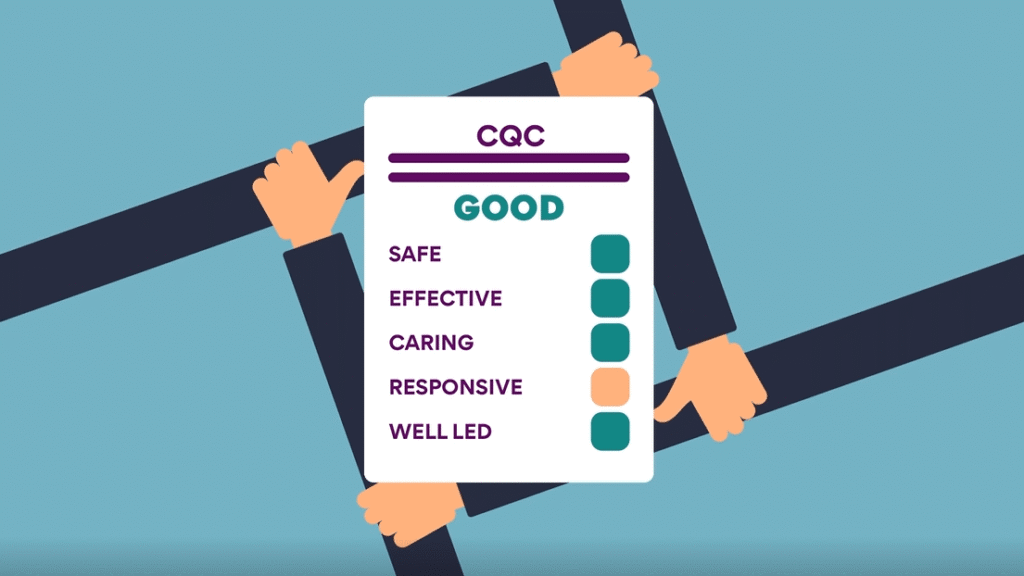
    What are the different CQC ratings?

    CQC uses four ratings to judge services:

    Outstanding – The service performs exceptionally well.
    Good – The service meets standards consistently and delivers safe, effective care.
    Requires Improvement – The service does not consistently meet standards and must improve.
    Inadequate – The service fails to meet required standards and may face enforcement action.

    CQC applies these ratings across five key questions: Safe, Effective, Caring, Responsive, and Well-led. Leadership quality strongly influences the Well-led rating.

    What is the lowest CQC rating?

    The lowest CQC rating is Inadequate.
    When CQC rates a service Inadequate, it has identified serious failings in safety, leadership, or care quality.

    CQC may impose conditions, restrict admissions, issue warning notices, or begin enforcement action. In some cases, services close if they cannot improve.

    Leadership failures often contribute to an Inadequate rating, particularly under the Well-led key question.

  • CQC Supported Living Registration in 2026: The Complete Guide

    CQC Supported Living Registration in 2026: The Complete Guide

    Sometimes, but the trigger is personal care, not supported living itself. The Care Quality Commission (CQC) does not regulate supported living as a service model. CQC only regulates what you do inside that model.

    If your staff deliver personal care, you must register with CQC before you start operating. If you do not provide personal care, CQC registration is not required.

    What counts as personal care?

    CQC defines personal care as hands-on support with daily living tasks, including:

    • Washing or bathing
    • Dressing or undressing
    • Toileting or continence care
    • Eating or drinking support
    • Physical assistance linked to hygiene or mobility

    If your staff help with any of these activities, even occasionally, you are delivering the regulated activity of personal care. You need CQC registration before providing these services.

    What does not trigger CQC registration?

    You do not need CQC registration if your service only provides housing-related or social support, such as:

    • Tenancy sustainment
    • Budgeting or bill support
    • Help accessing education, work, or community activities
    • Emotional or social support without hands-on care

    Many supported living providers fall into this category at first. Problems arise when services quietly drift into personal care without recognising the regulatory consequences.

    CQC treats unregistered personal care as a serious offence. Operating without registration can lead to enforcement action, prosecution, and long-term reputational damage.

    Just as importantly, CQC does not accept “grey areas.” If inspectors see evidence of personal care, they will assess your service against the standards for regulated activity, regardless of how you describe your model.

    Supported living does not require CQC registration by default. Personal care does. If your service crosses that line, registration is mandatory, and getting it wrong can cost you months of delays or force a complete reapplication.

    CQC Supported Living vs Care Homes

    Do You Really Need CQC Registration for Supported Living? | 2026 Guide for Providers

    Many providers lose registrations or face reclassification because they misunderstand this distinction. CQC does not judge your service by its name. It looks at how you combine housing and care in practice.

    The question CQC asks is simple: Does the person genuinely live in their own home, or does the service package accommodation and care together?

    What makes supported living legally different from care homes

    In supported living, housing and care stay separate.

    • The person holds a real tenancy or occupancy agreement
    • Housing and care sit under separate legal arrangements
    • The tenant can, in principle, change their care provider without losing their home
    • Staff respect the home as the person’s private space, not a service-controlled environment

    CQC focuses on choice, control, and housing rights. When those elements exist, the model fits supported living or supported accommodation.

    In contrast, care homes operate differently:

    • Accommodation and personal care come as a single package
    • The provider controls where the person lives and how care is delivered
    • Residents do not hold genuine tenancy rights

    This difference explains why someone searching for care homes near me looks for a regulated residential setting, while supported living operates under a completely different legal framework.

    When supported living becomes an assisted care facility

    Problems arise when providers blur the line.

    CQC may decide your service functions as an assisted care facility or care home if it sees evidence that:

    • Care is tied to the property
    • Tenants cannot realistically choose or change their care provider
    • Staff access the home without proper consent or boundaries
    • Commissioners “place” people into a bundled housing-and-care arrangement
    • The service controls daily living decisions rather than supporting independence

    When this happens, CQC may conclude that you are providing accommodation together with personal care. That triggers a different regulated activity, with higher expectations, different registration requirements, and stricter inspection standards.

    CQC makes this judgement based on evidence, not intent. Even well-meaning providers fail here because their documents, contracts, or daily practice contradict the supported living model they describe.

    Why getting this wrong causes serious problems

    If CQC determines that your service operates like a care home:

    • Your CQC Supported Living application may fail
    • You may need to reapply under the correct regulated activity
    • Your registration timeline can extend by months
    • Future inspections will assess you against the wrong framework

    In extreme cases, CQC can refuse registration altogether if it believes the model does not protect people’s rights or independence.

    Supported living succeeds only when housing and care remain genuinely separate. If accommodation and care merge into a single package, CQC will treat the service as something else entirely, regardless of what you call it.

    The Real Tenancy Test: How CQC Decides If Your Model Is Genuine

    This is where most CQC Supported Living applications succeed or fail. CQC does not rely on labels like supported living or supported accommodation. It looks for evidence that people genuinely live in their own homes.

    To make that judgement, the Care Quality Commission refers to the Real Tenancy Test, a framework developed by the National Development Team for Inclusion (NDTi) and embedded in CQC’s Housing with Care guidance.

    CQC uses this test to answer one question: Does the person have real housing rights and real control over their home?

    What the Real Tenancy Test actually checks

    CQC expects supported living providers to show that housing and care operate as two genuinely separate arrangements, not a bundled service.

    Key indicators of a genuine supported living model include:

    • The person holds a legal tenancy or occupancy agreement with enforceable housing rights
    • Housing and care sit under separate contracts, not a single package
    • The care provider and housing provider are separate organisations, or clearly separated functions if part of the same group
    • The tenant can choose or change their care provider without losing their home
    • Staff treat the property as the person’s private home, not a service location
    • The tenant controls access, routines, and decisions about their living space
    • Commissioners do not “place” people into a fixed housing-and-care bundle

    CQC looks for consistency across documents, contracts, and daily practice. If any part of your model contradicts these principles, assessors will question whether your service truly qualifies as supported living.

    Common ways providers fail the Real Tenancy Test

    Many applications fail not because providers misunderstand the law, but because their evidence tells a different story.

    CQC often raises concerns when it sees:

    • Care contracts that reference the property as a “placement”
    • Housing agreements that end automatically if care stops
    • Staff holding keys without tenant consent or clear access protocols
    • Service rules that override tenant choice “for operational reasons”
    • Care rotas that dictate daily life rather than support independence

    Each of these signals suggests that accommodation and care operate as one service. When that happens, CQC may decide the model no longer fits supported living.

    Why the Real Tenancy Test affects your registration outcome

    If your service fails the Real Tenancy Test, CQC may conclude that you provide accommodation together with personal care. That triggers a different regulated activity and a completely different registration route.

    This decision can lead to:

    • Rejection of your supported living application
    • Requirement to reapply under a care home-style registration
    • Significant delays and added costs
    • Higher inspection thresholds and tighter regulatory scrutiny

    CQC makes this decision early in the process. Once assessors form the view that housing and care are not genuinely separate, reversing that conclusion becomes difficult.

    Passing the Real Tenancy Test is not about wording. It depends on how your service works in reality. If tenants hold real housing rights and real control, CQC will treat your model as supported living. If not, CQC will regulate it as something else.

    READ ALSO: CQC Registration for Domiciliary Care Providers: Complete 2026 Guide

    What Changed in CQC Supported Living Registration Since 2025

    cqc supported living registration
    cqc supported living registration

    CQC registration rules for supported living have not stood still. Several changes between 2025 and 2026 have altered how CQC assesses applications, what documents it expects, and how quickly it rejects incomplete submissions.

    Understanding these changes helps you avoid costly mistakes.

    July 2025 changes: what changed and what did not

    In July 2025, the Care Quality Commission introduced a revised registration process aimed mainly at domiciliary care (homecare) providers. Many people assumed those changes applied to supported living. That assumption causes problems.

    Here is the reality:

    • CQC simplified homecare registration requirements
    • Some documents were removed at application stage for homecare only
    • CQC tightened rejection rules for incomplete applications

    What did not change:

    Supported living registration did not receive the same simplifications.

    CQC continues to treat supported living as a higher-risk, more complex service model because it sits at the intersection of housing, care, and human rights. As a result, supported living applications still require a broader evidence pack than standard domiciliary care.

    February 2026 update: additional supporting documents

    In early 2026, CQC expanded the list of supporting documents required for care homes and supported living services.

    This update reinforced three key expectations:

    • Documents must be current, complete, and service-specific
    • Policies must reflect how your service actually operates
    • Evidence must align across your Statement of Purpose, business plan, and contracts

    CQC now rejects applications more quickly if documents are missing, outdated, contradictory, or clearly copied from generic templates.

    This change affects supported living providers more than homecare providers because supported living relies heavily on model clarity. Any inconsistency around housing, care separation, or tenant rights raises immediate concerns.

    A critical misconception to avoid

    Some providers believe they can submit a “basic” application first and fill in gaps later.

    That approach no longer works.

    CQC now applies strict initial checks. If your application fails at that stage, CQC rejects it outright. You must correct the issues and resubmit as a new application, losing your place in the queue and adding weeks or months to your timeline.

    This is why preparation matters more than speed.

    What this means for supported living providers in 2026

    If you are registering a supported living service now:

    • Do not rely on outdated advice meant for homecare providers
    • Assume CQC will scrutinise housing and care separation closely
    • Expect rejection if your documents do not align perfectly
    • Treat registration as a one-shot submission, not a draft

    The registration process has become stricter, not simpler, for supported living. Providers who understand the post-2025 and 2026 changes submit stronger applications, avoid rejection, and move through the process faster.

    Step-by-Step CQC Supported Living Registration Process

    CQC does not approve supported living services by accident. It follows a structured assessment process designed to test whether your organisation can deliver safe, lawful personal care within a genuine supported living model.

    Understanding how this process works helps you prepare properly and avoid rejection.

    Stage One: Initial checks (the rejection stage)

    At this stage, the Care Quality Commission checks whether your application is complete and coherent. CQC does not assess quality here. It checks whether your submission meets the minimum standard to move forward.

    CQC will reject your application at this stage if:

    • Mandatory forms are missing or incomplete
    • Required supporting documents are not attached
    • Policies contradict your Statement of Purpose
    • Your model of care is unclear or inconsistent
    • Housing and care separation is not evident

    A rejection at this point means you must resubmit as a new application. You lose your place in the queue and add weeks or months to your timeline.

    This is why supported living providers must treat submission as a final version, not a draft.

    Stage Two: Full assessment

    If your application passes initial checks, CQC moves to full assessment. This is where CQC tests whether you can actually deliver the regulated activity of personal care safely and lawfully.

    CQC will assess:

    • Your policies and procedures in detail
    • Your understanding of supported living principles
    • Your leadership and governance arrangements
    • Your approach to safeguarding, medicines, and consent

    For supported living services, CQC may also arrange a site visit. Inspectors use this to assess premises readiness, privacy, staff access arrangements, and whether the environment supports independence.

    The fit person interview

    During full assessment, CQC interviews your Registered Manager and Nominated Individual. This interview tests whether the people leading the service meet legal “fit person” requirements.

    Expect questions linked to CQC’s five key areas:

    • Safe: How you manage safeguarding, risk, and medicines
    • Effective: How you deliver person-centred personal care
    • Caring: How you protect dignity, privacy, and respect
    • Responsive: How you adapt care to individual needs
    • Well-led: How you monitor quality and improve practice

    For CQC Supported Living, assessors also focus heavily on:

    • How you maintain separation between housing and care
    • How tenants exercise choice and control
    • How staff respect the home as a private space
    • How you apply the Mental Capacity Act in daily practice

    Weak answers here often lead to delays or refusal.

    How long the process takes in practice

    CQC aims to process applications within 10 weeks, but supported living registrations often take 10–16 weeks or longer, even for complete applications.

    Incomplete or inconsistent submissions extend this timeline significantly. Rejected applications reset the clock entirely.

    What happens after registration

    Once CQC grants registration:

    • You receive your registration certificate
    • You can legally begin delivering personal care
    • Your service becomes eligible for inspection and future CQC reports
    • Your performance will later contribute to published CQC ratings

    Registration is not the end of scrutiny. It is the starting point.

    CQC registration follows a strict two-stage process. Supported living providers succeed when they submit a complete, consistent application and prepare their leadership team to demonstrate real understanding of supported living, not just paperwork compliance.

    MORE: Latest CQC Reports, Regulated Activities (2026)

    Documents You Must Submit for CQC Supported Living Registration

    CQC expects a complete, consistent evidence pack for supported living registration. Every document must align with your service model and clearly show how you deliver personal care while keeping housing and care separate.

    If your documents contradict each other, CQC will reject the application at initial checks.

    Core application forms (submit together)

    You must submit both provider and manager applications at the same time. CQC will not assess one without the other.

    • Application for Registration as a Provider of Regulated Activities
    • Application for Registration as a Manager of Regulated Activities

    Download the current versions directly from the Care Quality Commission website before completing them. CQC updates forms regularly, and using outdated versions delays assessment.

    Statement of Purpose (legal requirement)

    Your Statement of Purpose carries legal weight. CQC uses it as the anchor document for the entire application.

    For CQC Supported Living, it must clearly state:

    • You register for personal care only
    • You do not provide accommodation with care
    • How housing and care remain separate
    • Who you support and how you support them
    • Where and how the service operates
    • Who manages the regulated activity

    CQC frequently rejects applications where the Statement of Purpose sounds like a care home description or fails to explain separation properly.

    Mandatory policies and procedures

    CQC expects policies that reflect how your service actually works, not generic templates.

    At a minimum, include:

    • Safeguarding policy and procedures
    • Medicines management policy
    • Infection prevention and control policy
    • Recruitment and safer employment policy
    • Consent and Mental Capacity Act policy
    • Equality, diversity, and human rights policy
    • Complaints policy
    • Good governance and quality assurance policy

    Each policy must match your client group, staffing model, and supported living approach.

    Financial viability statement

    Unlike simplified homecare registration, supported living providers must still submit a financial viability statement.

    Use the CQC template and include:

    • Confirmation of funding sources
    • Evidence you can sustain the service as described
    • Accountant or financial adviser details

    CQC checks whether your financial plan supports safe, continuous care delivery.

    Business plan

    Your business plan should demonstrate real understanding, not ambition.

    CQC looks for:

    • Evidence of local need and demand
    • Understanding of the people you will support
    • Staffing structure and shift patterns
    • Risk management and business continuity
    • Realistic financial projections

    Plans that read like funding pitches often fail this test.

    Insurance documentation

    You must show evidence of appropriate insurance cover:

    • Public liability insurance
    • Employer’s liability insurance (if you employ staff)
    • Professional indemnity insurance (strongly recommended)

    Certificates must show the correct business name and address and remain valid at the time of submission.

    Data protection and ICO registration

    Even where CQC does not request the certificate at application stage, ICO registration remains mandatory before you process personal data.

    CQC may still ask for evidence later in assessment or inspection.

    Additional documents CQC often requests later

    Prepare these in advance to avoid delays:

    • Sample care plan
    • Sample care contract (separate from housing agreement)
    • Organisational structure chart
    • Staff training matrix
    • Mental Capacity Act guidance and tools
    • Learning Disability form (if applicable)

    Why consistency matters more than volume

    CQC does not reward long document lists. It looks for alignment.

    If your policies describe a service that looks different from your Statement of Purpose, business plan, or contracts, assessors will question whether you understand your own model.

    A strong supported living application uses fewer documents, written clearly, that all tell the same story. Consistency across documents is what moves applications forward.

    SEE ALSO: New Rules for Care Home Payments in 2026

    Personal Care, Medicines, and Mental Capacity in Supported Living

    This section causes the most confusion and the most enforcement risk. CQC focuses on what staff actually do, not how providers describe their service.

    When personal care triggers CQC registration

    Personal care remains the legal trigger. If staff provide hands-on assistance with daily living, registration applies.

    That includes:

    • Washing, bathing, or personal hygiene
    • Dressing or undressing
    • Toileting or continence support
    • Physical help with eating or drinking
    • Direct assistance linked to mobility or hygiene

    If your team delivers any of these activities, these services fall within the regulated activity of personal care. You must register before you operate.

    Medicines support: the decision rule CQC applies

    Medication support creates confusion because not all medicines activity looks the same.

    CQC draws a practical line:

    • Prompting someone to take their own medicine may not, on its own, trigger registration
    • Administering medicines, managing dosages, handling PRN medication, or dealing with medication errors usually sits alongside personal care

    When medicines support forms part of a wider personal care role, CQC treats it as ancillary to personal care. In supported living, that often means registration applies even if medicines are not the primary service.

    Providers get into trouble when they describe medicines support as “minor” while policies and care plans show otherwise.

    Mental Capacity Act: supported living expectations

    Supported living providers must show strong, working knowledge of the Mental Capacity Act 2005. CQC looks for evidence that staff:

    • Assume capacity unless proven otherwise
    • Support people to make their own decisions
    • Assess capacity decision by decision
    • Record best-interest decisions clearly
    • Use the least restrictive options at all times

    In supported living, deprivation of liberty works differently from care homes. If a person experiences continuous supervision and control and is not free to leave, providers must seek Court of Protection authorisation. DoLS does not apply.

    CQC tests whether managers understand this distinction and apply it correctly in practice.

    Consent, choice, and daily living

    Supported living succeeds when people control their lives. CQC expects providers to show how they:

    • Obtain and record valid consent
    • Respect tenancy rights
    • Balance safety with independence
    • Reduce restrictions over time

    Policies alone do not convince assessors. CQC looks for real examples of how staff support people to make choices, even when those choices involve managed risk.

    Where providers go wrong

    CQC raises concerns when it sees:

    • Blanket restrictions “for safety”
    • Capacity assessments copied across individuals
    • Medication practices that contradict care plans
    • Staff uncertainty about when court authorisation applies

    When those services drift into risk-averse or institutional practice, CQC questions whether the model still supports independence.

    In supported living, personal care, medicines, and mental capacity link together. Providers who understand these links and apply them consistently pass assessment. Those who treat them as paperwork exercises struggle.

    LEARN MORE: What does CQC stand for? Complete 2026 Guide

    Right Support, Right Care, Right Culture: Requirements for Learning Disability and Autism Services

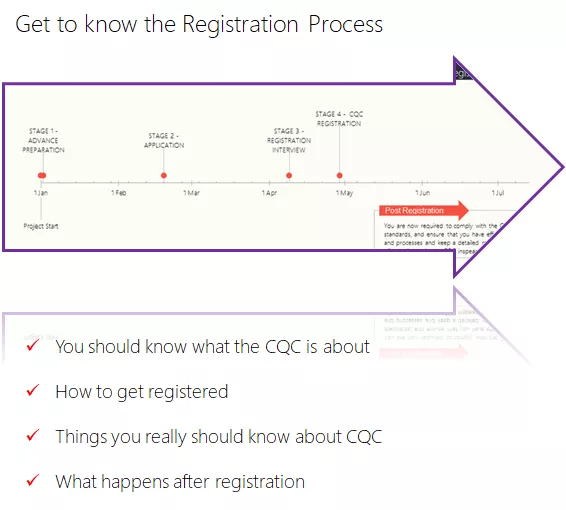
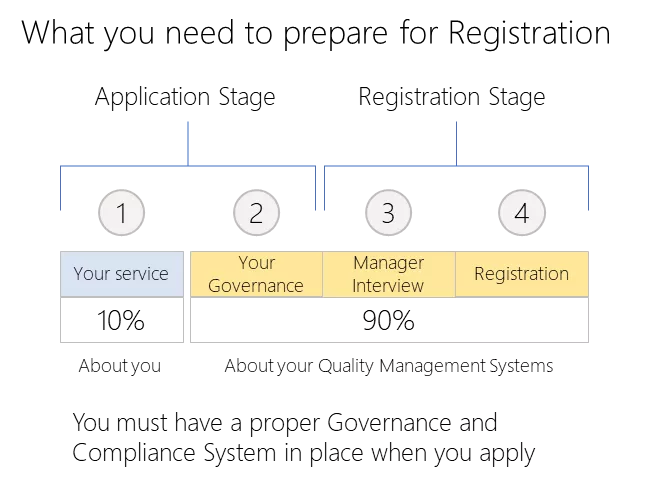
    CQC Registration Process
    CQC Registration Process

    If your CQC Supported Living service supports autistic people or people with a learning disability, CQC applies additional scrutiny. This is not optional. It is a core part of how the Care Quality Commission decides whether to grant registration.

    CQC expects providers to design services around the statutory guidance Right Support, Right Care, Right Culture.

    When this guidance applies

    CQC applies this framework when your service:

    • Supports people with a learning disability
    • Supports autistic people
    • Offers long-term supported living rather than short-term enablement

    If your Statement of Purpose includes these groups, CQC will assess your application against this guidance from day one.

    What CQC means by Right Support

    Right Support focuses on how the service model promotes independence.

    CQC expects you to show that:

    • People live in ordinary homes in the community
    • Support increases independence rather than replacing it
    • Daily routines reflect the person’s choices, not staff convenience
    • The service avoids institutional features or restrictive practices

    Large, clustered, or highly controlled settings raise red flags unless you provide strong justification.

    What CQC means by Right Care

    Right Care focuses on how care is delivered.

    CQC looks for evidence that care:

    • Respects dignity, privacy, and human rights
    • Responds to individual needs, not labels
    • Supports people to live ordinary lives
    • Adapts as people’s needs and goals change

    Generic care plans or one-size-fits-all approaches undermine confidence in your model.

    What CQC means by Right Culture

    Right Culture focuses on leadership and staff behaviour.

    CQC expects leaders to create a culture where:

    • Staff empower people instead of controlling them
    • Risk management supports choice rather than avoids responsibility
    • Staff understand autism and learning disability needs
    • Managers challenge restrictive or institutional thinking

    Culture shows through staff decisions, not policy wording.

    Pre-application engagement: when CQC expects it

    CQC strongly encourages providers planning learning disability or autism services to engage before submitting a full application.

    This usually involves:

    • Completing a pre-registration questionnaire
    • Discussing your service design with a CQC registration specialist
    • Receiving feedback on whether your model aligns with the guidance

    Early engagement helps providers avoid rejection after investing time and money in a full application.

    Service size and design expectations

    CQC often refers to best-practice guidance that supports small, community-based services. There is no absolute size limit, but providers must show that:

    • The environment supports privacy and dignity
    • Staffing levels remain appropriate
    • The setting does not feel institutional

    CQC has refused registrations where providers failed to show how service design supports person-centred care. It has also approved larger services where providers demonstrated strong evidence of individualised support.

    Training expectations and the Oliver McGowan Code

    CQC expects providers to train staff appropriately for the people they support.

    For learning disability and autism services, this includes meeting the standards set out in the Oliver McGowan Mandatory Training Code of Practice. CQC checks whether:

    • Staff receive training relevant to their role
    • Training supports real competence, not box-ticking
    • Supervision reinforces good practice

    Training records must match your staffing model and service aims.

    Why this section matters for registration

    CQC uses Right Support, Right Care, Right Culture as a registration filter, not just an inspection framework. If your service design conflicts with this guidance, CQC may refuse registration even if your paperwork looks complete.

    For learning disability and autism services, CQC does not ask whether you can deliver care. It asks whether your service model supports people to live ordinary, empowered lives. Providers who design around this principle move forward. Those who ignore it get stopped early.

    ALSO READ: Care Policies and Procedures: How to Implement Them Correctly in 2026

    The Fit Person Interview: How CQC Assesses Your Leadership

    CQC does not register services. It registers people. The fit person interview decides whether your leadership team is capable of running a supported living service safely, lawfully, and in line with regulatory expectations.

    This interview often determines the outcome of the application.

    Who CQC interviews and why

    The Care Quality Commission interviews:

    • The Registered Manager
    • The Nominated Individual (if applicable)

    CQC uses the interview to confirm that these individuals:

    • Are of good character
    • Can perform the duties of their role
    • Have the skills, knowledge, and experience to manage personal care in supported living

    Strong paperwork cannot compensate for weak leadership responses.

    How CQC structures the interview

    CQC frames the interview around its five key questions. Assessors expect clear, confident, and practical answers.

    Safe

    You must explain how you:

    • Identify and manage safeguarding risks
    • Respond to incidents and near misses
    • Handle medicines safely
    • Protect people from avoidable harm

    Expect scenario-based questions, not theory.

    Effective

    CQC tests whether you:

    • Deliver person-centred personal care
    • Apply Mental Capacity Act principles correctly
    • Assess capacity decision by decision
    • Review care as needs change

    Generic answers raise concerns.

    Caring

    You need to show how you:

    • Promote dignity, privacy, and respect
    • Support people to make real choices
    • Avoid institutional practices
    • Balance risk with independence

    CQC looks for values in action, not slogans.

    Responsive

    CQC wants to know how you:

    • Adapt support to individual needs
    • Respond to complaints
    • Learn from feedback
    • Adjust care quickly when circumstances change

    Rigid systems signal poor responsiveness.

    Well-led

    This is where many providers struggle.

    You must explain how you:

    • Monitor quality and performance
    • Audit care delivery
    • Learn from incidents and inspections
    • Lead staff culture and behaviour

    Good governance matters more than policy volume.

    Supported living–specific questions to expect

    For CQC Supported Living, assessors focus heavily on:

    • How you maintain separation between housing and care
    • How tenants control access to their home
    • How staff respect tenancy rights
    • How you apply the Real Tenancy Test in daily practice
    • How you reduce restrictions over time

    If leaders cannot explain these clearly, CQC questions whether the model truly supports independence.

    What weak interviews have in common

    CQC often raises concerns when interviewees:

    • Rely on policy wording instead of real examples
    • Confuse supported living with care home practice
    • Show uncertainty around mental capacity or court authorisation
    • Cannot explain how governance works in practice

    Experience matters here. Leaders familiar with regulatory environments, whether through management roles, inspection experience, or regulatory careers such as CQC careers or care quality commission jobs, tend to perform better because they understand how assessors think.

    How to prepare effectively

    Strong preparation focuses on real scenarios, not memorised answers.

    Before the interview, ensure you can explain:

    • How your service works on a typical day
    • How staff make decisions when risks arise
    • How you evidence learning and improvement
    • How leadership supports independence, not control

    Practice answering questions out loud. If you cannot explain something simply, CQC will assume the system is not embedded.

    CQC uses the fit person interview to test leadership credibility. Providers who demonstrate clarity, confidence, and real understanding of supported living principles move forward. Those who rely on paperwork alone often do not.

    Anti-Rejection Checklist: How to Avoid Common CQC Registration Failures

    Most CQC Supported Living applications do not fail because providers lack good intentions. They fail because documents, decisions, and service design do not line up.

    Use this checklist before submission. Treat it as a final gate, not a formality.

    Documentation consistency (non-negotiable)

    CQC cross-checks every document you submit. Inconsistencies trigger immediate rejection.

    Confirm that:

    • Your Statement of Purpose matches your policies, staffing model, and client group
    • Your business plan describes the same service as your policies
    • Housing and care separation appears clearly across all documents
    • Organisational charts match named roles elsewhere
    • Every document uses the same legal business name

    If one document describes a care-home-style service, CQC will assume that is your true model.

    Completeness of submission

    CQC now rejects incomplete applications at initial checks.

    Before sending anything, confirm that:

    • All mandatory policies are attached
    • All required forms are completed in full
    • All signatures are included
    • Insurance certificates are current and accurate
    • Files are readable and clearly named
    • Everything is submitted together in one package

    Sending documents in stages does not help. It delays or resets your application.

    Supported living-specific checks

    This is where many providers fail.

    Confirm that you can clearly evidence:

    • Genuine separation between housing and care
    • A real tenancy or occupancy agreement
    • A care contract separate from housing
    • Tenant control over access, routines, and decisions
    • Compliance with the Real Tenancy Test

    If you cannot demonstrate this, CQC may treat your service as a care home and reject the application.

    Learning disability and autism services

    If your service supports autistic people or people with learning disabilities, check that:

    • Your service design aligns with Right Support, Right Care, Right Culture
    • You have evidence of commissioner engagement
    • You completed pre-application discussions where expected
    • Staff training plans meet current guidance

    CQC rejects services that appear institutional, restrictive, or poorly designed for independence.

    Regulatory currency

    Outdated information causes rejection.

    Before submission:

    • Download the latest forms from the CQC website
    • Review current guidance and supporting document requirements
    • Update policies to reflect current legislation
    • Remove any references to outdated processes or systems

    CQC does not correct outdated submissions. It rejects them.

    Final self-test before submission

    Ask yourself these questions honestly:

    • Would an assessor understand our service model in five minutes?
    • Do all documents tell the same story?
    • Can our leaders explain this model confidently in interview?
    • Does our service protect tenancy rights and independence?

    If the answer to any question is no, stop and fix the issue before submitting.

    CQC rejection usually signals misalignment, not malice. Providers who submit a clear, consistent, supported living model move forward. Those who rush or rely on generic documents get stopped early.

    CQC Fees, Timelines, and What Happens After You Register

    Registering a supported living service involves more than approval paperwork. Providers need to understand costs, realistic timelines, and post-registration expectations to plan properly and avoid disruption.

    CQC fees for supported living providers

    There is no application fee for CQC registration. However, once registration is granted, providers must pay an annual fee.

    For community social care providers, which includes CQC Supported Living, CQC calculates fees using:

    • A base fee
    • A per–service user fee

    The exact amount depends on how many people you support. Fees are invoiced after registration and then annually. Providers must budget for this from day one, as non-payment creates compliance risks.

    How long registration takes in practice

    CQC’s official target remains 10 weeks, but supported living registrations often take 10 to 16 weeks or longer.

    Timelines depend on:

    • Completeness of your application
    • Clarity of your supported living model
    • Speed of responses to CQC queries
    • Interview availability for key personnel

    Rejected applications restart the clock entirely. This is why preparation saves months.

    What happens immediately after registration

    Once CQC grants registration:

    • You receive your registration certificate
    • You can legally deliver personal care
    • Your service becomes eligible for inspection
    • CQC can publish a CQC report after inspection

    Registration does not mean reduced scrutiny. It signals that CQC expects you to operate exactly as described.

    Inspections, reports, and ratings

    CQC will usually inspect supported living services within the first year. Inspectors assess whether your service remains:

    • Safe
    • Effective
    • Caring
    • Responsive
    • Well-led

    Inspection outcomes feed into published CQC ratings, which commissioners and families rely on heavily.

    Strong early practice helps you avoid adverse CQC reports that can affect referrals and funding.

    Why inspection readiness matters from day one

    CQC inspects against real practice, not application promises.

    Inspectors will review:

    • Care delivery
    • Record keeping
    • Staff competence
    • Tenant rights and privacy
    • Leadership and governance

    Providers who drift from their registered model often struggle at first inspection.

    How registration affects commissioning and growth

    A strong registration and inspection history helps supported living providers:

    • Secure local authority referrals
    • Build credibility within Care United Kingdom and the wider sector
    • Compete with large providers such as Barchester Care Home groups
    • Demonstrate compliance when bidding for contracts

    Poor inspection outcomes, by contrast, limit growth opportunities.

    Registration opens the door, but inspection determines reputation. Providers who plan for compliance beyond registration build stronger, more sustainable supported living services.

    Conclusion

    CQC registration for supported living does not fail because providers lack good intentions. It fails when the service model, documents, and daily practice tell different stories.

    In 2026, CQC expects supported living providers to understand one core principle: housing and care must remain genuinely separate. Personal care triggers regulation. Tenancy rights protect independence. The Real Tenancy Test determines whether your service qualifies as supported living or falls into a different regulatory category altogether.

    Providers who succeed do three things well. They design services around real choice and control. They prepare evidence that reflects how the service actually operates. And they lead with clarity, not assumptions, when dealing with regulation.

    Registration is not just an approval step. It sets the framework for future inspections, CQC reports, and long-term credibility with commissioners and families. When you get the foundations right, compliance becomes easier, inspections become predictable, and your service earns trust over time.

    Supported living works best when it feels like home, not a service setting. Build your model around that truth, and the registration process stops being a barrier and starts becoming confirmation that you are doing it right.

    Get Expert Support With Your CQC Supported Living Registration

    CQC registration for supported living leaves little room for error. One inconsistency can delay your application for months or push your service into the wrong regulated activity.

    Care Sync Experts supports supported living providers across England with end-to-end, regulation-led registration support. We focus on clarity, consistency, and evidence—so your application stands up to CQC scrutiny the first time.

    How we help supported living providers

    • Real Tenancy Test assessment to confirm your model is genuinely tenancy-based
    • Statement of Purpose written to reflect personal care only and clear housing-care separation
    • Policy and procedure packs tailored to supported living (not generic templates)
    • Business plans and financial viability statements aligned with CQC expectations
    • Right Support, Right Care, Right Culture compliance for learning disability and autism services
    • Fit person interview preparation for Registered Managers and Nominated Individuals
    • Post-registration readiness to support strong first inspections and CQC ratings

    We also support registrations with Care Inspectorate Wales (CIW) and RQIA in Northern Ireland for providers operating across the UK.

    Book a free consultation to discuss your service model and registration route, before you submit and risk rejection.

    This guide reflects CQC requirements as of January 2026. Always check current guidance before submitting your application, as requirements can change.

    FAQ

    What are the 5 CQC standards?

    The Care Quality Commission assesses services against five core standards, often called the five key questions. These standards apply across health and social care, including supported living and care homes.
    The five CQC standards are:

    Safe – People receive care that protects them from harm and abuse

    Effective – Care achieves good outcomes and follows best practice

    Caring – Staff treat people with dignity, compassion, and respect

    Responsive – Services meet people’s needs and adapt when those needs change

    Well-led – Leadership promotes quality, safety, and continuous improvement

    CQC uses these standards during inspections, registration assessments, and when deciding enforcement action.

    How does CQC work?

    CQC works as an independent regulator of health and social care in England. Its role is to make sure services meet legal and quality standards.
    In practice, CQC works by:

    – Registering providers before they deliver regulated activities
    – Inspecting services to assess quality and safety
    – Publishing inspection reports for public transparency
    – Rating services where applicable
    – Taking enforcement action when standards are not met

    CQC gathers evidence through document reviews, site visits, staff interviews, and feedback from people who use services. It then judges services against its regulatory framework and legal requirements.

    What are the benefits of CQC registration?

    CQC registration brings both legal protection and strategic benefits.

    Key benefits include:
    – Legal authority to deliver regulated care
    – Increased trust from commissioners, families, and professionals
    – Eligibility for local authority and NHS contracts
    – Clear quality framework for service improvement
    – Published inspection outcomes that support transparency

    Well-run services use CQC standards as a management tool, not just a regulatory obligation. Strong compliance often leads to better inspections, stronger referrals, and long-term sustainability.

    What are the 5 main components of a care plan?

    A good care plan shows how a service delivers safe, person-centred care. While formats vary, strong care plans usually include five core components:

    Personal details and background – Who the person is and what matters to them
    Assessed needs – Physical, emotional, social, and health needs
    Care and support actions – What support is provided, how, and by whom
    Risk management – Identified risks and agreed control measures
    Review and outcomes – How care is monitored, reviewed, and updated

    CQC expects care plans to reflect individual choice, consent, and changing needs, not generic templates.

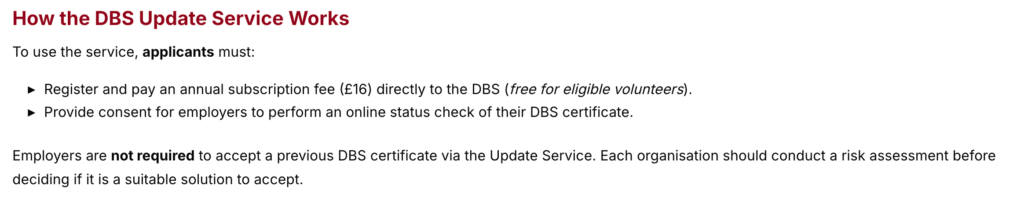
  • Can you use the DBS Update Service for CQC registration?

    Can you use the DBS Update Service for CQC registration?

    If you are applying for CQC registration in 2026, you cannot use the DBS Update Service to meet CQC’s DBS requirement.

    Care Quality Commission states that it cannot accept DBS checks from the Update Service because it cannot verify your identity in person against the certificate, as required by the Disclosure and Barring Service. Even if your DBS Update Service check shows as current and clear after dbs update service login, CQC will reject your application if you rely on it.

    What CQC accepts instead (at a glance):

    • Not a registered healthcare professional?
      Apply for a CQC countersigned enhanced DBS check.
    • Registered healthcare professional (e.g., NMC, GMC, HCPC)?
      Use an enhanced DBS (not countersigned) and post the original paper certificate to CQC.
    • All applicants:
      Your DBS must be Enhanced, include the correct barred list, and be under 12 months old at submission.

    Why this matters: Since mid-2025, rejected applications go to the back of the queue. A simple mistake, like submitting an update service DBS instead of the required certificate, can cost you months.

    Why CQC cannot accept the DBS Update Service

    CQC Refusal? How to Fix Your Application and Get Registered

    CQC rejects the DBS Update Service because it does not allow them to complete the identity checks required by the Disclosure and Barring Service.

    The update service exists to help employers confirm whether an existing DBS certificate has changed since it was issued. It provides a status check, not a fresh DBS certificate and not identity verification. When an employer uses the dbs update service check, they must first see the original paper certificate, verify the person’s identity in person, and confirm the certificate level and barred list match the role. That in-person step is mandatory.

    CQC processes applications from thousands of providers across England. They cannot meet every applicant face-to-face to verify identity after a login dbs update or dbs online account login check. Because they cannot complete that verification step, they cannot rely on the Update Service at all.

    Instead, CQC requires DBS evidence that already includes verified identity checks. That is why they insist on either:

    • a CQC countersigned enhanced DBS check, where identity is verified through the Post Office on CQC’s behalf, or
    • an enhanced DBS from registered healthcare professionals, whose professional registration already includes robust identity verification.

    This distinction explains a common point of confusion. The DBS Update Service can show that a certificate remains unchanged, but it cannot prove who is presenting it. CQC must confirm both the certificate details and the applicant’s identity. The Update Service only covers one of those requirements.

    If you submit a CQC application using the Update Service instead of the required DBS certificate, CQC will reject the application without assessment. In 2026, that rejection does not pause your place in the queue. It resets it.

    What DBS check does CQC require for registration?

    CQC will only assess your application if your DBS evidence meets all of the requirements below. Miss one, and CQC will reject the application outright.

    CQC requires an enhanced DBS check

    CQC does not accept Basic or Standard checks. You must submit an enhanced DBS check.

    An enhanced DBS shows:

    • Convictions, cautions, reprimands, and warnings
    • Relevant information held by local police
    • Barred list information (where requested)

    If your certificate does not clearly say Enhanced, do not submit it.

    Choose the correct barred list

    Your enhanced DBS must include the right barred list for the service you are registering:

    Service usersBarred list required
    Under 18 onlyChildren’s barred list
    18 and over onlyAdults’ barred list
    All agesAdults’ and children’s barred lists

    CQC checks this closely. If you select the wrong barred list, CQC will reject your application even if everything else looks correct.

    Follow the strict 12-month rule

    CQC will not accept a DBS certificate that is more than 12 months old at the point you submit your application.

    There are no exceptions:

    • 13 months old → rejected
    • 12 months and 1 day old → rejected

    If your DBS is close to expiry and you expect any delay, apply for a new one before you submit.

    Do not rely on the Update Service or shortcuts

    CQC will not accept:

    • Certificates checked through the DBS Update Service
    • Status results from an update service DBS check
    • Shortcuts via third-party portals that cannot meet CQC’s criteria

    CQC requires DBS evidence that already includes verified identity checks. That is why they accept either a CQC countersigned enhanced DBS or, for certain professionals, an enhanced DBS supported by professional registration.

    For CQC registration, your DBS must be Enhanced, include the correct barred list, be under 12 months old, and be submitted through the correct route.

    READ: Care Policies and Procedures: How to Implement Them Correctly in 2026

    Which DBS route applies to you? (Decide in 30 seconds)

    What You Need for CQC Registration
    What You Need for CQC Registration

    Use this quick decision guide to choose the correct DBS route before you apply. Picking the wrong route is one of the fastest ways to get rejected.

    Step 1: Are you a registered healthcare professional?

    Ask yourself this first. Are you currently registered with any of the following bodies?

    • General Dental Council (GDC)
    • General Medical Council (GMC)
    • General Pharmaceutical Council (GPhC)
    • Health and Care Professions Council (HCPC)
    • Nursing and Midwifery Council (NMC)
    • Social Work England

    Step 2: Follow the correct path

    If you are not registered with any of these bodies, you must apply for a CQC countersigned enhanced DBS check.

    CQC uses this route because it includes verified identity checks carried out through the Post Office on their behalf.

    If you are registered with one of these bodies, you still need an enhanced DBS, but it does not need to be countersigned by CQC.

    Instead, you must:

    • Ensure the DBS is Enhanced
    • Ensure it includes the correct barred list
    • Ensure it is under 12 months old
    • Post the original paper certificate to CQC with your application

    Step 3: Ignore the Update Service

    This decision does not change if:

    • You can access your certificate through dbs update service login
    • Your update service DBS shows as current
    • You have previously passed dbs tracking or a status check

    The DBS Update Service never replaces the correct DBS route for CQC registration.

    Your professional registration status decides your DBS route. The Update Service does not.

    READ MORE: Latest CQC Reports, Regulated Activities (2026)

    If you are not a registered healthcare professional, apply for a CQC countersigned enhanced DBS

    If you are not registered with the GMC, NMC, HCPC, GDC, GPhC, or Social Work England, CQC requires a CQC countersigned enhanced DBS check. This is the only DBS route CQC will accept for non-healthcare professionals.

    What “CQC countersigned” actually means

    A countersigned DBS allows CQC to meet the Disclosure and Barring Service’s identity-verification rules without meeting you in person. CQC authorises additional checks, and the Post Office verifies your identity on CQC’s behalf. This step is why CQC accepts the certificate, and why the DBS Update Service cannot replace it.

    Step-by-step: how to get the CQC countersigned enhanced DBS

    1. Apply online through CQC’s DBS portal (the official route for registration applicants).
    2. Choose your identity documents and receive a confirmation letter with a barcode.
    3. Visit a participating Post Office for identity verification and pay the fee.
    4. Wait for processing while DBS completes police checks and issues your certificate.
    5. Receive the original paper certificate by post and keep it safe.

    How long it takes (plan for this)

    CQC states the countersigned process can take up to 60 working days (around 12 weeks). Many certificates arrive sooner, but delays happen, especially where multiple police forces must check records. You cannot submit your CQC application until the certificate arrives.

    Best practice: Apply for the countersigned DBS first, then prepare your statement of purpose, policies, business plan, and training plan while you wait. This parallel approach prevents months of avoidable delay.

    Cost and common pitfalls

    • The total cost typically includes the enhanced DBS fee plus Post Office identity-check fees (amounts vary).
    • Do not rely on an employer’s DBS, an update service DBS, or a third-party shortcut.
    • Do not submit scans or screenshots; CQC requires the original certificate in the correct route.

    Bottom line: If you are not a registered healthcare professional, the CQC countersigned enhanced DBS is non-negotiable. Next, we cover the rules for registered healthcare professionals, including how to submit the original certificate correctly and avoid rejection.

    If you are a registered healthcare professional, you still need an enhanced DBS

    If you are registered with a recognised healthcare professional body, CQC applies a different DBS route, but the standards remain strict. You still need an enhanced DBS check with the correct barred list. The difference is how you prove your identity.

    Who counts as a registered healthcare professional?

    CQC accepts non-countersigned enhanced DBS certificates only if you are registered with one of the following bodies:

    • General Dental Council (GDC)
    • General Medical Council (GMC)
    • General Pharmaceutical Council (GPhC)
    • Health and Care Professions Council (HCPC)
    • Nursing and Midwifery Council (NMC)
    • Social Work England

    CQC accepts this route because these bodies already carry out robust identity and professional standing checks during registration.

    What you must submit

    If you fall into this category, you must:

    • Obtain an enhanced DBS (not Basic or Standard)
    • Include the correct barred list for your service
    • Ensure the certificate is less than 12 months old
    • Use your current legal name, with all previous or legal names listed
    • Post the original paper DBS certificate to CQC (no copies, scans, or digital versions)

    CQC will not accept screenshots, PDFs, or evidence from a dbs update service login, even if your update service status shows as clear.

    Where to send your certificate

    Post your original enhanced DBS certificate to:

    CQC National Customer Service Centre

    Citygate
    Gallowgate
    Newcastle upon Tyne
    NE1 4PA

    CQC returns your certificate by registered post after processing.

    Third-party DBS providers: proceed carefully

    CQC may accept an enhanced DBS from a third-party provider only if the certificate meets all their criteria. If it does not, CQC will require you to apply for a CQC countersigned enhanced DBS instead.

    If you want to eliminate all risk, many applicants choose the countersigned route even when they qualify as healthcare professionals.

    Professional registration removes the need for countersigning, not the need for an enhanced DBS. In the next section, we’ll give you a simple pre-submission checklist to make sure your DBS evidence passes CQC review first time.

    SEE ALSO: Starting a Care Home in the UK: Best 2026 Guide

    DBS checklist before you submit your CQC application

    DBS Update Service for CQC registration
    DBS Update Service for CQC registration

    Use this checklist immediately before submission. If you cannot tick every box, pause and fix it. Submitting anyway will lead to rejection.

    • You have an enhanced DBS check (not Basic, not Standard)
    • The DBS includes the correct barred list for your service (adults, children, or both)
    • The certificate is under 12 months old on the day you submit
    • You are not relying on the DBS Update Service, a status check, or a screenshot
    • You used the correct route:
      • CQC countersigned enhanced DBS (if not a registered healthcare professional), or
      • Enhanced DBS + original certificate posted to CQC (if a registered healthcare professional)
    • All current and previous names on the certificate match your application
    • You have the original paper certificate ready (no scans or copies)

    If any box remains unticked, do not submit your application. CQC will reject it without assessment, and you will lose your place in the queue.

    Common DBS scenarios (and exactly what to do)

    These are the situations that cause the most delays in CQC registration. Use the guidance below to choose the correct next step and avoid rejection.

    “My DBS is on the Update Service from my current employer”

    What this means: You can access your record via dbs update service login and the status shows as clear.

    Why it’s a problem: CQC does not accept Update Service checks for registration.
    What to do: Apply for a new DBS through the correct CQC route. Your employer’s DBS, even if current, will not work.

    “My DBS is 11 months old”

    What this means: Your certificate looks valid today but may expire soon.
    Risk: If it passes the 12-month mark before or during submission, CQC will reject it.
    What to do: Apply for a new DBS now. Do not gamble on timing.

    “I lost my DBS certificate but I can see it online”

    What this means: You can view status via dbs login or an update service DBS check.
    Problem: DBS does not issue replacement certificates.
    What to do: Apply for a new DBS. There is no workaround.

    “I’m starting a domiciliary care or supported living service”

    What this means: You’re registering a regulated service, often as provider and manager.
    What to do: Apply for a CQC countersigned enhanced DBS with the adults’ barred list (or both lists if you support all ages). Start this first.

    “I’m a nurse or social worker applying as registered manager”

    What this means: You hold professional registration (e.g., NMC, HCPC).
    What to do: Use an enhanced DBS (not countersigned), ensure it’s under 12 months, and post the original certificate to CQC with your application.

    “I’m both the provider and the registered manager”

    Good news: You need one DBS only.
    Rule: Use the route that matches your status (healthcare professional or not). The same DBS covers both roles.

    “My DBS shows convictions or information”

    What this means: Disclosure does not automatically block registration.
    What CQC does: Assesses relevance, timing, pattern, and evidence of rehabilitation.
    Hard stop: If you appear on a barred list, CQC cannot register you for that group.

    Most DBS problems come from timing, route selection, or reliance on the Update Service. Fix these early, and your application moves forward.

    LEARN MORE: New Rules for Care Home Payments in 2026

    DBS Update Service login and tracking: what it can and cannot do

    People often search for dbs update service login, dbs login, or dbs online account login when they want to check the status of an existing certificate. The Update Service has a purpose—but CQC registration is not it.

    What the Update Service actually does

    After you sign in to your update service DBS account, you can:

    • See whether your DBS certificate has changed since it was issued
    • Allow employers to run a status check
    • View a history of checks carried out on your certificate

    This is why employers use the service. It helps them confirm ongoing suitability after they have already seen your original certificate and verified your identity in person.

    What the Update Service cannot do for CQC

    The Update Service does not:

    • Replace an enhanced DBS check
    • Verify your identity for a regulator
    • Produce a certificate CQC can assess
    • Extend the 12-month validity rule
    • Convert an employer DBS into a registration DBS

    Even if dbs tracking or a dbs update service check shows “no change,” CQC still requires DBS evidence that already includes verified identity checks. The Update Service only shows status—it does not prove who you are.

    “Tracking” vs “status checks” (clear this confusion)

    Many people search for terms like track dbs, dbs tracking service, or disclosure and barring service tracking service. In practice:

    • DBS tracking usually means checking the progress of a new DBS application
    • The Update Service only shows status changes on an existing certificate

    They are not the same thing, and neither replaces the DBS route CQC requires.

    Avoid shortened links and fake portals

    Only use official GOV.UK or CQC websites. Avoid shortened URLs (for example, a random tinyurl site) claiming to offer fast DBS checks or Update Service shortcuts. These sites do not meet CQC requirements and can expose your personal data.

    The Update Service helps employers. It does not help with CQC registration. Use it for employment checks if you wish, but never submit it as DBS evidence to CQC.

    Conclusion

    CQC registration does not fail because people ignore the rules. It fails because people assume.

    They assume the DBS Update Service works because it worked for employment.
    They assume an employer DBS transfers across.
    They assume “11 months old” is close enough.
    They assume they can fix the DBS later.

    CQC does not work on assumptions. It works on evidence.

    In 2026, CQC applies DBS rules mechanically and without discretion. If the DBS is wrong, outdated, or submitted through the wrong route, CQC does not pause your application. It rejects it and sends you to the back of the queue. No appeal. No partial review.

    That is why the DBS step is not paperwork.
    It is the gatekeeper.

    Get it right, and your application moves forward. Get it wrong and months disappear.

    The safest approach is simple:

    • Ignore the Update Service for registration purposes
    • Choose the correct DBS route based on your professional status
    • Apply early so time works for you, not against you
    • Submit only when every requirement is met

    If you treat DBS as a formality, CQC will treat your application the same way.

    If you treat it as the foundation of your registration, you put yourself in the strongest possible position to succeed.

    That single decision often determines whether your care service opens on schedule or sits in limbo for another year.

    Get your DBS right the first time (and avoid months of delay)

    The rules are clear in 2026:

    • The DBS Update Service does not work for CQC registration
    • Your DBS must be Enhanced, include the correct barred list, and be under 12 months old
    • Your professional status decides whether you need a CQC countersigned enhanced DBS or an enhanced DBS with the original certificate posted
    • One DBS mistake can push your application to the back of the queue

    Most delays we see happen because applicants rely on the Update Service, use an employer DBS, or submit a certificate that expires mid-process. All of these are avoidable.

    Get a free DBS & CQC registration check

    At Care Sync Experts, we guide care providers through CQC registration every day. We help you:

    • Choose the correct DBS route before you apply
    • Time your application so your DBS stays valid
    • Prepare and review your documents before submission
    • Avoid rejections that cost weeks or months

    If you want a quick check before you submit, or full support from DBS to approval, get in touch and let’s make sure your application moves forward the first time.

    This guide reflects CQC guidance updated on 19 December 2025 and is current for 2026. Always check official CQC updates for changes.

    FAQ

    Can I use the DBS Update Service for CQC registration?

    No. CQC does not accept DBS checks from the DBS Update Service. Even if your status shows as clear after dbs update service login, CQC will reject the application because they cannot verify your identity through the service.

    How long does a DBS last for CQC registration?

    For CQC purposes, a DBS certificate must be less than 12 months old on the day you submit your application. If it is over 12 months old, CQC will reject it without review. This answers the common question: how long does a DBS last for registration? The answer is 12 months, strictly.

    How long does a CQC countersigned enhanced DBS take?

    CQC states the countersigned process can take up to 60 working days (around 12 weeks). Some checks complete faster, but delays can occur depending on police checks and application accuracy.

    Do I need a new DBS if I already have one through my employer?

    In most cases, yes. Employer DBS checks, even Enhanced ones, are for employment purposes. Unless you are a registered healthcare professional and meet all criteria, CQC will require a CQC countersigned enhanced DBS. An employer DBS or update service DBS will not transfer.

  • Harrow Council Home Care Tender 2026

    Harrow Council Home Care Tender 2026

    £21m–£160m Domiciliary Care Framework: Complete Guide for Care Providers

    The London Borough of Harrow, working jointly with Hillingdon, is commissioning a new Home Care (Domiciliary Care) Services Framework starting 1 September 2026, with an estimated total value between £21 million and £160 million over the framework lifespan. 

    The framework is expected to run for up to 8 years (2026–2034) and is open to CQC-registered providers delivering adult home care, reablement services, and care for children and young adults with disabilities.

    This guide explains who can bid, how the framework is structured, key deadlines, and what providers must do to qualify and compete successfully.

    What Is the Harrow Home Care Framework?

    Harrow Council £21 MILLION Home Care Tender 2026

    The London Borough of Harrow, alongside London Borough of Hillingdon, is establishing a new open framework for the delivery of domiciliary care and support services across Harrow.

    The framework will commission:

    This framework replaces or consolidates existing arrangements and will form the primary route through which the council purchases home care services from 2026 onwards.

    Key Contract Details

    ItemDetail
    Contracting AuthorityLondon Borough of Harrow (with Hillingdon)
    Tender ReferenceFTS 002241-2026 / ocds-h6vhtk-06039f
    Estimated Framework Value£21m – £160m (potential £150m+ over life)
    Initial Term3 years (Sept 2026 – Aug 2029)
    Maximum DurationUp to 8 years (to Aug 2034)
    Contract Start Date1 September 2026
    Procurement RouteOpen Procedure – Open Framework
    Submission Deadline25 February 2026 at 23:59
    Procurement PortalLondon Tenders Portal

    Services Being Commissioned

    Harrow Council is seeking providers to deliver regulated domiciliary care services aligned with assessed social care needs, including:

    • Personal care and daily living support
    • Long-term home care packages
    • Short-term reablement following hospital discharge
    • Support for adults with:
      • Physical frailty
      • Dementia
      • Learning disabilities
      • Autism
      • Mental ill-health
      • Sensory or neurological conditions
    • Home-based care for children and young adults with disabilities (CYAD)

    All services must comply with statutory adult and children’s social care duties and relevant regulatory standards.

    Understanding the 7-Lot Framework Structure

    home care services
    home care services

    The framework is divided into seven distinct lots, allowing providers to bid based on geography, service type, and operational capacity.

    Adults 18+ Long-Term Homecare (Lots 1–3)

    These lots cover ongoing domiciliary care for adults aged 18 and over.

    LotAreaEstimated ValueProvider Cap
    Lot 1Harrow West£6mUnlimited
    Lot 2Harrow Central£6mUnlimited
    Lot 3Harrow East£6mUnlimited

    Services include support for people with learning disabilities, autism, dementia, mental health needs, and physical impairments.

    Adult Reablement Support Services (Lots 4–6)

    Short-term, intensive reablement services designed to restore independence, typically lasting up to 6 weeks.

    LotAreaEstimated ValueProvider Cap
    Lot 4Harrow West£400kMax 3
    Lot 5Harrow Central£300kMax 2
    Lot 6Harrow East£300kMax 2

    These lots are highly competitive due to limited provider numbers.

    Children & Young Adults with Disabilities (CYAD) – Lot 7

    LotCoverageEstimated ValueProvider Cap
    Lot 7Borough-wide£2mMax 6

    This lot supports children and young people aged 0–18 with moderate to profound disabilities, autism, severe physical impairments, and complex needs.

    Eligibility Requirements: Can You Bid?

    Harrow Council applies strict pass/fail Project Specific Questions (PSQs). Failure on any requirement results in elimination.

    Mandatory Requirements

    You must be able to demonstrate all of the following:

    Registered with the Care Quality Commission for domiciliary care

    • CQC Rating

    Minimum overall rating of “Good”

    • Wage Compliance

    Full compliance with National Minimum Wage and National Living Wage

    • Electronic Call Monitoring (ECM)

    Operational ECM system recording calls at each care location

    • Business Continuity Plan
      Documented and tested continuity arrangements
    • Policies & Procedures

    Including (but not limited to):

    • Safer recruitment and vetting
    • Staff induction and training
    • Safeguarding
    • Whistleblowing
    • Data protection
    • Health & safety
    • Equality and diversity
    • Complaints management
    • Staff Training Matrix

    Up-to-date training records covering statutory and role-specific requirements

    Critical Tender Timeline (Do Not Miss These)

    Missing any deadline will result in exclusion.

    MilestoneDate
    Tender Notice Published12 January 2026
    Clarification DeadlineAs stated on portal
    Submission Deadline25 February 2026 – 23:59
    Evaluation Period9 Feb – 21 Apr 2026
    Award Recommendation22 Apr – 20 May 2026
    Notification of Decision26 May 2026
    Standstill Period27 May – 5 June 2026
    Contract Award8 June 2026
    Mobilisation Period8 June – 31 Aug 2026
    Service Commencement1 September 2026

    How Providers Should Prepare to Win This Framework

    Original insight (not in the tender documents): 

    Providers that fail in large London frameworks typically fail before pricing is even considered, due to weak mobilisation plans, poor evidence of ECM use, or generic policy submissions.

    Recommended Preparation Checklist

    1. Confirm CQC rating remains “Good” or above
    2. Audit ECM functionality and reporting outputs
    3. Align staffing levels to specific lot geography
    4. Update business continuity and escalation plans
    5. Prepare a clear mobilisation plan for 1 September 2026
    6. Evidence workforce recruitment, retention, and training
    7. Demonstrate quality assurance and service monitoring
    8. Ensure policies match current practice, not templates
    9. Assign internal ownership for bid coordination
    10. Submit early to avoid portal issues

    Common Reasons Providers Are Eliminated

    • Failing a single PSQ requirement
    • Submitting outdated or generic policies
    • Inability to evidence ECM in practice
    • Bidding for too many lots without delivery capacity
    • Weak mobilisation planning for borough-wide coverage

    Who This Opportunity Is Best Suited For

    Care Home in UK
    Care Home in UK
    • Established domiciliary care providers operating in or near Harrow
    • Providers with strong compliance records and stable workforces
    • Organisations able to scale safely over a long-term framework
    • Specialist providers with CYAD or reablement expertise

    Final Takeaway…

    The Harrow Council Home Care Framework 2026 is one of the largest domiciliary care opportunities in North-West London, offering long-term stability for providers that meet high regulatory and operational standards.

    For CQC-registered organisations with the right capacity, preparation, and governance, this framework represents a transformational growth opportunity lasting potentially until 2034.

    Need Expert Support With the Harrow Home Care Tender?

    Bidding for large local authority frameworks like Harrow’s Homecare Services Framework is complex.

    Even strong providers are often eliminated due to technical non-compliance, weak mobilisation plans, or poorly evidenced PSQ responses.

    Care Sync Experts supports domiciliary care providers across England with end-to-end tender and framework support, including:

    • bid readiness assessments before you submit
    • review of pass/fail PSQs to prevent automatic elimination
    • compliance checks against CQC, workforce, and ECM requirements
    • mobilisation planning for borough-wide and multi-lot bids
    • quality and method statement drafting aligned to council expectations
    • policy and evidence alignment to support tender responses
    • ongoing framework compliance and performance support after award

    We stay up to date with local authority commissioning practices, social care procurement requirements, and regulatory expectations, so you can submit with confidence and avoid costly mistakes.

    Book a Free Tender Readiness Consultation

    If you’re planning to bid for the Harrow Home Care Framework, or you’ve previously been unsuccessful on similar council tenders, speak to our team before you submit.

    Early preparation can make the difference between framework appointment and automatic exclusion.

    This guide was prepared by Care Sync Experts and reflects the Harrow Home Care Tender requirements available at the time of writing (2026). Procurement requirements and evaluation criteria may change. Providers should always refer to the official procurement documents and portal before submitting a bid.

    FAQ

    Can new or recently registered care providers bid for the Harrow Home Care Framework?

    Yes, newly registered providers may bid, provided they meet all mandatory eligibility criteria at the point of submission, including active registration with the Care Quality Commission and a minimum overall rating of “Good.”
    However, newly registered providers should be aware that councils typically scrutinise mobilisation plans, workforce stability, and governance maturity more closely where operating history is limited.

    Can providers bid for more than one lot under the Harrow Home Care Framework?

    Yes, providers may bid for multiple lots, but must clearly demonstrate operational capacity, staffing resilience, and geographic coverage for each lot applied for.
    Bidding for multiple lots without sufficient evidence of delivery capability increases the risk of evaluation failure, particularly during quality and mobilisation scoring.

    Does being awarded a place on the framework guarantee work or care packages?

    No. Appointment to the framework does not guarantee any minimum level of work or income.
    Placements and care packages are awarded on a call-off basis, depending on service demand, provider performance, availability, and commissioning decisions throughout the framework term.

    What happens if a provider’s CQC rating drops below “Good” during the framework period?

    If a provider’s CQC rating falls below “Good” during the life of the framework, the contracting authority may:

    – Suspend new placements
    – Apply remedial or monitoring measures
    – In serious cases, remove the provider from the framework

    Maintaining regulatory compliance and inspection readiness throughout the contract term is therefore critical to long-term participation.

  • CQC Registration for Domiciliary Care Providers: Complete 2026 Guide

    CQC Registration for Domiciliary Care Providers: Complete 2026 Guide

    The Care Quality Commission (CQC) has, since July 1st, 2025, changed how it handles new homecare applications, and the impact has been brutal for unprepared providers.

    CQC now routinely returns and rejects incomplete or inaccurate domiciliary care applications at the point of receipt. When that happens, any resubmission counts as a brand-new application. You lose your place in the queue. You start again from the back. In some cases, that mistake adds months to your launch timeline.

    This single procedural change in CQC registration for domiciliary care providers explains why so many new CQC domiciliary care applications are failing right now.

    The rules did not get easier.
    CQC raised the bar, deliberately.

    Most online guides still teach the old approach:

    • “Submit what you have and fix issues later.”
    • “CQC will come back with questions.”
    • “Minor errors won’t matter.”

    That advice is now dangerous.

    CQC no longer treats missing documents, outdated forms, or vague answers as fixable issues. They treat them as grounds for immediate rejection.

    If your application fails at intake:

    • CQC does not correct it with you
    • CQC does not hold your place
    • CQC applies whatever new requirements exist at resubmission

    That last point matters more than people realise. Requirements continue to evolve. A delay today can mean more documents, more scrutiny, and more cost tomorrow.

    Why CQC Tightened the Process

    Do You Really Need CQC Registration for Supported Living? | 2026 Guide for Providers

    CQC did not make this change randomly.

    An independent operational review (the Dash review) exposed severe backlogs and inefficiencies. More than half of new provider applications were missing basic information. Some sat unresolved for months. Instead of absorbing that burden, CQC redesigned the process to filter weak applications immediately.

    The result is a strict two-stage system:

    1. Initial checks that act as a hard gate
    2. Full assessment only for applications that pass cleanly

    We’ll break both stages down in detail later in this guide.

    What This Guide Does Differently

    This is not a generic overview of CQC registration for domiciliary care providers.

    This guide focuses on:

    • How CQC actually assesses applications today
    • Where applications fail before assessment even begins
    • The exact submission mechanics that cause avoidable rejection
    • The documents, detail, and consistency CQC now expects from day one

    If you plan to apply for CQC registration in 2026, read this guide carefully and follow it in order.

    Who Needs to Register With CQC for Domiciliary Care?

    If you plan to deliver personal care in people’s own homes, the law leaves no room for interpretation. You must register with the Care Quality Commission before you provide any care.

    CQC does not assess intentions.
    They assess what you actually do.

    What Counts as Domiciliary Care?

    Domiciliary care (also called homecare) involves supporting people in their own homes with tasks they cannot safely do alone. This includes:

    • Helping with washing or bathing
    • Assisting with dressing
    • Supporting eating and drinking
    • Helping people take medication
    • Providing personal hygiene support

    If your service includes any of these activities, CQC classifies it as personal care, which is a regulated activity under the Health and Social Care Act 2008.

    Who Is Legally Required to Register?

    You must register if you provide personal care as:

    • A limited company
    • A partnership
    • A sole trader/individual
    • A charity or non-profit organisation

    CQC does not care about your business size.
    A one-person homecare startup must meet the same registration standard as a multi-branch provider.

    Who Does Not Need to Register?

    Some providers assume they need registration when they don’t, while others assume the opposite and get it wrong.

    You do not need to register with CQC if you only provide:

    • Domestic help (cleaning, shopping, laundry)
    • Companionship or social support without personal care
    • Administrative or care coordination services only

    The moment you cross into hands-on personal care, registration becomes mandatory.

    What About Managers and Individuals?

    CQC registration applies at two levels:

    1. The provider organisation or individual
    2. The registered manager (a separate regulated role)

    If you operate alone, you may act as:

    • the provider
    • the nominated individual
    • the registered manager

    CQC allows this, but it increases scrutiny. You must clearly explain how you manage governance, accountability, and complaints when one person holds multiple roles. We’ll cover this in detail later.

    Operating Without Registration Is an Offence

    Providing regulated care without registration is not a minor breach. It is a criminal offence.

    CQC has enforcement powers that include:

    • prosecution
    • fines
    • enforcement notices
    • long-term impact on future registration attempts

    If you plan to offer personal care, you should not market, recruit staff, or accept clients until CQC confirms your registration.

    Quick Self-Check: Do You Need to Register?

    You need CQC registration now if:

    • You will help people wash, dress, eat, or take medication
    • You advertise personal care services
    • You employ or plan to employ care workers for personal care
    • You intend to start delivering care once approved

    If any of these apply, registration is not optional.

    Registering With CQC as an Individual (Sole Trader)

    Registering with the Care Quality Commission as an individual is legal, common, and fully permitted. However, it is not the easier option, despite what many people assume.

    CQC applies the same regulatory standards to individual providers as it does to limited companies. In practice, individual applicants often face closer questioning, not less.

    What Stays the Same

    If you register as an individual rather than a company, these requirements do not change:

    • Personal care remains a regulated activity
    • You must meet all fundamental standards
    • You must submit the same core supporting documents
    • You must demonstrate safe care, governance, and financial sustainability

    CQC does not lower expectations because you are a sole trader.

    What Changes for Individual Providers

    Where things differ is how CQC evaluates responsibility and oversight.

    When you register as an individual:

    • You become the legal provider
    • You carry personal accountability for compliance
    • CQC expects clear evidence of how you manage risk, quality, and decision-making

    If you also act as the registered manager, CQC will examine how you separate:

    • operational delivery
    • governance oversight
    • complaints handling

    You must show that one person can realistically manage all three without conflicts of interest.

    The Governance Challenge (Where Many Applications Fail)

    CQC often rejects individual applications because governance is poorly explained.

    Common weak answers include:

    • “I will manage everything myself”
    • “I will deal with complaints if they arise”
    • “I will monitor quality regularly”

    These statements say nothing about how you will do those things.

    As an individual provider, CQC expects you to explain:

    • how you audit care quality
    • how you identify risks
    • how you act on feedback
    • how complaints about you are handled independently

    If you cannot show this clearly in your governance and complaints policies, your application is unlikely to pass.

    Individual vs Limited Company: Practical Differences

    Choosing to register as an individual affects more than paperwork.

    Individual registration means:

    • You carry personal liability
    • You rely heavily on your own experience and competence
    • You must demonstrate credibility without a wider management structure

    Limited company registration allows:

    • clearer separation of governance and operations
    • easier delegation as the service grows
    • stronger perception of sustainability for CQC assessors

    CQC does not tell you which route to choose, but it does assess whether your chosen structure makes sense for the service you propose.

    When Individual Registration Makes Sense

    Registering as an individual may be appropriate if:

    • You have strong prior care management experience
    • You plan to run a small, local service initially
    • You fully understand the compliance burden
    • You can clearly explain governance arrangements

    If you lack experience or plan rapid growth, individual registration often creates avoidable risk.

    How CQC Processes New Domiciliary Care Applications in 2026

    The biggest mistake new providers make is assuming CQC registration works the way it did a few years ago.

    It doesn’t.

    On 1 July 2025, the Care Quality Commission fundamentally changed how it processes new domiciliary care applications. That change still governs approvals in 2026.

    The Old Assumption (Now Wrong)

    Before mid-2025, many applicants believed:

    • CQC would flag missing documents later
    • Minor errors could be corrected during assessment
    • Applications stayed in the queue while issues were fixed

    That approach no longer applies.

    The New Reality

    CQC now applies strict intake controls.

    When your application arrives, CQC first checks whether:

    • every required document is present
    • all forms are current and fully completed
    • the information is accurate and internally consistent

    If anything fails at this point, CQC returns or rejects the application immediately.

    There is no partial acceptance.
    There is no “we’ll fix this later.”

    Why Resubmission Is So Risky

    If CQC rejects your application at intake:

    • you must correct the issues
    • you must resubmit everything
    • CQC treats the resubmission as a new application

    That means:

    • you lose your original place in the queue
    • your timelines reset
    • any new requirements introduced meanwhile apply to you

    In practical terms, one missing document can delay your launch by months.

    Why CQC Made the Process Stricter

    CQC tightened the system after an operational review revealed widespread problems:

    • high volumes of incomplete applications
    • long processing delays
    • assessors spending time chasing basic information

    Instead of absorbing that inefficiency, CQC redesigned the process to filter out weak or unprepared applications immediately.

    This protects their resources, and shifts the burden onto providers to submit complete, assessment-ready packs from day one.

    What This Means for You

    CQC no longer rewards “good enough” submissions.

    To succeed in 2026, your CQC domiciliary care application must:

    • arrive complete
    • follow current guidance exactly
    • include documents that meet minimum requirements
    • show consistency across every form and policy

    If your pack does not meet those standards at intake, CQC will not progress it.

    That is why preparation now matters more than speed.

    The Two-Stage CQC Domiciliary Care Application Process

    Every CQC domiciliary care application now passes through two distinct stages.
    Each stage has a different purpose, and a different failure risk.

    Understanding the difference is essential if you want to register successfully.

    1. Stage One: Initial Checks (Where Most Applications Fail)

    Stage One is not an assessment of care quality.
    It is a gatekeeping exercise.

    When the Care Quality Commission receives your application, they first check whether it is complete, current, and assessable.

    At this stage, CQC looks for one thing only:
    Can this application move forward without further clarification?

    What CQC Checks at Stage One

    CQC will confirm that:

    • All required application forms are included
    • Every form uses the latest version
    • All sections of every form are fully completed
    • All required supporting documents are attached
    • Documents meet minimum content requirements
    • Information is consistent across forms and policies

    This is a strict yes-or-no decision.

    If even one required document is missing, or one form uses an outdated version, CQC will reject the application.

    What Stage One Is Not

    CQC does not:

    • review care quality in depth
    • interview your manager
    • assess how well your policies work in practice

    That comes later.

    Stage One exists to filter out incomplete or poorly prepared submissions.

    Why Applications Fail at Stage One

    Most rejections at this stage happen because of:

    • Missing supporting documents
    • Incorrect or outdated forms
    • Blank fields or vague answers
    • Generic policies that lack required detail
    • Contradictions between documents
    • Email submission errors

    CQC will usually email you to explain why your application was rejected, but by then the damage is done.

    If you resubmit, CQC treats it as a new application.

    Stage One Pass Checklist (Use This Before You Submit)

    Your application should pass Stage One if:

    • Every required document is included
    • Every form is current and fully completed
    • No answers are left blank
    • Policies reflect your actual service model
    • Your Statement of Purpose, business plan, and policies align
    • File names are clear and organised
    • All documents are submitted together

    If you cannot confidently tick all of these, do not submit yet.

    2. Stage Two: Full Assessment (Where CQC Tests Your Readiness)

    Only applications that pass Stage One move to Stage Two.

    Stage Two is where CQC evaluates whether you are fit to provide safe, effective, and well-led care.

    This is a detailed assessment, not a tick-box exercise.

    What CQC Assesses at Stage Two

    During full assessment, CQC will review:

    • Your supporting documents in detail
    • Your understanding of the fundamental standards
    • Your governance and quality assurance systems
    • Your safeguarding arrangements
    • Your recruitment and training processes
    • Your financial sustainability
    • Your ability to manage risk and respond to incidents

    CQC may also:

    • request additional information
    • conduct a registration interview
    • arrange a premises visit to your office base

    The Registration Interview

    CQC often interviews the registered manager and sometimes the nominated individual.

    They expect you to:

    • explain how your policies work in practice
    • demonstrate understanding of safeguarding and medicines management
    • show how you monitor quality and learn from issues
    • answer confidently without contradicting your documents

    CQC does not expect perfection, but they do expect competence and honesty.

    Premises Visits for Homecare Providers

    Even though care takes place in people’s homes, CQC may visit your registered office base.

    They will check:

    • health and safety arrangements
    • secure storage of records
    • readiness to operate
    • evidence of legal occupancy

    If your premises are not ready when visited, CQC may refuse your application.

    Why Stage Two Takes Time

    Stage Two can take several months. CQC assesses risk carefully and may handle many applications at once.

    You must:

    • respond quickly to information requests
    • monitor your email daily
    • keep your documents consistent

    CQC may give you only a few days to respond to requests. Delays or incomplete responses can stall or damage your application.

    In Short…

    Stage One decides whether CQC will even assess you.
    Stage Two decides whether you are fit to provide care.

    Most providers focus too much on Stage Two and underestimate Stage One.
    In 2026, Stage One is where most applications fail.

    Documents Required for CQC Registration (2026 Homecare Pack)
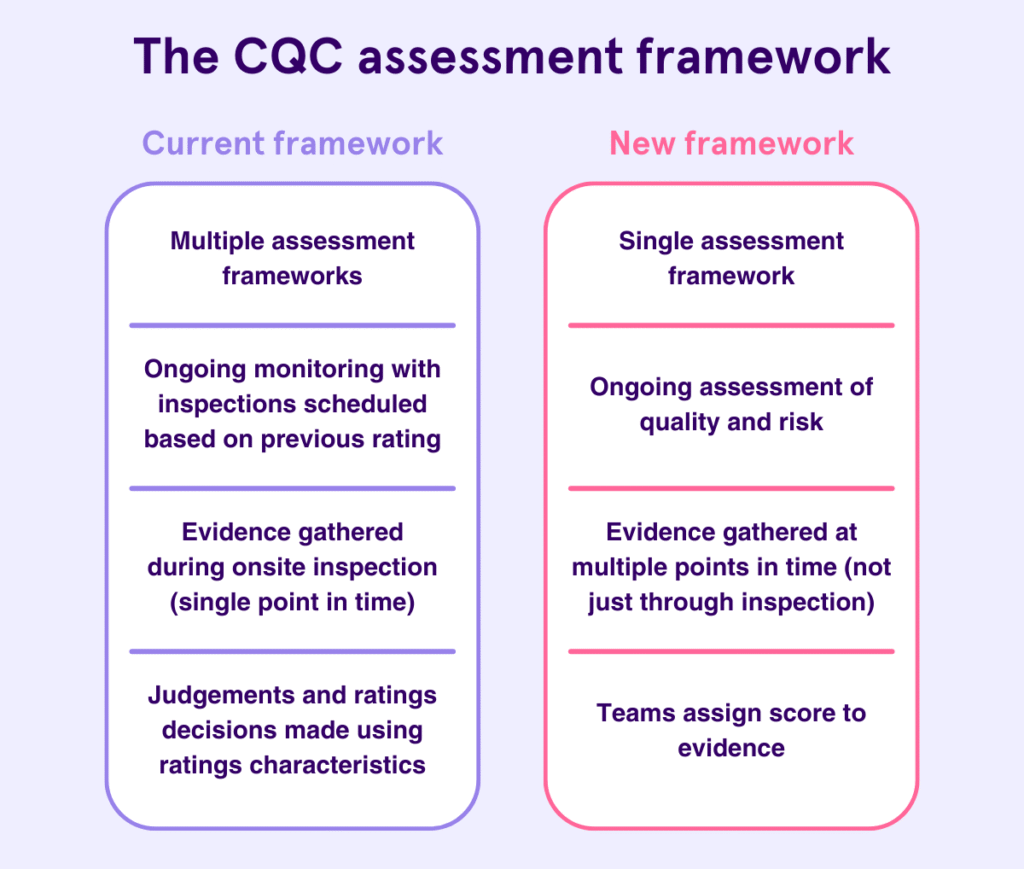
    CQC Assessment Framework
    CQC Assessment Framework

    CQC does not reject domiciliary care applications because providers lack good intentions. They reject them because documents are missing, weak, inconsistent, or unassessable.

    If your document pack does not meet minimum requirements, the Care Quality Commission will return your application before assessment begins.

    This section explains exactly what you must submit, and what CQC expects to see inside each document.

    Core Documents Required for All Providers

    Every provider applying for CQC registration must submit the following. There are no exceptions.

    Statement of Purpose

    Your Statement of Purpose defines your service. CQC cross-checks it against every other document.

    It must clearly explain:

    • the regulated activities you will provide
    • who you will support
    • where services will be delivered
    • how care will be delivered

    CQC expects this document to be:

    • service-specific
    • current
    • consistent with your business plan and policies

    If your Statement of Purpose describes services your policies do not support, your application will fail.

    DBS Checks

    You must provide enhanced DBS checks for:

    • the provider (if an individual)
    • the nominated individual
    • the registered manager

    DBS certificates must:

    • be countersigned where required
    • be less than 12 months old at submission

    Start DBS applications early. Delays here stall entire applications.

    Insurance Evidence

    You must submit evidence of:

    • public liability insurance
    • employer liability insurance (if you will employ staff)

    CQC only accepts one insurance document.
    If you require both types, you must complete the CQC liability insurance supporting information form and include your certificates.

    Expired or incorrect insurance evidence leads to rejection.

    Additional Documents Required for Domiciliary Care Providers

    If you are registering to provide personal care, CQC requires additional service-specific documents.

    These are non-negotiable.

    Additional Information for Providers of Personal Care (Form)

    This form is mandatory for homecare providers.

    CQC uses it to assess:

    • how you recruited key personnel
    • how you assessed competence
    • whether genuine local demand exists for your service

    Weak answers here often expose:

    • lack of market research
    • unrealistic service plans
    • governance gaps

    Treat this form as an assessment tool, not an admin exercise.

    Business Plan (With Financial Forecast)

    Your business plan must demonstrate that your service is viable and sustainable.

    CQC expects:

    • clear service model explanation
    • evidence of local market demand
    • realistic staffing plans
    • a one-year financial forecast
    • a SWOT analysis

    Vague statements like “there is demand for care services” will not pass.
    CQC expects evidence, not assumptions.

    Evidence of Legal Occupancy

    You must prove you have permission to operate from your registered address.

    Acceptable evidence includes:

    • title deeds (if you own the property)
    • tenancy or licence agreement
    • written permission from landlord or mortgage provider

    This applies even if you operate from home.
    Missing or unclear occupancy evidence is now a common rejection reason.

    Staff Training Plan

    CQC no longer accepts a simple training matrix.

    Your training plan must explain:

    • induction training
    • mandatory training
    • refresher schedules
    • specialist training where required
    • support for overseas workers
    • who delivers the training

    CQC wants to see how training works in practice, not just a list of topics.

    Service User Guide

    This document explains your service to people who use it.

    It must cover:

    • what services you offer
    • pricing and charges
    • safeguarding information
    • how to raise concerns or complaints

    If this document reads like marketing copy instead of practical guidance, CQC will challenge it.

    Policies Required for All Home Care Providers

    CQC requires a specific policy set. Each policy must reflect how your service actually operates.

    You must submit policies covering:

    • consent
    • equality, diversity and human rights
    • governance
    • infection prevention and control
    • medicines management
    • recruitment
    • safeguarding
    • complaints

    Generic templates often fail because they:

    • describe services you do not provide
    • contradict your Statement of Purpose
    • lack sufficient operational detail

    CQC cross-checks policies line by line. Inconsistencies trigger rejection.

    Minimum Requirements: What CQC Means by “Assessable”

    CQC’s guidance is clear. Documents must include enough detail to be assessed.

    That means:

    • no placeholders
    • no blank sections
    • no copied text that does not apply to your service
    • no contradictions between documents

    If an assessor cannot understand how your service will operate, your application does not progress.

    Final Document Pack Self-Check

    Before submission, confirm that:

    • every required document is included
    • every document reflects your service model
    • all documents agree with each other
    • all documents use current terminology
    • nothing relies on “we will decide later”

    If any document fails this test, fix it before you submit.

    CQC Application Form for New Providers: What to Prepare Before You Fill It In

    Many domiciliary care applications fail before CQC reads a single policy.

    The problem is not the documents. The problem is the CQC application form for new providers.

    The Care Quality Commission uses this form as the master reference point. Assessors cross-check everything else against it. If the form contains vague answers, missing detail, or contradictions, CQC rejects the application at Stage One.

    Do Not Start the Form Until These Decisions Are Final

    Before you touch the application form, you must lock down the following:

    • Regulated activity
      For homecare agencies, this is usually personal care. Do not list activities you are not ready to deliver.
    • Service model
      Who you will support, how you will deliver care, and what you will not provide.
    • Registered location
      Your office base address must be final and supported by legal occupancy evidence.
    • Key roles
      Who is the provider, nominated individual, and registered manager, and whether any roles overlap.

    If any of these points remain undecided, stop. Incomplete thinking here leads to rejection later.

    How CQC Reads Your Application Form

    CQC does not read the form in isolation.

    Assessors compare it against:

    • your Statement of Purpose
    • your business plan
    • your policies and procedures
    • the additional personal care form

    If your form says one thing and your documents say another, CQC assumes you do not understand your own service.

    That is a red flag.

    Common Form Errors That Trigger Rejection

    CQC regularly rejects applications because the form includes:

    • Blank fields
      Every question must be answered. If something does not apply, state “Not applicable” and explain why.
    • Vague language
      Phrases like “we will ensure”, “we plan to”, or “we intend to” without explanation show lack of readiness.
    • Overly broad services
      Listing services you cannot evidence through policies, training, or staffing.
    • Inconsistent answers
      For example, describing a small, local service in one section and a large multi-area operation in another.
    • Outdated assumptions
      Using terminology or processes that no longer reflect current CQC expectations.

    Each of these issues can stop your application before assessment begins.

    How to Write Strong Answers (What CQC Expects)

    Strong answers are:

    • specific
    • consistent
    • evidence-backed

    Instead of writing:

    “We will provide high-quality care tailored to individual needs.”

    Write:

    “We will deliver personal care to adults in their own homes within [location], following care plans developed after initial assessment and reviewed monthly.”

    Clarity beats ambition every time.

    The “Cross-Check Rule” (Use This Before Submission)

    Before you submit the application form, cross-check each answer against:

    • your Statement of Purpose
    • your business plan
    • your policies

    If any answer cannot be supported by a document, revise it.

    CQC assumes:

    If it is written in the form, you must already be able to deliver it.

    Final Form Readiness Checklist

    Your application form is ready when:

    • every field is completed
    • no answers rely on future decisions
    • language matches your documents exactly
    • service scope is clear and realistic
    • roles and responsibilities are consistent

    If you rush this stage, CQC will return your application, and you will lose your place in the queue.

    How to Apply for CQC Registration (Submission Mechanics That Make or Break You)
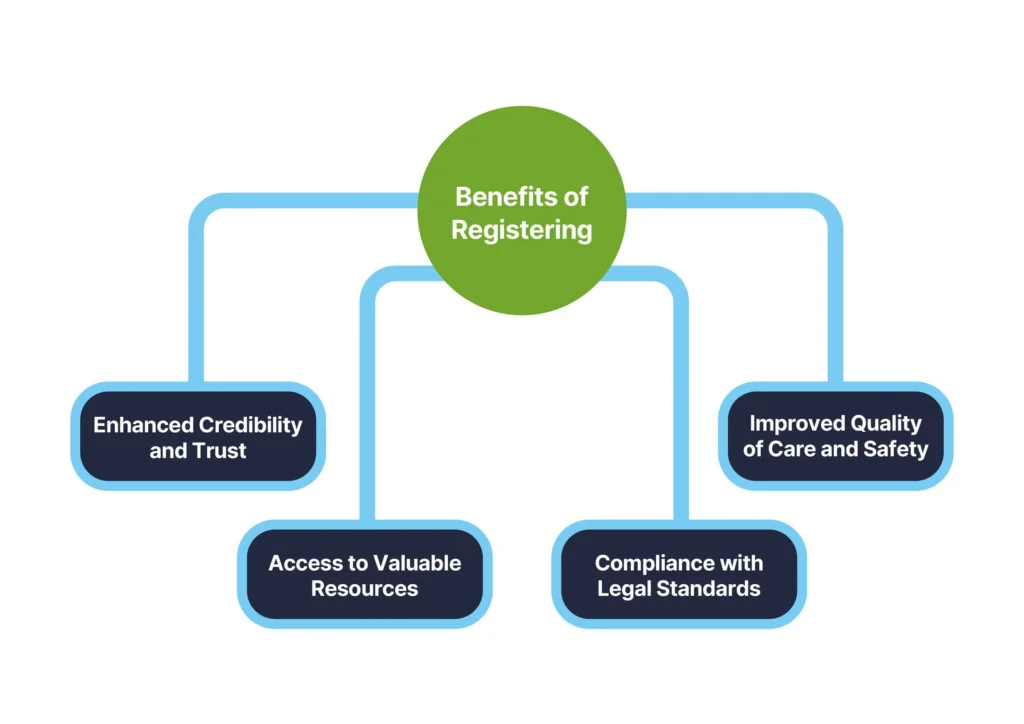
    What is CQC Registration?
    What is CQC Registration?

    Many providers prepare strong documents and still fail because they submit their CQC domiciliary care application incorrectly.

    At this stage, CQC does not troubleshoot. If your submission does not meet their technical requirements, your application may never reach assessment.

    Here is how to apply for CQC registration properly in 2026.

    Where to Submit Your Application

    You must email your complete application bundle to:

    HSCA_Applications@cqc.org.uk

    CQC requires email submission for new provider applications. This is not optional.

    The 10MB Email Size Rule (Non-Negotiable)

    CQC can only receive emails up to 10MB in size.

    This includes:

    • all attachments
    • the email body
    • embedded signatures

    If your email exceeds 10MB:

    • CQC may not receive it at all
    • you may not get a bounce-back warning
    • your application may be treated as missing

    If your application exceeds 10MB, you must split it into multiple emails.

    Correct Subject Line Format (Critical for Multi-Email Submissions)

    When sending more than one email, CQC requires a specific subject line format so they can match your documents correctly.

    Use this format exactly:

    [Provider Name] new provider application 1/2
    [Provider Name] new provider application 2/2

    If you send three emails, use 1/3, 2/3, 3/3.

    If you do not follow this format:

    • emails may not be linked together
    • CQC may treat your application as incomplete
    • your application may be rejected at intake

    This is one of the most common and avoidable failures.

    All Documents Must Arrive Together

    CQC requires that all documents arrive at the same time.

    You cannot:

    • send the application form today
    • send policies tomorrow
    • send missing documents next week

    If anything is missing from the initial submission, CQC will return or reject the application.

    When you resubmit, it counts as a new application.

    File Naming and Organisation (Make Review Easy)

    CQC assessors review large volumes of applications. Clear organisation helps your application move smoothly.

    Use:

    • separate files for each document
    • clear, descriptive file names
    • consistent terminology across documents

    Good example:

    • Statement of Purpose – Oxtown Care Ltd.pdf
    • Safeguarding Policy – Domiciliary Care.pdf
    • Business Plan – Homecare Services.pdf

    Avoid:

    • vague names like “Policy 1”
    • merged documents containing multiple policies
    • zipped folders unless absolutely necessary

    Assessors must be able to locate documents quickly.

    What to Include in the Email Body

    Keep the email body simple and factual.

    Include:

    • provider name
    • confirmation that this is a new provider application
    • number of emails being sent (if applicable)

    Do not include explanations, justifications, or attachments that are not required.

    Submission Day Checklist (Use This Before You Click Send)

    Before submitting, confirm that:

    • All required documents are attached
    • All forms use the latest versions
    • File names are clear and consistent
    • Total email size is under 10MB
    • Subject line format is correct
    • All emails are ready to send together

    If any item is missing, stop and fix it first.

    After You Submit: What to Do Next

    After submission:

    • save sent emails and attachments
    • keep a copy of everything submitted
    • monitor your inbox daily

    CQC may contact you quickly if there is an issue. Delayed responses can slow your application or affect assessment.

    Note: Strong documents mean nothing if CQC cannot process your submission.

    Follow the submission mechanics precisely. Treat this step with the same seriousness as the documents themselves.

    Why CQC Rejects Domiciliary Care Applications (And How You Prevent It)

    Most failed applications do not fail because providers lack experience or commitment. They fail because applicants underestimate how precise and unforgiving the Care Quality Commission has become.

    Below are the rejection reasons we see most often, and exactly how to avoid each one.

    Rejection Reason 1: Missing Documents

    This is the single biggest cause of rejection. If even one required document is missing, CQC will return or reject your application at intake.

    How to prevent it

    • Use a master document checklist before submission
    • Confirm every required document is attached
    • Do not assume CQC will “ask for it later”

    CQC will not chase missing documents anymore.

    Rejection Reason 2: Using Outdated Forms

    CQC updates application forms periodically. Submitting an old version triggers immediate rejection.

    This includes:

    • provider application forms
    • manager application forms
    • additional personal care forms

    How to prevent it

    • Download every form directly from the CQC website immediately before completing it
    • Never reuse forms from old applications or third-party packs

    If the form version is wrong, nothing else matters.

    Rejection Reason 3: Incomplete or Vague Form Answers

    Leaving fields blank or providing vague responses signals unreadiness.

    CQC does not accept:

    • empty fields
    • “to be confirmed” answers
    • generic statements without explanation

    How to prevent it

    • Answer every field
    • If something does not apply, state “Not applicable” and explain why
    • Replace vague language with specific operational detail

    Clarity shows readiness. Vagueness triggers rejection.

    Rejection Reason 4: Generic Policies That Do Not Match the Service

    CQC expects policies to reflect how your service will actually operate.

    They regularly reject applications where:

    • policies describe services not offered
    • care home policies are used for domiciliary care
    • documents read like unedited templates

    How to prevent it

    • Tailor every policy to your service model
    • Remove irrelevant sections
    • Ensure policies align with your Statement of Purpose and business plan

    If your policies contradict your service description, CQC will not proceed.

    Rejection Reason 5: Inconsistencies Between Documents

    CQC cross-checks everything.

    They will identify contradictions such as:

    • business plans that describe services not listed in the Statement of Purpose
    • staffing structures that do not match recruitment policies
    • governance arrangements that conflict with complaints procedures

    How to prevent it

    • Review documents side by side before submission
    • Use consistent terminology across all documents
    • Resolve contradictions before CQC finds them

    Consistency is a core assessment signal.

    Rejection Reason 6: Missing Legal Occupancy Evidence

    Since mid-2025, CQC has enforced this requirement more strictly.

    Applications fail when:

    • no occupancy evidence is provided
    • permissions do not cover business use
    • home-based providers lack written consent

    How to prevent it

    • Provide clear evidence of ownership or tenancy
    • Include written permission if operating from home
    • Ensure documents match the registered address

    Without this evidence, CQC will not assess your application.

    Rejection Reason 7: Governance Gaps When One Person Holds Multiple Roles

    When the nominated individual and registered manager are the same person, CQC looks closely at governance.

    Applications fail when:

    • complaints policies do not explain independent handling
    • oversight arrangements are unclear
    • accountability is poorly defined

    How to prevent it

    • Clearly explain how complaints about the manager are handled
    • Show how oversight works in practice
    • Address the conflict-of-interest risk directly

    Ignoring this issue signals weak governance.

    Rejection Reason 8: Email Submission Errors

    CQC still rejects applications that never technically arrive.

    Common errors include:

    • emails over 10MB
    • incorrect subject line format
    • documents sent across multiple days
    • missing attachments

    How to prevent it

    • Check email size carefully
    • Use the correct subject line format
    • Send all documents together
    • Keep proof of submission

    Strong applications fail silently when submission rules are ignored.

    Rejection Reason 9: Submitting Before You Are Ready

    CQC expects you to be operationally ready when you apply.

    Applications fail when:

    • premises are not ready
    • systems are not in place
    • staffing plans are unrealistic
    • training arrangements are undeveloped

    How to prevent it

    • Submit only when you can realistically start providing care
    • Ensure documents reflect current readiness, not future plans

    CQC assesses capability, not ambition.

    The Pattern CQC Rejects

    Across all rejected applications, the pattern is the same:

    • incomplete preparation
    • unclear thinking
    • inconsistent documentation

    CQC no longer allows providers to “fix it later.”

    If you want to register successfully in 2026, you must submit an application that is complete, coherent, and assessment-ready from day one.

    How Much Does CQC Registration Cost? (Fees, Real Costs, and Budgeting Reality)

    One of the biggest misconceptions about CQC registration for domiciliary care providers is cost.

    Some people assume registration is expensive.
    Others assume it is free.

    Both assumptions cause problems.

    Let’s break this down properly.

    Is There a Fee to Apply for CQC Registration?

    No. The Care Quality Commission does not charge an application fee to register as a new provider.

    Submitting your CQC application form for new provider costs nothing.

    However, this does not mean registration is cost-free.

    When Do You Start Paying CQC Fees?

    You only start paying CQC fees after your application is approved and registration is granted.

    Once registered:

    • CQC charges annual regulatory fees
    • Fees are based on your turnover from regulated activities
    • Fees must be paid every year you remain registered

    If you fail to pay annual fees, CQC can take enforcement action.

    Typical Annual CQC Fees for Domiciliary Care Providers

    CQC calculates annual fees using a sliding scale linked to turnover.

    In simple terms:

    • Smaller providers with low turnover pay lower fees
    • Larger providers with higher turnover pay more

    CQC publishes its fee structure annually, and amounts can change. Always check the current fee schedule when budgeting.

    Real Costs You Must Budget for Before Registration

    Although the application itself is free, preparing a CQC domiciliary care application involves unavoidable costs.

    Here are the main ones.

    DBS Checks

    You must obtain enhanced DBS checks for key personnel.

    Typical cost:

    • Around £40–£50 per DBS check

    DBS processing can take weeks, so delays here often slow applications.

    Insurance

    You will need:

    • Public liability insurance
    • Employer’s liability insurance (if employing staff)

    Costs vary depending on:

    • provider size
    • staffing model
    • risk profile

    CQC requires valid, current insurance evidence at submission.

    Training and Qualifications

    If your registered manager does not already hold the required qualifications, you may need to budget for:

    • Level 5 Diploma in Leadership and Management for Adult Care
    • Mandatory and specialist training

    Training costs vary widely but should not be underestimated.

    Premises and Legal Occupancy

    Even home-based providers may need:

    • written permission from a landlord or mortgage provider
    • minor adaptations for secure record storage

    Commercial office premises increase costs further.

    Policies, Documents, and Professional Support

    Many providers underestimate the time and expertise required to prepare:

    • a compliant business plan
    • tailored policies
    • governance documentation

    You can prepare documents yourself, but poorly written or generic documents often lead to rejection, which costs time and lost opportunity.

    Professional support is optional, but repeated resubmissions are far more expensive in the long run.

    Hidden Cost: Delay

    The most expensive mistake is not a document fee, it is delay.

    Every rejected application can cost you:

    • months of lost trading time
    • ongoing rent and overheads
    • missed contracts and referrals

    A “free” application that fails twice can cost more than getting it right once.

    Budgeting Tip Most New Providers Miss

    Do not budget on the assumption that registration will be quick.

    Even strong applications can take several months to complete the full assessment process.

    Plan for:

    • at least 3–4 months before launch
    • ongoing costs during the waiting period

    Rushing to submit before you are financially prepared often leads to rejection or operational strain.

    Cost Summary (Plain English)

    • Application fee: £0
    • CQC annual fees: Payable after registration, based on turnover
    • Preparation costs: DBS, insurance, training, premises, documents
    • Biggest risk: Delay caused by rejection

    Understanding the full cost picture helps you plan properly and avoids painful surprises later.

    The CQC Registration Interview: What They Ask and How to Answer Clearly

    If your CQC domiciliary care application passes the initial checks, CQC may invite you to a registration interview.

    This interview does not exist to catch you out. It exists to confirm one thing: can you actually run the service you described on paper?

    The Care Quality Commission uses the interview to test understanding, not memory.

    Who CQC Interviews

    CQC usually interviews:

    • the registered manager
    • sometimes the nominated individual

    If the same person holds both roles, CQC will focus closely on governance and accountability.

    Interviews typically take 30–45 minutes and happen by phone or video call.

    What CQC Is Really Testing

    CQC is not asking whether you have policies. They are asking whether you understand them.

    Assessors want to see that you can:

    • explain how your policies work in practice
    • apply them to real situations
    • identify risks and respond appropriately

    You do not need perfect answers. You need credible, consistent answers.

    Core Topics CQC Covers in Interviews

    Although questions vary, interviews usually focus on the same areas.

    Safeguarding

    Expect questions like:

    • What would you do if a care worker raised a safeguarding concern?
    • How do staff report concerns?
    • When would you escalate to the local authority?

    Strong answers explain process, not just intention.

    Medicines Management

    CQC may ask:

    • How do you reduce medication errors?
    • How do staff record administration?
    • What training do staff receive?

    You should link answers directly to your medicines policy.

    Recruitment and Staffing

    Typical questions include:

    • How do you recruit safely?
    • What checks do you complete before employment?
    • How do you support and supervise staff?

    CQC wants to hear how recruitment, induction, and supervision connect.

    Training and Competence

    Expect questions on:

    • induction training
    • mandatory training
    • refresher schedules
    • competence checks

    Avoid vague answers like “we will train staff regularly.”

    Explain how, when, and who delivers it.

    Governance and Quality Monitoring

    This is where many interviews go wrong.

    CQC may ask:

    • How do you monitor quality?
    • How do you learn from incidents?
    • How do you use feedback?

    Strong answers include:

    • audits
    • supervision records
    • complaints analysis
    • action plans

    If you hold multiple roles, explain how you avoid conflicts of interest.

    How to Prepare for the Interview

    Preparation is simple but essential.

    Before the interview:

    • Have your application form, Statement of Purpose, and policies in front of you
    • Re-read your documents and note key processes
    • Prepare examples that match what you wrote

    CQC will notice if your answers contradict your paperwork.

    How to Answer Well (What Assessors Respond To)

    Good answers are:

    • clear
    • practical
    • honest

    If you do not know something yet, say so, and explain how you will address it.

    Overconfident guessing creates doubt.
    Measured honesty builds trust.

    Common Interview Mistakes

    Avoid:

    • repeating policy wording without explanation
    • contradicting your documents
    • guessing answers you are unsure about
    • dismissing safeguarding or complaints concerns

    CQC interviews assess judgement, not just knowledge.

    Interview Readiness Checklist

    You are ready if you can:

    • explain your service model clearly
    • describe safeguarding processes confidently
    • walk through recruitment and training steps
    • explain how you monitor quality
    • discuss complaints handling realistically

    If you cannot explain it verbally, CQC will question whether you can deliver it in practice.

    After You Get Registered: What Happens Next (and How to Stay Inspection-Ready)

    Once the Care Quality Commission grants registration, you can legally begin providing domiciliary care. But approval does not come with a grace period.

    From day one, CQC expects you to operate exactly as described in your application.

    What Changes Immediately After Registration

    As soon as registration is confirmed:

    • You can start delivering regulated personal care
    • You become liable for annual CQC fees
    • You must comply fully with the regulations
    • Your service becomes eligible for inspection

    CQC assumes that everything you described on paper is already in place and working.

    Your First Inspection: What to Expect

    CQC usually inspects new domiciliary care providers within the first 12 months of registration. However, inspections can happen sooner if CQC identifies risk.

    Inspections focus on the five key questions:

    • Is the service safe?
    • Is it effective?
    • Is it caring?
    • Is it responsive?
    • Is it well-led?

    Inspectors will test whether your service matches your registration documents in practice.

    The First 30 Days: What You Should Do Immediately

    The first month after registration sets the tone for inspection readiness.

    You should:

    • implement all policies and procedures in real operations
    • begin staff supervision and competency checks
    • keep training records up to date
    • document care planning and reviews
    • log incidents, complaints, and actions taken

    Do not wait for inspection to start recording evidence. Inspectors expect to see a working paper trail.

    Maintain Compliance, Not Just Documents

    Many providers pass registration and fail inspection because policies exist only on paper.

    CQC expects to see:

    • staff following procedures
    • audits being completed
    • feedback being collected and acted upon
    • risks identified and managed

    If your service looks different from what you described in your application, inspectors will challenge it.

    Notify CQC of Changes

    You must notify CQC about certain changes, including:

    • changes to your nominated individual or registered manager
    • changes to your registered address or premises
    • significant incidents or safeguarding concerns
    • changes to the services you provide

    Failing to notify CQC is itself a compliance breach.

    Keep Your Statement of Purpose Accurate

    Your Statement of Purpose must stay current.

    If your services change, you must:

    • update the document
    • ensure policies still align
    • notify CQC where required

    Outdated Statements of Purpose are a common inspection finding.

    Note: Registration confirms that you can provide care.
    Inspection confirms whether you do provide it safely and consistently.

    Treat compliance as an ongoing process, not a one-off hurdle.

    The CQC Registered Providers List: Why It Matters and What to Check

    Once CQC approves your application, your service appears on the CQC registered providers list. This is not a formality. It is your public regulatory record.

    Commissioners, local authorities, families, insurers, and partners use this register to verify whether a provider is legally allowed to operate.

    What the CQC Register Shows

    Your public listing typically includes:

    • your provider name
    • your registered address
    • your regulated activities
    • your registered manager (where applicable)
    • your inspection status and rating (once inspected)

    This information becomes part of your public reputation.

    Why the Register Matters for New Providers

    For a new domiciliary care agency, the register:

    • proves you are legally registered
    • builds trust with service users and referrers
    • allows commissioners to verify compliance
    • confirms you can deliver regulated personal care

    Many organisations will not engage with you until your registration appears on the public register.

    What You Should Check as Soon as You Go Live

    When your registration goes live, check your listing carefully.

    Confirm that:

    • your provider name is correct
    • your address matches your legal occupancy evidence
    • your regulated activity is listed accurately
    • your service description reflects what you applied for

    Errors happen. Leaving them uncorrected can cause confusion or delay referrals.

    What to Do If Something Is Wrong

    If you spot an error:

    • contact CQC promptly
    • provide clear evidence of the correction needed
    • keep records of communications

    Do not assume CQC will fix mistakes automatically.

    How the Register Connects to Inspection

    Once registered, your listing links directly to:

    • inspection reports
    • ratings
    • enforcement history (if any)

    Everything CQC publishes builds on your registration record. Accuracy matters from the start.

    The Key Takeaway

    The CQC registered providers list is your public compliance footprint.

    Check it.
    Maintain it.
    Treat it as part of your professional credibility.

    Get Your CQC Registration Right the First Time

    CQC registration for domiciliary care providers has changed, permanently.

    Since July 2025, incomplete or inaccurate applications no longer move forward. CQC rejects them at the point of receipt. Resubmissions lose their place in the queue. Small mistakes now cost months, not days.

    If you take one thing from this guide, take this: CQC no longer fixes applications. They filter them.

    Success in 2026 depends on preparation, accuracy, and consistency, not speed.

    You must:

    • submit the correct documents
    • use current forms
    • align every answer across your application
    • follow submission mechanics precisely
    • demonstrate readiness from day one

    If any part of your application feels rushed, vague, or incomplete, stop and fix it before you submit.

    Need Expert Help With Your CQC Registration?

    If you want to avoid rejection, delays, and costly resubmissions, expert guidance can make the difference.

    Care Sync Experts supports home care providers across England with:

    • end-to-end CQC registration support
    • professionally written, service-specific policies
    • Statement of Purpose and business plan development
    • application review before submission
    • registration interview preparation and coaching
    • ongoing compliance support after approval

    We stay up to date with CQC regulatory changes, submission requirements, and assessment expectations, so you don’t have to learn the hard way.

    Book a Free CQC Registration Consultation

    If you’re planning to apply, or you’ve already faced rejection, speak to our team before you submit again.

    This guide was prepared by Care Sync Experts and reflects current CQC requirements as of 2026. CQC guidance can change. Always verify current requirements with CQC before submitting your application.

    FAQ

    Is CQC Registration Difficult?

    Most applications fail because providers:
    CQC registration is not difficult because it is complicated. It is difficult because it is precise.
    submit incomplete document packs
    contradict themselves across forms and documents
    misunderstand what “ready to operate” actually means.

    The Care Quality Commission does not assess effort or intention. It assesses readiness and accuracy. If your application is complete, consistent, and specific to your service, registration is achievable. If it is vague or rushed, rejection is likely.

    What Are the Different Types of CQC Registration?

    CQC registration depends on what regulated activity you provide and how you operate, not on business size.
    For domiciliary care, the most common registrations are:
    Registered manager registration – required for the person managing day-to-day care delivery
    Provider registration – required for the organisation or individual delivering the service
    You may also register for different regulated activities, such as:
    personal care
    treatment of disease, disorder, or injury
    nursing care
    Each regulated activity carries different expectations and evidence requirements. You must only apply for activities you are genuinely ready to deliver

    Do Private Carers Need to Be CQC Registered?

    It depends on how the care is arranged.
    A self-employed carer does not need CQC registration if:
    they are directly employed by the person receiving care, and
    they do not operate through an agency or employ other carers
    However, registration is required if:
    care is arranged through an agency
    the carer employs staff
    the service provides regulated personal care as a business
    Many people get this wrong. Operating as an “independent carer” does not automatically remove the requirement to register

    How Often Does CQC Inspect Domiciliary Care Providers?

    CQC does not inspect on a fixed annual schedule.
    For new domiciliary care providers:
    the first inspection usually happens within 12 months of registration
    inspections can happen sooner if CQC identifies risk
    After that, inspection frequency depends on:
    previous inspection outcomes
    risk indicators
    intelligence or concerns raised
    CQC can also carry out unannounced inspections at any time. Providers must remain inspection-ready from the day they begin operating.